Roof surveys and replacements for Coast Guard stations and sector buildings near Manhattan, NY, planned for salt air, harbor wind, surge and mission schedules.
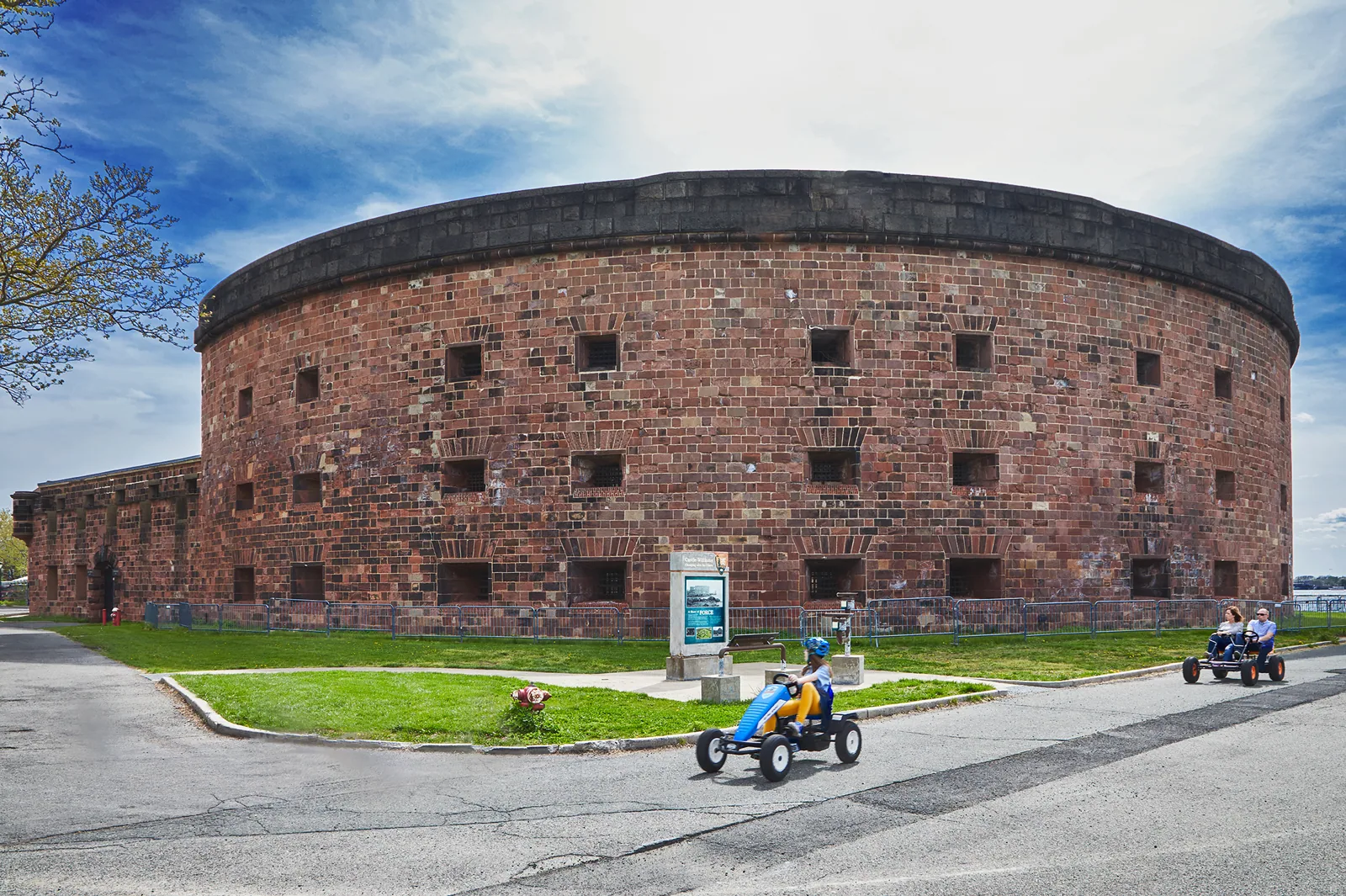
Pull a fastener on a harbor-side roof and the test can show corrosion on the head of every second screw and a white salt crust on the underside of the metal flashing, and a core cut can show insulation that has taken on water at the wall where the membrane terminates. The first reading means the roof's attachment has lost capacity before the next storm. The second means the leak has been traveling for a season. Sector New York, the Coast Guard's largest operational field command on the East Coast, keeps its main staff at Fort Wadsworth on Staten Island, about 10 miles south-southwest of Manhattan, NY, in buildings the Navy once held. Our survey rates each roof by use and by exposure, so the sector can sequence work around its mission.
What does a roof survey find on adapted Navy buildings?
After the Navy left Fort Wadsworth in 1994, the Coast Guard moved in as a tenant of the former Navy buildings and housing. Adapted buildings can carry the signatures of their first use and of each change since: hatches in awkward places, penetrations left from removed equipment, layers added over layers and drains that serve a floor plan that no longer exists.
We survey each building by zone and map every penetration, abandoned or active. Abandoned openings are capped and flashed. Cores show the layers and the condition of the insulation. A ranking by use, such as operations, housing and support, tells the sector which roofs protect the mission and which protect other assets.
Housing and support buildings deserve the same rigor as operations space. A leak in a residence affects the people the command relies on, and the survey ranks it by occupancy as well as by condition. Where buildings have chimneys, vents or antenna mounts, each gets its own flashing review.
Marine exposure also changes how we read the age of a roof. A membrane that looks sound can sit beside flashing metal already well advanced in corrosion, so we weigh the condition of the metal and the sealants more heavily than the age on the drawing.
How does salt air change the specification?
A roof beside a harbor sees salt in the air. Salt accelerates corrosion on fasteners, edge metal and rooftop equipment, and it creates a film that holds moisture against the membrane. Aluminum, stainless steel and coated metals last longer than plain galvanized steel, and fasteners with a suitable coating resist the attack for longer.
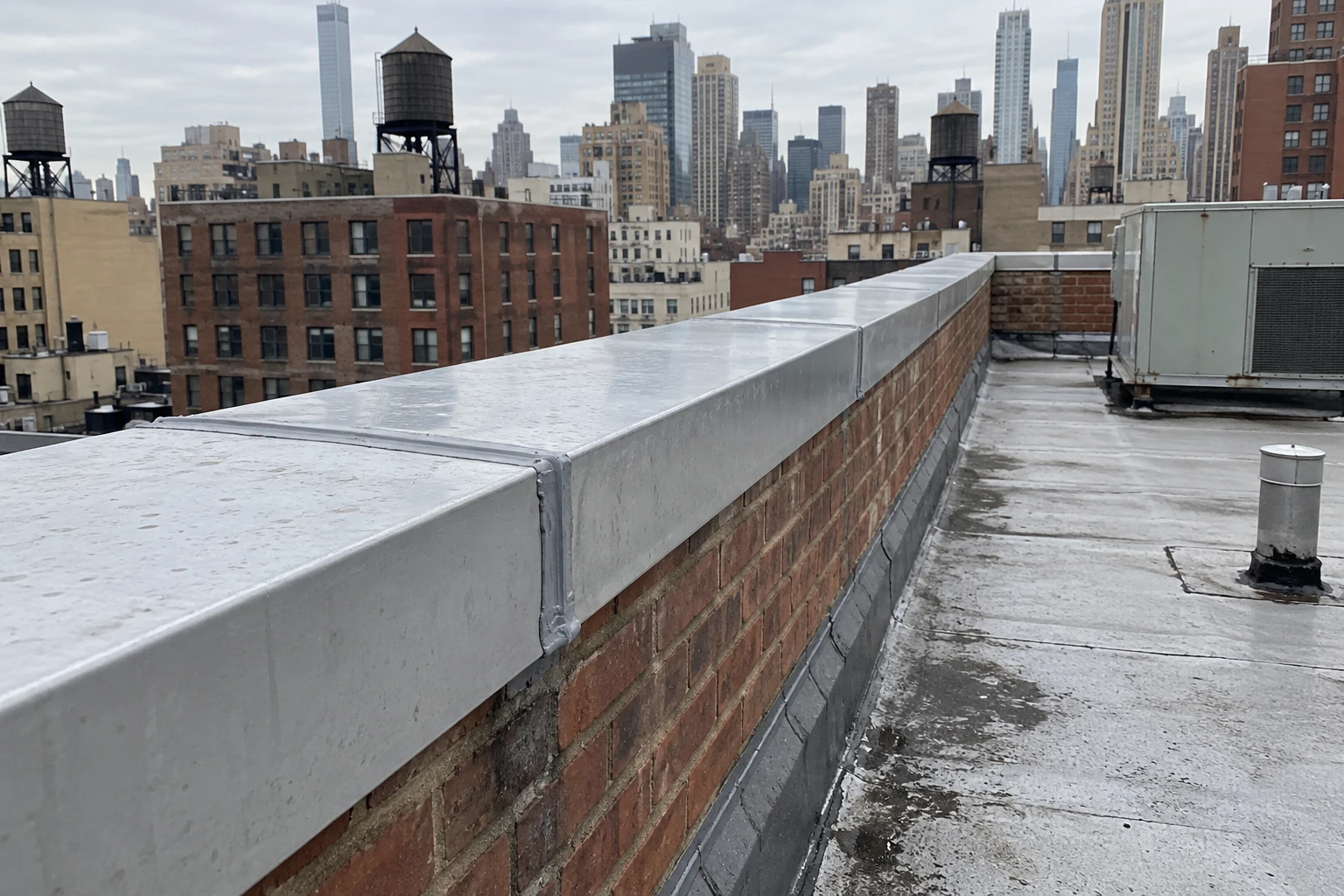
We inspect edge metal, fasteners and curb flashings for rust and pitting, and we measure the thickness of coatings where that applies. Specifications call for corrosion-resistant fasteners and trims, and washing is part of maintenance. The survey lists the corroded items by location so they can be replaced in the next repair cycle, not discovered in a storm.
Cleaning belongs in the plan. A fresh-water wash removes salt before it works into laps and fasteners, and a coating or a protective sealer on metal edges slows the attack. Records of each wash and each replacement show the sector which roofs need more attention.
What did Sandy and Ida show about harbor-side roofs?
Sandy's surge on October 29, 2012 stood 14.06 feet above average low tide at The Battery, and about 17 percent of New York City flooded. For a harbor facility, roofs matter after a surge because equipment, communications and power may sit on them. On September 1, 2021 Ida's rain peaked at 3.15 inches in an hour.
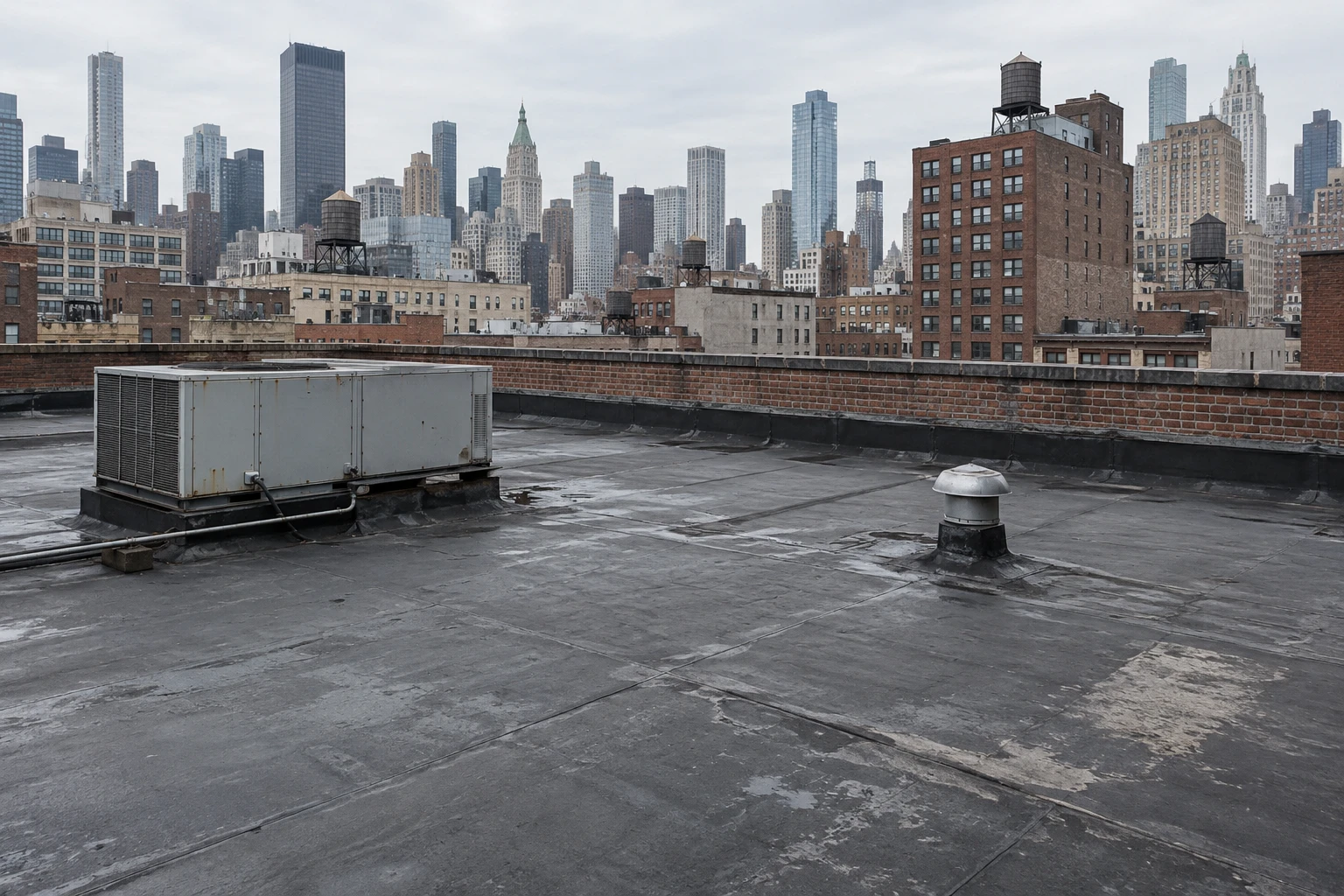
Central Park has recorded a 78 mph gust, and open water gives wind a long run before it meets a building. We check wind uplift ratings, edge details and fasteners at the perimeter, and we test drain leaders by flow. Equipment on the roof sits on drained, flashed platforms, and the survey rates the platform and its conduit penetrations as their own zone.
Heat and snow complete the load list. Central Park has recorded 106 F and averages 29.8 inches of snow a year, so a dark roof over a watch floor runs hot in July and a drift against a wall loads the low roof beside it in January. Both are mapped on the roof plan.
How does the work fit a mission schedule?
A command with operational duties cannot close a building for a roof, which makes this occupied building reroofing in its strictest form. We phase the work so each section is opened and closed within the shift, and we schedule the loudest tasks outside watch changes and drills. The sector's facilities staff review the plan before the first day, and access follows the installation's procedures: passes, escorts, vehicle inspection and limits on cranes.
Roofing on a federal installation is generally specified under the Unified Facilities Criteria for roofing, which set system types, wind uplift, fire performance and quality control. We read the criteria first and price to them. Our military installation roofing method applies, with documentation filed as the contract asks.
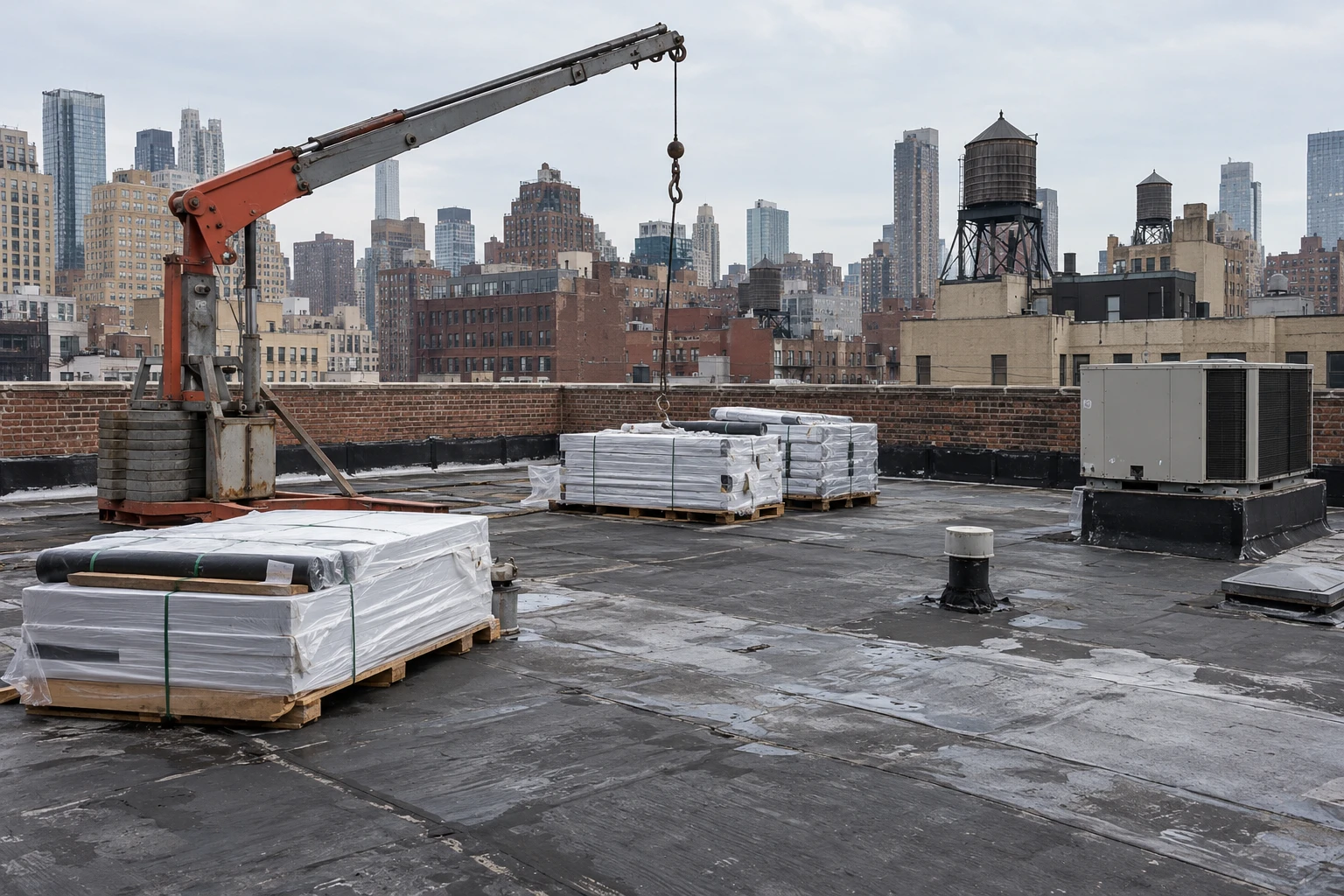
Contingency matters when a mission can change the day. Materials stay staged and covered, crews are ready to dry in a section on short notice, and the facilities staff have a phone number for the foreman. If an operation takes priority, the roof is closed first and resumed later.
What goes in the file for each building?
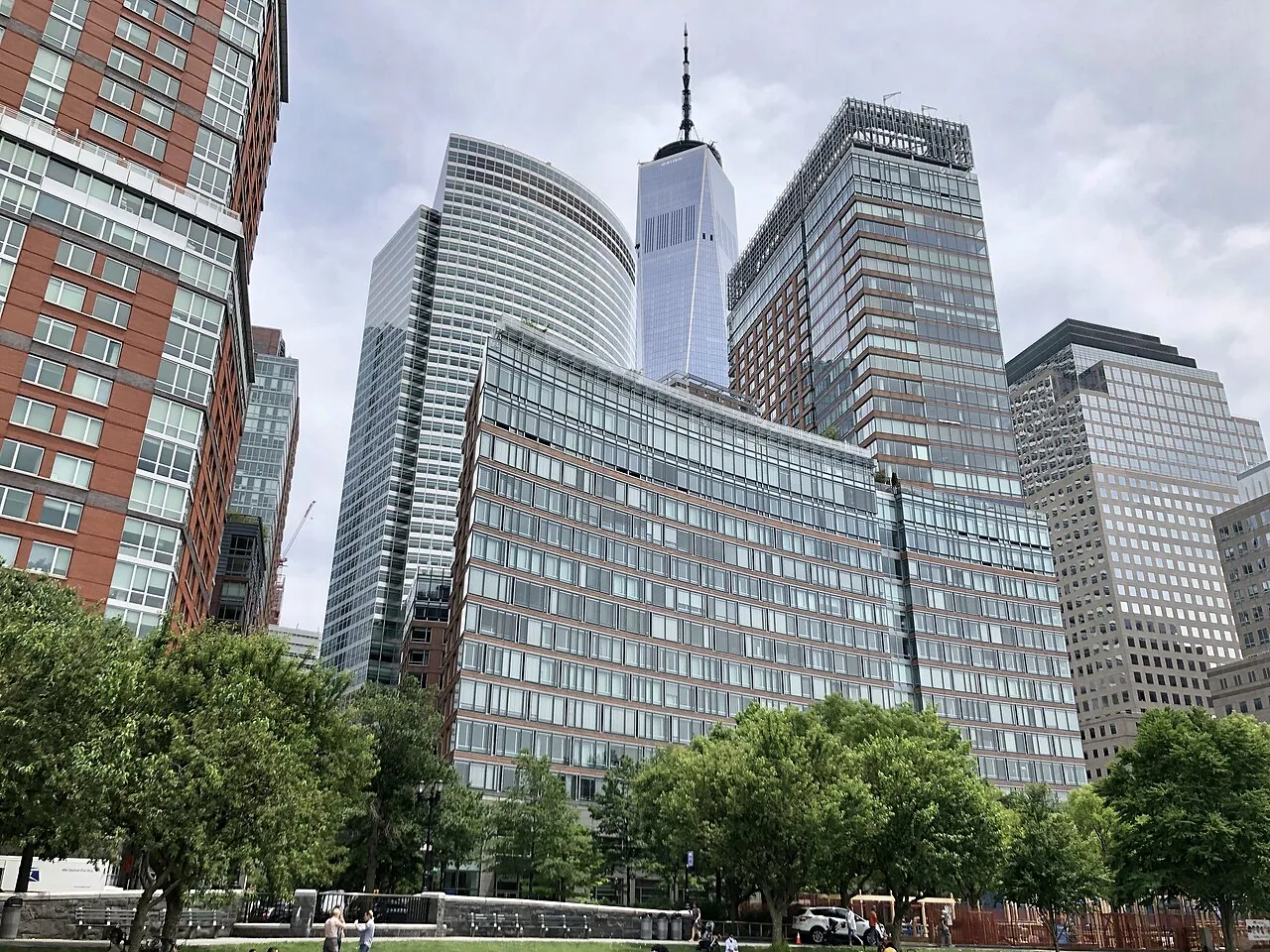
The file holds the survey, the roof plan with zones, the cores and their locations, the infrared maps, the ponding readings, product data and warranty, test results and photographs. A rating for each zone feeds the capital plan, and a log of storms and repairs shows the trend. The Army installation roofing and VA medical center roofing files follow the same format, so a federal facilities office can compare buildings across agencies. For waterfront exposure inside the city, Battery Park City shows the same surge risk.
Federal records outlast personnel. A facilities officer who rotates out should leave a file that the next officer can use without a briefing, so every item in the folder carries a date, a location and the name of the person who took the reading. A government building roofing file works the same way, and it supports budget requests that arrive years later. Roofs in Hoboken and Jersey City face the same salt air across the Hudson.
Commercial Roofing Questions
How often should harbor-side roofs be inspected?
Twice a year at minimum, once after winter and once before storm season, with an extra visit after any major storm. Salt accelerates corrosion, so annual fastener and edge-metal checks pay off.
Which metals hold up best in salt air?
Stainless steel, aluminum and coated metals resist better than bare galvanized steel. The specification names the grade and finish. We check fasteners and flashings for pitting at every visit.
Can a roof be replaced on an operating command building?
Yes, in sections. Each section is dried in the same shift, and the facilities staff agree on watch changes, drills and quiet hours. Each day closes with a note listing which areas are open and which are covered.
What do you need to start a survey on a federal site?
The access procedures, the building list with uses, drawings if they exist and the last roof report. Pass processing for the crew starts at once, and the scope is set once the buildings are known.
How does a surge event affect roof planning?
It moves critical equipment upward, which loads the roof. Platforms must be drained and flashed, and conduit penetrations rated. The survey includes those as zones with their own ratings.