EPDM rubber roofing for Manhattan, NY flat roofs: shrinkage at curbs, seam tape and adhesive, ballast and adhered options, cold-weather behavior and records.
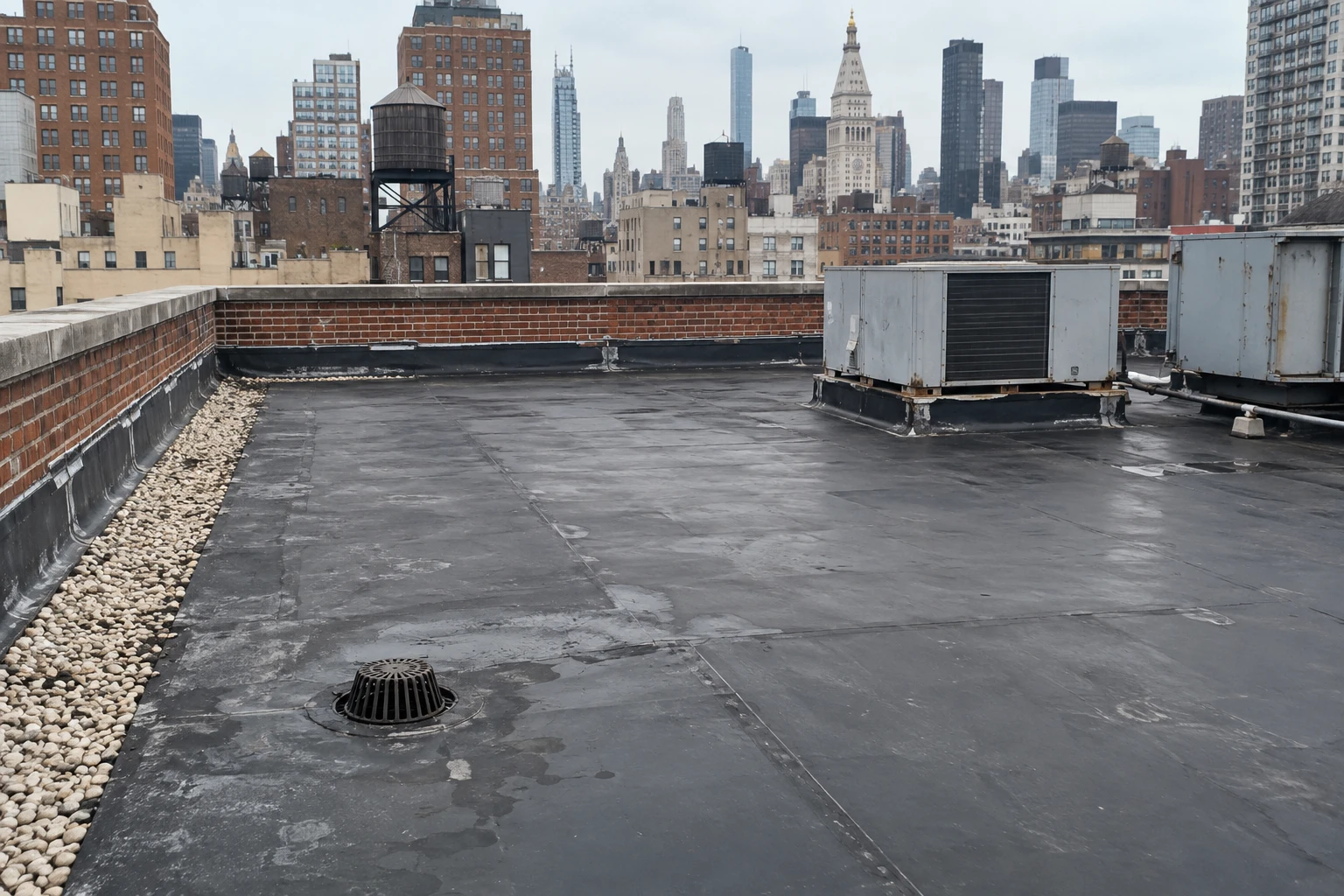
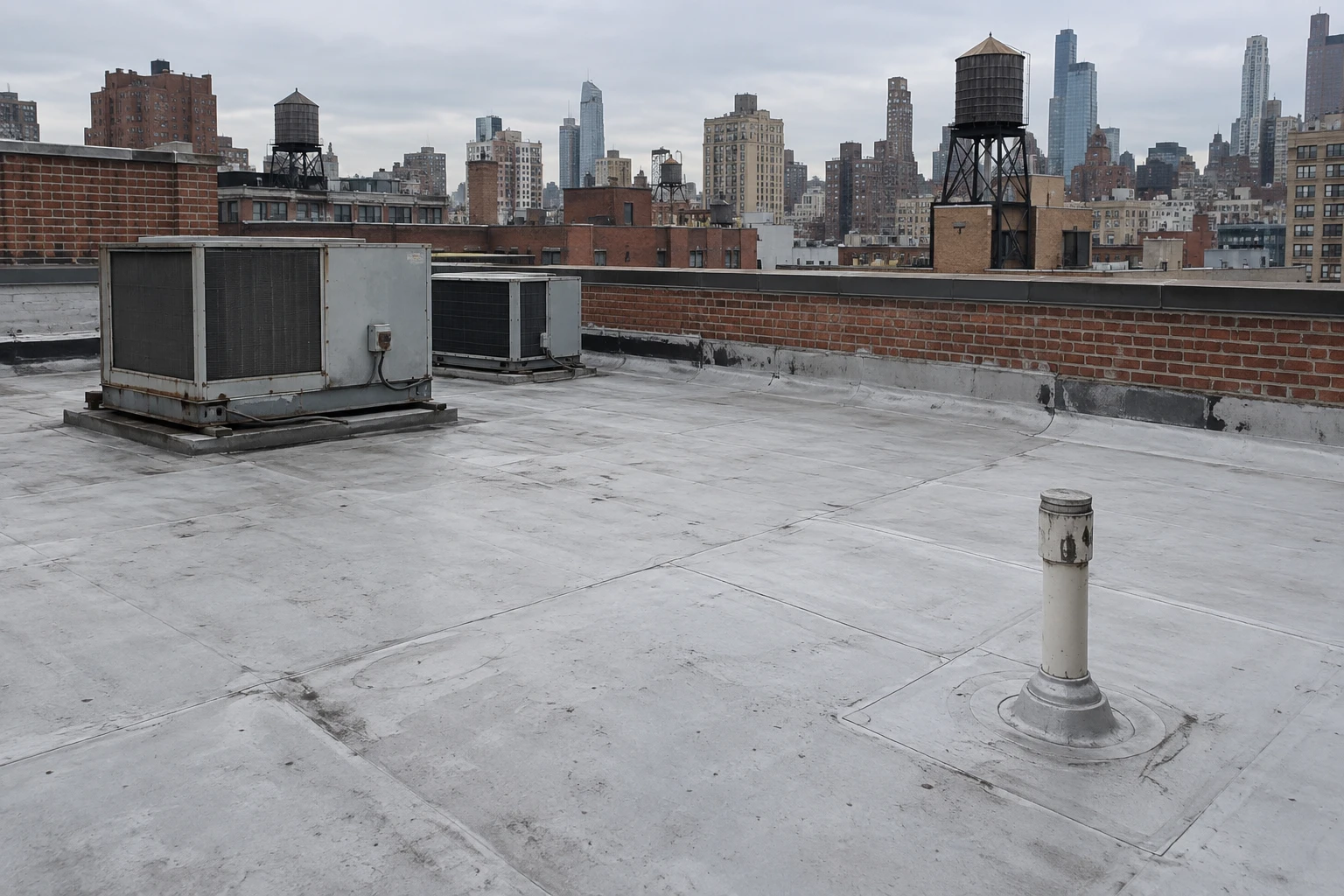
Peel a strip of splice tape from a scrap of EPDM that was spliced on the roof that morning, and the force it takes to separate the two surfaces says more about the seams than any look across the field. A seam that peels clean was made on a dirty or damp surface, and it lets go within months. Along the edges, a straightedge laid from the wall to the sheet reads the other number that matters: the gap where shrinkage has pulled the rubber off the flashing, which tells the owner how much life the membrane has left even when the field looks fine. EPDM, ethylene propylene diene monomer, is a synthetic rubber sheet used on low-slope roofs since the 1960s, and many flat roofs in Manhattan, NY carry one. It is flexible in cold weather, durable under foot traffic and repairable with tapes and adhesives, which makes it practical on small multifamily roofs. The survey question is whether the existing sheet can be repaired or whether it has reached its limit.
Where does EPDM make sense on a Manhattan building?
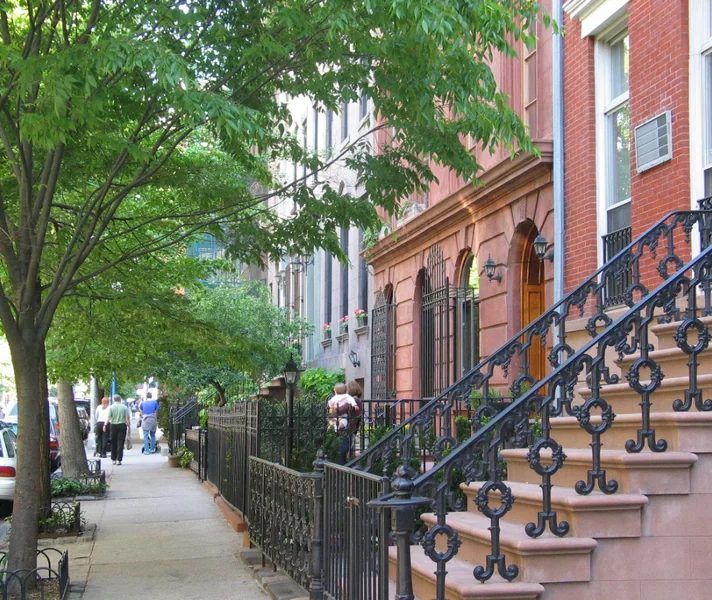
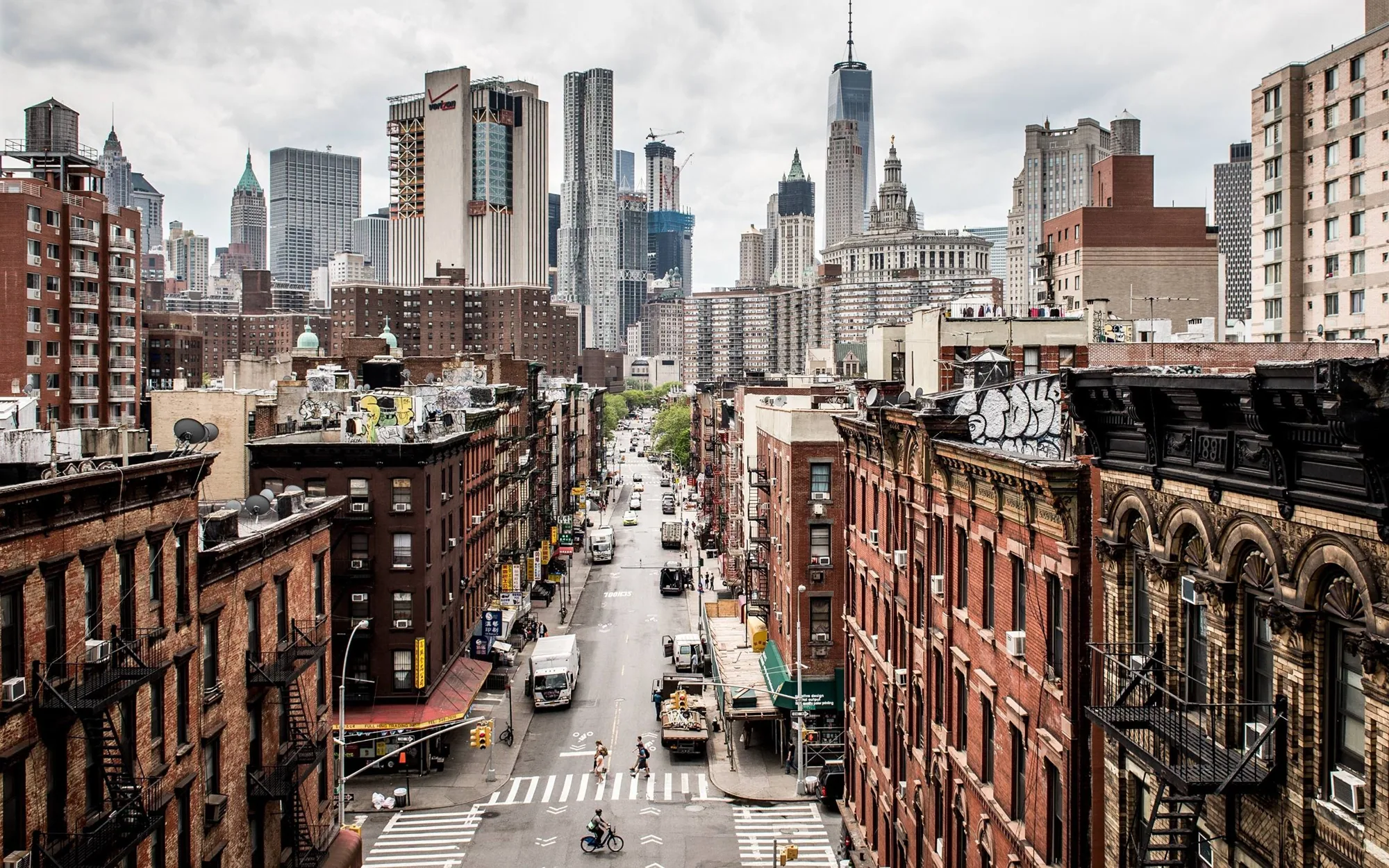
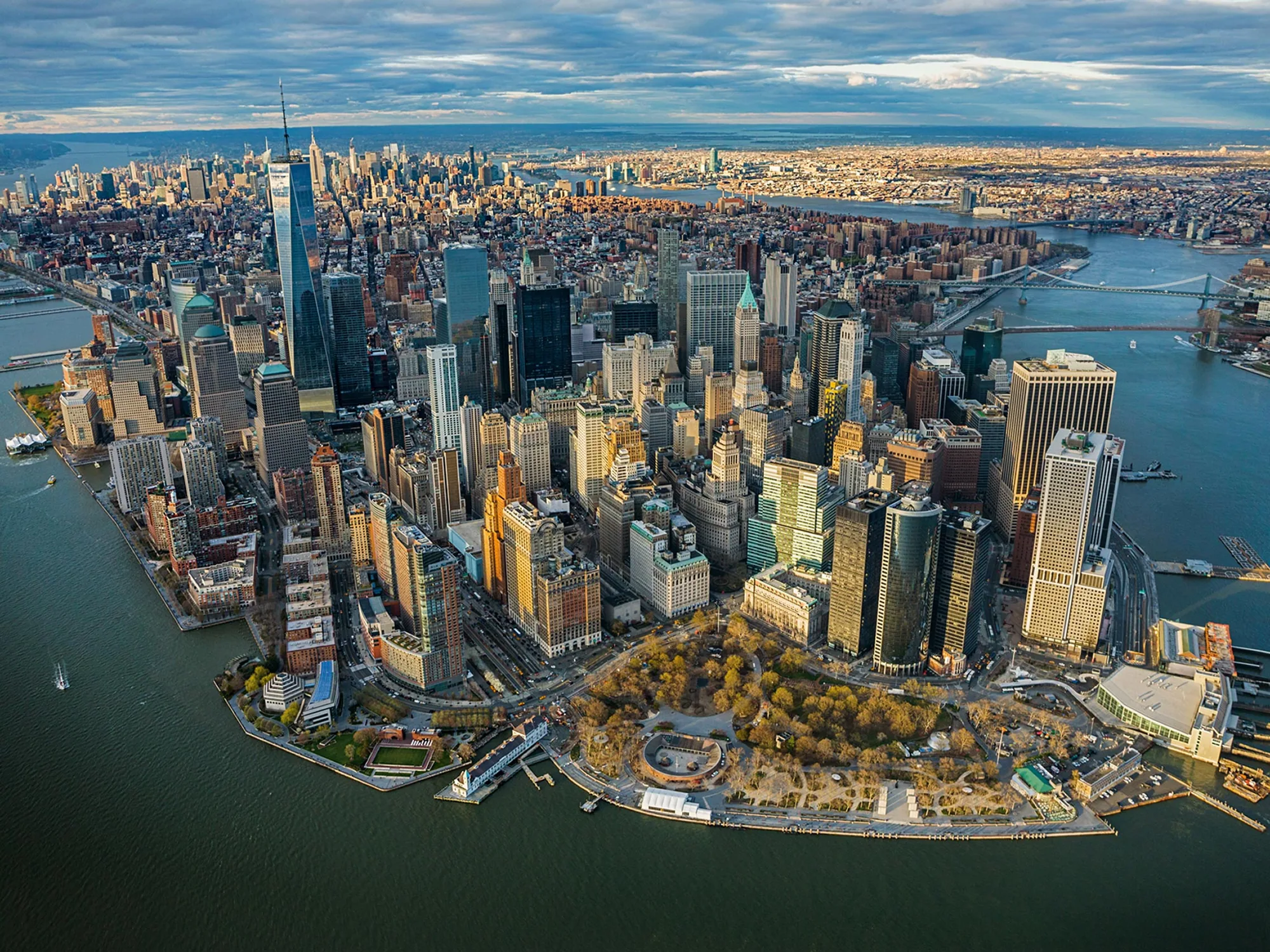
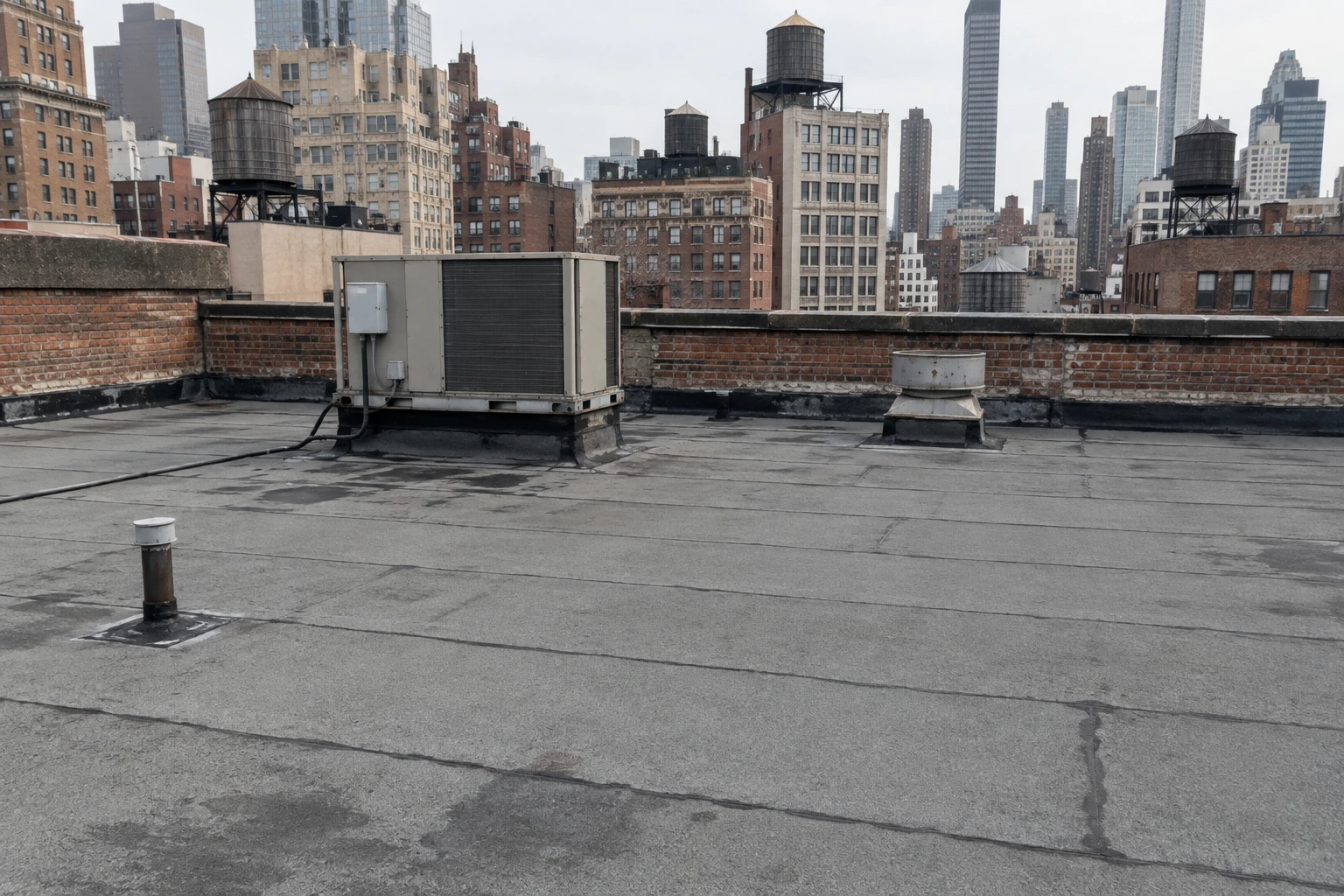
It fits small to mid-sized flat roofs with many penetrations and little chemical exposure, such as the roofs of walk-up apartment buildings, mixed-use buildings with a shop below, and the lower roofs of setback towers. Prewar five and six story tenements and apartment buildings dominate Washington Heights, Inwood, the East Village and the Lower East Side, so low-slope flat roofs on multifamily buildings are common there. Corlears Hook on the Lower East Side had some of the first tenements in the city, built in 1833, so the multifamily stock in that district is old, and each building's roof history has to be read from the roof itself.
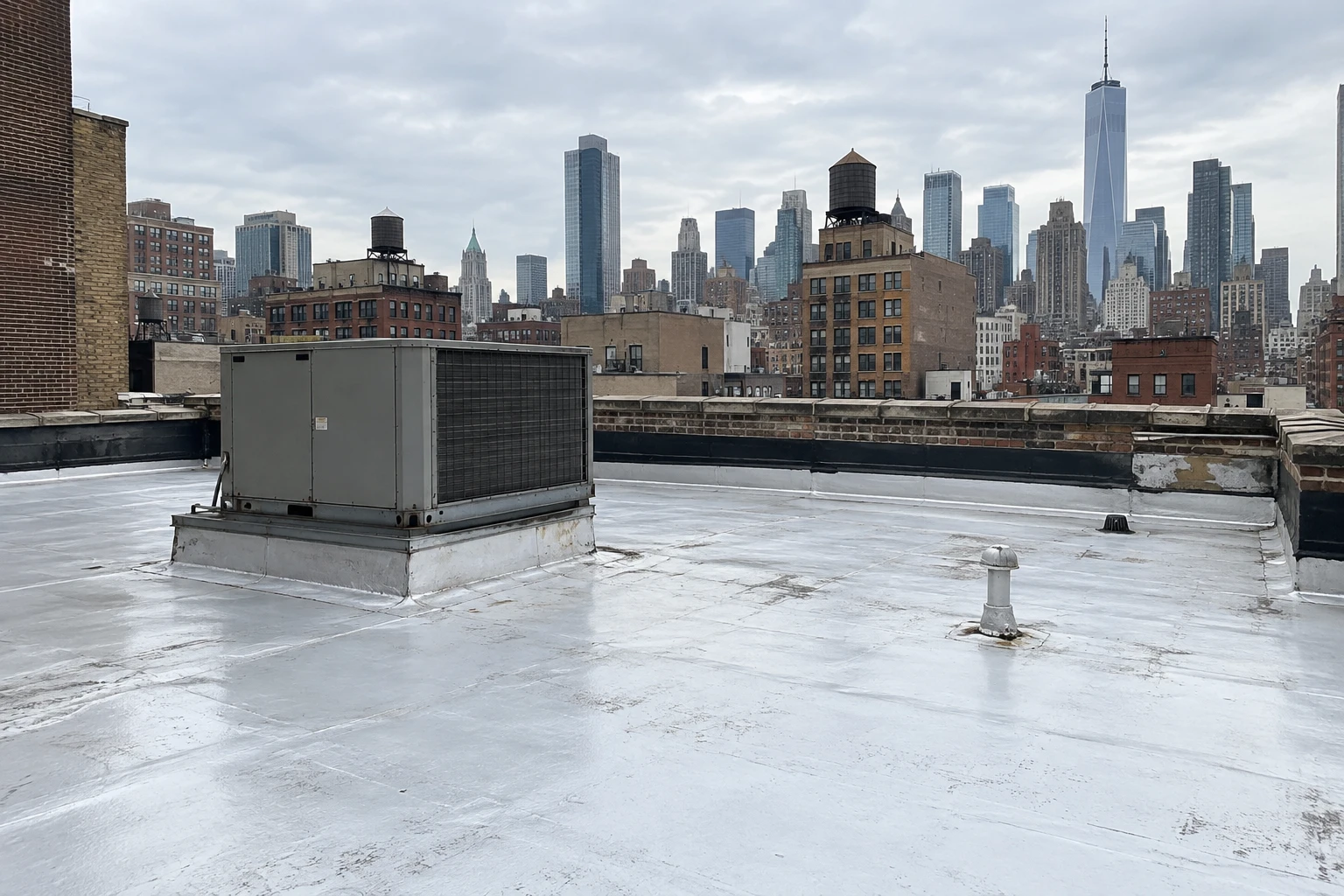
Black EPDM absorbs heat, and a white-surfaced version reflects it. The choice follows the building's cooling load and the owner's preference, and a cool roof installation may point to white EPDM or a different membrane altogether. Where there is exposure to grease, PVC is the stronger choice.
Is it adhered, mechanically attached or ballasted?
Three methods are used. A fully adhered sheet bonds to the substrate with adhesive and resists wind well, which suits parapet-heavy roofs where uplift concentrates at the edges. A mechanically attached sheet is fastened in battens or plates and goes down quickly. A ballasted sheet rests under stone or pavers, and its weight is the limit (a modified bitumen cap sheet is the usual alternative where the deck cannot carry stone): many older buildings cannot carry it, and a survey of the structure decides.
Wind governs the choice at the perimeter. Parapets and corners see the highest uplift, and the strongest gust Central Park has recorded, 78 mph on December 2, 1974, shows what they must resist, so we add adhesive or fasteners there. On roofs that must also carry pavers for a terrace or an array, ballast may be part of the design, and the engineer confirms the structure. The file gets the attachment method and pattern, plus photographs taken before the sheet hides the fasteners.
How are EPDM seams made, and where do they fail?
EPDM seams are joined with either liquid adhesive or splice tape. The surfaces must be clean and dry, primer must be applied correctly and the joint must be rolled with firm pressure. Poor preparation produces a seam that looks fine and peels months later. Cold, damp or dusty conditions are the usual cause, so our crew checks surface temperature and moisture before any seam is made.
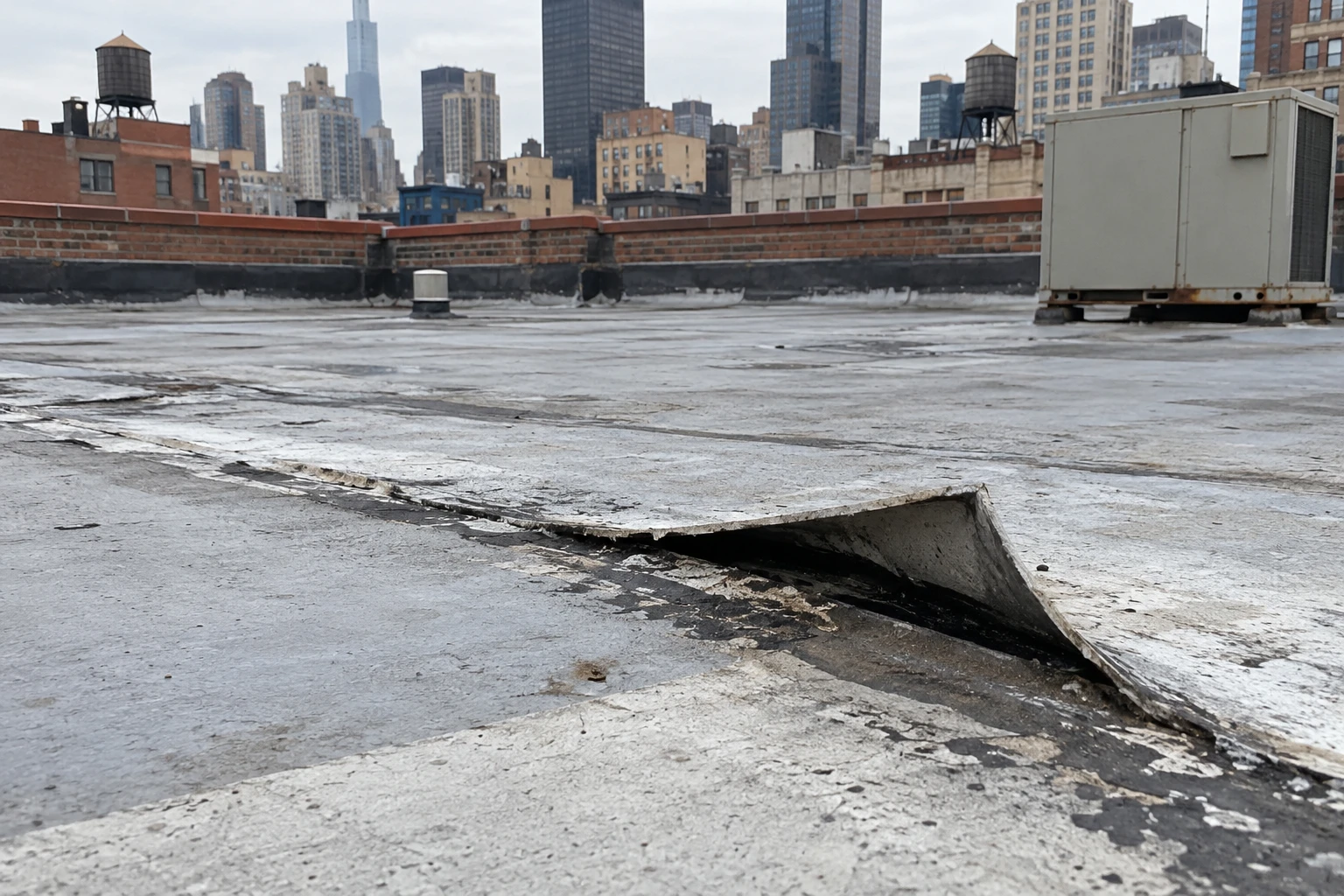
Seams are tested by probing, and by peel tests on scrap pieces spliced in the same conditions as the roof seams. On an older roof the weak spots cluster at inside corners, at patch edges and wherever a seam crosses a lap in the sheet. A seam failure repair removes the old tape or adhesive, cleans the surface and applies a new strip with overlap. If the seams across a large area have opened, the membrane has aged enough that replacement is more sensible than repeated repair.
How does EPDM handle freeze-thaw and heavy rain?
EPDM stays flexible at low temperatures, which is a reason it has been used in northern cities for decades. Winter extremes in Central Park include minus 15 F on February 9, 1934 and a 27.3 inch snowfall on January 23, 2016, against an annual snow average of 29.8 inches. A flexible sheet moves with the roof as it contracts, and the seams carry less stress than in a stiffer membrane.
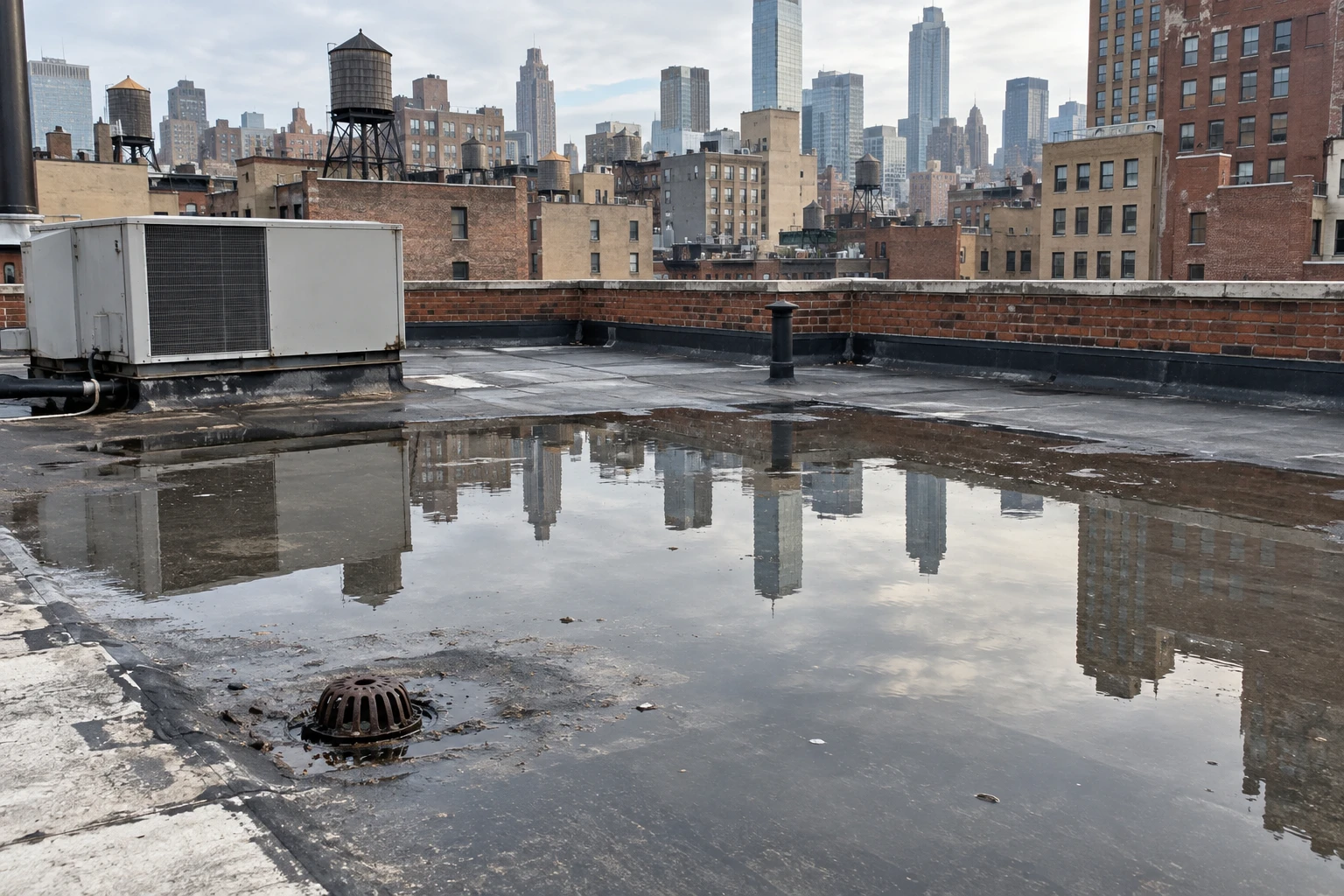
Rain exposes drainage. Hurricane Ida brought a record 3.15 inches of rain in one hour in 2021, and a sheet on a roof that cannot drain will carry water for days. We measure ponding depth after rain and propose tapered insulation, a new drain or a cricket where water stands. A ponding water repair addresses the cause, not just the stain below it. Snow load is a structural question, so we flag any roof that drifts heavily against a bulkhead and send the finding to the building's engineer.
How long does an EPDM roof last, and what ends it?
Service life depends on thickness, exposure, traffic and maintenance, and a promise of years would be a guess. What ends an EPDM roof is usually one of four things: shrinkage that pulls the sheet from flashings, seam failure across large areas, punctures from traffic and equipment, or saturated insulation underneath. The survey checks each and assigns a condition rating.
Repairs extend life when the problems are local. A roof with scattered punctures and a few open seams but dry insulation can often be patched. A roof with shrinkage at every edge, hardened rubber that cracks when flexed and wet insulation over a wide area should be replaced. The roof condition report shows which category the roof falls in and what each path costs over the next several years.
What goes into the owner's file?
The straightedge measurements at the edges, the moisture map, the seam test results, the attachment pattern, the product data and the warranty terms. A full replacement adds the sustainable roofing zone plan required by Local Laws 92 and 94 to the same file. Keep the photographs of each flashing before it was covered, because those are the details a future repair needs. A short log of every patch, with its location marked on a roof plan and the date, turns scattered repairs into a pattern that the next survey can read. When three patches cluster around one curb, the curb is the problem, and the file shows it before the fourth leak does.
Commercial Roofing Questions
Can a shrunken EPDM roof be repaired?
Sometimes. A limited amount of shrinkage can be repaired when the flashing can be re-adhered or extended, and that repair holds for a time. If the sheet has pulled back across most edges and the rubber is hard, the membrane has aged out and replacement is the better value. The gap measurements and a flex test show which case applies.
Is white EPDM worth the extra cost?
It reflects more sunlight and lowers the roof surface temperature, which helps a top floor with a high cooling load. Whether the saving justifies the added cost depends on the building's energy use and the length of ownership. We show the options side by side, with the reflectance data.
What does ballast do to the roof structure?
Stone ballast is heavy, and it adds a constant load to the deck. On older buildings the structure may not have the capacity, and the engineer must confirm it before ballast is specified. Adhered or mechanically attached systems avoid the load.
Can EPDM be installed in cold weather?
The sheet itself handles cold, but adhesives and tapes need minimum temperatures to bond. We check surface temperature and moisture for each seam, use cold-rated products where they are approved and postpone seam work when conditions fall outside the limits. Roof closure at the end of each day remains the rule.