Ponding water damage repair for Manhattan, NY roofs: membrane wear, wet insulation, added deck load and the slope corrections that stop standing water.
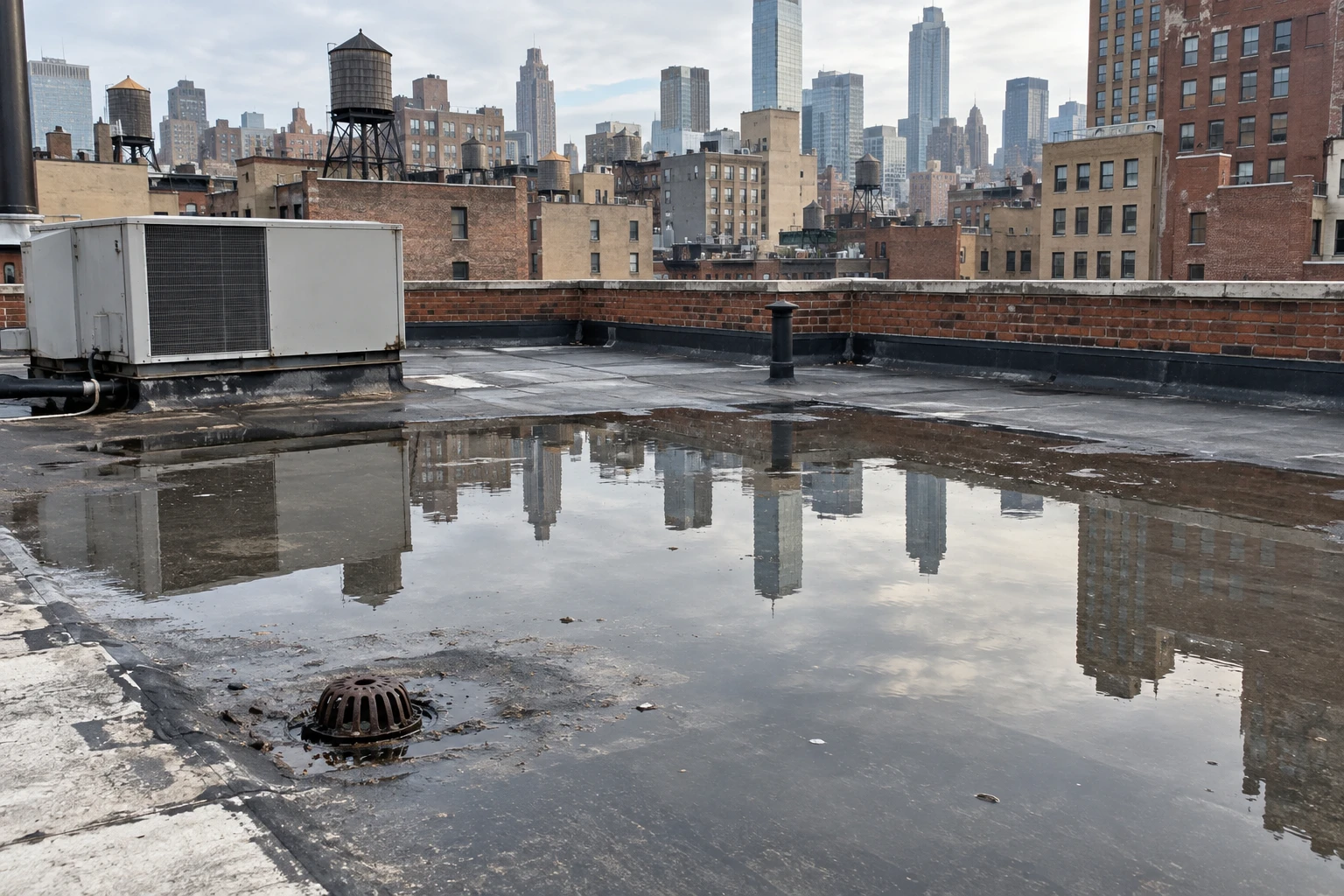
One inch of water standing on a roof weighs about five pounds per square foot, and on a ten-foot-wide pond that is a load the deck was never asked to carry as a constant. The measurement is simple to take and easy to overlook: a ruler at the deepest point, the date and the hours since the last rain. Ponding on a Manhattan roof is rarely a cosmetic problem. It wears the membrane, saturates insulation, loads the structure and, over a freezing winter, cracks what it touches. Photograph the pond with a ruler in the frame and record how long it lasts.
We measure, repair and correct ponding on commercial roofs, and we document the cause and the cure.
What does standing water do to a membrane and what lies under it?
Water that stays for days works on the membrane in several ways. It leaches plasticizers from some single-ply sheets, grows algae and organic film that hold moisture against the surface, and concentrates ultraviolet exposure at the waterline. Seams under a pond are under constant hydrostatic load, and a marginal seam admits water that a drained roof would shed.
Beneath the membrane, saturated insulation loses its thermal value and adds weight. Metal decks corrode from the underside when moisture reaches them, and the damage spreads from the ponded area outward. A moisture survey maps the wet insulation, and cores confirm it. In many cases the stain on a ceiling lies far from the pond that caused it, because water travels along the deck. Our infrared moisture survey traces the path. Record the location of each pond on the roof plan.
Why do roofs pond in the first place?
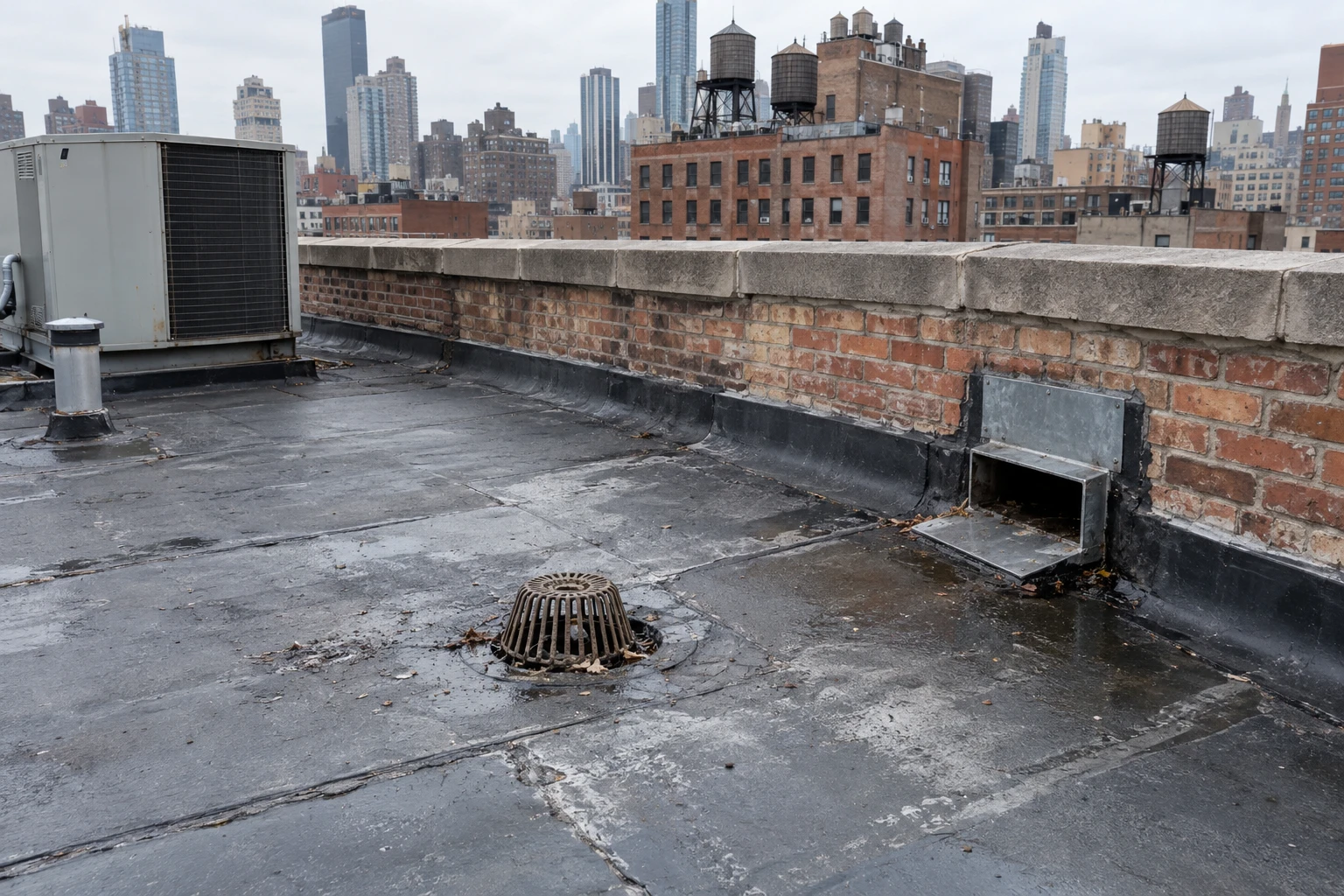
There are four common causes. The first is a blocked or undersized drain: leaves, debris or a collapsed leader holds water on the roof. The second is a low spot from deck deflection or settled insulation, where water collects regardless of the drain. The third is a drain set higher than the surrounding surface. The fourth is a built-up roof that has gained layers over many reroofs, hiding the original slope.
Flat roofs on prewar five and six story buildings, from Washington Heights down to the East Village, have had many years to settle, so low spots there can be long-standing. Ida's hourly peak of 3.15 inches on September 1, 2021 exposed every low spot in the city. The survey separates the causes so the fix addresses the right one. Measure the pond again after the next heavy rain.
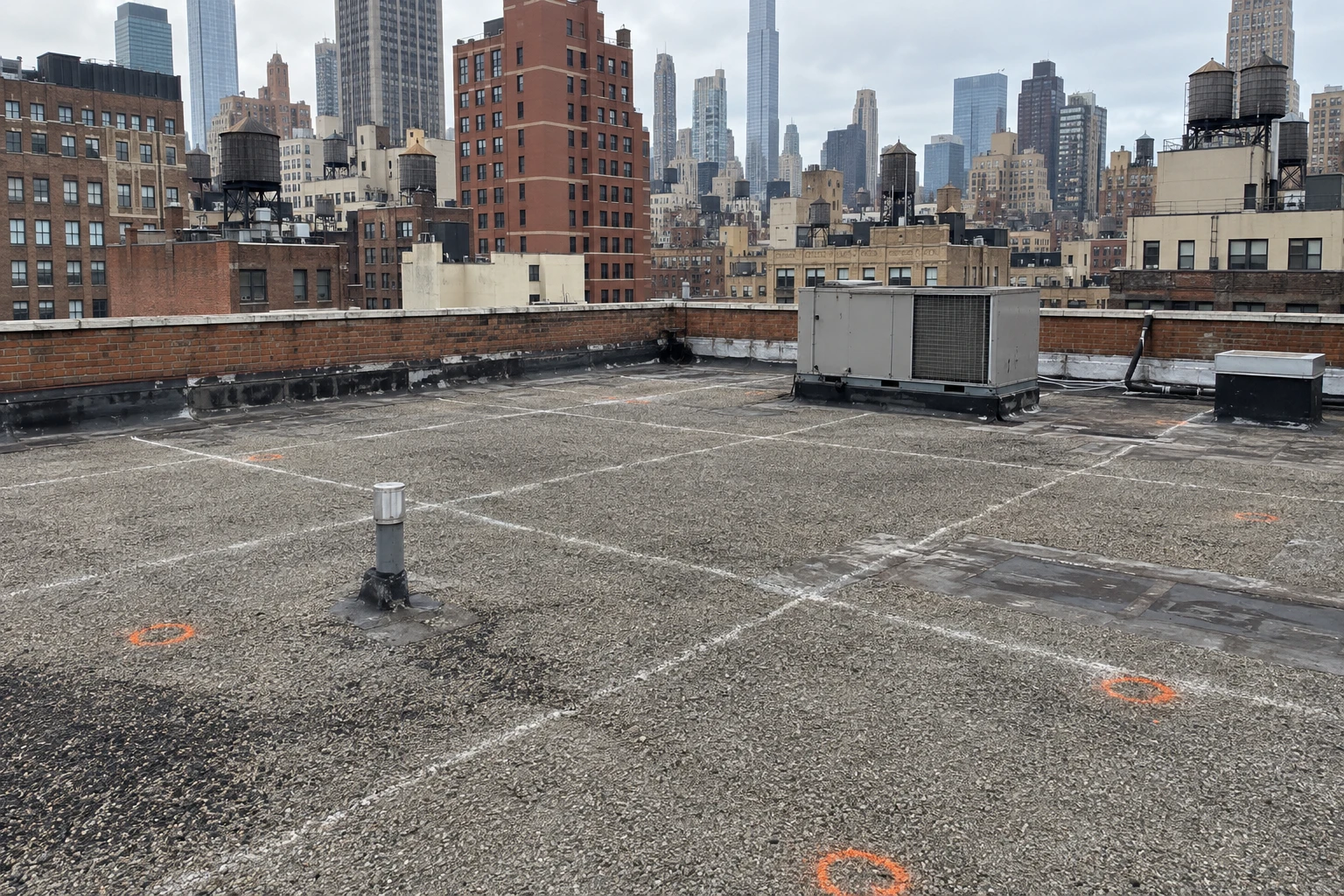
Equipment adds its own ponds. A rooftop unit whose curb interrupts the roof's natural fall holds water back on its uphill side, and a walkway pad laid over a drainage path produces the same dam. The survey traces water from the high points down to the drains and marks wherever something stops it. A pad can be moved, a saddle added behind a curb or a relief channel cut through the pad, and the pond often disappears for little money without any new membrane.
Which repairs actually remove standing water?
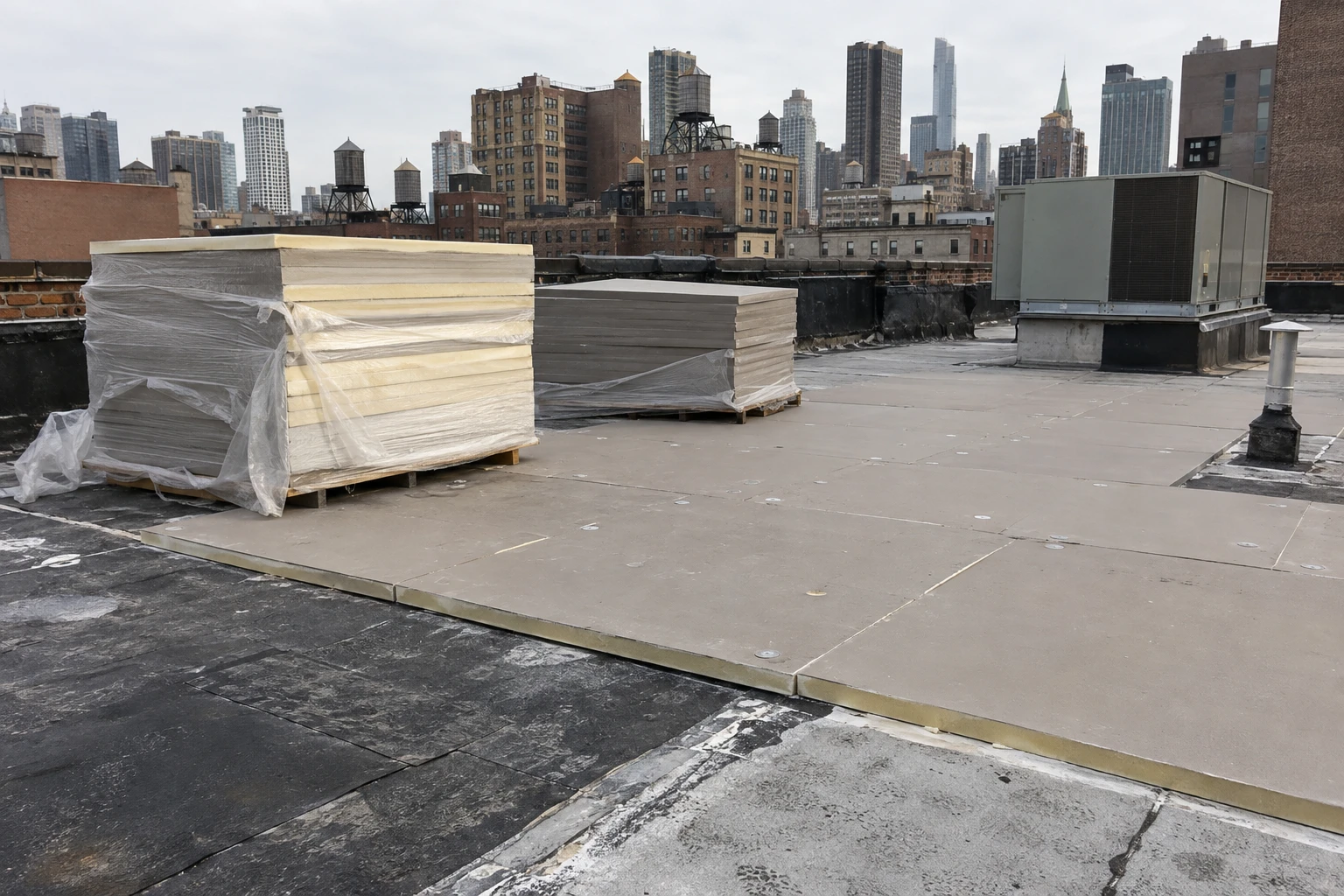
The repair follows the cause. A blocked drain is cleared and its strainer replaced. A collapsed leader is camera-inspected and repaired from inside, working with the building engineer. A low spot is filled with tapered insulation or a cricket that sends water to a drain, and a drain set too high is lowered or supplemented with a new one. Where the roof must be replaced, the new design includes a tapered plan.
Each option has cost drivers: access, the area to be built up, the height available at parapets and thresholds, and the need to open the ceiling below. Clearing and resizing the roof drains and scuppers handles the outlets, and a roof insulation and cover board design handles the slope. A water test after the repair shows whether the pond is gone. Keep the before and after depth measurements with the file.
Order of work matters in an occupied building. Filling a low spot means working over the insulation, so the work goes in sections and each one is closed before the shift ends. The added height at the pond climbs toward the edges, which is why parapet and door heights are checked in advance and flashings are raised wherever the build-up demands it. Where the ceiling below shows staining, the engineer decides whether to inspect the deck from inside. We photograph the underside while access is open.
How does freezing make ponding worse?
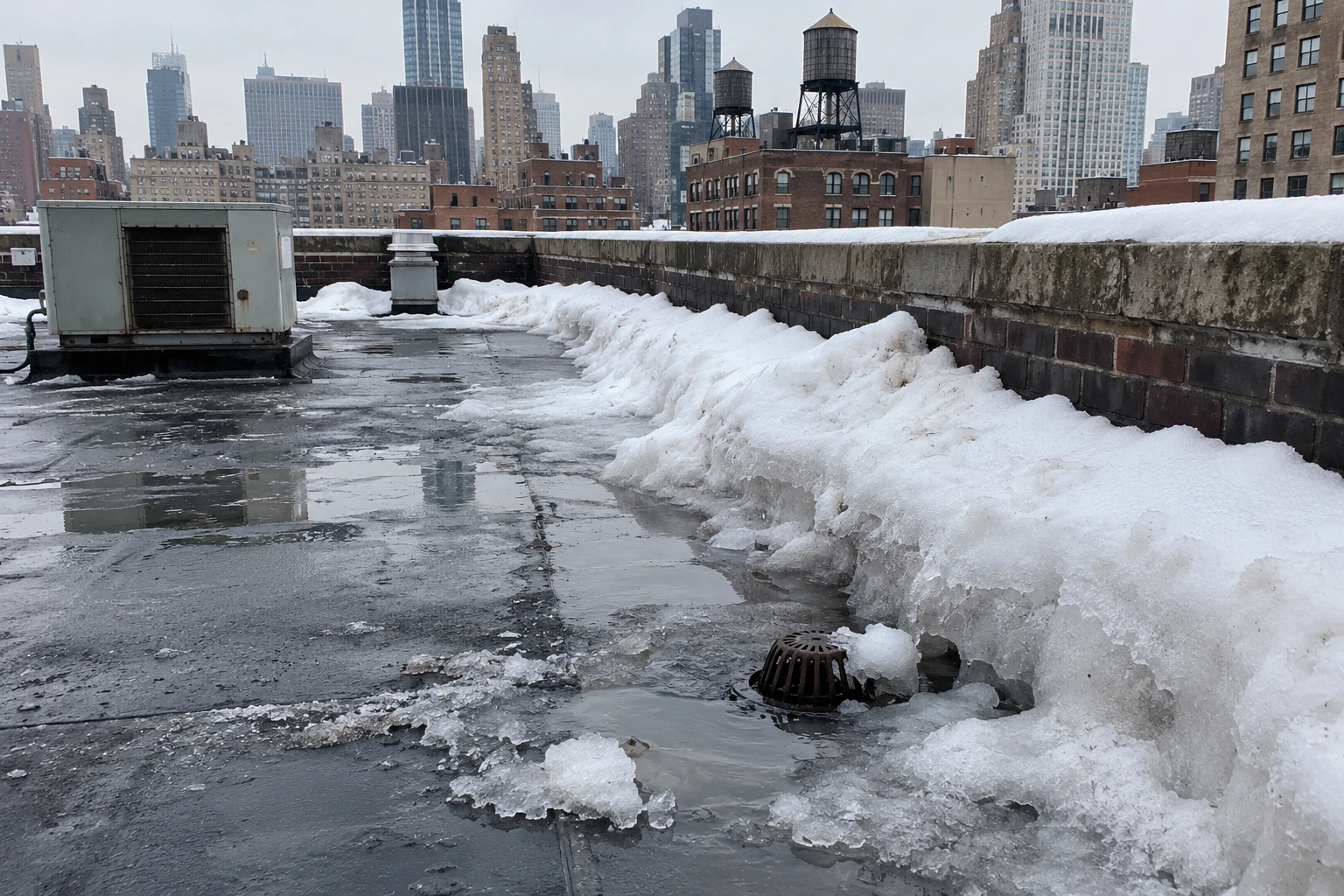
Winter in Central Park brings 29.8 inches of snow in an average year, and the record low of minus 15 F came on February 9, 1934. A pond that freezes expands, lifts the membrane at seams and flashings and bonds ice to the surface. When it thaws, the water drains away from the lifted section but leaves a path behind it. Repeated cycles open seams that were tight in autumn.
Snow that melts and refreezes also blocks drains, which creates new ponds on top of old ones. We inspect and clear drains before the first freeze and after each major snow, and we avoid chipping ice from the membrane. For damage already done, see how snow and ice damage repair addresses lifted seams. Photograph any ice on the roof before it is cleared.
How does ponding appear in the reserve study and the lease?
A roof that ponds has a shorter service life than one that drains, and the reserve study should show it. Warranty coverage on ponded areas is limited by many manufacturers, so ignoring a pond can cost an owner the warranty on that section. Tenants may also object when a leak follows a pond and the lease gives the roof to the landlord.
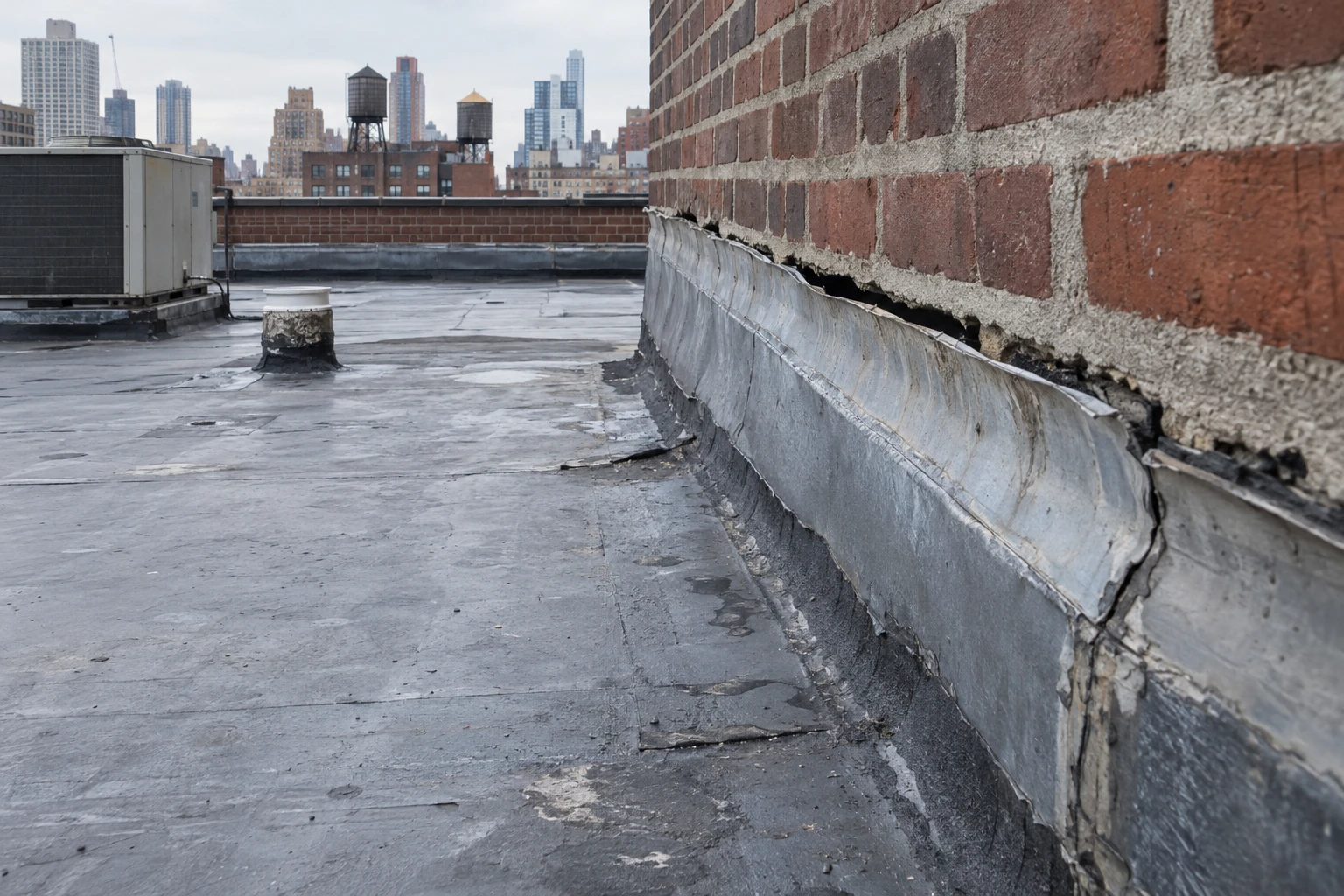
We record each pond with its depth, area and cause, and we attach the record to the condition rating. A flashing failure under a pond is noted separately. For owners in Washington Heights and other districts of older buildings, the record helps rank which roof to correct first. Share it with the property manager and the lender.
Verification closes the repair. After a build-up or a drain change, we wait for the next measurable rain, or run a controlled water test, and measure depth and drying time at each corrected spot. The new numbers go beside the old ones in the file. If a pond remains, the survey reopens the cause rather than assuming the repair held. A roof that sheds water within the first day after rain has met the standard we set for the work, and the log shows it.
Commercial Roofing Questions
How long can water stand before it is a problem?
Water still standing after forty-eight hours is the usual measure. Shallow moisture that dries within a day is common. A pond that returns after every rain is a defect to be corrected.
Will a coating solve ponding?
Some coatings handle ponding better than some membranes, yet none of them removes the water or its weight. Slope or drain still needs correcting, or the coating wears away at the waterline.
Is the deck strong enough for the weight of the water?
That depends on the structure, and a deep or large pond calls for a structural engineer's answer. Depth and area are reported, and the engineer checks the deck.
Can ponding cost the owner a membrane warranty?
Many warranties limit or exclude ponded areas, so the terms deserve a careful read. Ponding conditions are recorded, which shows the owner where coverage may be at risk.
What should be done between rain and repair?
Clear drains safely, photograph the pond, and avoid walking on wet areas that may hide soft insulation. Schedule the survey while the pond is visible.