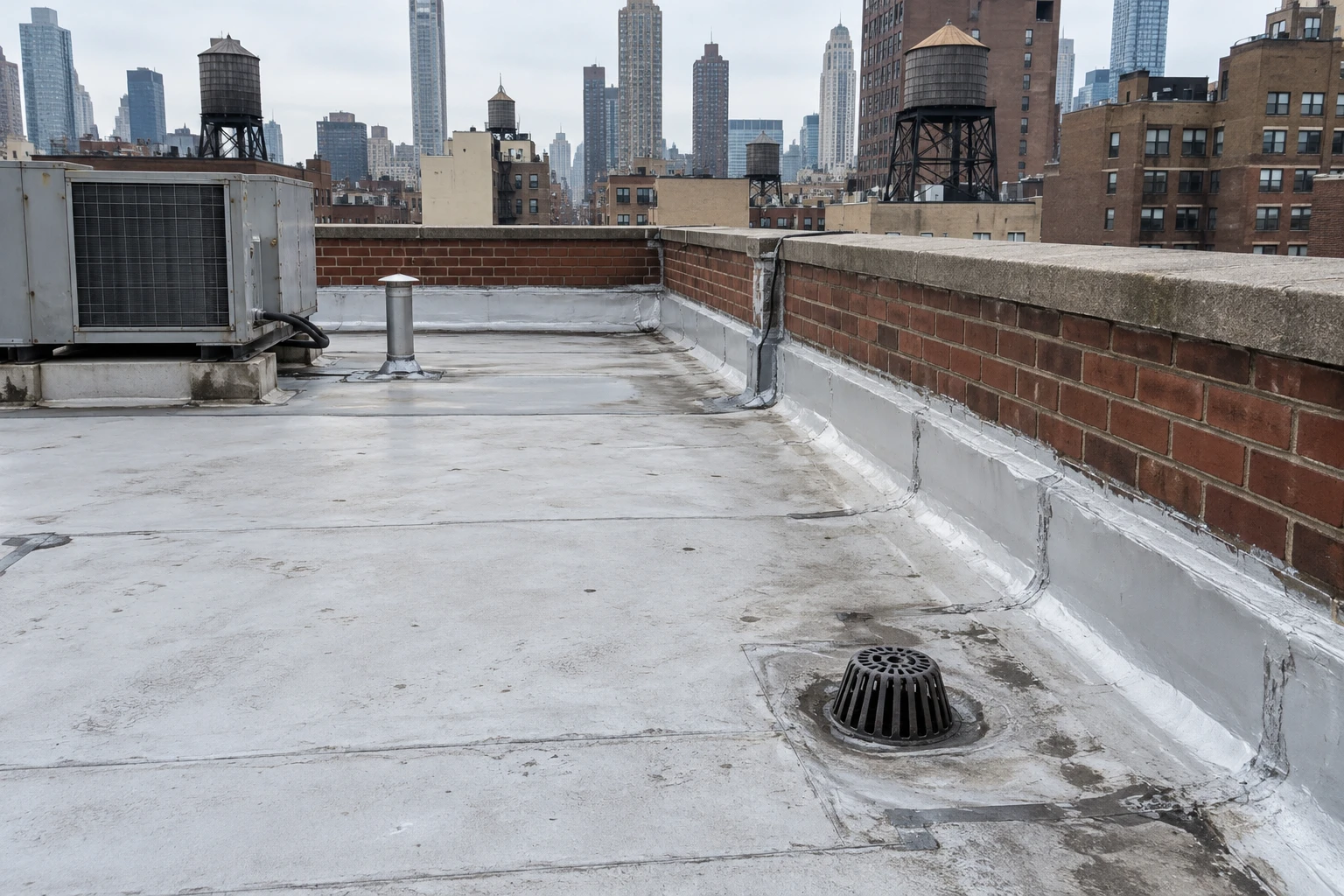
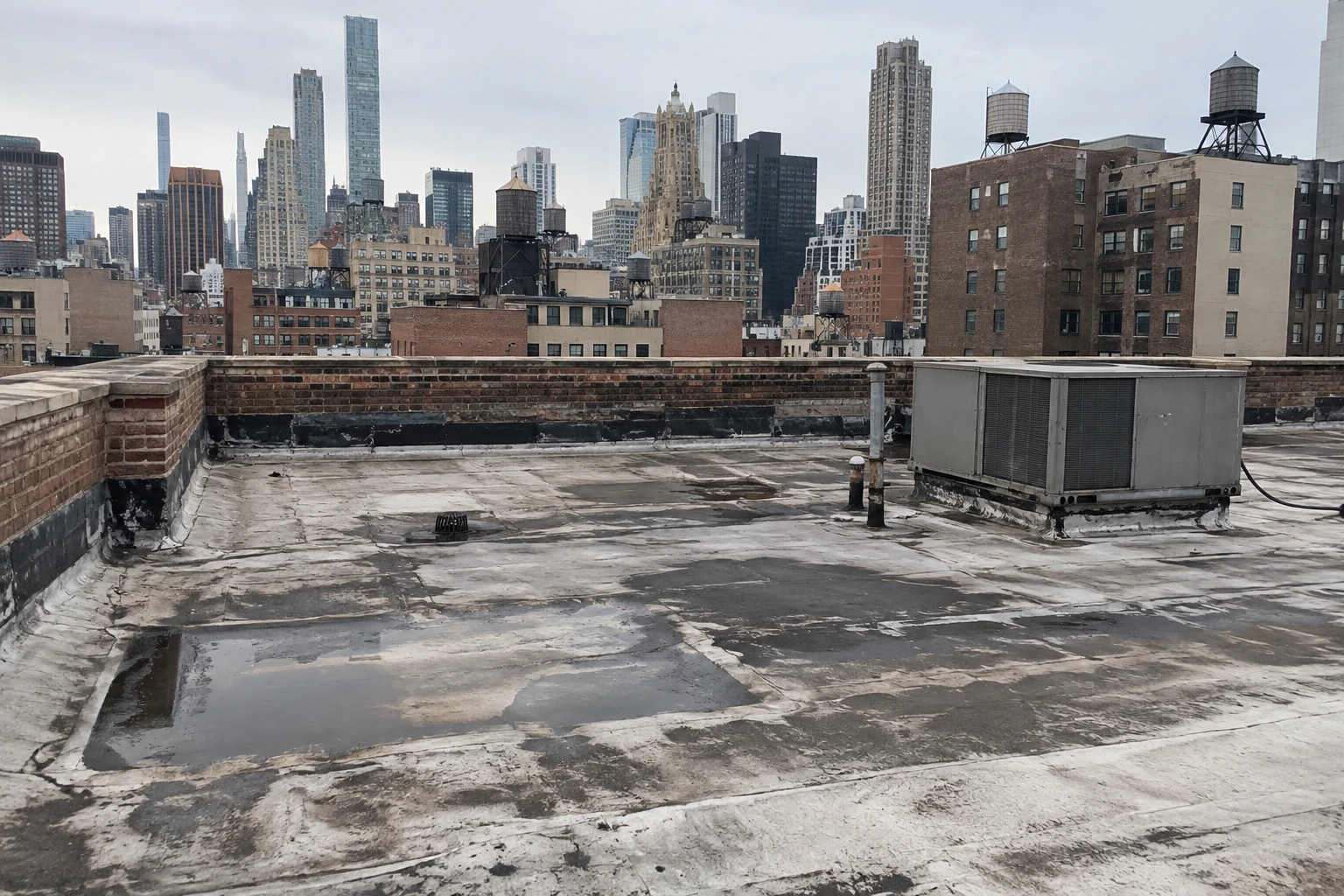
Roof drain, scupper, cricket and ponding correction for Manhattan, NY buildings, with leader testing, ponding depth records and tapered insulation options.
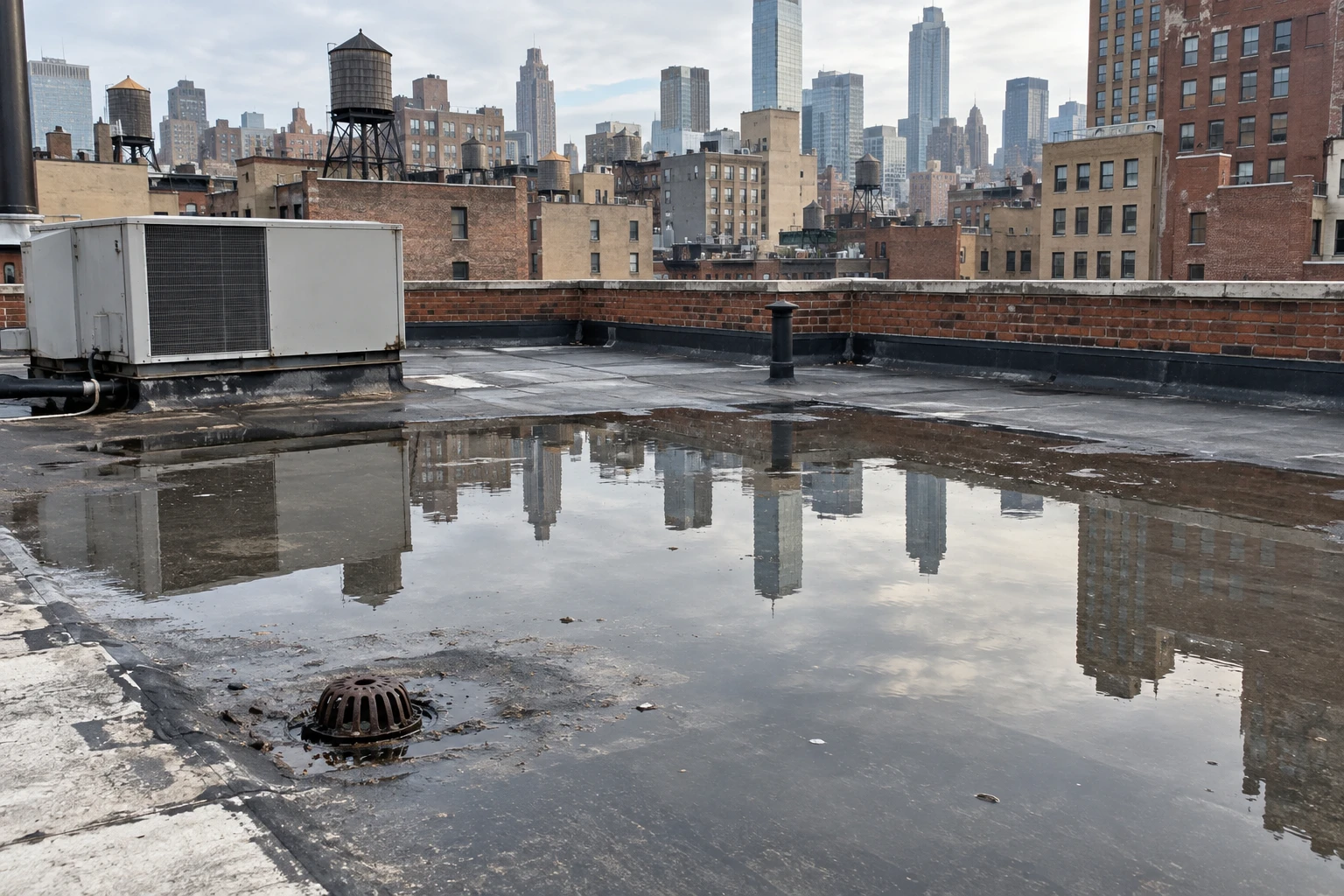
A ponding depth of one and a half inches, still standing forty-eight hours after the last rain, is a finding with a clear consequence: the membrane under it is under constant water load, the insulation beneath is a candidate for moisture, and the deck has an extra weight to carry. Standing water is not a cosmetic defect on a Manhattan roof. It is the sign that a drain, a leader or the slope itself is not doing its job. Drains are small and the roof is crowded, so one blocked strainer can control the fate of a whole section. Measure the depth with a ruler at the lowest point and record the date.
We clear, repair, replace and relocate drains and scuppers, and we correct the slope that feeds them.
How much water does a drain have to handle in this city?
Central Park averages about 49.5 inches of precipitation a year, and the extremes are what test a drain. On September 1, 2021 Ida pushed a record 3.15 inches of rain through the city in a single hour, 7.13 inches in Central Park by day's end, and prompted the Weather Service's first flash flood emergency for New York City. A drain is sized for a design rainfall rate, and any hour above that rate leaves water standing on the roof until the leader catches up.
A clean, correctly sized drain system rides out that hour with a few inches of temporary depth near the inlets. A partly blocked system holds the water for a day or more, and the extra duration is what forces water through marginal flashings. The difference between the two is often a handful of leaves, a collapsed section of leader or a strainer that was never replaced. A ponding water repair begins with the drain, and the slope comes second.
How is a drain system tested before anything is replaced?
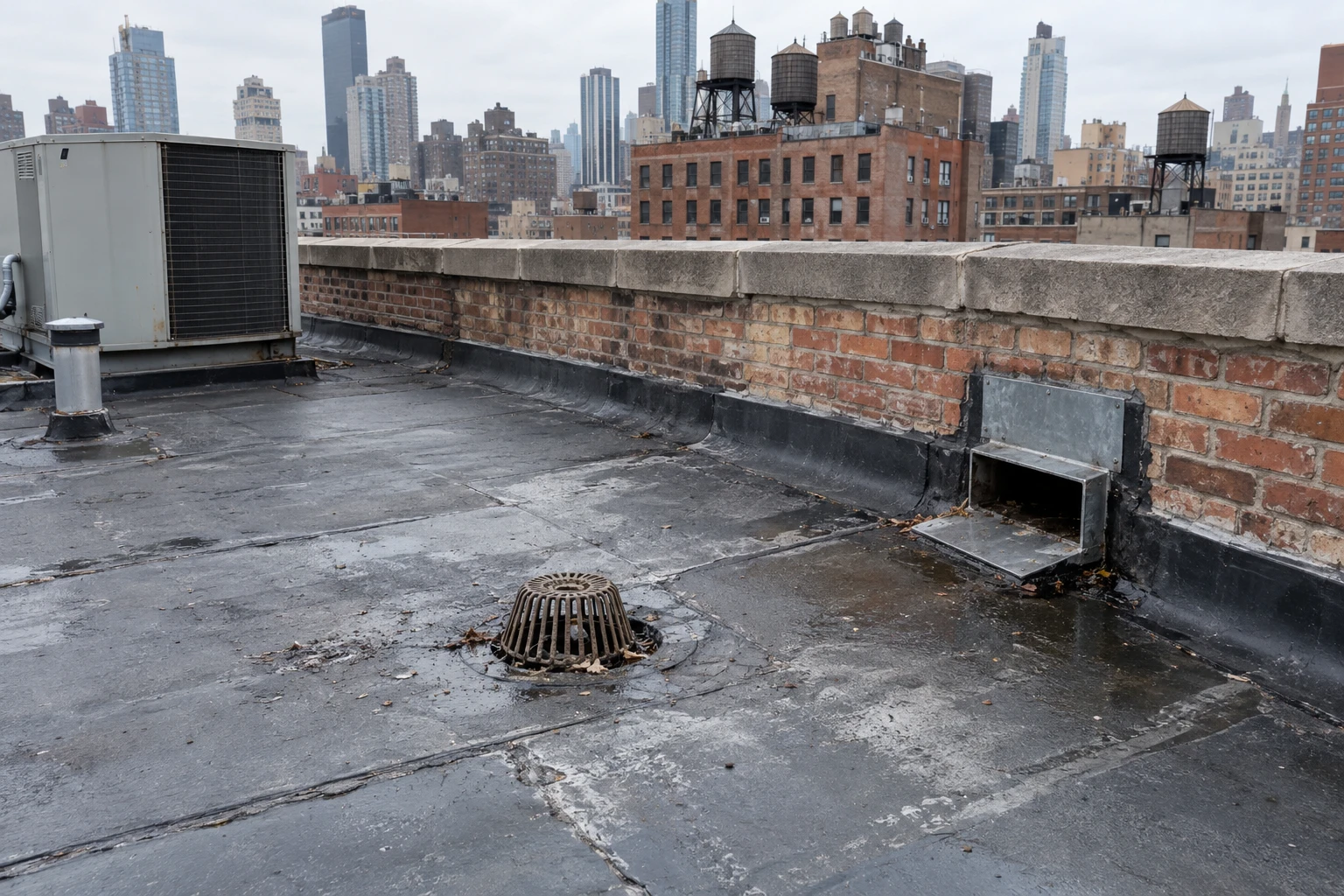
The test begins at the inlet. We remove the strainer, check the bowl for cracks and debris, and confirm the clamping ring is tight against the membrane. Then we flush the roof drain leader with a measured volume of water and time how long it takes to clear. A slow leader is camera-inspected for a bellied pipe, a root or scale intrusion, a collapsed joint or a connection that has separated inside the building.
Scuppers are checked for size, height and the condition of the surrounding flashing. A scupper set too high leaves a permanent pond behind it, and one set too low can drain a roof past its insulation. Overflow scuppers and secondary drains are verified against the design, since a secondary drain that is blocked gives no warning until the primary fails. Each location is logged on the roof plan with a photograph and a depth reading. Keep the flush times with the file, because a repeat test later shows whether a leader is deteriorating.
When is the problem the slope and not the drain?
If the drain is clear and water still stands, the deck or the insulation has a low spot. Causes include deflection of an old deck, settled insulation, built-up layers added over many reroofs, and a drain that sits higher than the surrounding surface. Prewar blocks in the East Village, the Lower East Side, Inwood and Washington Heights are dominated by low-slope flat roofs, which makes a slope check part of the first walk.
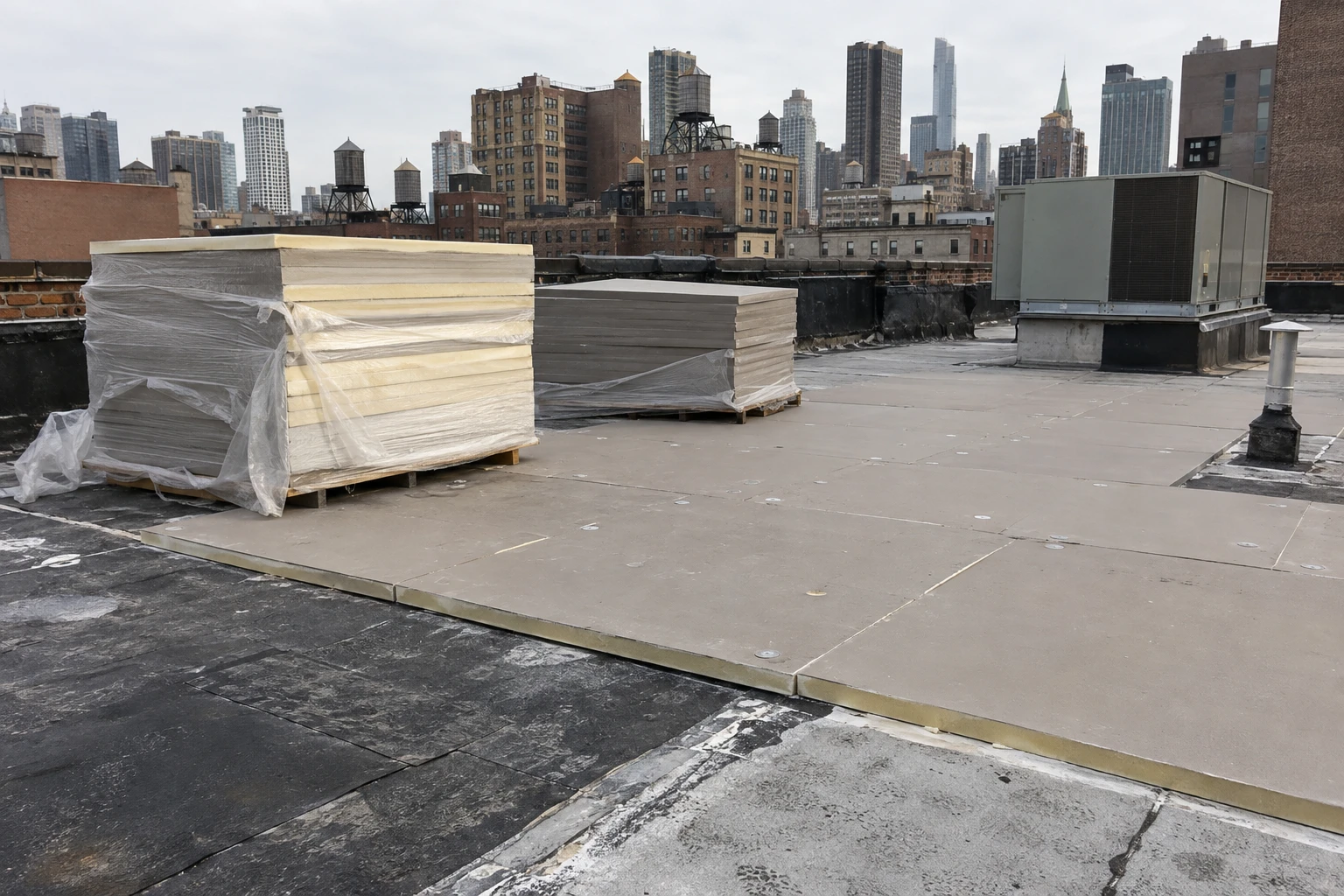
The correction is a cricket, a tapered insulation build-up or a lowered drain body. A cricket is a small raised ridge that divides water toward two drains, and it is the usual fix behind a curb or a bulkhead. Tapered insulation, laid in a plan, builds a slope of a quarter inch per foot toward the outlet and is part of a roof insulation and cover board design. Where a full tear-off is planned, the tapered plan is drawn for the whole roof. Record the slope direction on the plan so the next crew builds on it.
The test after the correction repeats the test before it. We pour a measured volume near the repaired area, time the clearance and photograph the water path, then compare the numbers with the first set. The comparison goes in the file, so the owner can show a lender or a buyer that the ponding was measured, corrected and verified.
What do freeze-thaw and snow do to a drain?
In Central Park, snow totals about 29.8 inches in an average year, and the 27.3 inch record snowfall arrived on January 23, 2016. Melting snow produces a steady flow, and a drain frozen at its throat sends that flow across the roof. Ice in a leader can crack a fitting, and the crack often shows up as a stain on a ceiling months later. Roofs on the shaded side of a tall neighbor melt slowly and refreeze overnight, so the same drain freezes repeatedly.
We check for heat tracing where it was installed, insulate exposed leader runs where feasible and clear the inlets before the first freeze. A preventive roof maintenance program carries these tasks on a calendar, with an autumn visit before the cold and a spring visit after the thaw. Note in the log which drains froze, because those are the first to receive upgrades.
What drives the cost of drain and scupper work?
Cost is driven by access, the number of drains, the depth of the problem and the finish required. Clearing strainers is a small item. Replacing a drain body means cutting the deck opening cleanly, setting a new body, reconnecting the leader and flashing the membrane to it, and that takes a day per drain with a hoist. Camera work and leader repair inside the building require coordination with the superintendent and sometimes the tenants beneath.
A tapered build-up is the largest item and the one that most changes the roof's performance. Landmarked buildings add review for a scupper or conductor that is visible from the street, and the SoHo-Cast Iron district alone has about 500 buildings under that review. For owners in Tribeca and nearby districts, we confirm the visible parts before design. Assets with documented drainage can be compared building to building in a roof capital plan, which turns a list of ponds into a ranked budget.
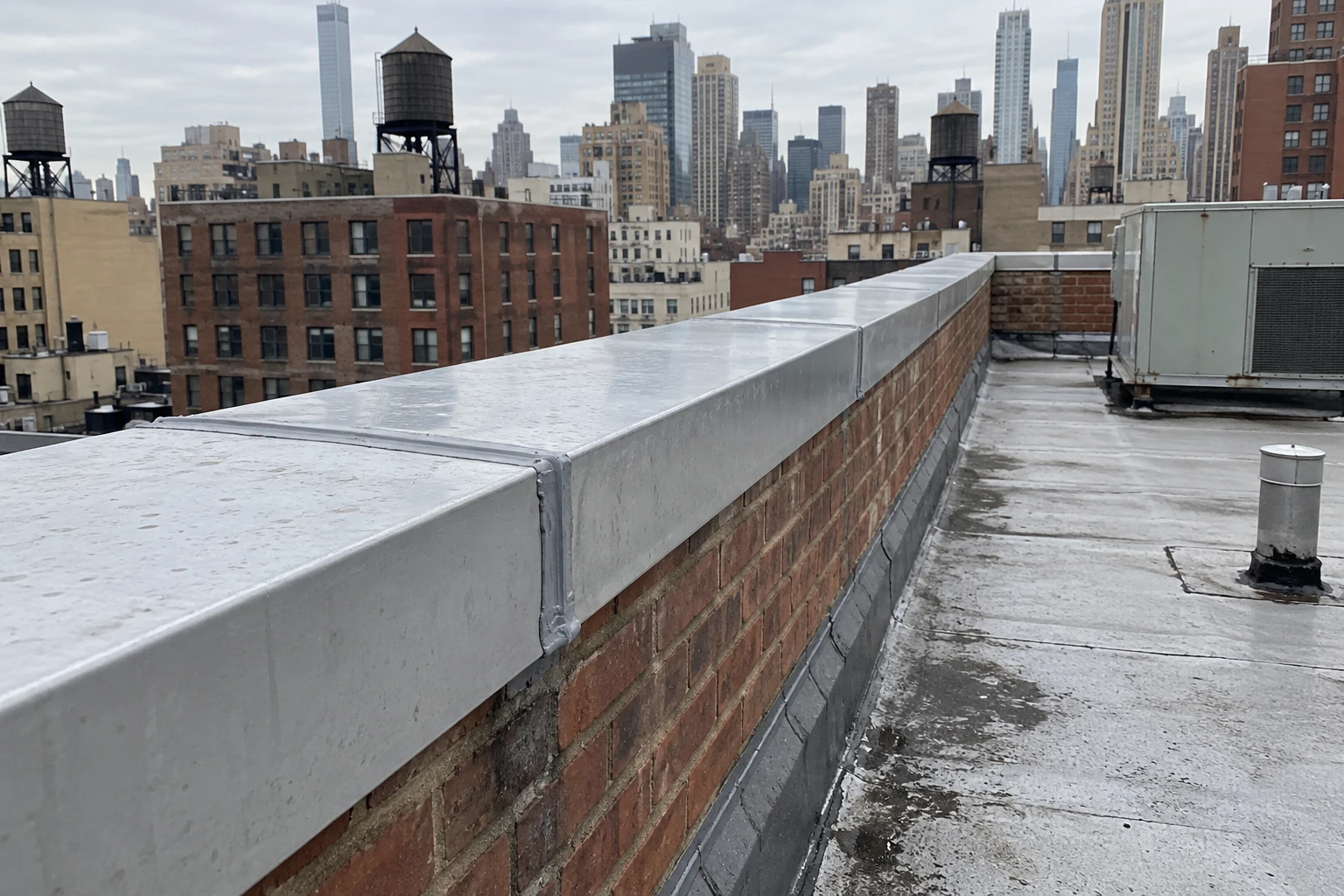
Coordination matters on the parapet side too. A scupper cuts through the wall, so the coping, the counterflashing and the conductor head must be set together with the opening. We detail that junction with the edge metal and coping work, so a new scupper does not become a new leak point at the wall.
Commercial Roofing Questions
How long may water stand on a roof before it counts as ponding?
Water still standing forty-eight hours after rain is the usual line. A film of dampness that dries within a day is ordinary on a low-slope roof. A pond that stays, or one deeper than about half an inch at the center, is measured and recorded, and its cause is traced to the drain, the slope or both.
Will adding drains fix a ponding roof?
Sometimes, and only when the roof structure and the building's plumbing allow it. A new drain at the low spot helps if a leader can be reached. Where it cannot, a cricket or tapered insulation moves the water to an existing drain at a lower cost than new piping.
Why does the stain appear far from the drain?
Water travels along the deck and insulation before it appears inside. The leak may start at a drain flange, a failed clamping ring or a seam that stays under water, and a moisture survey finds the entry.
Can a clogged leader damage the building?
It can, since the water has to go somewhere. A leader that is blocked or has collapsed may back water onto the roof or leak into the wall cavity. The camera inspection identifies the break and the repair, and the repair is coordinated with the building engineer.
What should be done before the crew arrives?
Photograph the pond and measure its depth, note when the last rain fell, and gather any drawings of the drain layout. Those three items let the crew start with a plan.