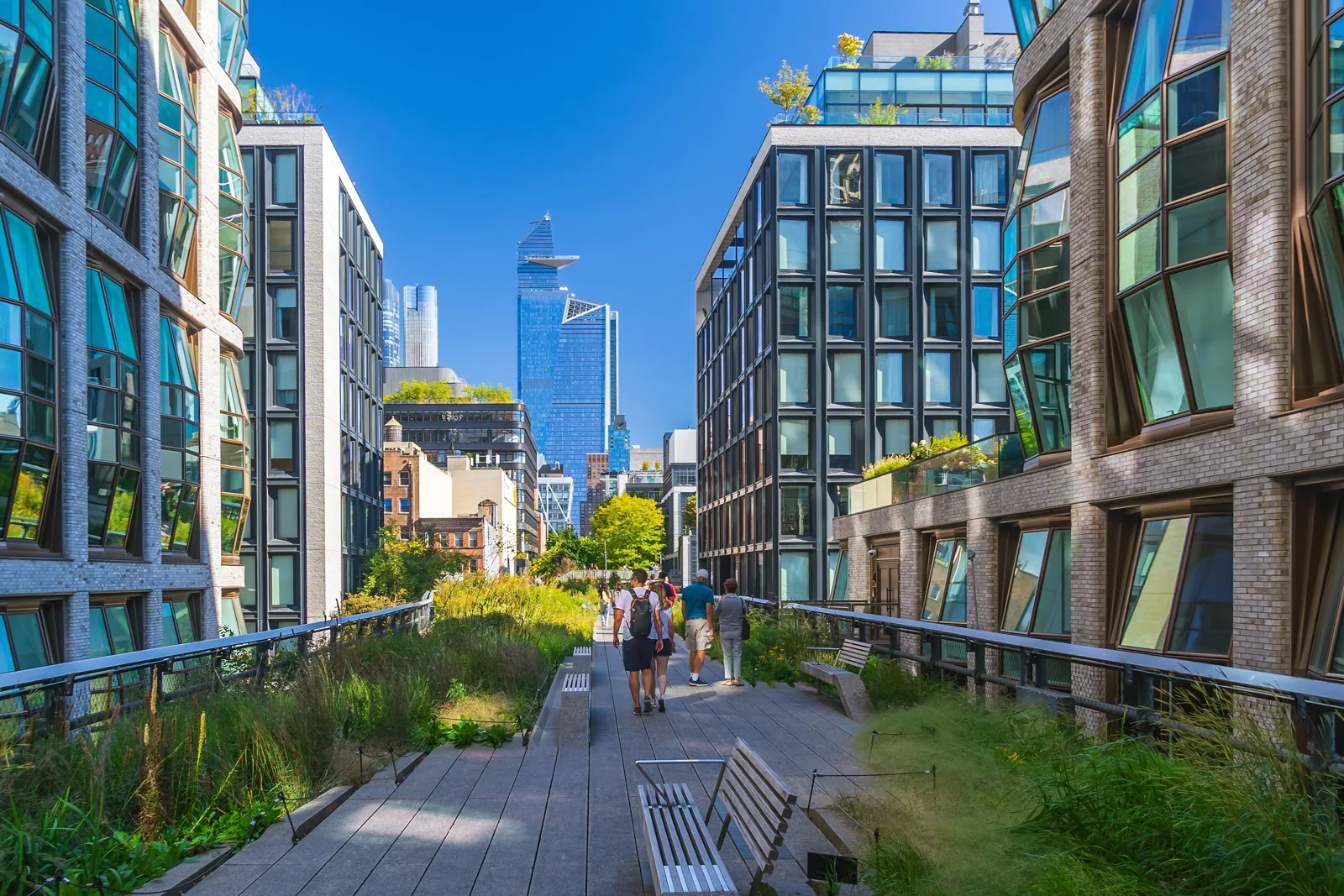
Roof surveys, warranty review and repair for newer Hudson Yards, Manhattan, NY towers, platform-level decks and terraces, with condition ratings and records.
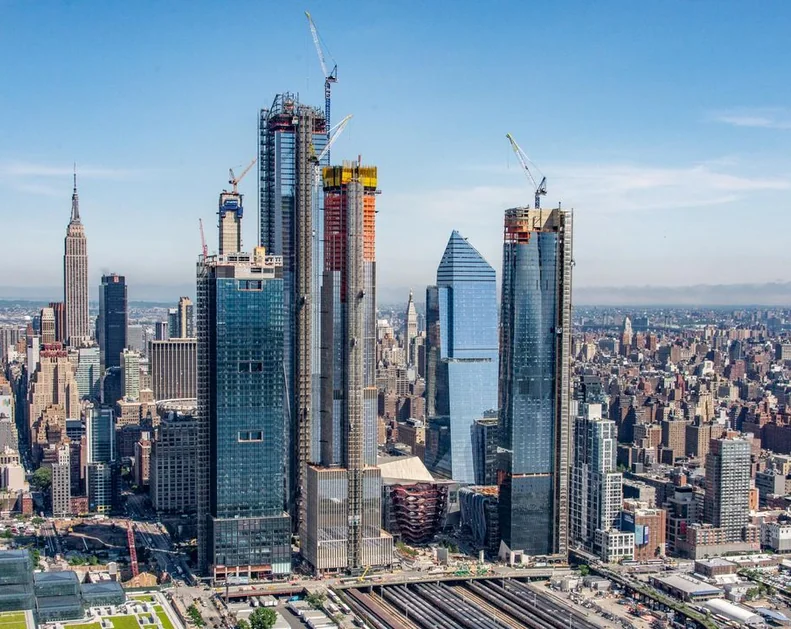
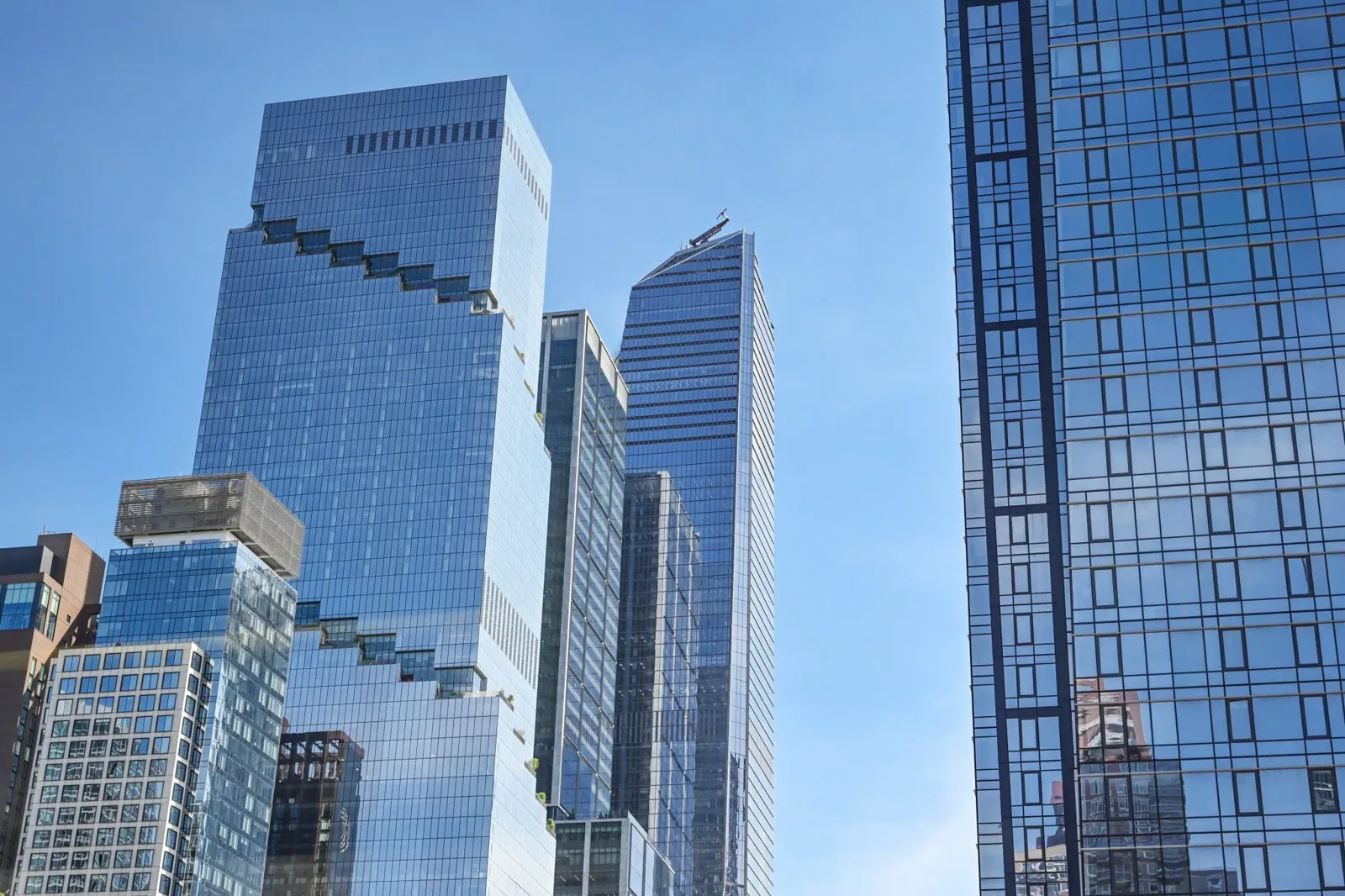
The survey finding most worth seeing on a young roof is a small one: a drain strainer holding construction debris that never left, a flashing termination that was never sealed, a curb with no counterflashing. Roofs on new buildings fail early at the details that a punch list missed, and the failure can arrive before the warranty clock is half run. Hudson Yards is the district where new roofs are the norm. A platform that Related and Oxford built over the West Side Rail Yard carries a 28 acre mixed-use development; construction of the platform began in 2014, and the 52 story, 895 foot 10 Hudson Yards opened in 2016. In Manhattan, NY, a roof here is young, high and expensive, and our job is to prove it, protect it and keep its warranty valid.
What does a survey find on a roof only a few years old?
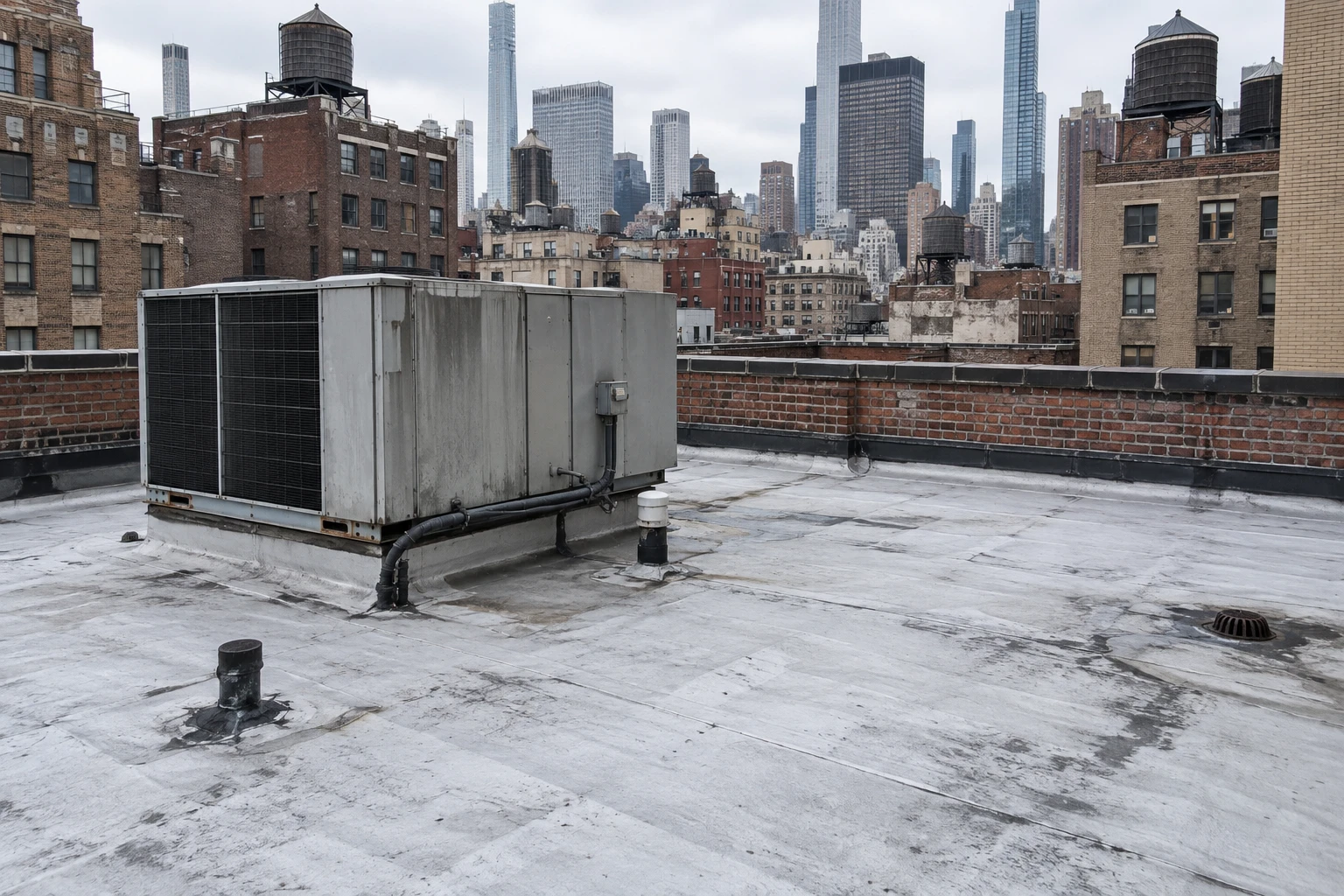
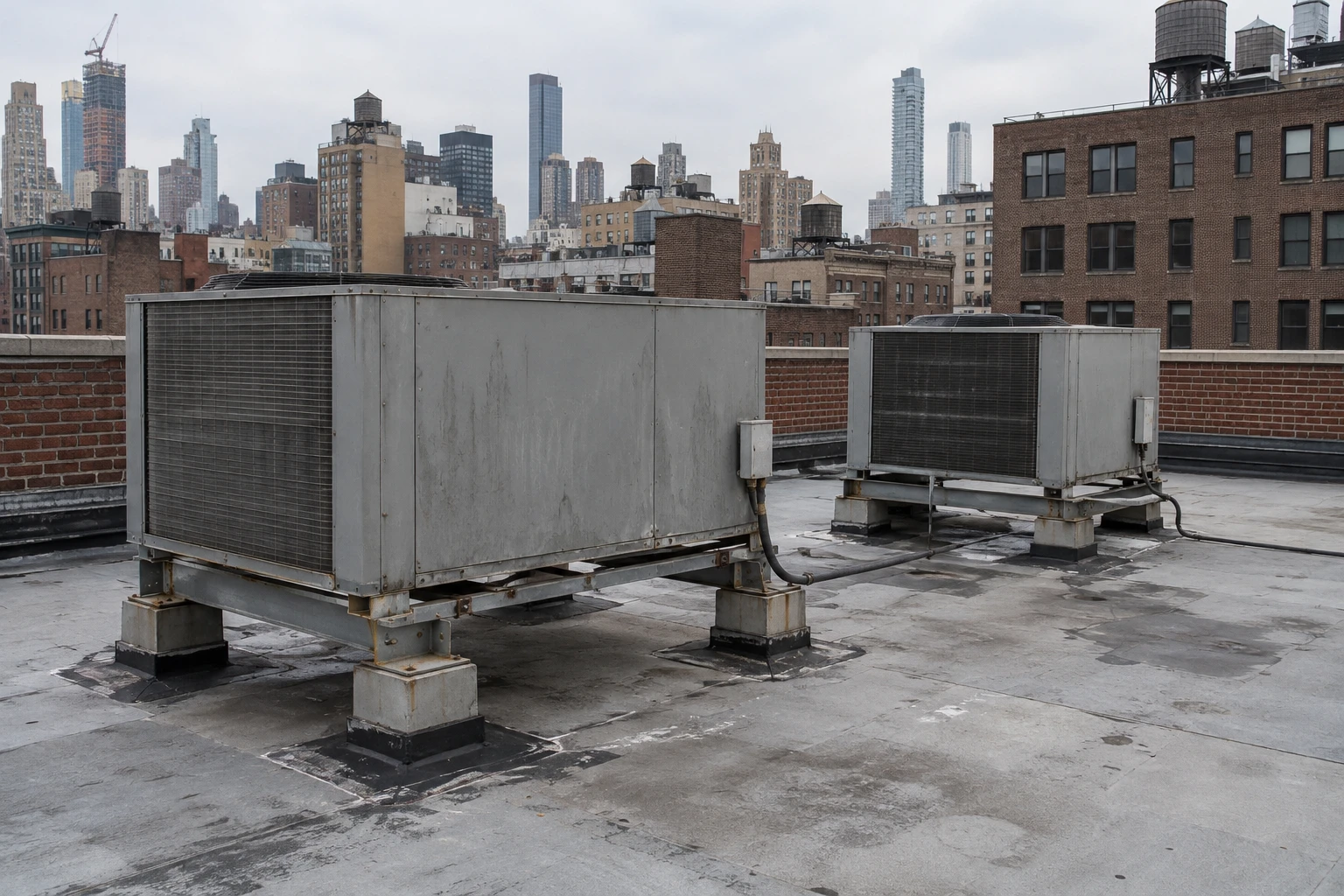
Mostly details, and the checklist for them is long. Phase 1, including the 80 story, 1,337 foot 30 Hudson Yards, opened on March 15, 2019, so roofs in the district are young enough that membranes should be sound. On a young roof we look for workmanship and coordination problems: curbs set after the membrane was laid, penetrations added by trades who did not flash them, pavers installed on pedestals that block drains, rooftop equipment placed where it traps water.
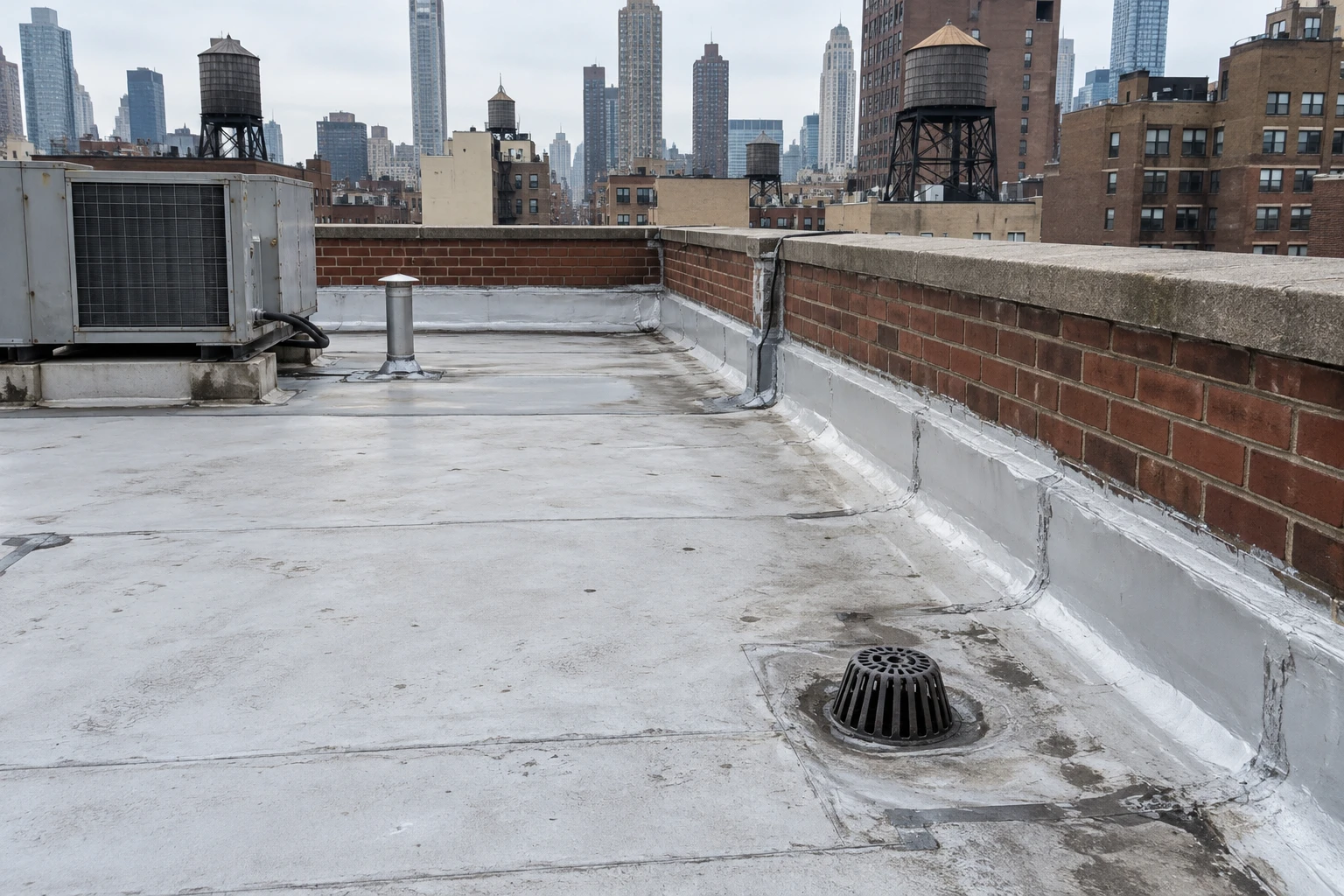
We survey with a checklist that covers every drain, penetration, termination, expansion joint and transition, and record each defect with a photograph. An infrared scan at dusk catches moisture that entered during construction, which new insulation can trap for years if it is sealed in. Findings are rated by urgency and by warranty significance, because a defect reported inside the warranty period is a different matter from one found afterward. The result is a report the owner can send to the installer or the manufacturer's representative.
Punch-list items from construction are a separate category. We compare the closeout documents with what is on the roof: the specified insulation depth against core cuts, the specified flashing details against photographs, the specified drain count against the drains found. Where the roof differs from the documents, the report says how and what it affects, so the owner can decide whether to ask for a correction while the installer is still responsible. Photographs of every transition, keyed to the plan, make the comparison fast and the record permanent.
How do we protect a new-roof warranty?
A warranty is a contract with conditions: documented installation, notified repairs, no unauthorized penetrations, regular inspection and maintenance. Violations of these conditions can void coverage. We review the terms, record the roof's condition at the start and keep a log of every visit, every penetration and every repair.
When another trade needs to touch the roof, such as a window-washing rig tie-back, an antenna or a mechanical unit, the work is coordinated through us, so that the penetration is flashed by approved details and logged. This is the practical content of roof warranty management: a record that shows the roof was cared for, and a process that stops damage before it begins. If a defect appears, the file shows when the roof was last inspected and in what condition, which strengthens a claim.
What is different about roofs and decks over a rail yard platform?
The MTA sought a 12.7 million square foot development on platforms over a rail yard that stayed in service during construction. A platform built over active tracks carries vibration, requires controlled access and is not easily opened for a repair underneath. For the waterproofing at platform level, that means two things: water must be kept out of the structure below, which holds service operations, and any repair has to be planned around constraints that ordinary roofs do not have.
We treat platform-level decks, plazas and terraces as roofs, with the same survey: drains, expansion joints, penetrations and the waterproofing under the finish. Leaks through a deck like this are traced with flood tests and moisture probes in zones, rather than by lifting large areas. Repairs are staged so that pedestrian use continues, and finishes lifted for access are logged and reset. Access permits and coordination with the building's operations team are part of the schedule.
Planter beds, pavers and fixed furniture complicate every repair, because each is something to lift, protect and reset. A deck repair log lists what was removed, where it was stored and how it was reset, with photographs, so the finish returns to its approved condition. Expansion joints across a platform move with temperature, and they are inspected for sealant condition and for debris that stops them from moving.
How does height change the roof's exposure?
Wind speed rises with height; Central Park's top gust of 78 mph, on December 2, 1974, is a useful reference. At the top of a tower of 895 or 1,337 feet, a roof edge sees stronger and more variable wind, and uplift at parapets and corners governs. Edge metal, copings and perimeter attachment are checked with that in mind, along with fasteners that have backed out and sealant that has failed at high-exposure corners.
Snow behaves differently high above the street, drifting against taller elements, and the winter average of 29.8 inches at Central Park, together with its 27.3 inch record fall on January 23, 2016, sets the scale for structural checks. Rooftop access is by hoist and stair, so a repair is planned around the lift. Window-washing rigs and antennas can share the same roof, and the curbs and supports for each are examined as part of the survey.
What does a long-term plan look like for a new building?
It begins at year one with a baseline report and continues with scheduled visits, usually twice a year, with extra visits after major storms. The plan tracks reflectance, drain performance and the condition of each office building roof area, since Ida's 3.15 inches in an hour on September 1, 2021 showed what a heavy hour does to drains, and Local Laws 92 and 94 now govern the sustainable roofing zone on new buildings. Maintenance is cheap compared with replacement, and the file makes it count at refinancing and sale. A preventive maintenance program is the vehicle, and nearby districts such as Chelsea and Hell's Kitchen can be part of the same schedule. New podium and tower roofs there are young, so the survey sets a baseline early and checks warranty conditions before small defects accumulate.
Commercial Roofing Questions
Why survey a roof that is only a few years old?
Because early defects are cheap to fix and may be covered by the installer or manufacturer. A baseline survey also records the condition at the start of the warranty and catches construction moisture. The cost is small compared with a claim denied for lack of documentation.
Who should authorize work by other trades on the roof?
The owner or managing agent, with us in the loop. We specify the flashing detail, inspect the result and log it. This keeps penetrations approved and the warranty intact.
How are leaks traced on a plaza-level deck?
By zones. We isolate areas with temporary dams, flood each with water in turn and watch the space below. Moisture probes and thermal images support the search. Repairs target the located defect, with finishes lifted only where needed.
Does a green roof change the maintenance plan?
Yes. Drains, root barriers and the growing medium are inspected, and irrigation is checked. The waterproofing beneath cannot be seen, so a leak detection system or a moisture survey is useful. The plan sets the intervals.