Wind damage repair for Manhattan, NY commercial roofs: pulled fasteners, lifted membrane, displaced coping and moved equipment, found by survey and documented.
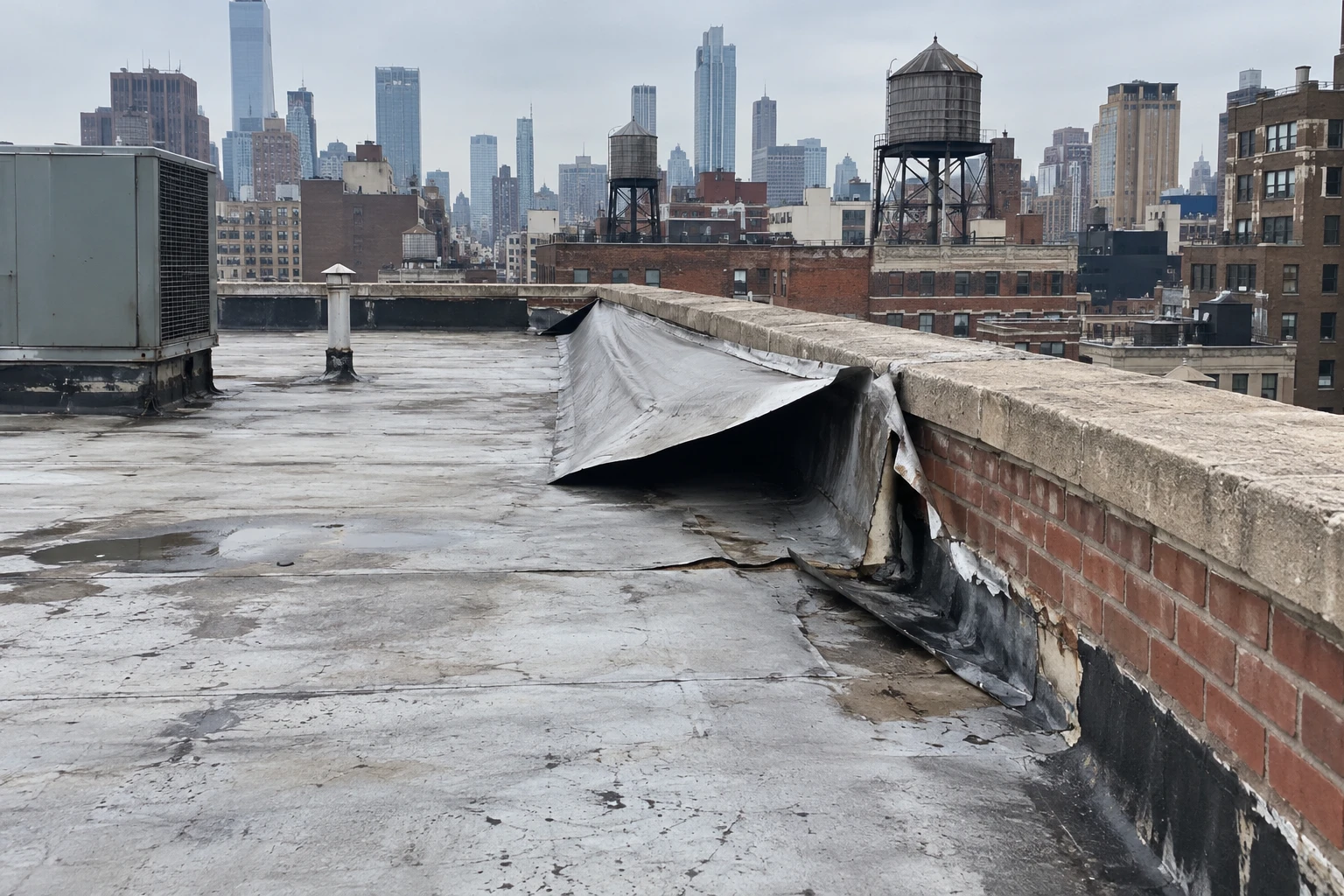
A fastener pulled a quarter inch out of a steel deck leaves a bright ring of clean metal around the hole, and that ring is how a surveyor dates wind damage: rust has not had time to form. Wind on a Manhattan roof rarely tears a large hole. It lifts, flutters and shifts, and the damage shows up as wrinkled membrane, loosened edge metal, displaced coping and equipment that moved on its curb. The 78 mph gust Central Park recorded on December 2, 1974 is the extreme case, but lesser gusts do their work every season. Photograph the roof edge from the safest point available and note the time of the storm.
We survey and repair wind damage on low-slope and metal roofs, and our emergency line answers at any hour.
How does wind actually damage a flat roof in a dense city?
Wind passing over a roof creates suction, strongest at the perimeter and the corners. Between tall buildings, wind speeds up around corners and drops down facades, so a low roof beside a tower can see gusts from unusual directions. Suction pulls on the membrane, the insulation and the edge metal, and the weakest attachment gives first.
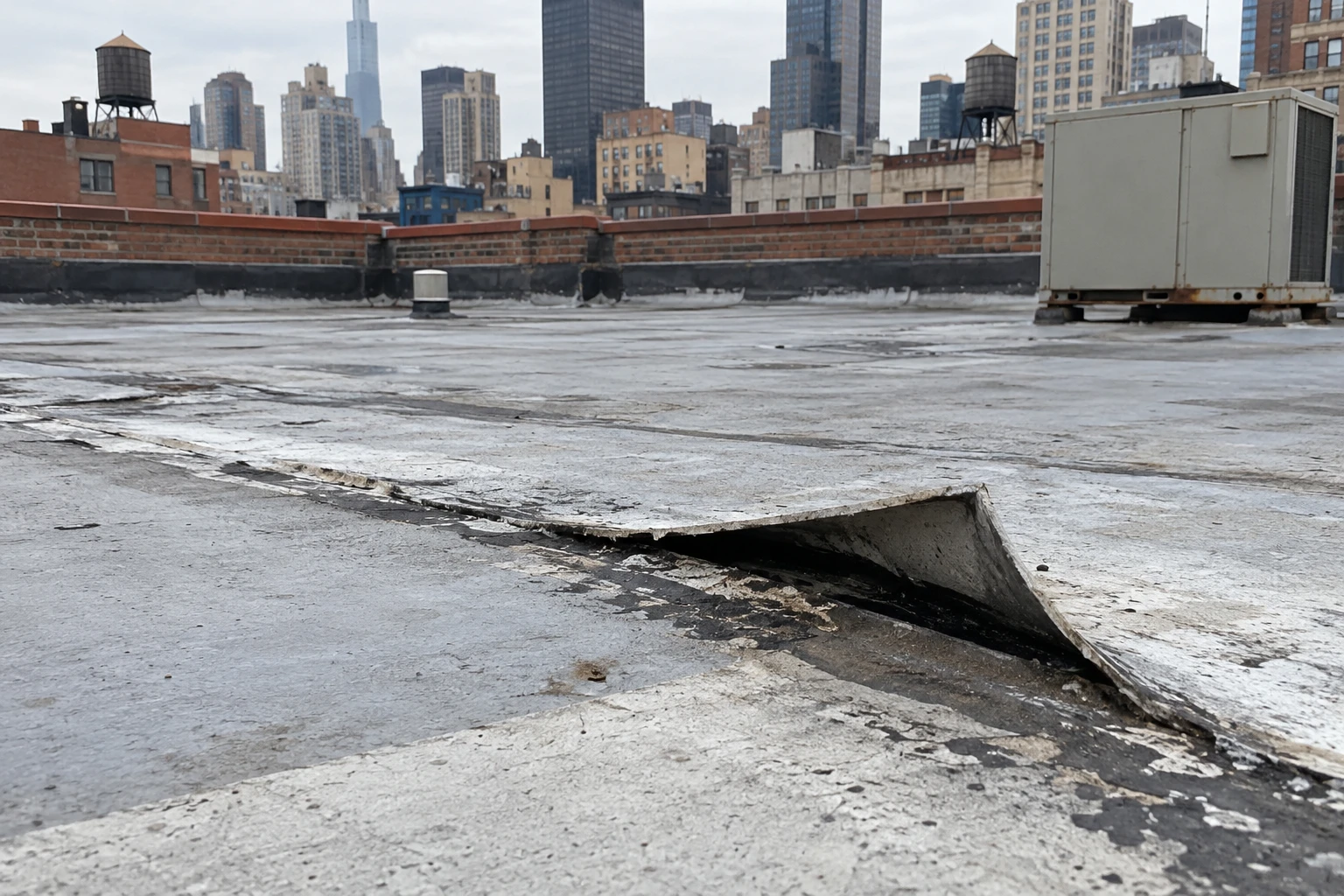
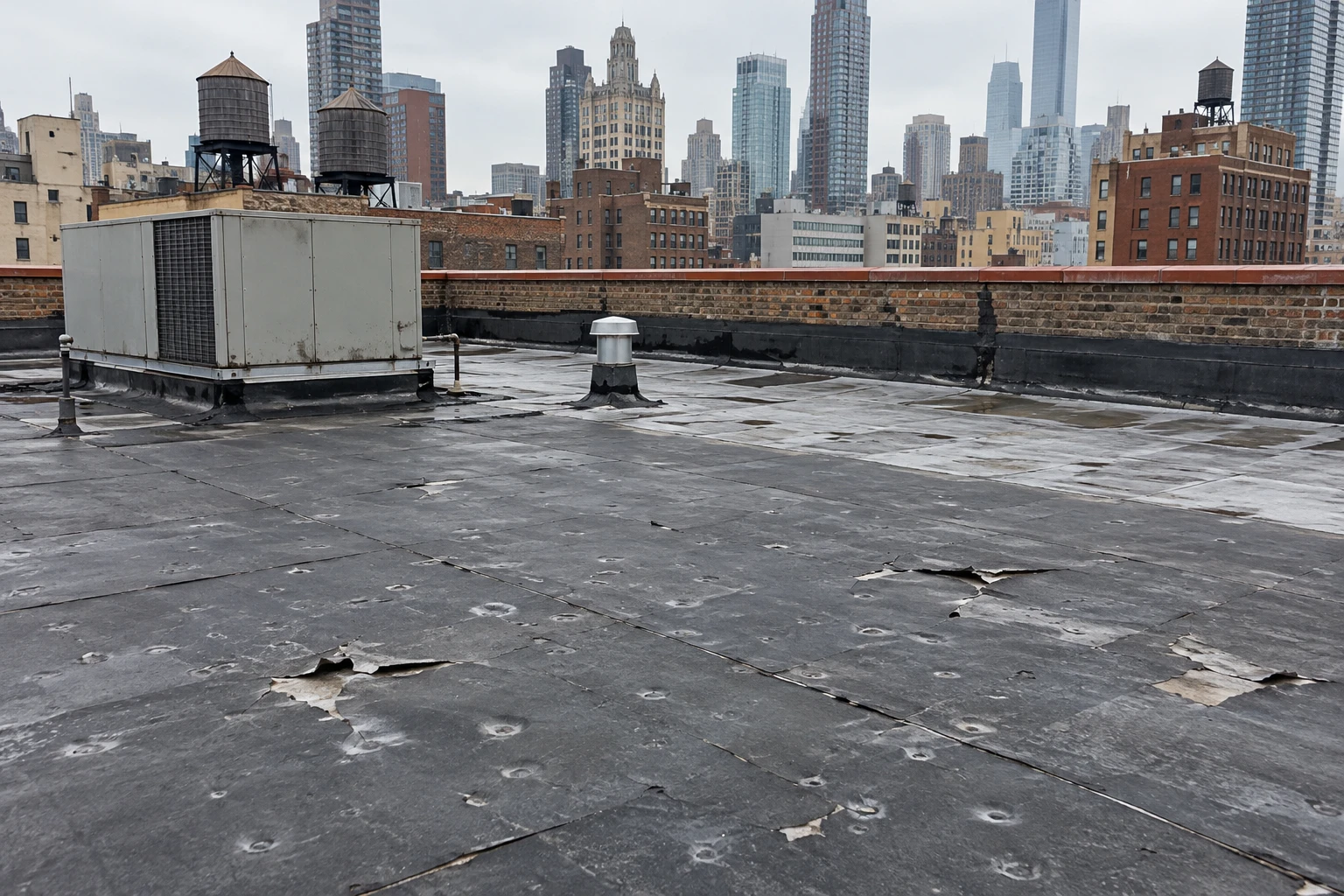
Fully adhered and mechanically fastened membranes fail differently. An adhered sheet may peel from the substrate in a patch that spreads from the edge. A mechanically fastened sheet may flutter, working fasteners loose and wearing the membrane at each plate. Ballasted roofs can lose stones and shift pavers. We examine the perimeter first, then the corners, then the field, and we compare the damage to the wind direction on the date of the storm. Record the direction from the weather report.
The Midtown skyline shows the effect plainly. The district holds about 400 million square feet of office space, and its setback roofs sit in the lee and the funnel of towers on every side. A terrace under a tower wall can see downdrafts, and a roof beside an open avenue sees the full gust. Hell's Kitchen, where zoning generally limits buildings to six stories west of Eighth Avenue and north of 43rd Street, has older walk-up roofs exposed to the river wind. Neither condition is a defect; each is a loading the attachment must meet.
Which parts of the roof usually fail first?
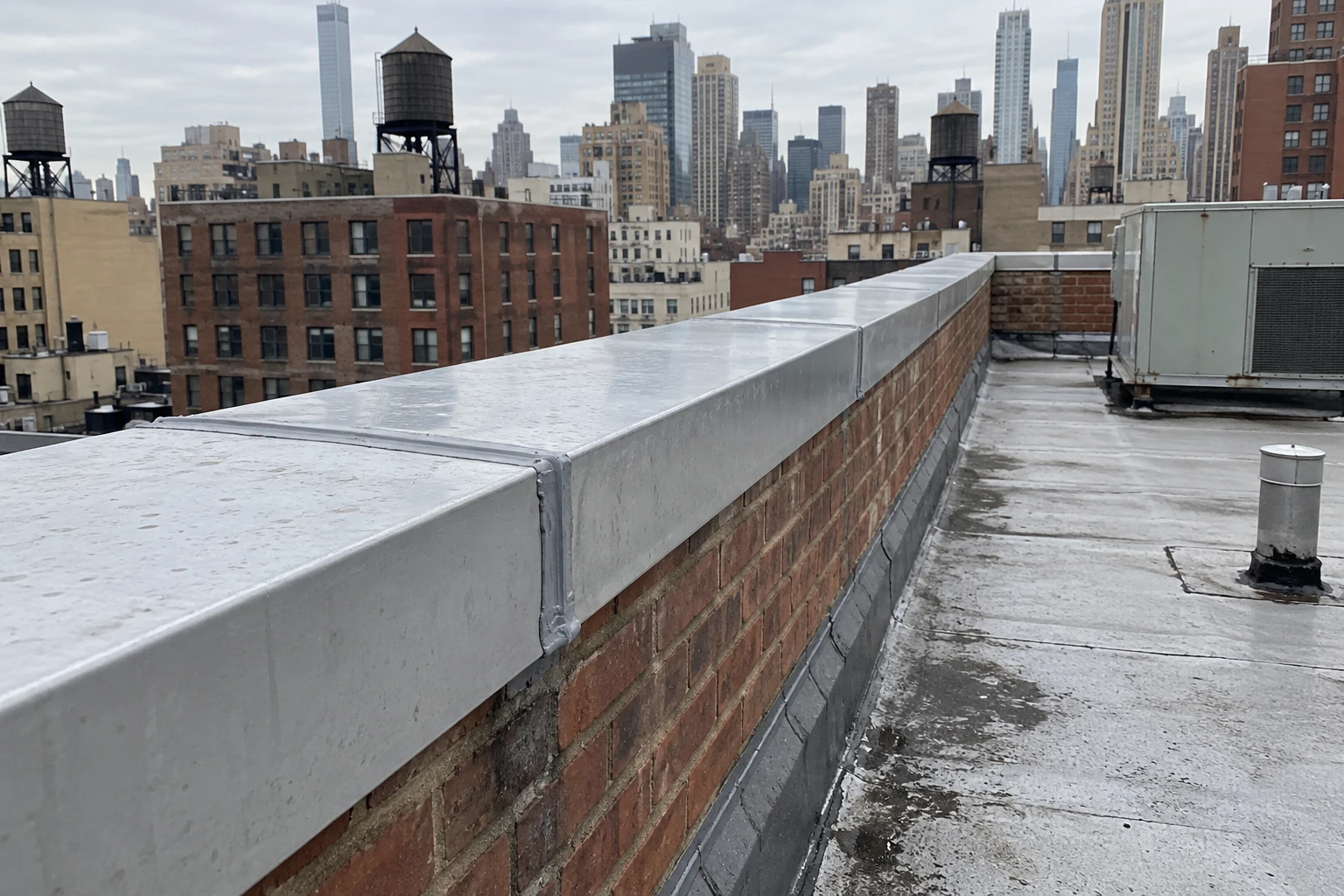
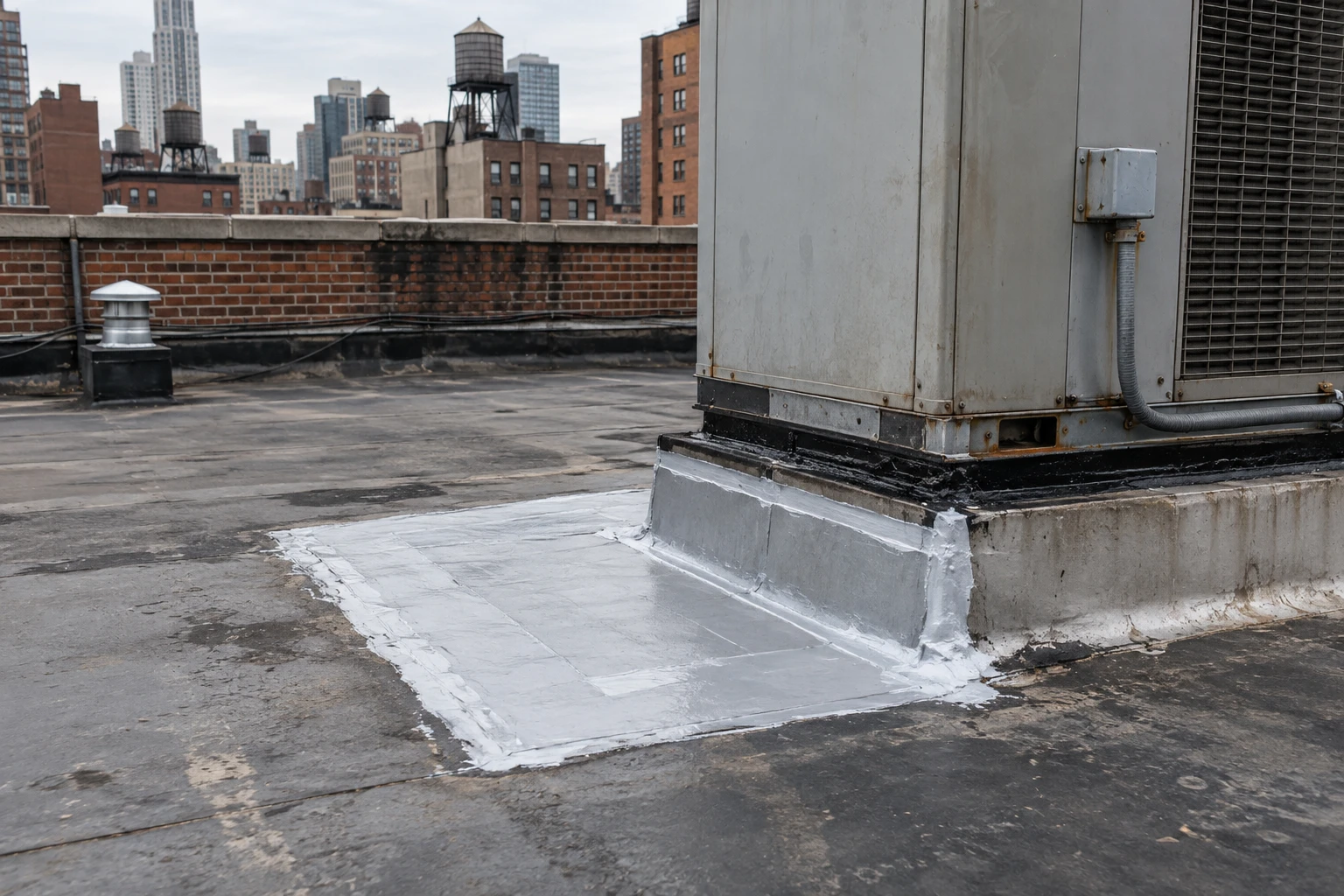
Edge metal, parapet coping, flashing heads at bulkheads and covers on rooftop equipment are the first parts to fail. Edge metal holds the membrane down at the perimeter; if it lifts, the membrane lifts with it. Coping on a parapet is a long, light cap that wind can lift if its clips or cleats have corroded. Unsecured equipment covers, ductwork and signage frames act as sails.
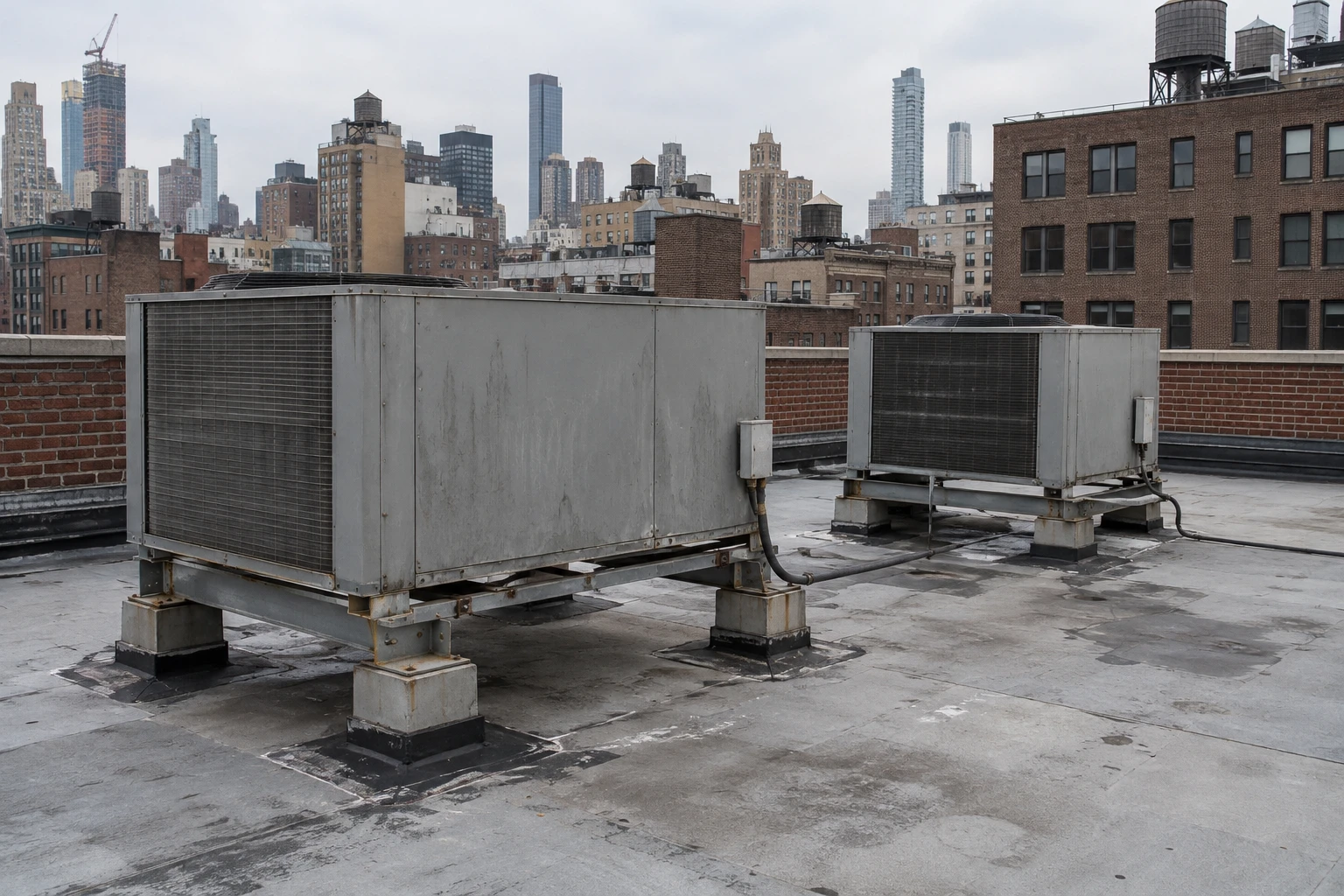
We check each against the original attachment: fastener spacing, cleat condition, sealant and lap direction. A run of metal lifted at one end indicates the direction of the gust. For edge metal, coping and gutters, repair means resetting, refastening with continuous cleats or replacing. For equipment, we check the curb attachment and flashing as part of rooftop equipment curbs and supports. Keep photographs of damaged pieces until the adjuster has seen them.
What does a wind repair involve, step by step?
The first step is to secure anything loose so that the next gust does no more harm. The second is to dry in any opening with a temporary membrane patch or tarp fastened to the deck. The third is a survey of the whole roof, with an infrared scan if rain entered. The fourth is the permanent repair: refastening or replacing membrane, resetting coping and edge metal, replacing damaged flashing and restoring equipment attachments.
A membrane that has fluttered, and seams that show a seam failure beside it, may need new fasteners and plates at a tighter pattern near the perimeter, as the wind design requires. On a roof that has lost sections of insulation, the exposed boards are replaced before the membrane goes back. When more than a patch is needed, we compare the repair to a commercial roof repair or a larger scope. Ask for the fastener pattern in writing.
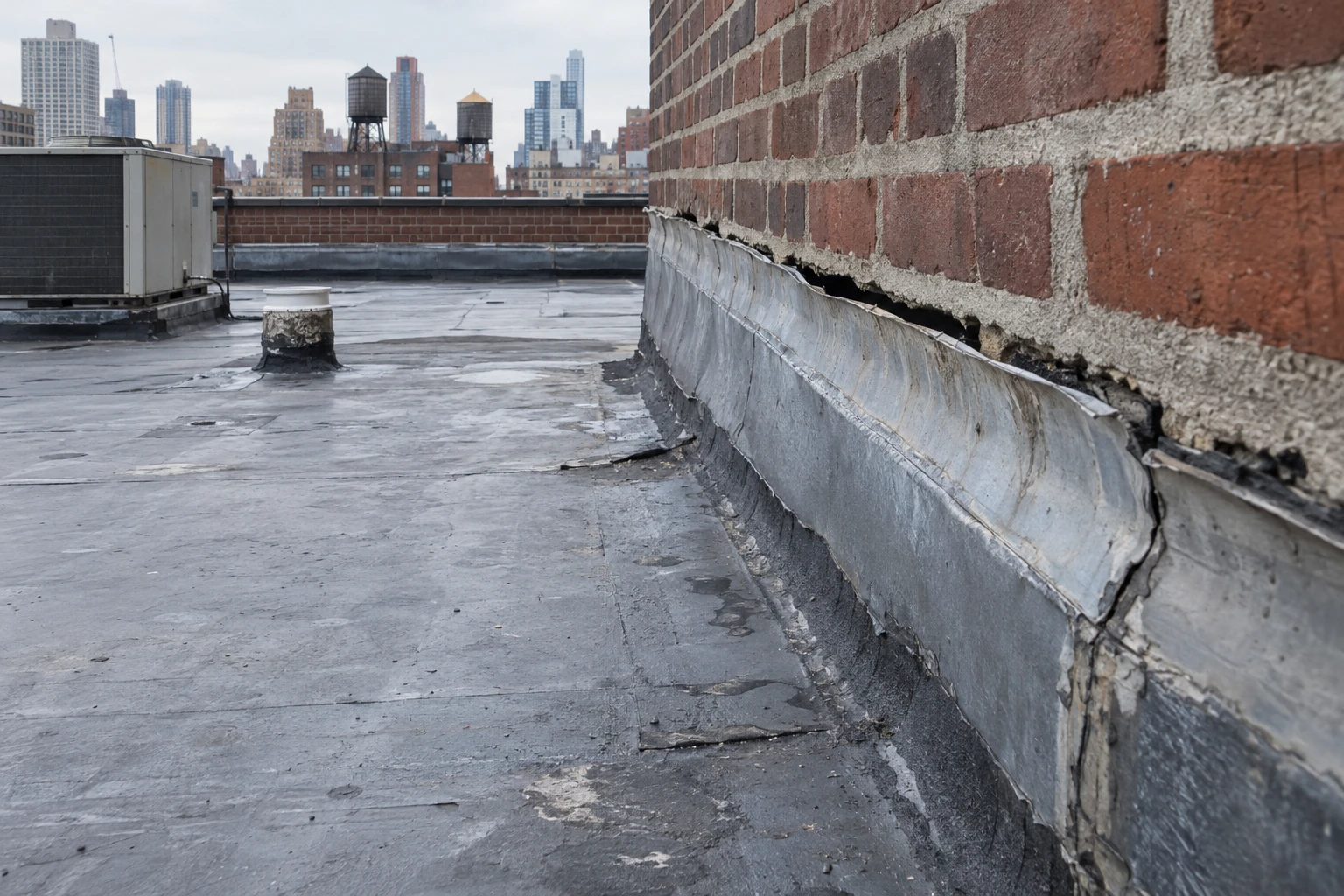
Flashing deserves its own look after wind. A gust that lifts a membrane at a wall can pull the termination bar loose or crack the sealant above it, and rain then enters behind the flashing. That pattern is a flashing failure with a wind cause, and the repair reseats the flashing and corrects the attachment, not just the sealant. We test the repaired termination with water before the crew leaves the roof.
How is wind damage documented for an insurer or owner?
A wind claim depends on the record. The file should include the weather data for the date, the pre-storm condition if known, photographs of each damaged element with a location on the roof plan, and a note of the direction of damage. It should also separate damage from wear, since lifted edges on a worn roof can reflect both.
The 2022 NYC Construction Codes govern repairs and new work, and the Existing Building Code decides how much of a roof must be upgraded when a repair is large. A repair that grows into a full replacement brings in Local Laws 92 and 94 of 2019 and the sustainable roofing zone. Our roof insurance claim assistance prepares the file in the format a carrier uses. Keep the dated survey with the claim.
Timing affects the claim. Carriers expect prompt notice and prompt mitigation, so the temporary repair and the first photographs should happen within days. A roof left open for weeks invites a rain event that blends with the wind loss. We date every image, record the weather on each visit and note when each measure was taken, so the sequence of events is clear to anyone reading the file.
What reduces wind risk before the next storm?
Prevention is mostly attachment and housekeeping. Continuous cleats at the edge, a tighter fastener pattern at corners, secured equipment covers and clean sealant joints reduce the chance of failure. Loose items on the roof, from tools to old equipment, are removed. After each storm, a quick edge walk catches a small lift before it spreads.
A preventive roof maintenance visit before the autumn and winter seasons checks these points. For buildings in Hell's Kitchen and other districts with mixed building heights, the survey notes where taller neighbors affect wind. Log every storm visit with the date and the findings.
Equipment is the quiet source of wind loss. Antennas, signage, solar frames and satellite dishes attach through the membrane, and a sail-like panel can tear its own flashing. We list each item, check the attachment and recommend added bracing or removal of anything that has been abandoned. An abandoned frame on a roof catches wind and gives nothing back, so taking it down is often the cheapest wind repair on the building.
Commercial Roofing Questions
What decides if wind damage means repair or replacement?
The share of the roof affected and the condition of the rest decide it. Damage limited to edges and a few sections on an otherwise sound roof is repaired. If the membrane is aged and the fasteners are widely loose, replacement may be the sounder spend.
How can we tell a wind lift from a normal seam failure?
A wind lift usually starts at the edge or corner and follows the wind direction, with clean fastener holes and fresh tears. Seam failure from age shows dirt, cracking and a pattern across the field.
Is a tarp enough after a gust?
For a short time, yes, provided it is fastened to the deck rather than to loose metal. It must be inspected after each wind event, and the permanent repair should follow soon.
Do we need a permit for wind repairs?
Small repairs may not, and larger ones do. We confirm with the building's filing representative before work. The scope is written so the filing matches.
What does the building staff do while the crew is on the way?
Secure doors to the roof, keep people clear of the edge and photograph what can be seen from a safe point. Note the time of the gust.