Documentation and coordination for Manhattan, NY roof insurance claims: dated photographs, moisture maps, scope of loss and repair records for adjusters.
A loss survey that marks every damaged area on the roof plan, with a cause written beside each, is the document that all the parties to a Manhattan roof claim end up asking for. The superintendent, the broker, the adjuster and the engineer of record each need a different piece of it, and a dated photograph tied to a point on the plan answers most of their questions. Without that, the claim turns into an argument about age and wear. For a Manhattan building, where the roof is small, the access is awkward and the repair cost per square foot is high, a clean record is worth the effort of keeping. Pull the last survey, the last invoice and the last inspection report before the first call to the carrier.
We document roof damage, coordinate the repair scope and supply the records a claim file needs, and we answer storm calls around the clock.
What records does a roof claim depend on?
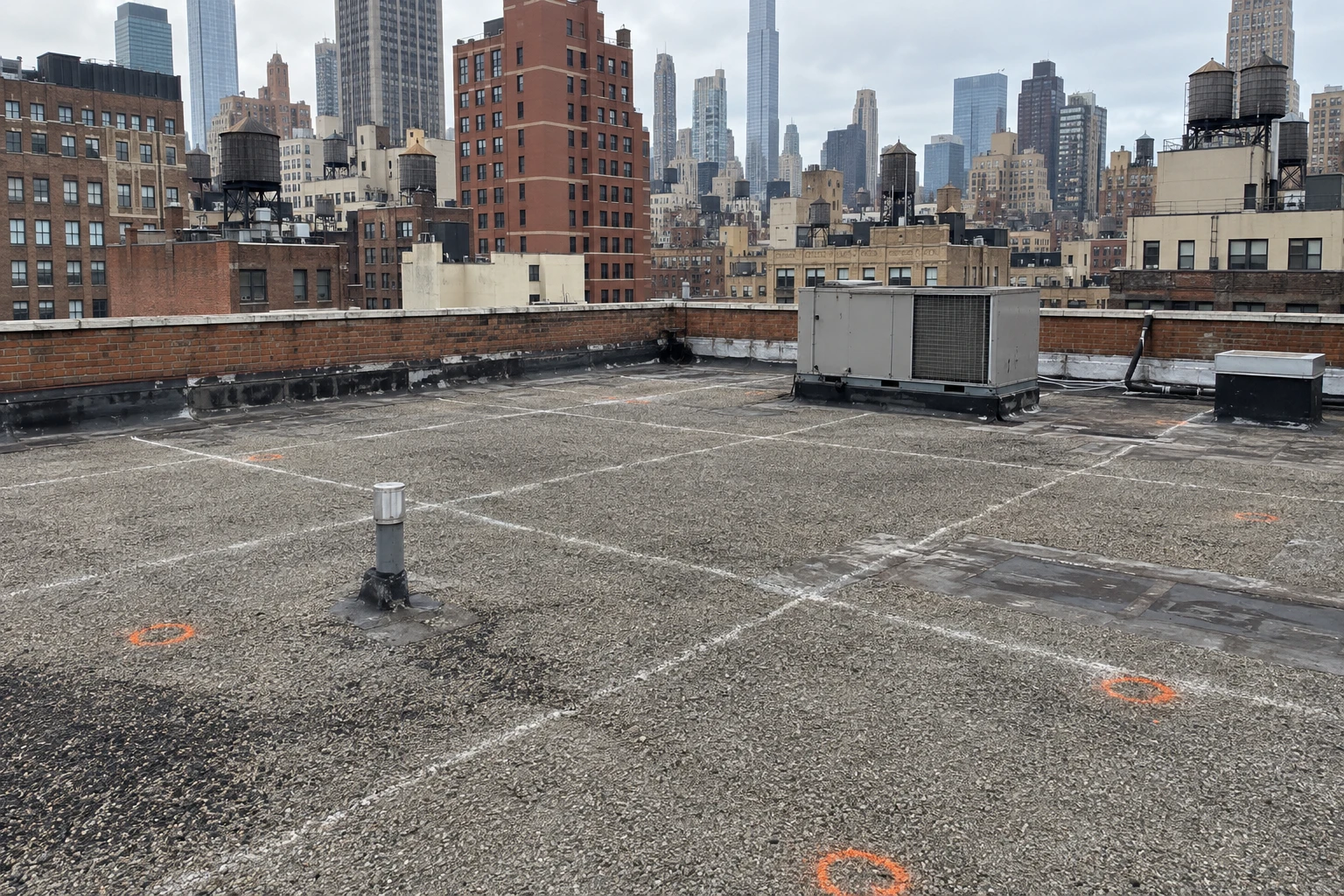
Four records carry most claims. The first is the baseline, meaning the last inspection or maintenance report with its condition rating. The second is the event record: dated photographs, the weather data for the day and any building log entries from the superintendent. The third is the loss survey, which marks the damaged areas on the roof plan and notes the cause for each. The fourth is the repair estimate, written by scope item and tied to the loss survey.
Each record answers a question the carrier will ask. The baseline answers whether the damage is new. The event record answers what caused it. The loss survey answers how much of the roof is affected. The estimate answers what restoring it costs. When two of the records conflict, the carrier tends to trust the one with a date and a photograph, so we date every image and tie it to a point on the plan. We produce the last three and help the owner assemble the first from existing files. A roof condition report filed before an event does more work than any document prepared after.
How is storm damage separated from wear and age?
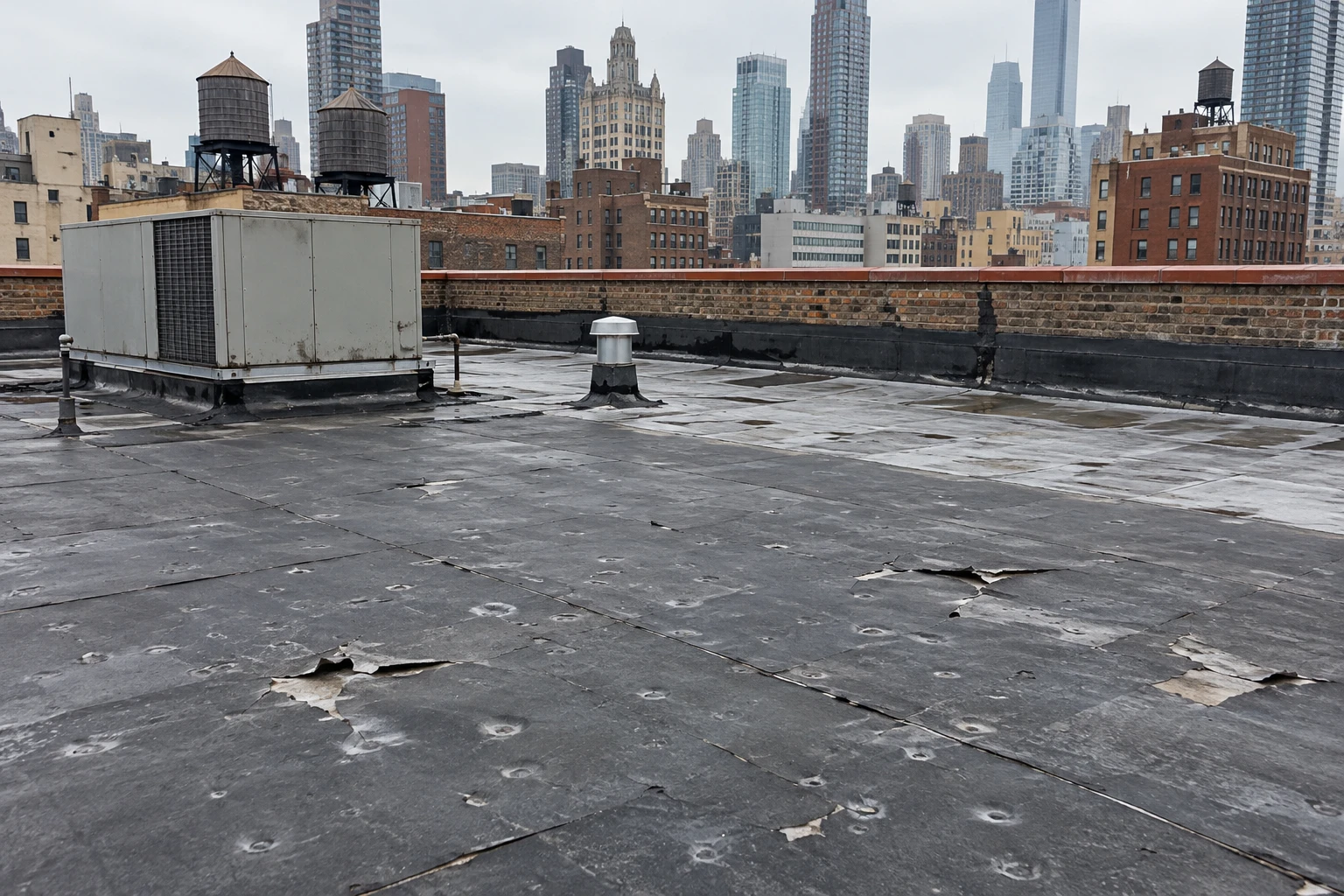
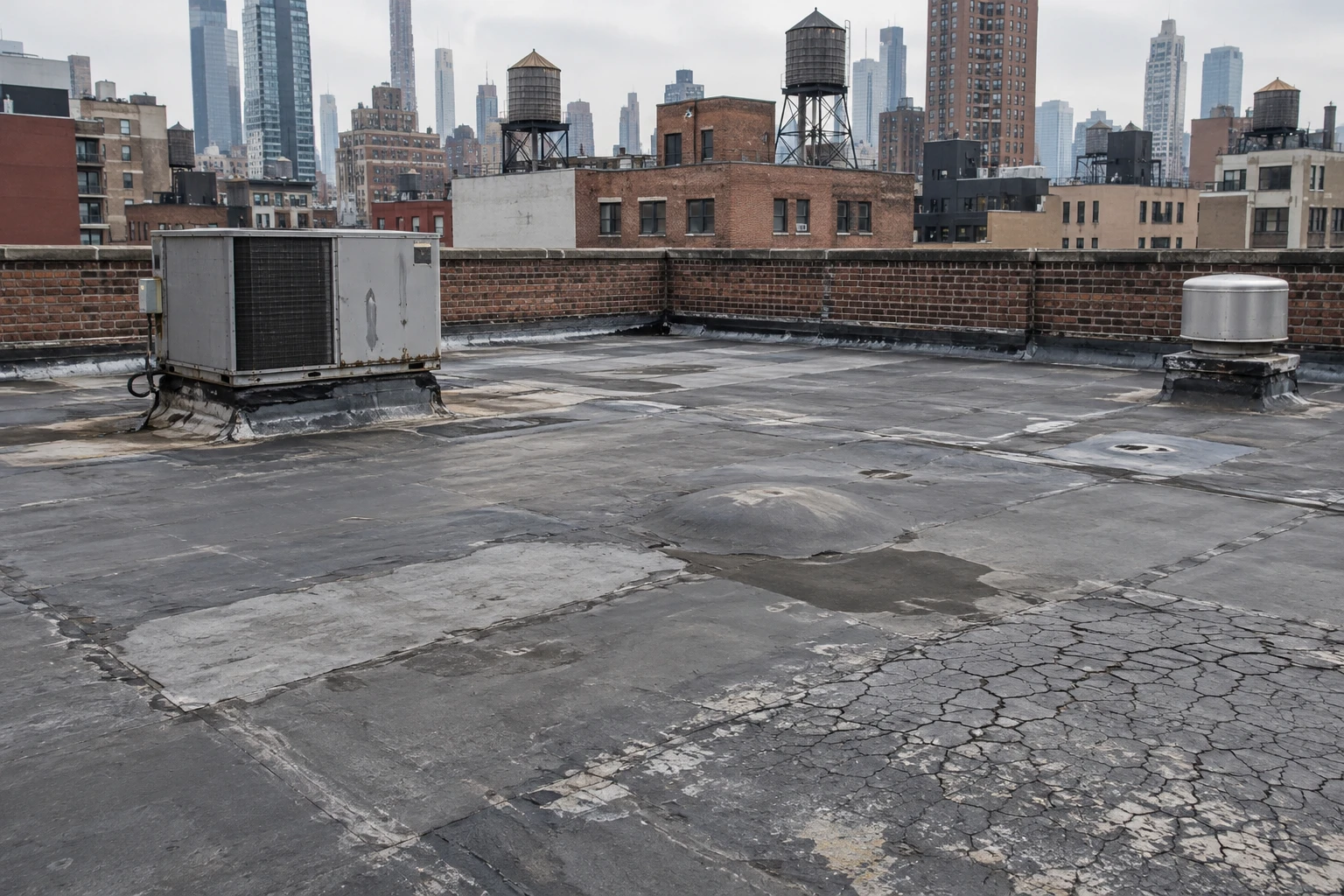
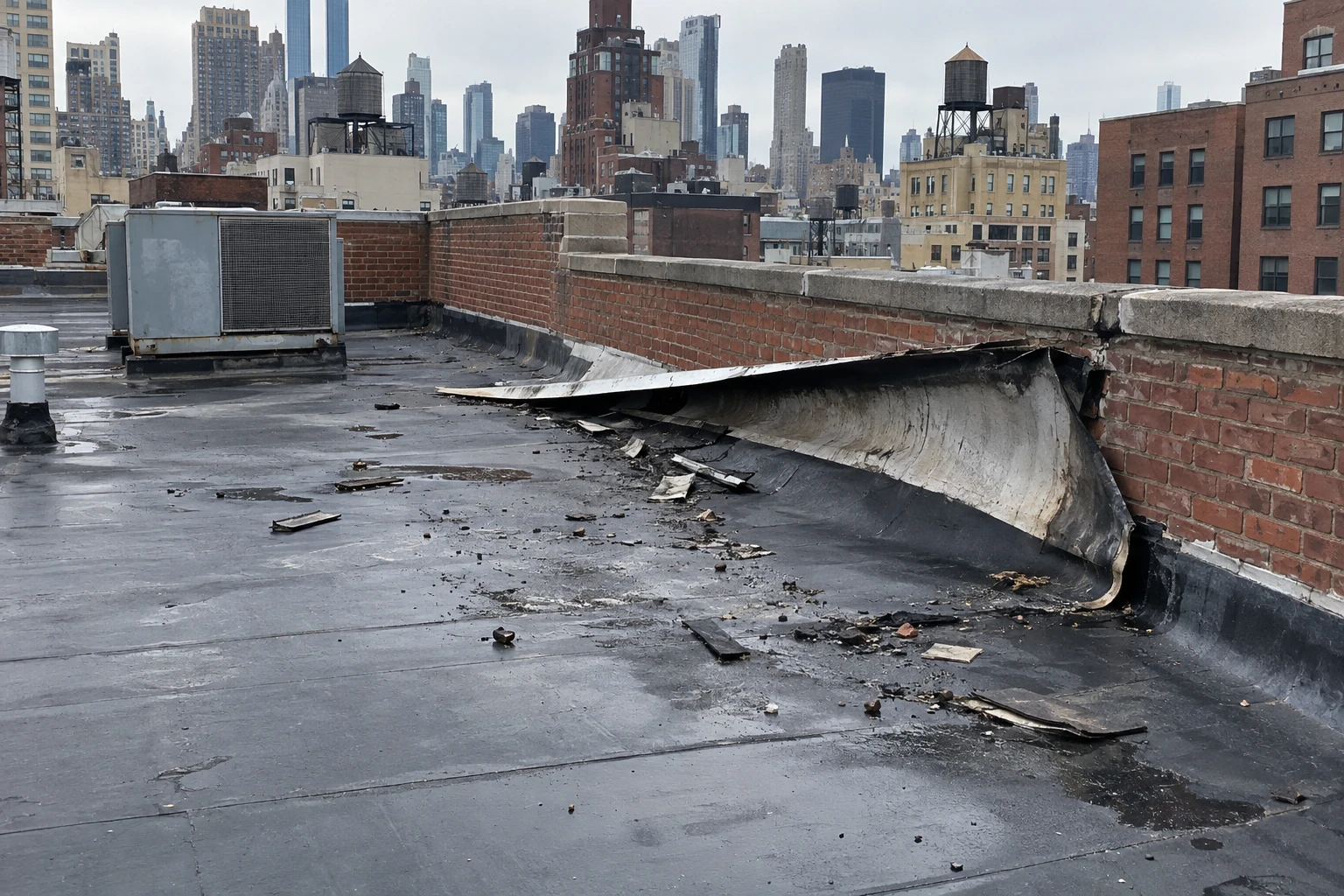
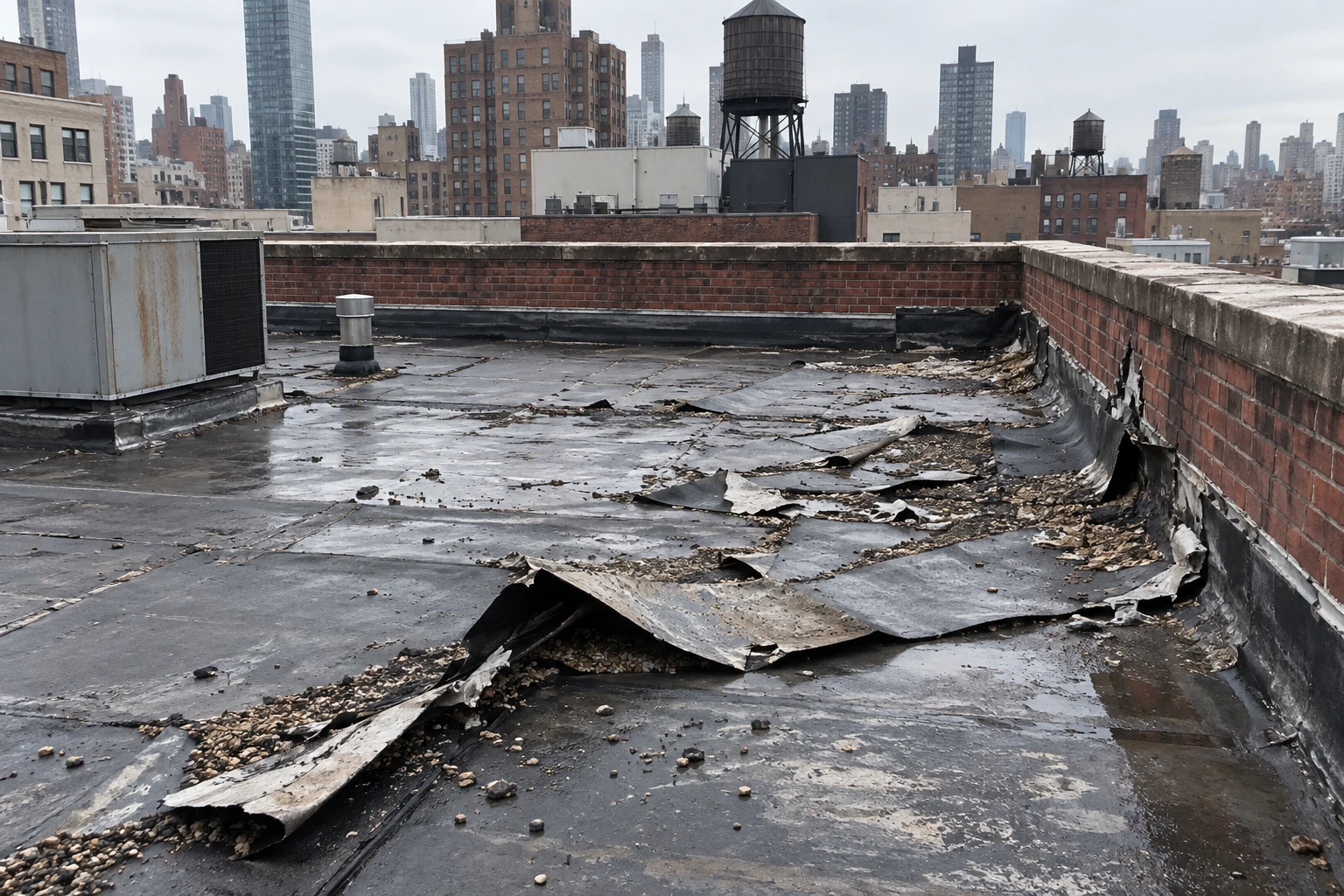
Carriers separate sudden damage from gradual deterioration, and the roof usually has both. A coping stone knocked loose by a gust is sudden. A membrane that has cracked over many summers is gradual. The survey records which findings carry the signature of an event, such as lifted edges, torn flashing, fresh punctures from debris or water marks that follow a single rain, and which belong to age.
Hurricane Ida on September 1, 2021 set the city's hourly rainfall record at 3.15 inches, and in such an hour a clogged drain makes ponding that looks like a defect but is a maintenance problem. The drain's condition goes into the same record. An infrared moisture survey taken after the event shows where new water entered and can be compared with the earlier map. Do not discard damaged material until the adjuster has seen it or the carrier has approved its removal.
What goes into the scope of loss and the repair estimate?
The scope lists each damaged element with a location, a quantity and a repair method: coping resets by linear foot, flashing replacement by linear foot, membrane patches by square foot, insulation replacement by area with the depth, drain repairs by count. It separates emergency dry-in from permanent repair, and it identifies code upgrades that the repair triggers.
In New York City, the 2022 NYC Construction Codes and the Energy Code govern new work, and Local Laws 92 and 94 of 2019 apply the sustainable roofing zone requirement to full roof replacements. If a loss is large enough that replacement is the repair, the added scope of solar, a green roof or both is a real cost, and policies treat it differently. We flag it early so the owner and the carrier discuss it before the work begins. For a smaller loss, the work proceeds as a storm damage roof repair and the estimate stays within that scope.
In what order should the owner act after a loss?
The order that protects a claim is simple. First, make the building safe and dry in the roof, because policies expect the owner to prevent further damage. Second, photograph everything before and after the temporary measure. Third, notify the carrier and the broker in writing with the date and a short description. Fourth, schedule the survey and keep the damaged material. Fifth, obtain the written scope and estimate. Sixth, wait for the adjuster before permanent work unless the delay would cause more loss.
A hurricane damage file works the same way. On October 29, 2012 Sandy flooded roughly 17 percent of the city after a surge of 14.06 feet at The Battery above average low tide, and an event on that scale puts the same documentation question to every owner at once. Owners with an organized file are the ones who can hand the carrier a dated record on request. Keep every email, every invoice and every photograph in one folder from the first day.
Reserve implications follow the claim. A paid loss changes the condition rating, the remaining service life and the capital plan, and the building's reserve study should be updated once the repair is complete. We supply the closing photographs, the final scope and the new rating so the asset manager can revise the study in the same month the work finishes, and the next lender request is answered from the file.
Who needs to be coordinated on a Manhattan roof loss?
Many parties touch a Manhattan roof loss: the building manager, the superintendent, the broker, the adjuster, a public adjuster if one is retained, the engineer of record, the landmark preservation staff for a protected building and the neighbors on shared walls. Each has a different question and a different deadline, and a missed notice can cost more than the repair. The roofing record should therefore be written for a reader who was not on the roof: plain locations, dated photographs, measured quantities and a short statement of cause for each item. We act as the roofing contact for all of them, answering the technical questions and passing the records.
Around the hospitals of Washington Heights, Kips Bay and the Upper East Side, infection-control rules and operating hours shape the repair schedule. In landmarked districts such as SoHo-Cast Iron, a repair that changes visible material needs review first. For managers of several properties, such as those who work with property management companies, a standard claim package lets each loss be read the same way.
Commercial Roofing Questions
What decides whether a claim covers a repair or a full replacement?
Start with the share of the roof that the covered event damaged, then the condition of the rest. If the survey shows localized damage on a sound roof, the repair is the covered scope. If the event wet most of the insulation, replacement becomes the repair and the carrier reviews it with the policy terms.
Do we need a survey if the carrier sends its own adjuster?
The adjuster's visit is short and general, while a roof survey is specific and measured. Your record gives the adjuster a map to follow and speeds agreement on scope.
Can temporary repairs be billed to the claim?
Policies generally expect sensible emergency measures and will reimburse them when the paperwork is in order. Take photographs of the temporary work and keep invoices that spell out the area covered, the materials and the hours billed.
What if the carrier disputes the cause?
Most disputes turn on the dated record. We provide survey photographs, core results and weather data, and we speak to the findings in writing. Legal advice and coverage opinions belong to counsel and the broker.
How long should claim records be kept?
Hold them through the life of the roof assembly and through the next sale or refinancing. Lenders and buyers ask for roof history, and a complete claim file is part of it.