Carlisle SynTec single-ply roof categories in Manhattan, NY: EPDM, TPO and PVC surveyed for seams, attachment and drainage, with repair and replacement options.
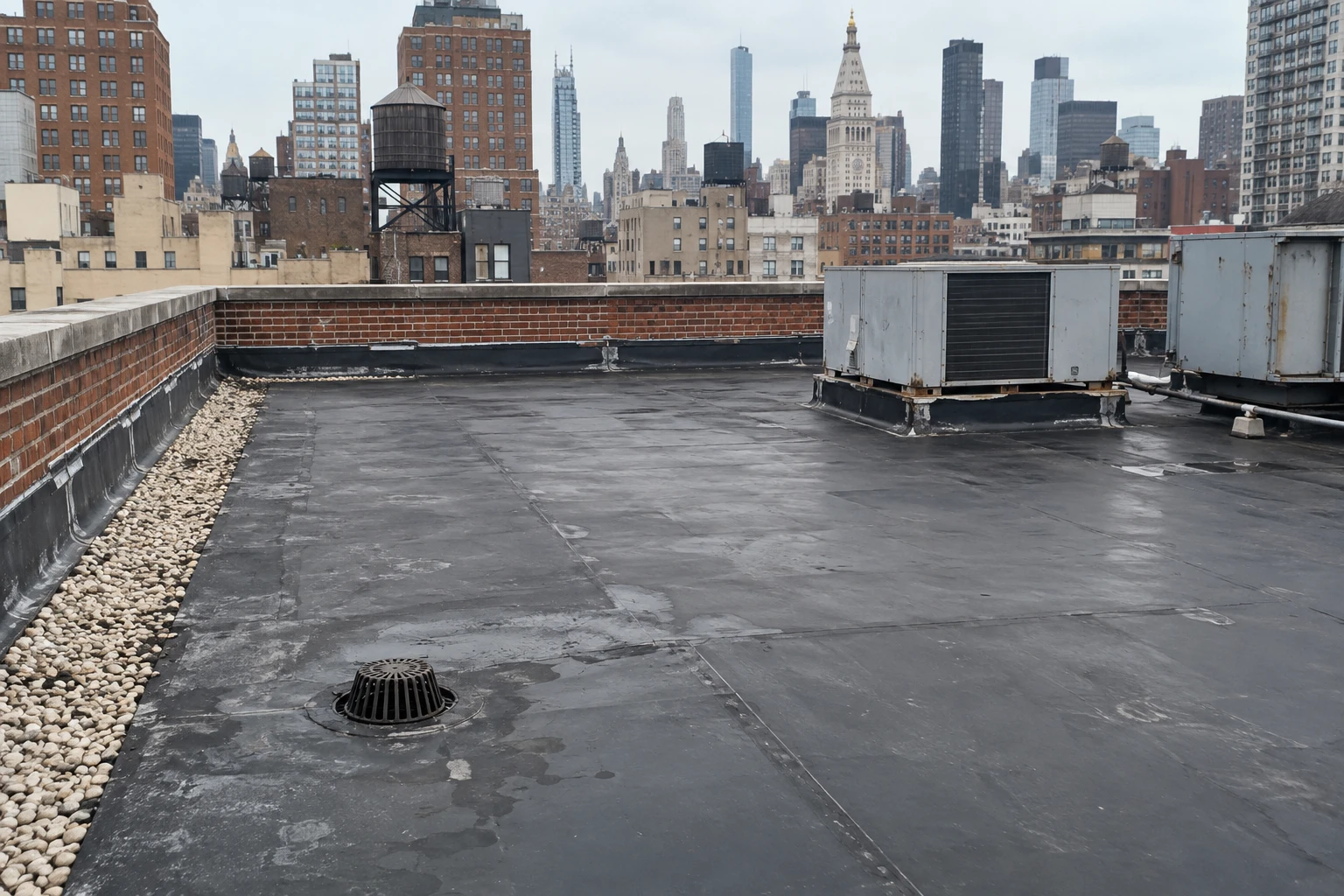
Ballast stone pushed against a parapet in a pile, with a bare strip of membrane where it used to lie, is a finding with a cause: wind, a leader that overflowed or a crew that walked through. Carlisle SynTec is a single-ply roofing manufacturer whose commercial systems cover EPDM rubber, TPO and PVC thermoplastics, installed as adhered, mechanically attached or ballasted sheets. On a Manhattan, NY roof, each method carries different consequences for weight, wind and repair, and the label does not say which was used. The survey does.
We survey, repair and replace these categories of single-ply roof. A photo of any label, the last roof report, the building's age and any open violations begin the file; survey scope and rating are fixed before any price.
How do we tell how the sheet is held down?
By lifting a corner at a test location and looking at the back of the sheet. An adhered sheet shows adhesive and a bonded surface. A mechanically attached sheet shows fastener plates along the seams. A ballasted sheet lies loose under stone or pavers. We record the method for each roof zone, because a repair that suits one fails on another. The test locations are chosen away from visible edges, the corner is lifted by hand with a putty knife, and the hole is closed the same day with a patch of the matching sheet. Photographs show the back of the sheet, the adhesive or the plate, and the date, and they go into the report beside the core logs.
Ballast matters in this market for weight. A ballasted roof carries stone load that is easy to forget when a green roof or solar array is proposed on top, and the sustainable roofing zone that Local Laws 92 and 94 attach to a full replacement makes that weight a design input. The survey records the ballast depth at several points, and the structural engineer uses the figures. Loose stone and exposed edges answer to wind on the scale of Central Park's 78 mph gust of December 2, 1974.
What do the seams show about each family?
On EPDM, seams are held by tape or adhesive. We press-test them, look for lifted edges and check where the sheet has shrunk from a curb. On TPO and PVC, seams are welded with hot air. We probe each lap with a blunt tool and cut a sample on a retrofit to see whether the two layers have fused. A fused weld tears the sheet before it gives up the seam.
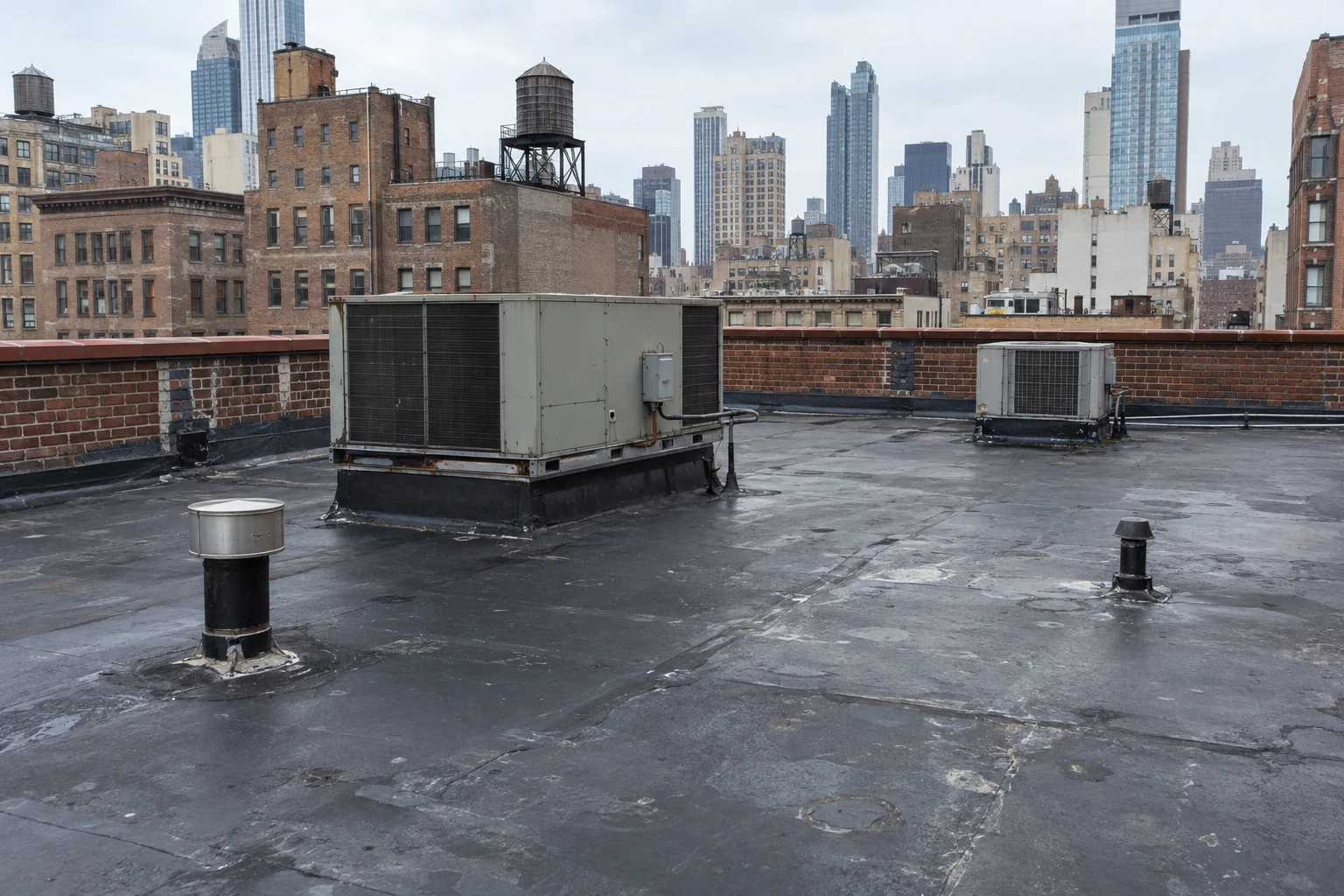
Older thermoplastic may resist a new weld because the surface has weathered. A test patch tells us. When it fails, the choice is a coating over a dry, sound roof or a recover. A TPO roof and an EPDM roof age differently, and the survey applies the right test to each. A roof with two families, from a past recover, is rated in zones. The line between zones is drawn on the sketch, and the tie-in there gets its own probe, because two sheets that move differently with temperature pull on the joint between them. A tie-in that has opened is among the likeliest sources of a leak that appears after a hot week and disappears after a cool one.
How does extreme rain test a single-ply roof?
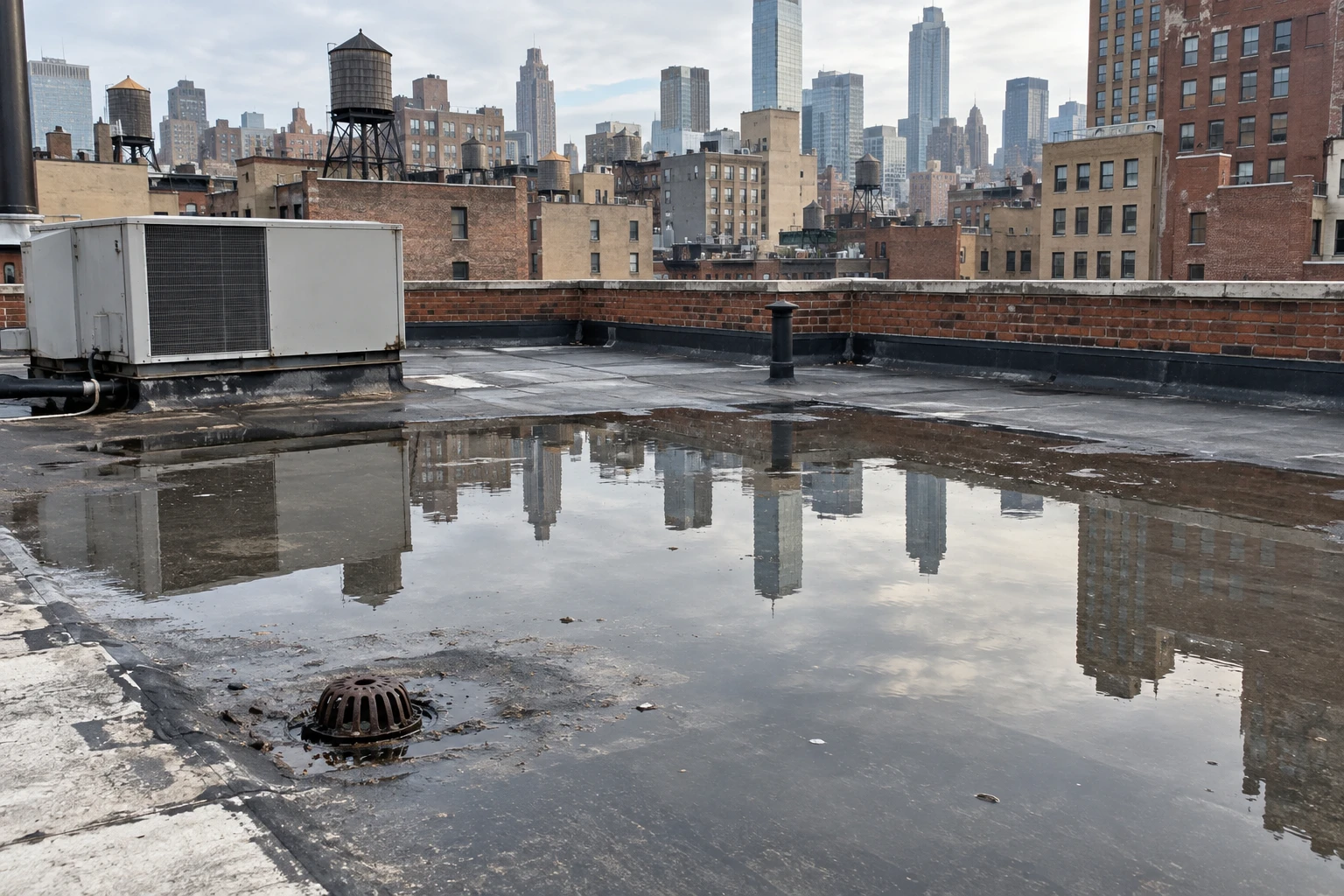
In Ida's storm on September 1, 2021, 3.15 inches fell in an hour and Central Park totaled 7.13 inches. A single-ply sheet tolerates a puddle better than a gravel roof, but a puddle that stays adds weight and collects grit that wears at seams. A leader that cannot carry the rate holds water against every curb and wall.
We measure ponding depth after rain, flush the leaders and check overflow height. The flushing test uses a measured volume from a hose, timed to the drain, and the reading goes into the report as a rate. A leader that drains slowly is cleaned and tested again, and a leader that still drains slowly points to a pipe problem for the plumber. Where the slope has failed, tapered insulation can re-slope the field during replacement. The ponding water repair scope records depths before and after, and the number goes into the condition rating. A roof with an inch of water in the low corner two days after rain has a drainage problem that no membrane can solve.
What do heat and cold do to the sheet?
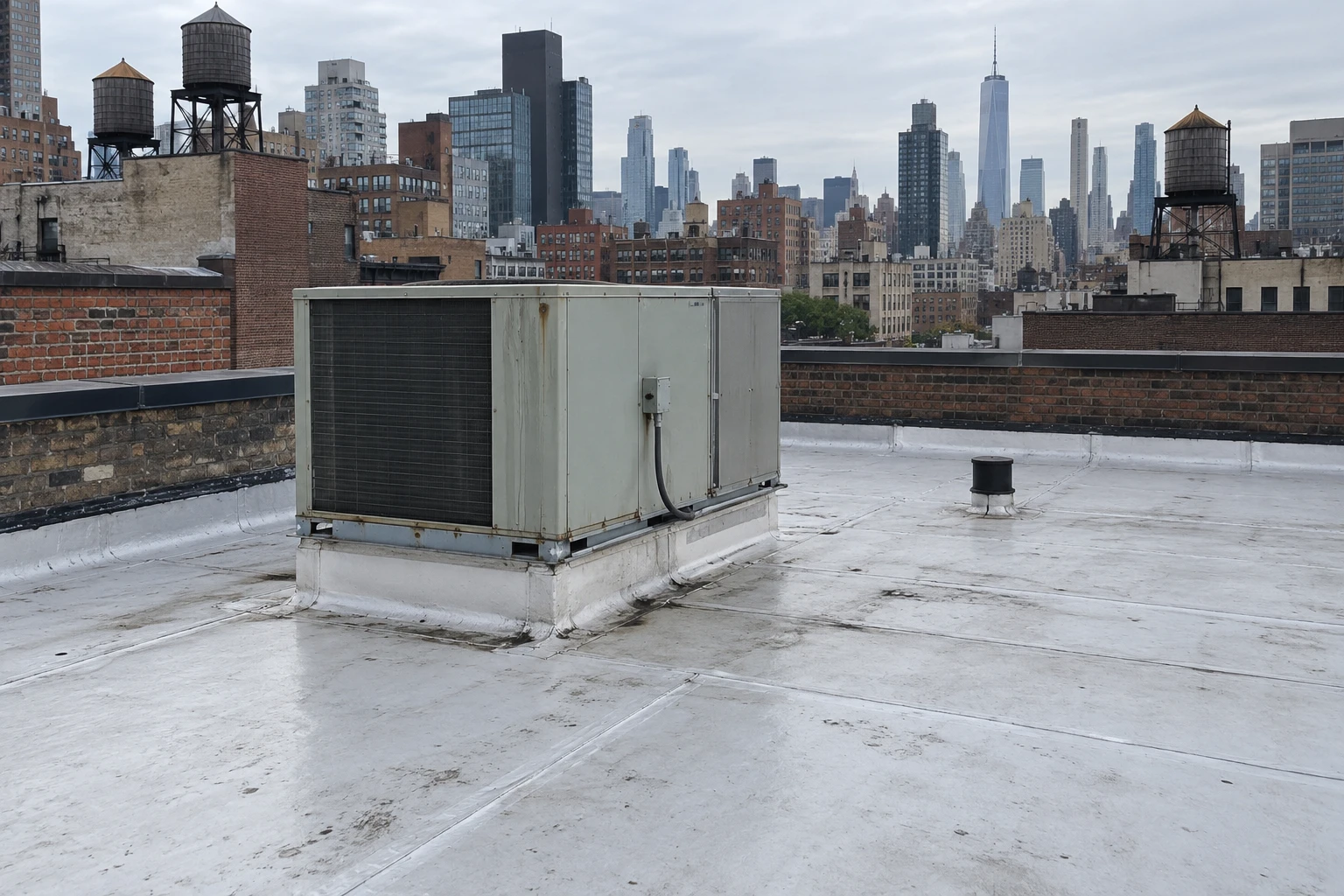
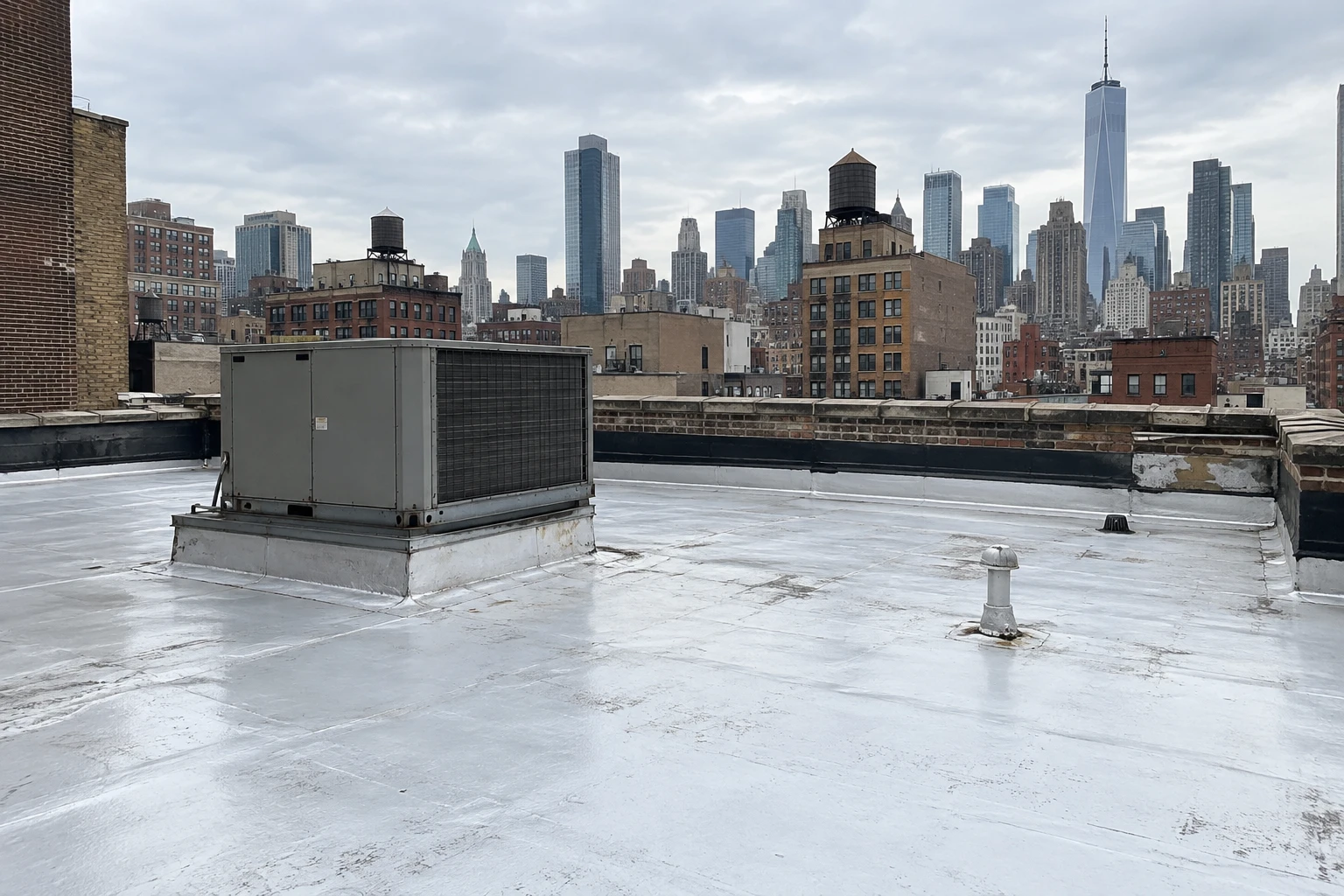
Central Park has recorded 106 F and minus 15 F, averages 29.8 inches of snow a year and sits in a strong urban heat island. A dark EPDM sheet absorbs heat and runs hotter than the air; a white thermoplastic reflects much of it. Both move with the temperature, and the movement concentrates at corners, curbs and walls.
We look for shrinkage that has pulled a flashing from its termination, wrinkles at corners and cracked sealant at counterflashing. Relief at corners and slack at wall transitions are standard in a replacement. For a small roof in Harlem or a podium deck in Midtown, the same details apply at different scale. A cool roof choice is one of several the report compares.
How does the comparison with other makers work?
On the basis of the roof's exposure, weight limit, repair path and district rules. Another maker such as Versico offers comparable single-ply systems, and GAF and others offer thermoplastic and bituminous alternatives. We write the comparison in a table: the system, the seam method, the weight, the expected repair path and the cost range.
The table goes into the condition report, with the core logs and the photographs that led to it. A board or a lender reading the file can follow the reasoning from the measurement to the choice. If a manufacturer warranty applies, we read its terms and record the conditions, because the best system on paper is the wrong one if the warranty forbids what the layout requires. The published detail for a seam or termination is compared with what is on the roof, and any gap is noted before a repair is priced.
Commercial Roofing Questions
What decides between repair and replacement on a single-ply roof?
The moisture findings and the seam condition. If wet insulation is limited to details and the seams probe sound, repair is sound. If wet insulation spreads across the field or the sheet will not take a test weld, replacement belongs in the plan. The cores and the infrared map give the proportion.
Does a ballasted roof need special care?
Yes. The stone adds weight, hides problems and shifts in storms. We sweep it back in sections to inspect the sheet, and we restore the pattern afterward. Before any green roof or solar, the load is checked with an engineer.
Can a thermoplastic sheet be recovered over EPDM?
Often, with a separation layer, if the old roof is dry and the deck sound. The added weight and the compatibility of materials are checked. A moisture scan comes first, and wet sections come out.
How long can a repaired seam be expected to last?
It depends on the cause. A seam that opened because of dirt is cleaned and re-welded. One that opened because the sheet shrank needs the tension relieved. We record the cause and probe the repair later, so the log shows whether it held.
Are New Jersey roofs surveyed the same way?
The method is identical. New York City buildings answer to Local Laws 92 and 94, while a New Jersey building answers to state and municipal codes, as its local building department confirms.