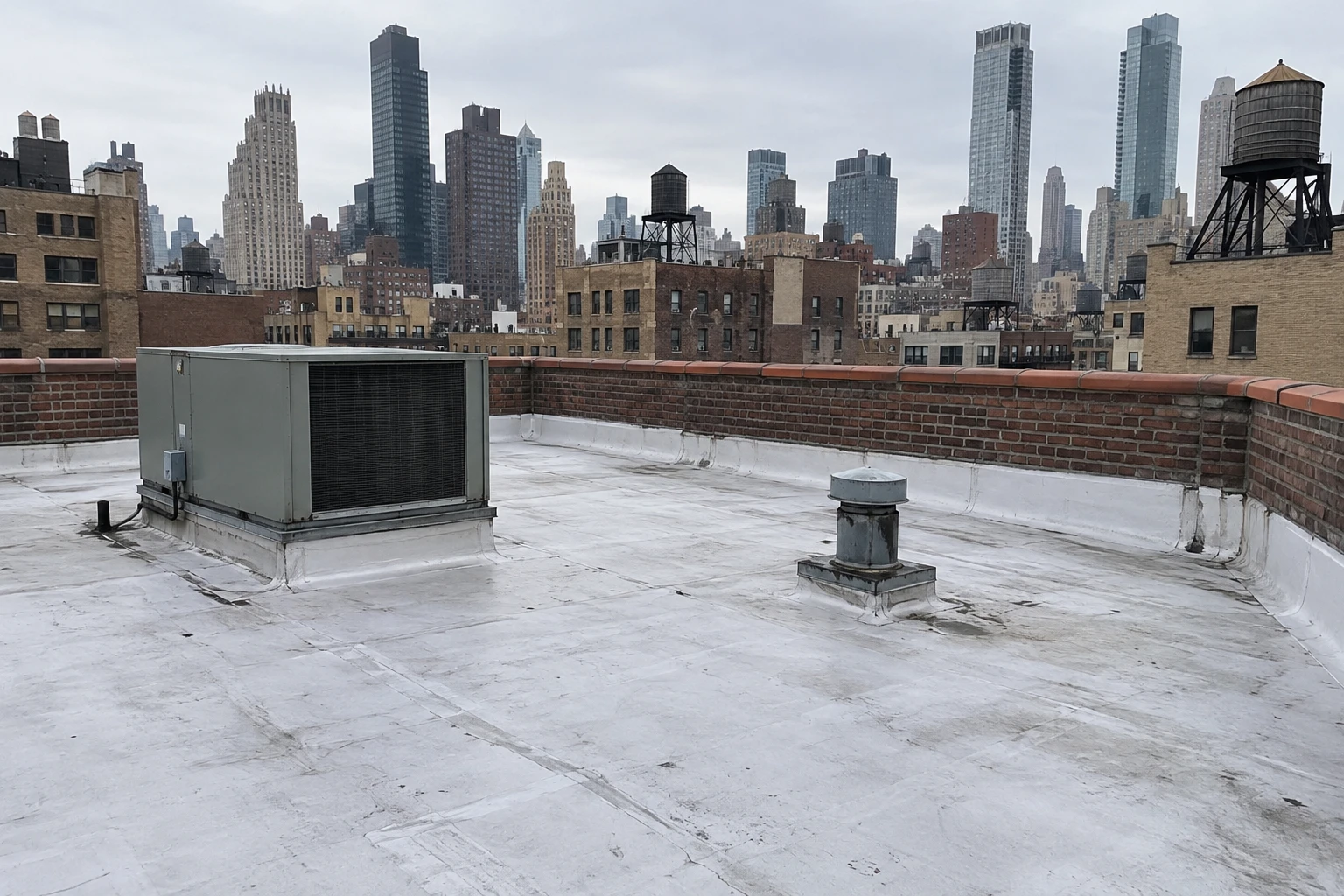
Versico single-ply roof categories in Manhattan, NY: EPDM, TPO and PVC roofs surveyed for wind uplift, perimeter fastening, coping and edge metal.
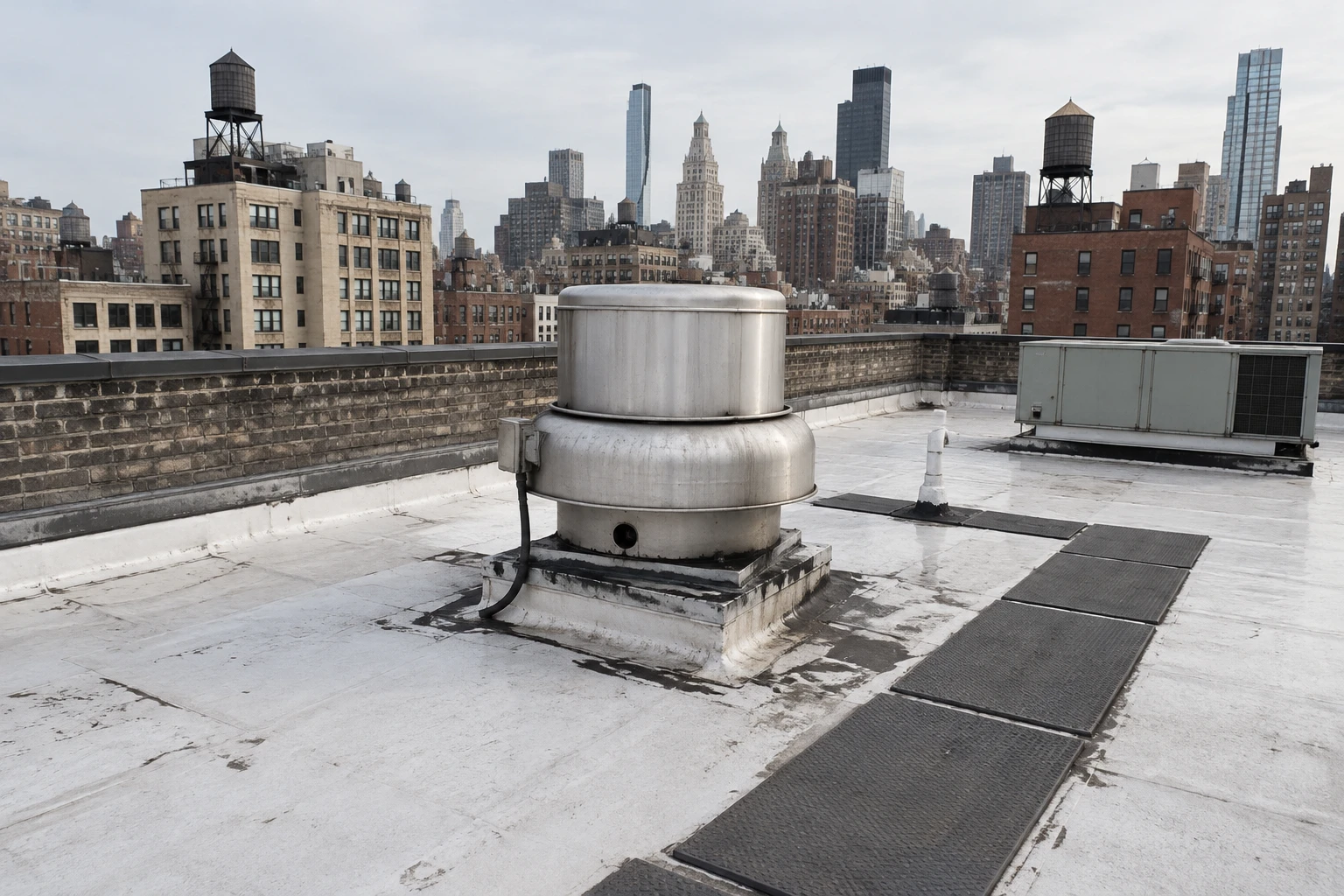
A coping stone displaced by half an inch and an edge strip lifted at one corner are the first two lines of a wind survey, and the third line is usually the fastener pattern under the membrane beside them. Versico makes single-ply roofing, and its commercial systems range across EPDM rubber, TPO and PVC thermoplastics, together with insulation and accessories. Wind is the load that single-ply roofs feel most at the perimeter, because the sheet is a light skin and the edge is where the air gets under it. In Manhattan, NY, towers, setbacks and waterfront buildings meet wind at height, and Central Park's strongest gust, 78 mph on December 2, 1974, is the scale for it.
We survey, repair and replace these categories of single-ply roof with attention to the perimeter. With the last roof report, any open violations and the roof plan, if one exists, the work can start; scope and rating come before a price.
What does a perimeter survey measure?
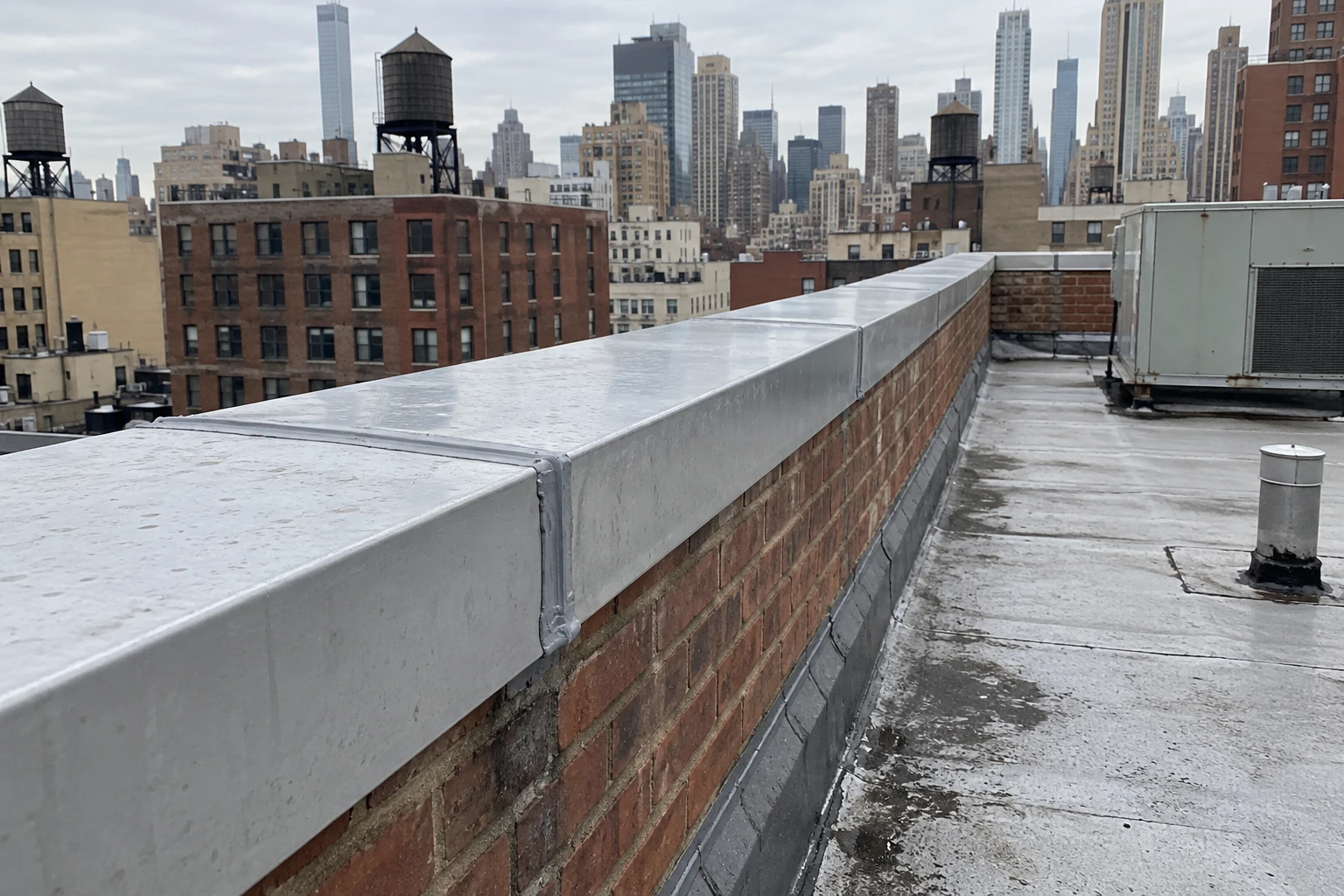
The edge metal or coping, its fasteners, its joints and its sealant. The membrane termination under it. The fastener density in the first rows of the sheet, where the attachment is meant to be closer. And the corners, where uplift is highest. We use a feeler gauge on coping joints, a pull test on terminations and a lift check on edge strips.
Findings go on the sketch by position: a gap of a given width at a given joint, a termination that pulled a given number of pounds, a fastener that backed out. Each position is numbered and photographed with a scale, and the gap widths are measured with the same gauge each visit, so a change of a sixteenth of an inch between surveys is visible and counts as a finding. A coping joint that has opened by a quarter inch lets wind-driven rain behind the membrane and gives gusts a way in. The edge metal, coping and gutters scope lists each repair with its materials and its fastening, so the perimeter is rebuilt to a standard and not patched by eye.
How does the attachment method change the wind risk?
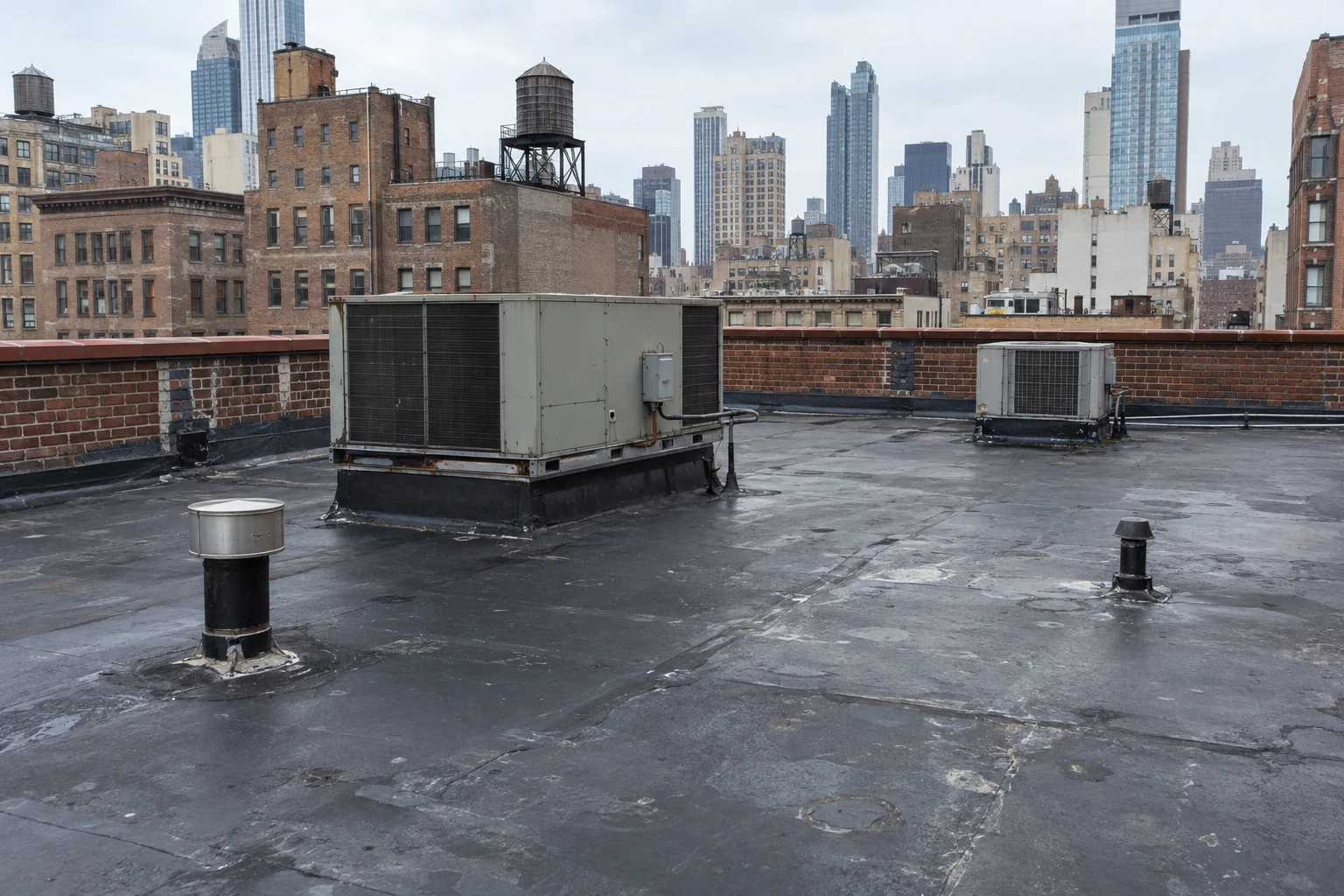
An adhered sheet holds by bond across its surface, and its weak points are edges and corners where the bond has lifted. A mechanically attached sheet holds by plates and screws along the seams, and its weak points are fastener backout and billowing between rows. A ballasted sheet holds by weight, and its weak points are stone that has blown or settled into piles.
The survey records the method in each zone and tests accordingly. On a roof with two methods from a past recover, the boundary is marked, because the two behave differently in wind and the tie-in between them is a stress point. A sheet that is adhered on one side and ballasted on the other flexes at the line, and the line gets its own probe. We lift a corner of an adhered sheet at a test location to see the adhesive, count fasteners per length of seam on an attached roof and measure ballast depth at several points on a loose-laid one. The Local Laws 92 and 94 of 2019 requirement that a full replacement carry solar, a green roof or both over the sustainable roofing zone adds racking or soil loads that interact with these methods, so the design checks wind and weight together.
Which Hudson-side buildings see the most exposure?
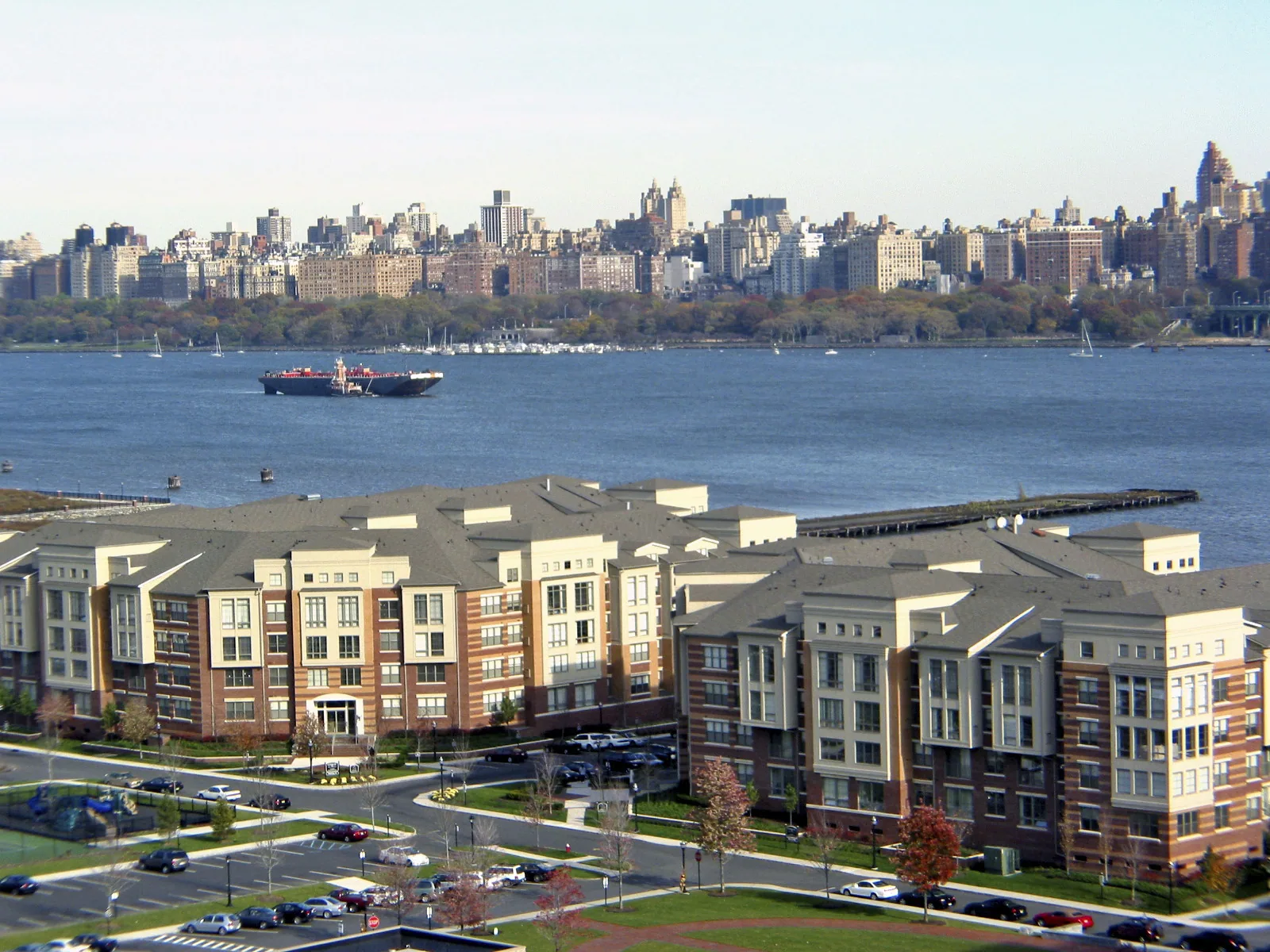
Fort Lee covers about 2.87 square miles and sits atop the Hudson Palisades escarpment at an elevation of 289 feet, and several established residential high-rises in the borough stand more than 300 feet tall. Weehawken covers 1.47 square miles, about 46.69 percent of it water, and its Lincoln Harbor business district lies between the Lincoln Tunnel and Weehawken Cove. A tall building on an escarpment or beside open water can meet wind with less shelter than one in a dense block, and the roofs there are surveyed with that in mind.
We do not assume what a particular roof carries. We walk it. For a tower in Fort Lee or an office roof in Weehawken, the survey checks perimeter fastening, edge metal and equipment anchorage first, then drainage. Sandy sent a surge to The Battery on October 29, 2012 that stood 14.06 feet over average low tide, and the wind that came with it tested edges across the region.
What is the post-storm routine?
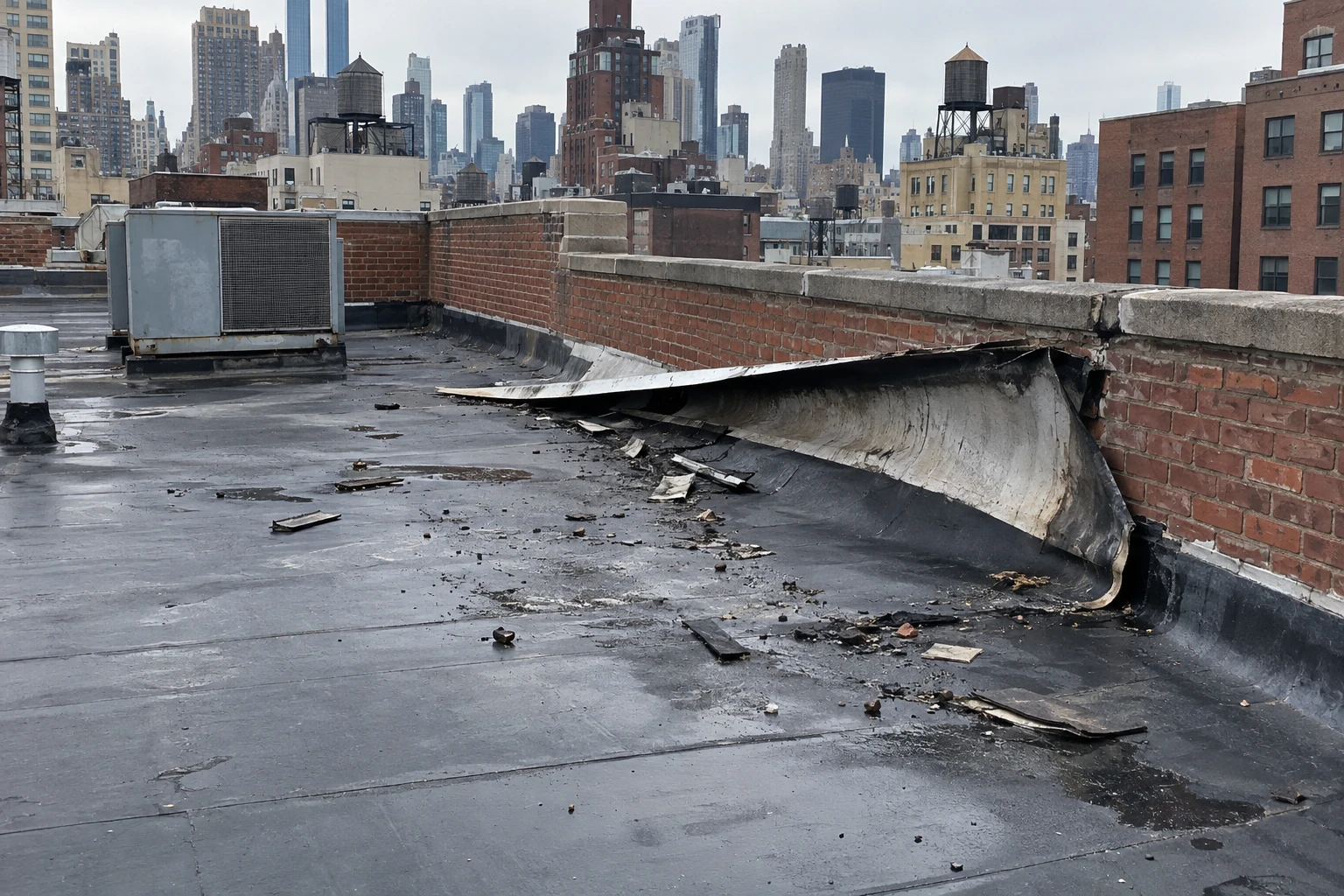
Walk the ground around the building first for trim, coping fragments and membrane scraps. Then the roof edges, then the equipment covers, then the drains. We photograph each finding before touching it and tie it down or close it the same day. Loose coping is strapped, a lifted edge strip is pinned, and an open termination is covered with a temporary seal. The owner receives the photographs and a one-page note that evening, which supports an insurance claim and tells the board what has been done so far. Permanent repair follows when the weather allows.
Ida's rain on September 1, 2021 peaked at 3.15 inches in one hour and totaled 7.13 inches in Central Park. A lifted edge during rain like that lets water behind the membrane quickly. Our storm damage roof repair notes record what was found, what was secured and what remains, and the pre-storm survey provides the comparison that separates new damage from old wear.
How does the comparison with other makers work?
On wind rating, attachment options, edge details and repair path, for the exposure at hand. Another maker such as Carlisle SynTec offers comparable systems, as does Duro-Last with prefabricated sheets. Each option's perimeter detail, fastening density and cost range appear in the table.
With 29.8 inches of snow in an average year and temperatures from minus 15 F to 106 F in Central Park, edges also see freeze-thaw. The comparison table includes the edge metal for each option, because the best membrane with a weak edge is a weak roof. If a manufacturer warranty applies, we record its wind and edge conditions beside the table.
Commercial Roofing Questions
What decides whether a lifted edge is a repair or a sign of wider failure?
The fastening and bond behind it. If the lift is local and the membrane behind it is secure, re-securing the edge and replacing the metal is sound. If the sheet is loose across a long run, or the fasteners are backing out, the whole perimeter needs rework or the roof is near replacement.
How often should edge metal be checked?
At every inspection and after every major wind event. The joints and sealant open slowly, and a check with a feeler gauge finds them early. We log the gap widths so the trend is visible.
Can ballasted roofs be kept in place near the edge?
Edges need larger stone or pavers because wind is stronger there. We measure ballast at the perimeter, restore it to the specified size and depth and check that edge metal is fastened. After storms, we look for stone displaced toward the parapet.
Does a high-rise roof need different edge details?
Often, because wind speed and uplift increase with height. We follow the design wind speed in the drawings and the code, and we compare it with what is fastened. A higher exposure may call for heavier edge metal and closer fastening.
Are New Jersey roofs surveyed the same way?
Yes. The method is identical. The report states that Local Laws 92 and 94 reach New York City and that a New Jersey building follows state and municipal codes, confirmed with the local building department.