Roof surveys and repairs for Weehawken, NJ office, waterfront and transit-district buildings, planned around river wind, drainage and tunnel-corridor access.
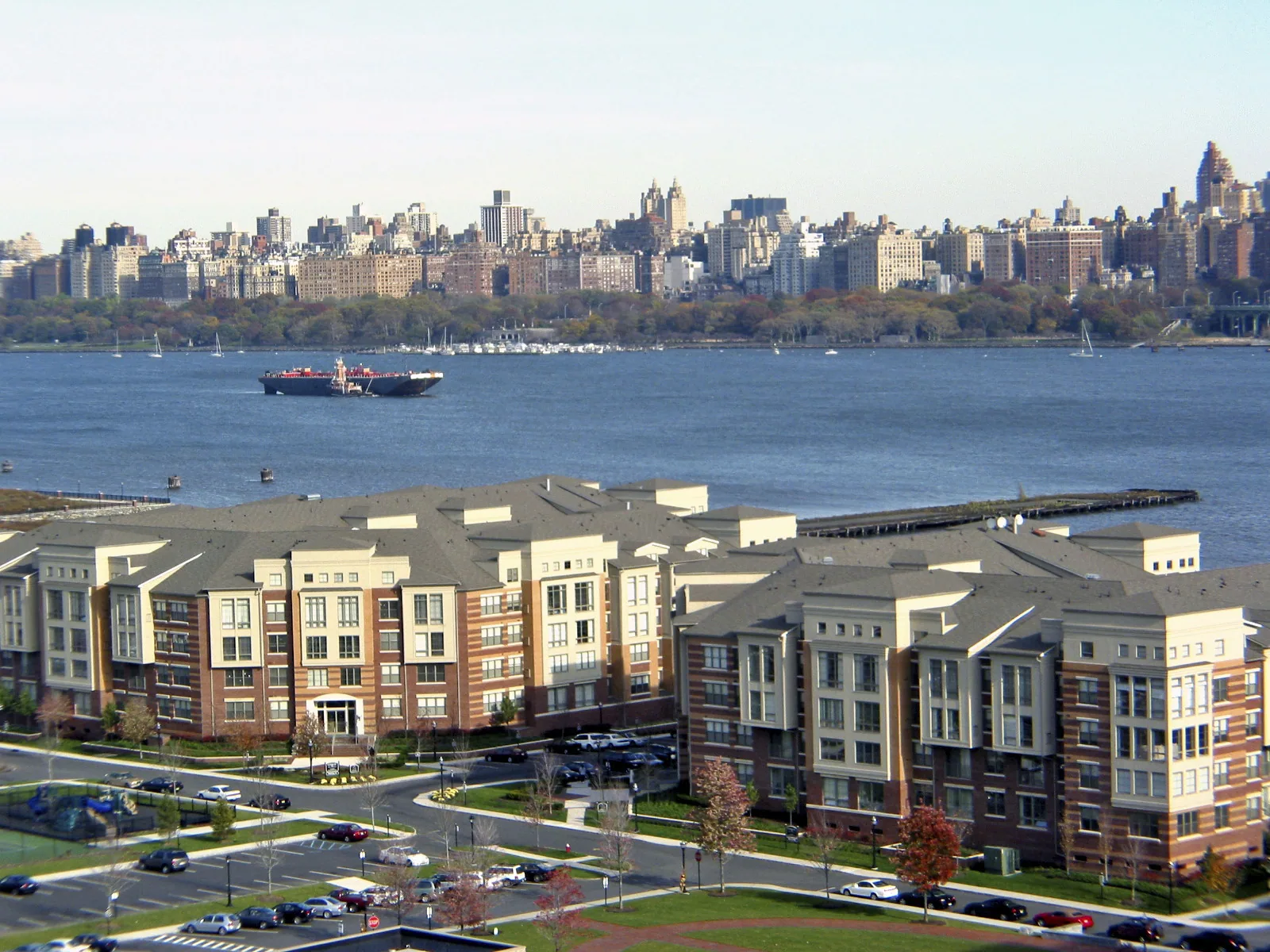
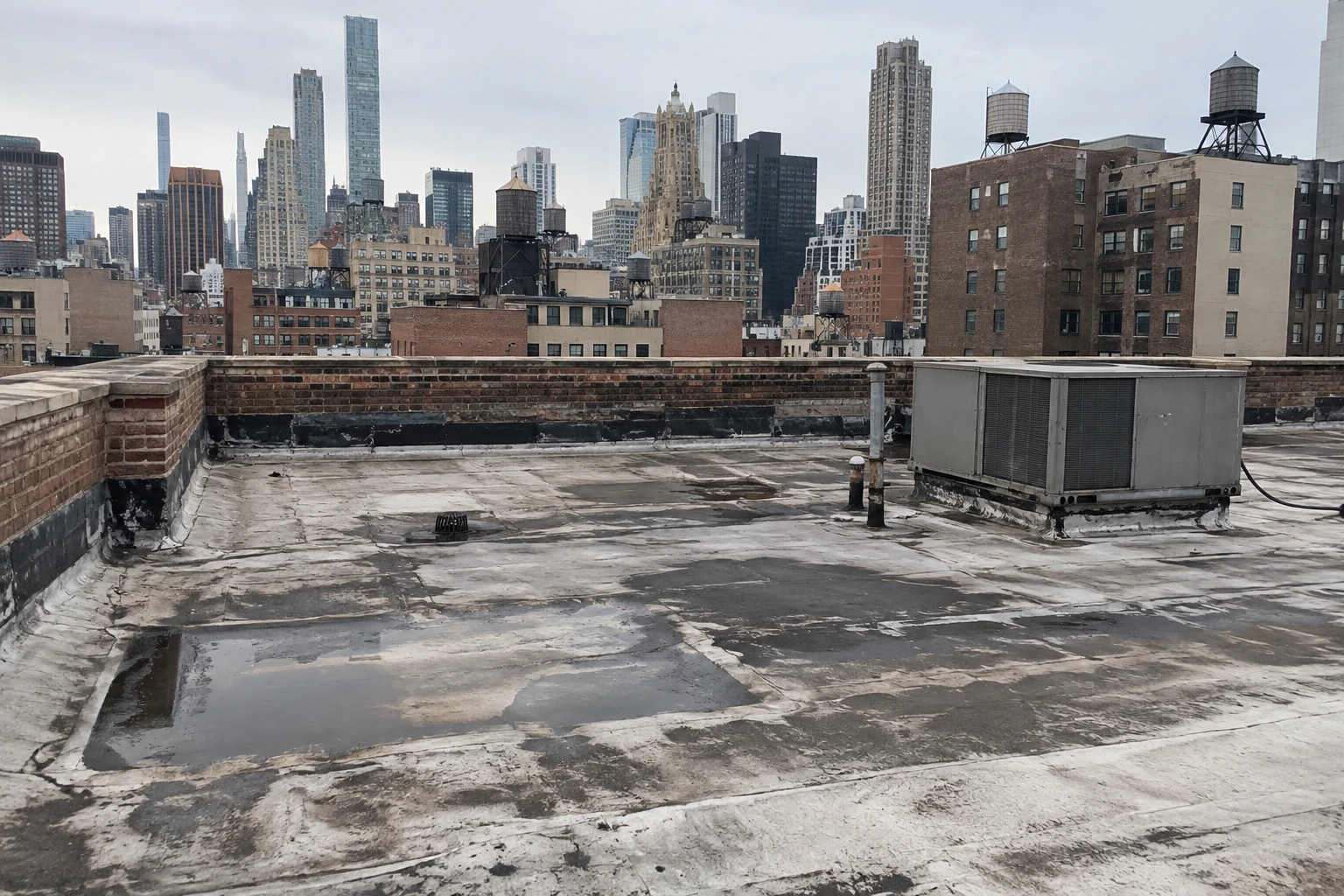
On a waterfront office roof, the first reading is ponding depth at the drains nearest the edge, because water standing there means the leaders are slow and the river wind is pushing rain across the surface faster than they clear it. Of Weehawken's 1.47 square miles, about 46.69 percent is water, which puts its roofs close to the river on three sides. The Lincoln Harbor business district between the Lincoln Tunnel and Weehawken Cove has tenants including UBS, Hartz Mountain and Telx, and the Port Imperial ferry terminal opened in 2006 on the former United Fruit Company site. The last roof report and the building age come first.
Weehawken commercial roofs are surveyed and repaired from Manhattan, NY, and the emergency line answers at any hour.
What kinds of roofs does a waterfront business district carry?
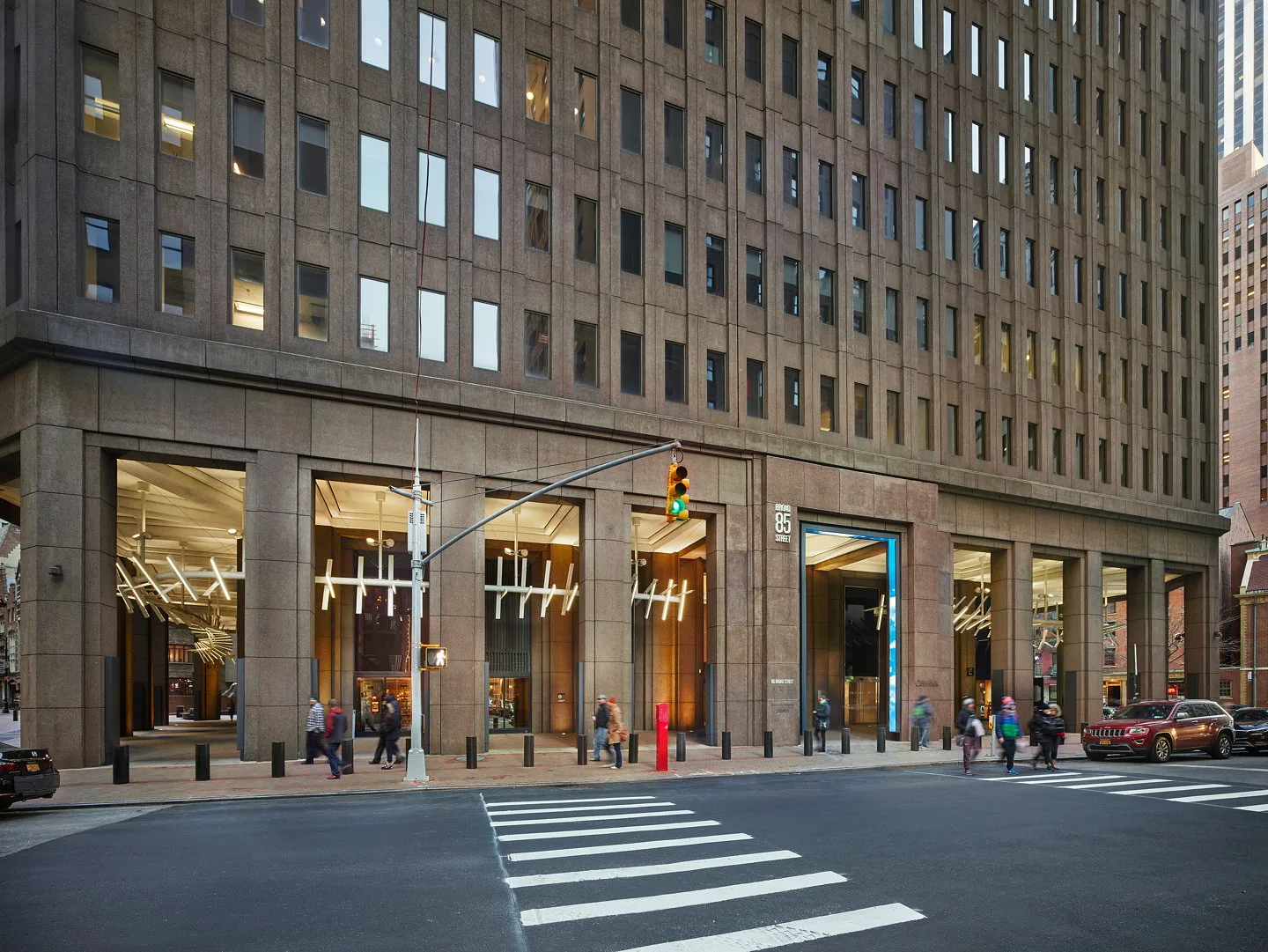
Office and commercial buildings in a district like Lincoln Harbor usually have low-slope roofs with rooftop mechanical units, curbs, drains and walkway routes for service staff. A data or telecom tenant, where one is present, adds cooling equipment and its exhaust. Ferry and transit facilities add canopies and covered areas where water must be shed quickly. We do not assume which roof system any building carries. The survey identifies each membrane, its age and its attachment before it rates anything.
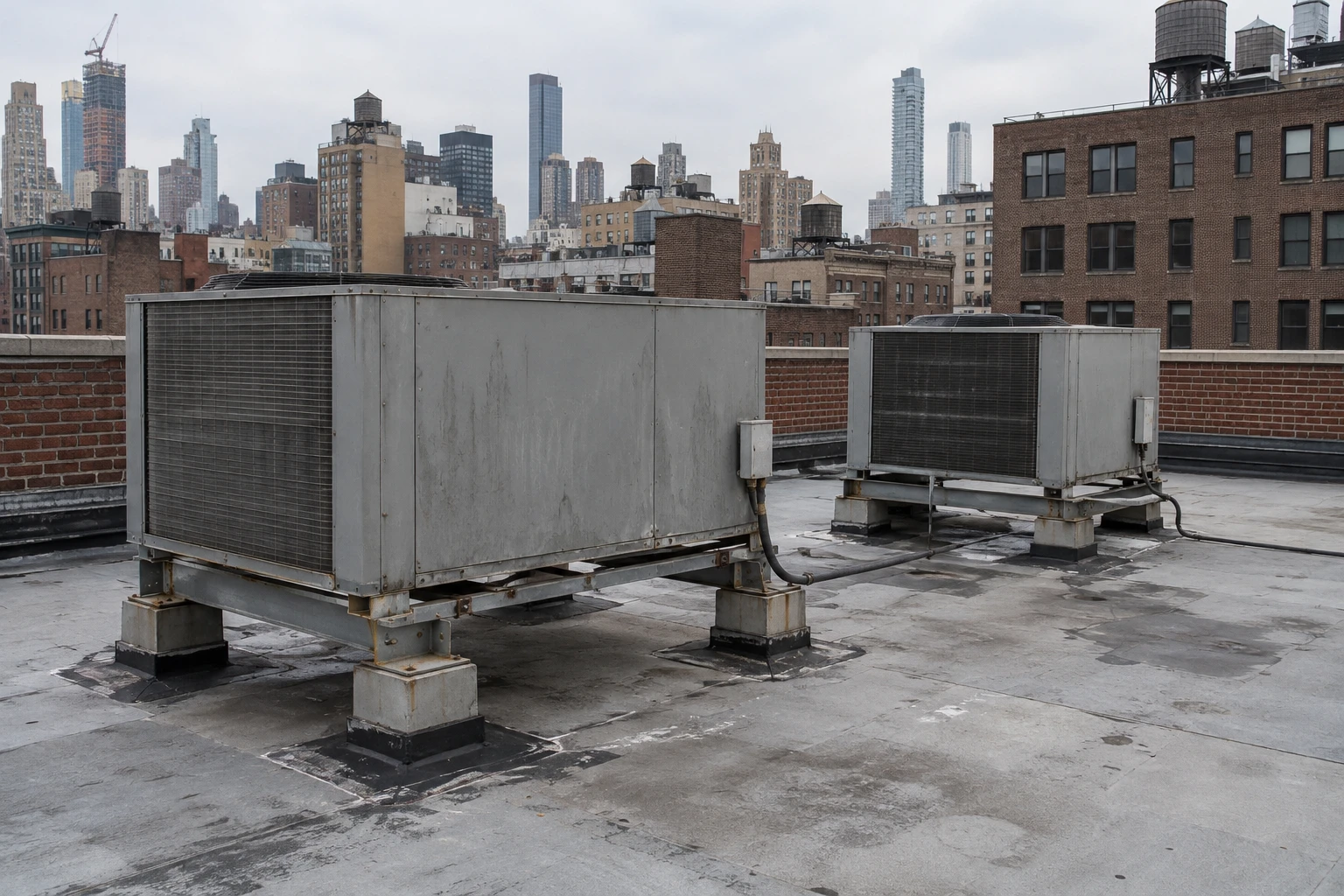
The common failure points are the ones every low-slope roof shares: drains and scuppers, flashing at curbs and walls, seams along equipment routes and edges exposed to wind. Where mechanical units sit on curbs, the flashing at the curb is a frequent entry for water. A rooftop equipment curb and support inspection checks the base, the counterflashing and the sealant. Send a list of the rooftop equipment and the tenants it serves.
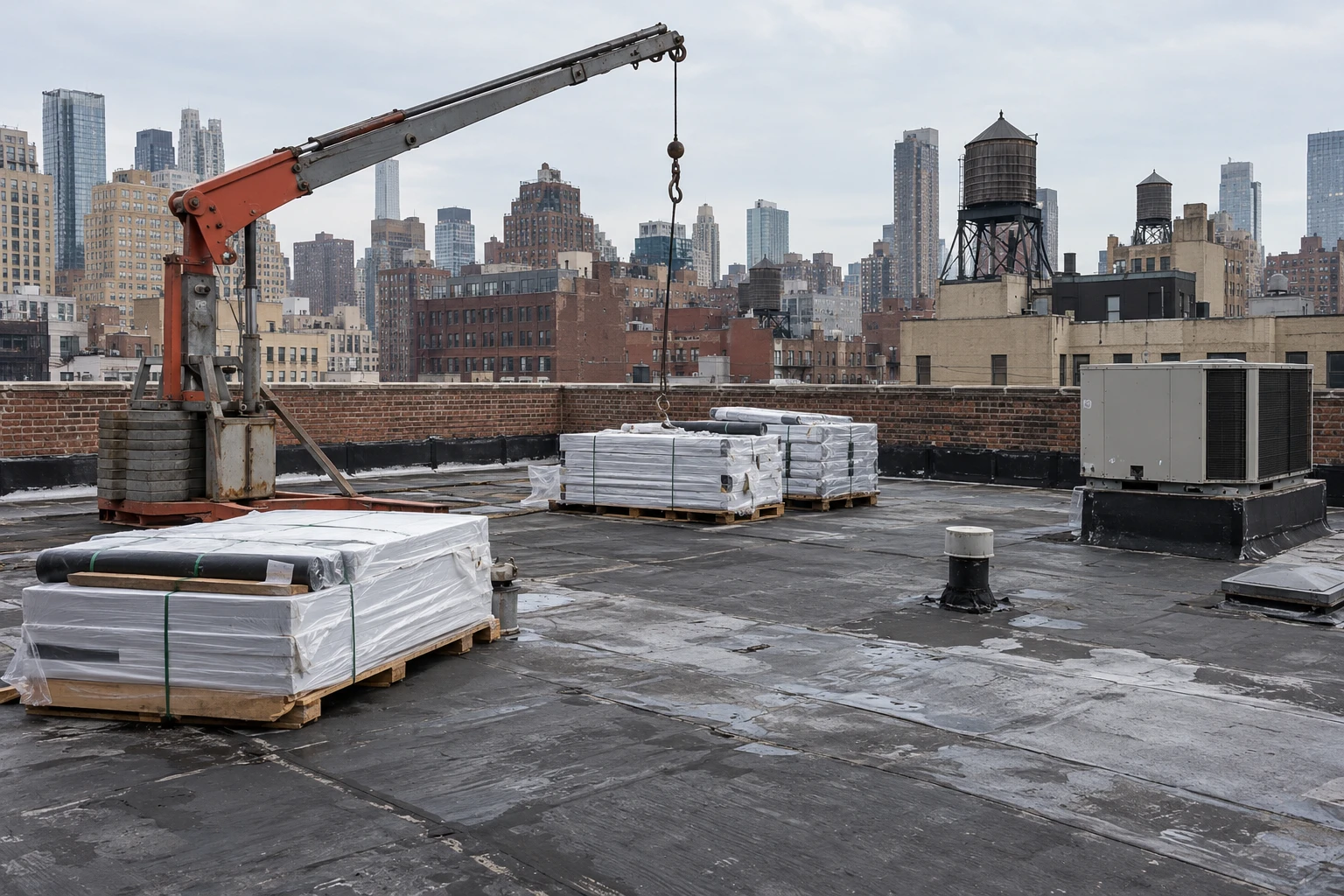
Materials and staging on the waterfront deserve a look. Wind off the river affects crane and hoist operations, so the plan sets wind limits for lifting rolls of membrane and bundles of insulation, and it secures stored material on the roof against gusts. Commuters and visitors use the ferry terminal and Lincoln Harbor, so any scope over a public path includes pedestrian protection at entrances. A short written plan, shared with the property manager, lists lift windows, protected routes and the person who can stop the work.
What does river wind do to an edge?
Weehawken is the western terminus of the Lincoln Tunnel, and the eight-lane Lincoln Tunnel Helix viaduct carries traffic from the toll plaza to the crest of the Palisades. The viaduct climbs from the river to the crest of the Palisades, and a roof near the water sees wind that crosses open water with nothing to slow it. A 78 mph gust in Central Park on December 2, 1974 came from weather that crosses the river on both banks.
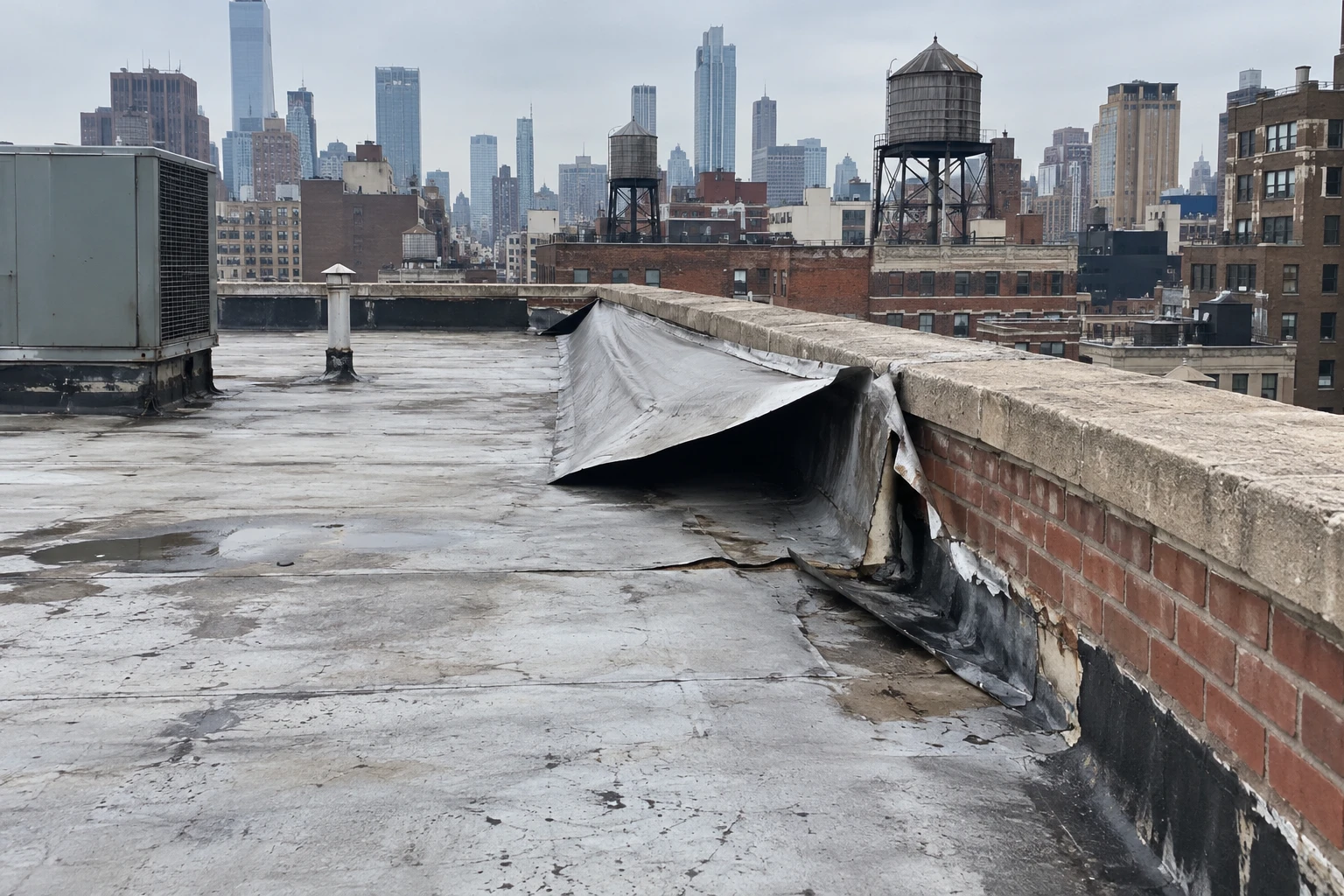
Wind creates suction at roof edges and corners, so edge metal, coping and the first row of fasteners take the load. We walk the perimeter, check fastener spacing and sealant, and probe seams near the edge. A displaced run of coping on the windward side is the signature of a gust. A quick edge check after a strong storm catches a lifted piece before the next gust takes it. Our wind damage roof repair secures what moved and reinforces the line. Photograph the edge from the ground after every storm.
Why do drains matter so much on a roof next to the river?
A town that is nearly half water depends on street drains that also receive roof leaders, and those can run full in a storm. One hour on September 1, 2021 delivered 3.15 inches, which is the load a drain system must handle. Roof drains are sized for a design rainfall, and an hour above it leaves water standing against parapets and curbs.
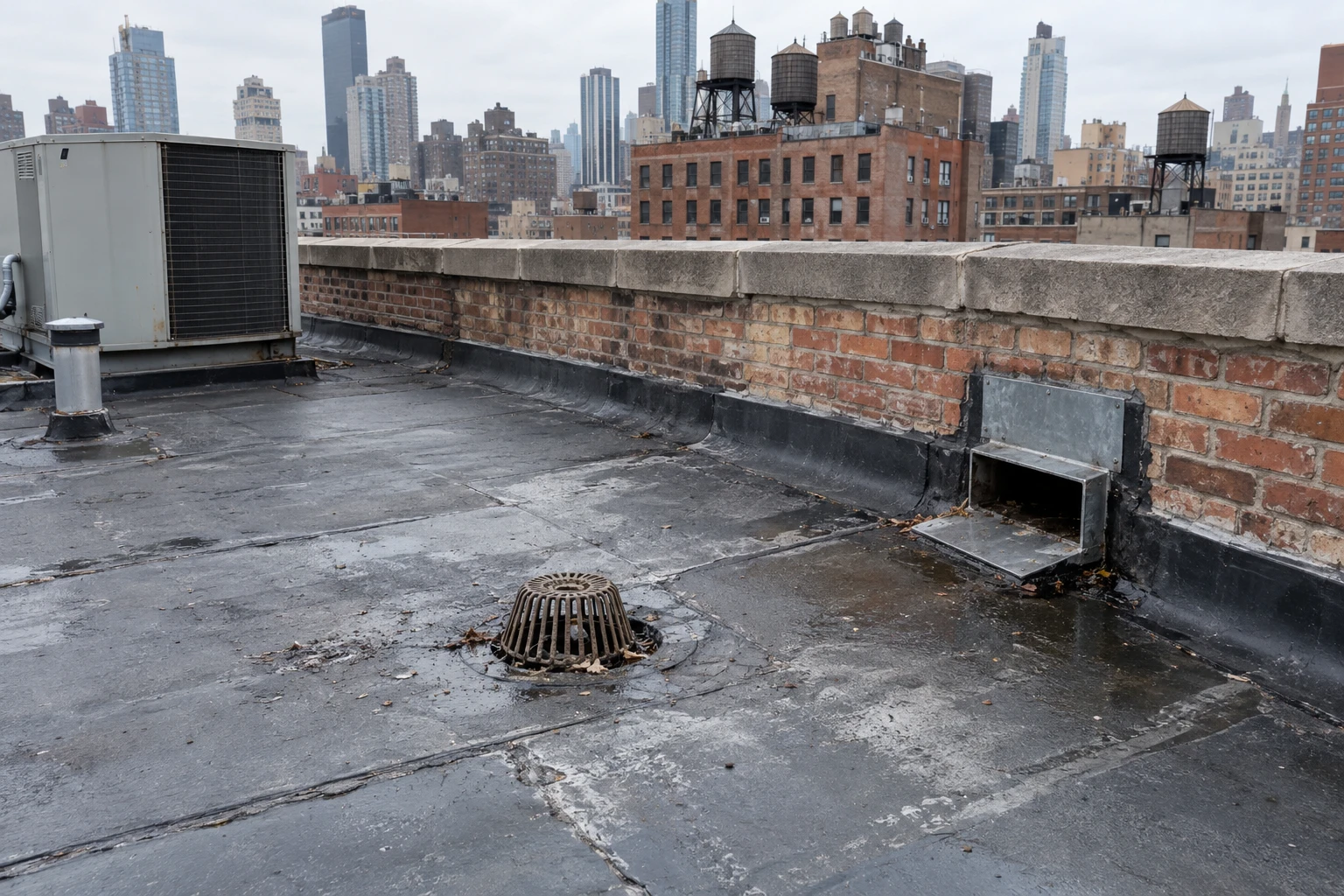
We flush each leader, clear the strainers, check overflow openings and measure ponding depth. A clear drain with standing water means a low spot in the deck or insulation, which tapered insulation or a cricket corrects. A roof drains and scuppers upgrade often costs less than the damage a flooded roof causes. Record the depth of any pond with the date.
Roofs with heavy equipment need extra attention at the drains nearest to it. Condensate lines from cooling units, if they discharge onto the roof, keep a section constantly wet and grow algae, which holds moisture against the membrane. We trace each condensate line, route it to a drain or a splash pad and protect the membrane where water lands. The fix is small, and it prevents the seam wear that a permanently damp patch invites.
How does tunnel traffic affect the schedule of roof work?
The Lincoln Tunnel, which links Weehawken with Midtown, carried roughly 112,995 vehicles a day in 2016. Crews and materials that cross it plan around its queues, and a delivery window that looks easy on a map can slip. We schedule deliveries for the hours the road is clearest, stage materials on the roof the day before heavy work and confirm hoist and crane windows with the site.
For a building that stays occupied, such as an office with tenants, the occupied building reroofing plan sets working hours, protects entrances and routes debris away from public paths. Telecom and data tenants may restrict access to rooftop areas near their equipment, and we ask for their rules early. Tell us who controls roof access and whether an escort is required.
What does an owner keep in the roof file?
A good roof file holds the dated survey with its moisture map, the core log, the maintenance history, the warranty paperwork and photographs. It lets an asset manager rate the roof, plan its replacement and answer a lender or a buyer. For a commercial owner with properties on both sides of the river, a common scale lets the roofs be compared.
Our roof capital planning work turns the ratings into a schedule by year. Owners with buildings in Secaucus or North Bergen as well can fold them into the same plan. Update the file after each survey.
Fire and life-safety rules also touch the roof. Smoke vents, roof hatches and access ladders have clearances that cannot be blocked by new membrane or equipment, and some assemblies carry fire ratings that the replacement must match. The survey notes each, and the proposal states how the new work keeps them. A reviewer in the building department or a fire marshal can then read the scope and see that the roof change does not compromise life-safety features.
Commercial Roofing Questions
What decides how often a waterfront roof is inspected?
Exposure, age and the amount of equipment decide it. A roof near the river with many curbs and an older membrane needs more visits than a newer, sheltered one. The first survey sets the number.
Can rooftop work happen around telecom equipment?
Yes, with coordination. The tenant sets access rules, and we protect the equipment, keep fumes and dust away and schedule heavy work for periods the tenant approves.
Do ferry and transit canopies need a different approach?
They can. Large covered areas shed water quickly, and gutters, downspouts and expansion joints take most of the strain. The survey rates those details separately.
What should we do after a strong river wind?
Walk the edge from a safe position, photograph any lifted metal or coping and call. A small lift repaired early costs far less than one that spreads.
What does the first survey need from us?
The address, the building age, the last roof report and a list of rooftop equipment. Photographs of the worst drain and edge help us plan the walk.