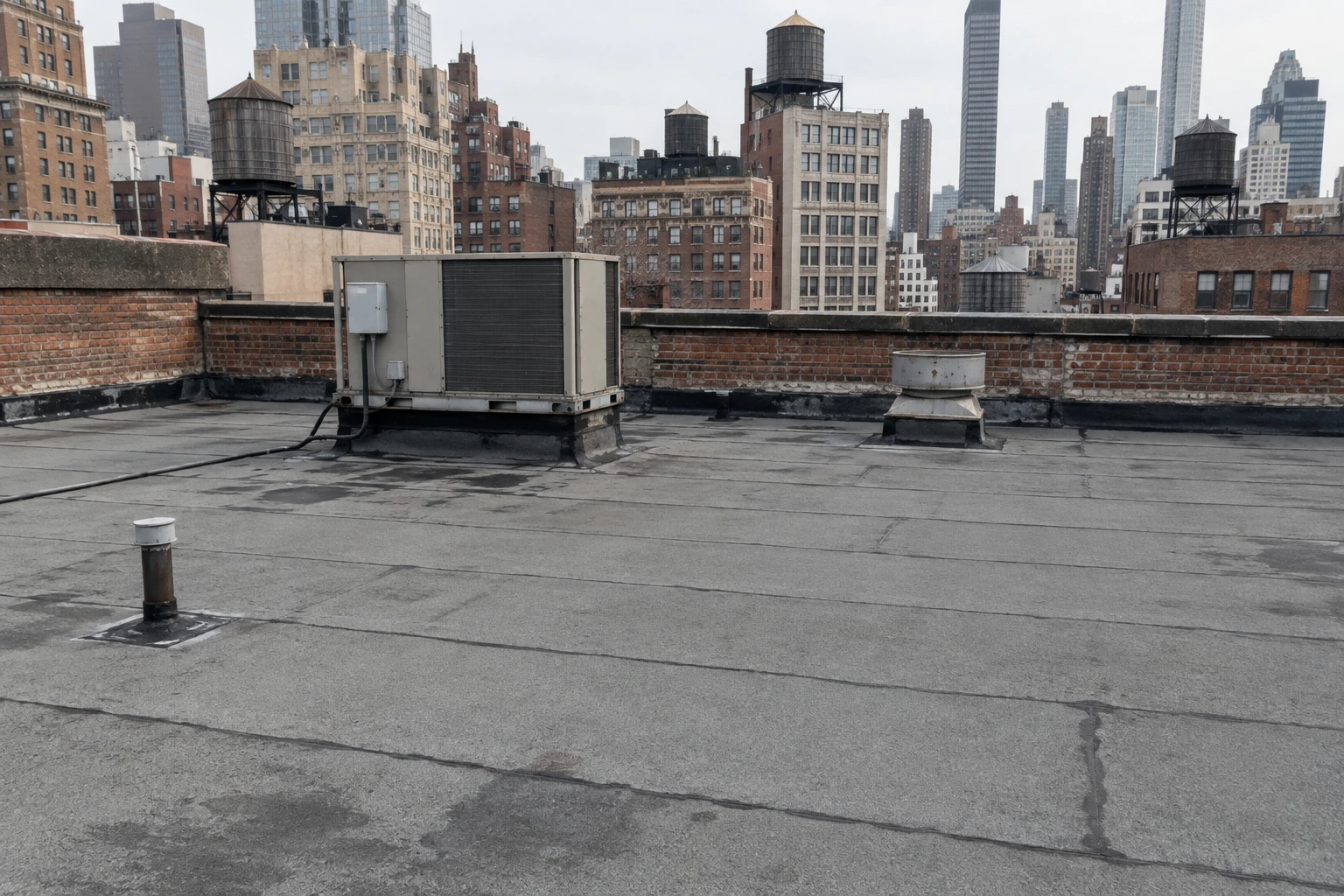
Roof surveys, repair and replacement for North Bergen, NJ retail, freight and industrial buildings, planned around drainage, wind and dock schedules.
Wide roofs over loading docks show their problems along a line: a stripe of ponded water a few feet in from the edge, parallel to the dock doors, where the deck has sagged between supports and the drains sit higher than the low spot. North Bergen covers 5.57 square miles, 5.14 of it land, and its commercial buildings follow its roads: the retail strips of Tonnelle Avenue, the freight yards served by the New York, Susquehanna and Western Railway, which operates five intermodal freight facilities within the township, and the buildings near U.S. Route 1/9 on the western edge. Start with the last roof report and the building's age; scope comes second.
Our work in North Bergen, NJ is dispatched from Manhattan, NY: surveys, repairs and replacements of commercial roofs, with an emergency line that answers at any hour.
Which North Bergen roofs carry the most operating risk?
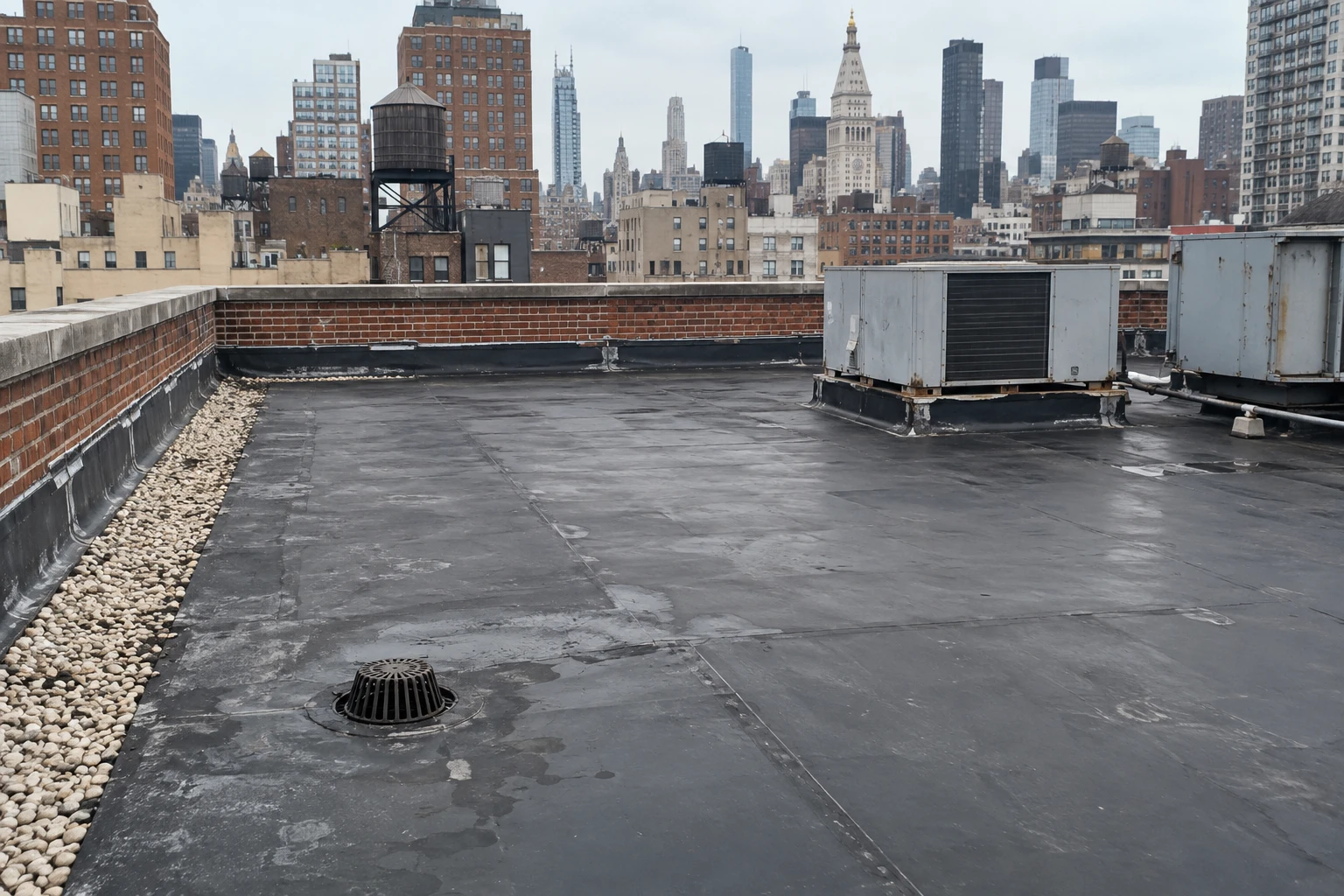
Freight and distribution buildings sit near the intermodal facilities, and retail buildings line Tonnelle Avenue, one of the township's main retail districts. Both kinds of building have broad low-slope roofs with drains, scuppers, rooftop units and long perimeters. The Palisades rise from the Hudson waterfront at Bulls Ferry, which puts some buildings at the foot of a steep slope and others on top of it.
The risk comes from use. A roof over stock or racking carries the cost of inventory, a roof over a retail floor carries the cost of closing, and a roof over a dock carries the cost of a delayed shipment. We rate each roof on condition and on consequence. We do not assume what any building carries, so the first survey identifies the system, the age and the attachment. The use of the space below each roof area belongs in the first message.
Retail roofs on a corridor like Tonnelle Avenue combine several tenants under one membrane. A restaurant's exhaust fan stains and softens the sheet near it, a grocer's refrigeration condensers add heat and condensate, and a cell-phone or signage installer may cut a new penetration without telling the roofer. The survey counts every penetration and traces who owns it, so a leak can be assigned to the right party. Where a landlord holds the roof and tenants hold the equipment, the log of who touched what is the best protection for both.
How is roof work scheduled around dock hours and truck lanes?
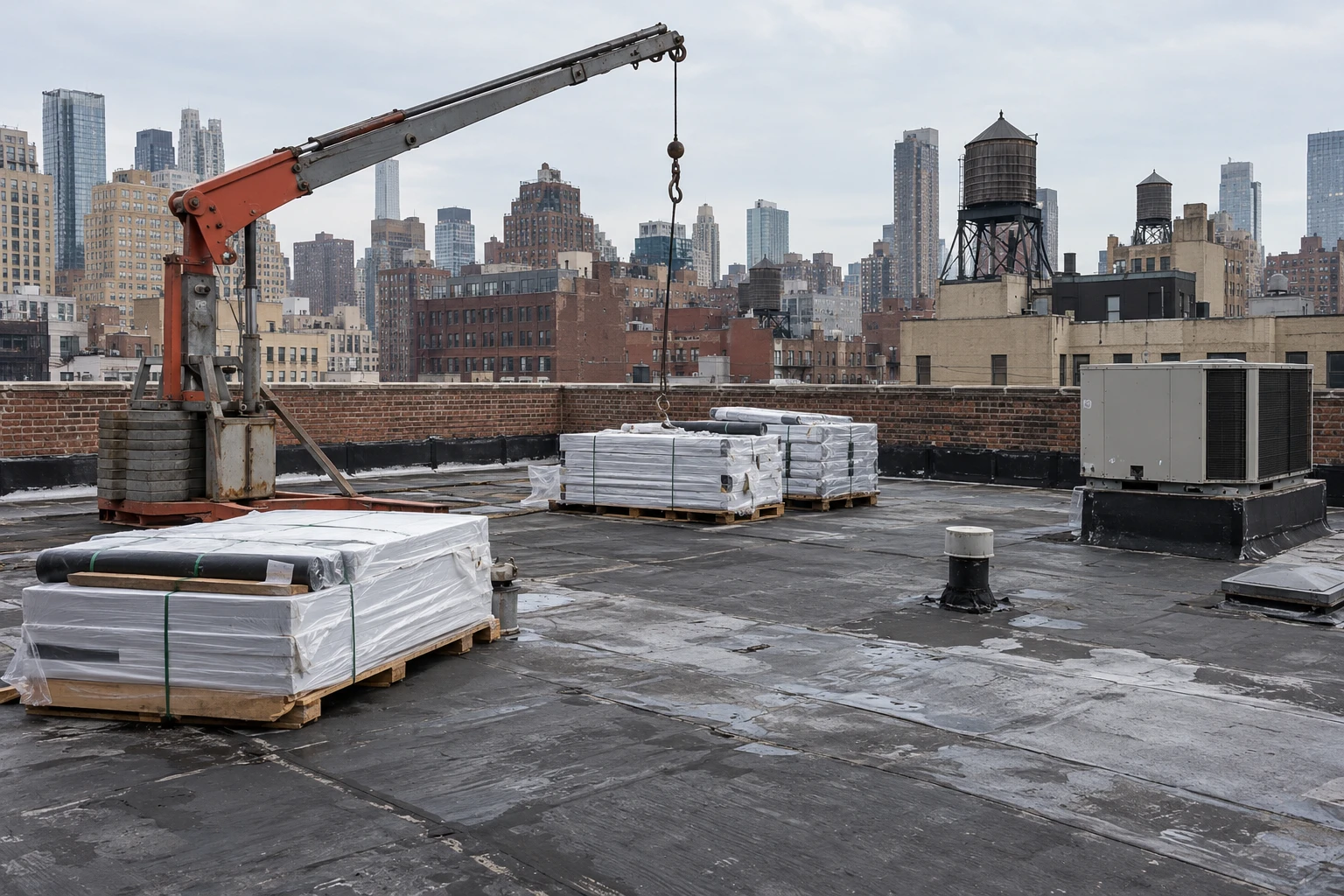
Docks are where a building is busiest, and the roof edge above them is where debris falls and wind lifts metal first. We stage materials away from truck lanes, protect doors with overhead barriers and close each day's work before the afternoon wave of deliveries.
Route 495 links the Lincoln Tunnel to the New Jersey Turnpike, and traffic on it shapes when trucks arrive at the docks. We ask for the delivery schedule and place the hoist, the dumpster and the material stack where they do not block it. Work moves in sections, with a small open area at any moment. Our occupied building reroofing approach was built for this. Give us the peak weeks and the holiday blackout dates at the start.
Debris control matters beside a railway or a truck court. Fasteners and scrap that fall to the apron can puncture a tire or injure a worker, so we use netting, a magnet sweep and a daily walk of the ground. Hot work follows a permit and a fire watch, and we choose cold-applied or mechanically attached systems where torch work would sit near stored goods. The safety plan is shared with the site's safety lead before the first day, and a pre-task meeting opens each shift.
What do open lots and the Palisades do to wind on a roof?
A roof beside a wide lot or a rail yard has no neighbors to slow the wind, and the cliff face of the Palisades can channel gusts along the base. The 78 mph gust recorded in Central Park on December 2, 1974 marks the extreme, and lesser gusts do their work every season on edges, coping and equipment.
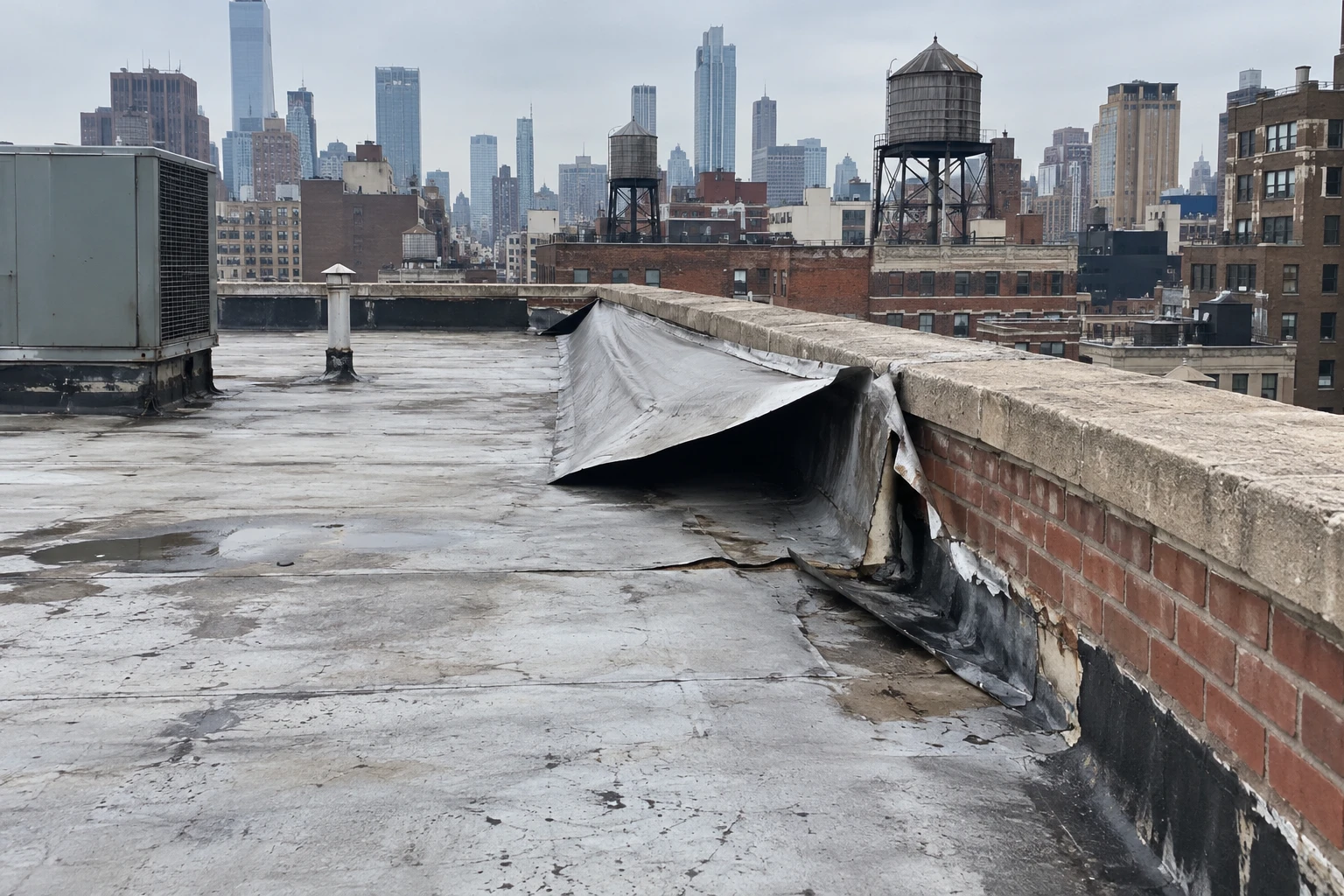
We walk the perimeter and corners first, checking fastener spacing, cleats, sealant and lap direction. On a mechanically attached membrane, flutter shows as wrinkling that points to a corner. Equipment covers, antennas and signs act as sails. After any strong storm a quick edge check catches a lifted piece before it spreads, and a wind damage roof repair secures what moved. Photograph the edge from the ground and note the direction of the damage.
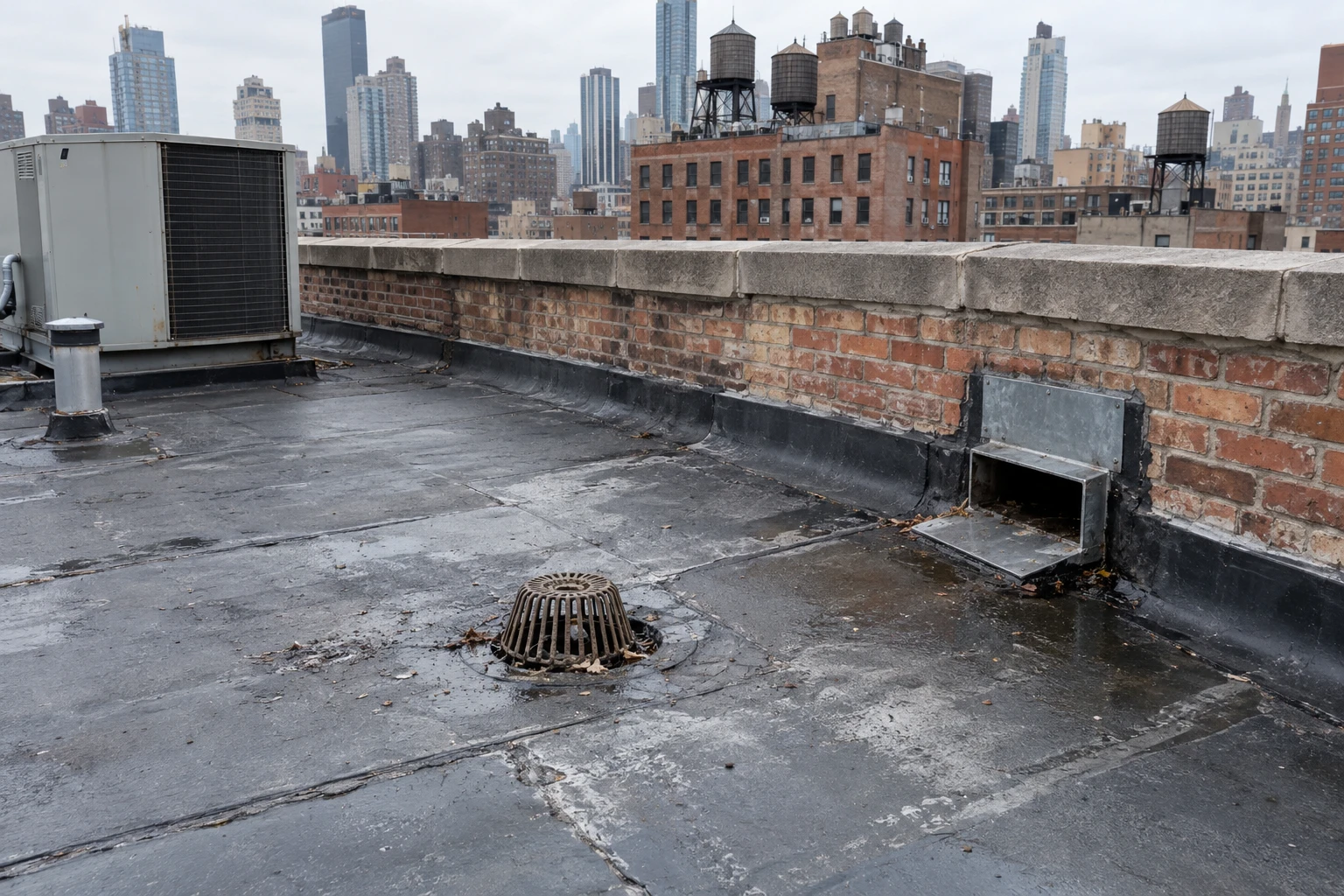
Drainage on a broad roof gets equal attention. Water on a long, nearly flat span travels far to reach a drain, and a clogged scupper at the low end can hold several inches across a wide area. Drain systems here face the scale of rain that Ida showed on September 1, 2021, when New York City saw a one-hour record of 3.15 inches. We flush leaders, check overflow openings and measure ponding depth, and a roof drains and scuppers correction often pays for itself in avoided damage.
Which membranes suit a freight or retail roof?
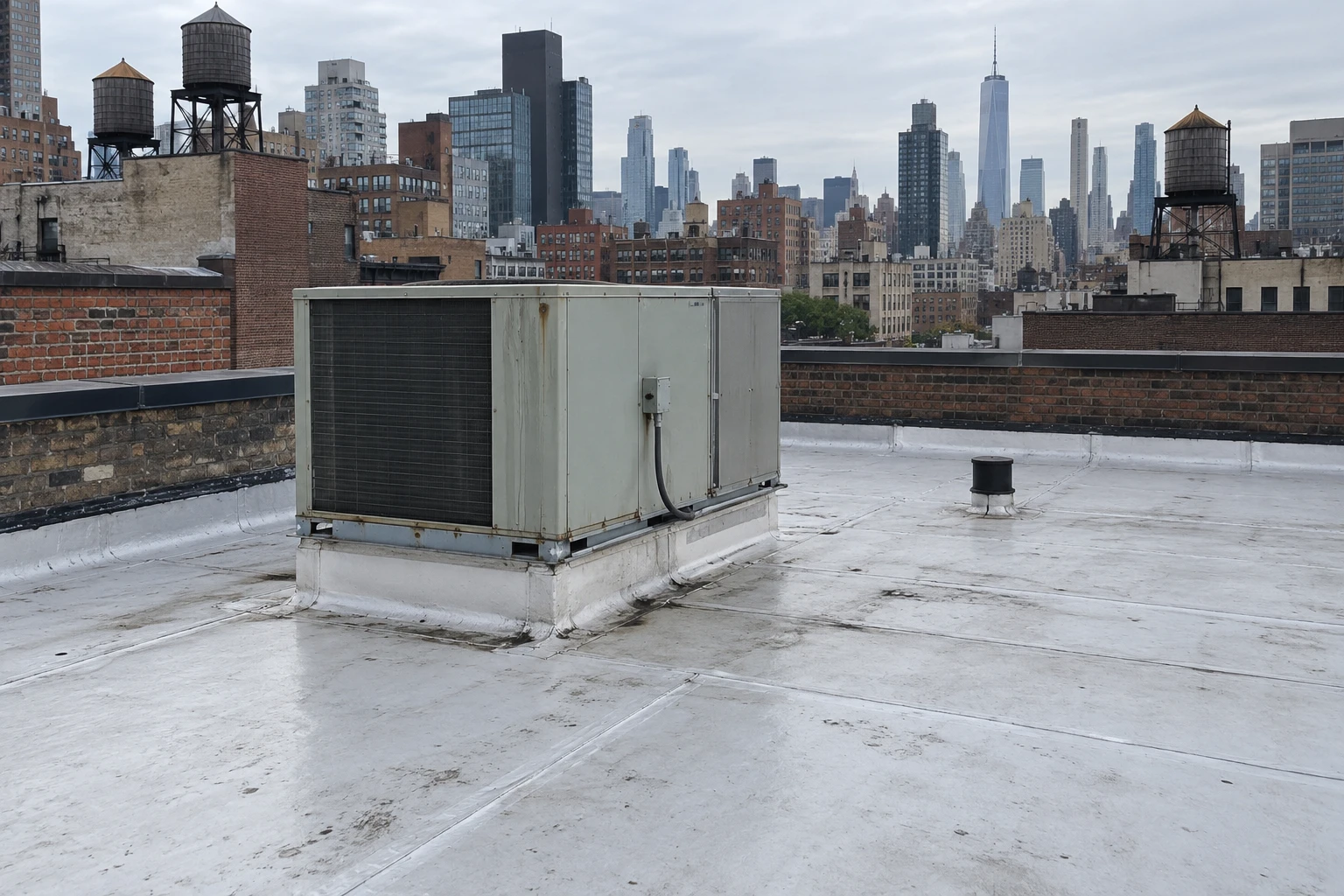
On large, low-slope roofs, single-ply systems such as TPO roofing and EPDM roofing are common, and modified bitumen suits roofs that see heavy foot traffic. Retail roofs with restaurant exhaust may call for PVC near the fans. Moisture map, deck and budget drive the decision.
A coating can extend a roof whose insulation is dry and membrane sound. Where it is wet, replacement follows, with tapered insulation to correct the ponding. In New Jersey the state code governs, and the survey confirms which edition and which energy provisions apply. The code basis should appear in the proposal, since it sets the insulation level and the attachment.
Winter adds its own stress. A wide roof collects drifts at parapets and equipment, and Central Park's snow, 29.8 inches in an average year with a 27.3 inch fall on January 23, 2016, sets the scale. Meltwater must reach a drain that may be frozen, and ice can crack a leader. We inspect drains before the first freeze, clear ice from inlets after storms and check seams and flashings after hard cold. A damaged roof is dried in until the weather allows permanent work, and the dry-in is recorded with a date.
How does an owner plan roof spending across a portfolio?
A rated survey of every roof gives a ranked list, and the plan separates repair, coating and replacement with cost drivers for each. For a landlord with several buildings, a roof capital plan sets the order and the budget by year.
Owners of retail and freight space near Union City and Secaucus often hold more than one property, and the same scale compares them. Update the ratings after every storm and every tenant change.
A closeout file completes the work. At closeout the owner receives layer-by-layer photographs, product data, test results, warranty paperwork and a rating for the finished roof. The owner keeps it with the lease and the building records, and a lender or a buyer reads it. If a tenant changes, the new tenant receives the roof plan and the list of protected routes, so the next trade on the roof does not puncture the sheet. Keep the file where the next property manager can find it.
Commercial Roofing Questions
What decides whether a freight building roof is repaired or replaced?
The share of wet insulation, the number of leaks over stock and the remaining life of the membrane decide it. When repairs cost more than the remaining service life is worth, replacement is the cheaper path.
Can the work run around the dock schedule?
Yes. We work in sections, keep truck lanes clear and close each section before deliveries peak. Share the schedule and the blackout dates.
How do you protect stock during a repair?
We locate the stock under each section, cover or move it as needed and keep the open area small. We close each section before the end of the day.
What if a storm hits during the work?
Sections are closed weathertight each day, and we keep dry-in material on the roof. A forecast storm moves the schedule, and the section in progress is dried in first.
What does the first survey need from us?
Address, use and age of the building, the last report, and photographs of the worst drain and edge.