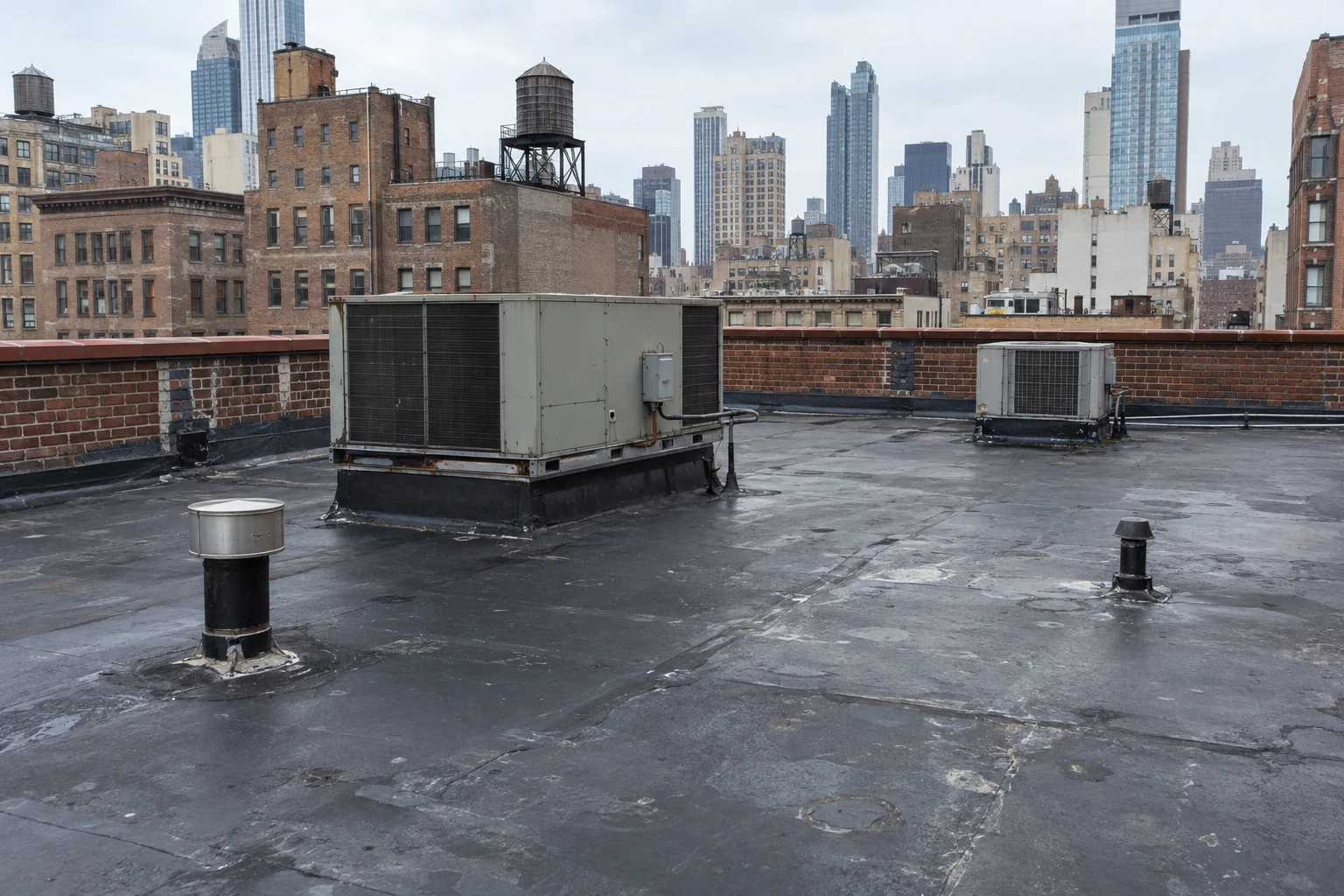
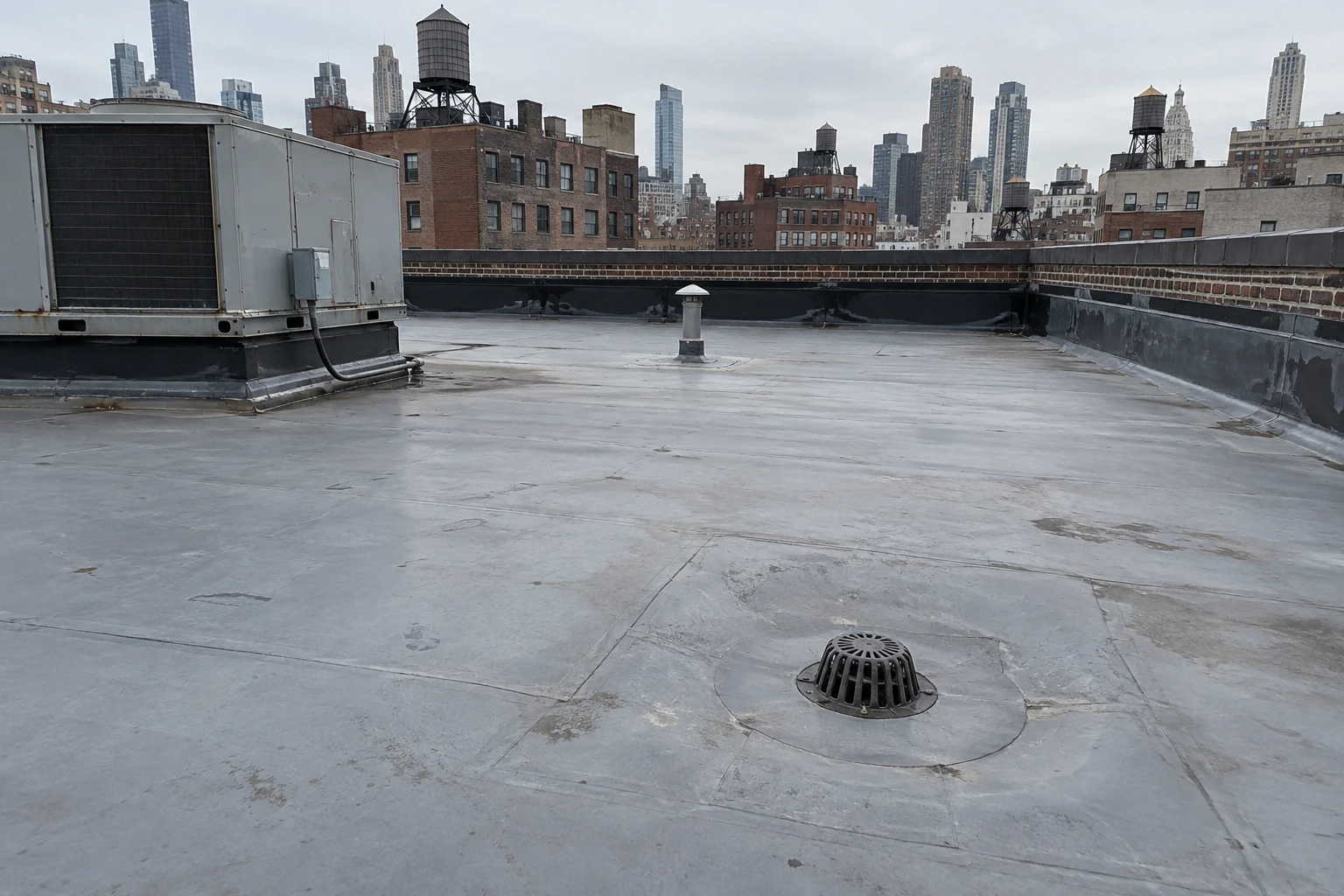
GAF commercial roof system categories in Manhattan, NY: thermoplastic, modified bitumen, built-up and coating roofs surveyed with core evidence.
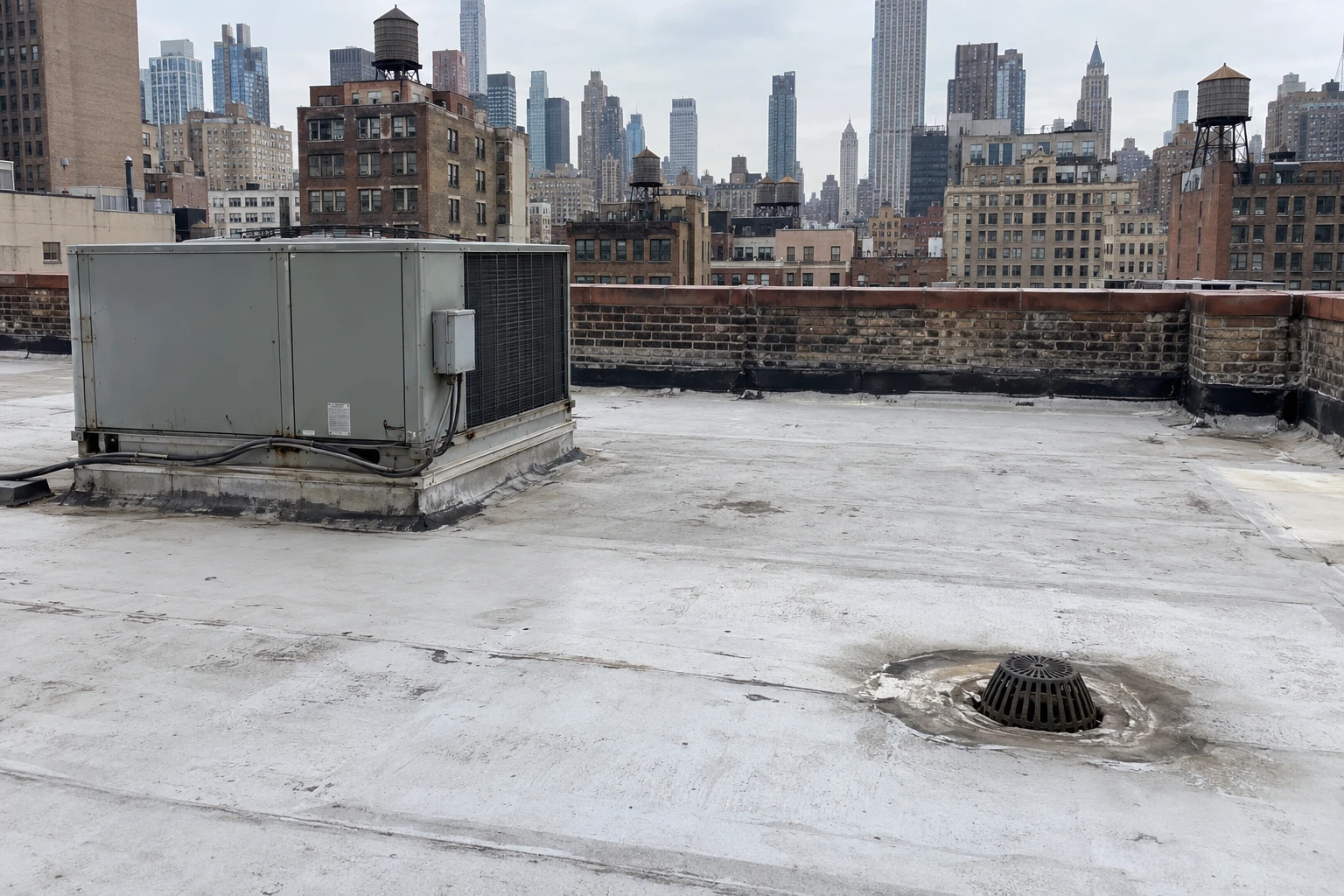
A roof label naming GAF tells an asset manager the maker and not the system, and the core log tells the rest. GAF's commercial range covers single-ply thermoplastic membranes, modified bitumen, built-up components and liquid coatings. On a Manhattan, NY roof, the label might sit beside a membrane that was recovered once, patched twice and flashed by three different trades, so the first job is to identify what is actually there. A core cut shows the layers; an infrared scan shows where they hold water.
We survey, repair and replace these categories of roof. Photographs of any label, plus the last roof report and any open violations, let the survey scope be set before a price is mentioned.
How do we identify the system under a label?
From the roof itself. A white or gray sheet with welded laps is a thermoplastic. Black rubber with taped seams is EPDM, which belongs to another family, while granules over layered asphalt mean modified bitumen and gravel over plies means built-up. A thin glossy film over an old membrane is a coating. The label may name the maker of the top layer only.
A core goes through every layer and shows the thickness, the attachment, the insulation type and the moisture content. We photograph the core against a scale and log it by location. If the layers show a recover, the log records both roofs. A recover is not always visible from above, and a roof that looks like a single sheet may sit on an older roof with its own moisture history. The core log shows where the two meet, whether the old roof was dry when covered and whether the insulation between them is damp. That layer is where many leaks that seem to defy a patch turn out to live. This matters for the repair method, because a patch that works on a thermoplastic fails on a bituminous surface, and for the warranty file, which has to match the roof in front of us.
Which details fail first on a small Manhattan roof?
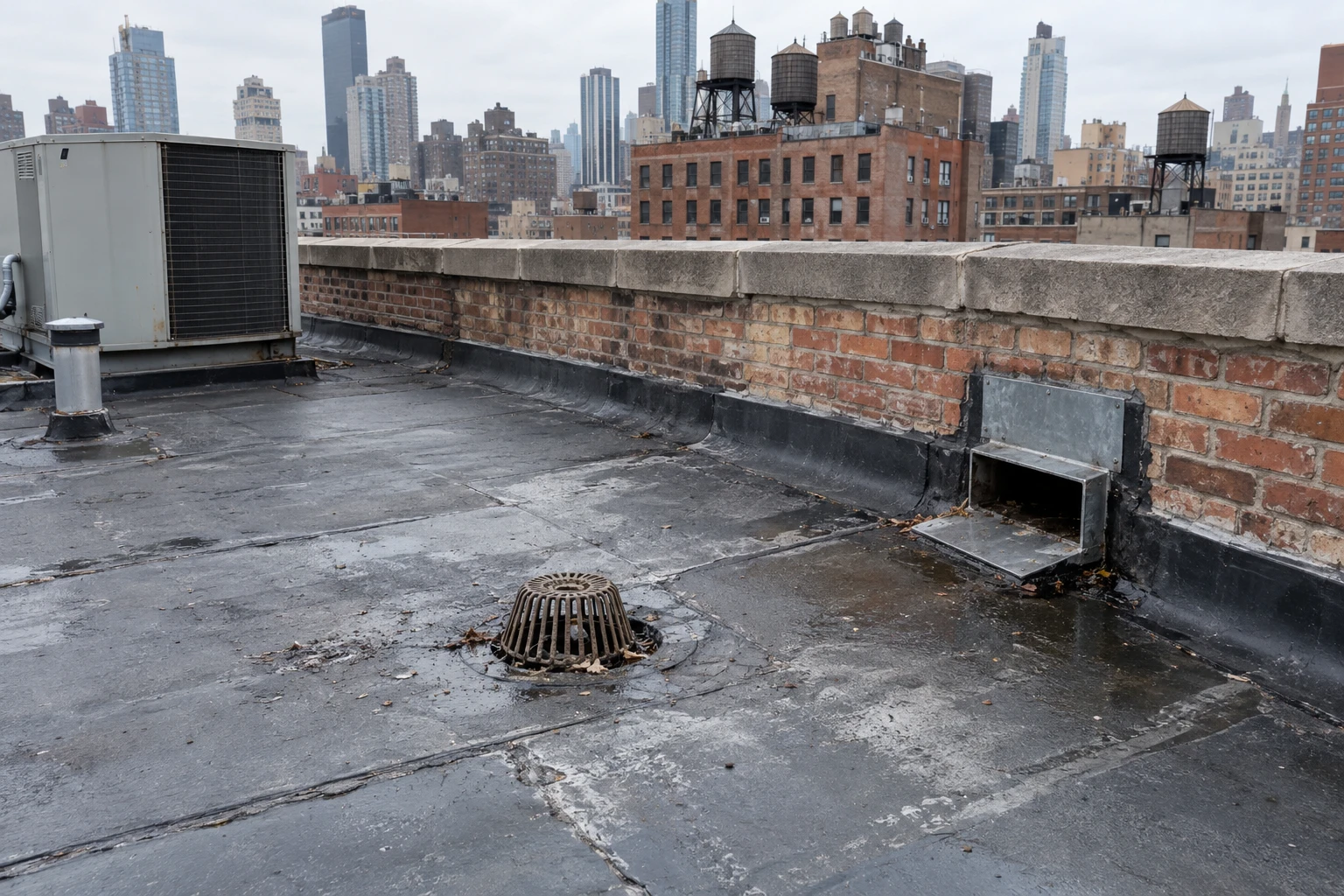
The bulkhead base, the parapet coping, the mechanical curb and the tie-in where one roof level meets another. With little field and a lot of flashing on a small roof, the survey puts its hours into the flashing. We probe each flashing, cut a core beside the worst, and record whether water has reached the insulation. The coping joints get a feeler gauge, because a joint that has opened by even a quarter inch lets wind-driven rain behind the membrane. A tug test on the termination checks the bulkhead base, and every mechanical curb is measured against its unit, so a mismatch turns up in the survey rather than as a ceiling stain.
On September 1, 2021 Ida's rain hit its one-hour peak of 3.15 inches, a city record, and Central Park received 7.13 inches that day. Water backs up against every detail when a drain leader cannot keep pace. We check the leaders, flush them and measure the overflow height. Our roof drains and scuppers report puts ponding depth before and after the work on the page.
How do solar and green roofs work over these systems?
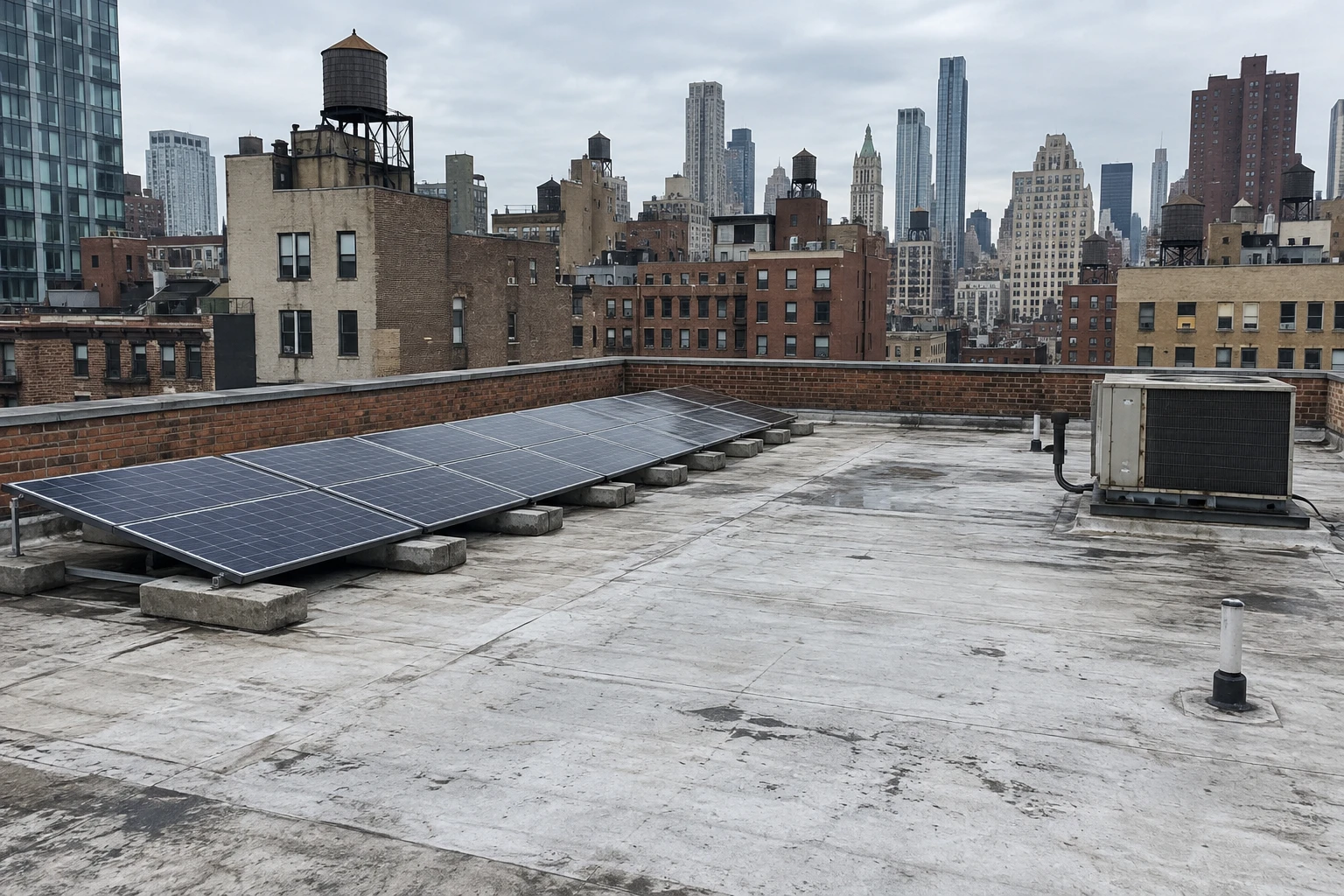
For a full replacement in New York City, Local Laws 92 and 94 of 2019 assign the sustainable roofing zone to solar, a green roof or both. The membrane under a solar array or a planted roof has to last as long as the array or the soil. Racking adds penetrations or ballast, and a green roof adds saturated weight.
If a roof is covered with a manufacturer's warranty, the terms may limit what can sit on the membrane. We read the document before the layout is fixed and flag conflicts early, because a design that voids coverage is expensive to change. A solar-ready roof is designed so the membrane, insulation and supports can carry the array, and the survey checks whether an existing roof is a candidate.
What changes in a landmarked district?
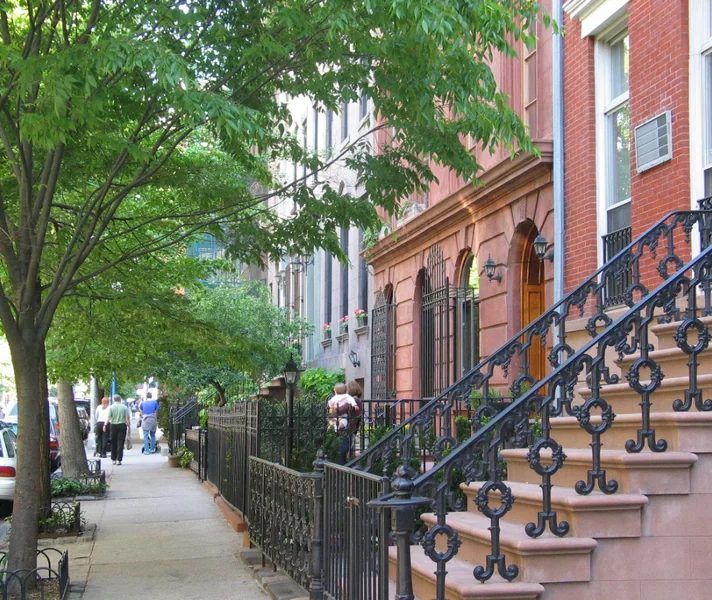
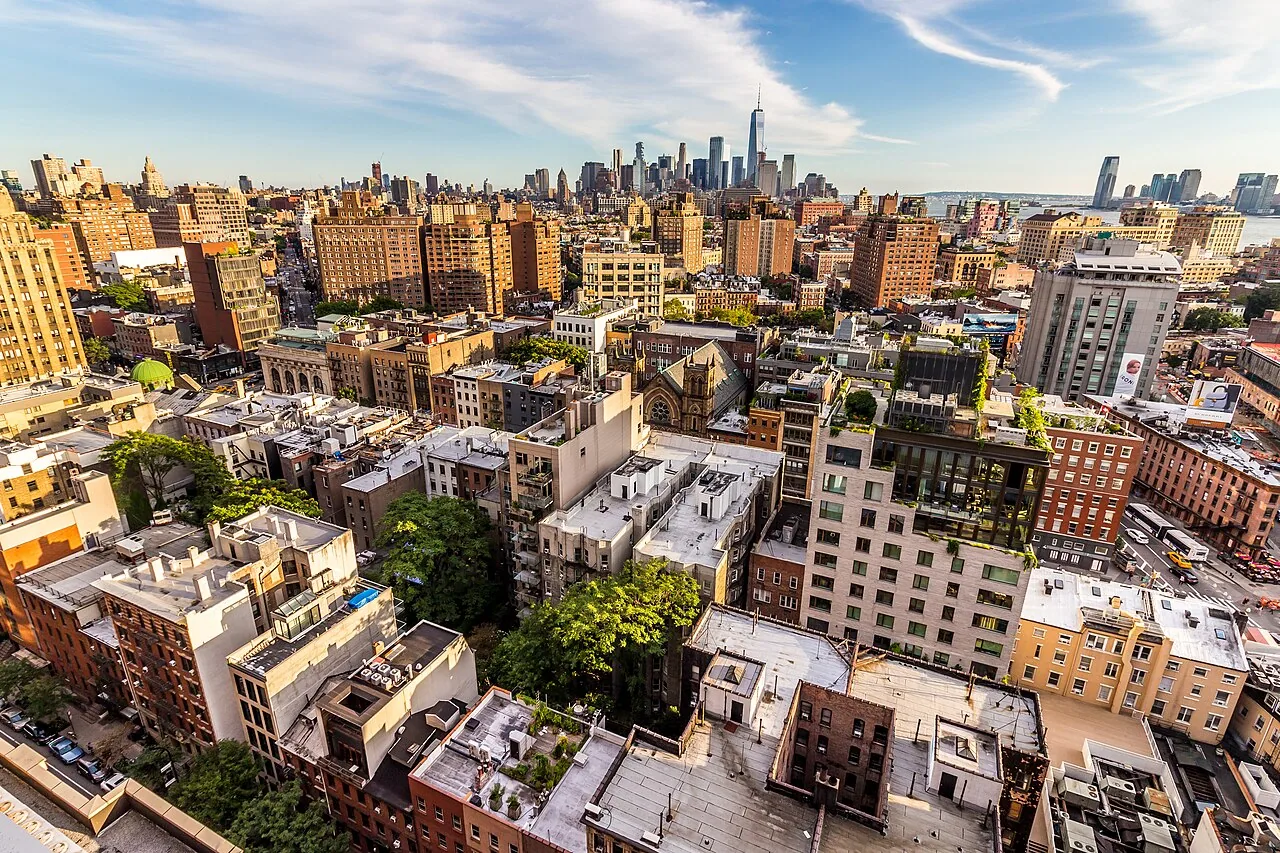
Two landmarked districts, SoHo-Cast Iron with about 500 buildings and Greenwich Village, restrict roof and facade changes that can be seen from the street. In the Greenwich Village Historic District, a renovation has to keep each building's main facade and overall look across more than 50 northern and western blocks. Membrane color, rooftop equipment and bulkhead changes can draw review, and the review takes time that the project schedule has to carry. Starting the status check before the survey is scoped lets the owner see the review step on the calendar from the first day, rather than discovering it after the contract is signed.
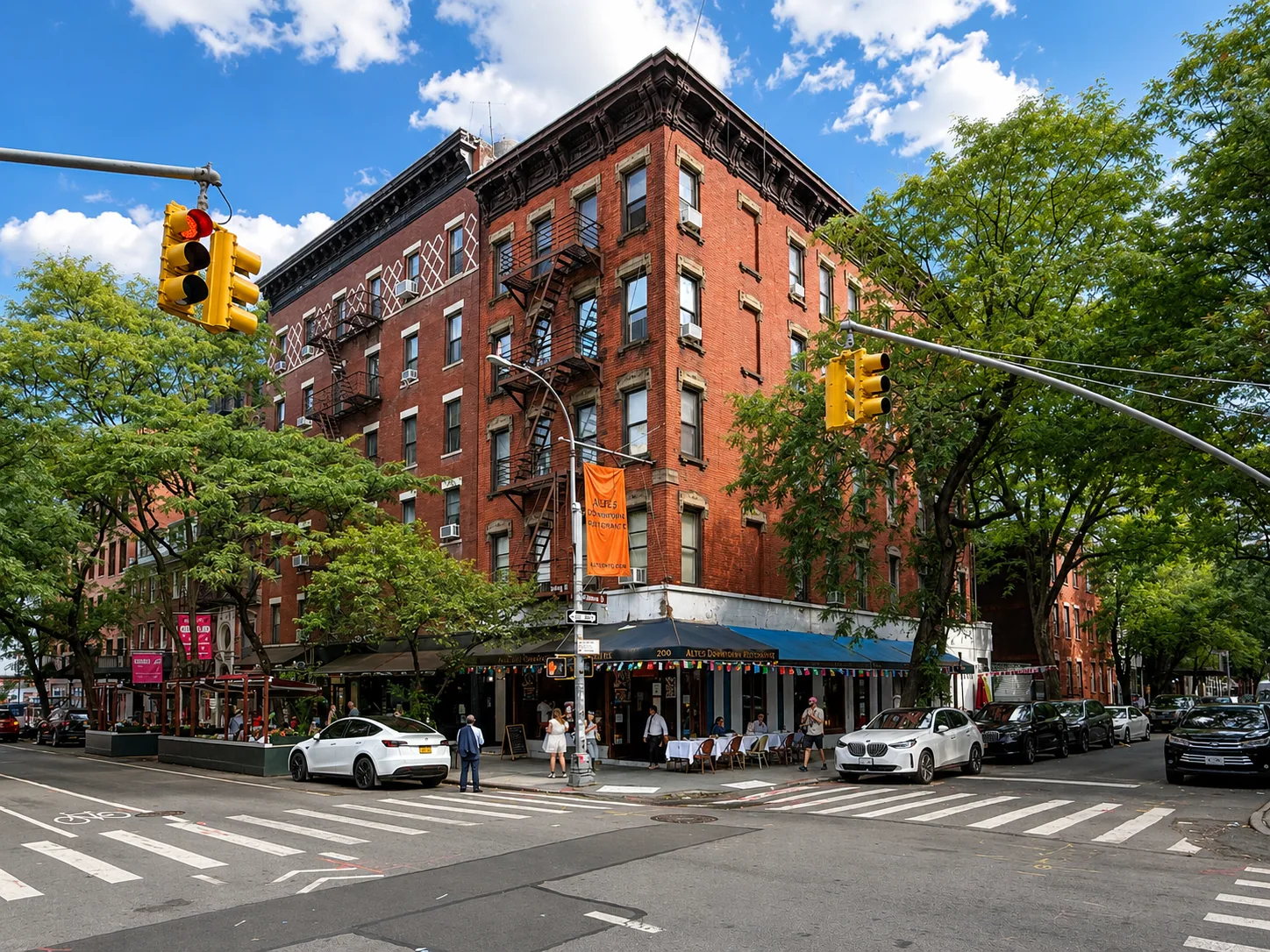
We confirm the building's status first, then the roof's regulated features, then the scope. Coping and parapet masonry are repaired in kind, and the membrane below can be modern. For a loft building in SoHo or a row of houses in Greenwich Village, the report separates the original fabric from new work, which speeds the review and gives the next owner a clear record.
How do we compare makers for a replacement?
Exposure and detail decide, not the name: what vents onto the roof, how much foot traffic it carries, how much load the structure can bear and what the district permits. Systems from several makers, such as Carlisle SynTec and Sika Sarnafil, are then compared on seam method, thickness, reflectivity and repair path.
In Central Park, temperatures have ranged between minus 15 F and 106 F, an average year brings 29.8 inches of snow, and the heat island is strong. A reflective thermoplastic lowers surface temperature; a layered bituminous roof tolerates foot traffic. The comparison is written down, with the findings that led to it, so the owner can see why one system was chosen over another and what the alternative would have cost. A board reading the comparison two years later, when a member asks why the roof looks the way it does, finds the reasoning in the file. A product name on a drawing is a starting point only; the installed layers decide what repair is compatible.
Commercial Roofing Questions
What decides whether the label on a roof tells us enough to order repair materials?
Whether the layers match it. The label names a maker, not a system, and a recovered roof can carry two. A core and a surface inspection identify the family, and the repair materials are chosen to be compatible with what we find.
Is an unknown original installer a barrier to repair?
Not at all. The system is identified, repaired with compatible materials and documented. If a warranty document exists, it should be sent along so the terms can be read before work starts, and the owner can check the repair against them.
Does a coating fit an older roof?
Sometimes. The roof must be dry, adhered and free of widespread splits. A moisture scan and an adhesion test come first. A coating over wet insulation traps water, and we say so before the owner commits.
How does a solar array affect the choice of membrane?
The membrane has to outlast the array or be easy to work around. Racking can be ballasted or fastened, and each has consequences for weight and penetrations. We review the design with the array contractor and read any warranty terms.
Are New Jersey roofs held to the same rules?
No. The local laws cited here cover New York City buildings, while New Jersey applies state and municipal codes, as the local building department confirms. The survey method is the same.