Prepare a Manhattan, NY roof for solar: moisture survey, membrane age, load and wind checks, the sustainable roofing zone and work around existing arrays.
A moisture survey run before a solar array goes down costs a small fraction of what it costs to find the same wet insulation after the panels are on. That ordering is the whole reason solar-ready roofing exists. A membrane with fifteen years left will carry an array for a decade and a half. A membrane with four years left will have to be lifted around the racking, and every panel row becomes a cost line in the next replacement. In Manhattan, NY the roof and the array are now planned together, because Local Laws 92 and 94 direct the sustainable roofing zone of a full replacement to solar panels, a green roof or both. We survey the roof for the array, not just for itself.
How do we know the roof is ready for an array?
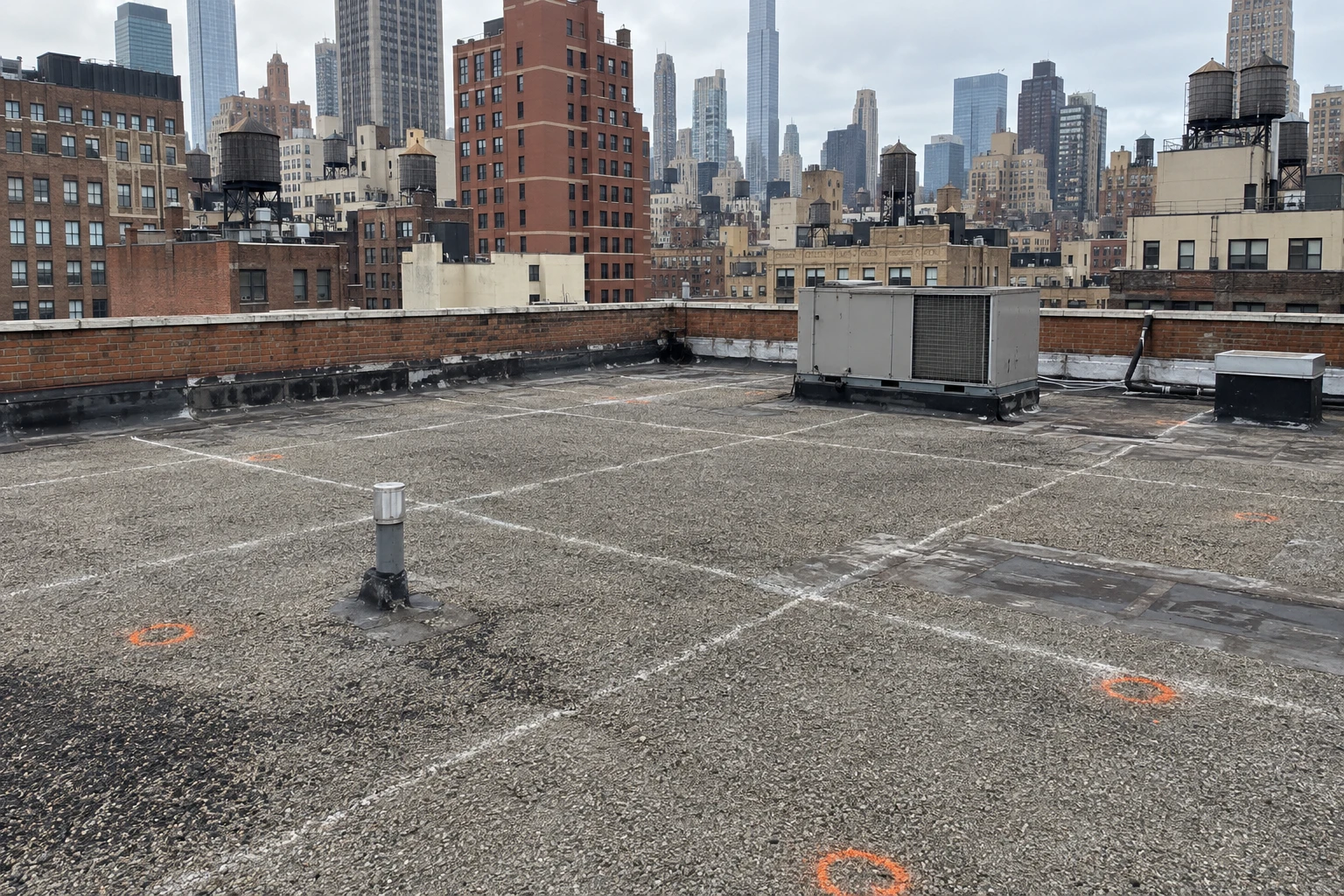
Three readings decide it: moisture, membrane age and deck condition. An infrared scan and core cuts show whether the insulation is dry. A membrane inspection records seam condition, flashing condition and surface wear. A look at the deck, from below where it can be reached, checks for corrosion, sag and attachment.
If all three are sound, we assign a condition rating and an estimated remaining life, and compare that life with the array's expected years in service. If the remaining life is shorter, the choice is to replace the membrane first or to plan for a removal and reset of the array later. Both are legitimate. The mistake is to install panels on a roof that will fail under them without having written down that decision. The rating goes into the file so the capital plan shows both the roof and the array on one schedule.
What loads does an array add, and who checks them?
An array adds dead load from panels and racking, and it changes how snow and wind load the roof. Central Park averages 29.8 inches of snow a year and recorded 27.3 inches on January 23, 2016, and its strongest gust was 78 mph on December 2, 1974. Snow can drift against a row of tilted panels, and wind can lift an array that is not ballasted or attached correctly. Those loads are for the structural engineer to confirm, and the roofer supplies the roof condition and the details at the attachments.
Ballasted racking sits on the membrane and relies on weight, so the insulation underneath must tolerate the pressure and the membrane needs protection pads. Mechanically attached racking goes through the roof, so each attachment is a penetration that must be flashed. We choose the details with the engineer and record where each one falls, so a future repair knows what lies beneath each panel.
How does the sustainable roofing zone change the layout?
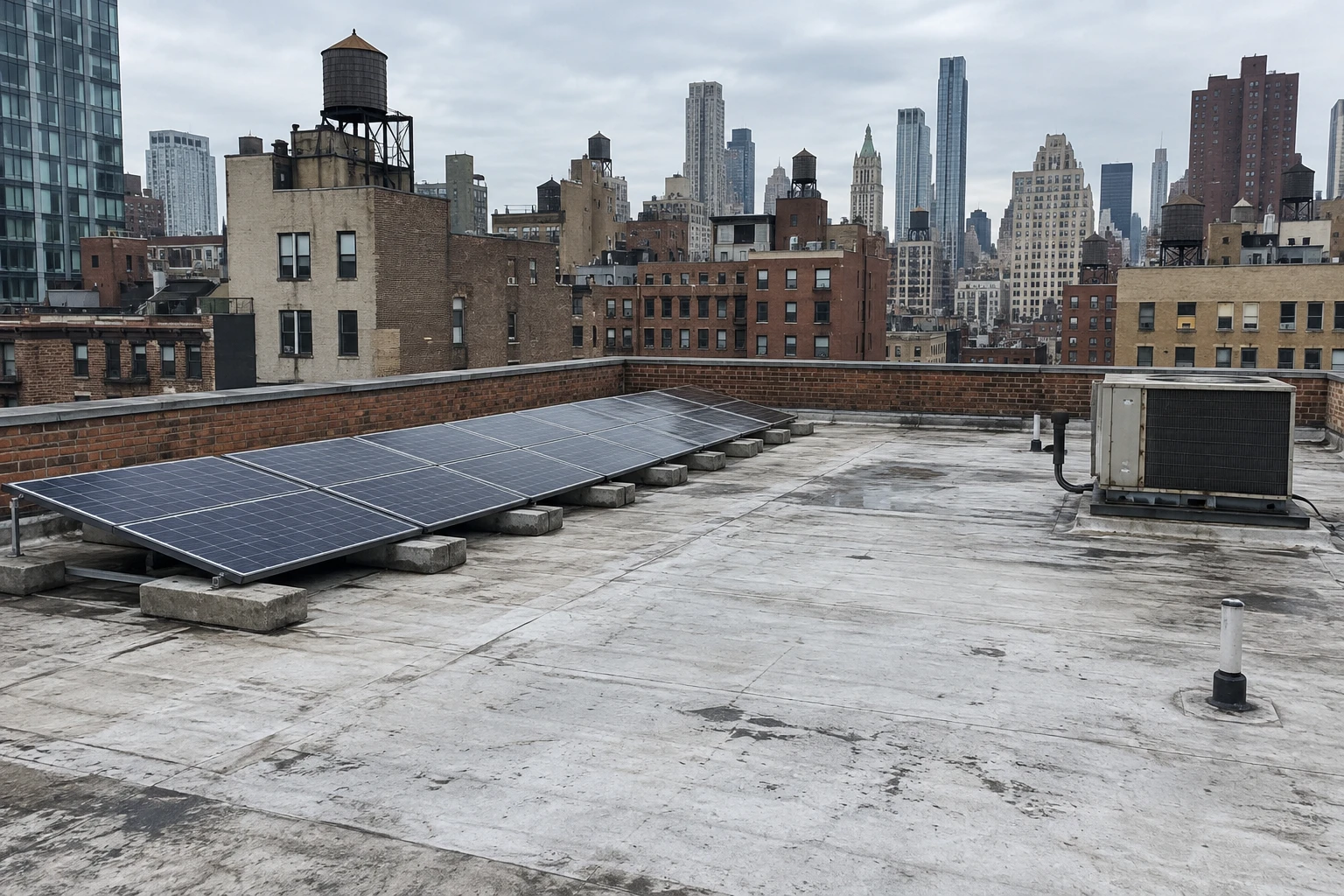
The sustainable roofing zone is the part of the roof that Local Laws 92 and 94 require to be fully covered by solar, a green roof or both on new buildings, enlargements and full roof replacements. On a tight setback roof, the zone has to share space with a bulkhead, mechanical equipment, drains and the access path to them. Equipment placement therefore matters before any panel is ordered.
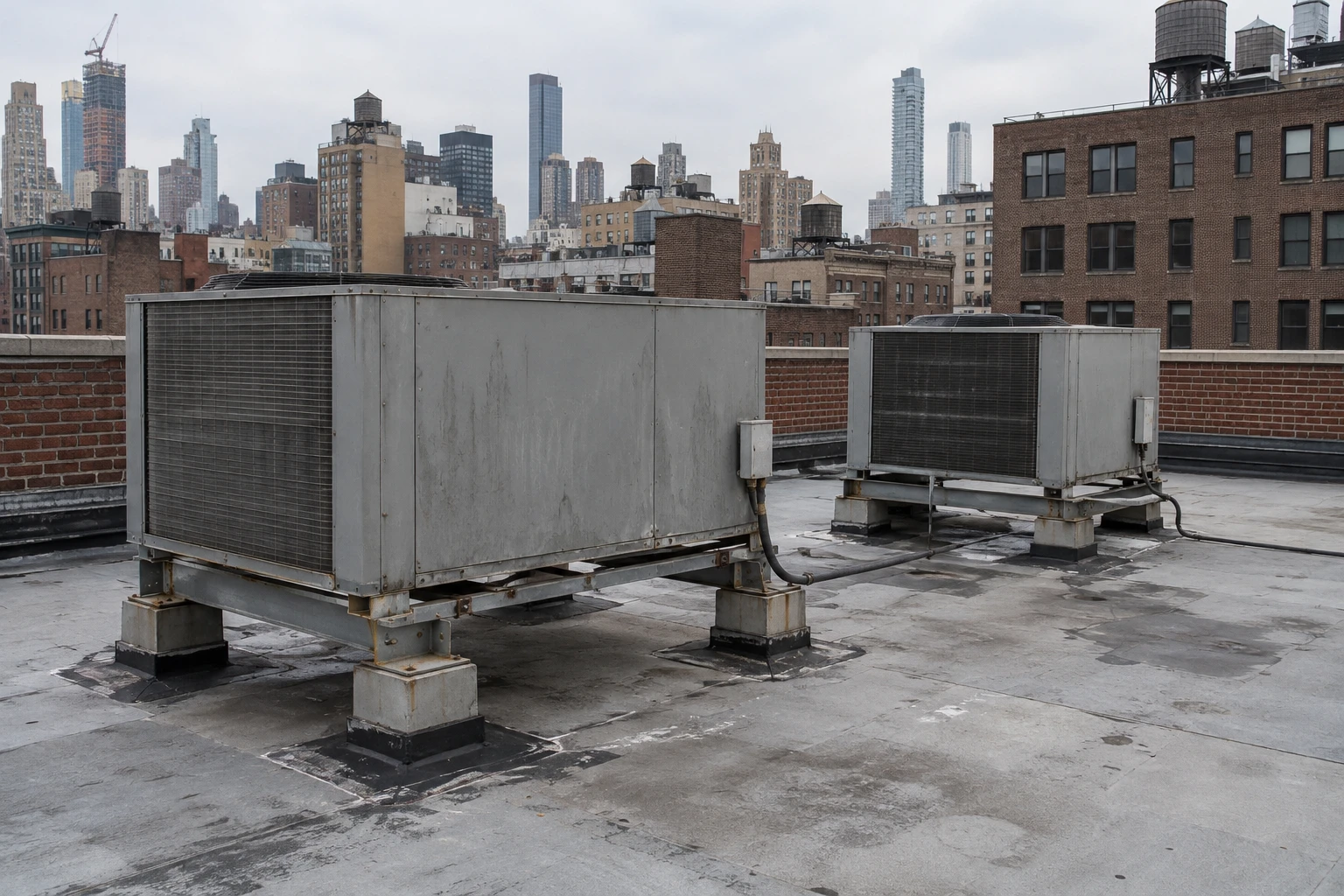
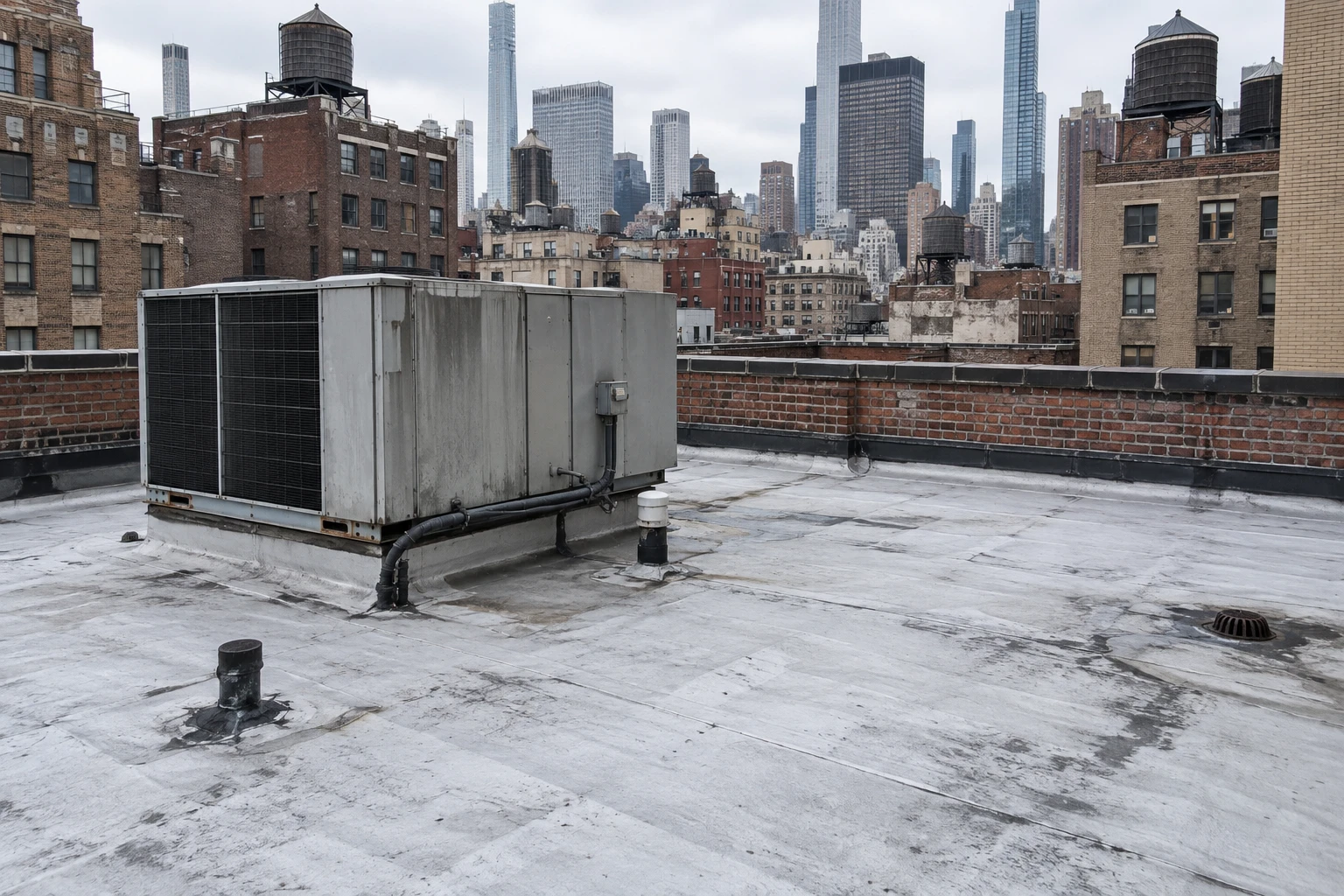
We lay out the roof with the zone, the equipment, the drains and the walkways on one plan. Clearances around rooftop equipment curbs and supports are kept so that a unit can be serviced or replaced without removing a row of panels. Drain leaders and scuppers keep a clear path, because an array that blocks flow turns a drained roof into a basin. The plan also shows where a green roof could replace or supplement panels, since the law accepts either or both.
What changes when an array is already on the roof?
Roof work under or around an existing array has its own order. The panels in the work area have to be disconnected, lifted and stored, which is a job for the array's electrician, and then reset and tested afterward. We plan the roof repair around those windows and keep the exposed area small, because the roof is open while the panels are off.
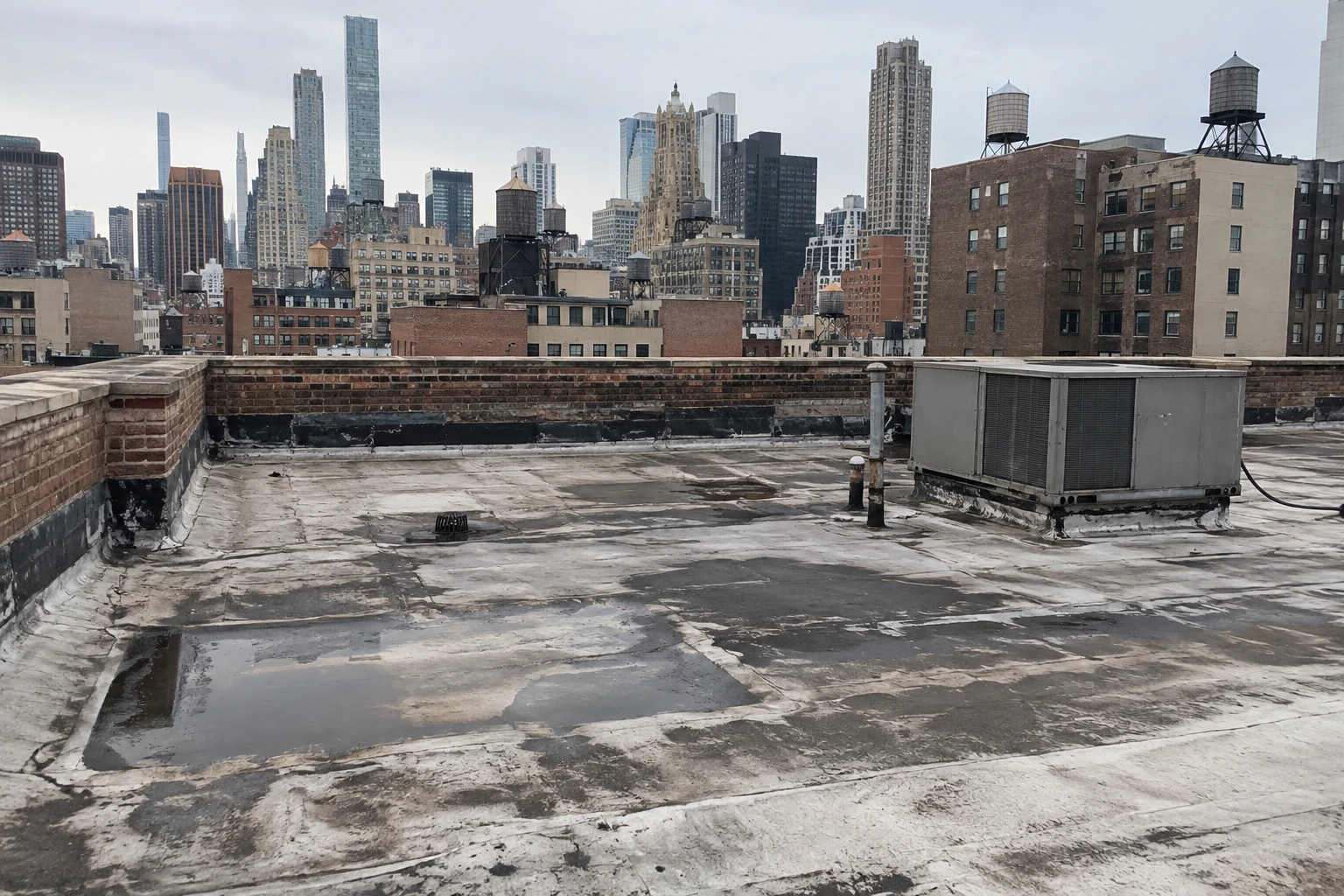
Leak tracing is harder with an array in place, since racking and panels hide the surface. An infrared scan from above sees panel tops, not the membrane, so we scan in sections as panels are removed, or use moisture probes and interior readings. An hour like the 3.15 inches Ida produced on September 1, 2021 tests the drainage under an array, so the survey records ponding depth in the aisles between rows. An infrared moisture survey before any removal tells us how much needs to come off.
Which membranes suit a roof that will carry panels?
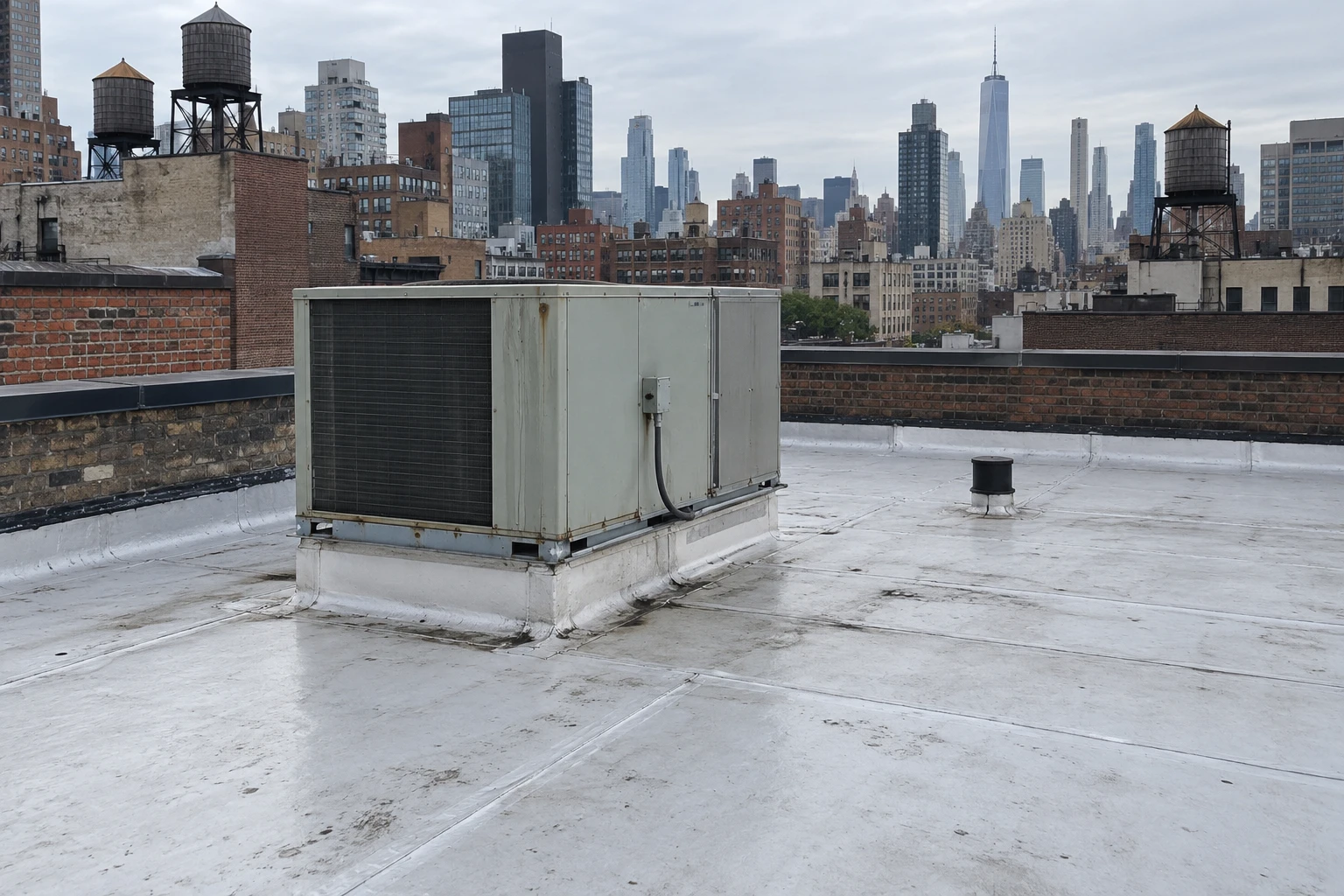
A reinforced single-ply, such as a TPO membrane, with a firm cover board over the insulation holds ballast and foot traffic well and has welded seams that tolerate the added movement. Where racking is attached through the roof, a thicker membrane at the attachments and walkway pads between rows protect the surface. A cap sheet or a coating can work if the roof qualifies, though a coated surface will need to be protected from the racking feet. Whichever surface is chosen, we record the product, the thickness and the warranty terms, because the warranty holder may require its own approval of the array attachments. Roof warranty management keeps that approval on file.
How should the owner time the roof and the array?
The cheapest sequence is a roof replacement with the array installed immediately afterward, on a membrane that is new beneath it. Where the budget does not allow that, a roof repair or coating with a defined remaining life, followed by an array, with a note in the roof capital plan for the membrane replacement and array reset in the same year. Buildings in Hudson Yards and other newer districts may have newer roofs, but the same survey applies, because age alone says nothing about moisture. Phase 1 of Hudson Yards, including 30 Hudson Yards, opened on March 15, 2019, so the survey there has a short roof history to read and is still documented in full. A short written answer on each roof, with a remaining-life estimate and a recommended order of work, lets the owner commit to the array with the roof question already settled and filed. Roofs in Midtown and Chelsea are screened for array space the same way.
Commercial Roofing Questions
Should we replace the roof before installing solar?
Replace it when the remaining life is shorter than the array's expected service. If the survey shows a dry roof with many years left, the array can go on directly. If it shows wet insulation or a membrane near the end of its life, replacing first avoids removing and resetting panels later. The survey, not the age of the building, gives the answer.
Can an array be installed over a roof with a few wet spots?
Not safely. The wet areas are cut out and replaced first, and the repaired sections are tested before racking goes over them. Panels hide the surface, so any leak under them is harder to find and more costly to fix. We mark the repaired areas on the plan so the array installer knows where the new material is.
Does solar affect the roof warranty?
It can, depending on the warranty terms. Some warranties require approval of the attachment method and a roofer's inspection after installation. We review the warranty language, use details that the membrane system accepts and keep the photographs and approvals together, so a later claim is not disputed over the array.
How much clear roof should remain around equipment?
Enough to service every unit without removing panels, and enough for a walkway from the access point to each piece of equipment and each drain. The exact clearances come from the equipment manufacturers and the building's engineer. We draw the layout with those clearances before the array is ordered.