Infrared scans and core cuts map wet insulation on Manhattan, NY commercial roofs, so owners can choose repair, recover or replacement from evidence.
Wet insulation holds heat longer than dry insulation, and that one physical difference is what an infrared scan reads. After a warm day, the wet areas of a roof stay warm into the evening while the dry areas cool, and a thermal camera records the contrast as a map. The map is a lead and not a verdict. It shows where to cut, and the cores taken at those spots confirm the moisture, measure its depth and identify the layers around it. Together the two steps replace guesswork with a diagram of the roof that shows exactly how much of the assembly is compromised, which is the information an asset manager needs to choose between a repair, a recover and a replacement.
How does the scan work, and when is it done?
The scan is timed for the cooling period, usually after a sunny day with a clear sky and light wind, when solar heat stored in the roof is releasing. Wet insulation releases heat more slowly, so it appears warmer than its surroundings. The survey is flown or walked in a grid so every part of the surface is covered, and the images are tied to a plan.
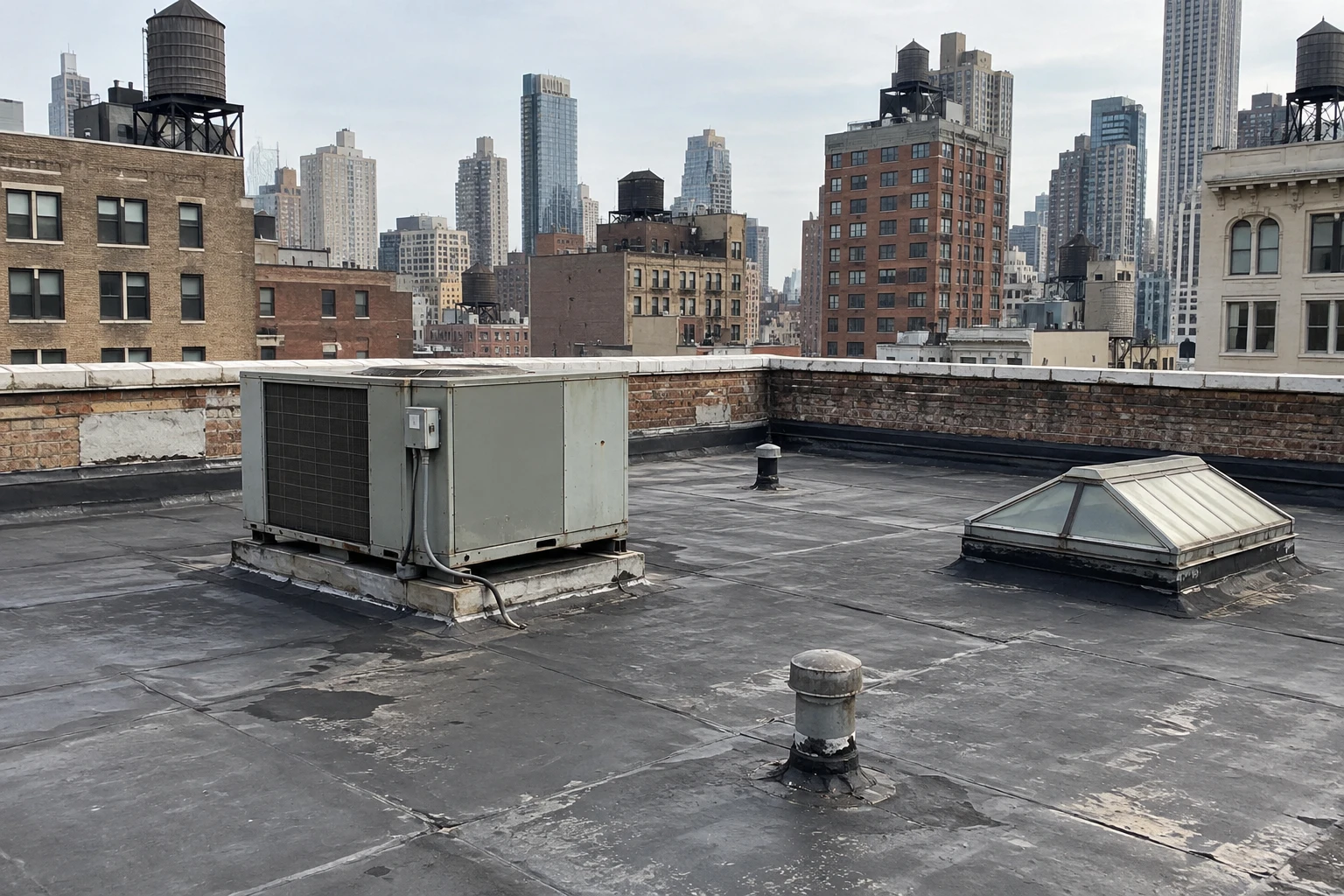
Conditions matter. Rain, strong wind, heavy cloud and a wet surface all blur the result, so the crew waits for suitable weather and records the conditions with each scan. Ballast, pavers, rooftop equipment and surface debris also change heat flow and are noted so they are not mistaken for moisture. Where a drone helps cover a large area, the drone roof inspection supplies the aerial pass and the walking crew verifies the suspect areas.
Why are core cuts needed after the scan?
A thermal pattern can come from several causes, including wet insulation, thicker insulation, a different material below, or a roof surface that holds heat differently. A core cut settles the question. A small sample is cut through the membrane and insulation, the layers are measured and photographed, the moisture content is read with a meter, and the hole is closed with a repair that is tied into the surrounding membrane.
We cut a few cores in the areas the scan marks as wet and a few in areas it marks as dry. The dry cores matter as much as the wet ones, because they confirm that the scan is reading the roof correctly. The result is a set of data points that checks the map and lets the engineer or the owner trust its edges. Core locations are chosen away from drains and seams where possible, and every cut is repaired the same day.
What can the survey say, and what can it not say?
It can say where the insulation is wet, how large the wet area is, how deep the water goes, and how the wet area relates to drains, penetrations and seams. It can say whether the roof is a candidate for a recover, since a recover needs dry insulation. It can also show a pattern that points to a cause, such as moisture lined up along a parapet that leads back to a failed flashing.
It cannot say how long a roof will last, whether a seam will open next winter, or whether the deck has corroded, though cores can reveal deck condition at the sampled points. For those questions the survey feeds a commercial roof inspection and a condition rating. The report keeps the two apart, stating what was measured and what was inferred, so the owner knows how much weight each finding carries.
Which Manhattan roofs most need a survey?
Roofs that have changed use or age are the best candidates. Hudson Square, long known as the Printing District, was rezoned in 2013 to allow taller buildings, and a 1,700,000 square foot headquarters across three buildings was announced there in 2018, so older buildings next to new construction deserve a survey before ownership or tenancy changes. The Hudson Square setting is also a reminder that adjacent construction can disturb roofs through vibration, debris and altered drainage.
On Roosevelt Island, Northtown buildings rise as much as 20 stories in U-shaped forms faced in concrete or corrugated brick, and the island's 147 acres sit in the East River, which makes wind and moisture exposure worth documenting. In Chelsea, the Walker Building was converted in 2012 so its top 16 floors became apartments, and a change of use like that is a good moment to establish what condition the insulation above is in. Weehawken, with 46.69 percent of its area covered by water, is a reminder that waterfront sites across the Hudson carry their own moisture load.
Should a survey follow a major storm?
Yes, when a roof has taken heavy rain or has been breached. Water that enters through a puncture can spread through insulation in days, and an early scan confines the repair to a smaller area. Hurricane Ida's 3.15 inches of rain in a single hour on September 1, 2021 and Sandy's 14.06 foot surge above average low tide at The Battery on October 29, 2012 are the two events this city measures every storm against. After either kind of event, we scan the roofs in the group with the most exposure first.
A survey also fits before a sale, a refinancing or a change in tenancy. The due diligence roof survey adds the age, the layers and the remaining life to the moisture map, giving buyers and lenders a clear picture of the roof they are acquiring or financing.
How does the result drive the decision?
The wet area, as a share of the roof, points to one of three paths. A small, localized area leads to a targeted repair, with the wet insulation removed and replaced. A moderate area with a dry remainder can justify a recover over the dry sections combined with removal of the wet zones. A widespread area points to a full replacement. The report lays out those paths with the reasoning and the likely order of cost.
The map also serves as a record for later work. If a repair is made, the wet area is rescanned afterward to confirm that the moisture was removed and not just covered, and the owner keeps both maps to show the before and after.
Commercial Roofing Questions
Can the scan be done on a gravel or ballasted roof?
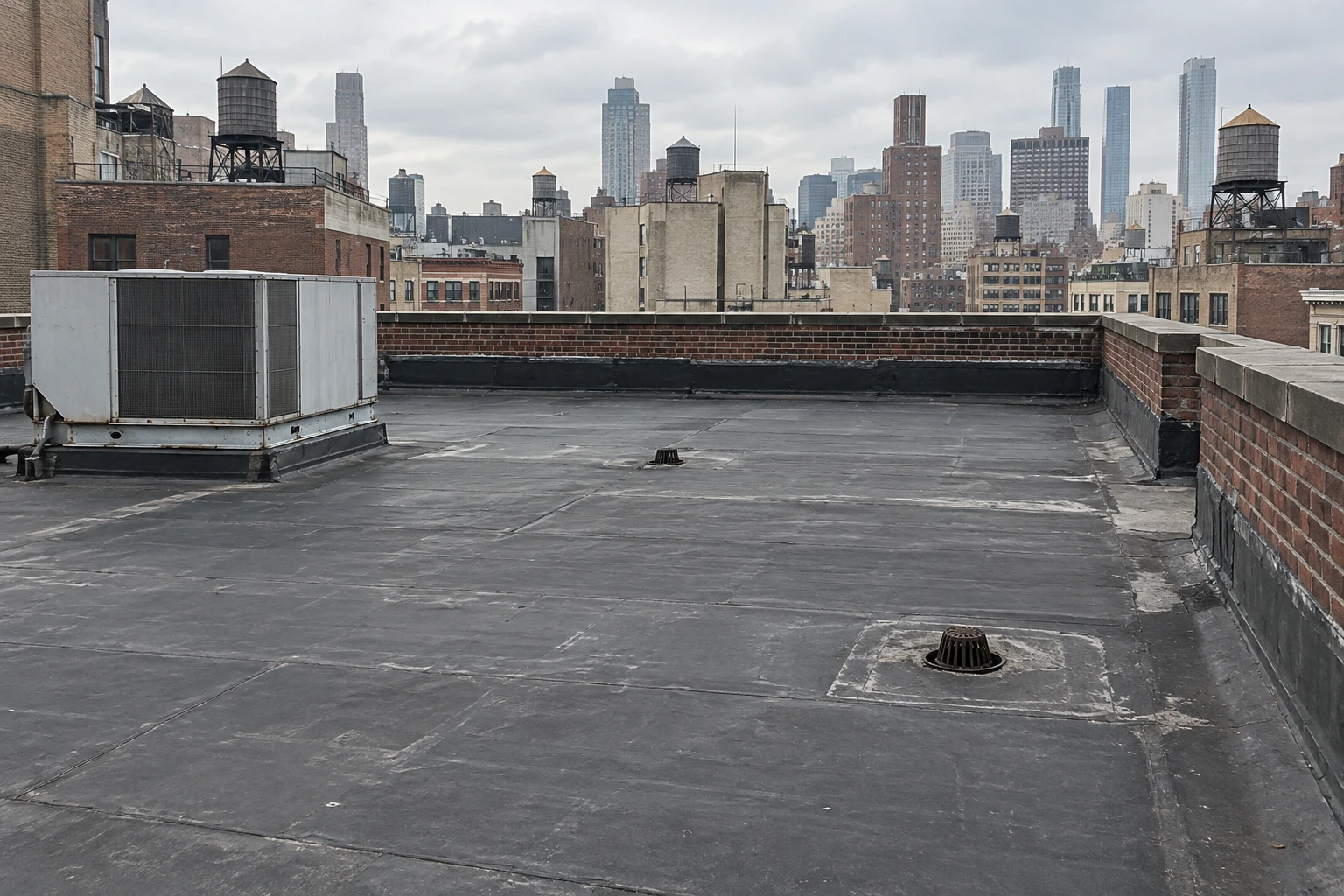
Yes, though the ballast and pavers change heat flow and can hide or mimic wet areas. The crew accounts for this by noting the ballast pattern and by cutting cores through areas that look inconsistent. In some cases the ballast is moved to expose the membrane before scanning.
What does the survey leave behind on the roof?
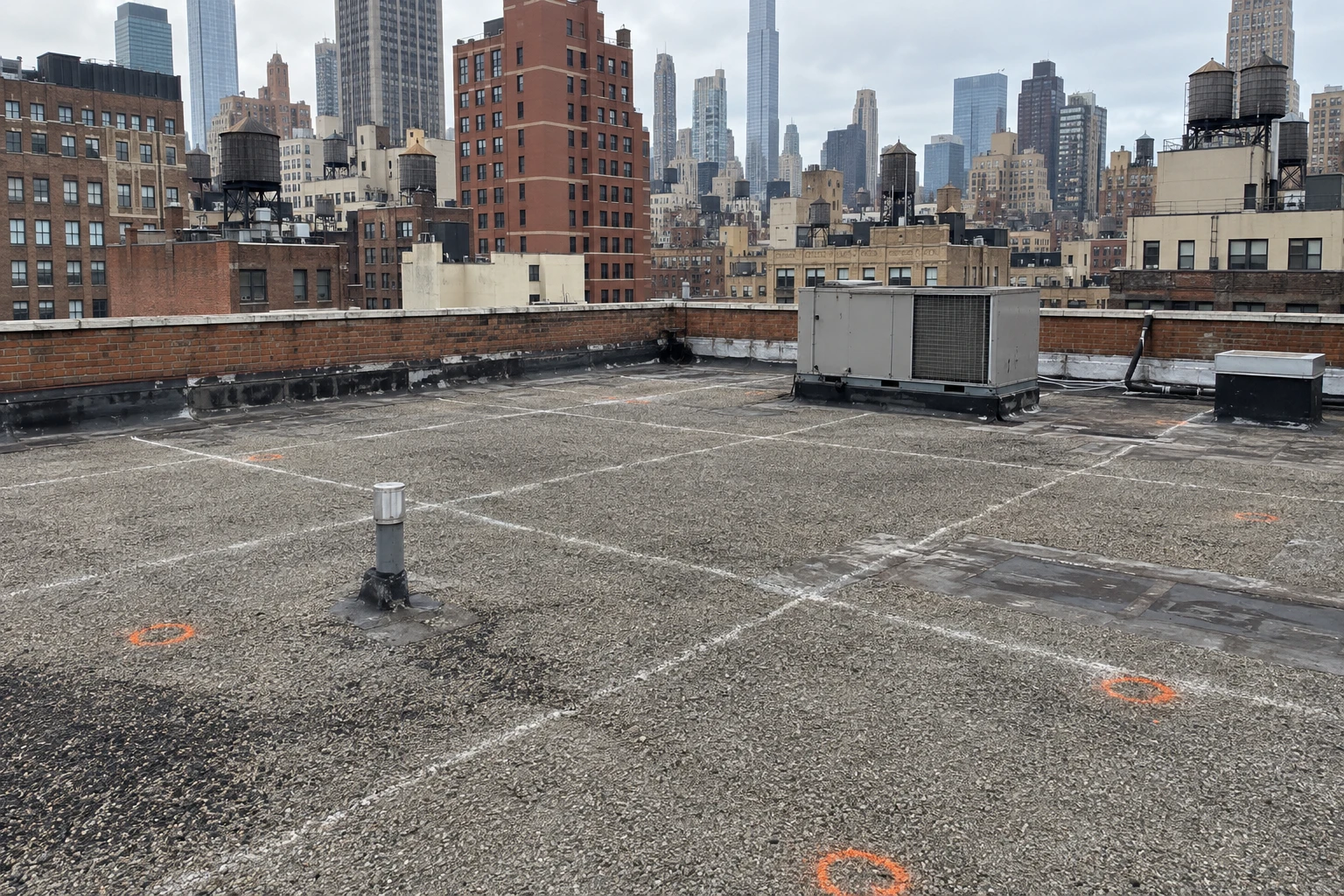
Only the core repairs, each closed and tied into the membrane the same day. The scan itself leaves no mark. Paint or chalk may be used temporarily to outline wet areas for the repair crew, and it weathers off.
How long is a survey valid?
Moisture can spread, so a map reflects the day of the scan. If the roof has leaked or been breached since, a new scan is warranted. A map taken in a quiet year remains a good baseline for comparison.
Is it worth surveying a roof that already leaks?
Yes. A leak is one point where water became visible, and the survey shows how far it has traveled. It lets the repair be sized to the damage, so the owner does not pay to replace dry insulation or leave wet insulation behind.
Does infrared work at night?
Night is often the best time, because the roof is releasing the heat it stored during the day. Scans at dusk and after dark are common, with the crew taking safety and lighting precautions on the roof.