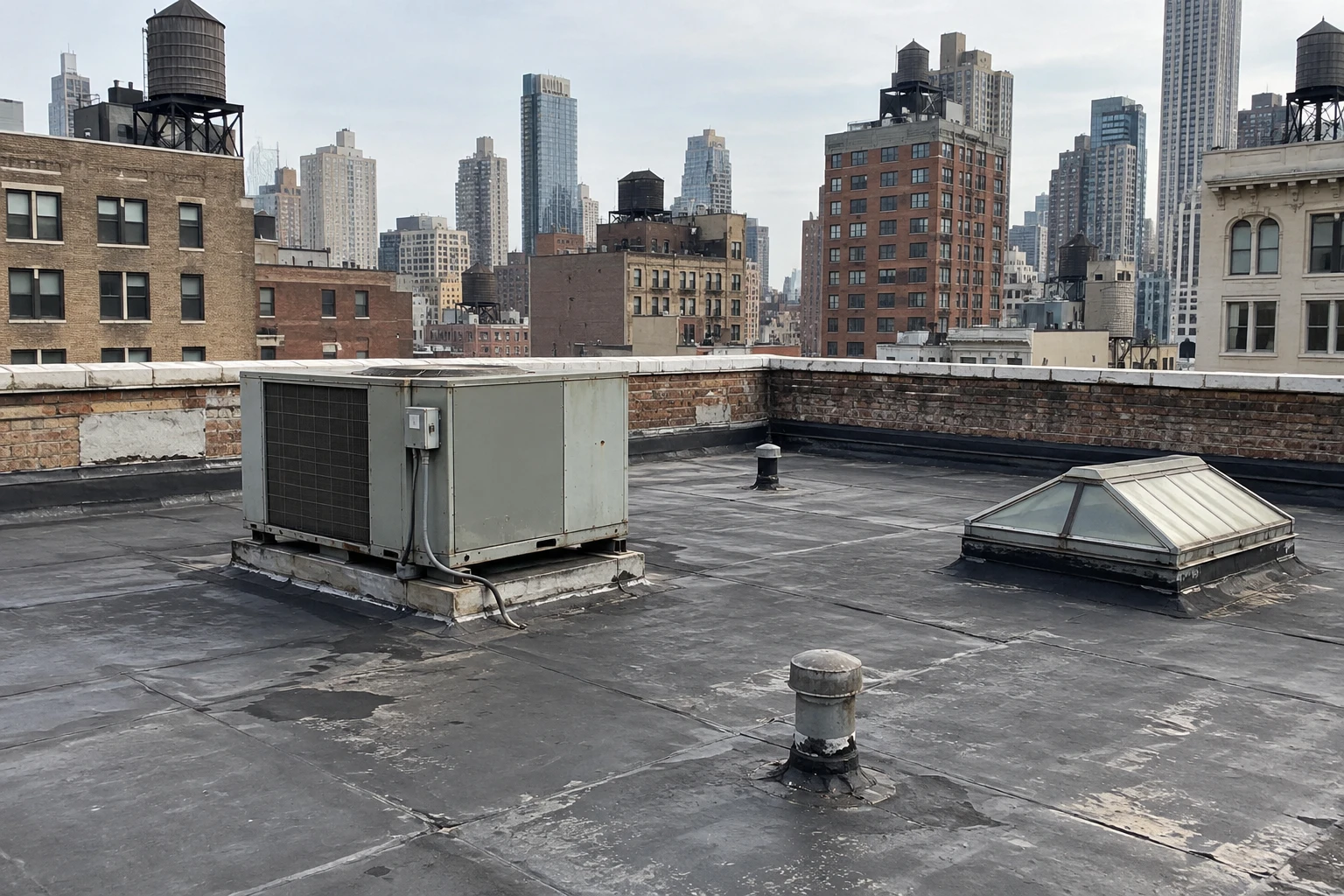
Commercial roof surveys, repair and replacement on Roosevelt Island, Manhattan, NY, for river-exposed towers, campus buildings and new construction.
On a narrow island, the wind reading on the roof is the first number worth taking. Roosevelt Island covers 147 acres, runs about 2 miles long and reaches a maximum width of 800 feet, so almost every building sits within sight of open water and open air. A roof on that kind of site is judged first by its perimeter: how the edge metal is fastened, how the membrane is secured and how the parapet flashing holds against uplift.
In Manhattan, NY, we survey, repair and replace commercial and multifamily roofs on the island, and the scope starts from exposure. The island holds a distinctive mix of older concrete residential blocks, institutional space and newer towers, and each type of building asks a different question of its roof.
What does a roof need on a tall, U-shaped residential block?
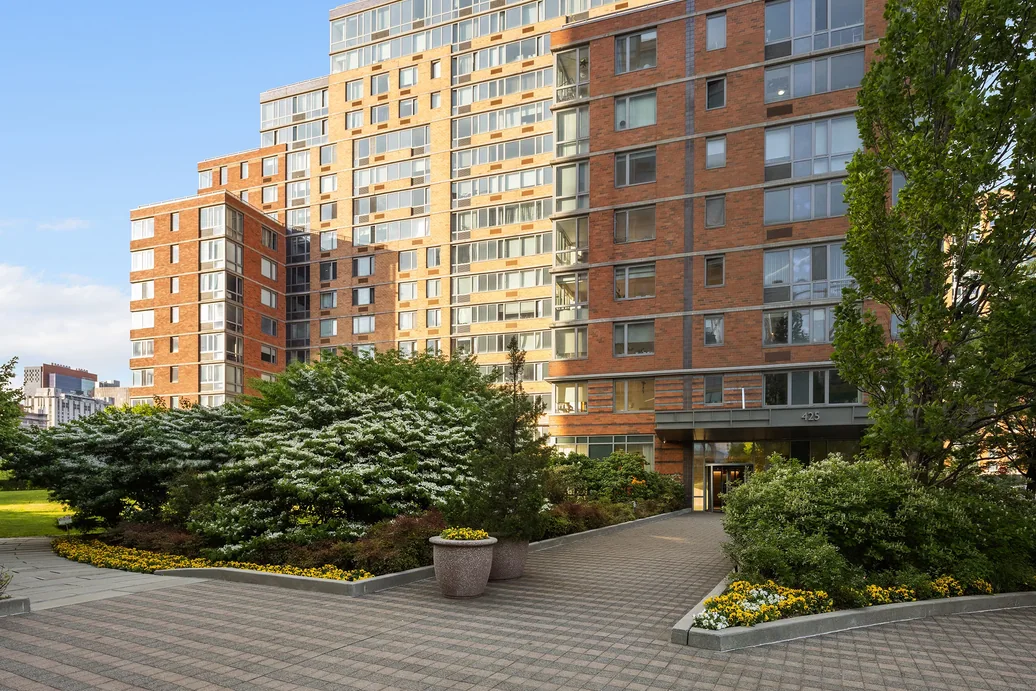
The Northtown buildings rise up to 20 stories, take a U-shaped plan and are faced in concrete or corrugated brick. A tall building with a courtyard shape creates roof geometry that matters: long parapet runs, several roof levels, corners where the wing meets the spine and drains spread across a wide plan. Each of these is a place where water collects or wind lifts.
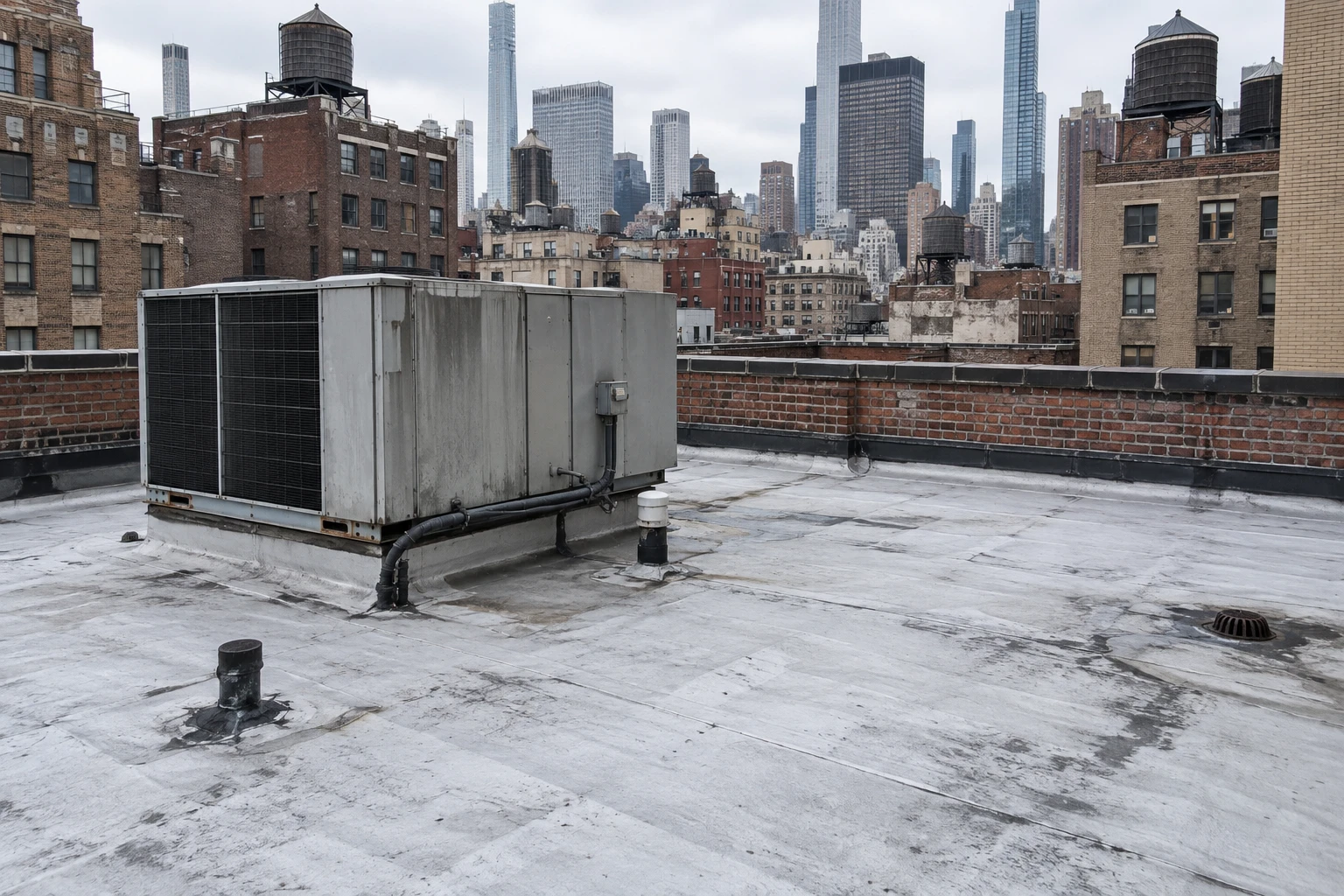
We begin by walking each wing and marking the parapet condition, the roof drains, the expansion joints and the mechanical penthouses. Height raises the stakes for wind, so the survey includes a close look at the coping attachment and any loose edge. The concrete frame does not forgive a leak, because water entering at a parapet can travel down a wall for several floors before showing. A multifamily roof of this height benefits from an annual check on edge metal and flashing.
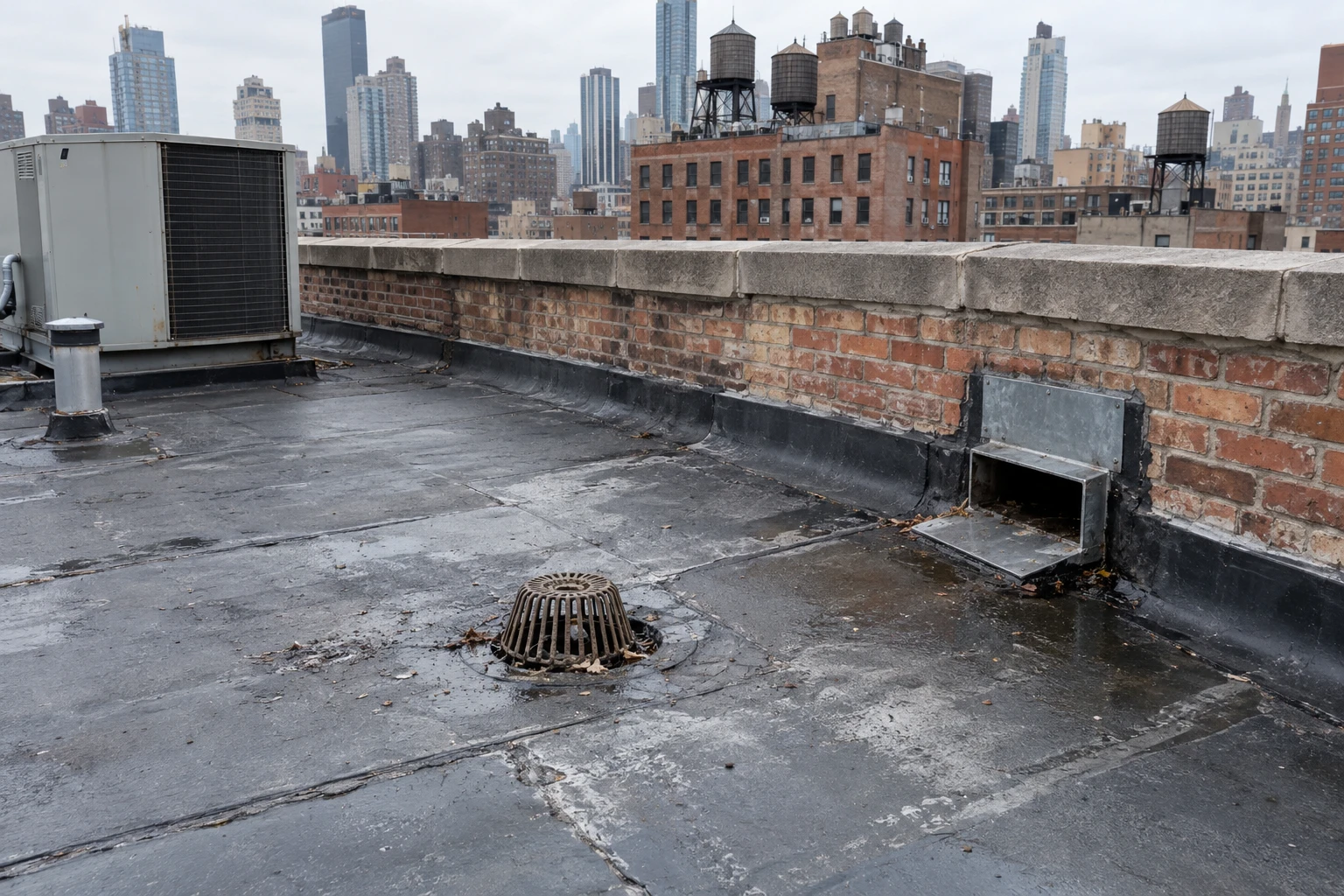
Drainage on a wide plan deserves its own sketch. Where a wing slopes toward interior drains, the leaders run through the building, and an undersized or partly blocked leader shows up as standing water far from the drain itself. We measure the depth of ponding at the low points, note how long it persists after rain and mark it on the plan, so the owner can tell a settling deck from a clogged line.
How do we secure a roof on an exposed river site?
Wind lifts a roof from the edges and corners first. On a building with open exposure on several sides, those edge and corner zones need the strongest attachment: more fasteners, a heavier or better-adhered edge detail and sealed metal at the perimeter. A membrane that is sound in the field can still peel from the edge if the perimeter was not built to match the exposure.
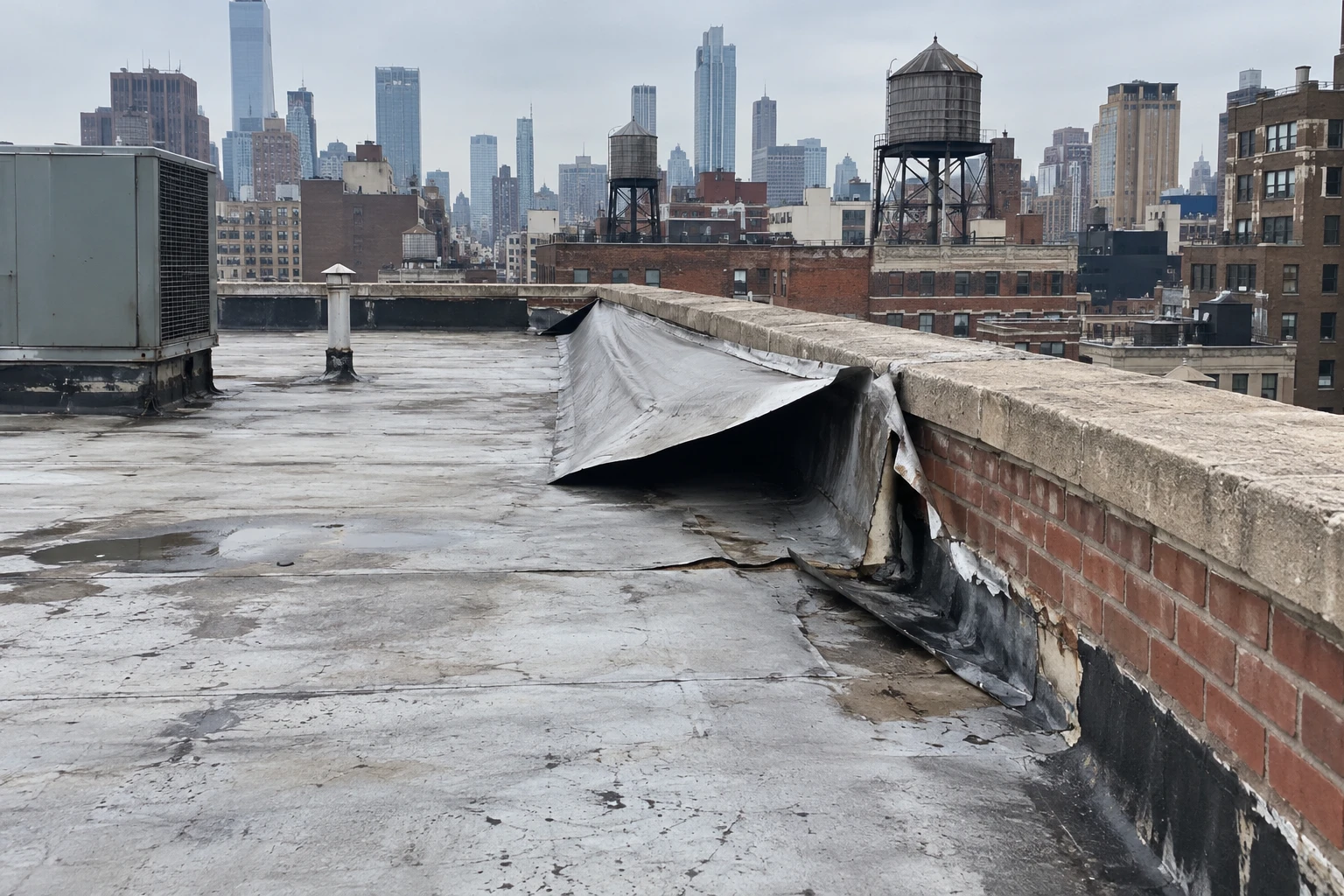
Our survey looks for lifted flashing, open metal laps, displaced ballast and billowing in the field. Where the findings call for repair, the work reattaches or replaces the affected edge and records the fastening pattern for the file. If a storm has already done damage, wind damage repair begins with a documented walk and photographs, which also supports an insurance claim. The record shows the owner and the carrier what the storm changed.
What do institutional and campus-style buildings add?
Cornell Tech took the place of the Goldwater Memorial Hospital, which closed in 2013; construction began in 2015 and the campus opened two years later. A planned campus of newer buildings usually means more equipment on the roof, greater expectation for sustainability features and a warranty that deserves tracking. That makes the roof file part of the building's asset record from the first day.
For institutional owners, we organize roof information by building and by roof level, with equipment curbs and penetrations numbered. A warranty file stays useful only if later work does not void it, so repairs by any trade on the roof are coordinated and documented. Rooftop solar or a green roof raises its own questions about ballast, drainage and access, all of which fall within the sustainable roofing zone rule when a roof is fully replaced.
Occupied research and teaching space also puts limits on noise, odor and vibration, so we agree the quiet hours before the first tear-off and keep access routes clear of the loading zone.
How do new residential towers change the roofing picture?
The Southtown plan covered 19 acres with 1,956 planned apartments, and the Riverwalk Heights building completed in 2024 added 357 units. Newer buildings arrive with roofs that are young but not exempt from trouble. Early trouble usually comes from construction: a penetration left unsealed, a drain set slightly high or a detail completed by another trade after the roofer had gone.
A baseline survey of a new roof, taken before the first winter, documents its condition and catches those early defects while they are cheap. It also gives the owner a starting point for the condition rating, so later changes are measured against something real. A drone pass makes the baseline efficient, and a drone roof inspection reaches areas that are slow to walk on a tall building.
Where the survey finds a defect on a young roof, the written finding says whether it looks like a workmanship item, a design item or ordinary wear, and what the owner can do about it while records are fresh.
What weather stresses an island roof the most?
Sandy, on October 29, 2012, sent the East River into parts of the East Village and a 14.06 foot surge, measured at The Battery, above average low tide. A roof sits above flood level, but the same storm drives wind and rain across the river, and power loss can shut down pumps and rooftop equipment. Ida's 3.15 inches in an hour on September 1, 2021 shows what every drain and scupper may face, and a clogged leader will back water onto the roof.
Winter adds snow load, averaging 29.8 inches a year in Central Park, along with ice in drains and flashing. We check roof drains and scuppers before each season and photograph their condition.
Heat adds a third stress. Central Park has recorded 106 F, and a building with long exposure to open sky sees its membrane and sealants age faster on the south and west faces. We look for splitting at corners, open laps and softened sealant, and we note which faces show the most wear.
What does the owner's file hold?
The file holds the condition rating, the roof plan with every curb and drain numbered, the fastening record for edges, warranty papers and photographs. Owners with holdings in the Upper East Side or the Lower East Side can place those roofs on the same scale as an island property.
Because the island is small, a single rating scale across every owned building is easy to keep. It also makes the reserve study straightforward, since each building's next roof event is a dated line.
Commercial Roofing Questions
Which part of an exposed roof is checked first after a storm?
The perimeter comes first: coping joints, edge metal, corner flashing and any ballast near the edge. Wind finds those details before it finds the field, and damage there is cheaper to fix early.
How do we baseline a roof on a building completed in 2024?
A baseline survey records drains, penetrations, seams and flashings at the roof's earliest age, with photographs and an infrared reading where appropriate. It gives the owner a dated reference for the condition rating and for any warranty question.
Does a solar array change how the membrane is repaired?
It changes access and sequence. Panels or ballast may need to be lifted for repairs, and the plan should record how that is done safely. We note the array layout on the roof plan so any repair stays coordinated with the electrical contractor.
What decides whether a tall building needs a hoist or a crane for materials?
Height, roof access, available street frontage and the weight of the delivery decide it. We plan lifts early, because permits and closures take lead time, and we match the method to the building.
How is a leak traced through a concrete frame?
Water can run along a slab or down a wall before it shows. We use moisture mapping, staged water testing and a review of parapets and penetrations to find where it enters, then confirm with a core cut where needed.