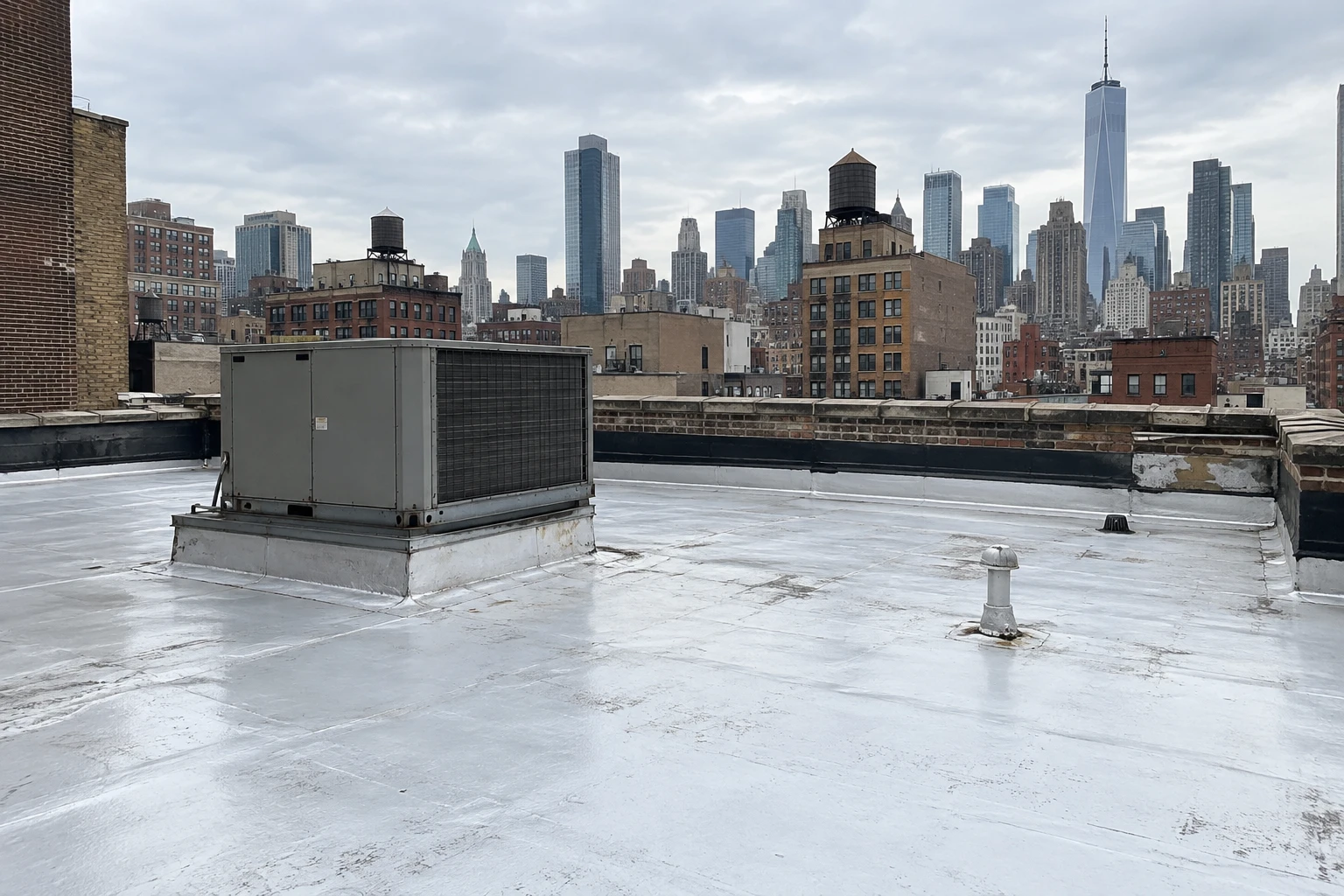
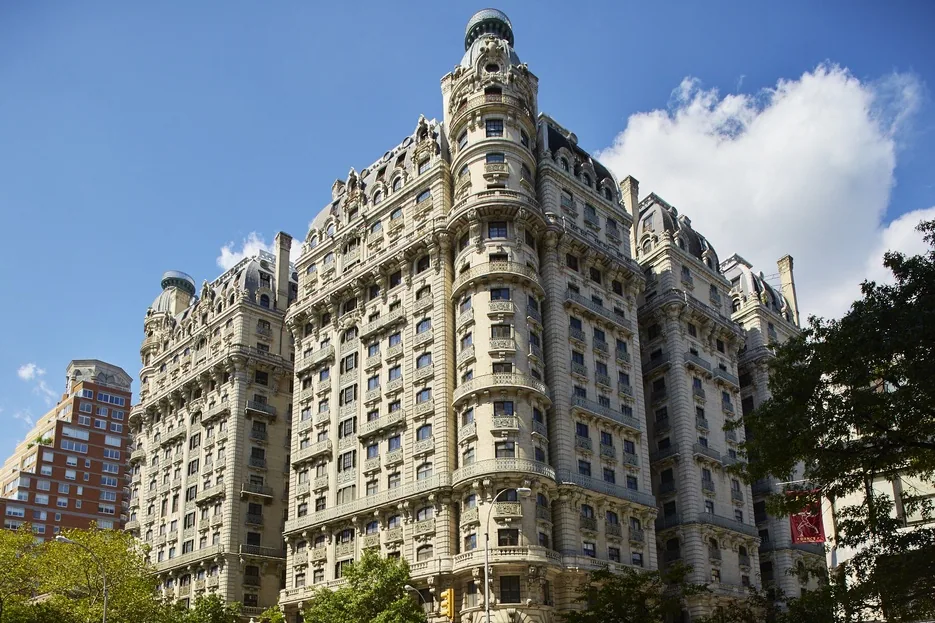
Commercial roofing on the Upper East Side, Manhattan, NY: co-op and hospital roofs, historic district review, moisture surveys, repair and replacement.
An infrared scan at dusk, after a warm day, shows a roof as a thermal map: the dry insulation cools quickly and the wet insulation holds its heat. On the Upper East Side that map matters because the roof sits under so many layers of oversight. Co-op boards, hospital facilities departments and landmark review all want the same thing, a document that says what the roof is, how it is performing and what it will cost to keep it that way.
We survey, repair, recover and replace commercial and multifamily roofs across the district, in Manhattan, NY, and the Upper East Side's building mix drives how we scope each job. Large prewar apartment houses, medical campuses and avenue retail all share the neighborhood, and each wants a different conversation about access, timing and records.
The first walk is deliberately slow. We read the roof from the edge inward, because the edge is where wind, water and movement meet, and we leave the field of the roof for the scan.
How do the historic districts shape a roof project?
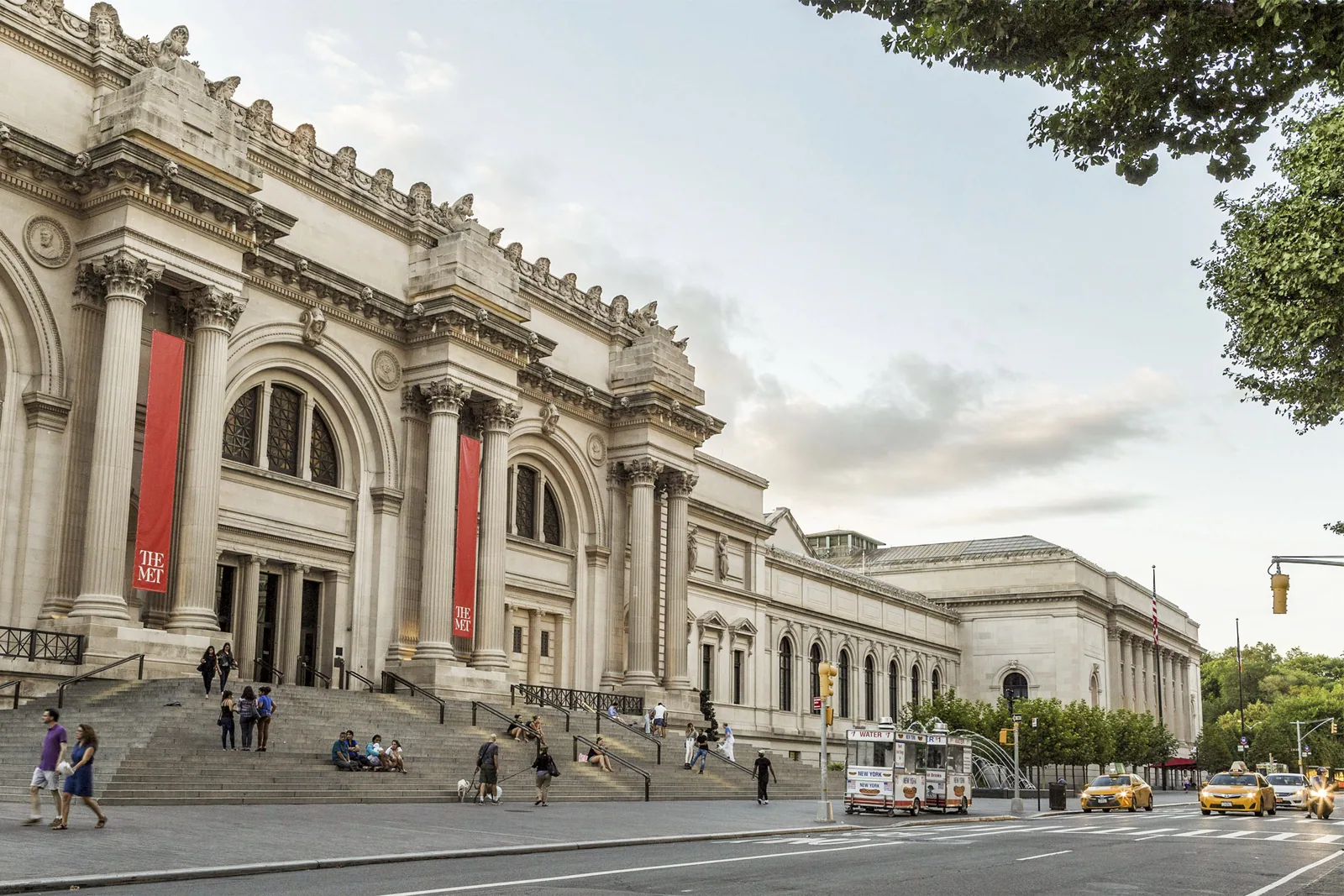
The Upper East Side Historic District was designated in 1981, and its 2010 expansion added 74 buildings. Carnegie Hill's historic district covers 400 buildings, mostly along Fifth Avenue from 86th to 98th Streets, and the Park Avenue Historic District, designated in 2014, includes 64 properties between 79th and 91st Streets. A roof inside any of these districts is subject to review for changes that can be seen from the public way.
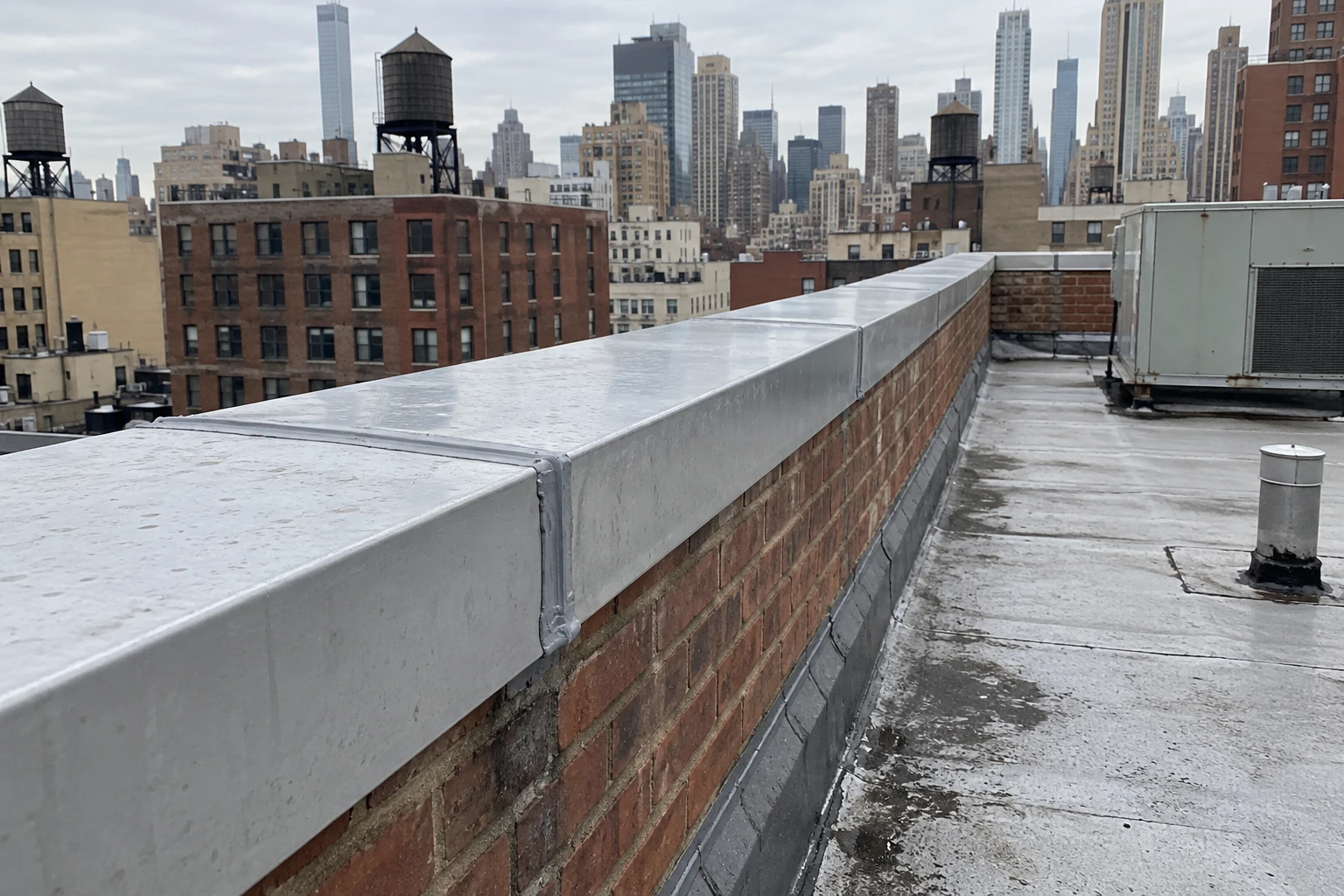
Most low-slope roofs are invisible from the street, but bulkheads, rooftop mechanical screens, new skylights and parapet changes may not be. We photograph what is visible from the sidewalk and from neighboring rooftops, note the existing coping and parapet profile, and flag which parts of a proposed scope might need review. A repair that leaves the exterior unchanged is usually simpler than a replacement that alters a visible edge, and coping and gutter work is the detail that most often gets looked at.
What do hospital-adjacent buildings need from a roof program?
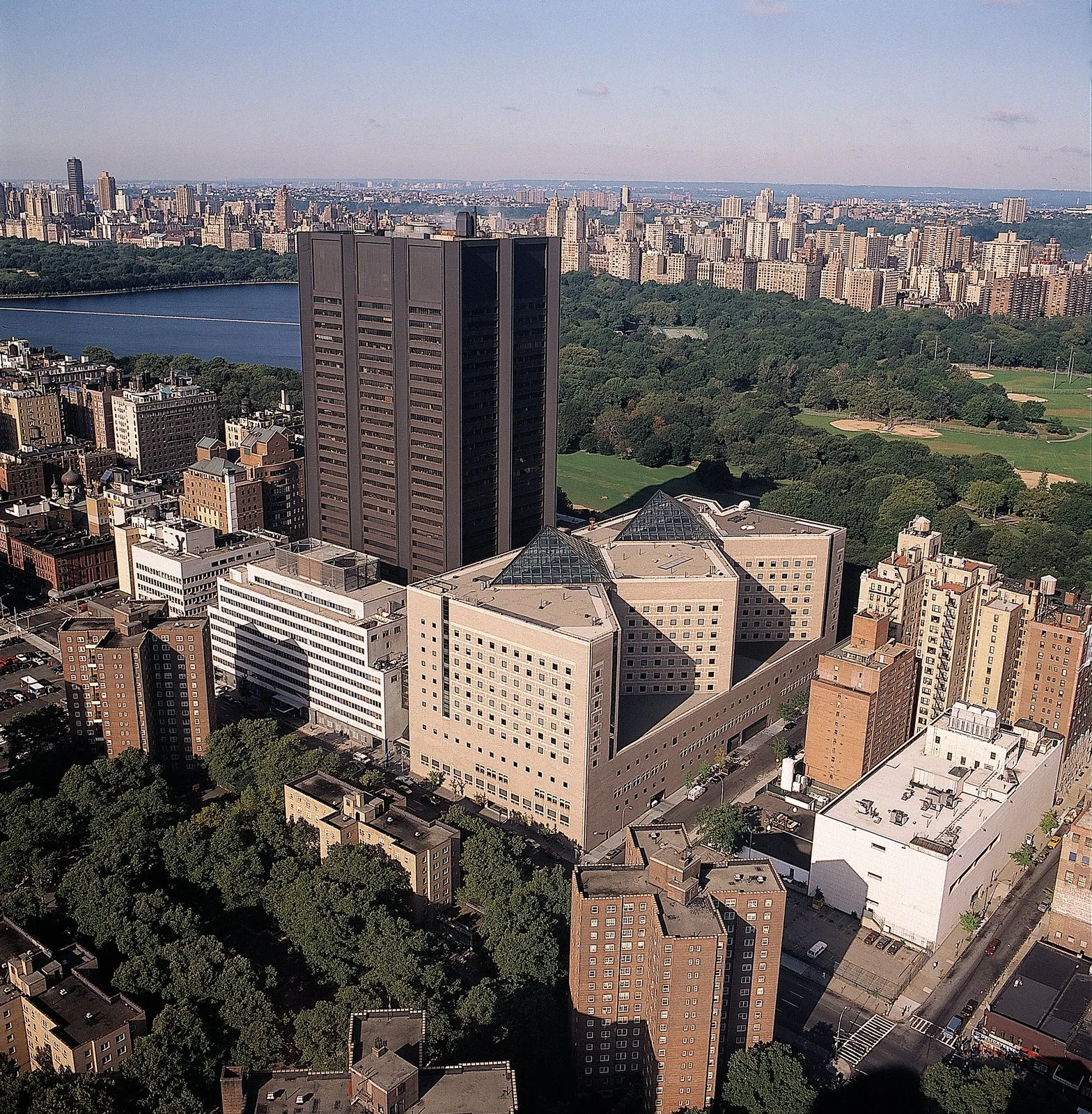
Lenox Hill Hospital, NewYork-Presbyterian Hospital and Weill Cornell Medical Center are all on the Upper East Side, and the medical offices, residences and service buildings around them depend on rooftop equipment that cannot go dark. Air handlers, exhaust fans and cooling equipment each sit on a curb, and each curb is a place where water can enter. A leak at a curb serving a clinical suite is a continuity problem, not just a maintenance item.
For that reason we keep the curb inventory with the roof plan, record the flashing height and sealant condition at each, and rate them separately from the membrane. When work is needed, we schedule around the equipment owner's operating windows, protect air intakes and stage hot work away from them. Work on hospital roofs and on the medical offices beside them is planned in phases, so the facility never loses more than one zone at a time.
How does a co-op or condominium board decide between repair and replacement?
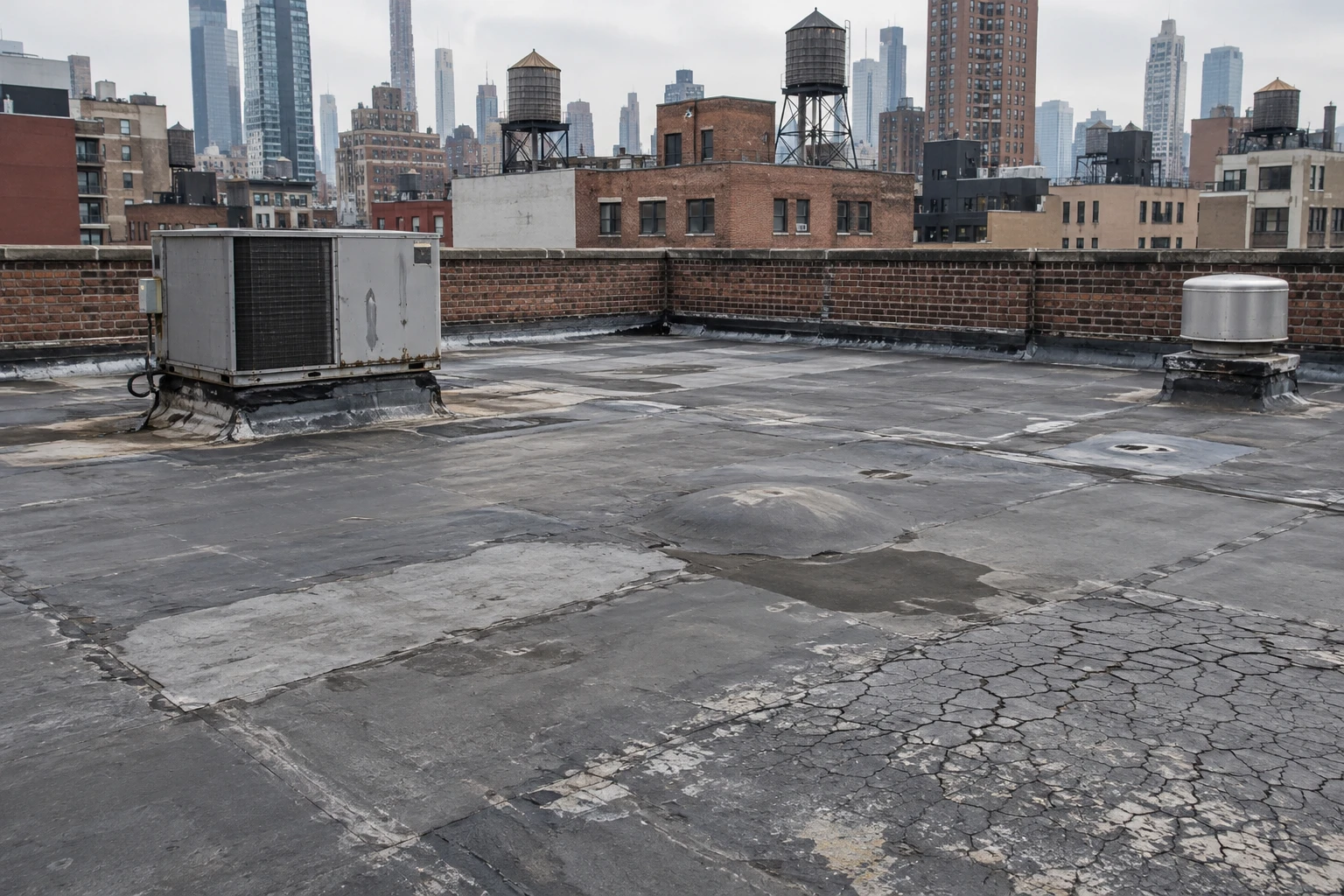
The board needs three documents: a condition rating for each roof area, a remaining-life estimate and a price range for each option. A rating built from an infrared scan and core cuts tells the board whether the membrane is wet through or only worn on the surface. Where the insulation is dry, a recover or a coating can add years at a fraction of a tear-off. Where it is saturated, the wet layers have to come out, and a patch only postpones the bigger bill.
Prewar apartment houses often have several roof levels, with a main roof, a setback and a bulkhead roof over the stair, and each can be at a different stage of life. A multi-year program can sequence them. Our roof condition report sets out the evidence and the options in plain terms so a board vote rests on the same page of findings.
Does the Second Avenue Subway matter to a roof?
The first phase of the Second Avenue Subway opened on January 1, 2017, with stations at 96th, 86th and 72nd Streets. Wherever a newer building rises beside an older one, the older roof ends at a wall that has become a flashing termination. Where two roofs meet, the tie-in carries a lot of water and gets little attention.
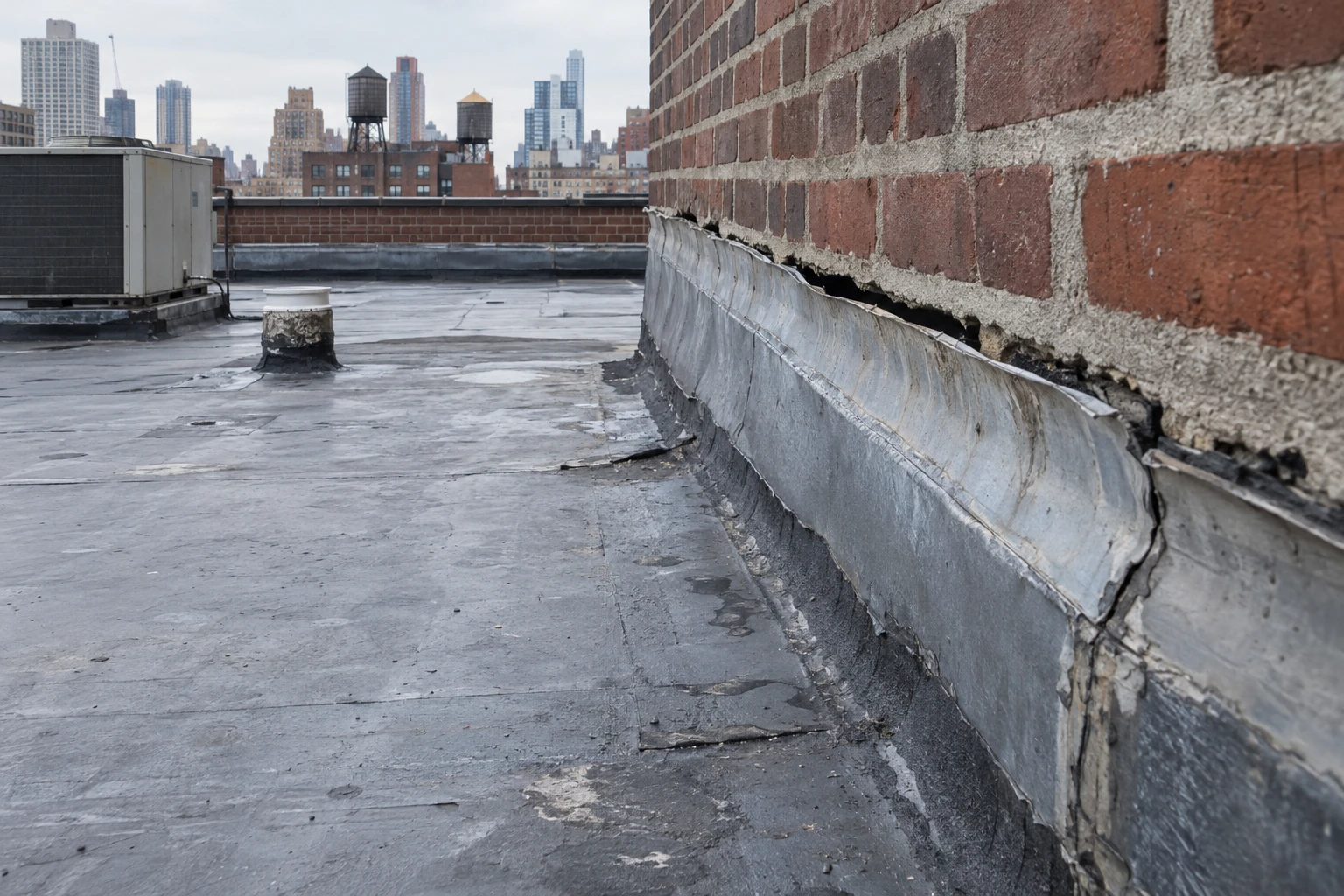
We look at those junctions closely. A tie-in at a rising wall, a base flashing that was cut for a new building and a counterflashing that no longer reaches are what we check for where a new wall rises beside an old roof. A flashing repair done properly at that line costs far less than an interior wall repair.
Which storms and temperatures should the roof be built for?
Ida's September 1, 2021 downpour peaked at 3.15 inches in a single hour, and Central Park totaled 7.13 inches. Hurricane Sandy's surge reached 14.06 feet at The Battery. Neither storm is a design number for your roof, but both show what drain capacity, curb height and flashing need to survive.
The same park has measured 29.8 inches of average annual snow and a low of minus 15 F, and the freeze and thaw that follows loosens sealants and cracks old coatings. We tie each seasonal risk to a check: drains and leaders before the wet season, edges and tie-ins before winter, and sealants before summer heat.
Heat deserves its own line in the report. Central Park has recorded 106 F, and a dark membrane on a roof with no shade can run far hotter than the air. Thermal movement opens laps and splits flashing at corners, so the walk includes a hands-on check of seams on the hottest exposures. When the building wants lower rooftop temperatures, a reflective cool roof is one option we price alongside the standard system.
What stays in the owner's file?
The file holds the rating, the scan, the cut log, the drain inventory, review approvals and warranty papers, with photographs keyed to a numbered roof plan. That keeps the next board, manager or buyer from starting over. Owners who also manage in the Upper West Side or East Harlem can compare those buildings against the same rating scale, and a multi-building owner can see in one table which roof falls due next.
Commercial Roofing Questions
Does a co-op need landmark approval for a flat roof replacement?
The test is visibility from the public way. A flat roof behind a parapet often needs none, but a changed parapet, a taller bulkhead or new screening can. We document the existing profile first, and the answer comes from the building's designation status.
How do we protect the air intakes of a medical office during reroofing?
Intakes are identified on the roof plan before work begins, then covered or relocated away from the active zone. Hot work is sequenced so fumes never reach them, and a monitor checks conditions during each shift.
What does the infrared scan show that a visual walk cannot?
It shows moisture trapped inside the roof system. A surface that looks flat and intact can hide wet insulation, and the scan marks the wet areas so core cuts confirm them. Without it, a replacement scope tends to be larger than the problem. For a building with several roof levels, that also means each level is rated on its own evidence.
When does a recover make more sense than a tear-off?
A recover fits when the existing insulation is dry, the deck is sound and the assembly can take the added weight. Wet insulation, a failed deck or a roof with several prior layers pushes the answer toward tear-off.
What should I bring to the first meeting about an Upper East Side roof?
Bring the last roof report, the building age, any open violations and the names of the roof levels. We set the survey scope from those and agree on the rating before a price enters the conversation.