Commercial roof surveys, repair and replacement in East Harlem, Manhattan, NY, for public housing campuses, towers, retail centers and vacant buildings.
Ponding depth, measured at a single low spot, can decide whether a roof is a repair or a replacement. A film of water that dries within a day points to a drainage nuisance. A pool that stays for days points to a deck that has sagged, a drain that has failed or insulation that has compressed under water. East Harlem offers many roofs where that distinction pays for itself, because the district combines large multi-building housing sites, tall residential towers and a number of buildings that have sat unused.
In Manhattan, NY, we survey, repair and replace low-slope roofs in East Harlem. A building owner, a housing manager or a lender gets a written rating, a map of moisture and a priority list. The rating turns a roof from a worry into a line in a capital plan, with a date and a range for each option.
How is a roof program set up across many buildings at once?
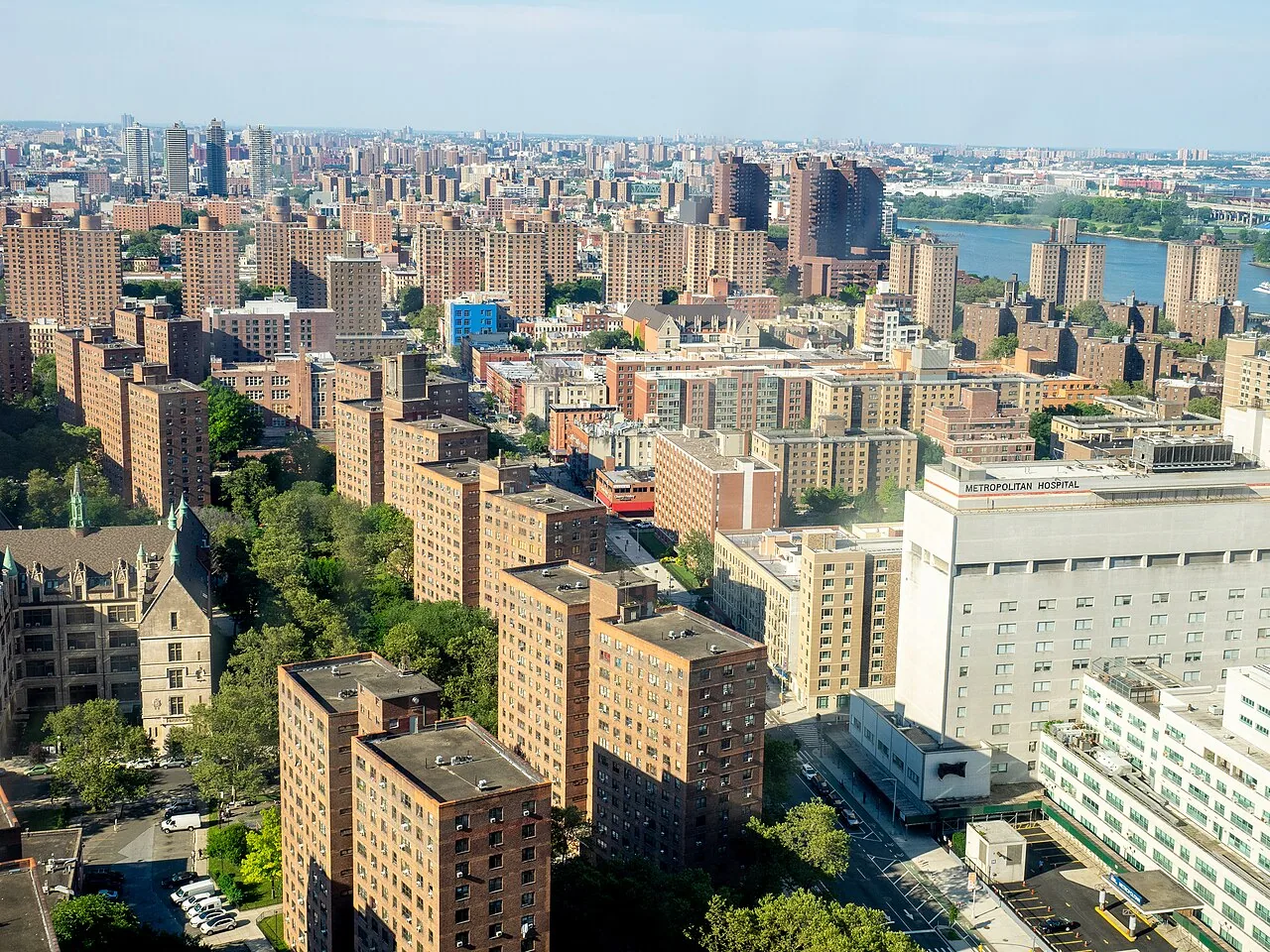
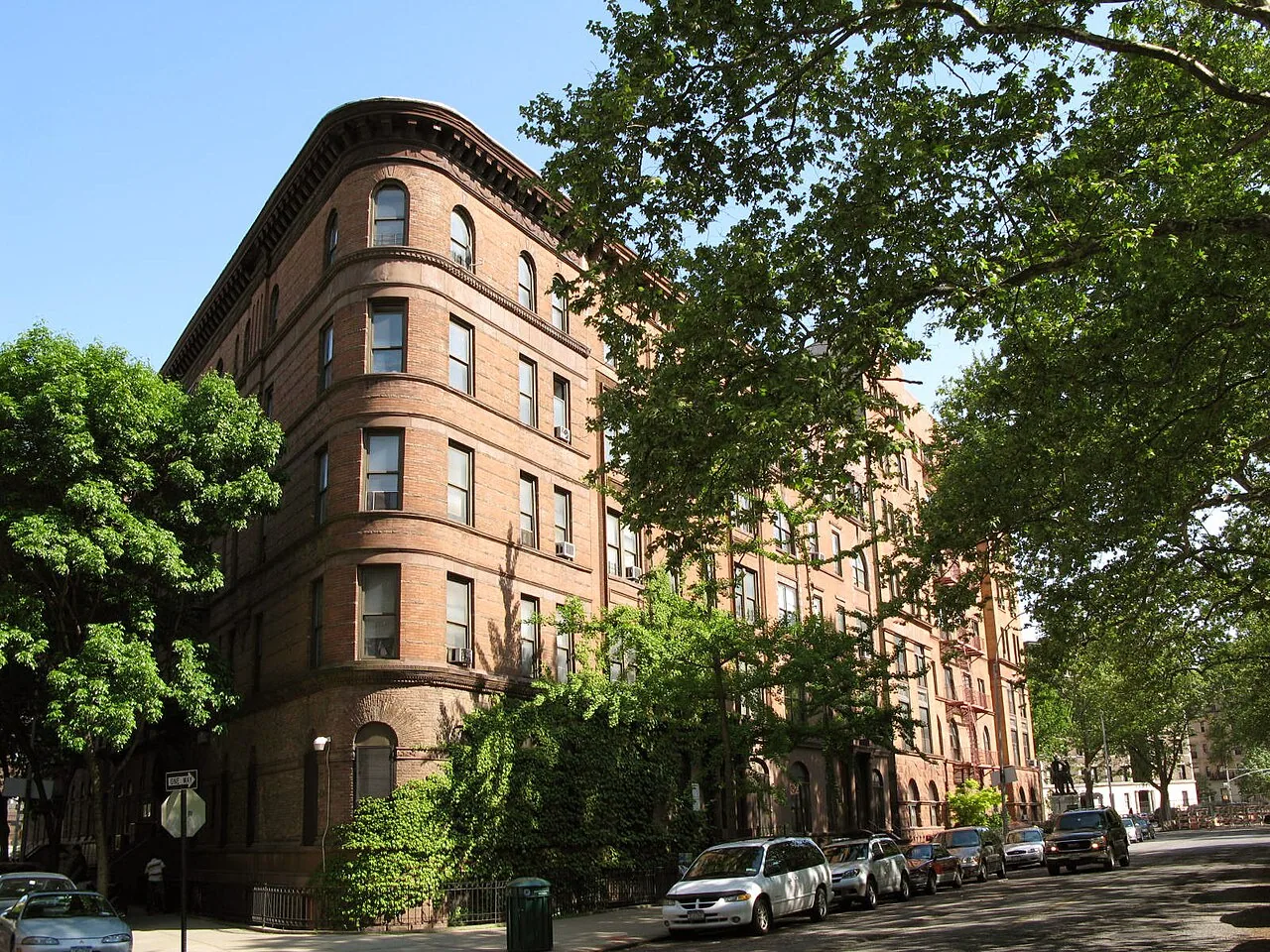
Twenty-four New York City Housing Authority developments stand in East Harlem, and in 2013 more than a quarter of its residents lived in NYCHA-managed units. A site with many buildings has many roofs, and the efficient approach is a program, not a string of single repairs. Each roof is surveyed to the same standard, rated on the same scale and entered in one inventory.
The inventory shows which roofs are failing first, which share a common problem such as a particular flashing detail and which can be grouped into one contract. Grouping reduces mobilization cost and speeds the schedule. Agencies and housing owners who manage many sites can use a multi-site roof program to set priorities and track progress by building. For public owners, procurement rules shape how and when work is bid, so the findings are written to support a clear specification.
Sequence matters on a multi-building site. Residents stay in place, so each building is worked in zones, with notice before noisy stages and a dry-in at the end of every shift. The inventory tells the housing manager which building is next, so residents hear the dates early.
What do tall residential towers ask of a roof?
Four 35 story towers with 656 apartments make up Taino Towers, which opened in 1979 at East 122nd Street and Third Avenue. Tall residential buildings put their roofs high in the wind, with long parapet runs, mechanical penthouses and sometimes several roof levels. Height changes the work: access, hoisting, wind limits for installation and the cost of a failure all rise.
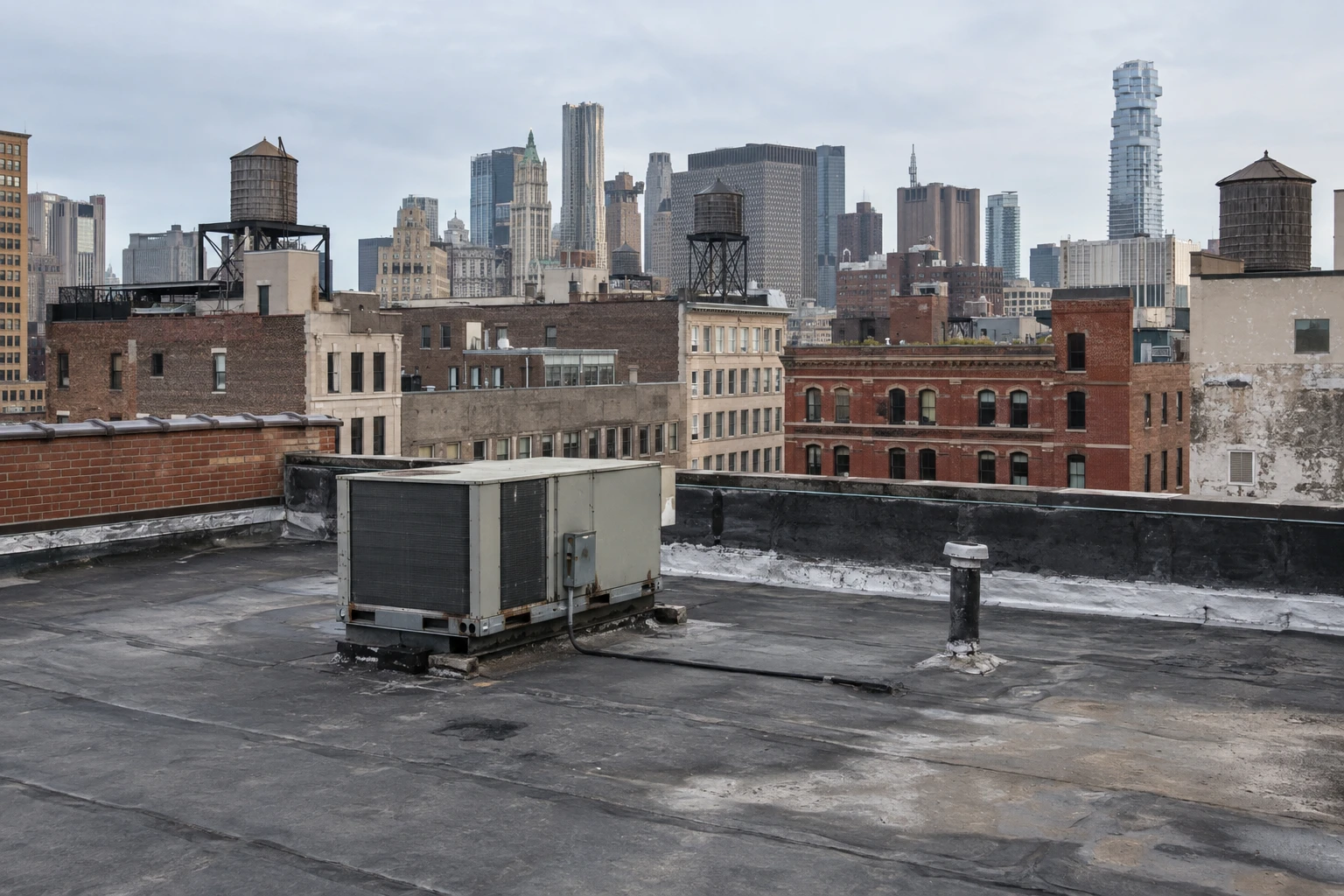
The survey of a tower roof begins at the edges, where uplift acts first, and moves to the drains, which carry rain from a large catchment through risers in the building. We check the coping attachment, the flashing at the penthouse walls and the condition of the drains and leaders. A drone inspection gets a first view of a tall roof quickly and safely, and a hands-on walk follows where the images show something worth touching.
Installation limits also follow the wind. Membranes cannot be placed or adhered in strong gusts, so a tall-building schedule carries weather days. Materials go up by hoist or crane, and the lift plan is approved before the start date.
What does an owner do with a long-vacant building's roof?
A 2007 survey counted 1,723 significantly vacant buildings in Manhattan, about three quarters of them north of 96th Street. A roof over an empty building is the first line of defense for everything below it, and an unattended leak can turn a salvageable structure into one that needs a major rebuild. Vacant does not mean ignored; a roof still needs drains cleared, openings sealed and a plan.
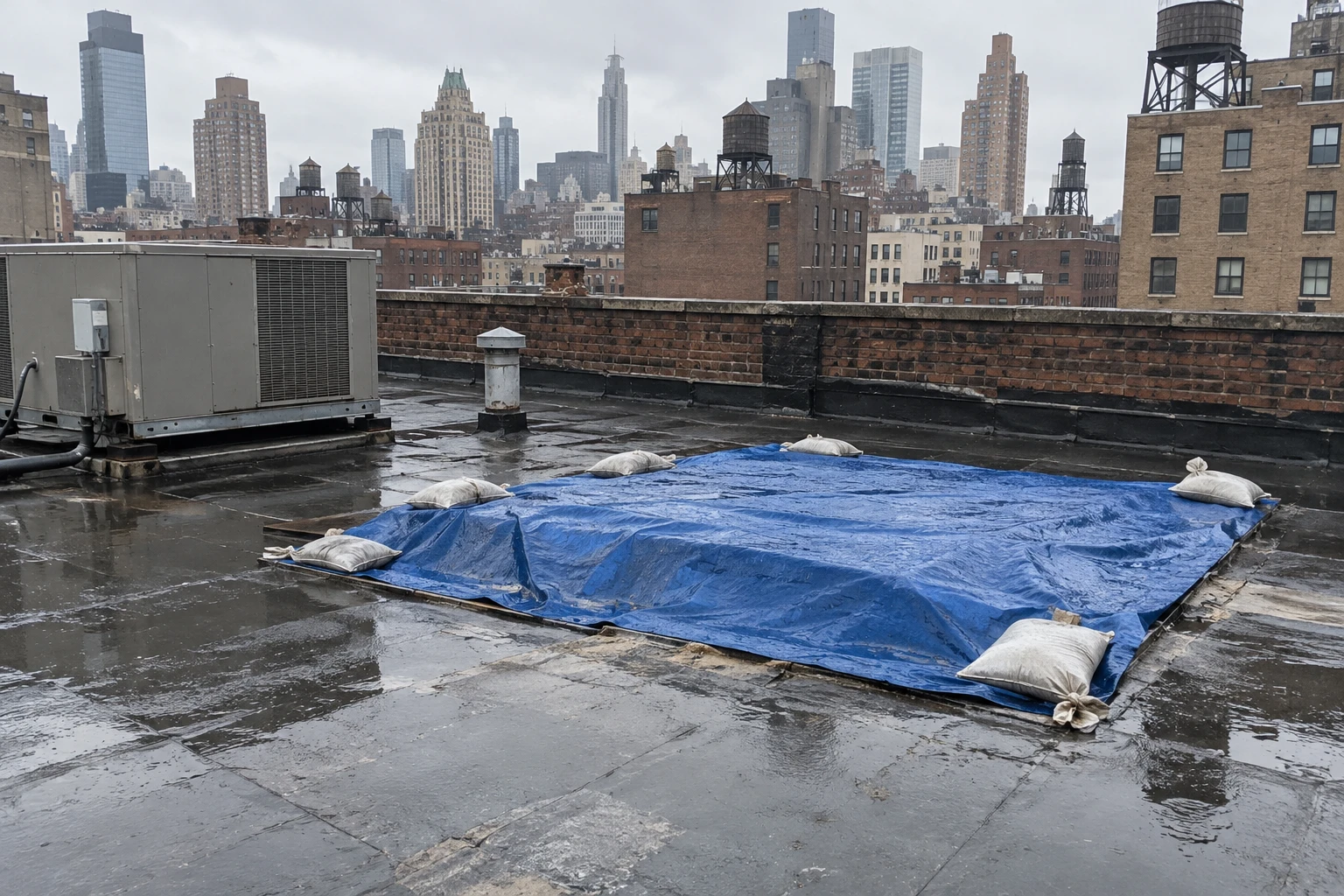
For an owner who is deciding whether to rehabilitate, sell or hold, the survey answers the roof's share of that decision. We rate the roof, estimate what a stabilizing repair would involve and separate emergency work from the rest. For storm or fire damage, emergency roof repair can dry in the building first, so later decisions are made with the structure intact.
Insurance and lenders read the same file. A dated rating and photographs show what the roof looked like on the day of the survey, which matters if a claim or a sale follows.
How do large retail centers differ from the housing roofs?
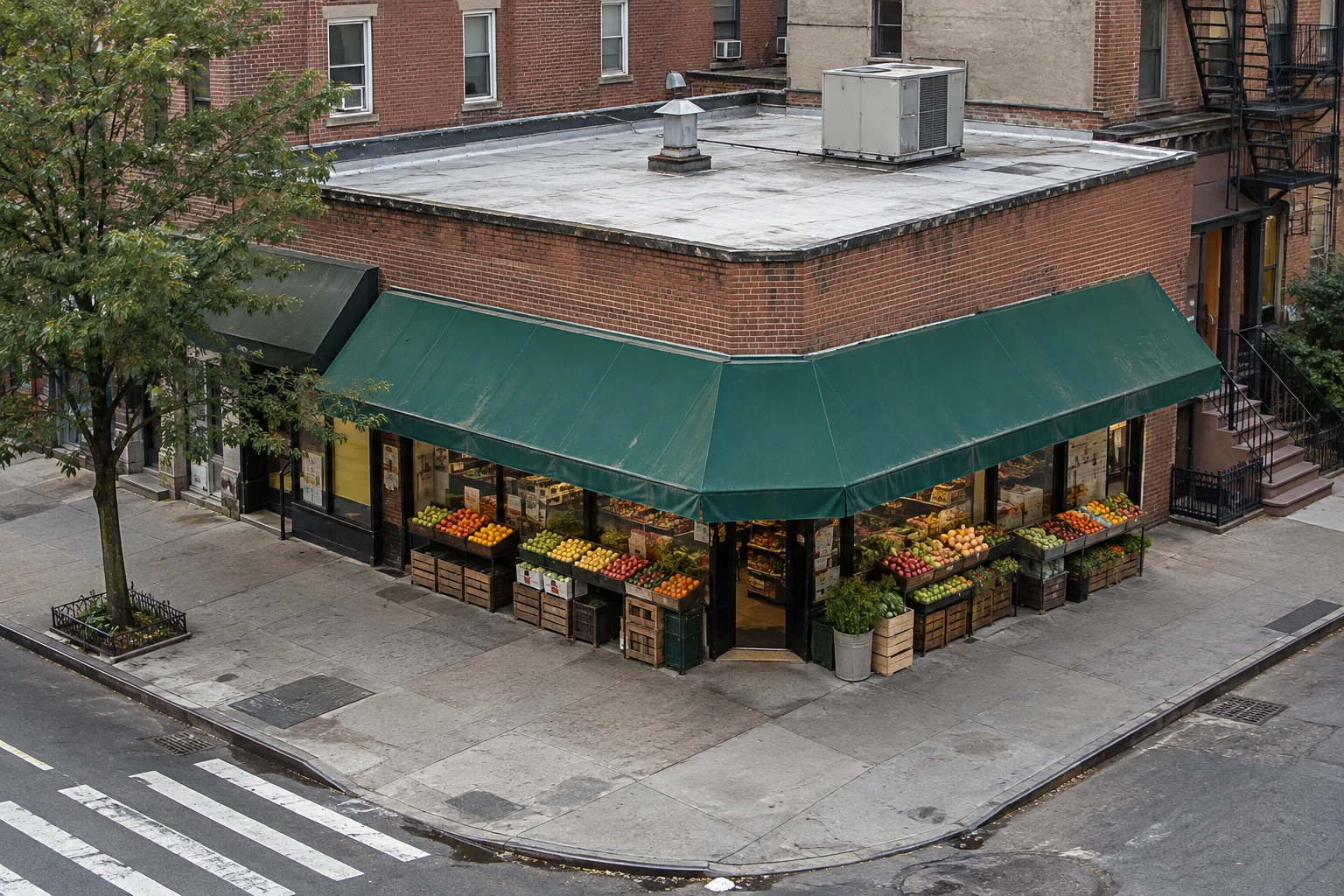
East River Plaza at East 117th Street and the FDR Drive has housed an Aldi grocery store since 2010. A retail center puts a different set of demands on a roof: a wider, flatter expanse, rooftop units serving stores and a tenant mix that expects the roof to stay out of the way. Refrigeration and ventilation equipment adds penetrations and weight, and a leak over a grocery floor is costly.
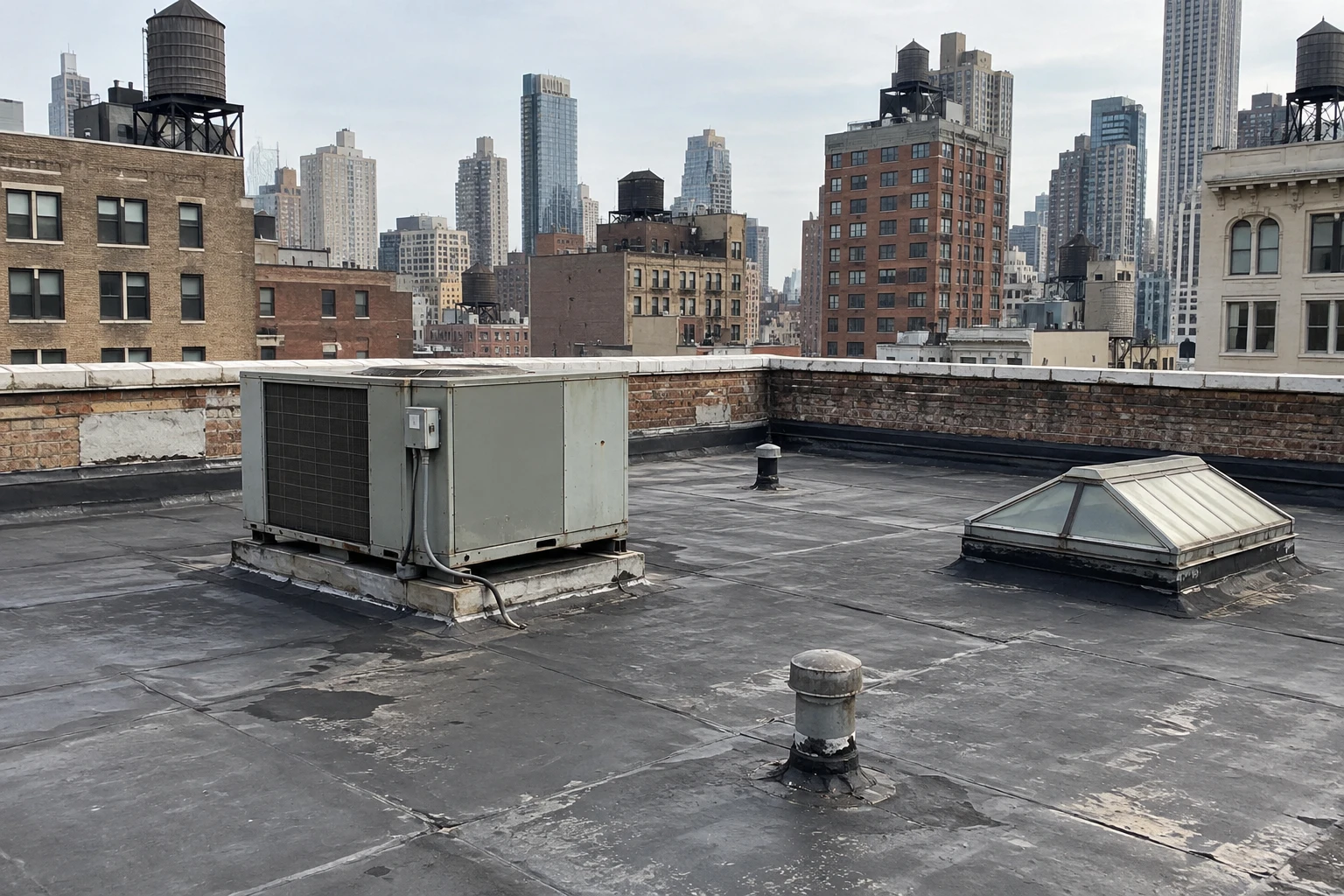
We map the rooftop units, inspect each curb and flashing and look at how water leaves the roof. For a retail owner, the roof file also helps with leases, since tenants and landlords often disagree on who pays for what. A grocery store roof carries refrigeration equipment that needs its own check for vibration at the supports.
Parking-deck and loading-area drainage often ties into the same system as the roof, so a clogged line can back up to either. We trace the leaders where access allows and note which outlets serve which area.
What weather matters to a flat roof here?
Sandy sent a surge to The Battery that measured 14.06 feet on October 29, 2012, a reminder of how the river edge behaves. Ida's one-hour record of 3.15 inches arrived on September 1, 2021, with the Weather Service's first flash flood emergency for the city. Drains and scuppers that carry that load have to be clear.
Snow and ice add load: Central Park averages 29.8 inches of snow a year, and its recorded low is minus 15 F. We check the drains, the leaders and the strainers before winter and after major storms.
Summer heat finishes the cycle. Central Park has recorded 106 F, and the urban heat island holds warmth overnight, so seams and sealants work harder than the air temperature suggests. We mark blistering and open laps on the survey plan.
What belongs in the owner's file?
The file holds the rating, the moisture scan, the core log, the drain inventory, photographs keyed to the roof plan and warranty papers. Owners who also hold property in Harlem or the Upper East Side can compare their roofs on the same scale.
A single table with building, roof age, rating and next action, updated after every visit, keeps a large portfolio readable.
Commercial Roofing Questions
How do we choose which housing roofs to repair first?
The rating decides, with wet insulation and active leaks ranked highest. Roofs with similar problems are grouped into one contract so the fixed costs are spread across more buildings.
What should be done to a roof on a building that has stood empty for years?
Clear the drains, seal openings, survey the layers and rate the condition. If water is entering, a stabilizing repair comes first. Replacement waits until the owner decides what the building will become.
Why is wind a bigger issue on a 35 story roof?
Wind speeds rise with height, and uplift concentrates at corners and edges. The attachment of the membrane and the coping matters more than on a low building, so we check them first.
How is refrigeration equipment treated on a grocery roof?
Each unit sits on a curb or frame that we inspect for flashing, sealant and support condition. Condensate and glycol lines get checked for leaks, because they can damage a membrane over time.
What records do public owners need from a roof survey?
They need a rating by building, a photographic record, a drain inventory and a clear scope that can feed a specification. We write the findings in that form so procurement can move quickly.