Multi-site roof programs in Manhattan, NY and the Hudson corridor: one survey format, one rating scale and one schedule across many buildings.
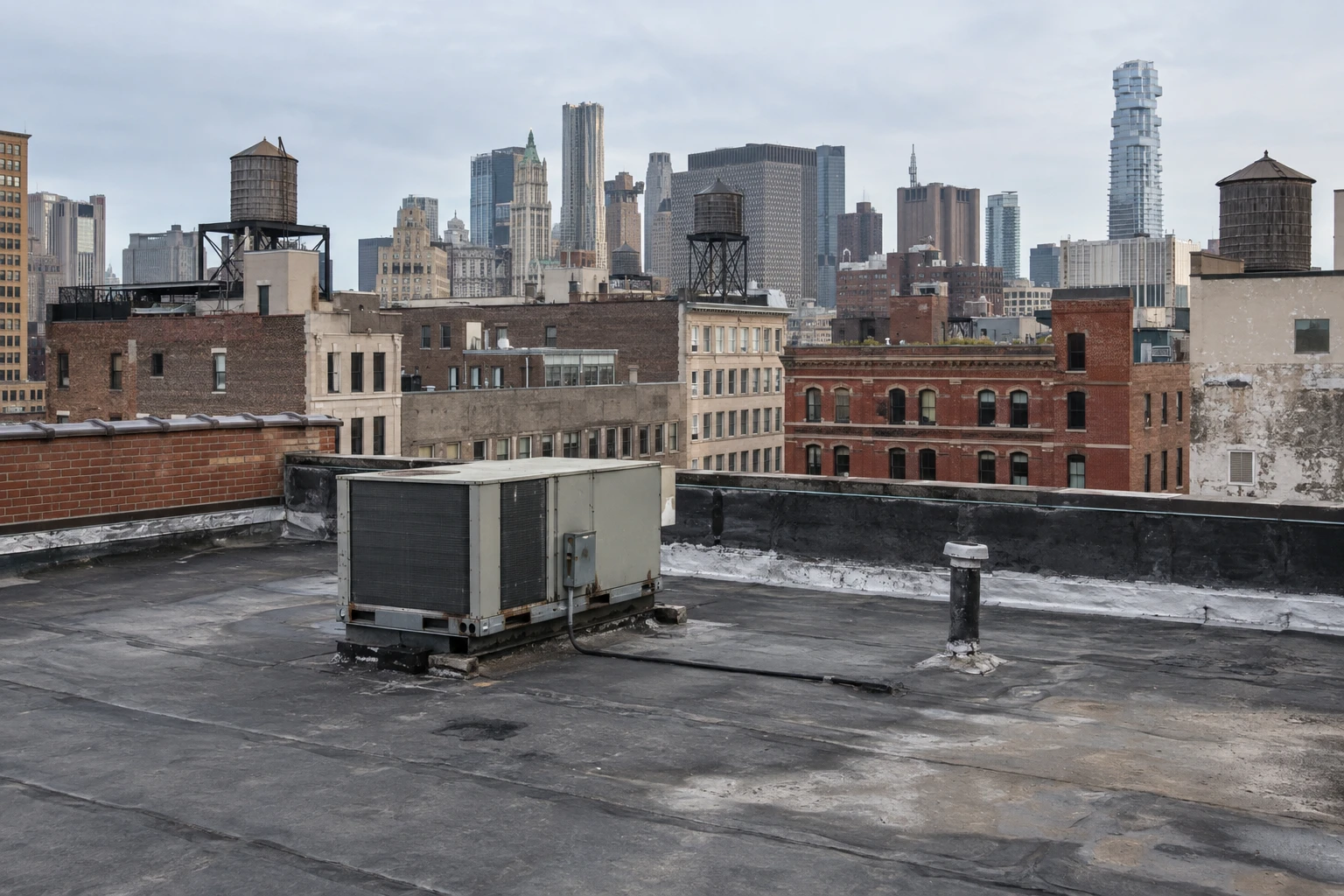
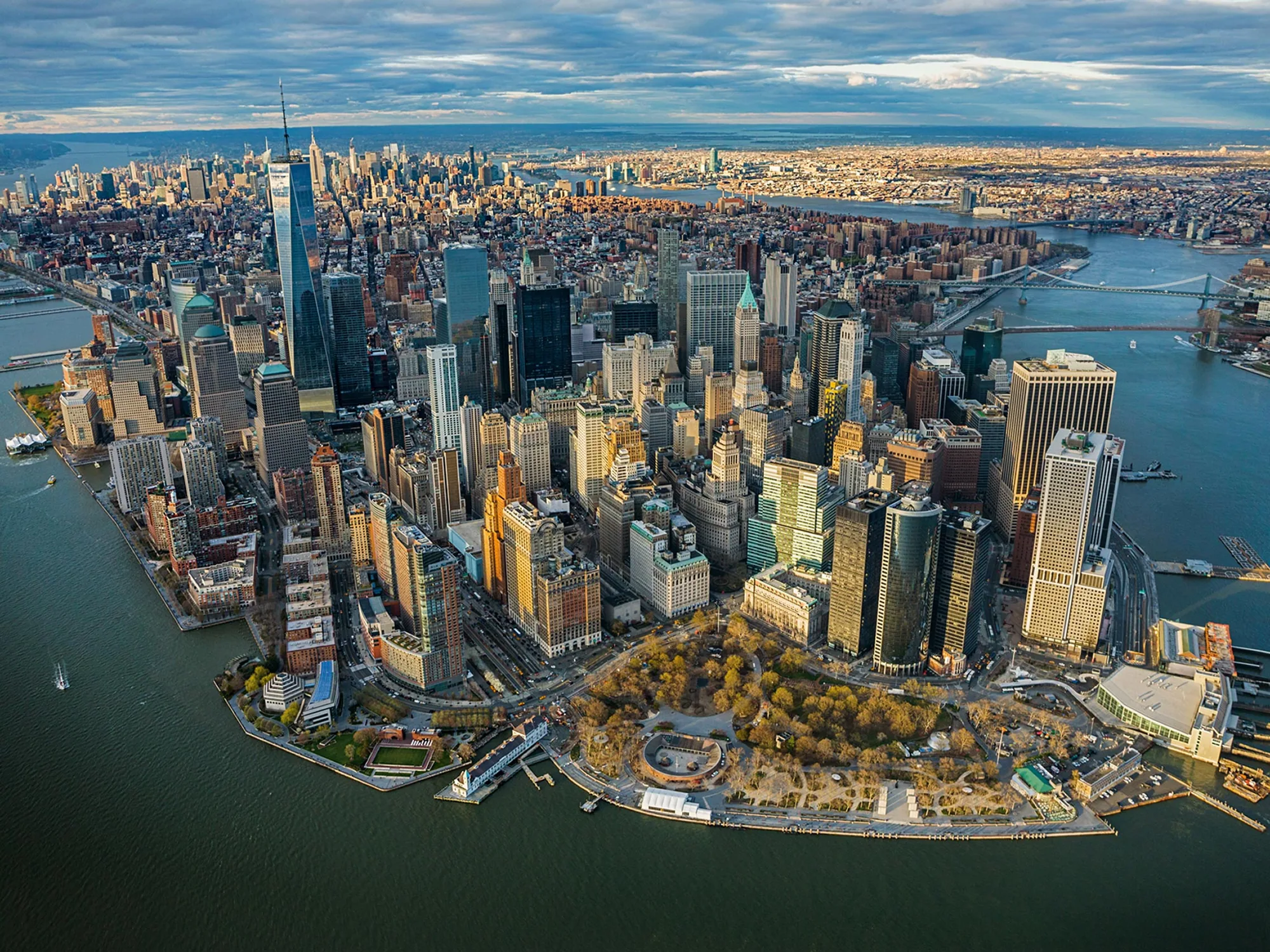
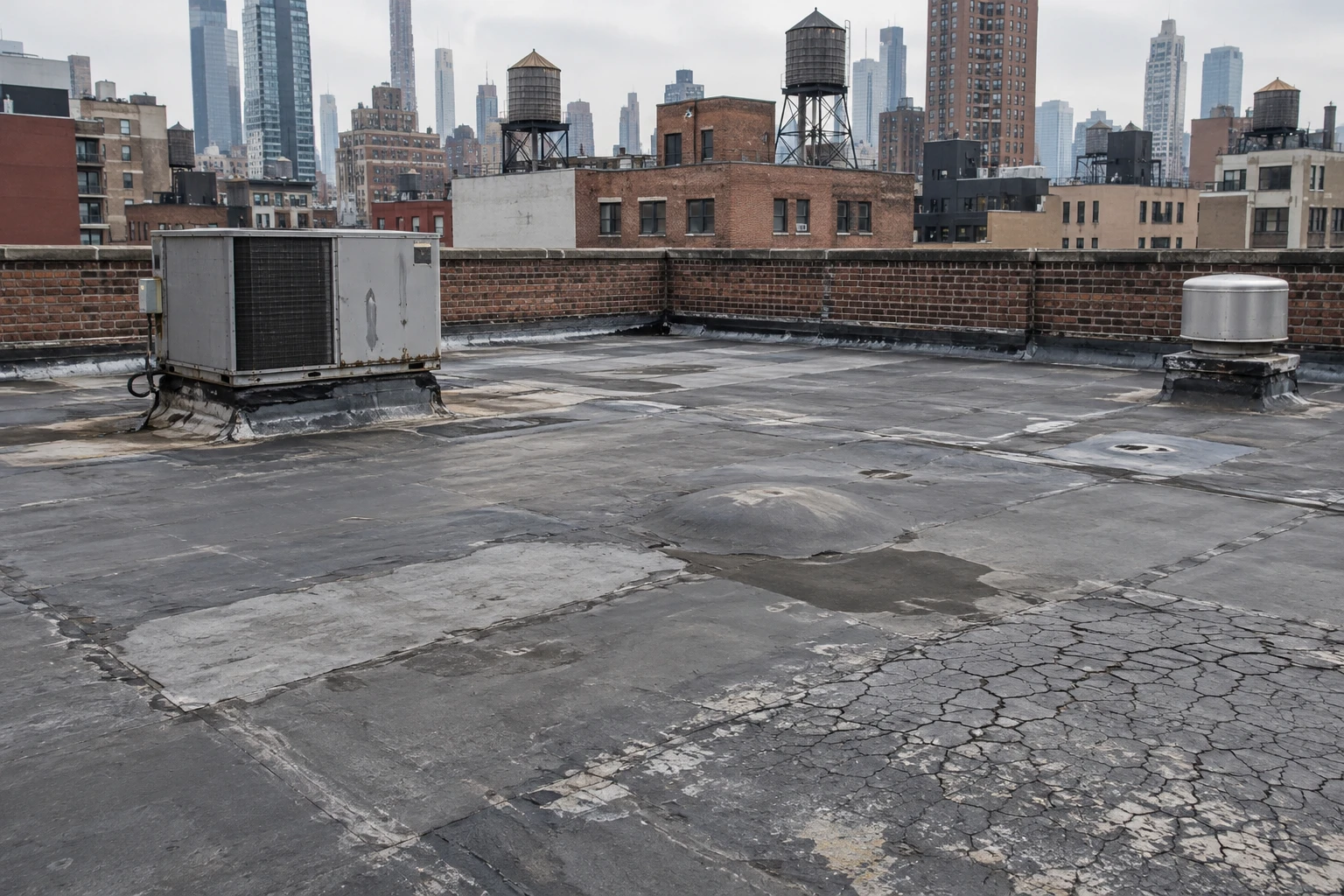
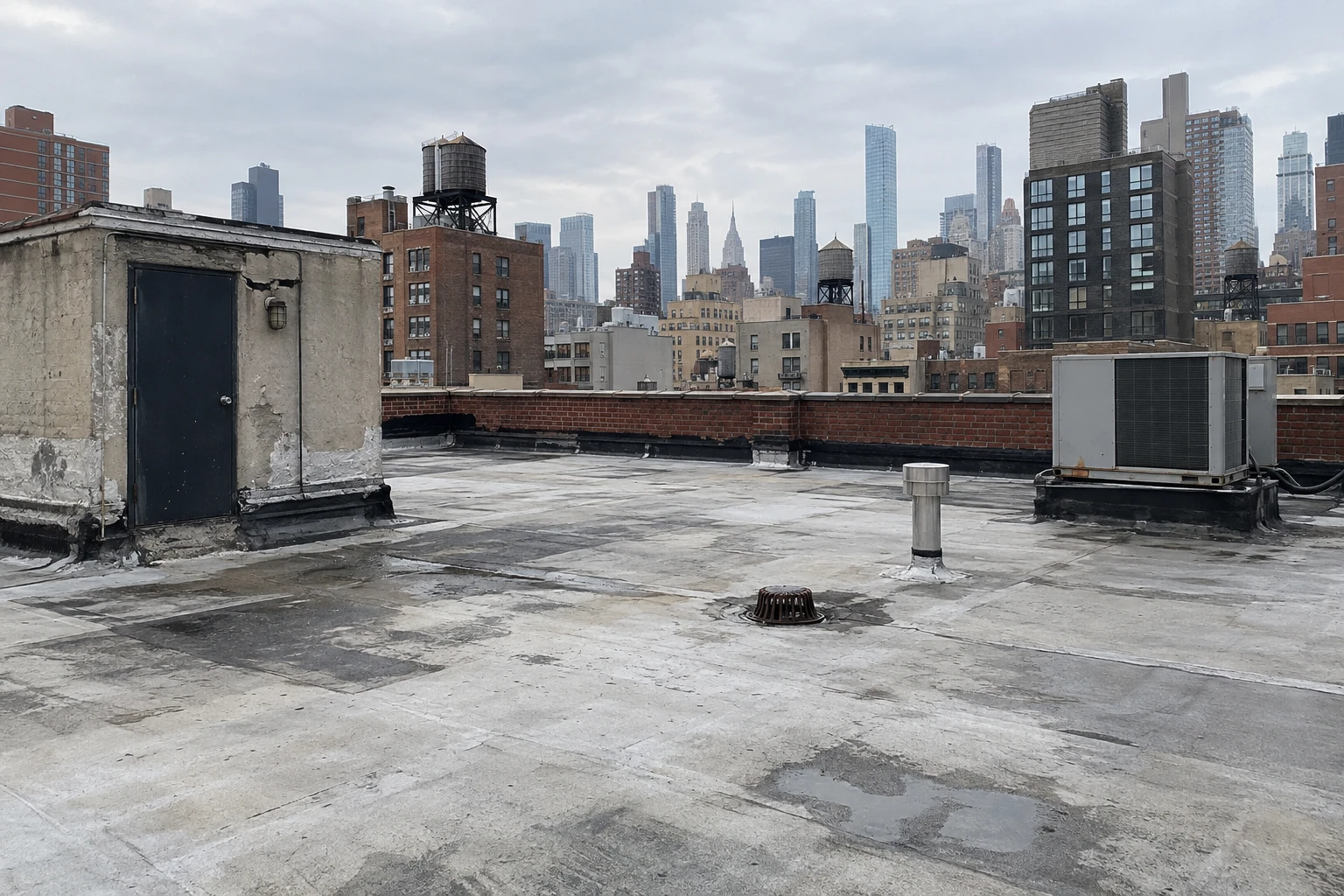
A portfolio of roofs rated by different surveyors on different scales is a portfolio that cannot be ranked. One report calls a roof fair, another gives it a number from one to ten, and a third lists repairs with no rating at all. A multi-site program begins by removing that noise: one survey method, one rating scale and one report format applied to every roof, so the owner can put twenty buildings in one table and see which three need money this year. The program in Manhattan, NY runs across a market where roofs differ sharply, from tower setbacks and low-slope podium decks in Midtown to prewar five and six story tenements in Washington Heights and Inwood, and across the Hudson in Jersey City, Hoboken, Weehawken, Secaucus, North Bergen, Union City and Fort Lee.
Send the last roof report for each building, the building ages and any open violations, and we will set the program structure and the first survey wave before a number is discussed.
What does it mean to use one format across every building?
Every roof gets the same four measurements: a dusk infrared scan, cores at the warm spots and at dry control points, ponding depth after rain and an inspection of each detail. The same rating scale, with the same definitions at each level. The same report layout, so a reader who has seen one has seen them all. The same photograph conventions, with numbered positions tied to a sketch.
That sameness is what makes the numbers comparable. A rating of three on a Jersey City warehouse means what a three means on a Harlem apartment building. The program table lists each roof with its rating, its remaining life, its next action and its cost range. Sorting the table by rating, by cost or by date gives three different views of the same portfolio, and each answers a question the owner actually asks. Our roof condition report format is the unit the program repeats.
How is a large portfolio surveyed in waves?
By risk and by access. The first wave covers the roofs with known leaks, the oldest roofs and those over critical space. The second covers the middle of the portfolio. The third covers the newest roofs, where the survey sets a baseline. Waves are scheduled by season: heat and dry weather for coatings and repairs, mild weeks for replacements, off-peak periods for retail and plants.
Each wave ends with a review meeting with the owner or the managing agent. The table is updated, the ratings are compared with the prior year's and the next wave is adjusted. A roof that scored worse than expected moves up. One that scored better moves down. The review also records access problems, such as a bulkhead door that sticks or a ladder that is not safe, so they are fixed before the next visit. Those small items decide whether a survey takes one hour or three, and over a portfolio the savings add up. We keep a list of access fixes by building, with an owner for each, and close them out as they are done. The roof asset management register holds the results.
How do Manhattan and New Jersey buildings differ in one program?
Codes differ. Local Laws 92 and 94 of 2019 govern New York City buildings and ask that a full replacement dedicate the sustainable roofing zone to solar, a green roof or both. In New Jersey the state and the municipality set the rules, as the local building department confirms. The program table has a field for the applicable code on each roof.
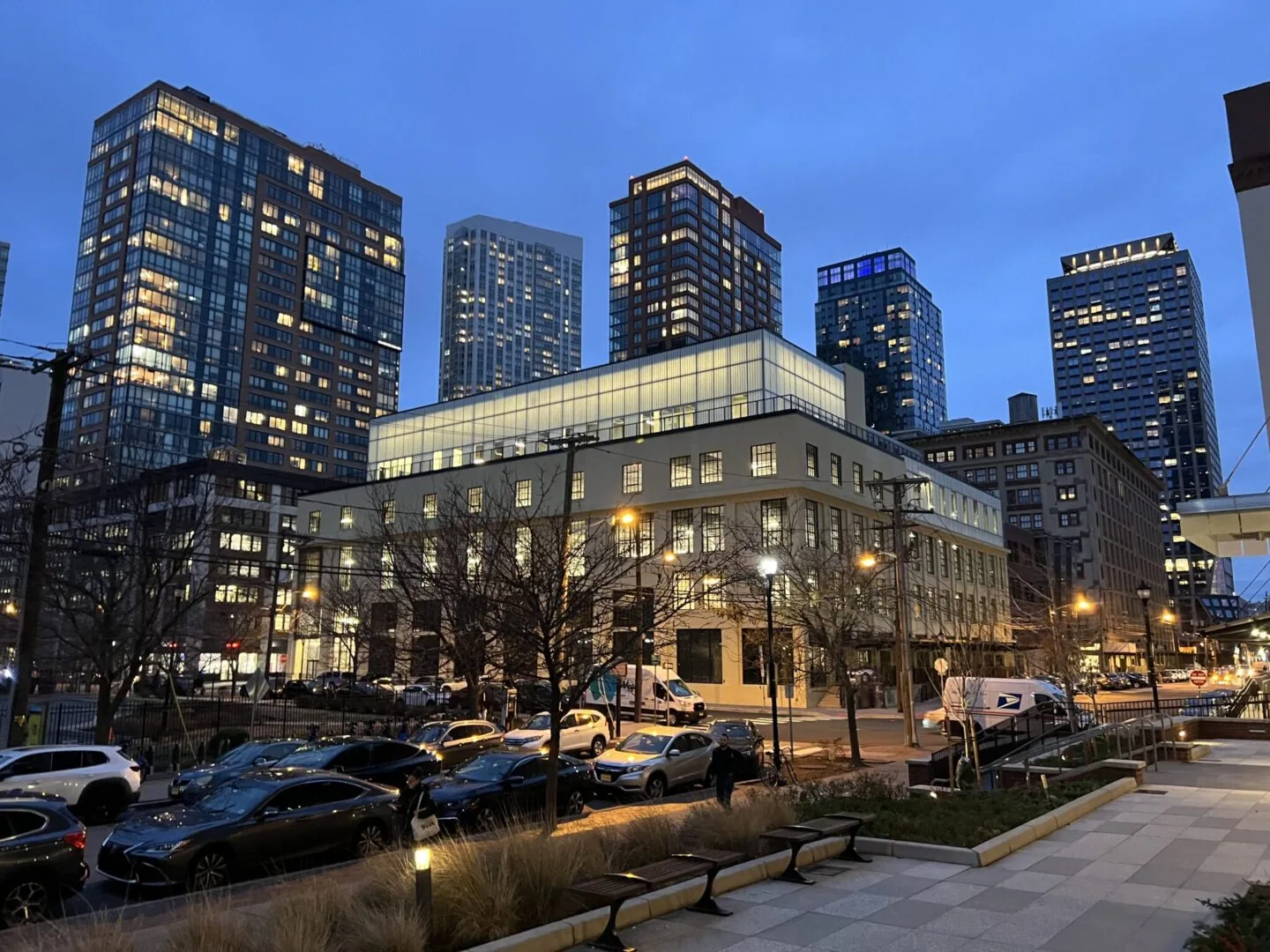
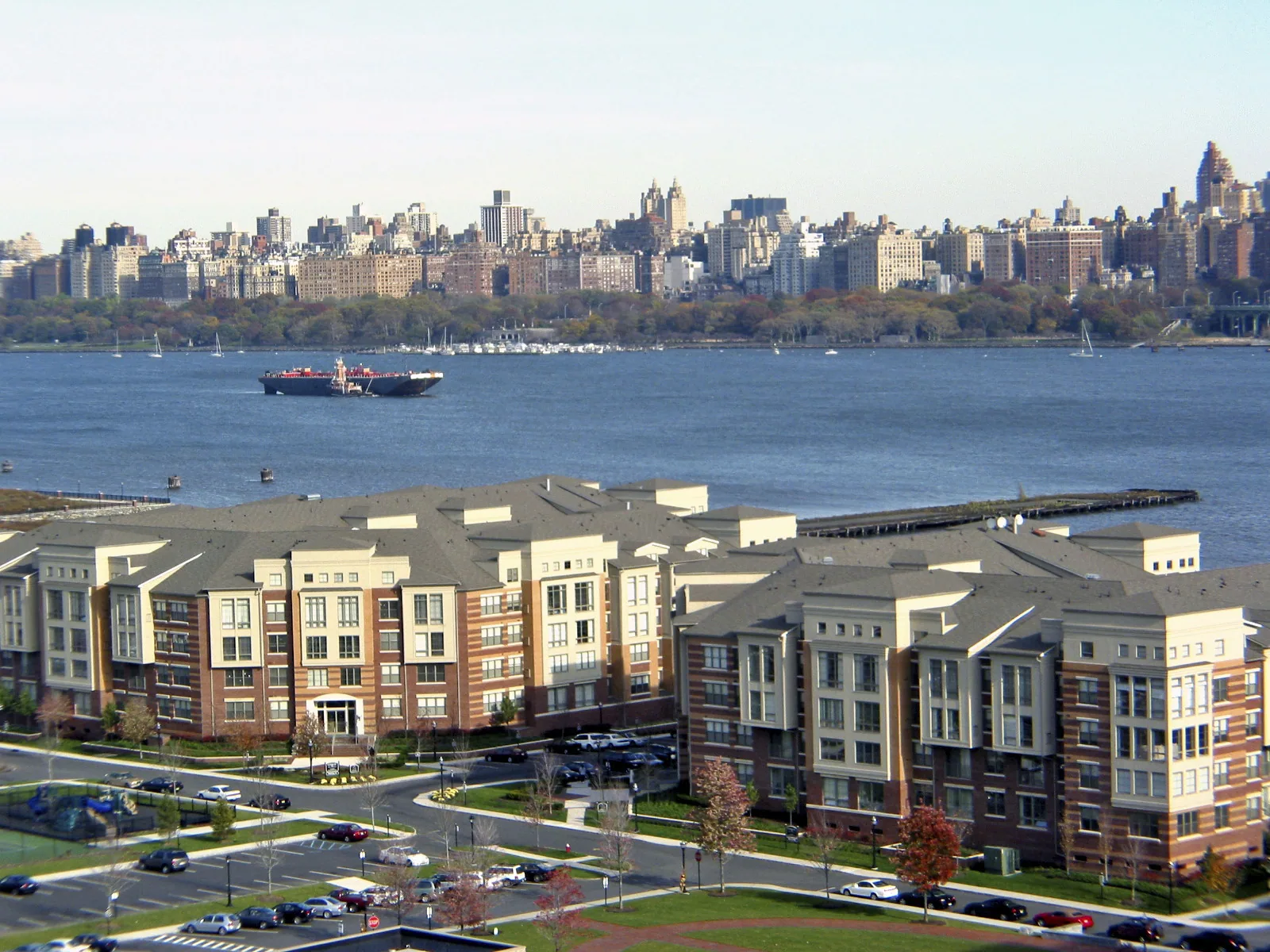
Access differs too. Jersey City had 292,449 residents in the 2020 census, up 18.1 percent from 2010, and has 30.7 miles of waterfront. Union City had 53,293.7 residents per square mile, the second densest municipality in New Jersey, which leaves little room to stage materials. Weehawken is the western terminus of the Lincoln Tunnel, and Fort Lee sits atop the Palisades at an elevation of 289 feet. A Jersey City roof, a Weehawken roof and a Fort Lee roof each get their own access plan, drawn from the same template.
How does storm exposure enter a portfolio program?
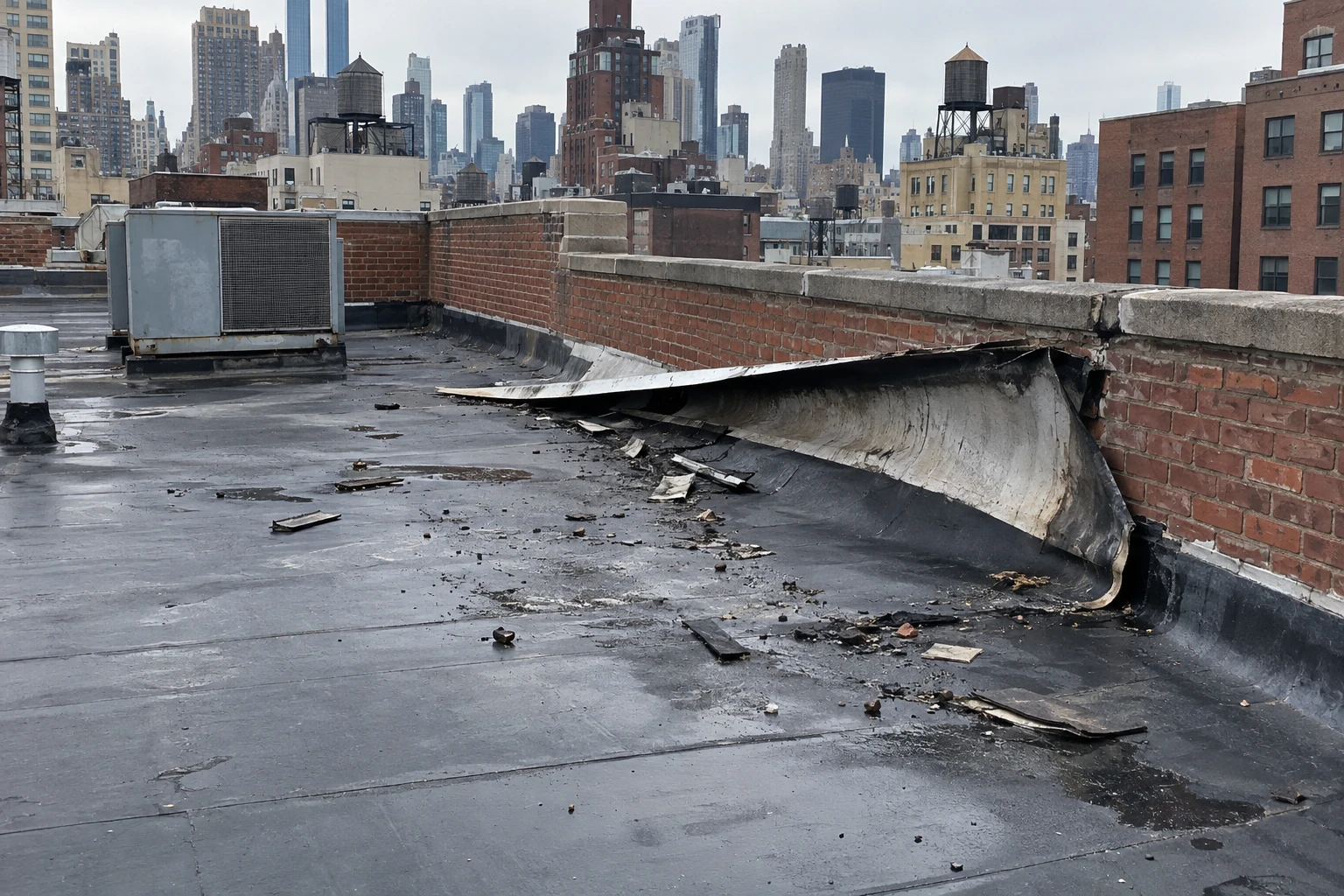
Sandy in October 2012 flooded 1,700 homes in Hoboken and put seawater across half the city, and Ida's rain on September 1, 2021 reached a one-hour record of 3.15 inches. After a storm, the program triggers a perimeter check on every roof, starting with those rated lowest, and the table records the results.
That response is faster when the table already exists. We know which roofs have weak edges, which drains are marginal and which curbs are mismatched, so the post-storm visit goes to the right places first. The storm damage roof repair scope then works from a known condition. With Central Park's record 106 F and minus 15 F and its 29.8 inches of average snow, the program calendar carries a pre-winter drain check and a post-heat seam check for every roof.
How does the program turn into a budget?
The table gives each roof a next action and a date. Sorting by date gives the year-by-year spend. The roof capital planning work adds assumptions and escalation and produces a multi-year schedule with ranges. An owner can then approve a year's worth of work in one decision, bid it as a package if that suits and ask for a single point of contact.
Bundling also reduces the overhead of mobilization, the cost of moving a crew, a hoist and a set of permits to a site. When two buildings need work in the same quarter, the program groups them, and the owner sees one mobilization line instead of two. The grouping is shown in the table so the owner can accept it or ask for a different order. A crew that is already working in one neighborhood can handle two nearby roofs in the same week, and permits for cranes and closures can be filed together. For property management companies and portfolio owners, the program replaces a collection of separate relationships with one record, one rating scale and one schedule that a lender, an insurer or a board can read.
Commercial Roofing Questions
What decides how many roofs belong in a program?
Any owner with more than a few roofs benefits from one format, since comparison is the main value. Programs work from three roofs to several hundred. The survey method is the same at any size, and waves are sized to the owner's budget and access.
Can existing roofs surveyed by others be included?
Yes, as inputs. We import system types, ages and repairs and mark each entry for a new survey if the measurements are old. Until the new survey is done, the entry shows its source and date, so no one mistakes an old rating for a current one.
How are roofs in different towns scheduled together?
By season, risk and travel. We cluster roofs in the same area for the same week and file permits together. Roofs with active leaks come first. A schedule with dates for every roof goes to the owner before the first wave.
What does the owner receive each year?
An updated table, an updated report for each surveyed roof, a repair log, a list of next actions with ranges and a short summary of what changed. The package is formatted for a lender, an insurer or a board.
Is the program tied to a particular roof system or maker?
No. The program rates roofs of any system. Recommendations follow the roof's condition and exposure, not a brand. If a warranty applies, we read its terms and record them in the table.