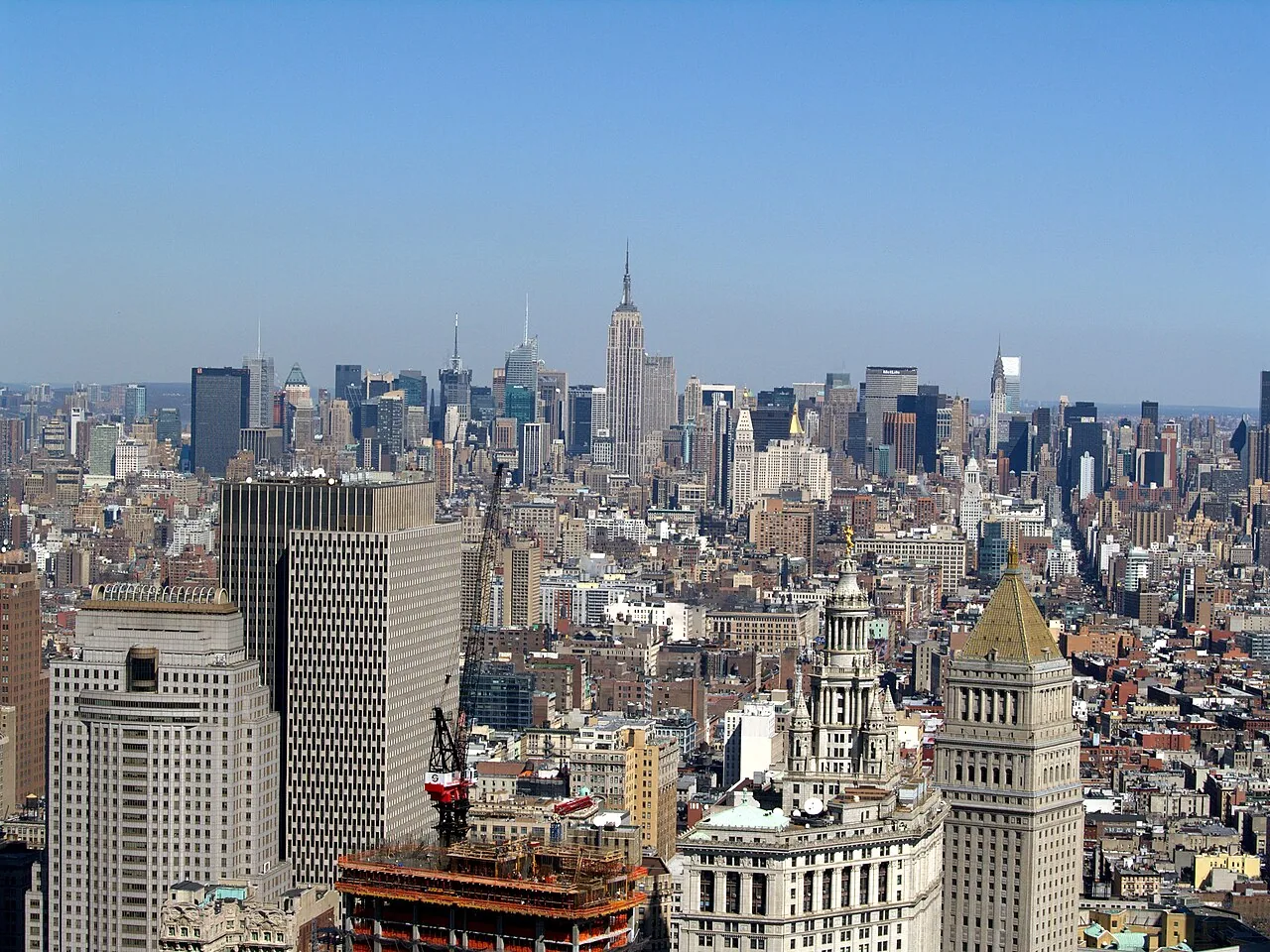
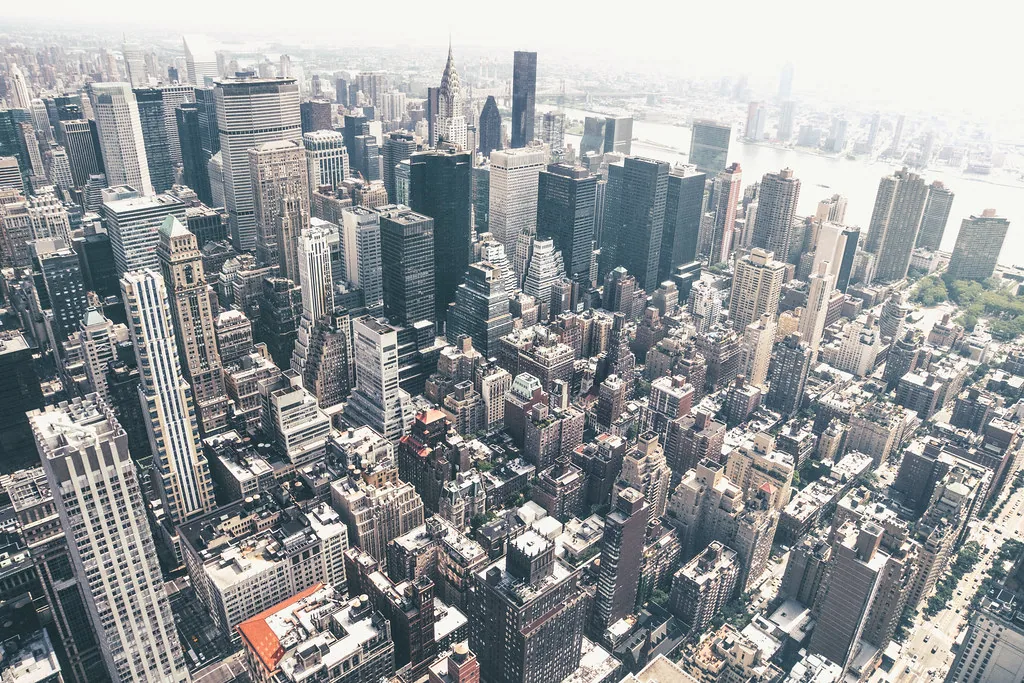
Roof surveys and repairs for Fort Lee, NJ podiums, retail rows and mixed-use buildings on the Palisades, planned around wind exposure and tight access.
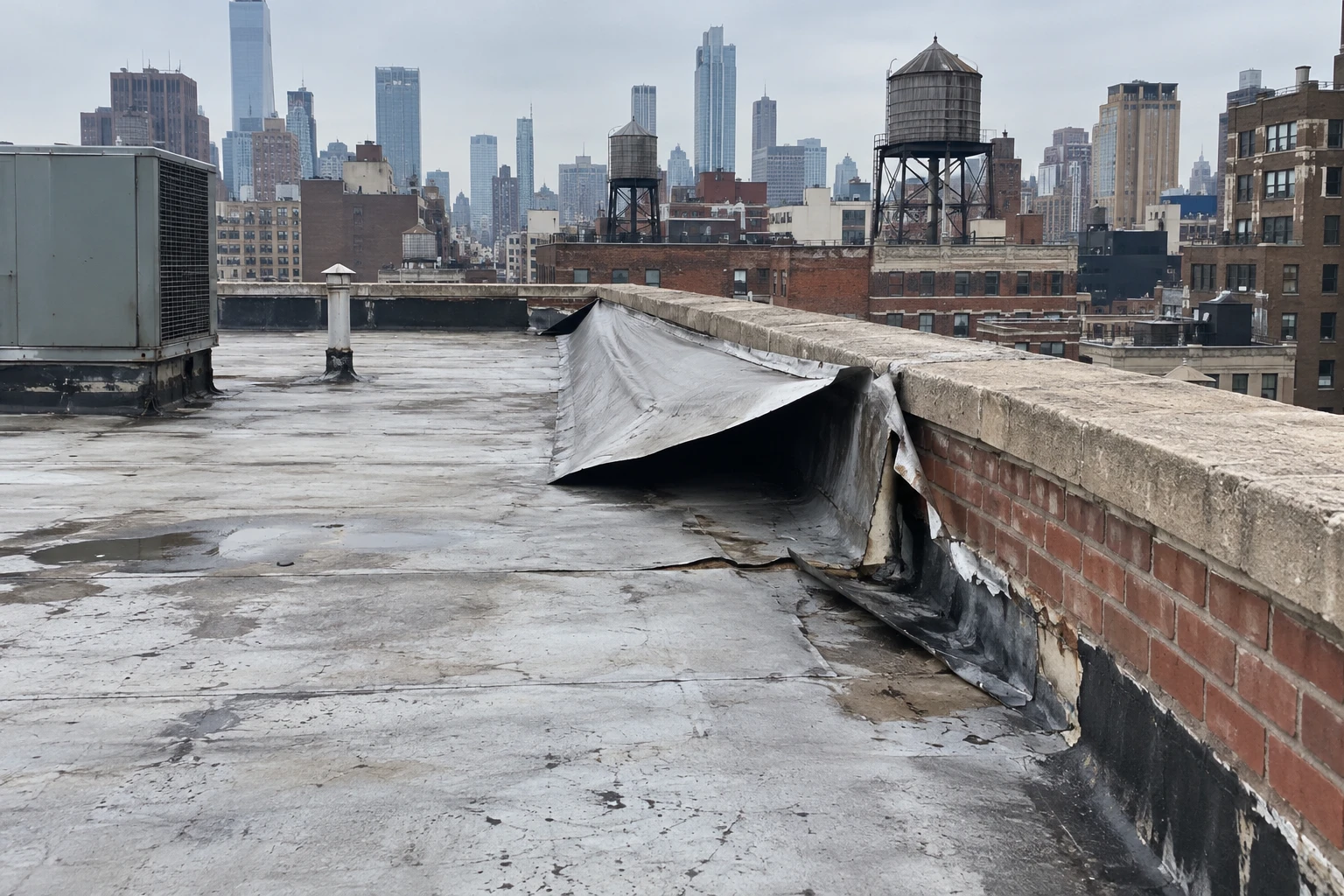
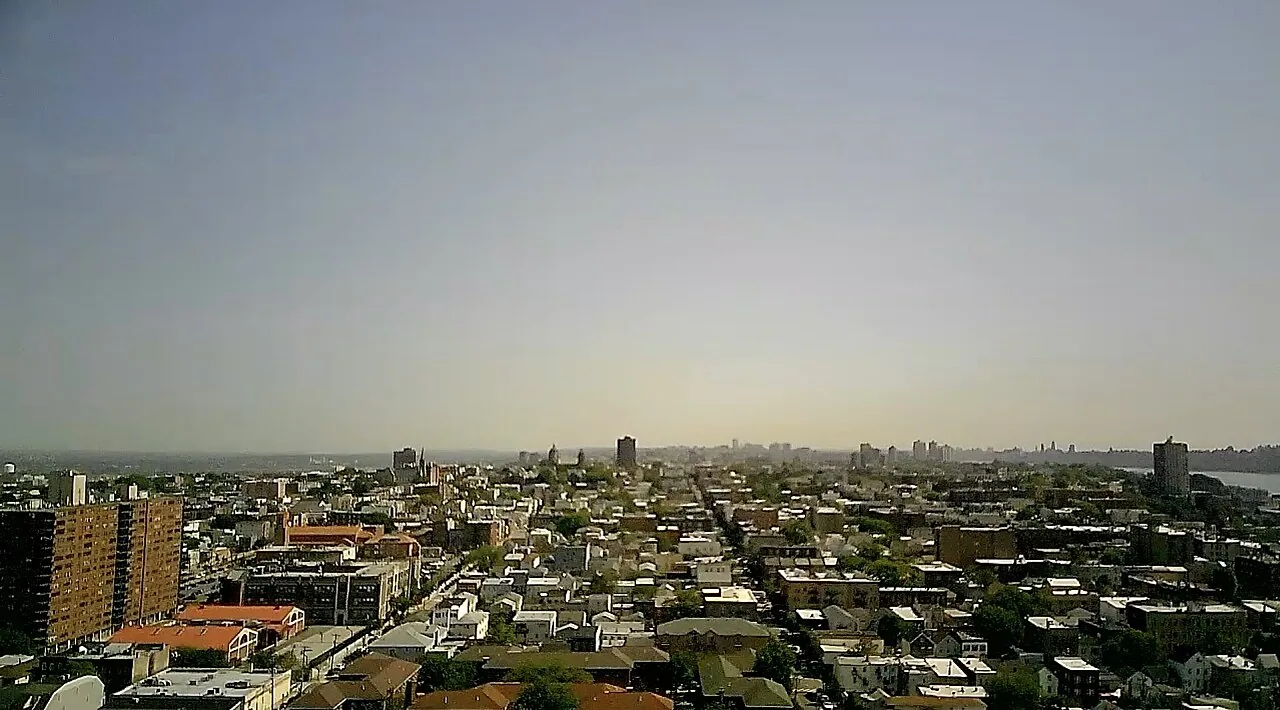
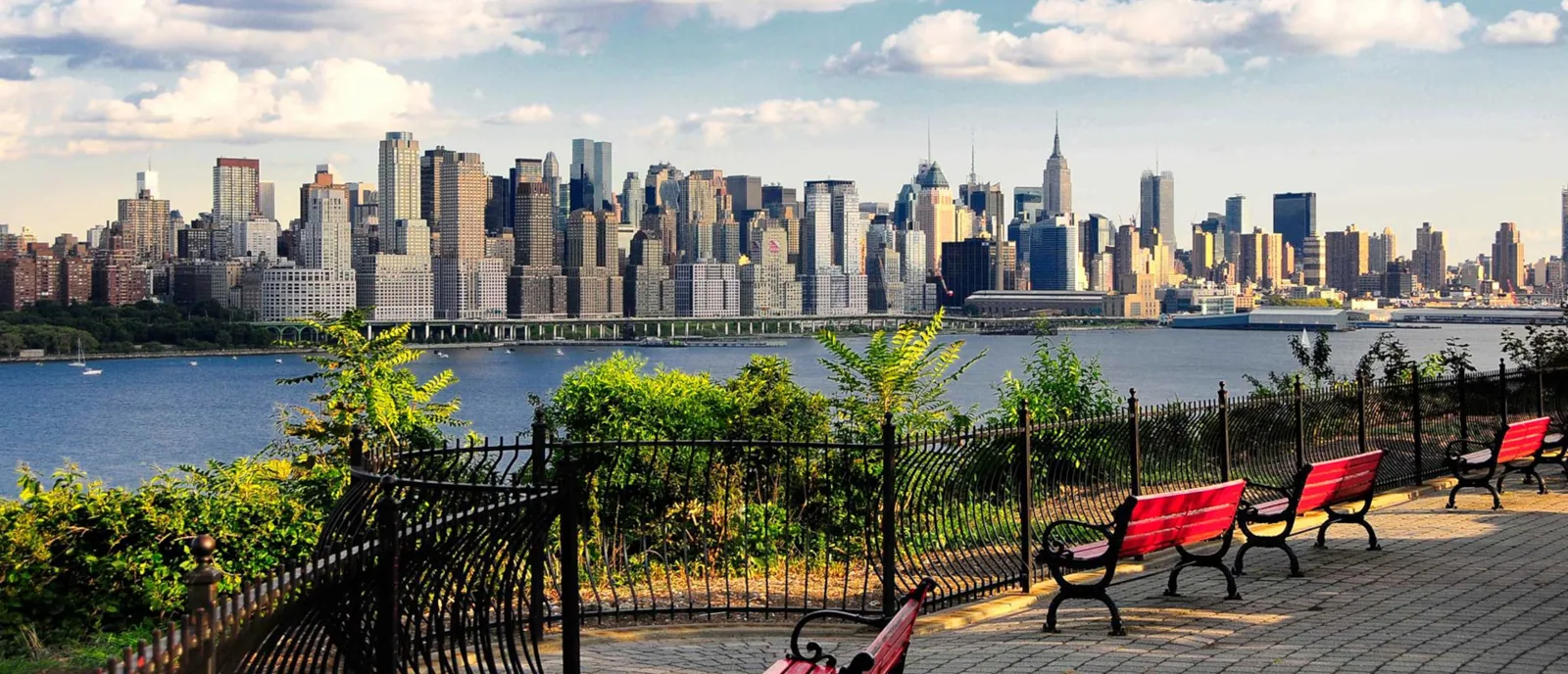
A parapet cap lifted a half inch at its windward corner, on a roof in a borough at an elevation of 289 feet, is a finding that wind explains before water does. About 2.87 square miles in size, Fort Lee sits on the Hudson Palisades escarpment, and more than one established residential high-rise in the borough rises above 300 feet. Below the towers, the commercial roofs are the podiums, retail rows and mixed-use buildings of a borough where Koreatown in downtown Fort Lee is centered at Main Street and Route 67, with about 130 Korean stores counted in 2000. Send the last roof report and the building age before we set a scope.
From our base in Manhattan, NY, we survey, repair and replace commercial roofs in Fort Lee, and our emergency line answers around the clock.
What does a clifftop site do to wind loads on a roof?
The Palisades rise abruptly from the river, so wind off the water meets the escarpment and accelerates over its edge. A borough at 289 feet stands above the shelter of the river bank, and its tall towers create their own downdrafts and corner winds at their bases. Central Park, across the Hudson, recorded a strongest gust of 78 mph on December 2, 1974.
Wind causes suction at roof edges and corners, and a roof at this exposure needs strong attachment there. We examine the coping clips, edge metal, fastener pattern and sealant, and we check the field for flutter. On podium roofs beneath towers, we look for damage from falling debris and for wind-driven rain forced behind flashing. A wind damage roof repair secures loose metal first and then reinforces the edge. Photograph the perimeter from a safe point after a storm.
Which Fort Lee roofs are the commercial ones?
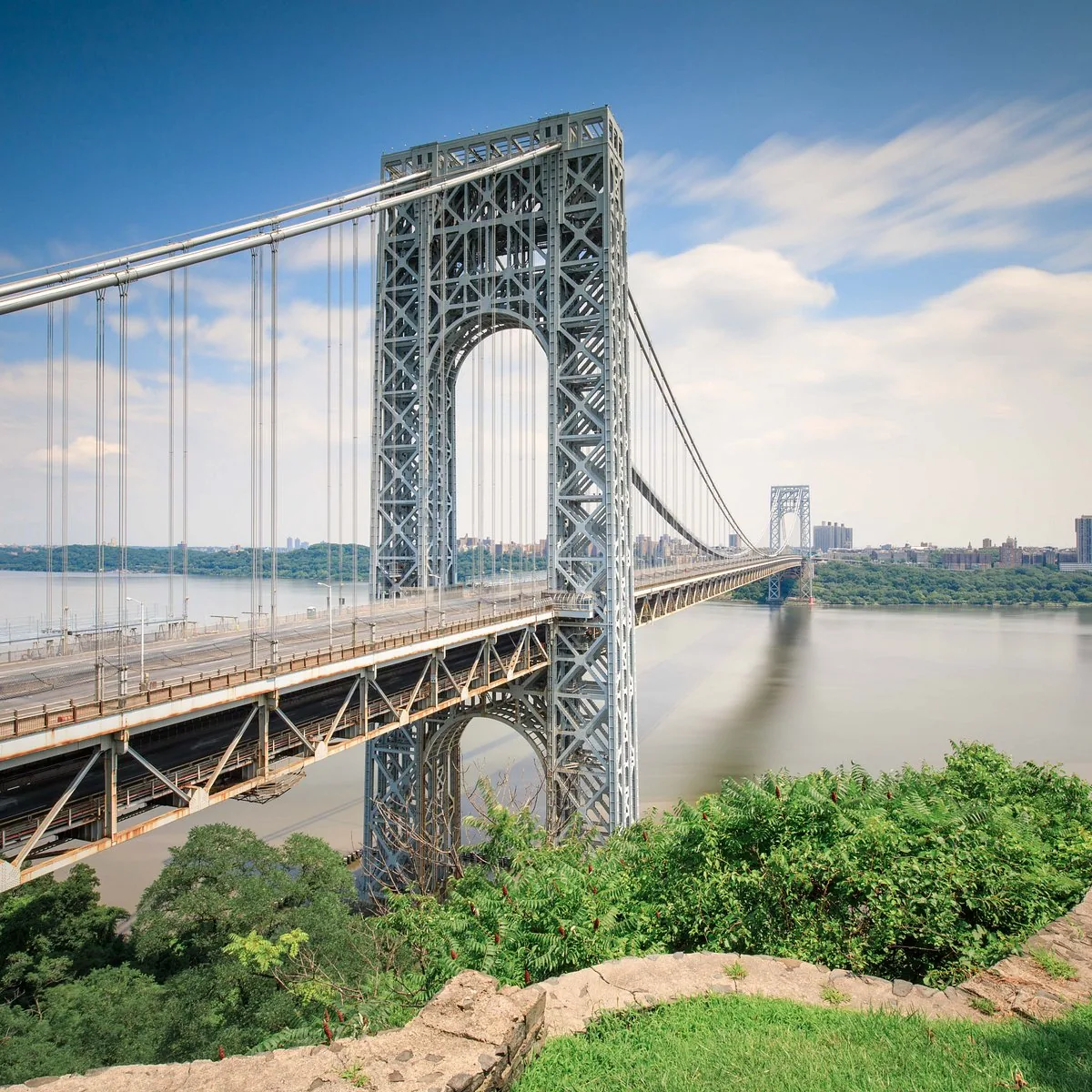
The commercial roofs sit under and beside the towers: the podium decks that connect high-rise buildings to the street, the retail rows along the main corridors and the mixed-use buildings of downtown, where Main Street meets Route 67. The George Washington Bridge became the borough's western terminus in 1931.
A podium deck is a roof and a plaza at once. It may carry pavers, planters, mechanical equipment and foot traffic over occupied space, and a leak through it reaches a garage or a lobby. A retail row has a long, low roof with exhaust fans from restaurants and cooling units for shops. We rate each roof by condition and by what sits beneath, and we do not assume a roof's construction until the core says so. Send the use of the space below each roof area.
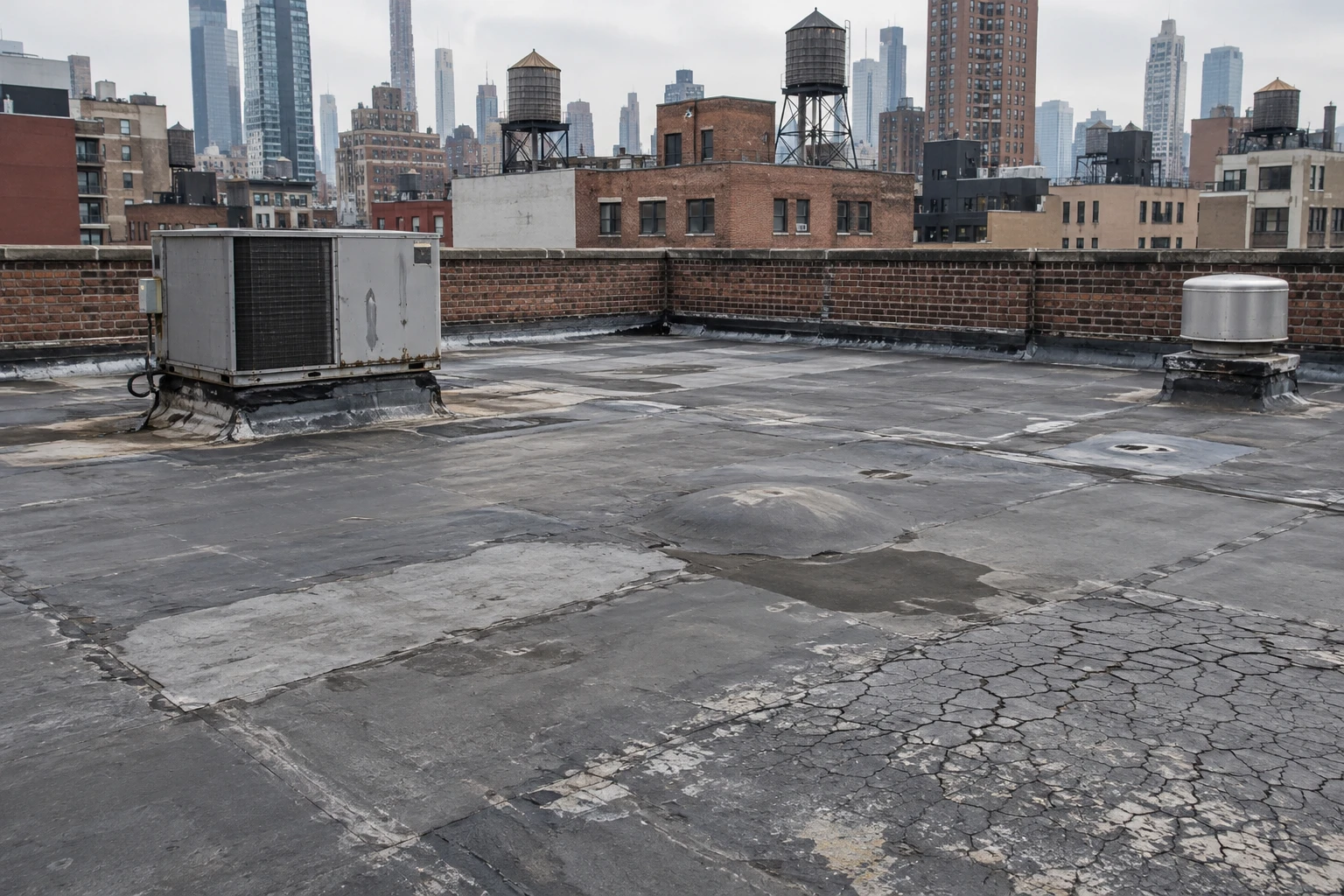
Retail rows deserve a closer look at what the tenants add. Restaurant exhaust spreads grease across the membrane, rooftop cooling units drip condensate onto one patch, and signage frames attach through the sheet. Each is a place where water gets in later, so the survey lists every item with the tenant who owns it. A busy corridor such as the one around Main Street sees tenants change, and each change can mean a new penetration. A current penetration map saves a lot of argument.
How are plaza decks and podiums surveyed?
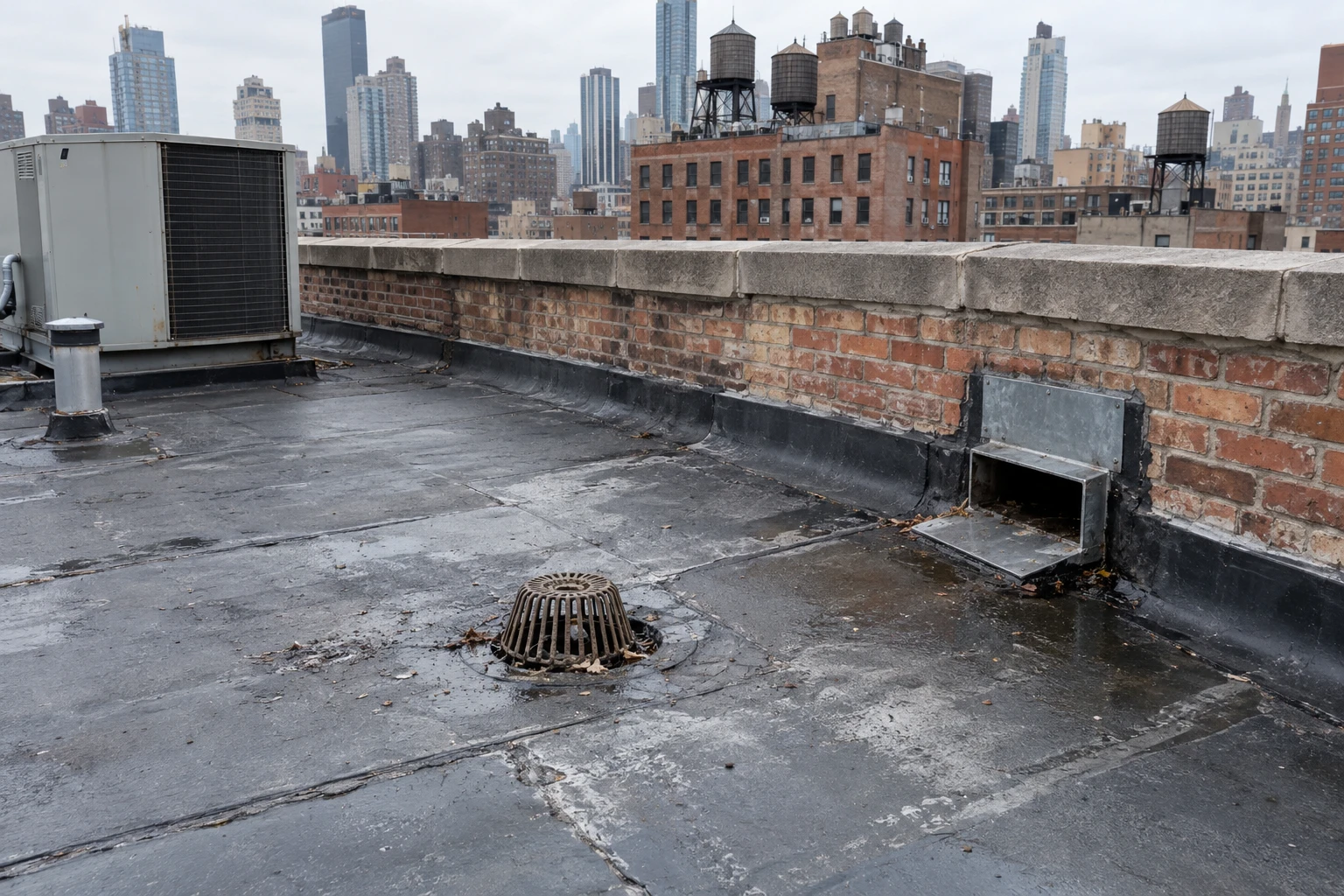
A roof under pavers hides its membrane. The survey uses infrared and moisture meters to map wet insulation, and then lifts selected pavers to look at the membrane and the drains. Planters and fixed furniture concentrate load and trap water, and the drains beneath pavers clog with debris. We check drain bodies, test flow and look at flashings at the plaza edge and at walls where the tower rises.
Repairs often mean lifting and resetting pavers in order, so the plaza closes for a defined period. We photograph the layout before lifting anything so it can be restored. A roof drains and scuppers correction at the deck is among the highest-value repairs, since a clogged drain loads the structure with water. Ask the building engineer for the original deck drawings.
The waterproofing layers of a plaza deck differ from an open roof. A membrane sits under a protection board, a drainage mat, a filter fabric and the pavers, and a failure shows only after water has traveled a long way. Because of that, the survey compares moisture readings with the drain layout and the expansion joint locations, and it targets the likely entry points before lifting anything. A repair that follows the data is smaller and cheaper than one that opens the whole deck, and the plaza returns to use sooner.
How does work proceed around occupied towers and busy retail?
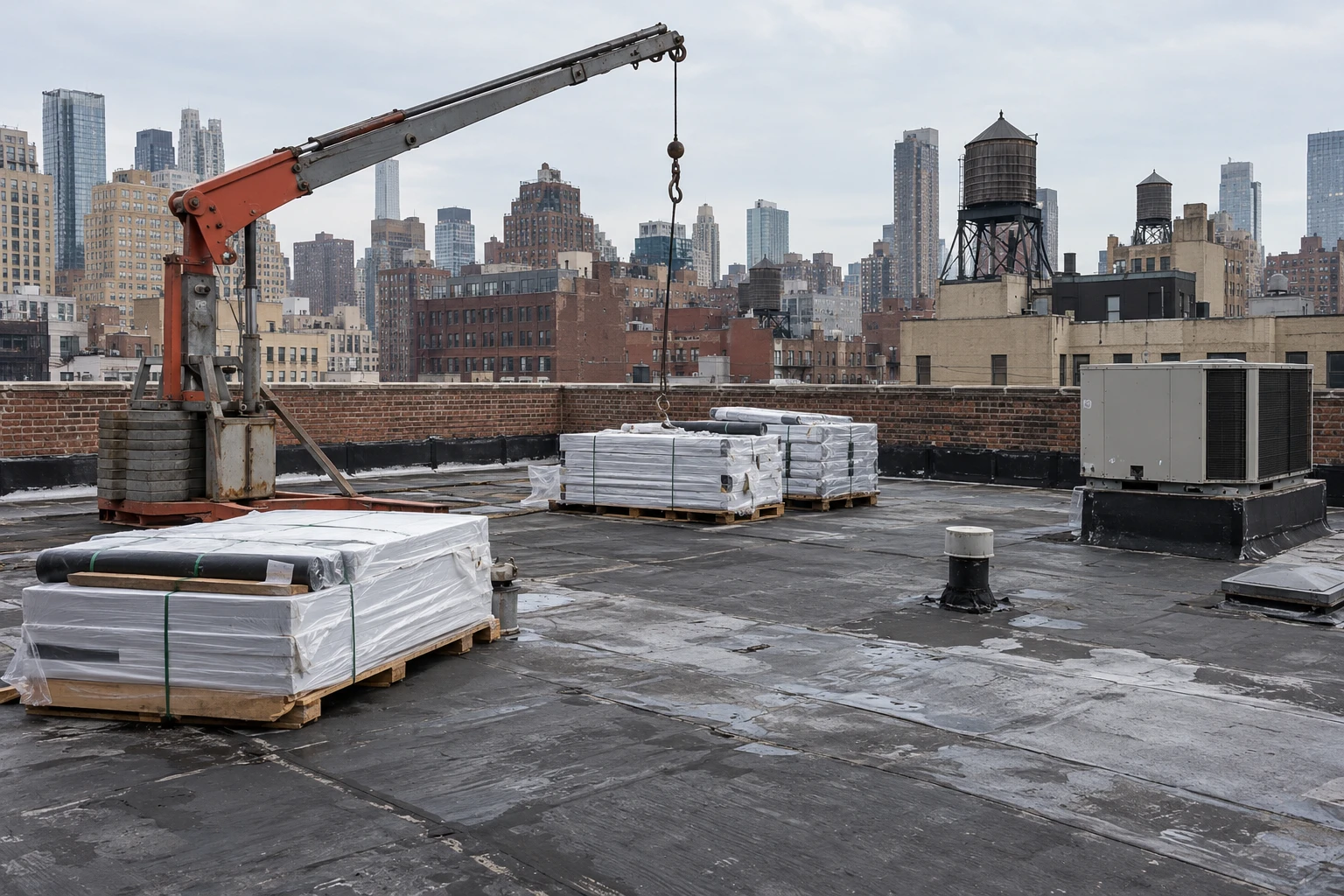
Residents live above, shoppers walk below, and the roof sits between. We fence the drop zone, use covered chutes, keep material off public paths and time loud work for mid-day. Cranes and hoists near the tower base need permits and wind limits, and we set a threshold for stopping lifts. For a retail row, deliveries are timed for off-hours.
Our occupied building reroofing approach works in sections, closing each at day's end and giving tenants written notice. Pedestrians pass the entrances of Fort Lee's retail district, so protection at entrances is part of any scope that works overhead. Tell us who controls roof access, whether an escort is needed and what hours are quiet.
Winter and summer both work on a clifftop roof. Central Park, across the Hudson, averages 29.8 inches of snow a year and has recorded minus 15 F and 106 F. Freeze and thaw open weak seams and crack the sealant at parapets, and summer heat softens adhesives and ages the surface. We time repairs for spring and autumn when possible, and we dry in anything left open in the cold. The log records each temporary measure with its date, so no patch is mistaken for a permanent fix.
What does an owner keep in the file?
The file holds the dated survey with the moisture map, core log, maintenance history, warranty paperwork and photographs. It lets a manager rate the roof, plan replacement and answer a lender. Owners with property across the river can compare roofs on one scale through roof condition reports.
Nearby Union City and North Bergen share the Palisades and much of the same weather. Update the file after each survey and after each storm.
A closeout file for a finished roof or deck holds photographs of each layer, the material data, test results, warranty paperwork and a rating. Residential towers answer to boards and lenders who ask for this file, and a podium owner who keeps it current answers quickly. Pair it with a maintenance calendar that clears drains each season and checks the plaza edges, so the next survey starts from a known baseline.
Commercial Roofing Questions
Why does a podium roof leak into a garage far from the leak?
Water travels along the deck and through joints before it appears. A moisture map and a water test trace it to the entry, which is often a drain flange, a wall flashing or an expansion joint.
Can a plaza stay open during repairs?
Often in part. We close sections, protect paths and reopen each as the work finishes. The plan states which areas close and for how long.
How do you set wind limits for crane lifts?
We follow the equipment's rated limits and the site's rules, and we stop lifts when gusts approach them. The foreman and the crane operator decide together.
What does a first survey need from us?
The address, the building age and use, the last report and the deck drawings if they exist. Photographs of drains and edges help.
What happens if a storm is forecast mid-project?
Sections in progress are closed weathertight before the crew leaves, and dry-in material stays on the roof. We adjust the schedule to the forecast.