Commercial roof surveys, repair and replacement for Midtown, Manhattan, NY towers, setbacks, podium decks and hotels, with condition ratings and clear records.
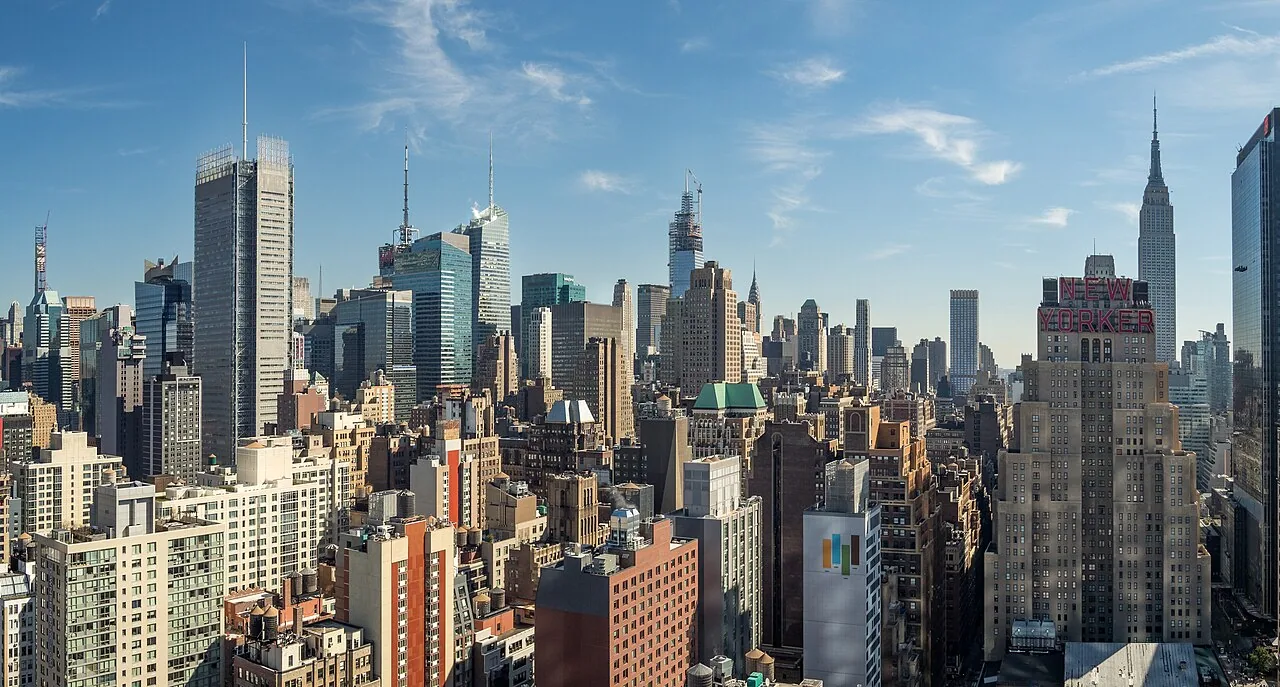
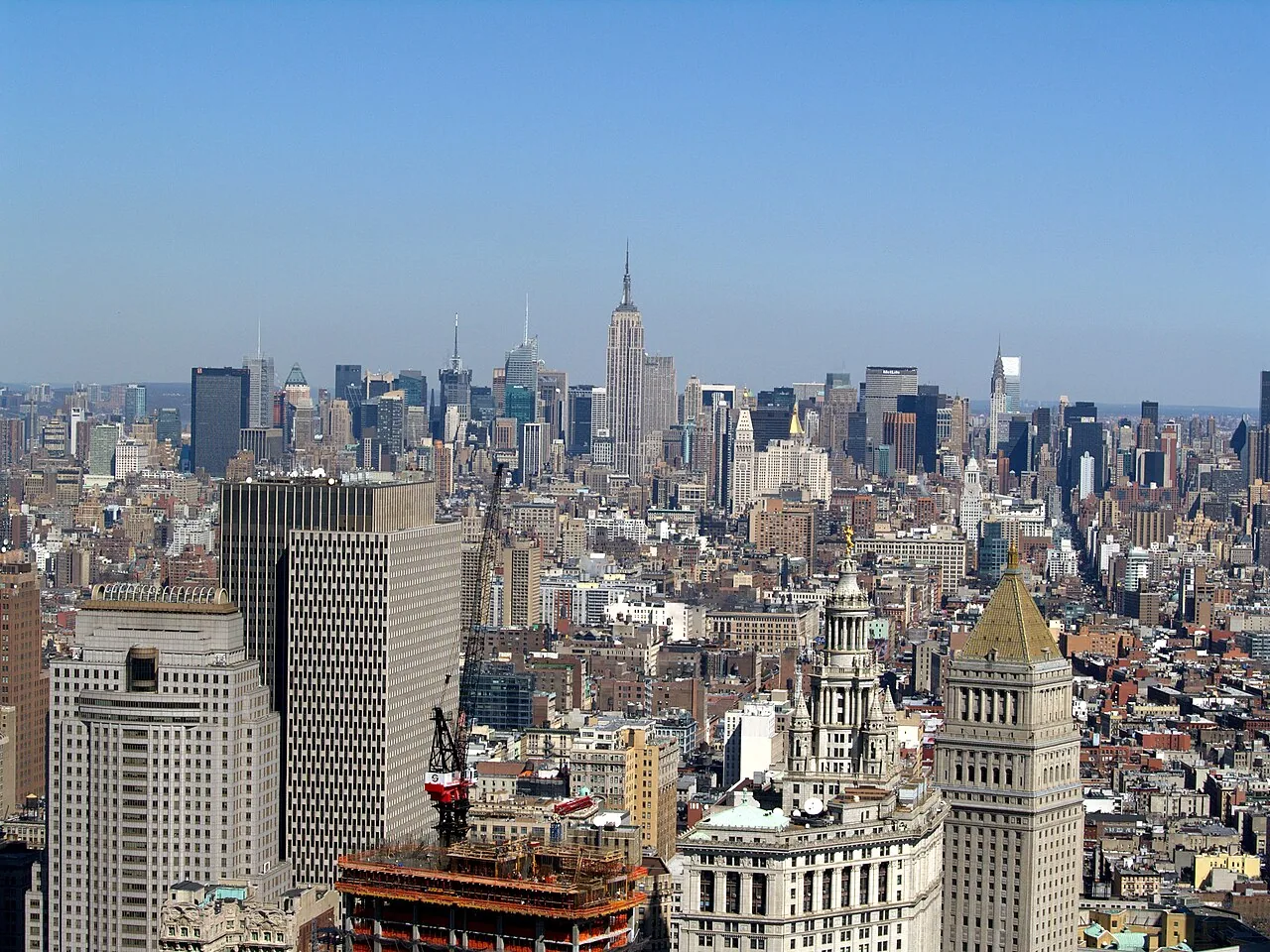
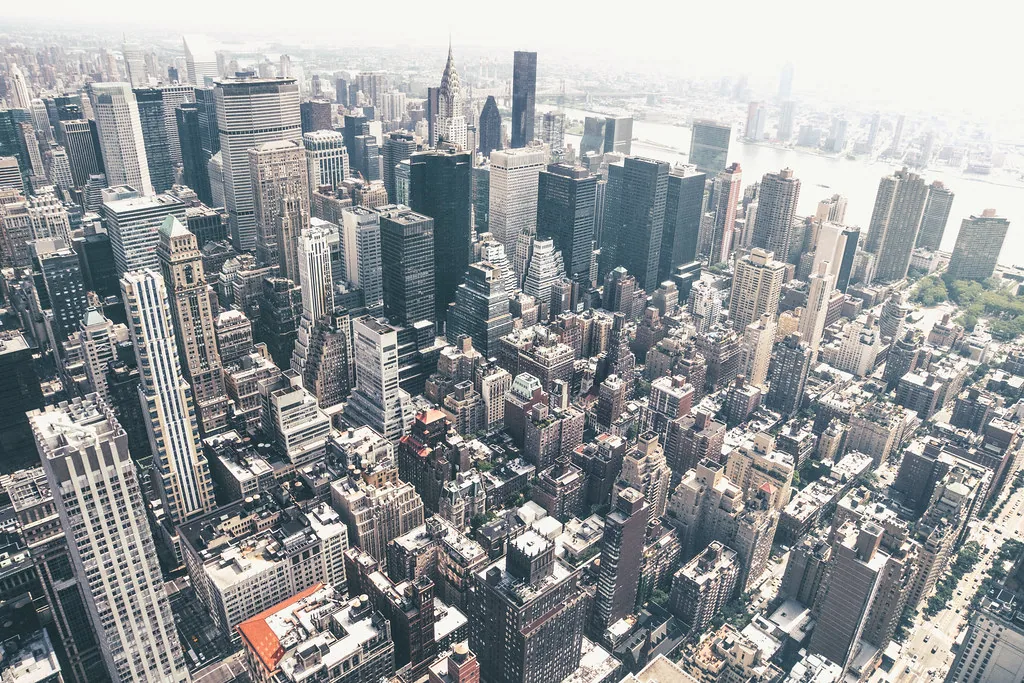
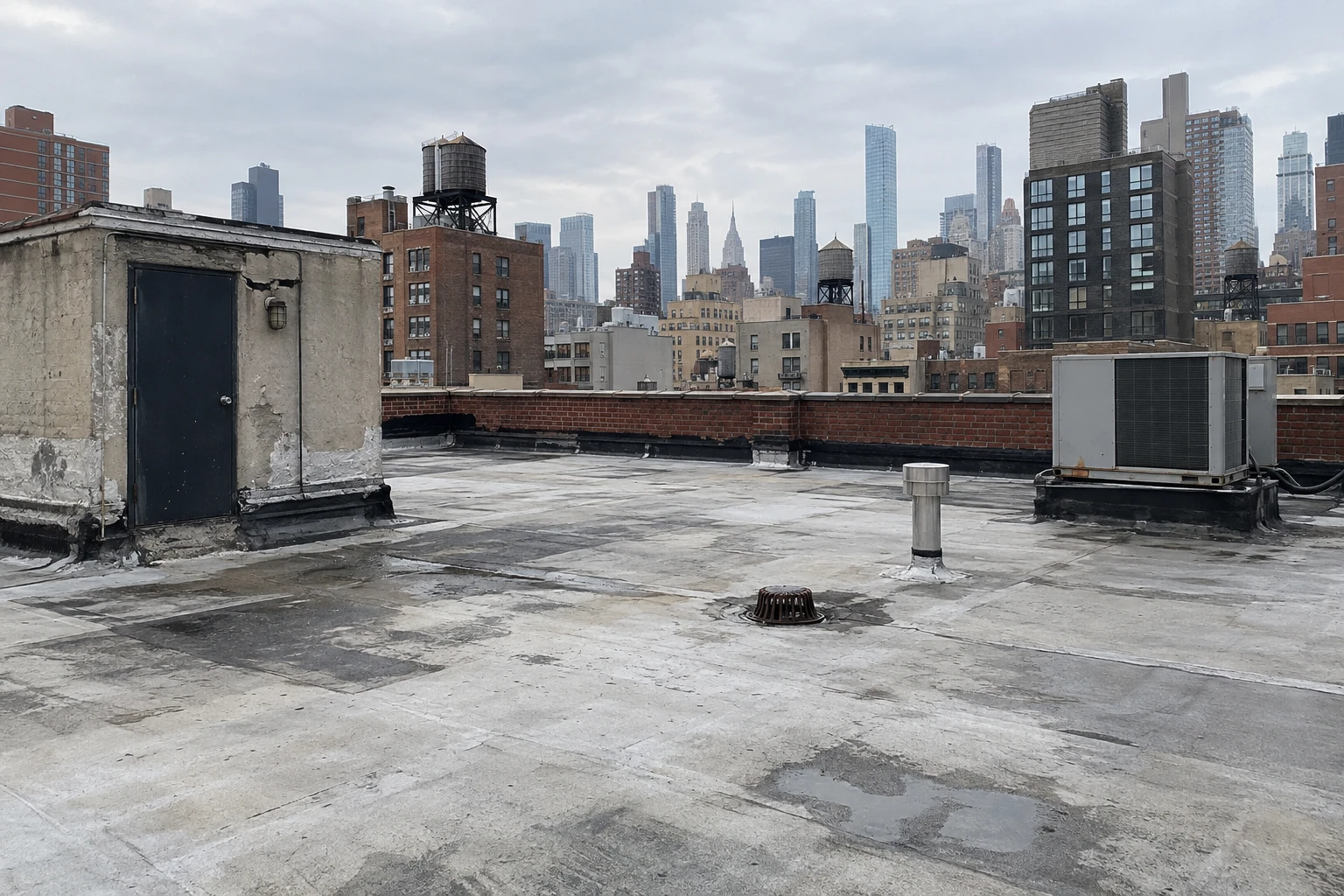
On a Midtown setback roof the moisture map usually splits into two zones. The field of the roof reads mostly dry, and the wet readings cluster around the mechanical equipment, the bulkhead and the parapet. That pattern is the first thing a survey in this district teaches: the water is rarely where the membrane is widest and almost always where something stands on it or ends against it. Office space in Midtown came to about 400 million square feet in 2018, the most of any central business district in the world, and the roofs above it are a different sort of asset from a warehouse roof. They are small compared with the floors beneath, hard to reach, crowded with equipment and tied to tenants who cannot be moved. Our work here starts with the survey and ends with a rating the managing agent can use.
What kinds of roofs does Midtown hold?
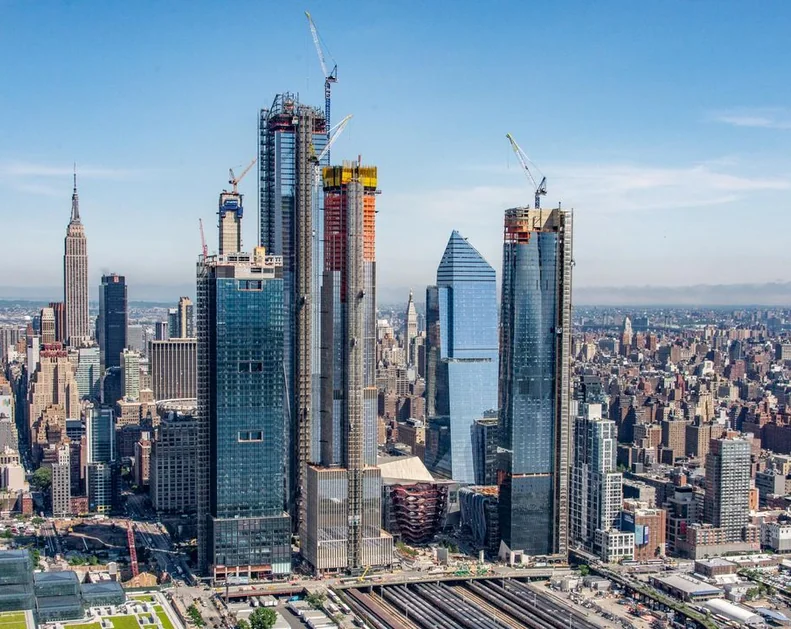
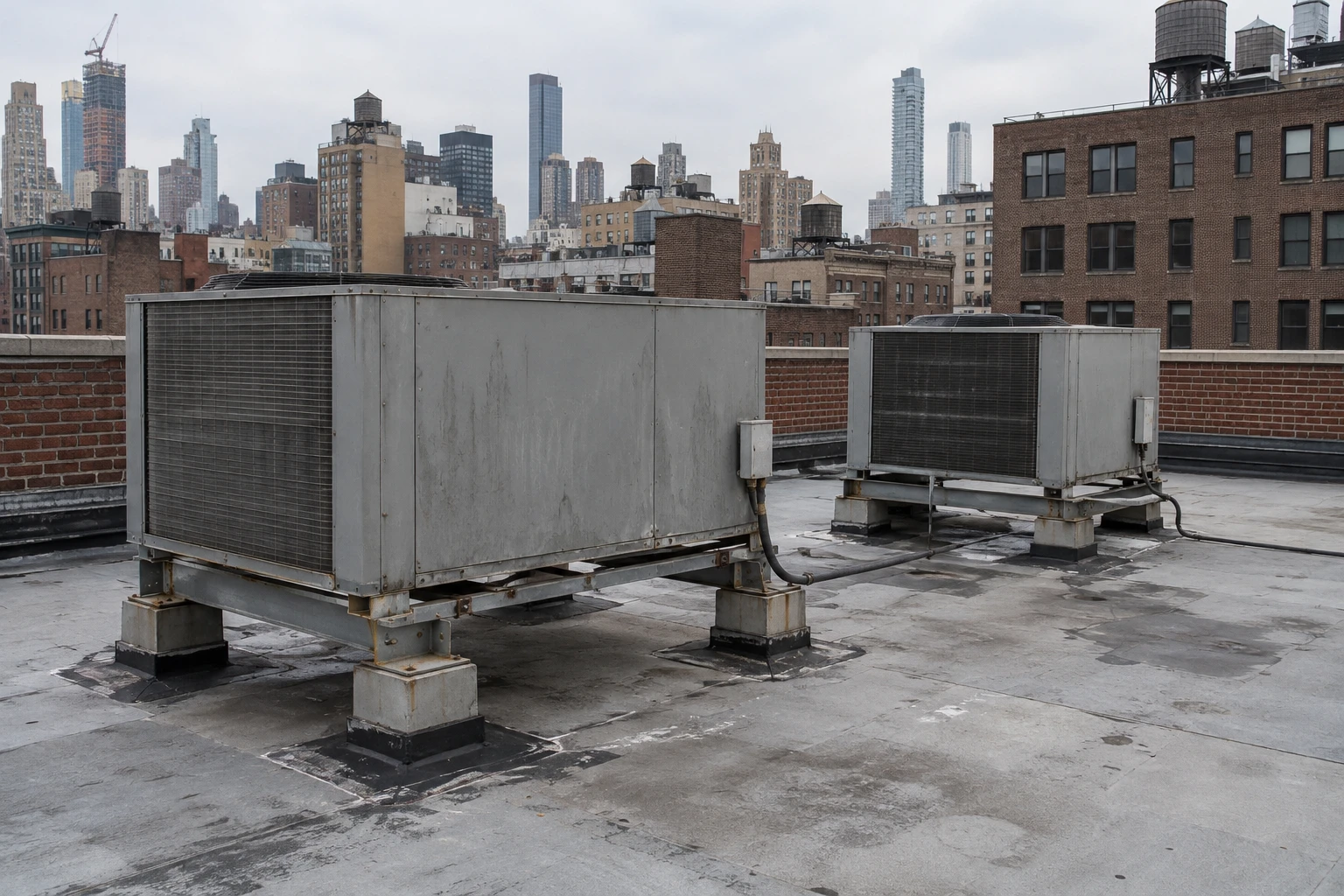
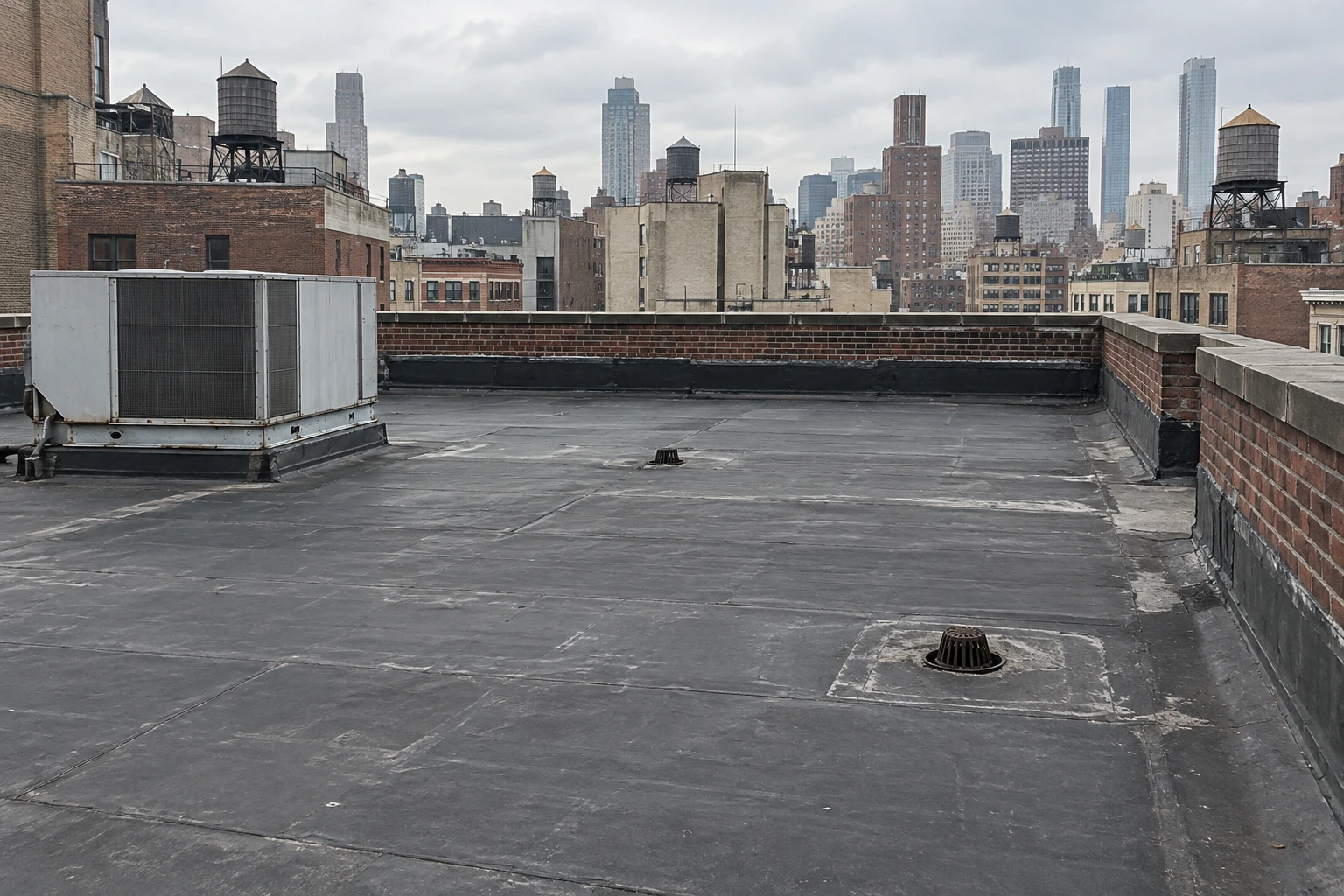
Roofs in Midtown range from tower setbacks and mechanical roofs to low-slope podium decks, as the district mixes office towers, hotels, apartment towers and theaters. Each has its own problems. A tower setback is a narrow terrace of roof wrapped around the shaft above, with parapets on one side and a tall wall on the other. A mechanical roof is the top of the building, filled with cooling towers, air handlers and exhaust. A podium deck is the roof of a lower base building and may carry amenity space, planters or pavers.
The survey identifies which kind of roof we are on, because the questions differ. For a setback, the key details are the wall-to-roof flashing and the drains tucked into corners. For a mechanical roof, they are the equipment curbs and supports. For a podium, they are the waterproofing under the pavers and the drains that serve it. Office buildings, hotels and residential towers each add a tenant profile that sets the work hours and the protection plan.
How is a Midtown roof surveyed?
We begin in the stairwell with the building's own record: prior repair invoices, leak logs, warranty papers and any report on file. On the roof we walk the full surface, map every curb, drain, penetration and expansion joint and take an infrared scan at dusk, when wet insulation holds heat longer than dry. Core cuts follow at the places the scan flags and at several that look sound.
The output is a condition rating for each roof area and a plan marked with the findings. A tower with several setbacks gets a rating for each, since they age at different rates. Drainage is measured: ponding depth after rain, the route water takes and the condition of each drain leader. The result sits in a commercial roof inspection report that the asset manager can attach to a reserve study or a lease negotiation.
What does a podium deck need that a tower roof does not?
A podium roof carries more than weather. It may hold paving, planters, mechanical screens or tenant terraces, and the waterproofing beneath is hidden under all of it. A leak below a podium can be far from the entry point because water travels under pavers before it finds a seam. Finding it means lifting sections of paving or using a flood test to isolate zones.
Drainage is the second concern. Pavers sit on pedestals over a membrane that drains through to a drain, and the drain below the paving can clog with silt and debris. A clogged podium drain turns an hour like Ida's 3.15 inches on September 1, 2021 into a flooded terrace. We inspect drain leaders, test flow and record the depth of water on the membrane. Repairs that need paving lifted are staged section by section so the amenity space stays usable.
How is work staged in one of the busiest districts in the city?
Midtown's traffic sets the logistics. The Port Authority Bus Terminal, which opened in 1950 for 60,000 daily passengers, now serves about 250,000 passengers on 7,000 buses each workday, and Grand Central Terminal serves Metro-North and, through Grand Central Madison, the Long Island Rail Road. Streets around them are crowded, and curb space for a delivery or a hoist is scarce.
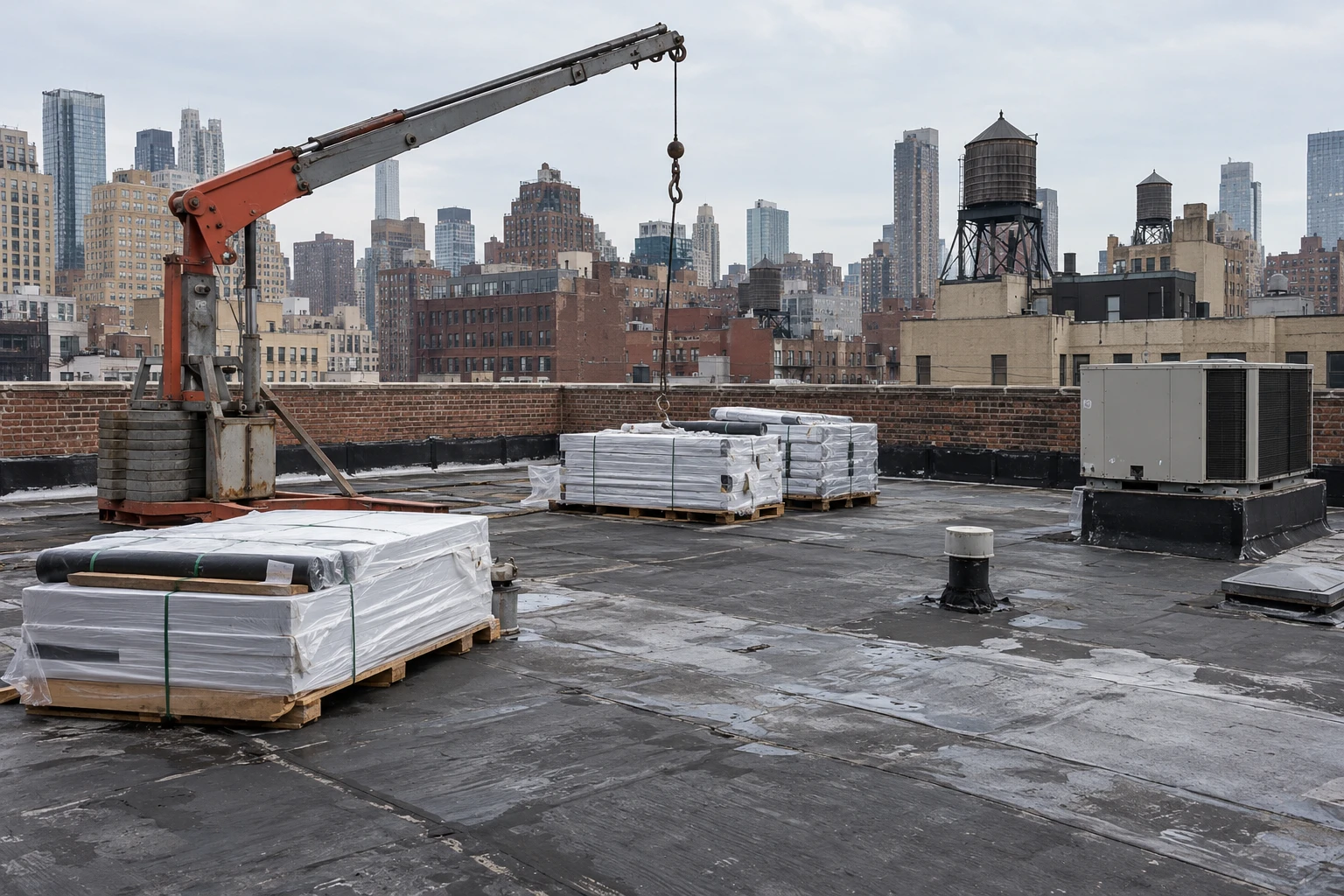
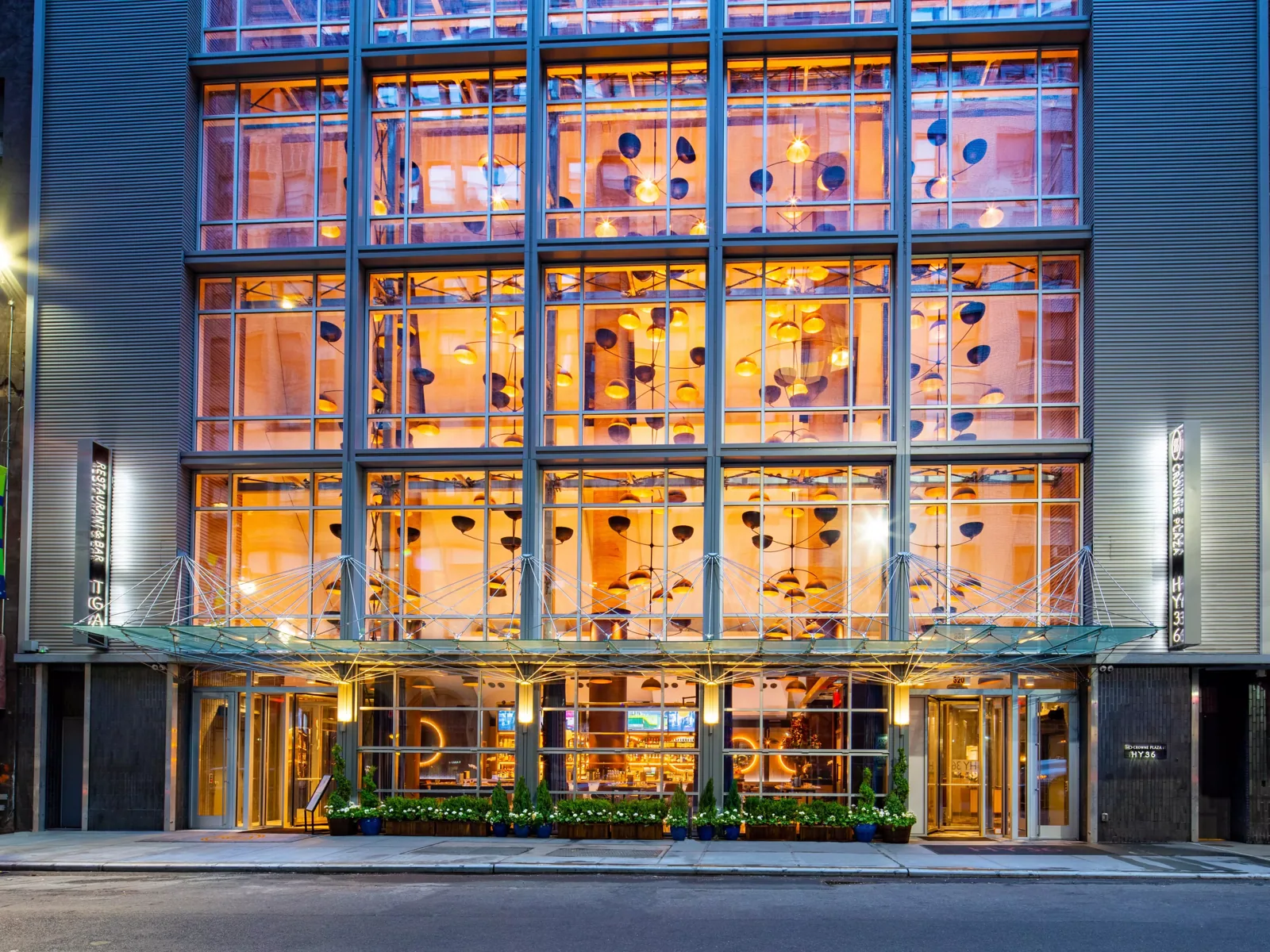
We plan materials and equipment moves for off-peak hours, use freight lifts and stairs when the building has them and schedule crane or hoist time against permits. Debris leaves in small, frequent loads. On an occupied tower, the plan for occupied building reroofing sets noise windows, protects floors below and gives tenants advance dates. A roof for a hotel adds guest-room considerations, so the loudest work is placed at hours when the floor below is least occupied.
How do the weather extremes affect Midtown roofs?
Heat, snow, wind and rain each stress a roof in a different way. Winters in Central Park bring 29.8 inches of snow on average and, in one case, a 27.3 inch fall on January 23, 2016, while temperatures on record run from minus 15 F to 106 F. The city's urban heat island adds to summer surface temperature, and the swing from freezing nights to warm days works seams and flashings. The park's strongest gust was 78 mph on December 2, 1974, and wind uplift concentrates at parapets and corners, which on a tall building sit in stronger air than at street level.
That climate shapes the specification. Perimeter attachment is tightened, edge metal is fastened with care, snow drift behind bulkheads is considered for structural loading, and reflective surfaces are specified where cooling load matters. Local Laws 92 and 94 of 2019 put solar, a green roof or both on the sustainable roofing zone of new construction and full replacements, so a full replacement in Midtown includes that layout from the start.
What should the managing agent keep on file?
The condition rating and photographs for each roof area, the moisture map, core cut results, drain tests, the structural confirmations for any added equipment and the warranty terms. A portfolio of towers benefits from the same data in the same format, which is the purpose of roof asset management. A portfolio that also holds buildings in Hell's Kitchen or the Garment District can be surveyed in one program with one rating scale.
Commercial Roofing Questions
Which roof area on a Midtown tower should be surveyed first?
Start with the area that has the most equipment, because that is where the curbs and penetrations concentrate. A mechanical roof often shows the most defects per square foot. Setbacks follow, then podium decks. The order can change if a leak history points elsewhere.
Can a setback roof be repaired without closing the floor below?
Usually, yes. We protect the interior ceiling, work in sections and close each section by day's end. If the floor below holds sensitive equipment, the tenant is told the dates and may move it for the work.
What do we do about a leak that appears in a theater or hotel ballroom?
Call the first-hour line right away. We stop the water at the roof, protect the space and trace the source with the moisture map. The permanent repair is scheduled around events. Photograph the stain, note the date and weather, and keep the ceiling area clear.
How long does a survey take on a large tower?
The walk takes a day or two for a typical building, and the scan and core cuts add a short second visit. The written report follows with ratings and a plan. Access to the roof and a contact who can open doors speeds it.