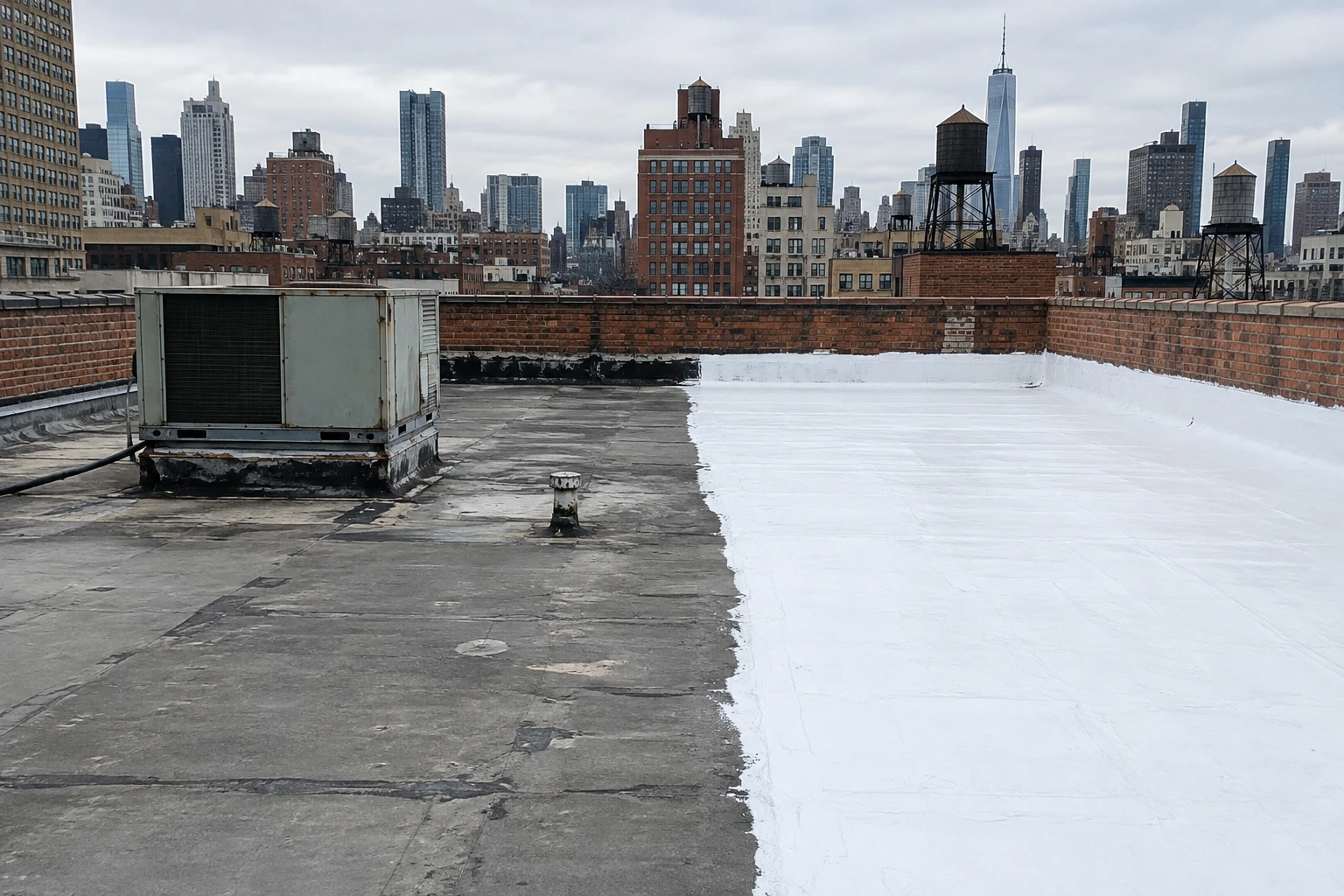
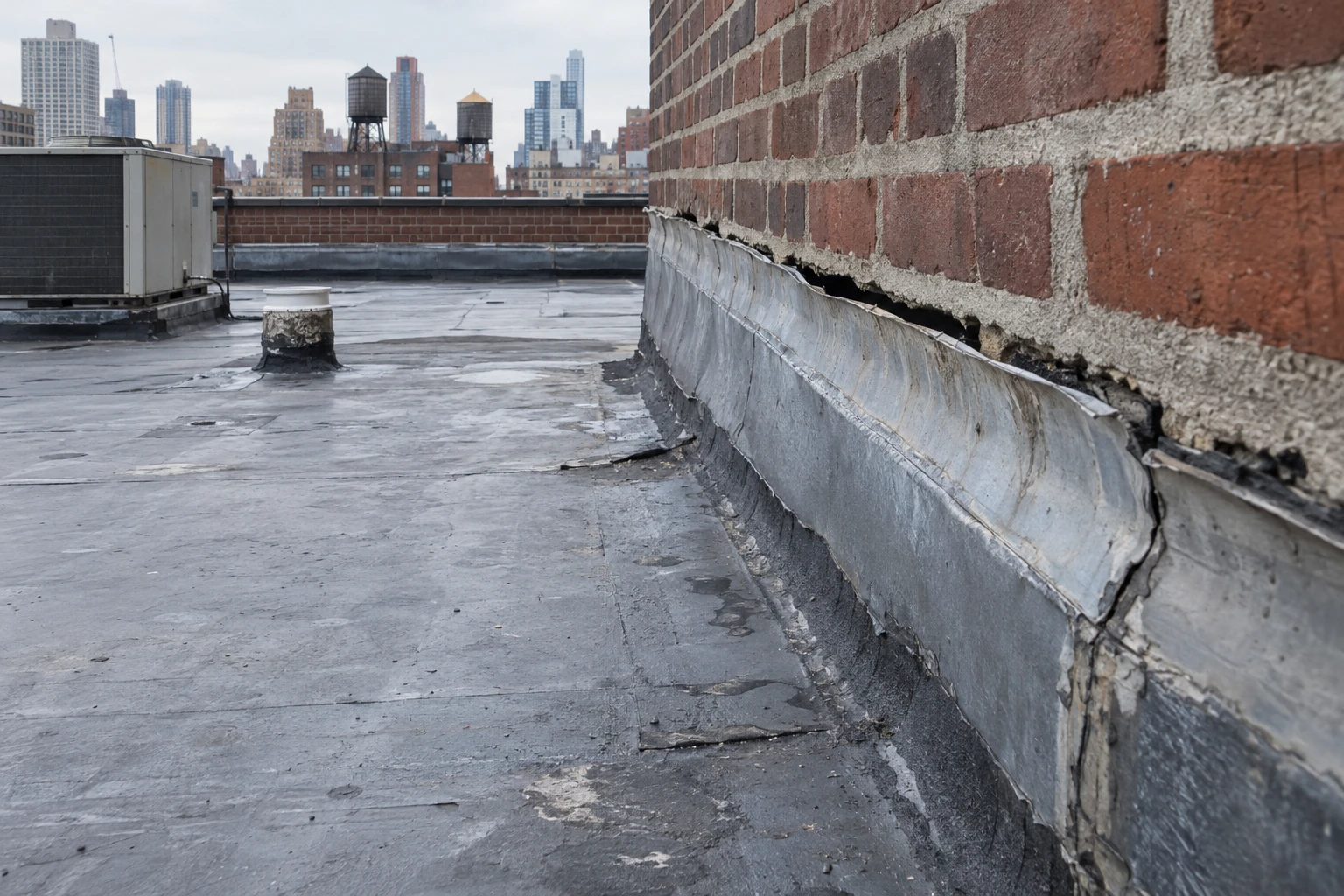
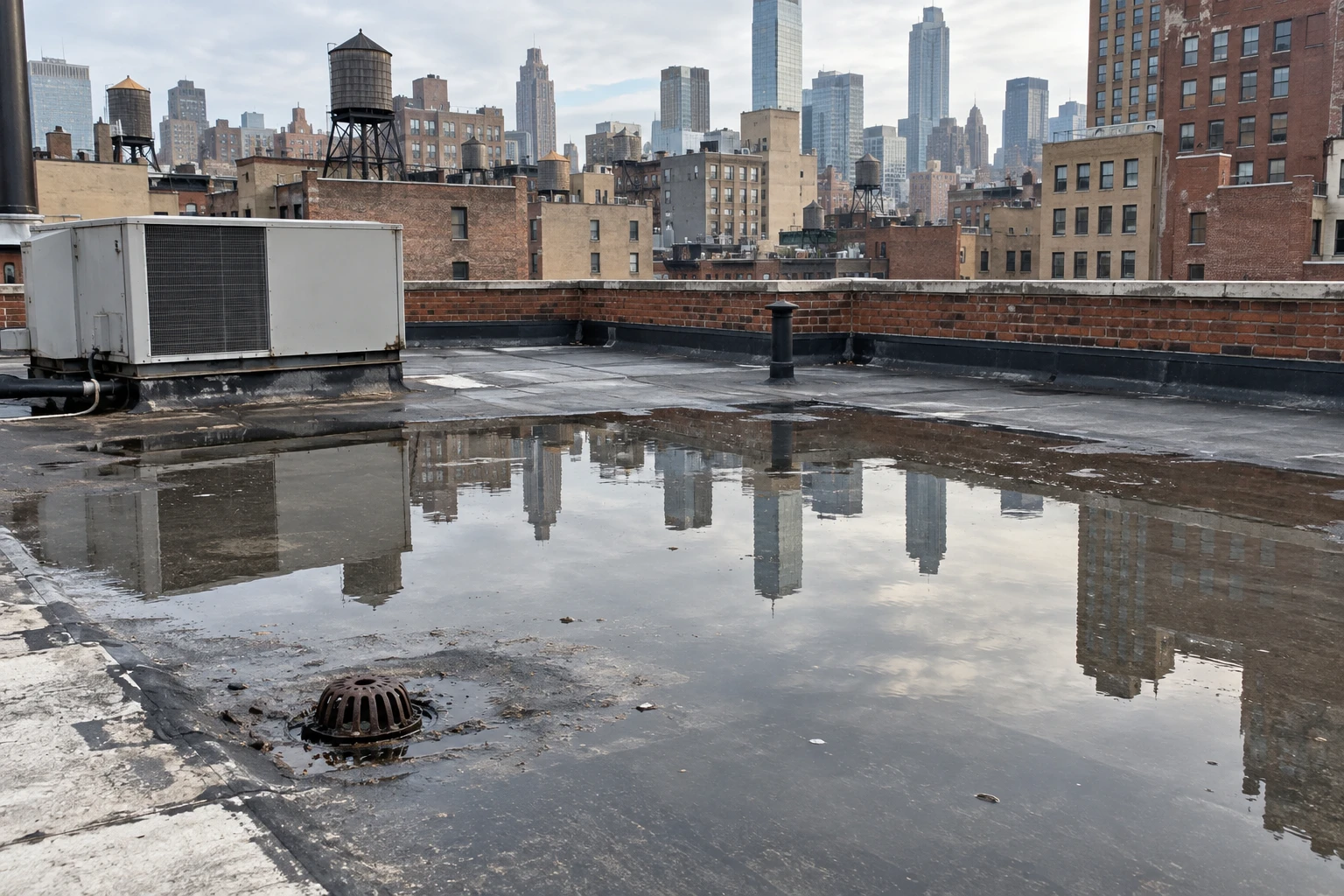
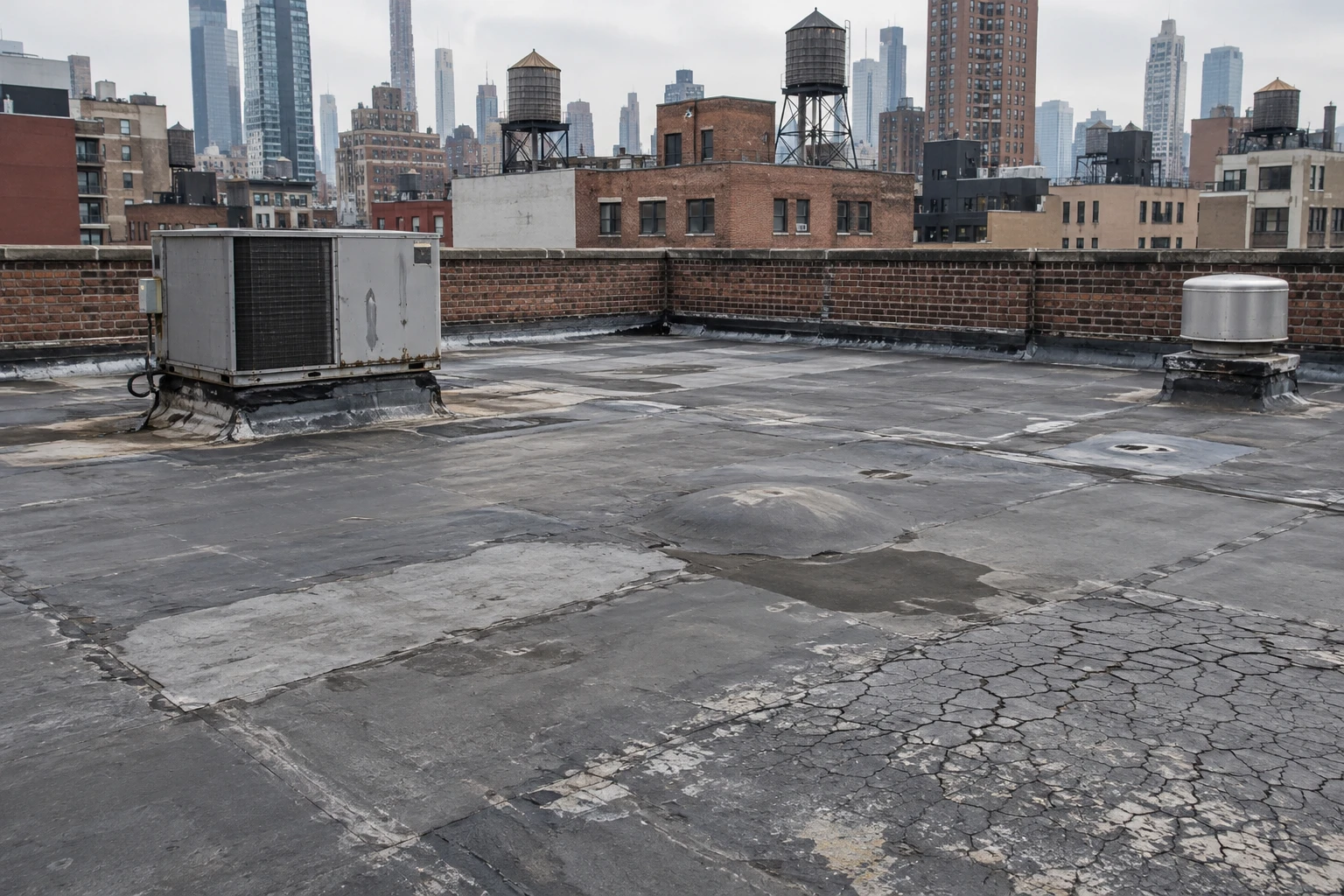
Repair of split, open and lifted seams on Manhattan, NY commercial roofs, with probe testing, cause analysis and welded or adhered repairs on file.
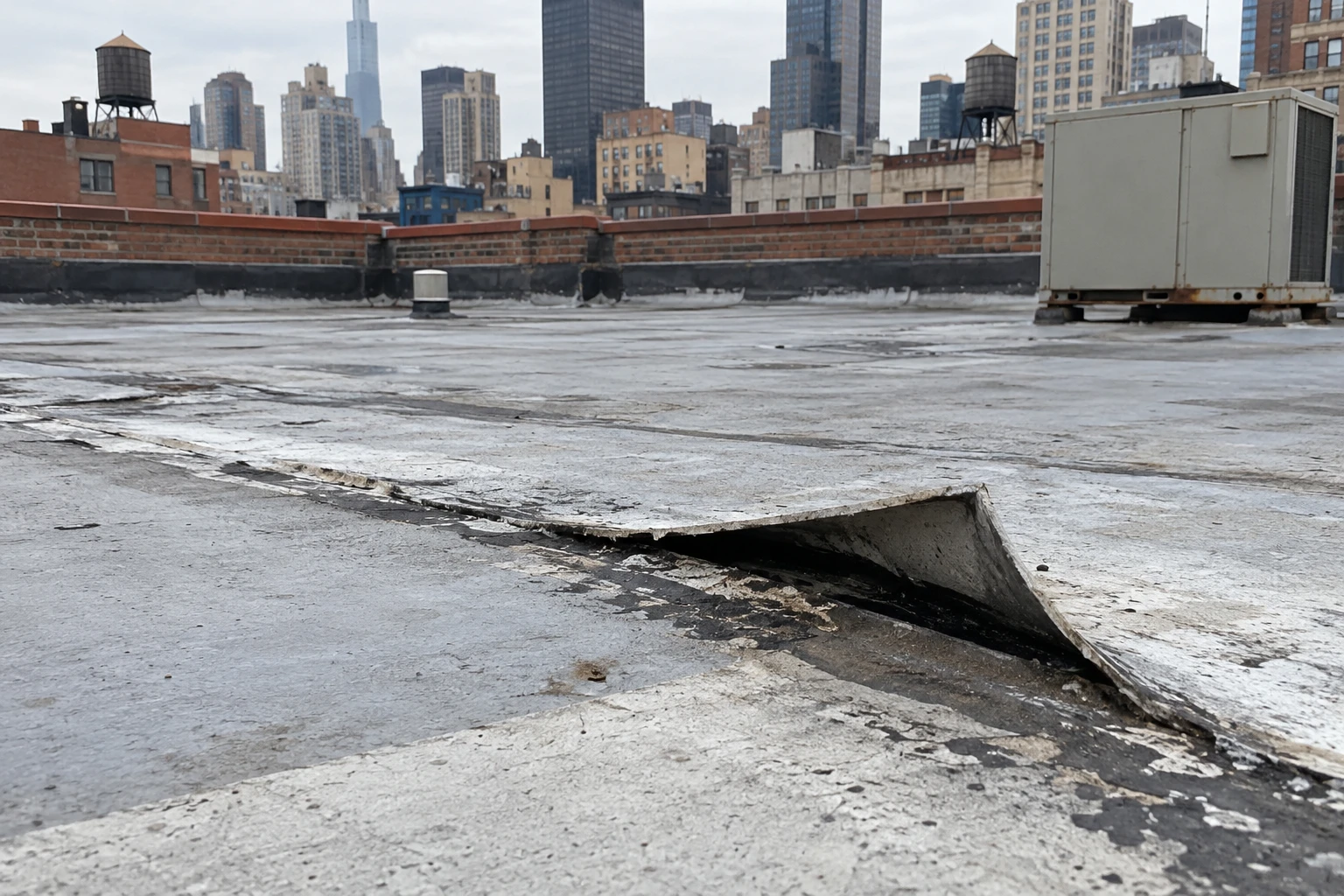
A blunt probe drawn along a seam tells more than the eye can: it meets resistance where the weld or the adhesive is sound and slips under the edge where it is not. A roof with a hundred feet of probed seam and eight inches of open edge has a finding with a clear scope, while a roof with open seams at every lap has a membrane problem. On a Manhattan roof, where access is limited and every leak reaches an occupied floor, the difference decides whether a repair visit or a replacement is next. Mark each open seam with chalk and photograph it before anyone repairs it.
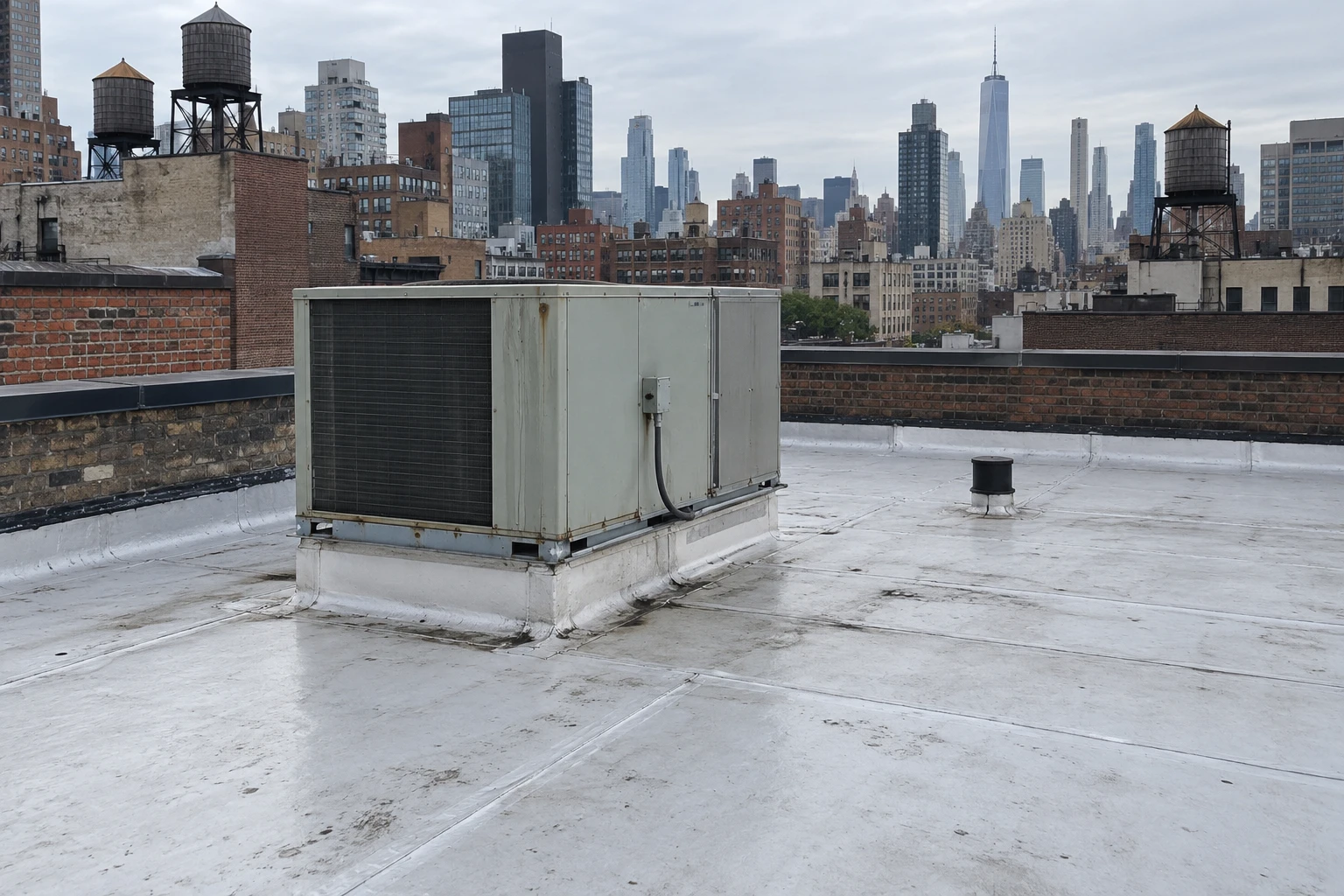
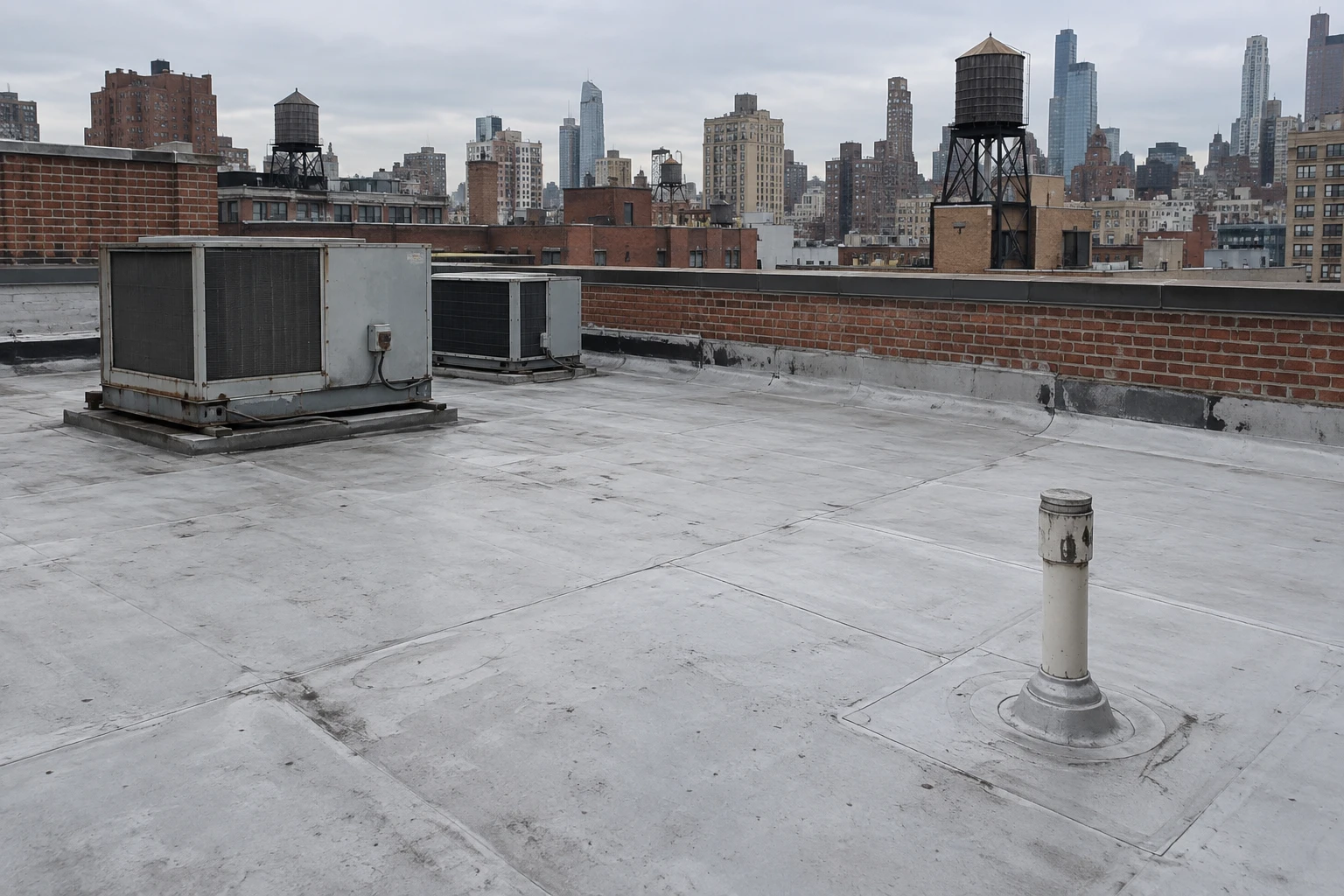
Single-ply, modified bitumen and built-up roofs all get their seams probed, diagnosed and repaired.
How do seams differ across roof systems?
A seam is where two sheets of membrane meet, and each system joins them differently. Hot air welds together thermoplastic sheets such as TPO roofing and PVC roofing, fusing two sheets into one, while EPDM relies on adhesive or tape. Modified bitumen laps are torched, heat-sealed or set in cold-applied adhesive, and built-up roofs lap their felts in alternating layers of bitumen.
Each joint fails in its own way. A hot-air weld that was cold when made peels clean. An adhesive joint contaminated with dirt lets go at the edge. A torched lap that was underheated opens in winter, and a built-up lap with too little bitumen dries and curls. The repair has to match the original method, so the first task is to identify the system and the joint. Read the roof's records, or take a core, before choosing the repair.
The probe is a simple instrument, a rounded steel pick or a blunt-tipped screwdriver run along the seam edge under light pressure. Resistance means a good weld; a soft give means a bad one. Each yield point is painted and measured, and the plan records the lengths so the open footage is known before pricing.
Why do seams open on roofs here?
Four causes recur. The first is workmanship at installation: a weld made too cold or too fast, a lap with dirt in it. The second is movement: the membrane shrinks or the deck shifts, putting tension on every joint. The third is ponding water, which keeps a seam under hydrostatic load and wears the weld. The fourth is age, as plasticizers leave the sheet and the edge becomes brittle.
Central Park has recorded 106 F and minus 15 F, and a roof sees that kind of swing season after season. Heat expands the sheet, cold contracts it, and the seam takes the stress at the lap. Snow averages 29.8 inches a year, and freeze and thaw drive water into any gap. In Ida's September 1, 2021 downpour, 3.15 inches fell in an hour, and rain like that finds every open edge. We record which cause fits the pattern, because the repair differs. Note whether open seams cluster near drains, walls or the field.
Roof traffic is the fifth cause worth naming. Service staff walking to equipment put point loads on seams, especially where the route crosses a lap, and a dropped tool can start a split. Walkway pads protect the route, and the survey marks where the traffic runs. Seams that open along a footpath have a different cause from seams that open along a pond, and their cure is a pad, not a patch.
What does a seam repair actually involve?
On a thermoplastic roof an open seam is cleaned and welded again with a hot-air gun and roller, and a cover strip is welded across the joint where the edge is damaged. For EPDM, the joint is cleaned, primed and re-taped or re-glued, with a patch over the repaired area. Modified bitumen laps are heated and pressed, or set in cold adhesive and weighted until they bond. Built-up laps are re-mopped and covered with a stripping ply.
Every repair is probed afterwards, and a test cut or a pull sample is taken where the system calls for it. Where seams have failed across the whole roof, patching is a poor use of money and the survey compares a repair to a roof coating restoration or a replacement. Weather limits the work: welds need dry, moderate conditions. Confirm the repaired length in the log.
How the repair reads later depends on its documentation. Each seam is photographed before and after beside a ruler, and the method and material are written on the plan at that spot. If a seam opens a second time, the log shows which gave way, the repair or the original joint, which counts when two parties disagree on responsibility.
When is the seam a symptom of something else?
Seams that fail in a line along a pond are symptoms of the pond. Seams that fail at a wall may reflect a flashing failure and the shrinkage that came with it. A pattern of failed seams across the field points to a membrane near the end of its life or to poor installation. A repair that ignores the cause lasts a season.
That is why the survey maps seam findings against drainage, walls and equipment. Standing water is treated through ponding water repair. Roofs on prewar five and six story buildings can hold seams from several generations of work, and the oldest are the first to open. A seam map should carry the date of every repair.
What does a seam failure mean for the budget and the lease?
On a sound roof, a few open seams make a modest repair. Open seams across a roof signal a remaining life measured in seasons, and the reserve study should reflect it. Warranty terms often require that seam repairs follow the manufacturer's method, and unauthorized repairs can affect coverage, so the record matters. When tenants see leaks they ask who pays, and the lease answers.
We rate seam condition in the roof condition reports and track it from survey to survey. If the rating falls year over year, the plan moves the roof up the replacement list. A full replacement here would bring a sustainable roofing zone under Local Laws 92 and 94 of 2019, to be met with solar, a green roof or both. For owners in Tribeca and other older districts, the plan accounts for it early. Record the probe results at every visit.
Timing within the season matters. Seams are best repaired in the dry, moderate weather of spring and autumn, when welds and adhesives cure correctly. A repair made in the cold of January may hold only as a temporary measure. For a roof that cannot wait, we dry it in at once and schedule the permanent seam work for the first suitable window. Staff learn which repairs are temporary and the date each will be redone, so a stopgap is never mistaken for the final answer. Older loft roofs in SoHo often carry seams that were repaired more than once, so the repair history is read before the seam is.
Commercial Roofing Questions
What decides whether to repair the seams or replace the membrane?
Extent of failure and age of the sheet decide it. Repair suits a few failed seams on a sound sheet, whereas failure throughout, along with brittle edges, means replacement.
Are cold-weather seam repairs possible?
Certain methods tolerate cold, but others need warmth and a dry surface. Until the permanent repair can be done properly, a temporary dry-in protects the roof.
What shows that a repaired seam will hold?
Confidence comes from probing the full length after repair, taking a test sample where the system requires one and checking the cause, since a repaired seam that still sits under a pond will fail again.
Could a seam repair change the warranty?
Possibly, because warranties usually specify who may repair and how. The manufacturer's method is followed and the work is recorded, so the file shows compliance.
How should a leak be handled before the repair?
Photograph the stain, note the rain and protect the area below. Leak and seam are not always in the same spot, which is why the survey traces the path.