Coating restoration for sound Manhattan, NY roofs: adhesion tests, moisture mapping, silicone and acrylic systems, and the records a reserve study needs.
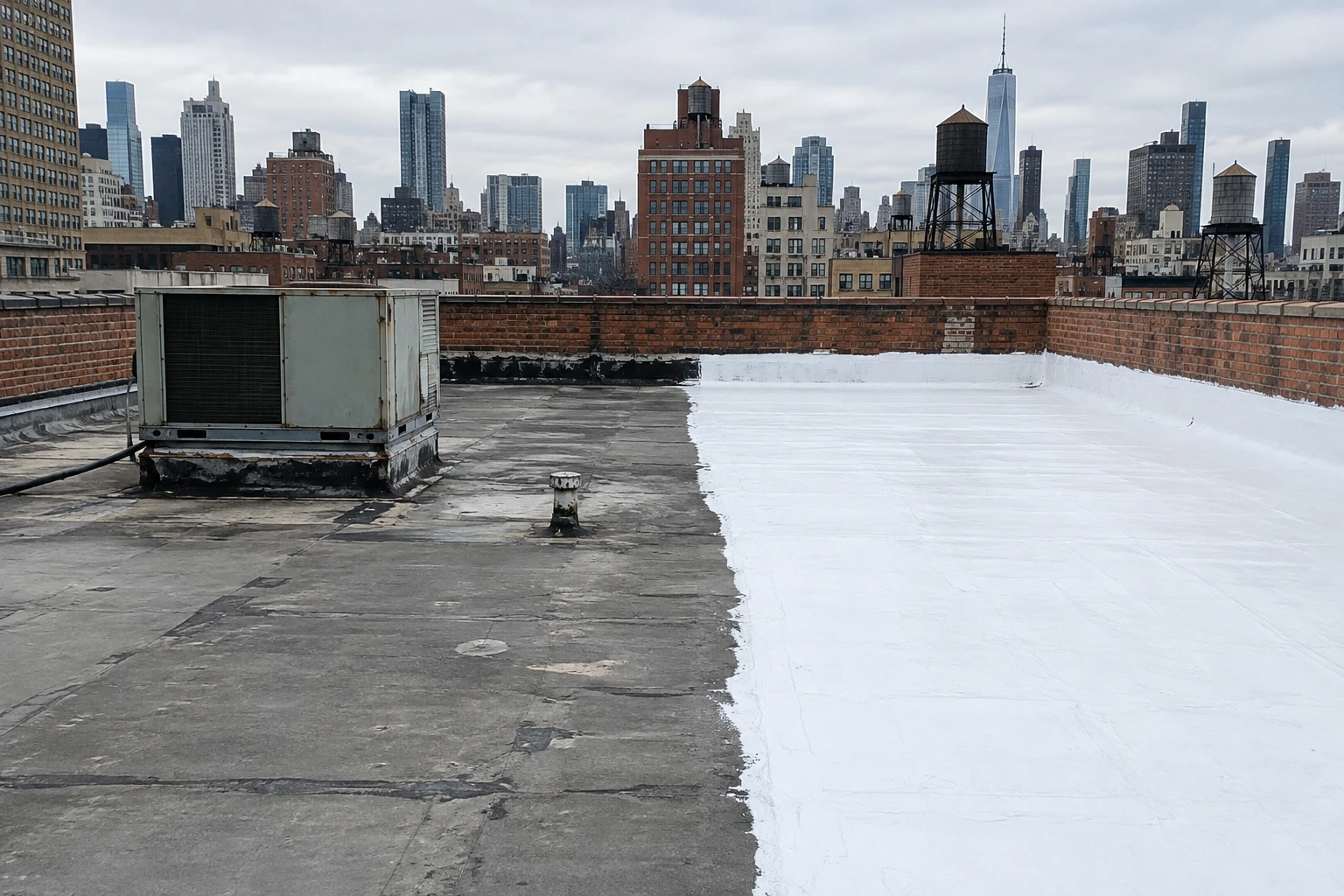
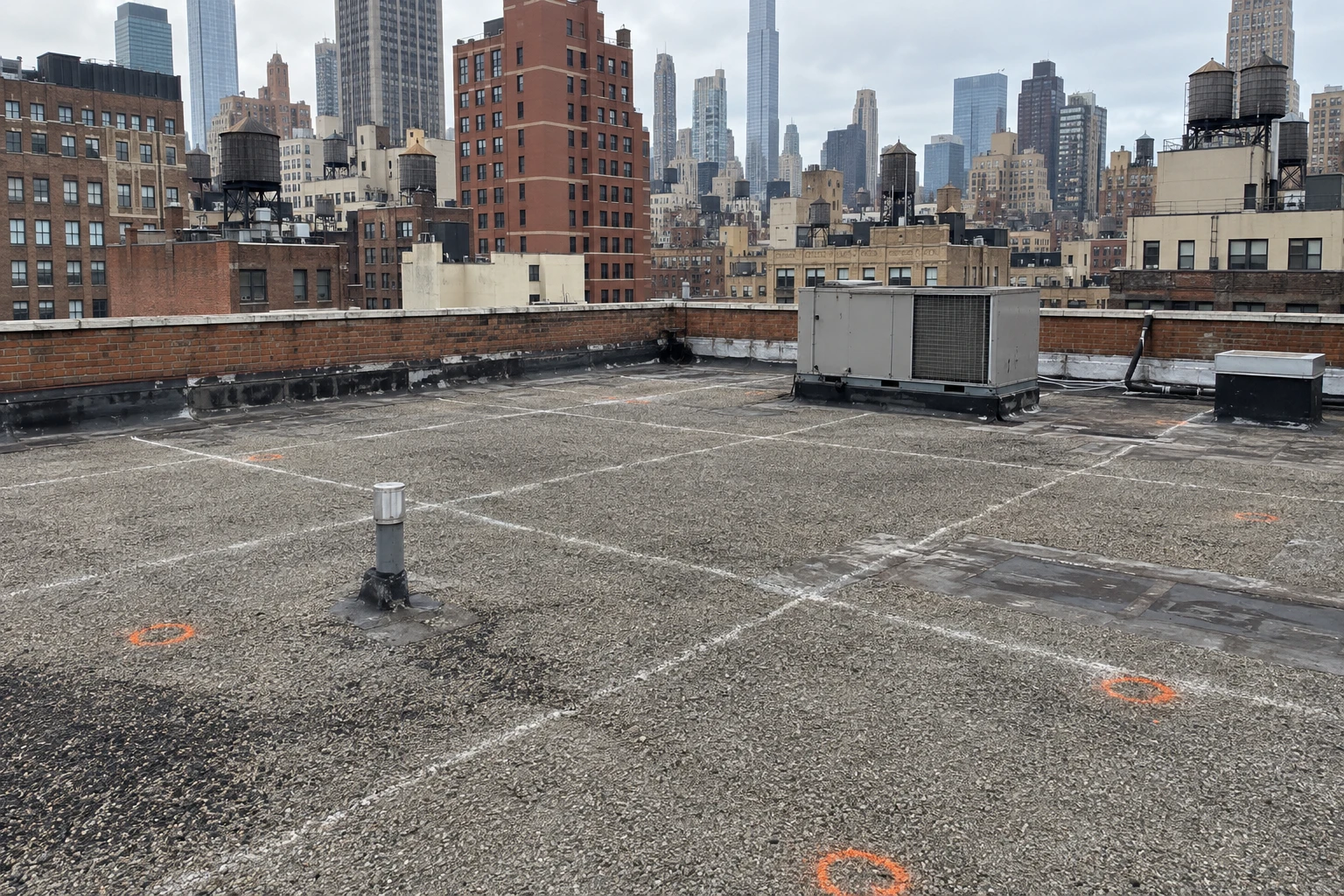
Three of five test cuts came back dry, and two came back with insulation that held water like a sponge. That split, on a single setback roof, is the whole argument for testing before coating. A coating restores a roof whose membrane and insulation are still sound, and it adds service life by renewing the weathering surface. It does nothing for a roof whose insulation is wet, because it seals the water in. For a Manhattan building with a small footprint and a tight budget, the question is how much of the existing assembly is worth keeping. The survey answers it with measurements. Keep the core photographs with the roof plan, because they decide the scope.
We install silicone and acrylic coating systems on qualified roofs and test before we propose one.
Which roofs qualify for a coating, and which do not?
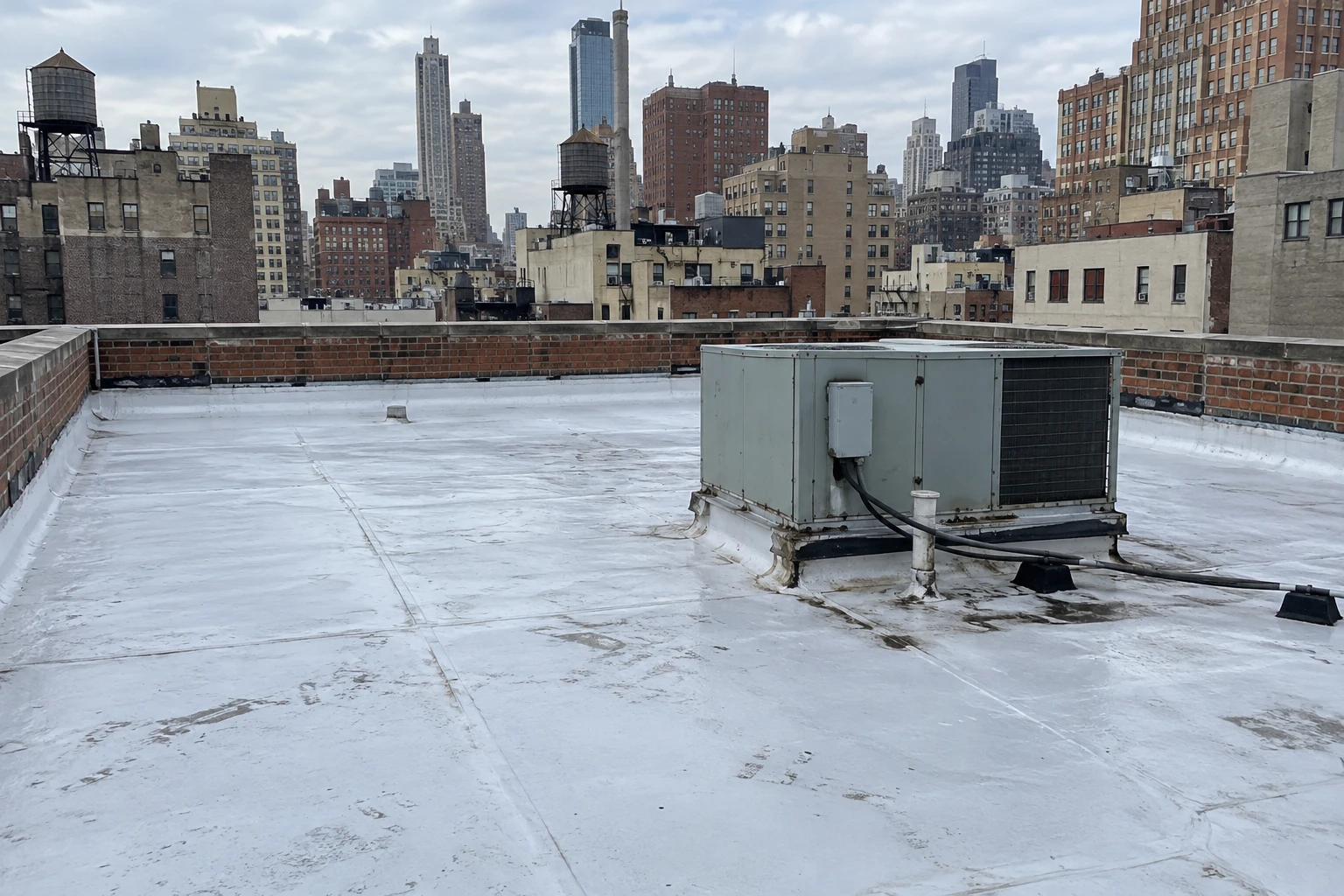
A roof qualifies when four conditions hold. The insulation is dry across the whole surface, confirmed by an infrared scan and cores. The membrane is attached and not curling away from the substrate. The seams and flashings are intact or repairable. And the surface will accept a coating after cleaning, which a small adhesion test on a patch confirms. Failing any one of these changes the recommendation.
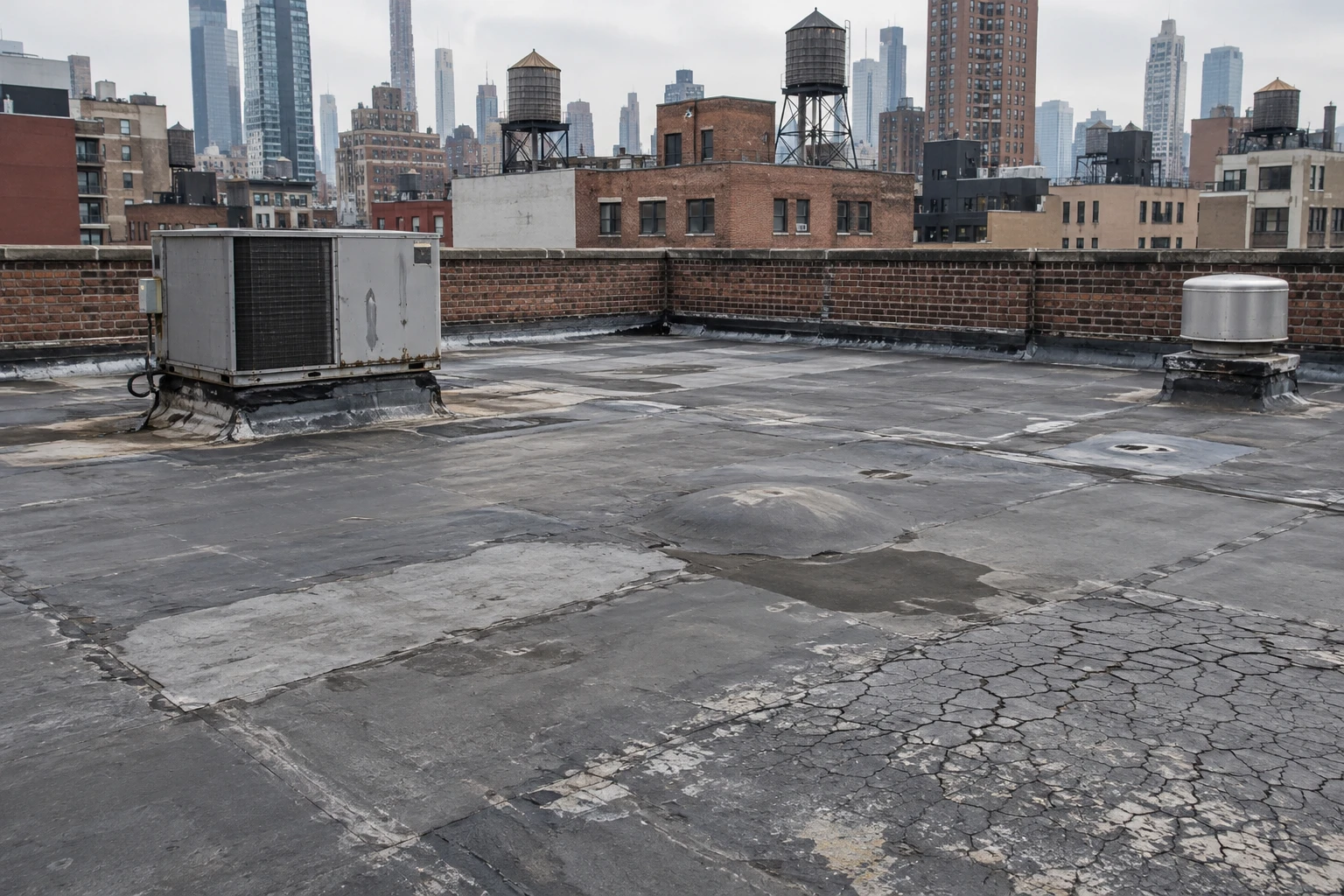
A roof with a few wet areas can still qualify after the wet sections are cut out and replaced, so the survey draws the repair boundary first. A roof with widespread blistering, soft deck or repeated past patches usually does not qualify, and replacement is the sounder choice. The infrared moisture survey is the document that settles the question, and its map belongs in the building file. Do not authorize a coating before the map is in hand.
The adhesion test deserves a word of its own. A small patch is cleaned, coated and allowed to cure, then pulled to see whether the film bonds to the old surface or peels away clean. A poor result usually points to residue, oxidation or an incompatible old coating, and the fix is a different cleaner, a primer or a change of system. Running the test in the survey stage avoids finding the problem after the whole roof has been prepared.
What is the difference between silicone and acrylic on a rooftop here?
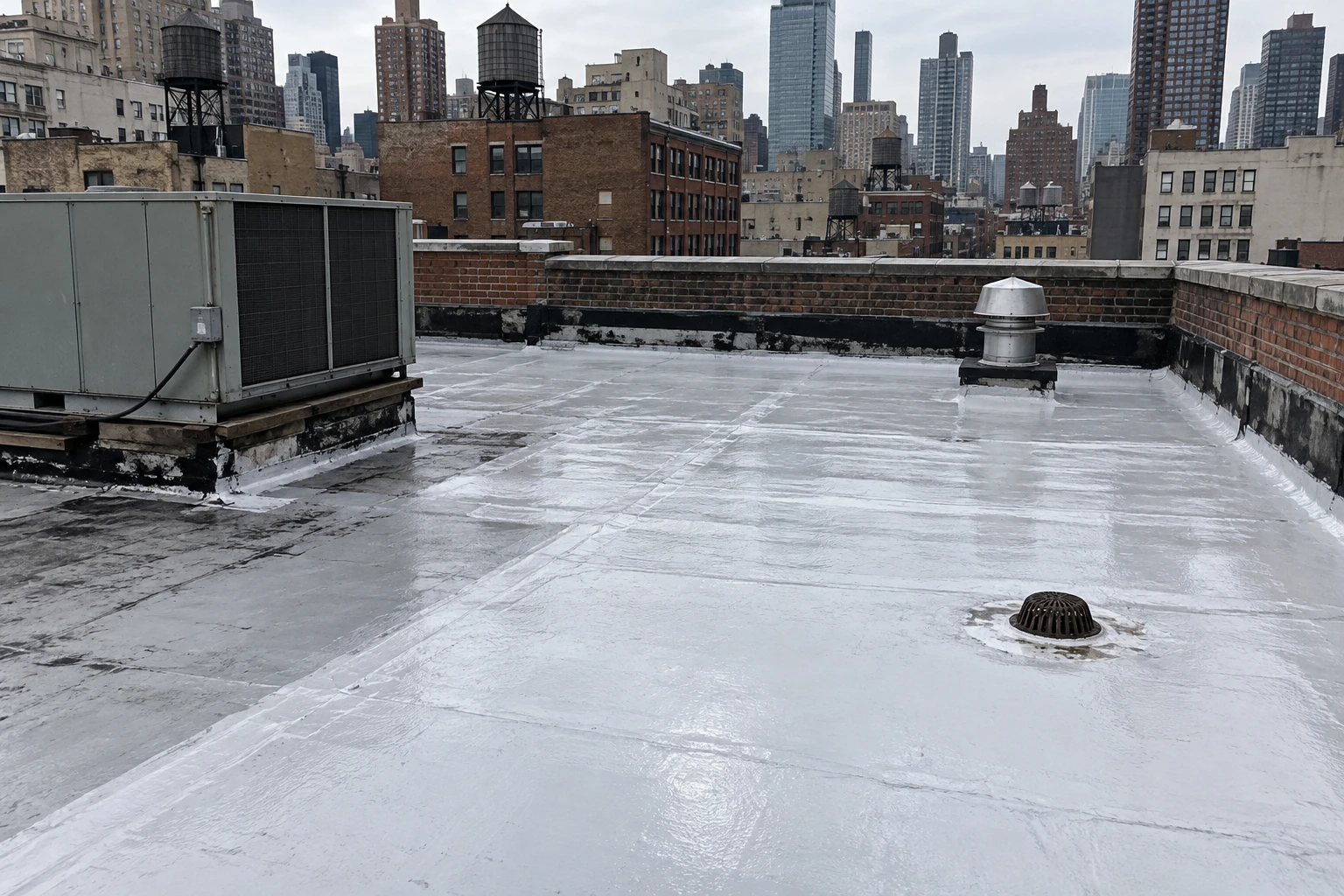
Both are liquid-applied and dry into one unbroken skin. Acrylic is a water-borne, reflective product that is simple to apply, and it performs best where water does not stand. Silicone tolerates ponding better, holds its flexibility across a wide temperature range and resists ultraviolet exposure well, which suits roofs where drains lag in heavy rain. The city recorded 3.15 inches of rain in one hour during Ida in 2021, and a roof that holds a shallow pond after such an hour is a candidate for silicone coating. A roof with good slope to the drains can take acrylic coating.
The substrate also matters. Silicone does not accept recoating by most other products, so the choice commits the building to silicone for later maintenance coats. We explain that tradeoff in the proposal, and we record the product and thickness in the file so the next owner knows what is on the roof.
How do heat and freeze-thaw affect the coated surface?
Central Park has recorded 106 F, and the city's heat island keeps rooftops warm after sunset. A reflective coating lowers the surface temperature of the membrane, which slows expansion and the aging of sealants. At the other end, the park has recorded minus 15 F, averages 29.8 inches of snow and cycles through freeze and thaw each winter. A coating must stay flexible through those swings and bridge small movement at laps and flashings without cracking.
Installation weather limits the schedule. Coatings need a dry surface, moderate temperatures and a cure window before rain, so spring and early autumn are the usual seasons. A roof that is coated in a hurry before a storm may not cure properly. We plan the work in sections, protect each cured area and record temperature, humidity and surface moisture at application. Those readings go into the closeout file along with the coating batch numbers.
Occupied buildings add their own limits. Coatings have odor during application and cure, and fresh-air intakes on the roof must be protected or shut down during the work. We confirm intake locations at the survey, schedule the heaviest application away from sensitive floors and give tenants notice of the days involved. A medical suite or a restaurant kitchen below the roof is flagged in writing before the crew mobilizes.
What preparation takes the most time and money?
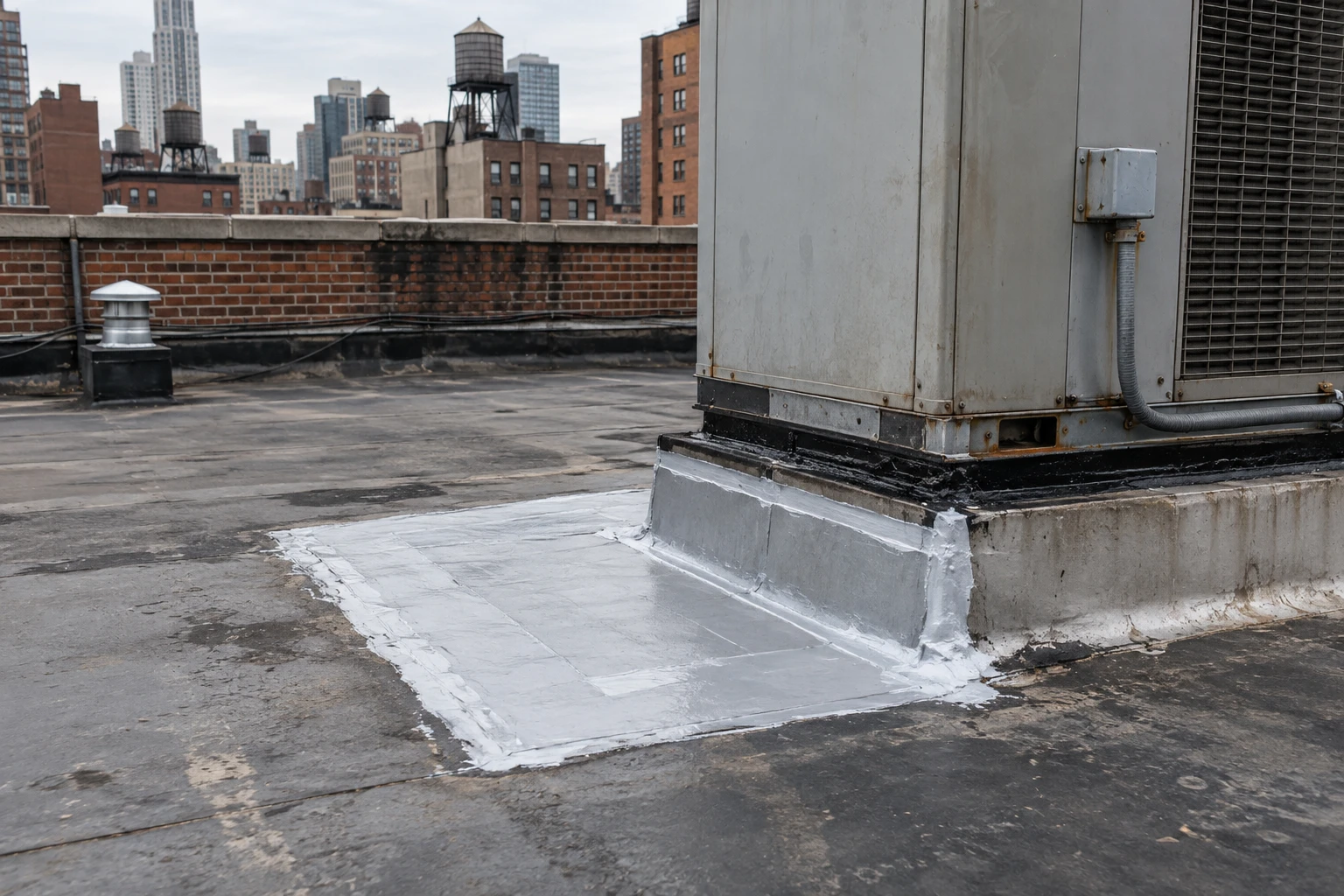
Preparation is most of the work. The surface is power washed, loose material is removed, failed flashings are rebuilt, seams are reinforced with fabric and sealant, and penetrations are detailed. Drains are cleaned and fitted with new rings where needed. On a Manhattan roof the cost drivers are access, the number of penetrations and the staging of material up a stair, since every bucket is carried by hand or lifted by hoist.
Bulkhead walls, parapet caps and mechanical curbs receive attention first because they handle the most water. A commercial roof repair at these details often precedes the coating. Landmarked buildings, such as those in the SoHo-Cast Iron district, may require a review of any change visible from the street, and a coating that alters a parapet's appearance falls into that category. Confirm the finish and color against the landmark file before ordering material.
What service life and records should the owner expect?
The service life of a coating depends on thickness, exposure and maintenance. A coated roof can extend the useful life of the assembly, and it delays a full replacement. When a full replacement does come, Local Laws 92 and 94 of 2019 require the sustainable roofing zone to be covered by solar, a green roof or both, so delaying replacement also delays that added scope. The requirement attaches to full replacements, and a restoration that keeps the assembly is reviewed against that definition before design.
The records to keep are the moisture map, the core log, the adhesion test results, the product data, the application thickness and the inspection schedule. We attach them to the building file with the roof condition reports so a lender or a buyer reading the history sees the baseline and the restoration together. For buildings in Chelsea and similar districts, that file is routine in due diligence.
Commercial Roofing Questions
What decides whether a coating pays off compared with replacement?
The wet-insulation percentage decides it. When the survey finds little or no wet insulation, a coating costs far less and extends service life. When wet areas are widespread, the coating would seal in water, and replacement or a large section replacement is the better spend. The core log gives the number.
Can a coating be applied over an old gravel or built-up surface?
Sometimes. Loose gravel must be removed and the surface prepared, and a smooth-surfaced built-up roof in sound condition can take a coating after cleaning. A mineral surface roof or a roof with deep alligatoring needs a closer look and a test patch before we recommend it.
How long before the roof can be used after coating?
Foot traffic is usually possible after a short cure, but heavy equipment waits longer. We mark the cured zones and keep service staff off wet areas, then release the roof section by section in writing.
Does the coating change what the building needs to file?
It can. A restoration that keeps the existing assembly follows a different review than a full replacement, so we confirm the filing path with the building's expediter before work begins. The decision is documented in the file.
What is the first maintenance after a coating?
A visit within the first year to check laps, flashings and drains, then regular inspections. A clean coating performs better, so debris is cleared from drains and low areas on a schedule.