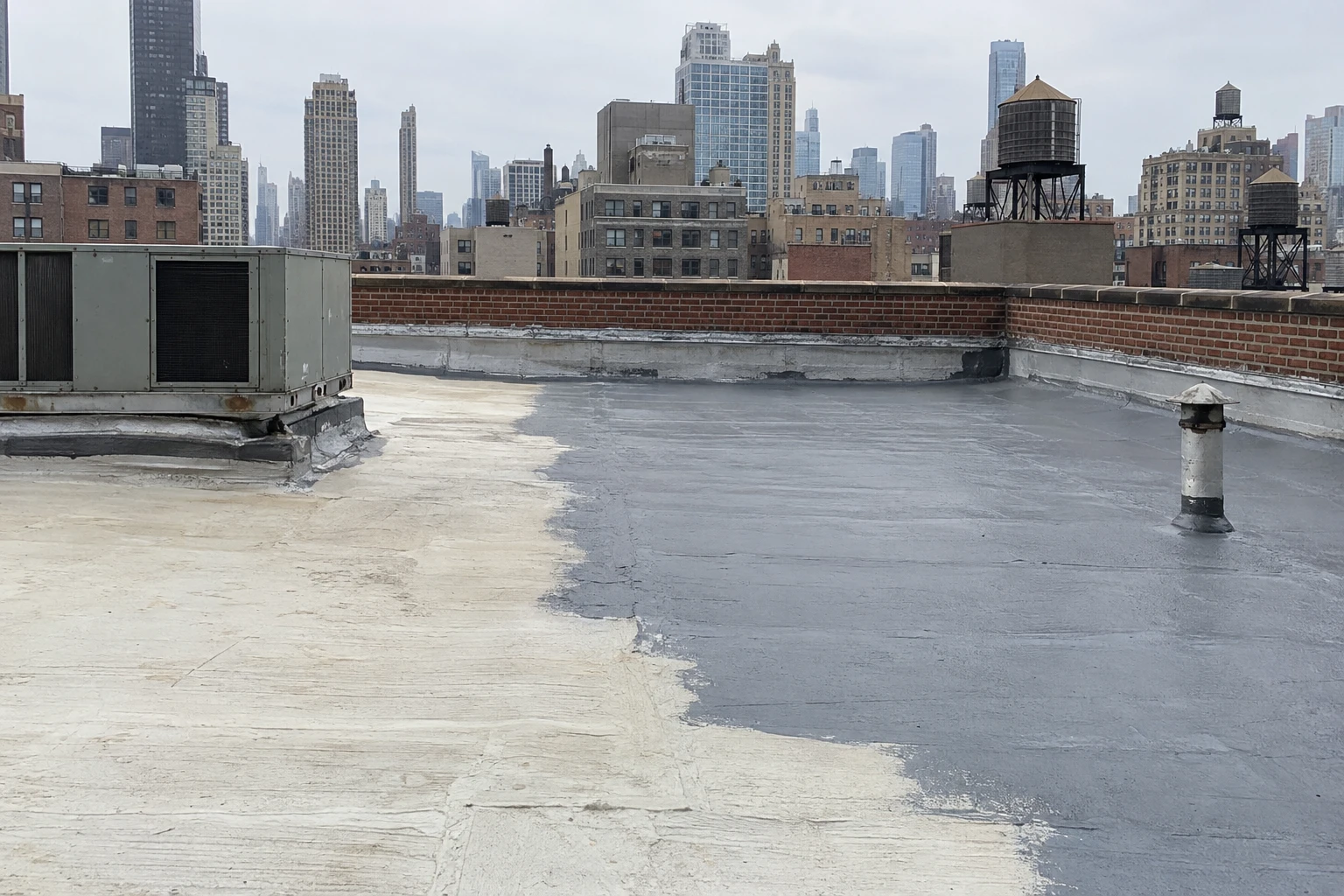
Silicone roof coating systems for Manhattan, NY roofs that pond or age: adhesion tests, ponding tolerance, compatibility, dirt pickup and warranty records.
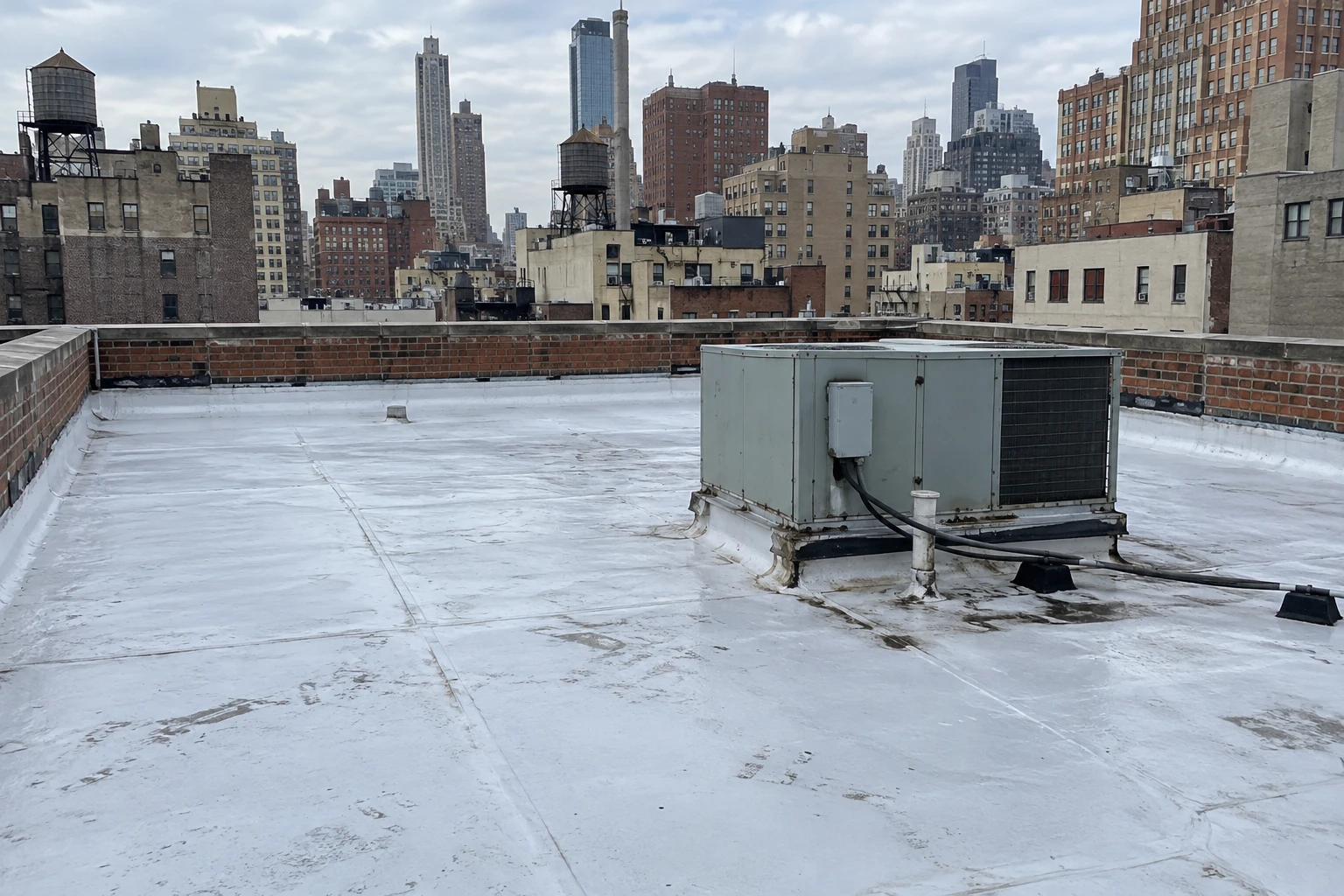
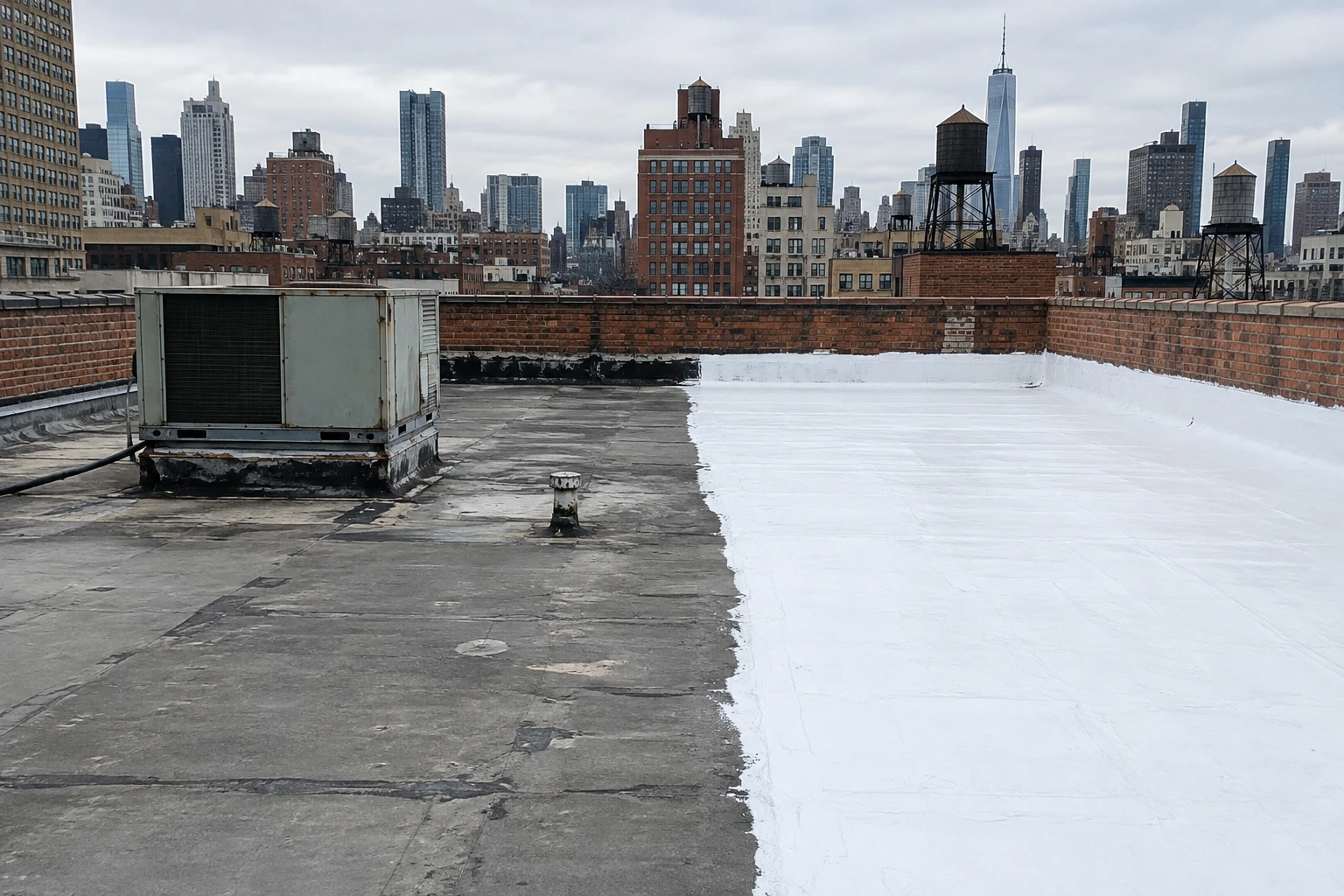
A test patch of coating scored with a grid of cuts and pulled with tape either holds every square or leaves some behind on the tape. That adhesion result is the first answer to whether a roof can take silicone, and it is read before a gallon is ordered. Silicone is a liquid-applied coating that cures into a rubber-like film, resists ponding water and ultraviolet light and bonds to many existing membranes, metals and built-up surfaces. On Manhattan, NY roofs that hold water in low spots, where drains and slopes were never ideal and replacement is not yet due, it is a frequent candidate. The decision for an owner turns on whether the roof underneath is dry, whether the surface will accept the bond and how the coating's dirt pickup and maintenance fit the building.
Why choose silicone over another coating?
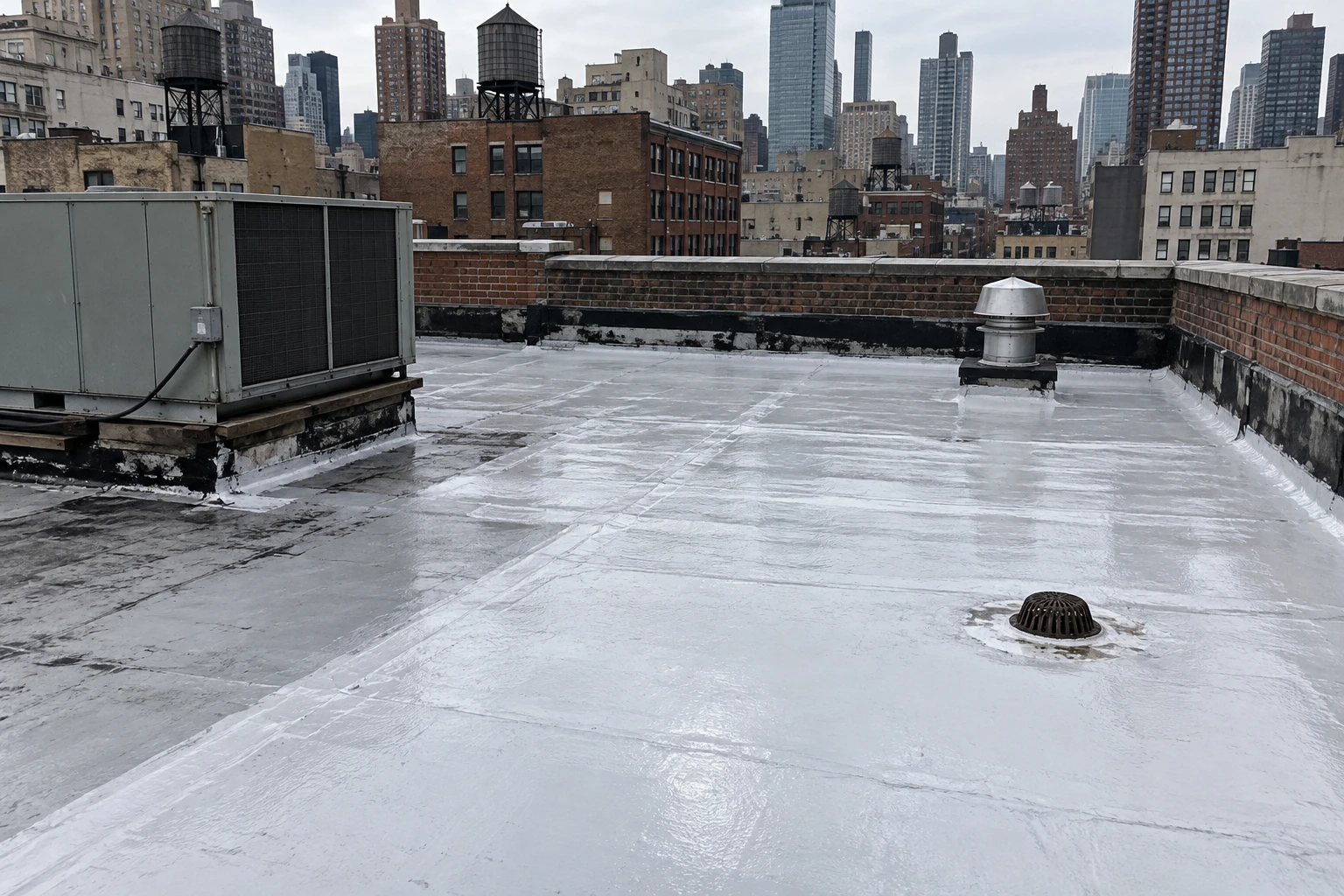
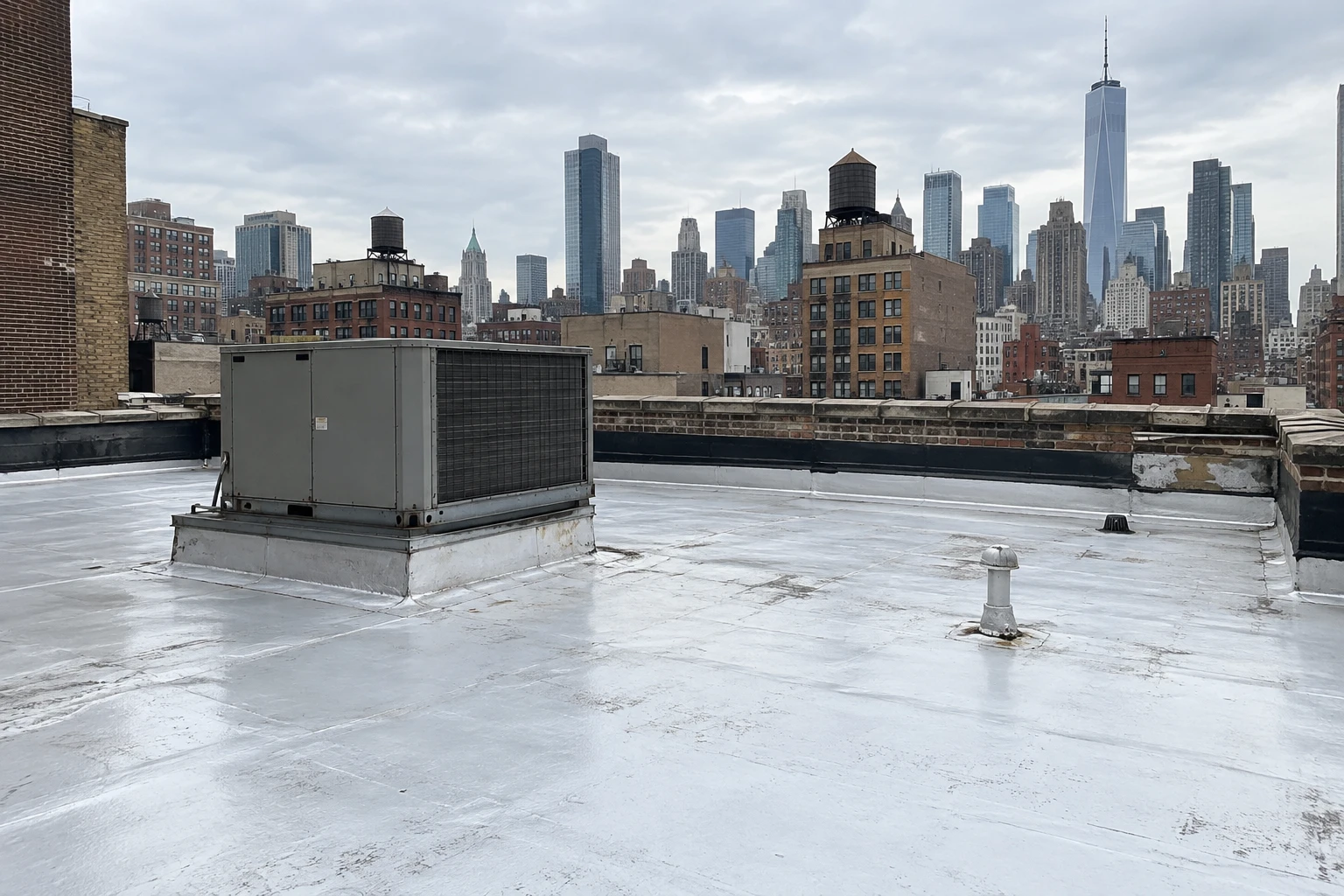
Ponding tolerance. Standing water leaves silicone intact where some acrylics would degrade, and it remains flexible through a wide temperature range. It also cures into a continuous film that fills small cracks and reflects sunlight, which also serves a cool roof installation goal without a new membrane. The central trade-off is dirt pickup and a surface that accepts little except more silicone later, which makes the choice a commitment.
Where a roof drains well, an acrylic coating is often cheaper and easier to maintain. Where a roof ponds, silicone is the safer choice, though standing water is still a problem for the roof and the structure. The survey measures ponding depth after rain and identifies whether a drain, a saddle or a slope correction should be done first. A roof that held water after Ida's hourly peak of 3.15 inches in 2021 will hold it again.
Which roofs qualify, and which do not?
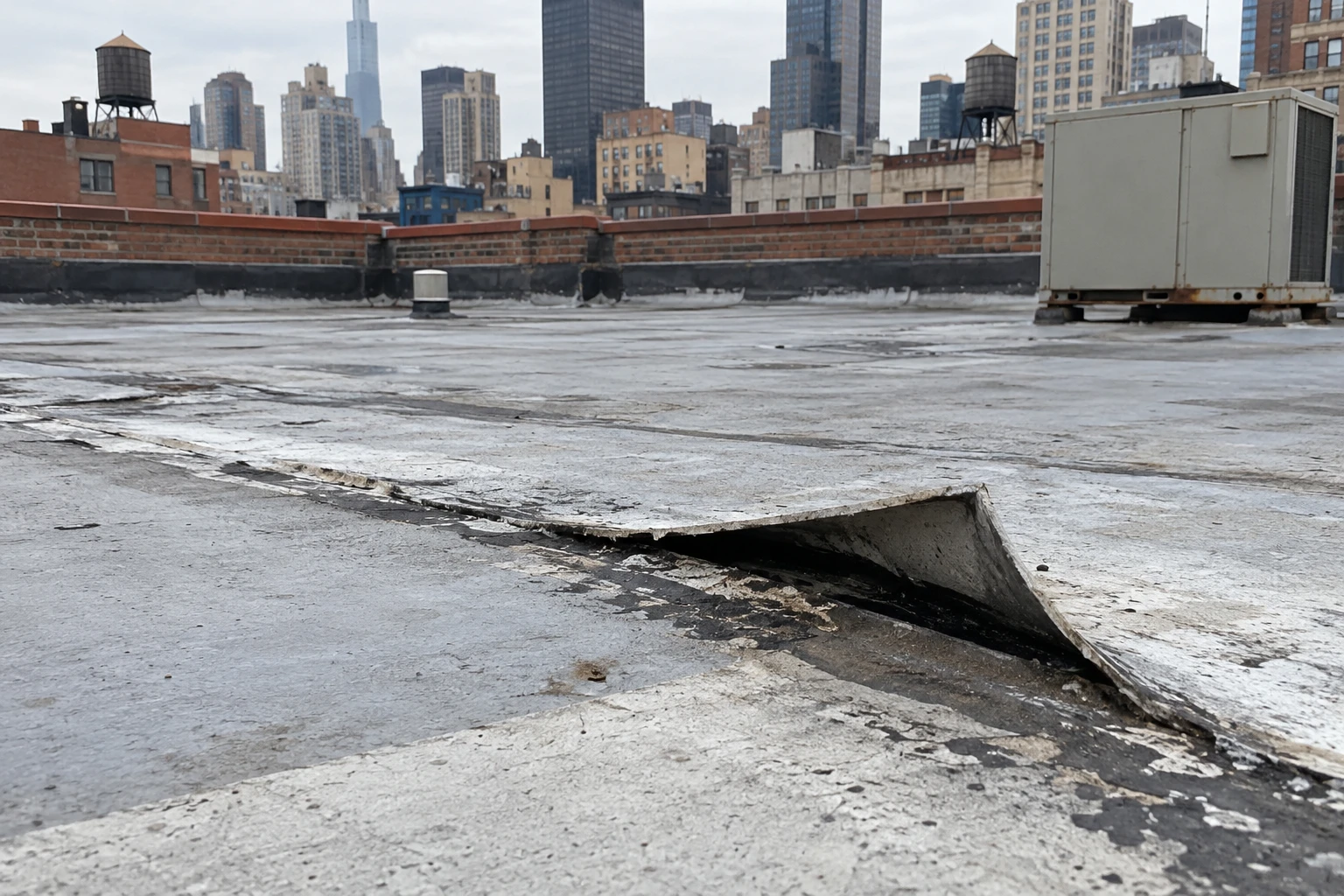
Four conditions must hold. The insulation is dry, confirmed by an infrared scan and cores. The existing membrane is attached and not blistered or delaminating. Seams and flashings are intact or can be repaired. And the surface accepts the coating after cleaning, shown by the adhesion test. Failing any one changes the recommendation.
Roofs with wet insulation need the wet sections removed first. Roofs with failed seams need repair. Some surfaces, such as certain old asphalt or oily membranes, need a primer or a barrier coat, and some do not bond at all. We record the result for each substrate type on the roof, because a single roof can carry two or three. If the roof does not qualify, the report says why and shows the alternative, which may be a recover or a replacement. The roof coating restoration decision is made from these readings.
What preparation takes the most time and money?
Cleaning and repair. The surface is power-washed to remove dirt and chalking, and the water has to leave and the surface has to dry before coating. Seams are repaired or reinforced with fabric and sealant, flashings are rebuilt where they have failed and penetrations are sealed. Rust on metal is treated.
Preparation is also where problems hide, and the record shows them. A seam failure repair done before coating prevents a leak at a lap that the coating alone would not seal. Walls and curbs are primed to the height where the coating will terminate. The crew photographs each prepared area before it is coated, since the preparation will not be visible afterward. Thickness matters, and the coating is applied in measured passes with wet-film gauges to reach the specified dry thickness.
How does silicone behave in Manhattan weather?
The white surface reflects sunlight on a roof that sits in a strong urban heat island with a recorded high of 106 F in Central Park. Through a winter that has reached minus 15 F in Central Park and averages 29.8 inches of snow, the film stays flexible and moves with the roof instead of cracking at seams. Coating must be applied in dry weather above the minimum temperature and with no rain expected until cure, so the schedule leaves room for weather days.
Dirt pickup is the practical downside. Silicone stays slightly tacky and holds soot, which darkens the surface and lowers reflectance over a few years. A wash restores some of it, and the maintenance plan sets an interval. On a roof in the Garment District, where the Garment Center Historic District covers 74 acres of buildings dating to 1916, the maintenance plan sets the wash interval from the reflectance readings taken at each visit.
What service life and records should the owner expect?
Service life depends on thickness, exposure and maintenance, and the survey sets an estimate that the owner revisits each year. Annual inspection finds scuffs, punctures and lap edges early. We walk the same route each time, photograph the same reference patches and compare the images, so a slow loss of thickness at a traffic route shows up as a trend long before the base layer is exposed. Pads along service paths, set during the first coating, cut that wear sharply, and the layout of the pads goes on the roof plan so a later crew does not move them. Repairs are made with the same silicone, since other materials do not bond to it. The reserve study carries the recoat interval, and the reflectance readings taken at each visit show when it falls due.
Kept in the file: the adhesion test, the moisture map, the preparation photographs, the product batches, the thickness readings, the weather log and the warranty terms. If the roof is later replaced in full, the Local Law 92 and 94 sustainable roofing zone applies, and the file shows how the coating history affected the substrate, since silicone residue limits what can be bonded to the old surface. Because silicone tends to be the last coating a roof receives, the file should say so plainly, so a future owner planning a tear-off knows what the old surface contains and can price its disposal correctly.
When is silicone the wrong answer?
When the roof needs to be recoated with something else later, when the building wants a paintable surface, when the roof is wet underneath or when drainage can be fixed cheaply. A roof headed for a green roof or an array should be looked at carefully, since attachment to a silicone surface is more limited. In those cases a spray foam system with a different topcoat, or a new membrane, may fit better. Roofs of similar age in Hell's Kitchen are rated on the same dryness test before a coating is priced.
Commercial Roofing Questions
Can silicone go over an existing coating?
Over silicone, yes, once the surface is clean. Over acrylic or any other coating the answer comes from the test patch, because adhesion varies. A primer rescues some combinations, and others fail outright. The test comes first.
How soon does the coating cure?
It skins over within hours and reaches full cure in days, depending on temperature and humidity. Rain before the skin forms can wash the coating off, so we apply it with a clear forecast and protect the surface until it sets.
Is a silicone roof slick underfoot?
When wet, yes, it can be. Service routes receive a granule-loaded coat or walk pads, and the survey marks those routes. Staff should still step carefully on a wet coated roof.
Will the coating hide existing leaks?
Small gaps get sealed, but a wet roof stays wet under a coating. Leaks are traced and repaired first, so the film lands on sound substrate. Moisture trapped beneath the film raises blisters.