Spray polyurethane foam roofs for Manhattan, NY buildings: thickness gauging, protective coatings, wind limits during spraying, overspray control and records.
A gauge pressed into freshly sprayed foam at twenty points across a roof gives twenty thicknesses, and the spread between the thinnest and thickest is the quality of the application in one number. Spray polyurethane foam, SPF, is a two-component liquid that expands on the roof into a rigid, closed-cell insulation with no seams, then receives a protective coating. Where it works, it adheres to the deck, flows around penetrations and builds slope into the surface. On Manhattan, NY buildings with irregular roofs, many penetrations or an existing roof that cannot be removed, that continuity is the draw. The questions for an owner are whether the substrate qualifies, how the spray is controlled in a dense neighborhood, and what the coating asks of the owner over the years.
How is a foam roof built, step by step?
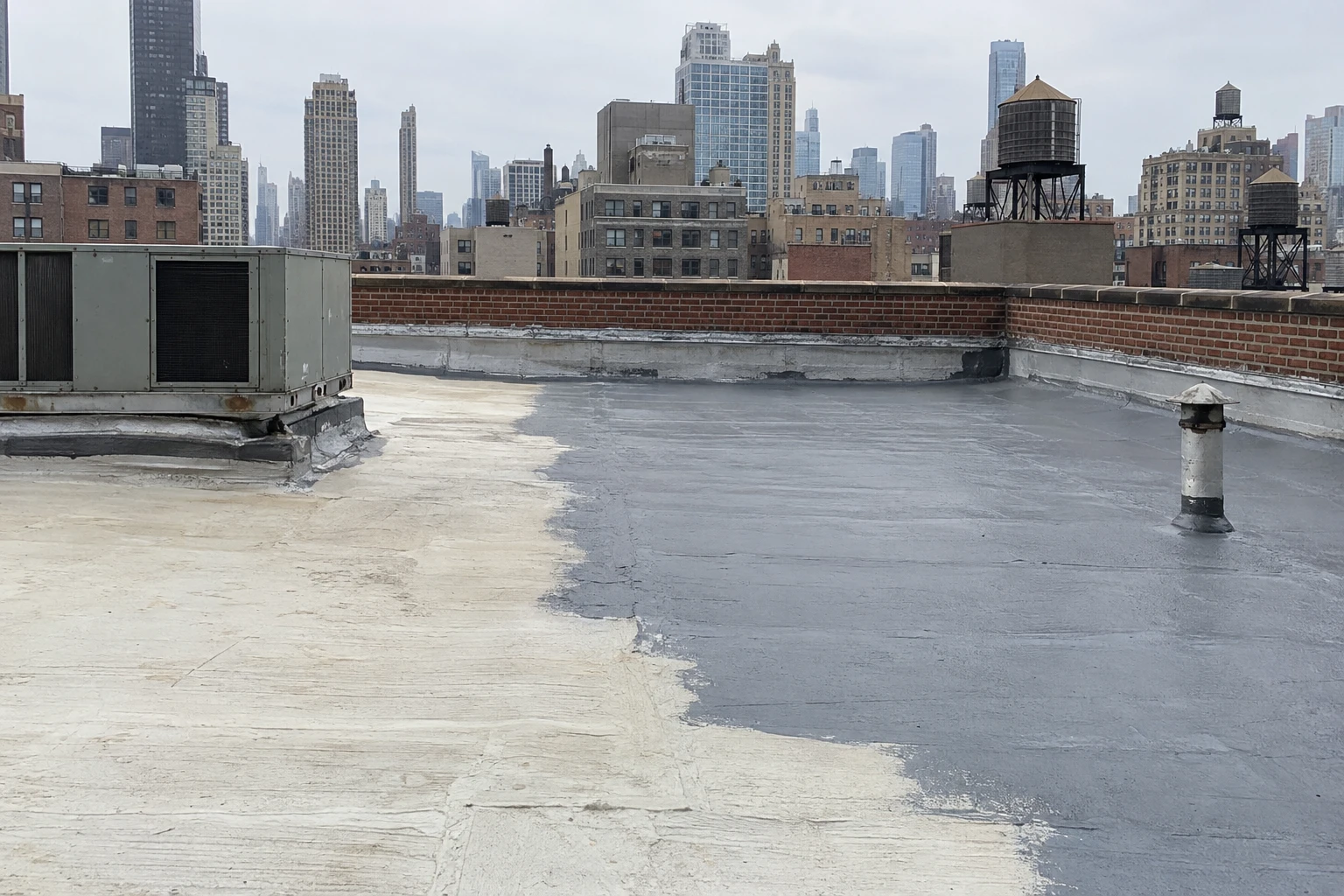
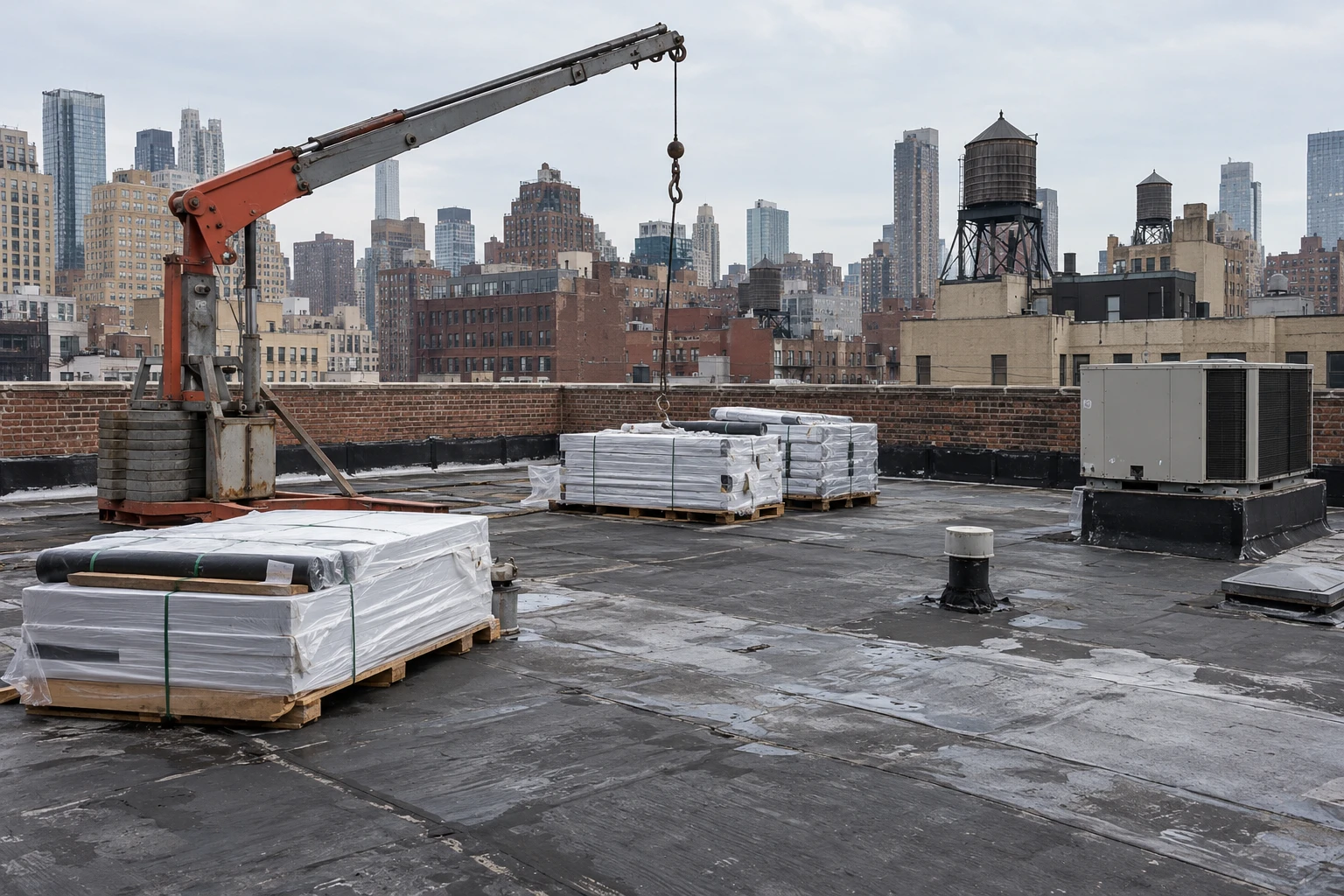
Preparation comes first: the substrate is cleaned, loose material removed, wet areas repaired and the surface primed if the foam manufacturer requires it. The foam is sprayed in lifts, usually of an inch or so, to reach the target thickness, and slope can be built into it to move water toward drains. The surface is then trimmed to a uniform texture and coated within a short window, because UV breaks the foam down quickly.
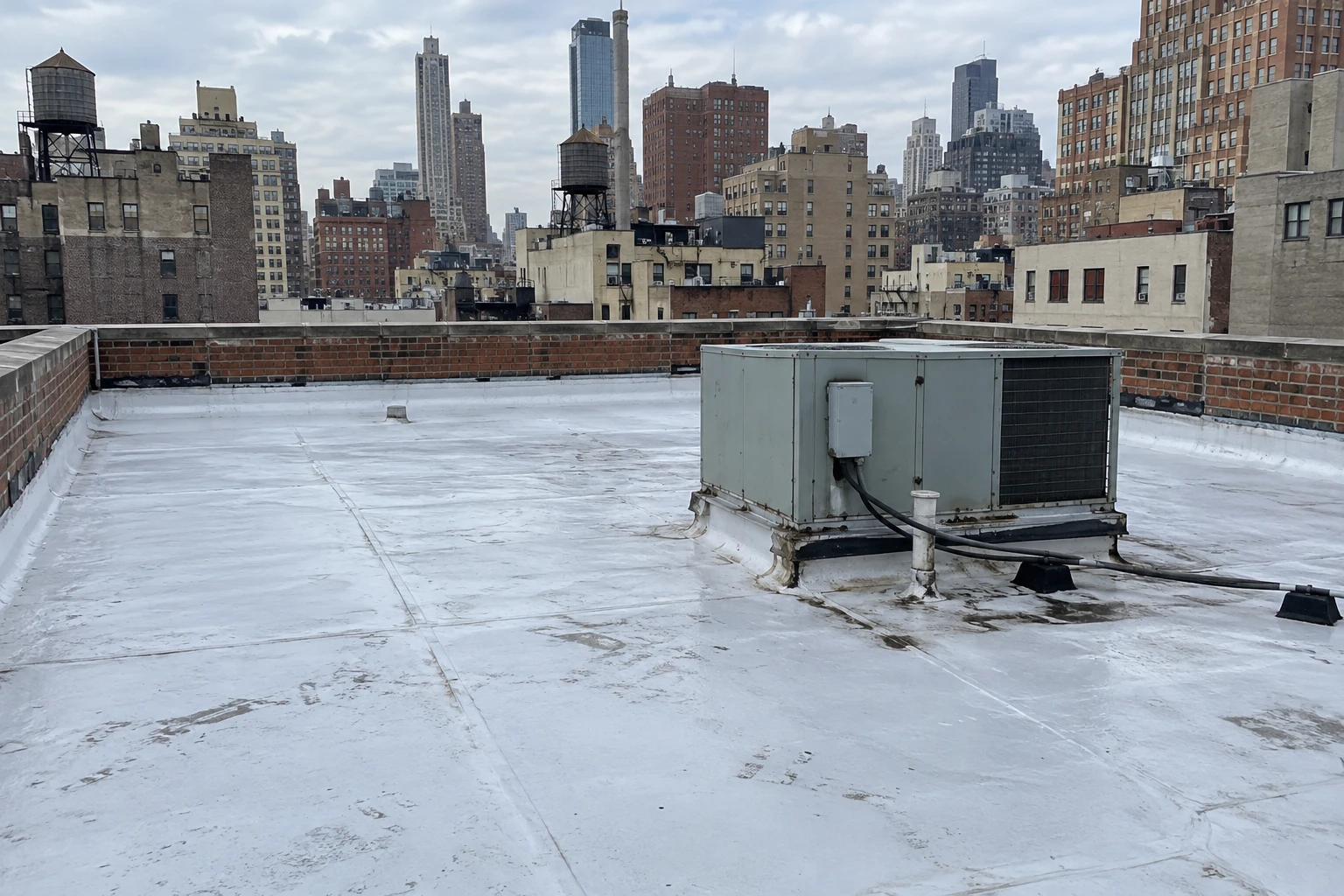
Because the foam is monolithic, the roof has no seams to open. Flashings are formed by spraying up walls and around curbs and pipes, which removes many of the cut-and-patch details that leak on sheet membranes. A silicone, acrylic or polyurethane topcoat protects the foam from sun and water, and it is renewed on a schedule. A foam roof is therefore two products in one assembly, and the owner maintains both.
What substrates qualify for foam?
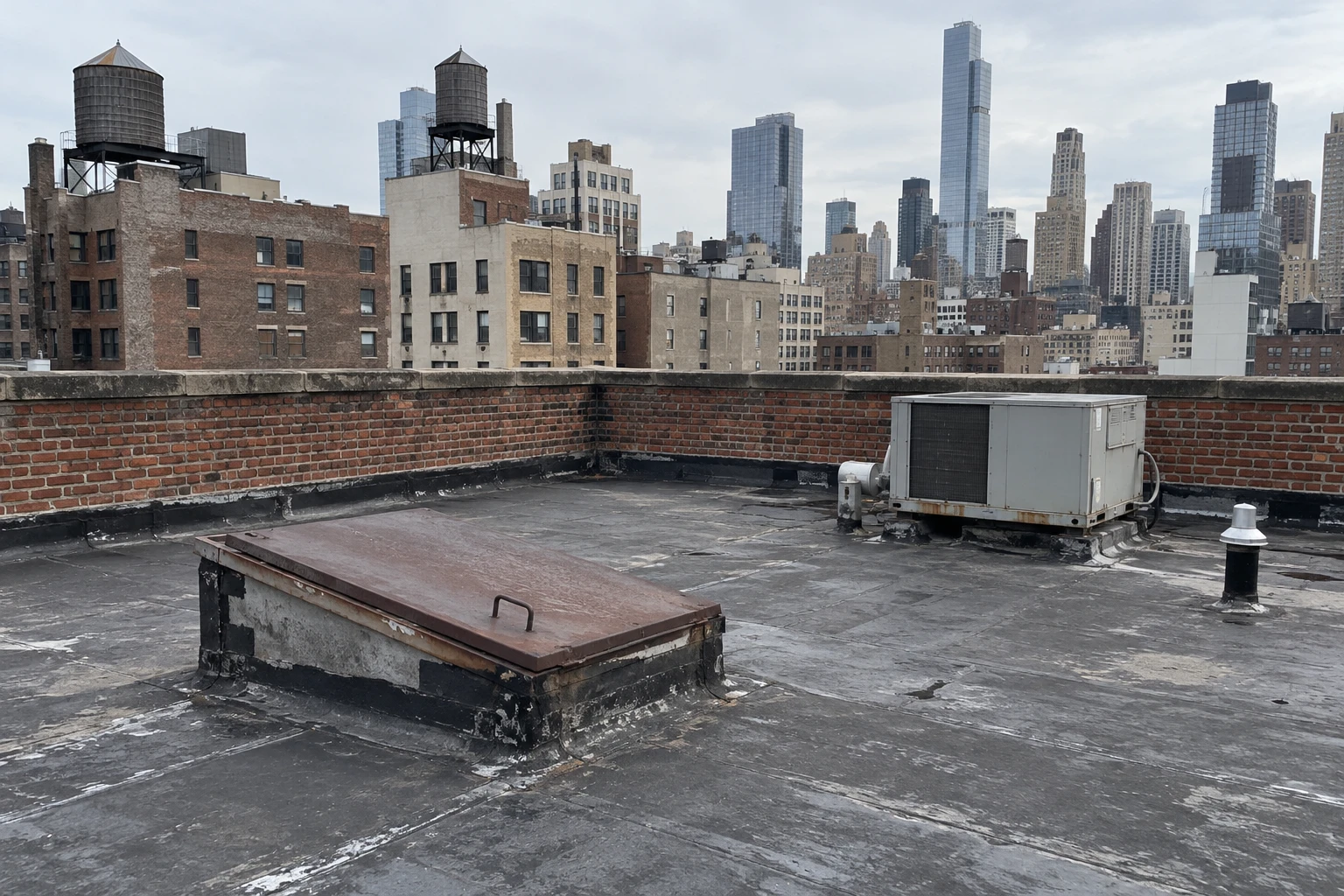
Foam needs a clean, dry, sound surface. It adheres to concrete, metal, wood and many existing membranes when prepared correctly, but not to roofs with wet insulation or surfaces contaminated by oil. The survey runs an infrared scan and core cuts, and wet areas are cut out and replaced before spraying. An old built-up roof that is dry and firmly bonded can serve as the base, which saves tear-off. A metal deck needs rust treatment.
On a roof with gravel, the gravel is removed or the surface is swept, and a primer is used. The substrate decisions go into the file with photographs, because the adhesion of the foam depends on them, and a failed bond is a failure of preparation rather than of the foam. A pull test on a sprayed patch confirms the bond before the full roof is done.
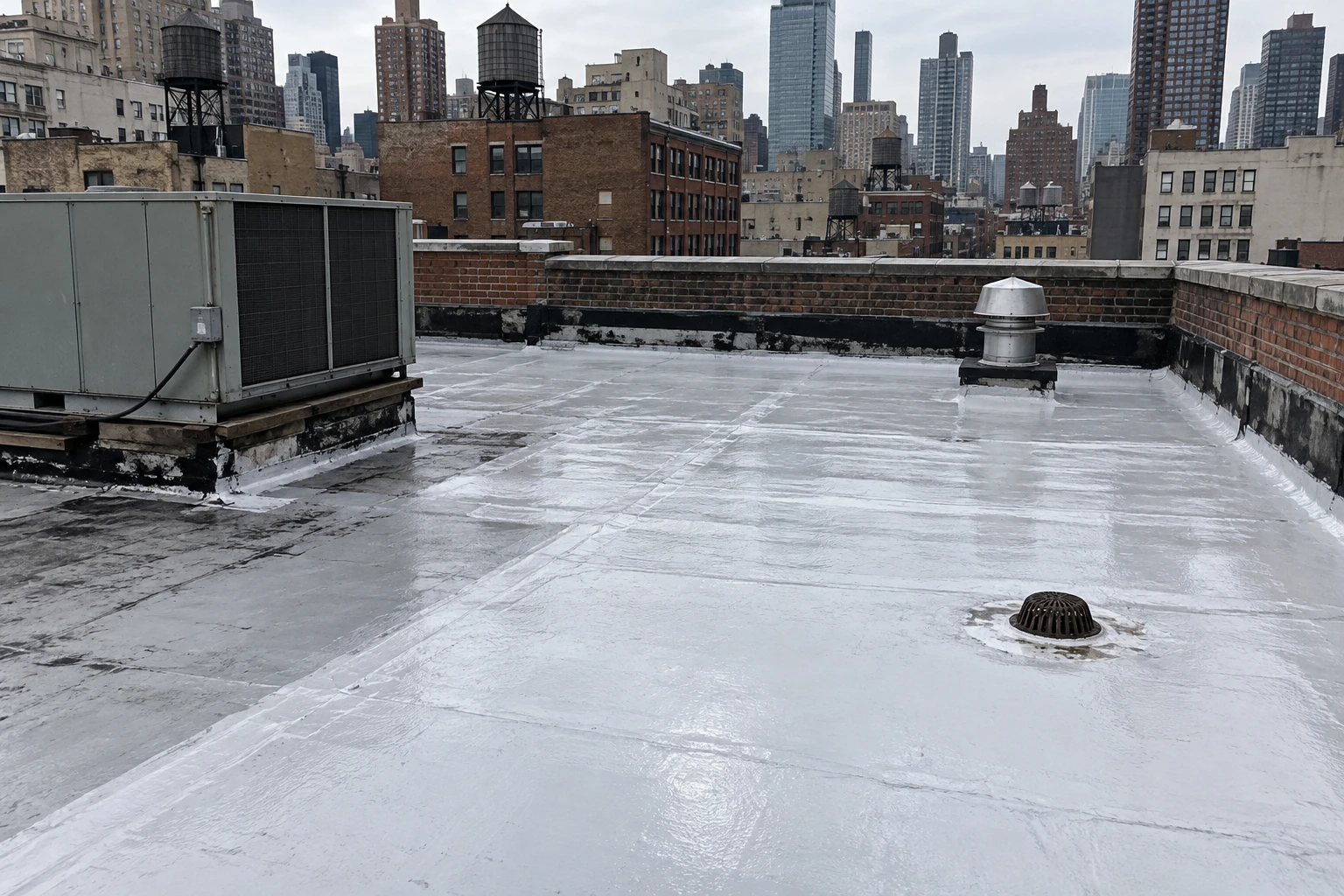
Penetrations get their own preparation. Each pipe, vent and curb is cleaned to bare, dry material, masked where needed, and primed so the foam bonds to the penetration as well as to the deck. Drains are protected from foam and coating so the strainers stay clear, and the foam is cut back at the drain bowl to leave a clean, sloped edge. The preparation takes more time than the spraying, and the photographs of it are among the most useful pages in the file, because every later repair starts with the question of what is under the foam at that spot.
How is spraying controlled in a dense city?
Wind carries overspray, the fine mist of foam or coating that drifts from the spray gun. With windows, parked cars and pedestrians below a Manhattan roof, drifting mist is a genuine hazard, so work halts once the wind passes a set speed, and screens surround the work area. The 78 mph gust of December 2, 1974 is the strongest on record at Central Park, but spray conditions turn marginal at far lower speeds. We watch conditions and stop when the margin is thin.
Temperature and humidity affect the cure, so spraying takes place within the manufacturer's ranges, and the crew logs readings. During spraying and the short cure period, air handlers that draw from the roof are shut or protected, and tenants receive notice of the days when odor is likely. For an occupied building the sequence follows the phasing used for occupied building reroofing, with a stricter eye on air intakes, stairwell doors and any window that opens onto the roof.
What does the protective coating require?
The coating shields the foam from sunlight, water and traffic. A silicone coating sheds water well and tolerates ponding. An acrylic coating is lighter and cheaper but wants a roof that drains. Granules may be broadcast into the coat for traffic areas. The coating needs inspection each year, cleaning when dirty and recoating when worn through, and recoat intervals are planned in the reserve study.
Foot traffic and dropped tools are the everyday threats to the coating. Walk pads along service routes keep the coating intact. A puncture in the coating exposes foam to UV and water, so repairs are made promptly with compatible material. Foam is repaired by cleaning, trimming and re-spraying or patching, and the log records each repair with its location.
Where does foam suit waterfront and flood-exposed buildings?
Secaucus sits at an elevation of 7 feet, and water covers 10.96 percent of the town's area, so drainage and flood exposure matter for roofs across the Hudson waterfront. Hurricane Sandy flooded parts of Battery Park City on October 29, 2012, and a 14.06 foot surge was recorded at The Battery. Those are ground-level events, but they remind owners that rooftop drains and curbs must work when streets and sewers are overwhelmed, a point Ida made from above with 3.15 inches in a single hour on September 1, 2021.
Foam's closed-cell structure resists water absorption, and the monolithic surface has no seams that rain can enter. Built-in slope toward drains is a plus where ponding has been an issue. The survey records drain locations, sizes and the paths between them, and we adjust the foam thickness to build the slope the roof needs.
What goes into the owner's file?
The substrate findings, the thickness readings at each gauge point, the product batches, the weather log, the coating thickness, the adhesion test results, the warranty terms and the recoat schedule. For a full replacement, the sustainable roofing zone plan under Local Laws 92 and 94 joins them. A foam roof under an array or a green roof needs the structure and the details confirmed, and the file shows how.
Commercial Roofing Questions
Can foam go over our existing roof?
In many cases yes, if the existing roof is dry, firmly bonded and clean. The survey confirms dryness and bond, and wet areas are removed first. Some surfaces need a primer. A test patch shows whether the foam adheres.
How thick should the foam be?
Thickness follows the insulation value required by the energy code, the slope to be built and the manufacturer's range. We gauge it at set points and record the readings. Uniform thickness matters more than the highest number.
What happens if it rains while the roof is being sprayed?
Spraying stops, and unfinished areas are protected. Foam cannot be applied over a wet surface, and a rain-wetted section is dried and checked before work resumes. The crew plans each day's area so that foam and coating are both complete before the forecast turns.
Does foam suit a roof with many pipes and vents?
Yes, that is one of its strengths. The foam wraps around penetrations and the flashing is formed in the same pass of spray. Each pipe or vent is cleaned and primed beforehand, with the coating carried over the flashing's upper edge.