Roof surveys, drainage testing and replacement for Battery Park City, Manhattan, NY waterfront towers and residential buildings, with storm-readiness records.
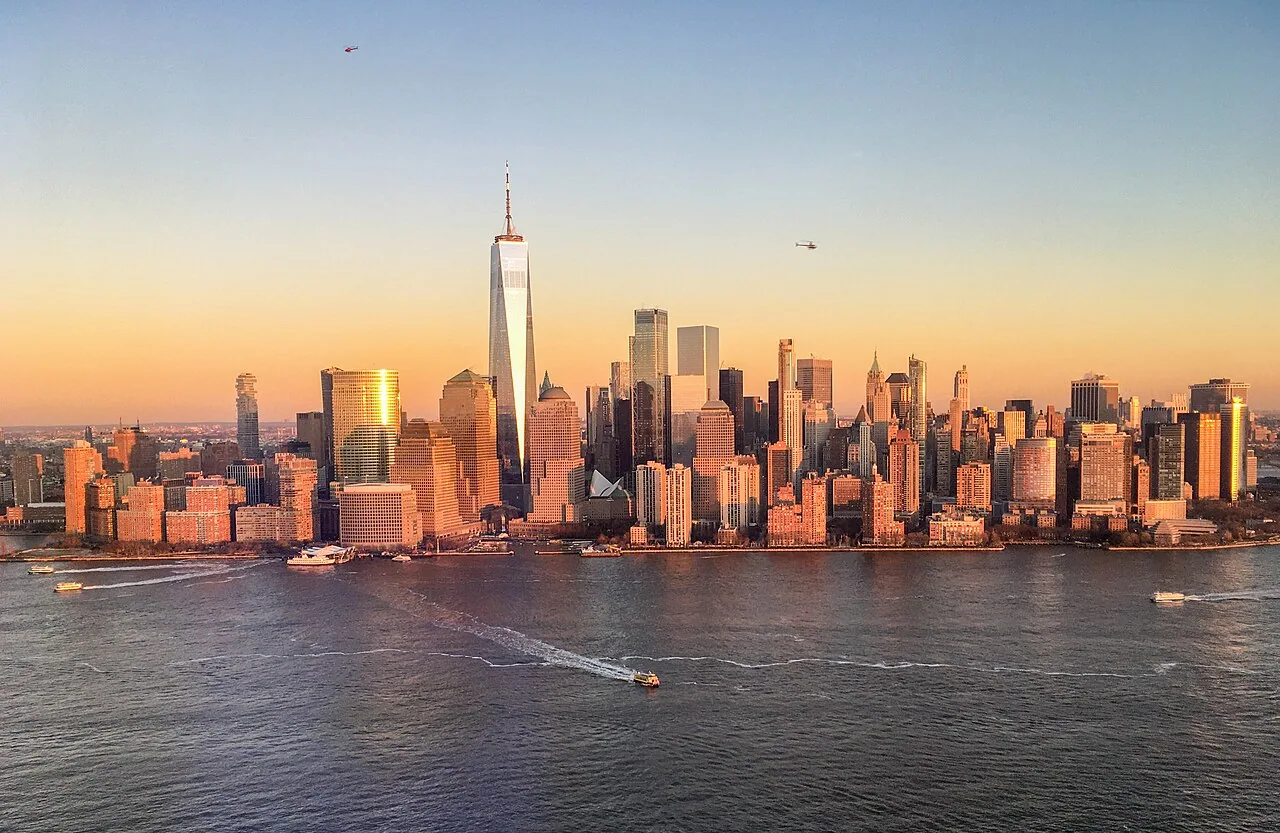
A roof drain test on a waterfront tower measures one number that matters here above any other: how many minutes it takes for a bucket of water poured at the drain to clear the strainer and leave the roof. Battery Park City covers 92 acres, 36 of them parkland, and Hurricane Sandy flooded parts of the neighborhood on October 29, 2012, including the ball fields and areas along West Street. The roofs above were not under that water, but the storm showed owners how much a building depends on drainage, power and pumps that fail together. In Manhattan, NY, a roof on the Hudson edge is read for drainage first, wind exposure second and age third. The survey is built in that order, and the report gives a board a record of readiness it can show an insurer.
What do the roofs in Battery Park City cover?
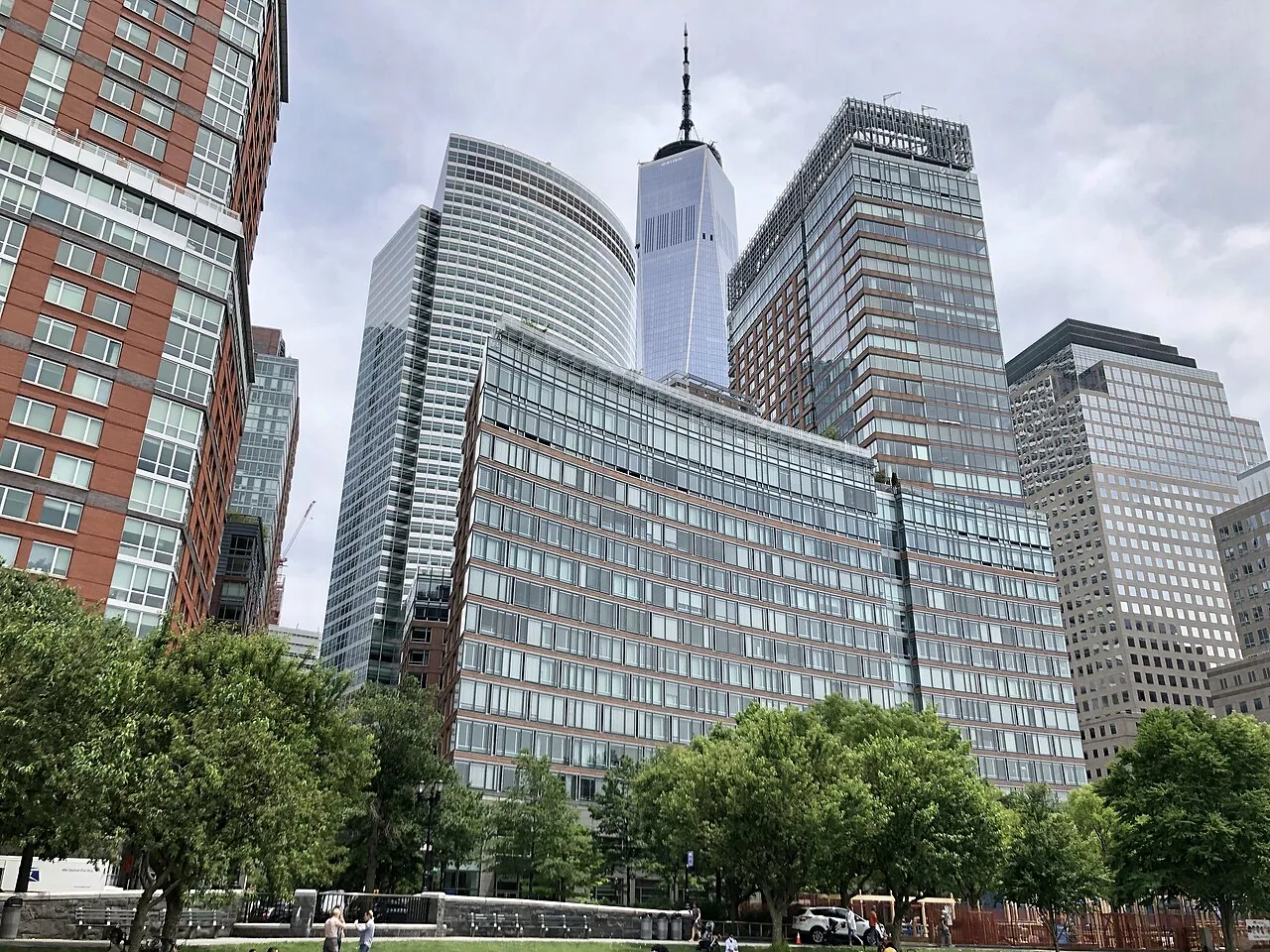
Residential towers, office towers and the low-rise buildings between them. The 200 West Street office tower, Goldman Sachs' global headquarters, has 2,100,000 square feet and opened in October 2009, so it is among the newer large buildings in the neighborhood. Residential buildings come from different decades and carry different roof assemblies.
The size of a building says nothing certain about its roof, so we read each directly: layers by core, flashings by hand, drains by test. Newer roofs get a baseline and a warranty file. Older roofs get a condition rating and a plan. The same scale covers both, so a managing agent with several buildings in the neighborhood can compare them and put money where the risk is highest. Terraces, planters and amenity decks, where present, are surveyed as roofs over occupied space.
How are drains and overflow paths tested?
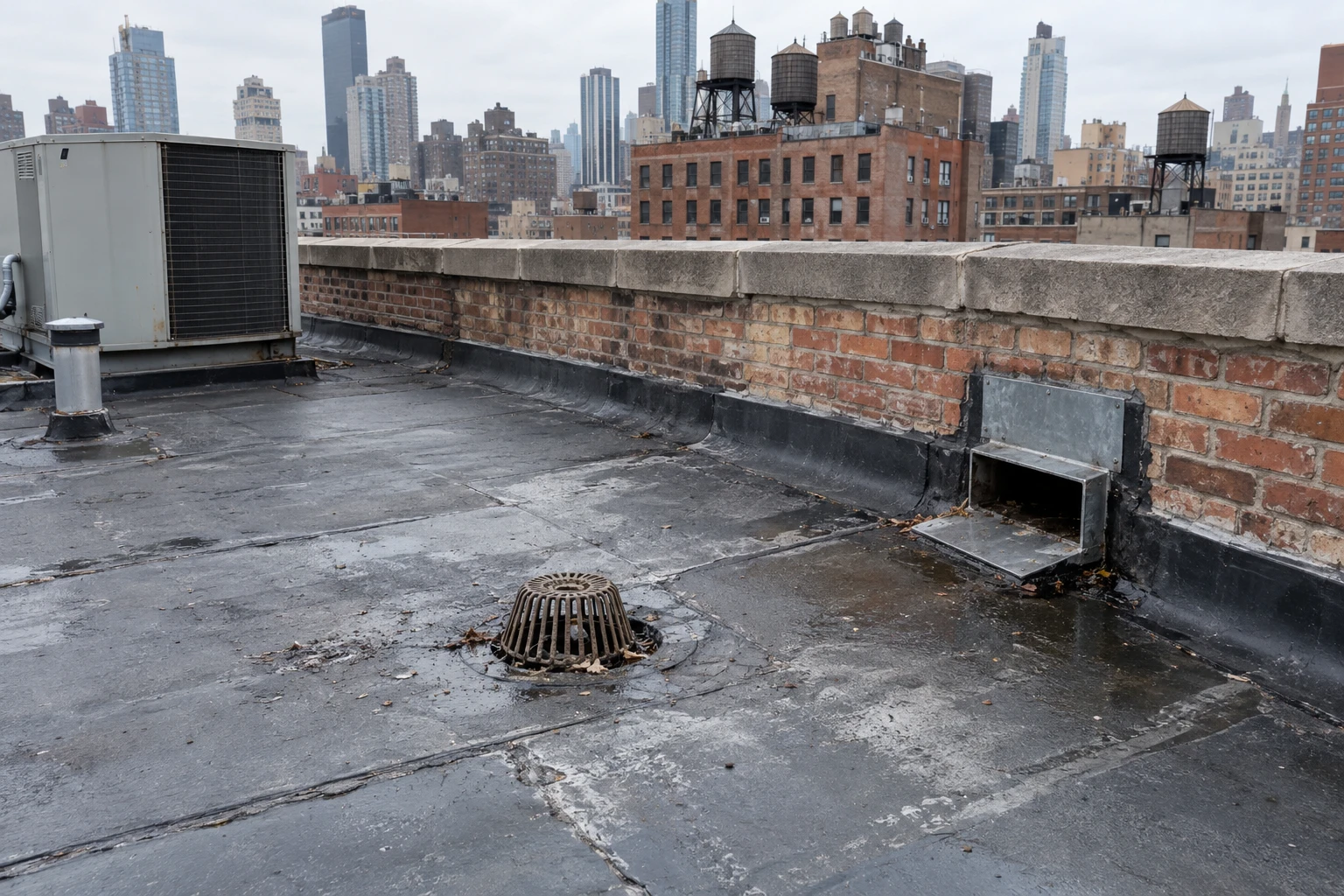
With water and a stopwatch. We clear each drain, pour a measured volume and time the flow. We trace the leader from the roof down to where it joins the building system where we can see it, and check strainers, overflow drains and scuppers. An overflow that is blocked, or sits too far above the primary drain, cannot do the job it was installed for.
The storm of September 1, 2021 is the extreme to design for: Ida left 7.13 inches in Central Park, 3.15 of them in a single hour. A roof that cannot shed that hour holds water against flashings, and a roof that holds water against flashings leaks. When the test fails, the fix may be as simple as a cleaned strainer or as large as a larger leader and a second overflow. The report lists each drain with its test time, so an owner can see which ones need work and which are ready. Where a leader has to be replaced, roof drains and scuppers are resized for the area they serve, and the overflow is set so that it opens before water reaches the base of a flashing.
Retesting follows every repair. A drain that passed in a dry week and failed after a storm has a different problem from one that was slow from the start, and the second visit shows which it is. We record the weather on each test day, the volume poured and the time to clear, so that the numbers can be compared across years without anyone having to remember the conditions. A log of those numbers is the most persuasive thing an owner can hand an insurer who asks how the roof was kept.
What did the storm teach about rooftop equipment and resilience?
Sandy's surge at The Battery stood 14.06 feet above average low tide, and Lower Manhattan south of 39th Street lost power. Flood barriers around parts of South Cove and Rockefeller Park are part of the Northwest Battery Park City Resiliency Project, planned for 2026 through 2031. These are ground-level measures, but any owner who places critical equipment on an upper floor or roof adds load and penetrations to that roof.
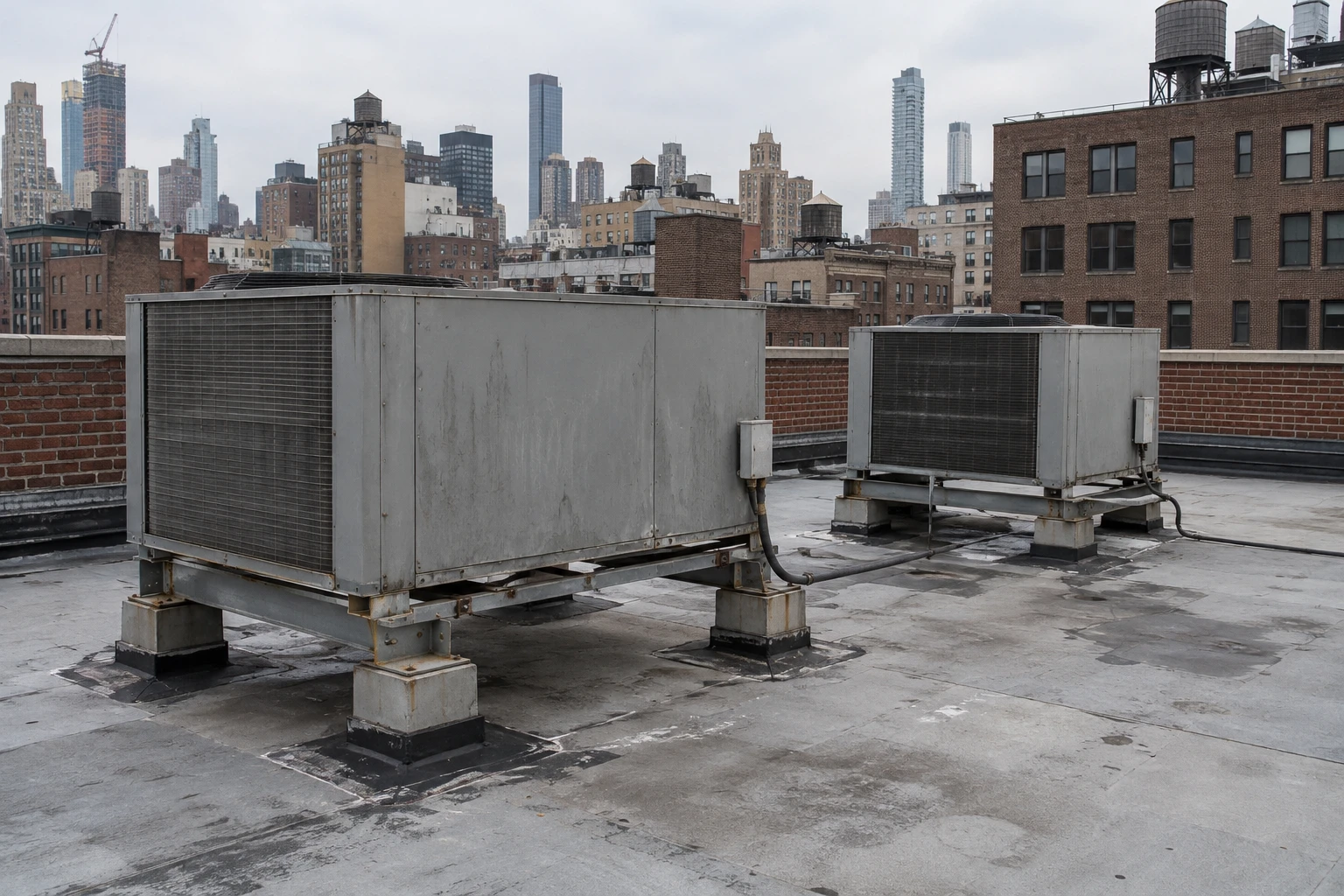
More equipment means more curbs, more supports and more penetrations. We survey rooftop equipment curbs and supports as the part of the roof that matters most to resilience: a flooded basement can be pumped, but a leak into an electrical room on an upper floor can shut down a building. The report ranks equipment locations by what sits below them and puts the highest-consequence curbs first on the repair list.
How does the waterfront edge change wind and weather exposure?
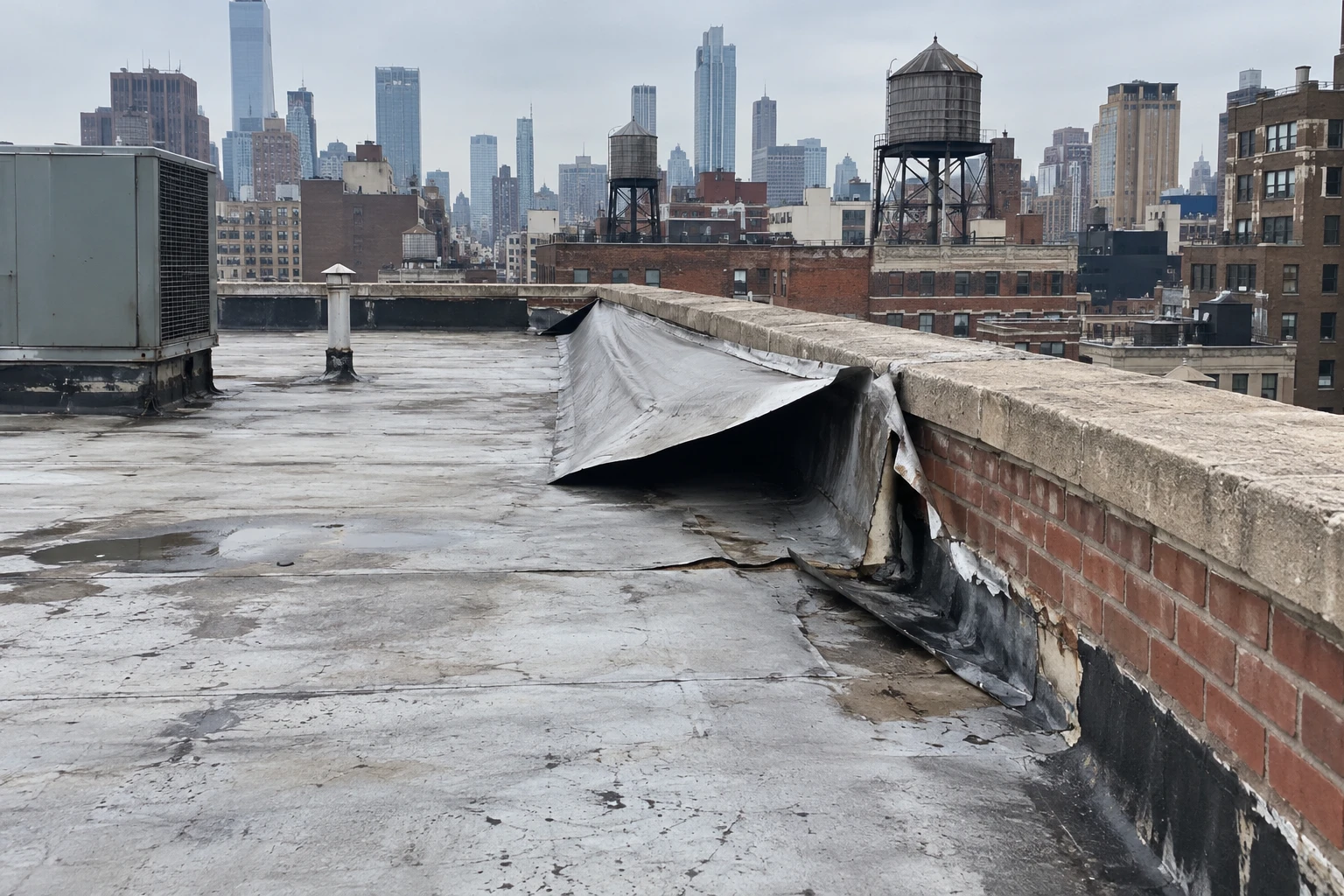
Open water on the west side means a clear run for wind, and Central Park's strongest gust was 78 mph on December 2, 1974. Uplift at roof perimeters and corners is the concern, and we check edge metal, copings and perimeter attachment for looseness. Fasteners that have backed out, sealant that has cracked and copings that have shifted are repaired before the cold season, when wind and snow arrive together.
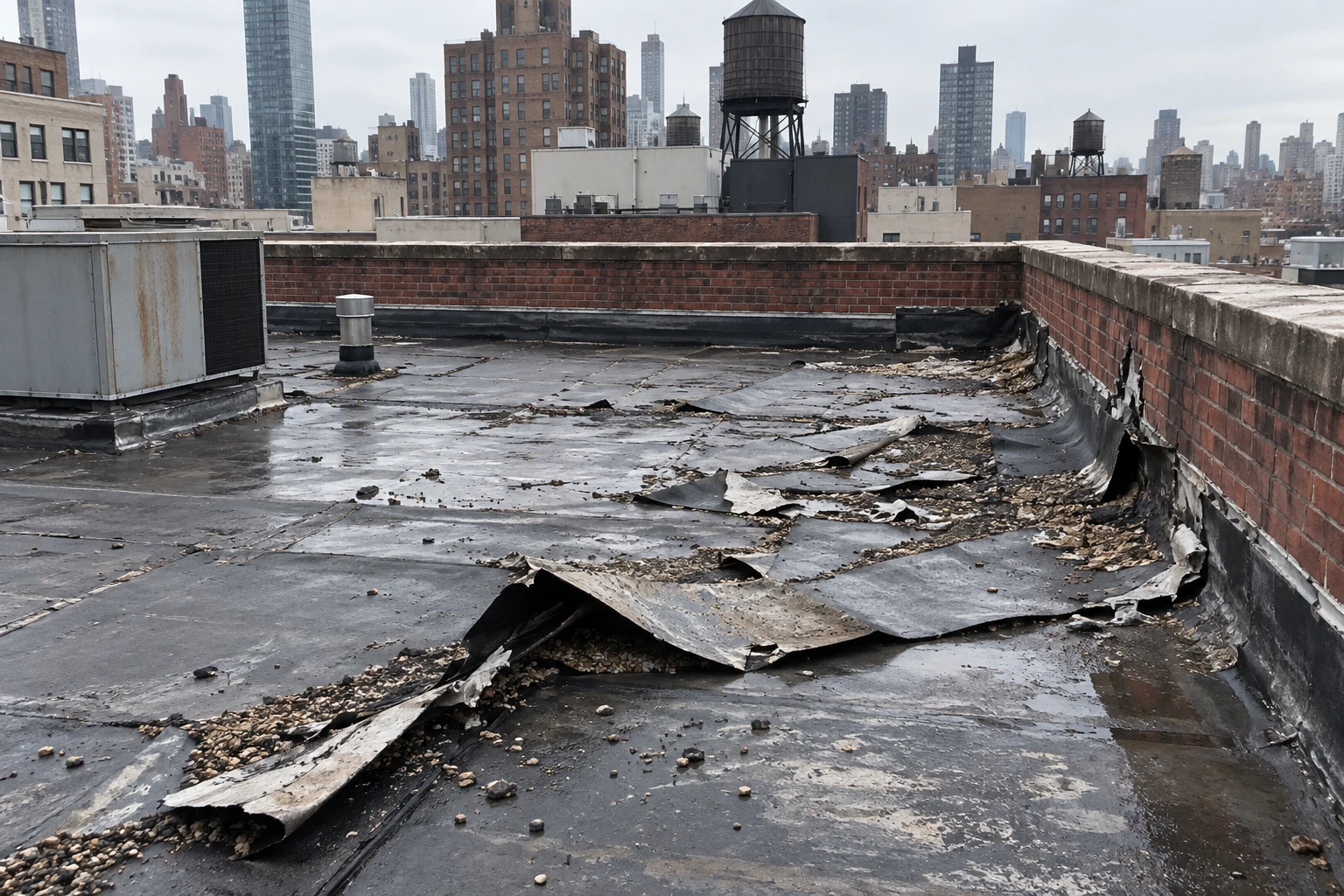
Snow loads and heat follow. Seams and sealants cycle through a wide range, from the 106 F Central Park has recorded to winters that bring 29.8 inches of snow. A wind damage repair after a storm begins at the edge and works inward, and every repair is logged with the storm date. If a building suffers a loss, the log and the baseline photographs support the claim.
How should a managing agent plan the work?
Around the building's use and the neighborhood's logistics. Streets near the water can have limited truck access, and staging space is tight; we confirm both at the first visit. We plan deliveries for off-peak hours and keep materials on the roof in weight-limited stacks. Residents receive notice of dates and hours, and noisy work stays inside agreed windows. A full replacement here draws in Local Laws 92 and 94 of 2019 and a roofing zone that solar, a green roof or both must occupy, so layout is set before equipment is placed. Neighbors such as the Financial District and Tribeca share many of the same logistics.
What should the board or owner keep?
The drain test table, the equipment map, the baseline photographs, the core cut results, the storm-day repair logs and the warranty terms. A hurricane damage roof repair file begins with the baseline, and without it the claim starts from zero. Add the dates of each drain test, the names of the people who attended and the photographs of each strainer before and after cleaning, so anyone reading the file later can see how the roof was managed through the seasons.
Commercial Roofing Questions
How often should drains be tested on a tower roof?
Twice a year at minimum, before winter and after the thaw, and after any severe storm. Each test is timed and logged. A drain that slows between tests tells us a blockage is forming.
Does an overflow drain have to be separate from the main drain?
It should have its own path out, so a blocked main does not take the overflow with it. The code and the building's design set the details. We check that the overflow is clear and set at the right height.
What records help most after a storm claim?
A dated baseline with photographs, drain test times, and the log of repairs made before the storm. These show the roof was maintained and what changed.
Can equipment be added to the roof for resilience?
Yes, with structure confirmed, curbs built and flashed correctly and drainage kept clear. We review the layout before the equipment is ordered.
What if a storm cuts power to the building?
A roof drain does not need power, which is a reason to keep gravity drainage clear and tested. Rooftop equipment may stop, and the roof should be checked for debris and loose items once the weather clears. We log the date, the findings and any repairs, and we keep temporary dry-in material ready for any damage the storm leaves.