Roof surveys, repairs and replacements for manufacturers with Manhattan, NY loft, garment and light-industrial buildings, scheduled around production.
A floor plan laid over a moisture map is the quickest way to find which production line sits under a wet corner of the roof. The core cut answers the roof side of the question, and the plan answers the other. In Manhattan the buildings are old, and the 1987 Special Garment Center District zoning restricts manufacturing in large portions of the area it covers, so a maker here is often in a multistory building whose roof is small, shared and hard to reach. That roof protects inventory, equipment and a schedule that customers depend on. Send the production schedule and the equipment layout with the first request.
Roofs over manufacturing space are surveyed, repaired, coated and replaced around the shift calendar.
Where does manufacturing sit in Manhattan's building stock?
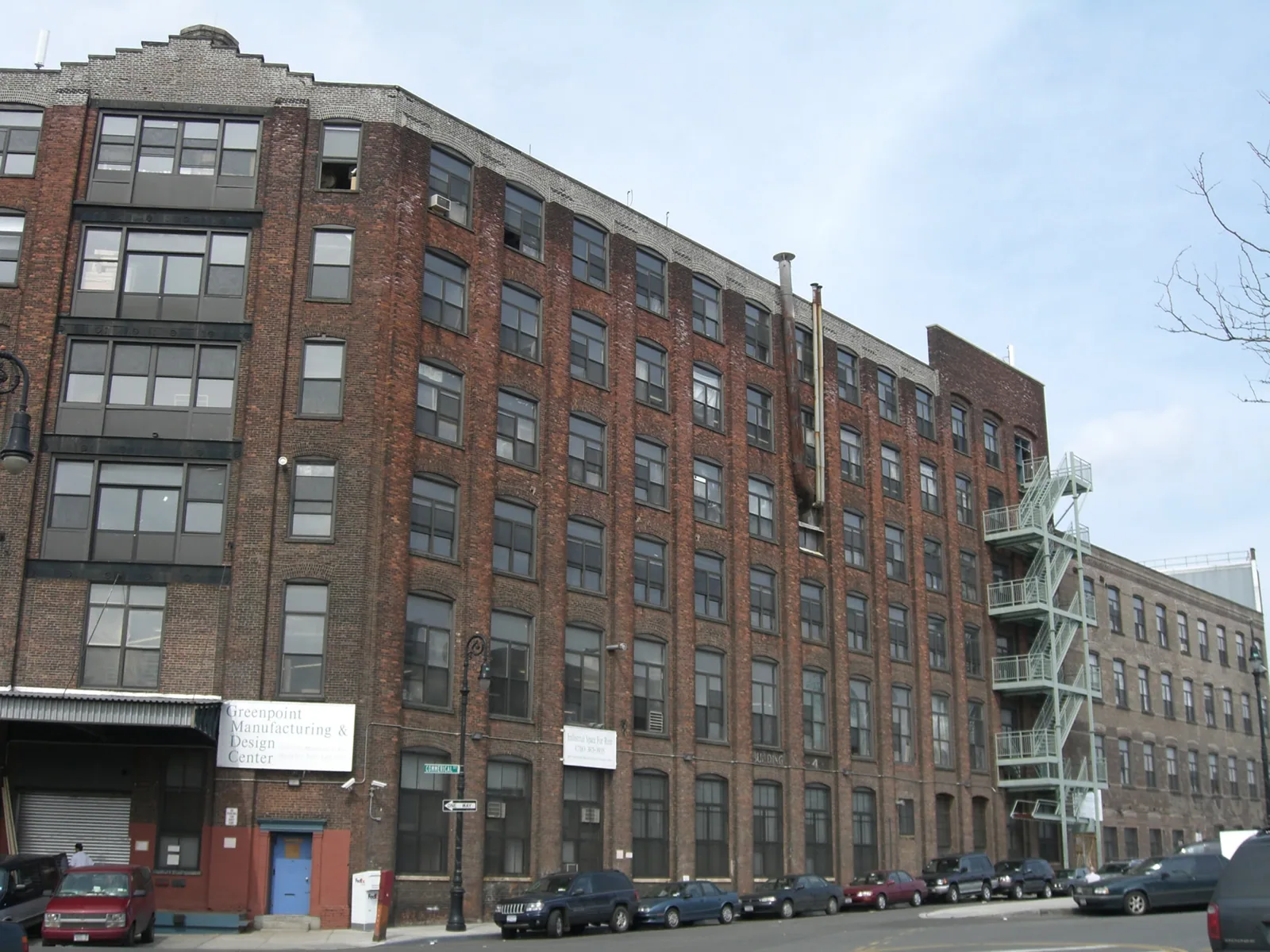
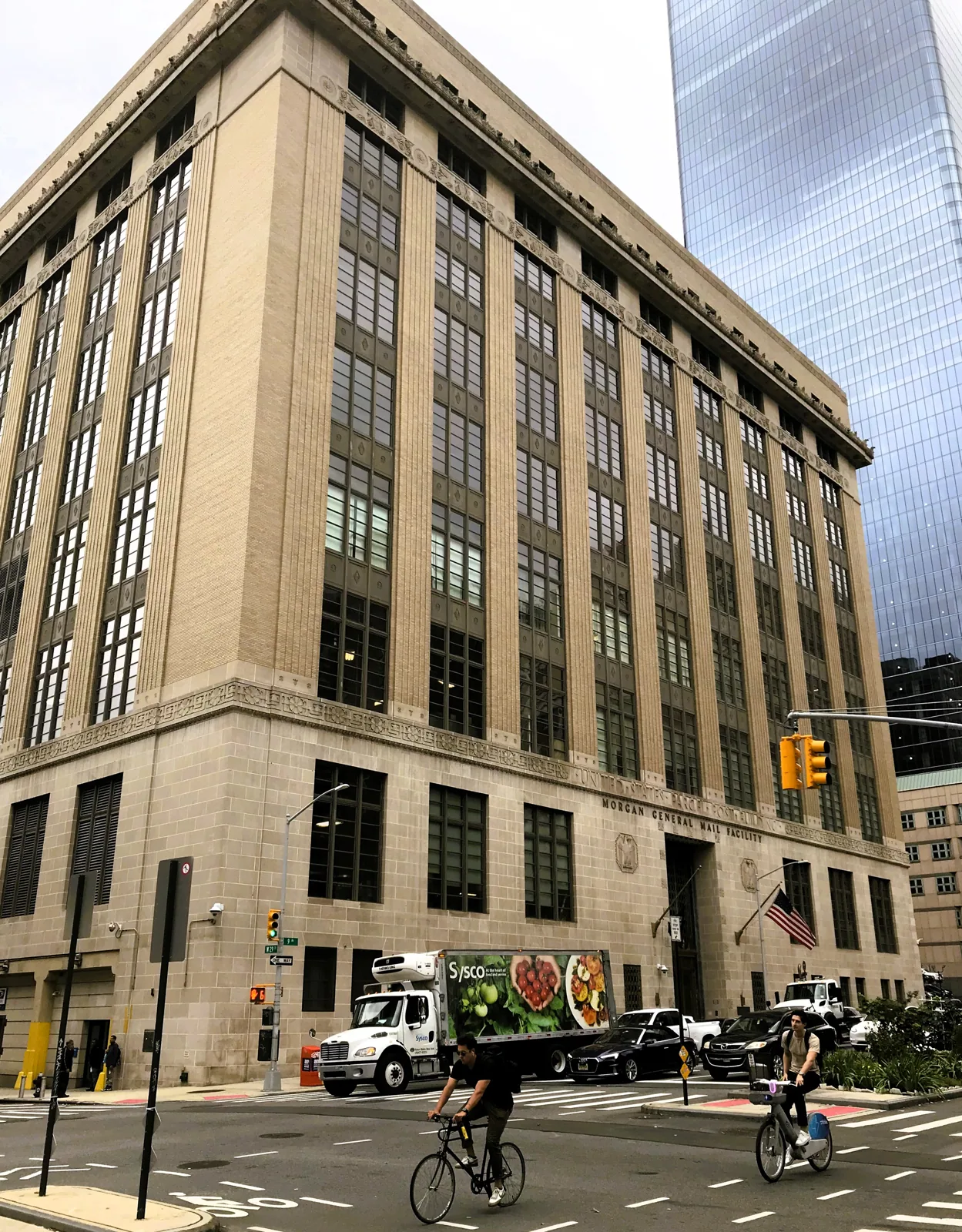
The Garment Center Historic District is a 74 acre National Register district whose buildings date to 1916. The 1987 Special Garment Center District zoning, which covers West 35th to West 40th Streets between Broadway and Ninth Avenue, restricts manufacturing in large portions, and the City Council's August 2025 approval of the Midtown South Mixed-Use Plan moved 42 blocks out of manufacturing-only zoning. The Starrett-Lehigh Building on West 26th Street, a freight terminal and warehouse that filled a full block when it went up in 1930 and 1931, became a city landmark in 1966. At the north end, Sherman Creek's industrial area in Inwood, with its subway, bus and sanitation depots, is bounded by Dyckman Street, Tenth Avenue and 207th Street.
The range runs from older multistory buildings made for making and moving goods, some now converted, to a few industrial pockets uptown. The survey reads what is actually on each roof and rates it. A manufacturer in a landmark district also faces review of changes visible from the street, which adds lead time to a replacement.
How is roof work kept from stopping a production line?
Production shapes the plan. The first questions are which lines are sensitive to dust, vibration, noise or fumes, which areas hold finished goods that cannot get wet and when the shifts change. Work proceeds in sections, each section is opened, mended and sealed the same day, with temporary protection holding overnight, and materials are staged away from loading routes and delivery times.
Hot work needs a permit and a fire watch, and near stored materials cold-applied or mechanically attached systems are preferred. Where finishing or packaging is sensitive, air intakes are protected and penetrations sealed before the work starts. The occupied building reroofing method fits this situation, and the plan is written for the plant manager to review. One named contact should have the authority to stop the crew if conditions change.
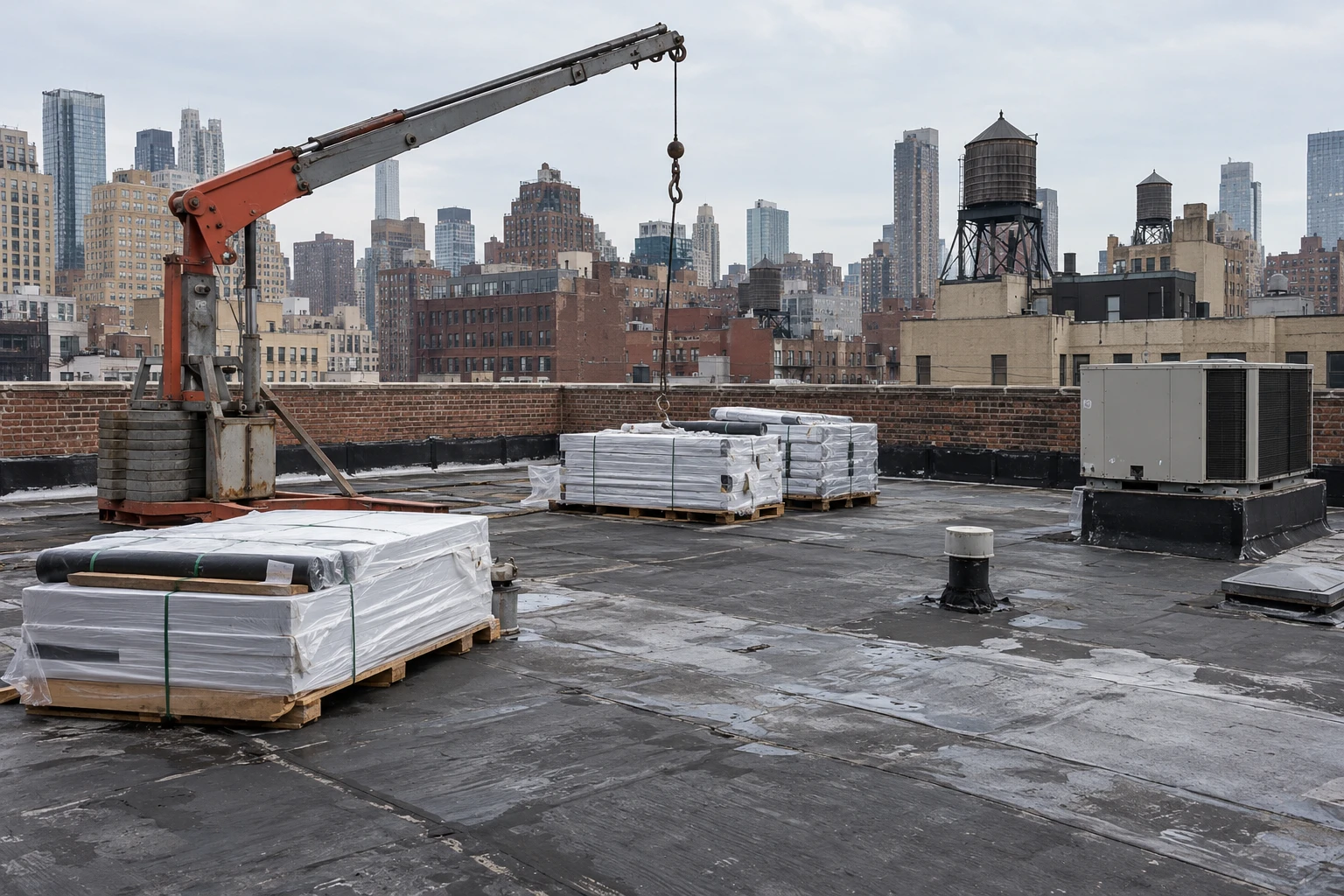
Deliveries matter as much as noise. A manufacturer receives raw material and ships product at set times, and a hoist or staging area that blocks a loading door costs more than the roofing delay. Loading routes are mapped on the first walk, and the hoist, the chute and the material stack go away from them. On a narrow street, deliveries to the roof are timed for the hours when the dock is quiet. Neighbors in the building, including logistics and 3PL operators that share a freight corridor, get the same notice.
What does extreme rain do to a manufacturing roof?
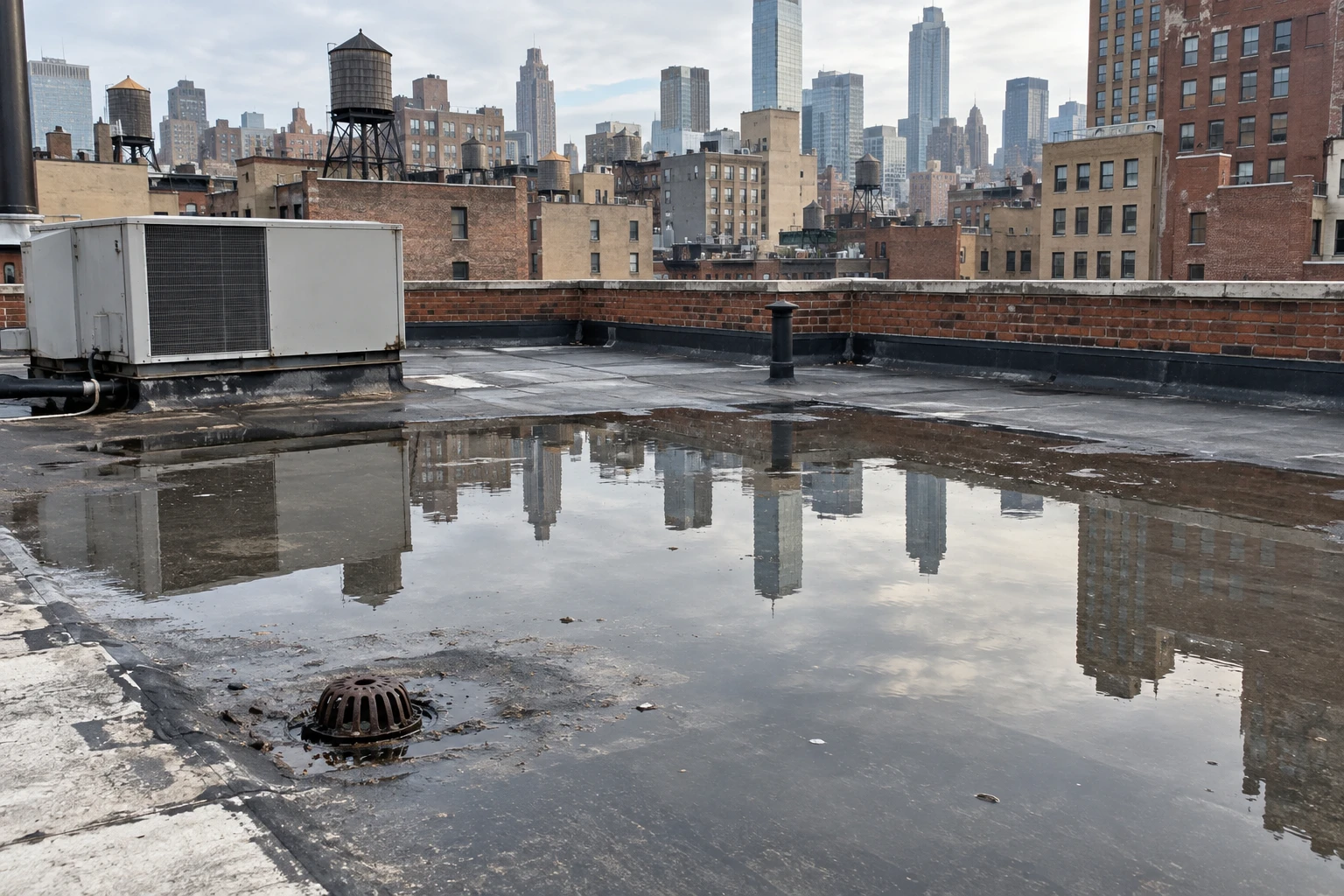
Ida's September 1, 2021 storm delivered 3.15 inches across the city in one hour, and Central Park totaled 7.13 inches by the end of the day. A drain system that cannot keep up lets water stand against parapets and curbs and find the flashing that was marginal. Over a manufacturing floor, a few drips mean damaged inventory and an interrupted run.
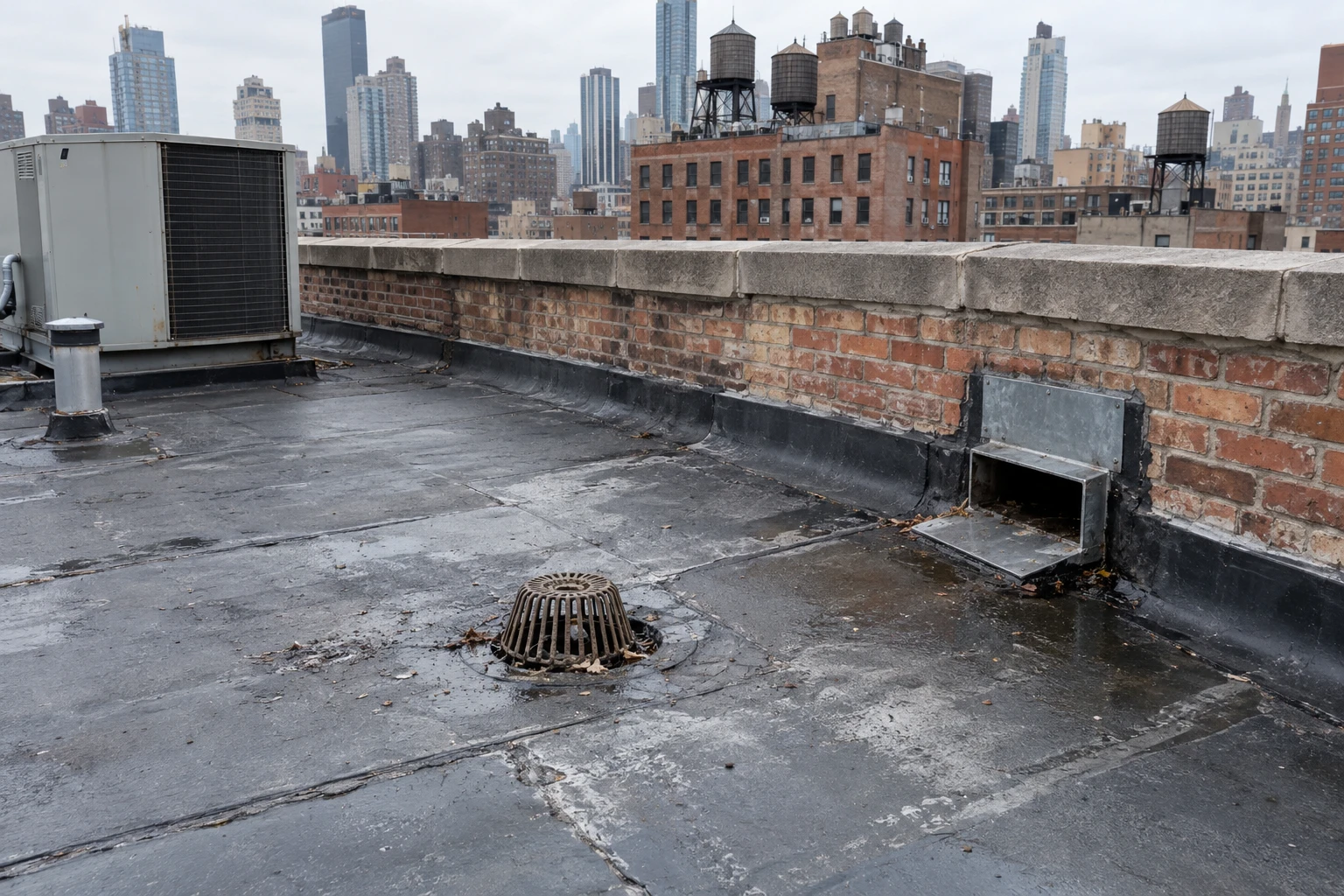
Drain capacity and leader condition are checked early, because a leak over equipment is costly. A roof drains and scuppers correction is often the first item in a plant's roof plan. Where a roof has ponded, the cause may be drainage, slope or both, and a ponding water repair addresses each. The depth of any pond after a heavy rain, with the date, belongs in the plant's facility log.
Snow and cold matter as well. Central Park averages 29.8 inches of snow a year and recorded a 27.3 inch fall on January 23, 2016, and heated space under a cold roof produces condensation when the vapor retarder is weak. Frost forming beneath the deck, or drips from a cold duct, can pass for a roof leak, so the survey checks the interior first. A correct diagnosis spares the plant a membrane repair that could never stop condensation.
How do exhaust, process equipment and heavy loads change the roof?
Weather is only part of what a plant roof carries. Exhaust fans, makeup air units, dust collectors and process vents all pierce the membrane, and each can drip onto or corrode the surface around it. Chemical vapors can attack some membranes, grease or oil near a vent shortens a roof's life and service staff walking to the equipment wear a path in the surface.
The survey records every penetration, the chemicals exhausted and the walking routes. Membranes are chosen to tolerate the exposure, such as a PVC roofing system near grease or chemical exhaust, and walkway pads are added along the routes. Equipment supports are checked for load and flashing. The production engineer's list of exhausted substances decides the membrane, so it is worth gathering early.
Fire and insurance requirements deserve a line. A manufacturing occupancy often has its own insurer, which may require a rated roof assembly, a hot-work policy and a record of inspections. The assembly information, the permit and the inspection records go to the insurer on request, and any difference between the proposed assembly and the existing one is flagged. Before the contract is signed, the scope should go to the plant's risk manager.
How should a manufacturer plan roof spending?
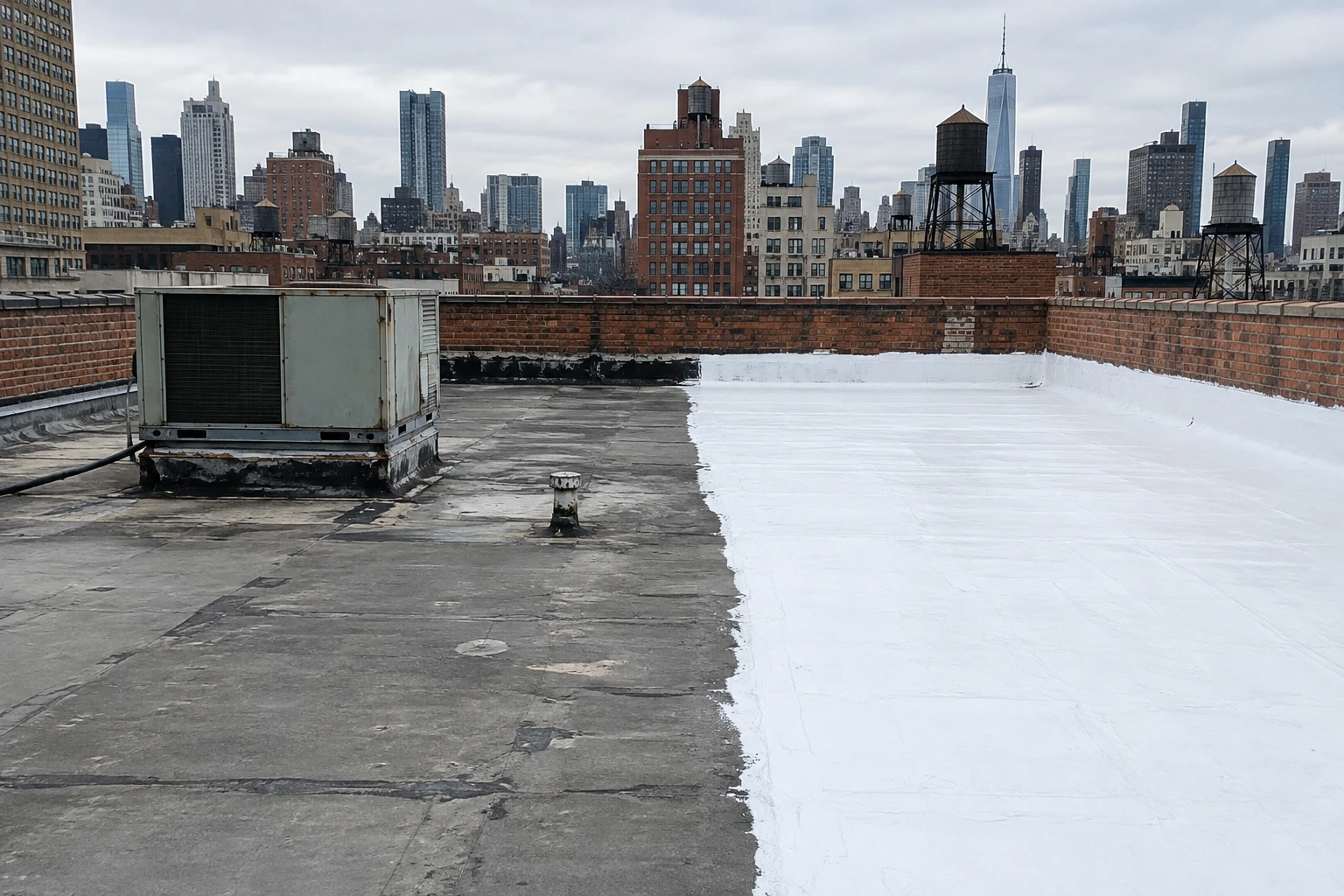
Roof spending is planned against production and lease terms. A rated survey shows which roofs hold dry insulation and can be coated and which need replacement. A coating, as in roof coating restoration, suits a dry roof, while replacement suits a wet one, and inside the city a replacement answers to Local Laws 92 and 94 of 2019, which reserve the sustainable roofing zone for solar, a green roof or both.
A tenant manufacturer needs to know who owns the roof, because a lease may assign repair duty to either party. The record lets tenant and landlord, often one of the property management companies that run loft buildings, agree on scope. A maker in Chelsea or the Garment Center can share the plan with its landlord. The plan is updated after each survey and kept with the lease file.
Commercial Roofing Questions
What decides whether to coat or replace the roof over a plant?
The moisture map and the core log. A dry assembly with a sound membrane can take a coating that extends service life, while wet insulation spread across the roof calls for replacement, because a coating would seal the water in.
Is off-shift work available to protect production?
Often, with notice. Off-shift and weekend hours lower the disruption, so noisy or hot tasks go there, and building rules and neighbors set the limits, which are confirmed in advance.
How are finished goods shielded while the roof is open?
Sensitive stock is located and covered with overhead barriers if needed, and work above it is timed for when it has been moved. What must stay dry, and where it sits, is the first thing to tell us.
Who is responsible for the roof in a leased loft?
The lease says. The survey and the scope supply the facts, and the parties assign the cost. When there is a dispute, the lease clause should arrive with the request so the scope can be written to match.
What happens if a storm hits during the work?
Every section is sealed before the day ends, which keeps the roof weathertight overnight. When a storm is forecast the schedule shifts and the section under way is dried in first.