KEE and PVC-alloy roofing for Manhattan, NY hospitals, labs and kitchens: chemical exposure surveys, plasticizer retention, welded seams and long-term records.
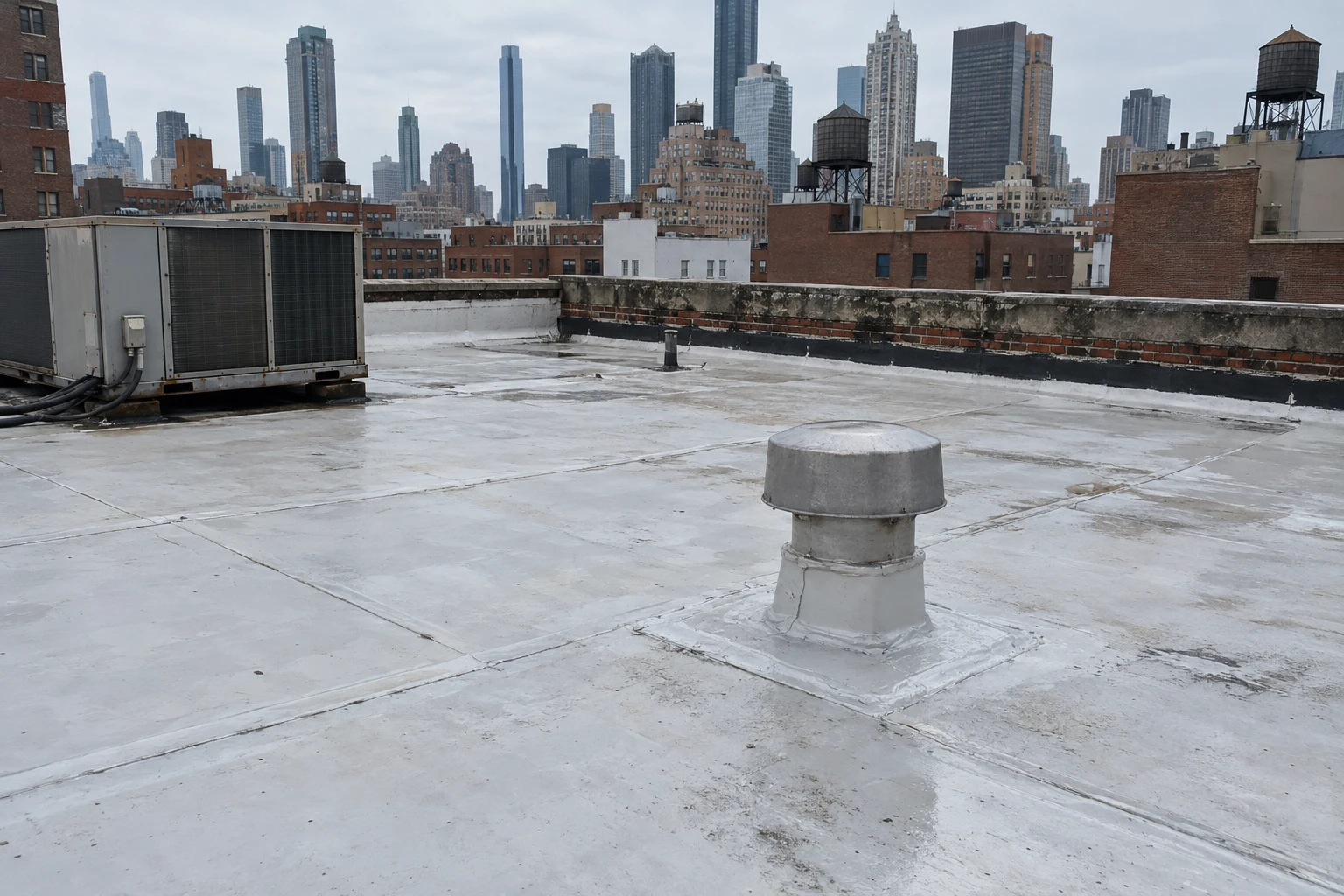
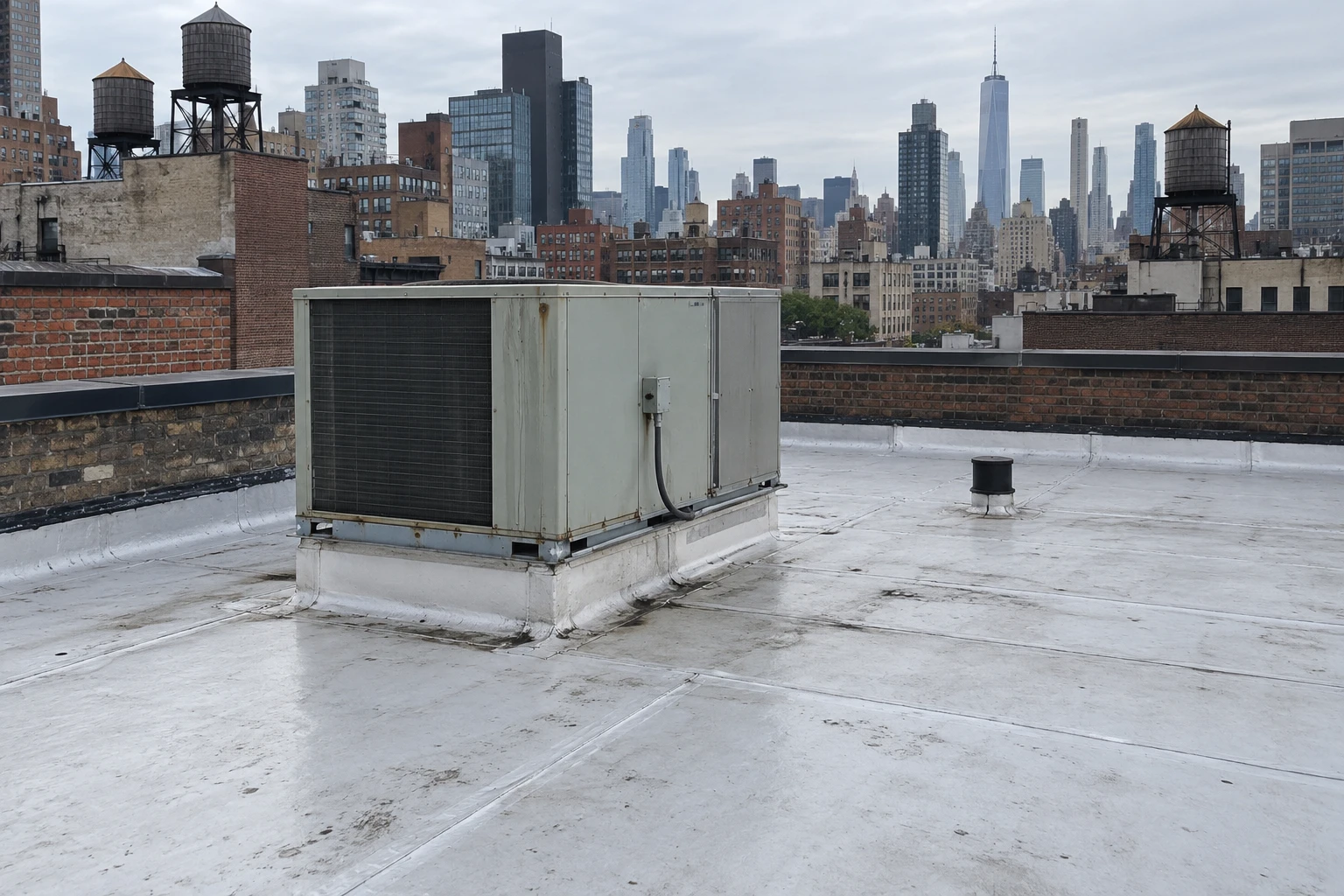
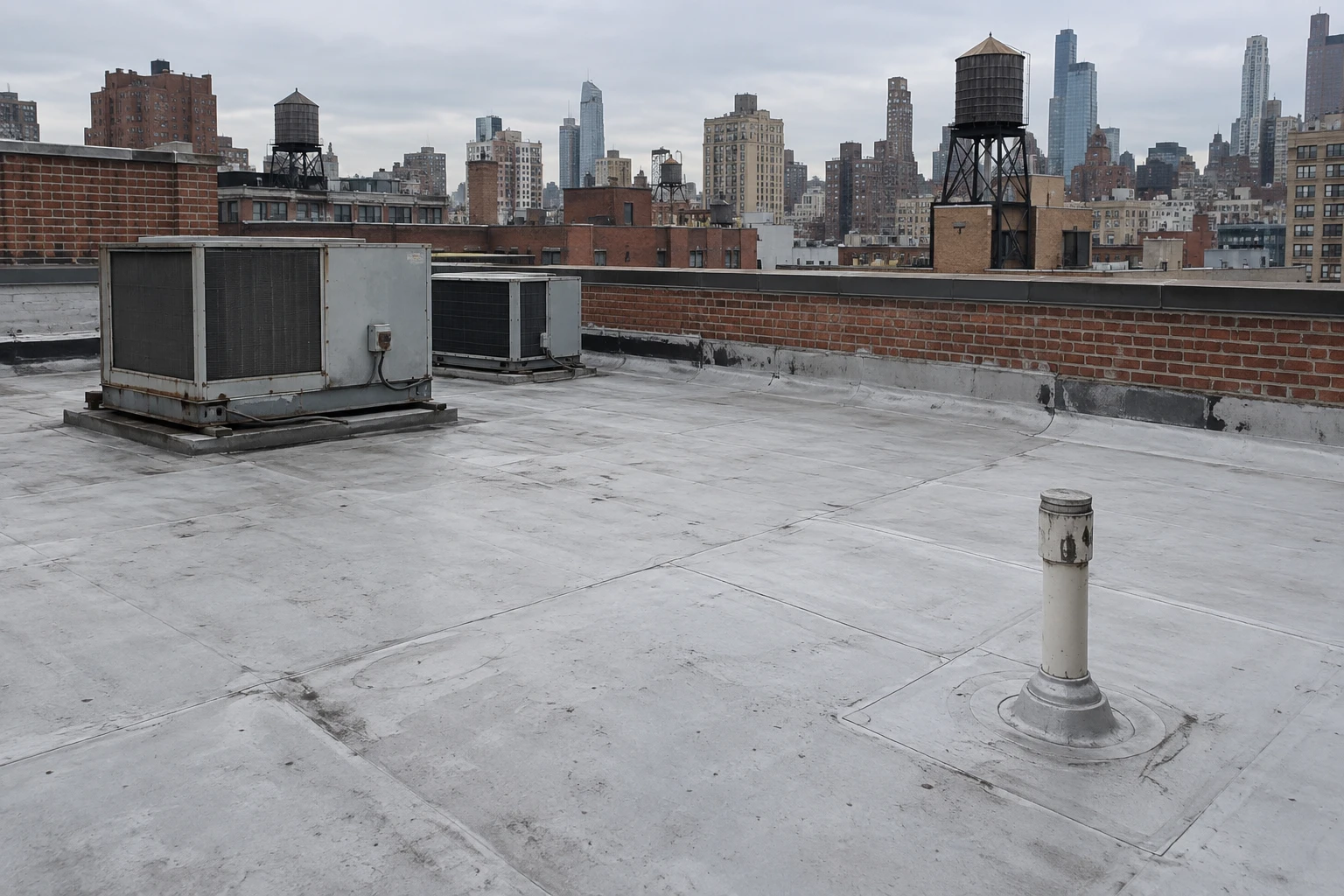
Two coupons cut from the same roof tell a story that the surface alone cannot. One, taken from the field far from any vent, is supple and bends without cracking. The other, taken from the zone around a laboratory exhaust, is stiff and shows hairline crazing. The difference is plasticizer, the ingredient that keeps a PVC sheet flexible, and its loss is the quiet failure mode of membranes that live downwind of chemicals, solvents and heat. KEE, short for ketone ethylene ester, is the plasticizer-retaining alloy used in a family of PVC-based membranes built for those conditions. In Manhattan, NY, hospitals, research buildings and commercial kitchens place discharge points close together on roofs that cannot be taken offline, and the coupon test is how a survey separates a roof that needs a standard membrane from one that needs an alloy.
What is KEE, and how does it differ from standard PVC?
A KEE membrane is a thermoplastic sheet in which the ketone ester acts as a permanent plasticizer, so the sheet stays flexible as it ages and when it is exposed to oils, fats, solvents and many acids and bases. Standard PVC resists many of those too, but its plasticizers can migrate out over time, especially under heat and chemical exposure. The alloy is meant to retain them.
The sheet is welded with hot air like other thermoplastics. The seams fuse into a single piece, and the welds hold under the chemical exposure that would attack an adhesive joint. The price is higher than that of a basic single-ply, and the product category is narrower, so it is specified where the exposure justifies it. A survey that finds no unusual exposure will not point to KEE, and we say so.
Which Manhattan roofs justify an alloy membrane?
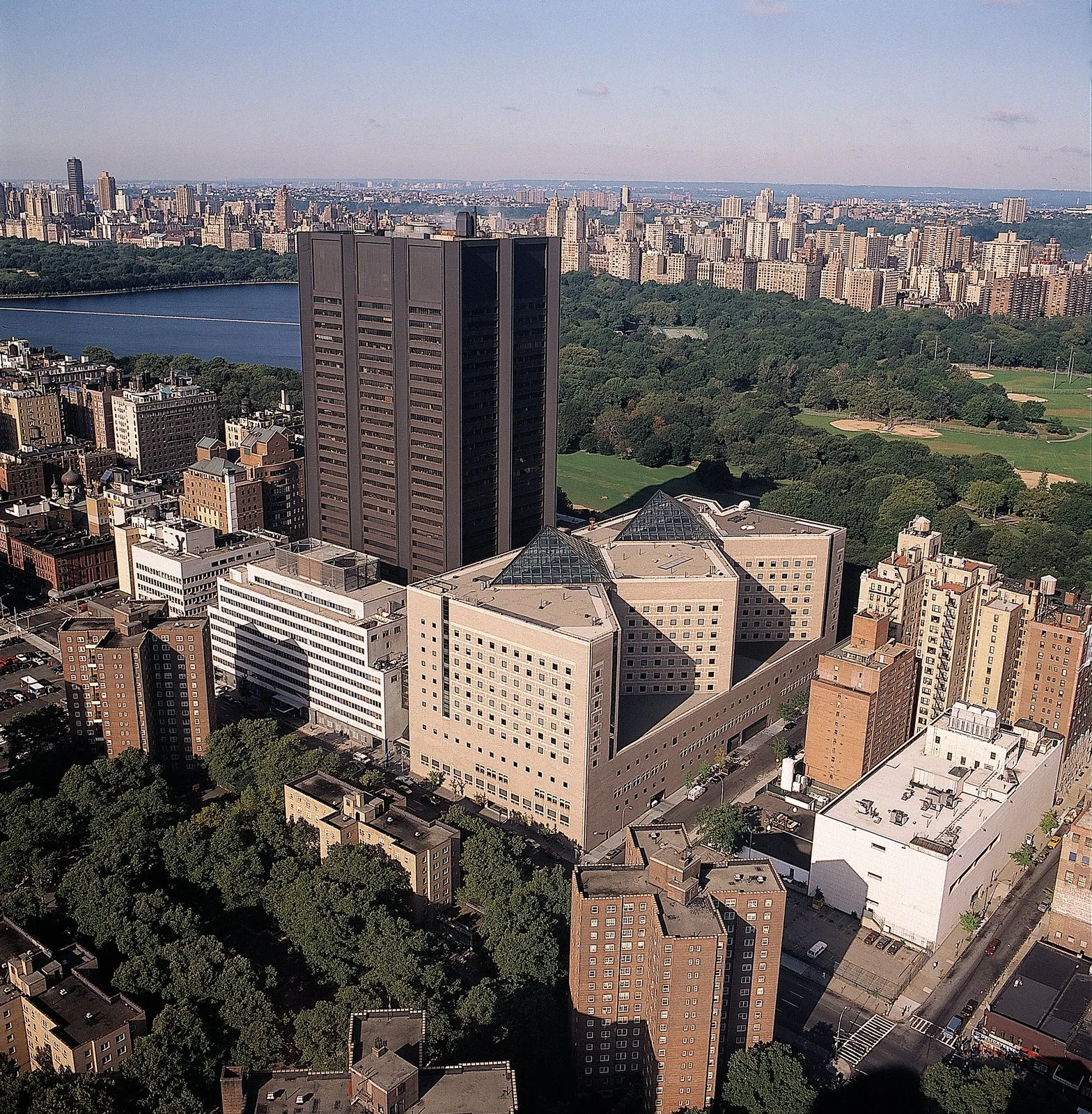
Roofs with persistent, concentrated exposure. Hospital and university employers are concentrated in several districts: NewYork-Presbyterian/Columbia in Washington Heights, Bellevue and NYU Langone in Kips Bay, and Lenox Hill and Weill Cornell on the Upper East Side. Medical and research buildings in general run laboratories, kitchens, sterilization equipment and generators whose exhaust crosses the roof, and a roof near that discharge sees chemical vapor, heat and grease on a daily basis.
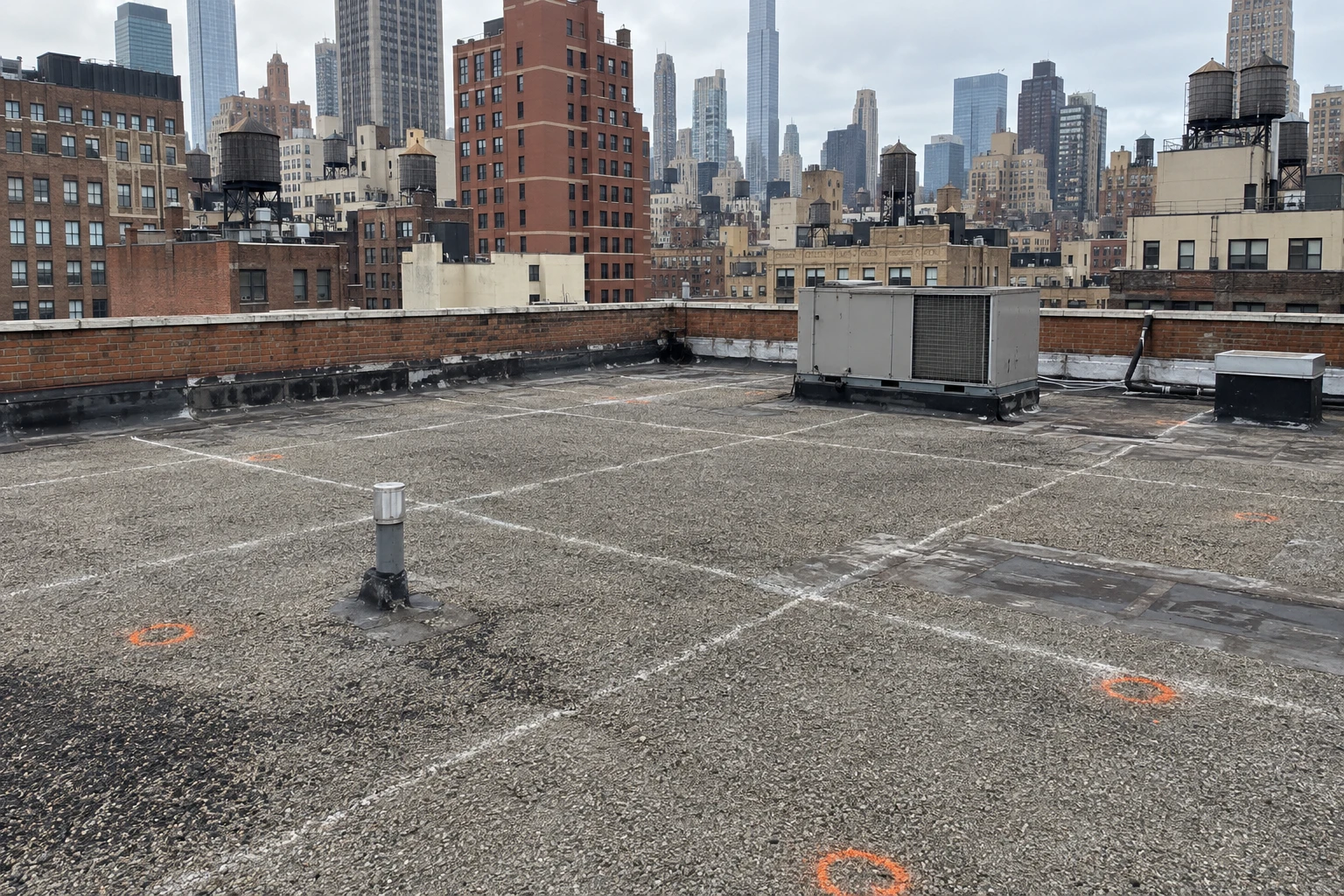
The Kips Bay medical cluster is a typical setting for the question, and each roof is judged by what the survey finds on it. The survey maps each discharge, notes the distance and the wind pattern, and takes membrane samples from the zones nearest to them. If the samples show softening or loss of flexibility, the report recommends an alloy for those zones or for the whole roof, depending on how widely the exposure spreads.
What does the survey measure before KEE is specified?
Three things: the exposure, the membrane's current condition and the substrate. For exposure, we record each exhaust and vent, its type and its distance from the roof surface. For condition, we assess hardness, flexibility, discoloration and seam integrity, and take samples where the owner permits. For the substrate, an infrared scan and core cuts check for wet insulation, since any new sheet laid over a wet roof seals the problem in, however chemical-resistant it is.
We also check compatibility. Some insulations and old asphalt layers interact with PVC-family membranes, so a separation layer or a cover board is selected to protect the new sheet. The findings go into a report with a condition rating for each zone, so the owner can see where the alloy is needed and where a standard membrane such as TPO would do. Where the exposure is mild and the existing roof is sound, a restoration coating can be the cheaper answer, and the report prices that route next to the new-membrane route so the choice is made on numbers. The difference between zones can be large on a single roof, which is why the report is drawn zone by zone and not as one verdict. An infrared moisture survey comes first because it governs how much of the old roof stays.
How are details and seams made to last?
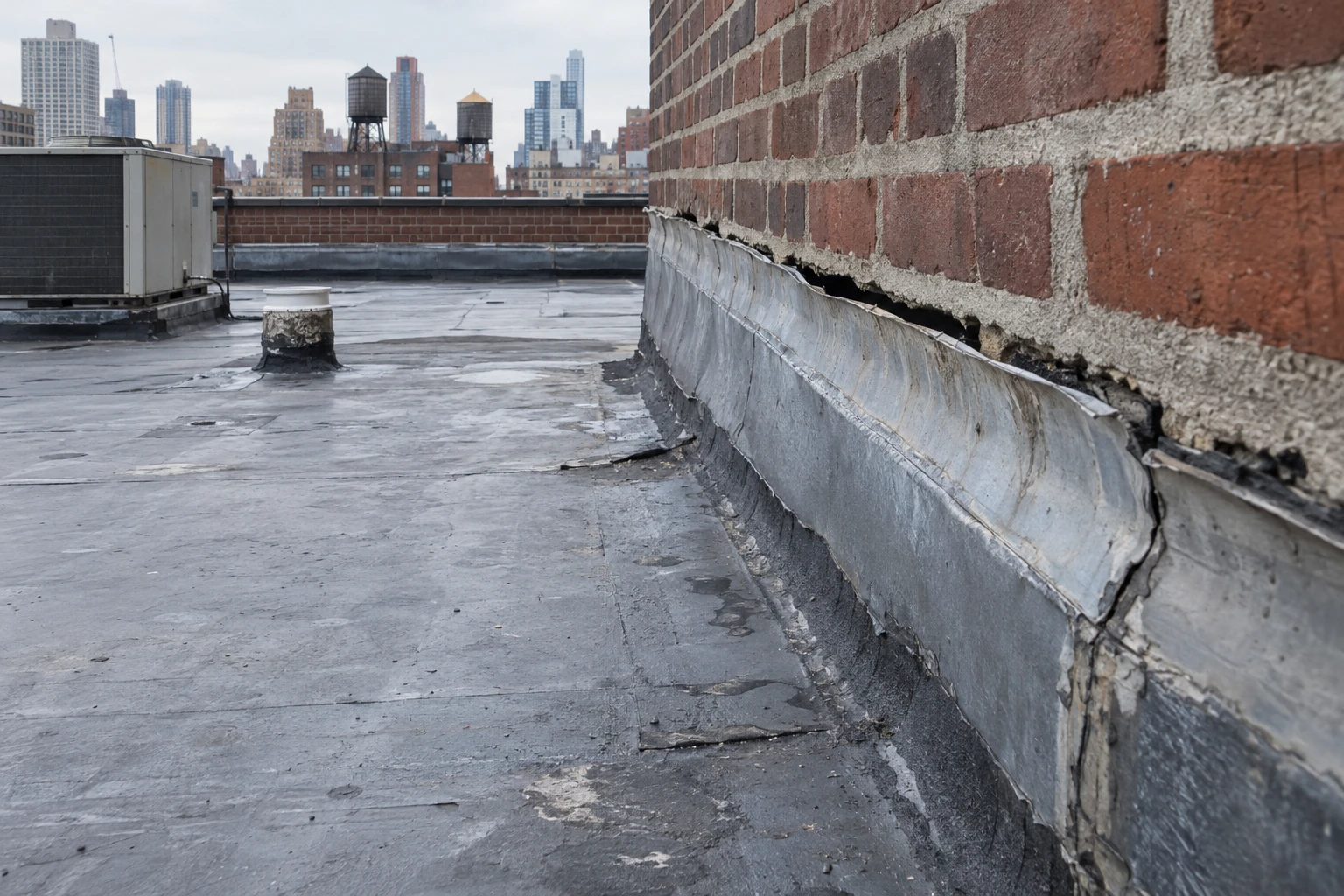
Details are the weakest part of any thermoplastic roof, and in a chemical zone they carry the most risk. Prefabricated corners and boots go in wherever possible, every flashing is hot-welded and every seam is probed. Termination bars at walls and curbs are fastened and sealed, and counterflashing is installed so that exhaust residue does not collect at the termination.
Where a discharge sits directly over the membrane, a sacrificial walk pad under the outlet takes the worst of the exposure and can be replaced without disturbing the roof. We photograph each detail before it is covered. Central Park's strongest gust was 78 mph on December 2, 1974, so perimeters get closer attachment, and the file records the pattern. These records become the reference if a warranty claim or an flashing failure repair is needed later.
How does it cope with Manhattan weather?
The same retained flexibility that helps with chemicals helps in cold. A membrane that stays pliable through winters in which Central Park has dropped to minus 15 F, as on February 9, 1934, and averages 29.8 inches of snow is less likely to crack at folds and seams. A white surface also turns back summer sunlight, which counts on a roof under the city's strong urban heat island.
Ida's September 1, 2021 cloudburst, 3.15 inches in a single hour, showed what happens to drains under stress. A hospital roof that ponds around a vent can wash residue across the surface, and the survey checks slope and drains in the same visit. For a hospital, a leak is an operations event as much as a repair. Our plan for hospital roofing keeps patient areas protected while the roof is open.
What should the owner keep on file?
The exposure map, the sample results, the substrate findings, the product and barrier data, the weld test records, the detail photographs and the warranty terms. Entries feed roof asset management for the whole portfolio, and a cleaning and inspection schedule is part of the file as well, because residue on the surface can hold chemicals against the sheet. Local Laws 92 and 94 apply to a full replacement, so the plan for the sustainable roofing zone goes in the same record.
Commercial Roofing Questions
Is KEE necessary if we only have a small kitchen vent?
Often not. A single small vent can be handled with a protective pad and a standard chemically resistant membrane. KEE is considered when exposure is heavy, broad or involves solvents. The survey measures how far the effect reaches and recommends the least expensive membrane that will hold.
Can KEE be mixed with another membrane on one roof?
Yes, with care. Different sheets must be joined with compatible methods, and the transition is detailed and tested. A common approach is to use the alloy near discharge points and a standard sheet elsewhere. The joint is documented on the roof plan.
Does a laboratory roof need special permits for roof work?
The building may have its own requirements for work near active exhaust, such as shutdown windows and hot-work rules. We ask the facility team early and write the requirements into the schedule. Roof work near active fume hoods is planned around the hours when the hoods are idle.
How can we tell if our current roof is losing plasticizer?
The signs are stiffness, crazing, shrinkage at edges and a surface that feels dry or chalky. A flex test on a sample and a hardness reading near the exhaust, compared with a protected area, show it. The report records the readings and the zones.