Roof capital planning in Manhattan, NY: replacement timing, phased budgets and reserve study inputs built from measured roof conditions and code requirements.
The roof line in a reserve study usually rests on an age assumption, and a core log can move it by years in either direction. A membrane that is fifteen years old with dry insulation may have a decade left, and one that is eight years old with saturated board may need replacing next spring. Capital planning for roofs is the work of replacing the assumption with a measurement, then turning the measurement into a schedule and a budget. In Manhattan, NY, the schedule has another input in Local Laws 92 and 94 of 2019, which tie a full replacement to a sustainable roofing zone carrying solar, a green roof or both and so change what a replacement involves.
We turn survey findings into replacement dates, phased budgets and reserve study inputs. Give the planning horizon, the last roof report and any open violations first; the survey scope follows, and the first number comes later.
What inputs does a roof capital plan need?
Five. The condition rating for each roof from a survey. The estimated remaining life, supported by cores and moisture findings. The scope of each likely project, including code triggers. The sequence in which projects should happen, set by risk. And the cost range for each, with the assumptions listed.
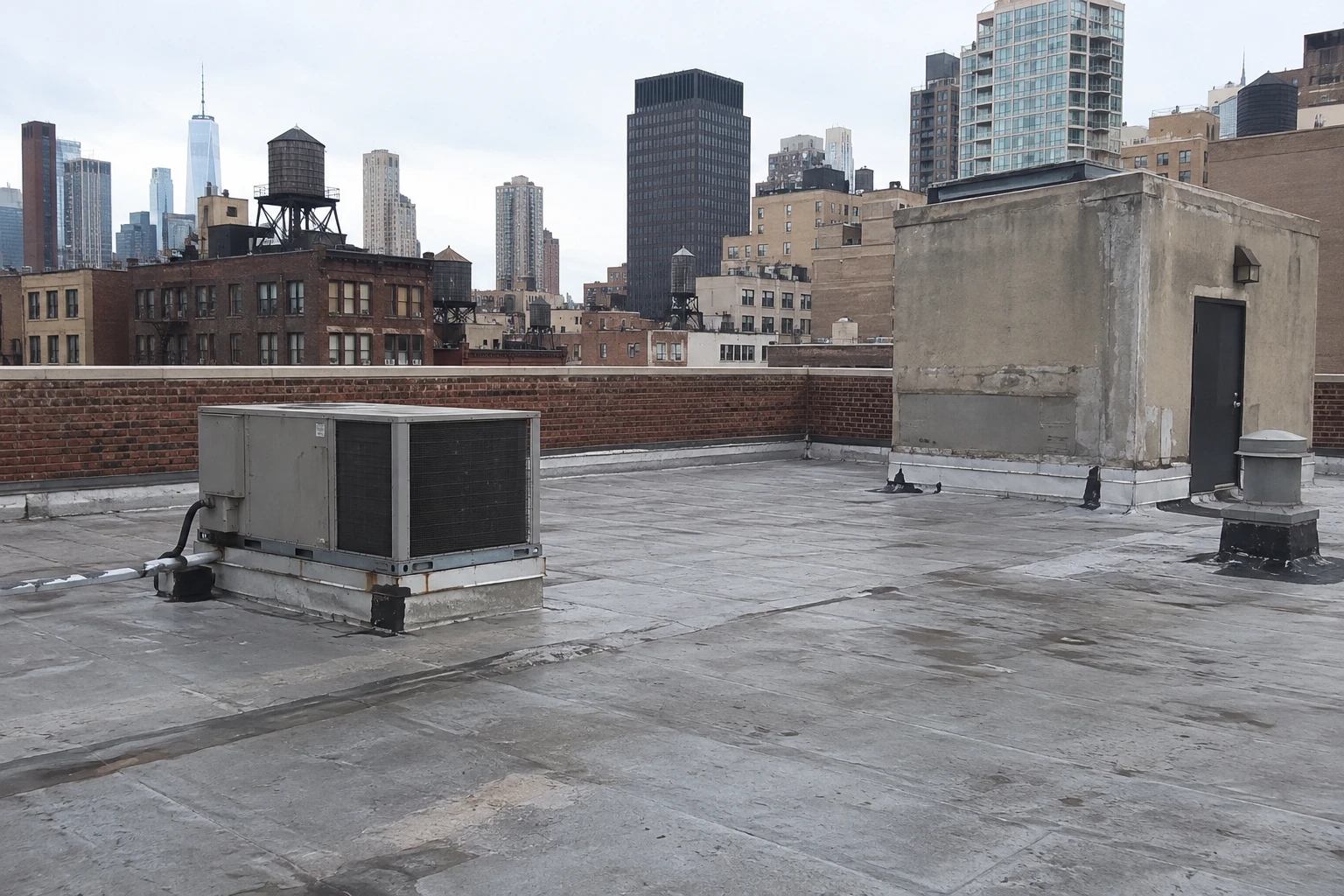
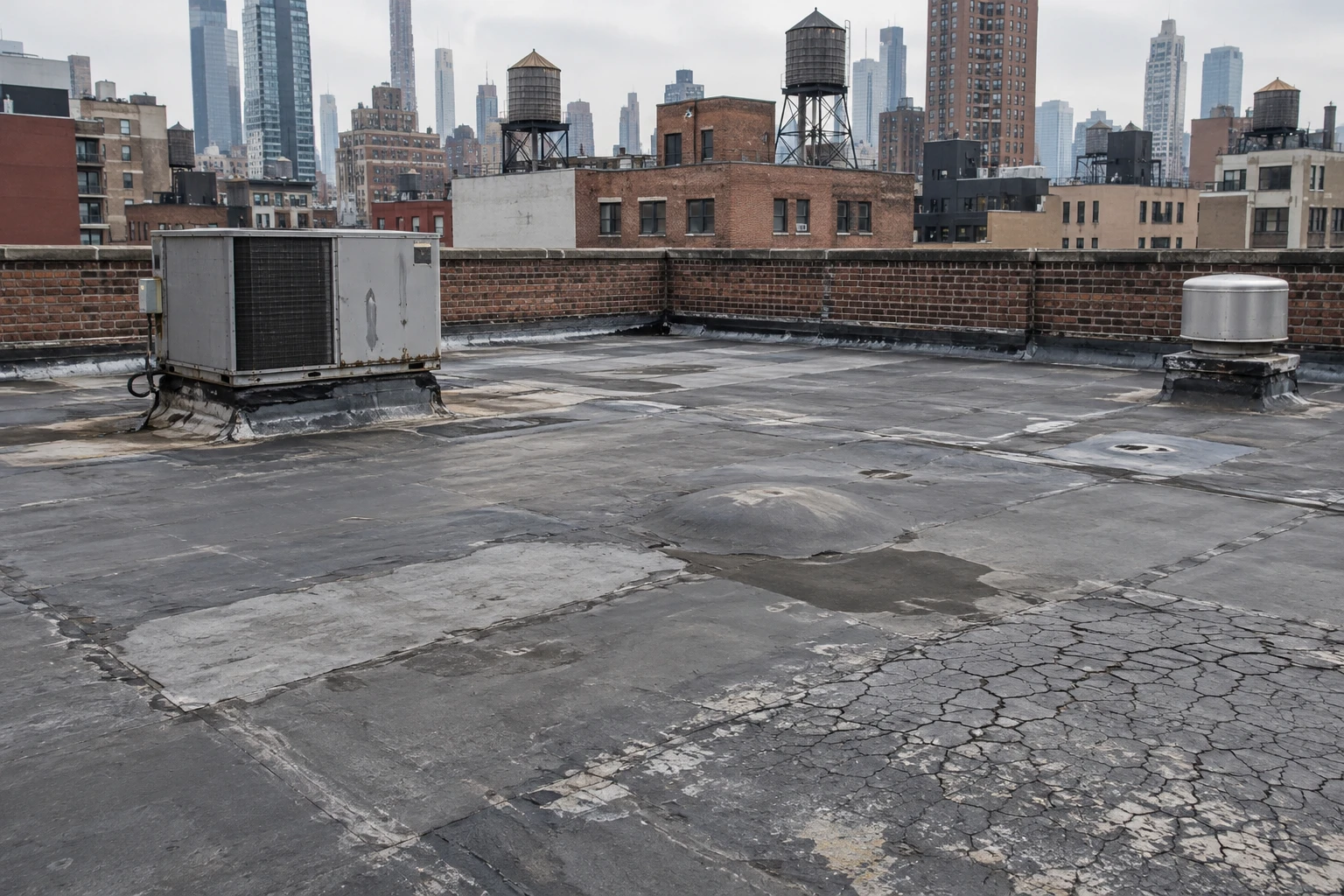
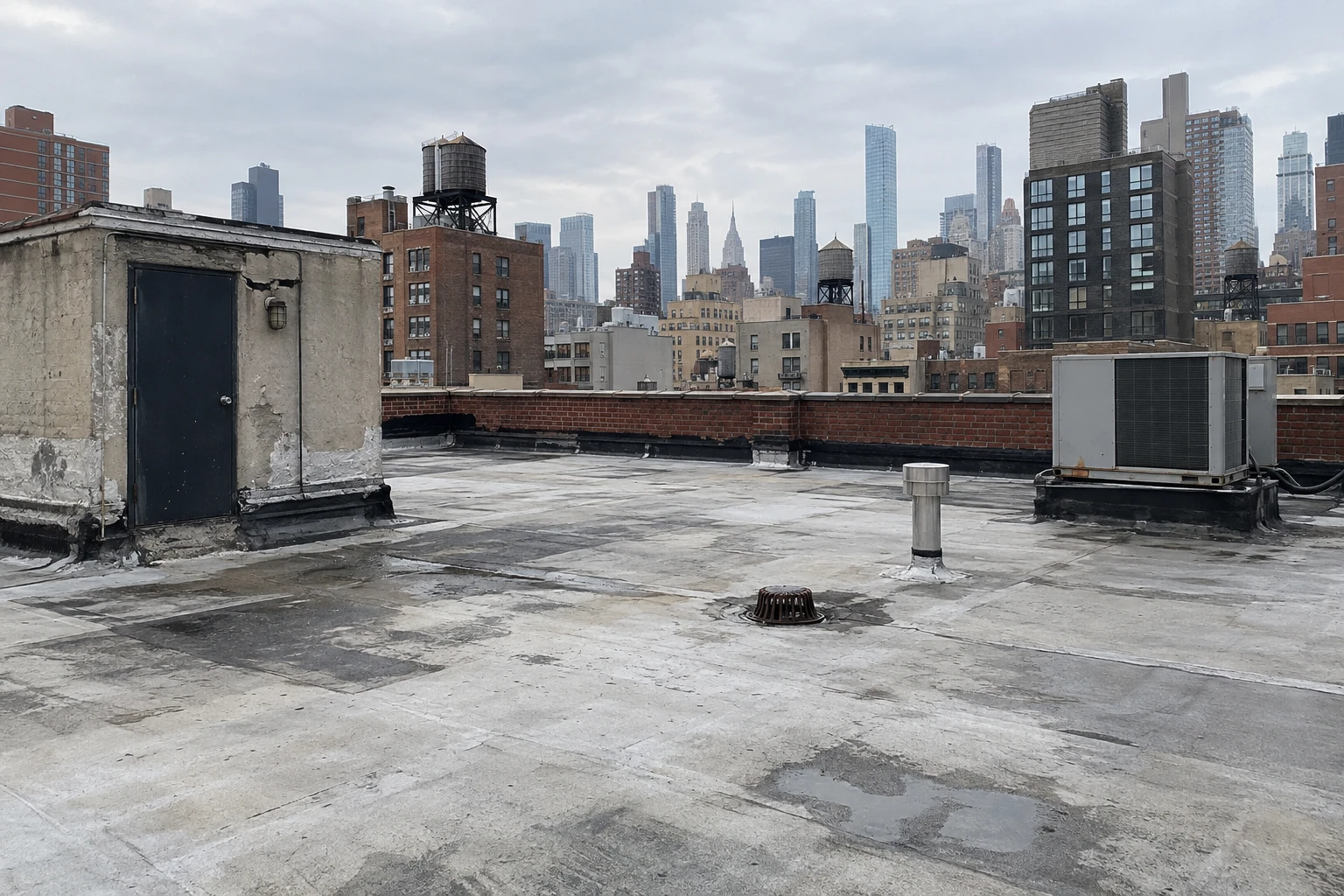
The survey comes first, because a plan built on age alone drifts from reality. We cut cores at warm spots and control points, scan with infrared, measure ponding and inspect the details. A roof that scores in the middle of the scale gets a maintenance program and a revisit date. A roof at the bottom goes into the next budget cycle. The ratings are the same across a portfolio, so the sequence can be defended, and a lender doing due diligence reads the same table. The roof condition report carries those ratings and photographs for each roof.
How do the New York City rules change the budget?
Plans here are drawn against the 2022 NYC Construction Codes and their Building, Existing Building and Energy Codes. A full roof replacement brings in the sustainable roofing zone requirement of Local Laws 92 and 94. That means the plan includes either a solar array, a green roof or a combination across the zone, and each has its own weight, access and structural demands.
A repair or partial recover may not trigger the rule, which makes the choice of project scope a budget decision. We map the zone, the existing equipment and the structure before a replacement is scheduled, and we show the owner two paths: stage repairs to extend life, or replace and install the zone. A plan that shows both, with dates and ranges, lets the board decide with the facts. Buildings in New Jersey follow state and municipal codes, and the plan notes which applies.
How are projects phased across several roofs?
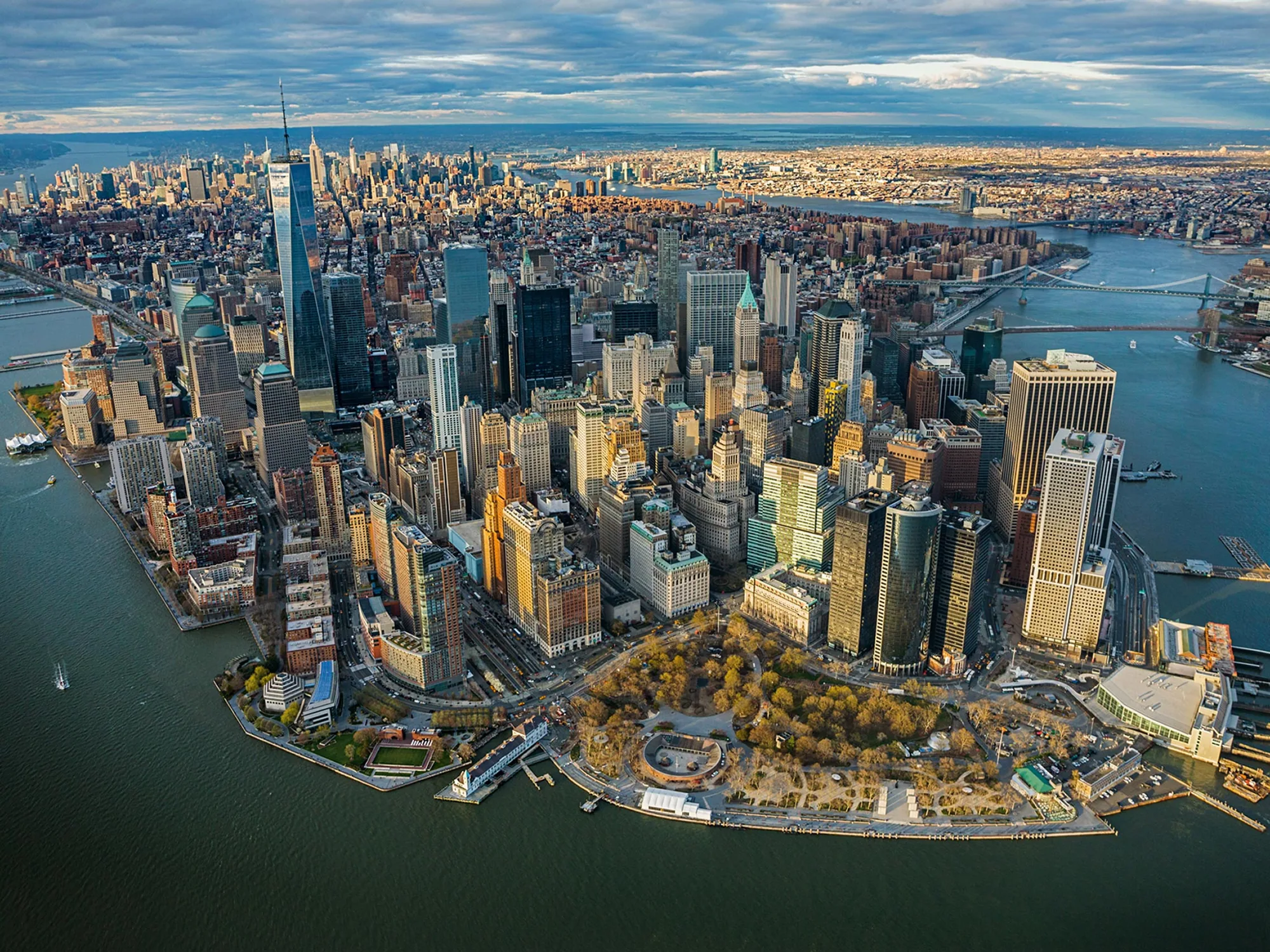
By risk first, then by practicality. A roof over critical space with wet insulation goes first. A roof that is dry and sound waits. Within a building, setback roofs, podium decks and mechanical roofs are phased so access, crane time and tenant impact are managed. Large complexes, such as the platform-supported development at Hudson Yards, where the 28 acre mixed-use project was built over the West Side Rail Yard, raise their own sequencing questions.
Phasing also reflects windows: summer for schools, off-season for retail, quiet weeks for plants. The plan lists the window, the lead time for permits and cranes and the date by which a decision is needed. In dense places the lead time is long. Missing a decision date can push a project a year, and the plan flags that date on the calendar.
How does storm exposure enter the plan?
Two storms set the priorities: Sandy, which sent a surge of 14.06 feet above average low tide to The Battery on October 29, 2012, and Ida, which delivered a one-hour peak of 3.15 inches on September 1, 2021. Neither storm is a roof event alone, but both shape priorities. A building near the water may rank drainage and equipment anchorage higher, and the plan notes those items.
The Northwest Battery Park City Resiliency Project is slated to run 2026 to 2031 and includes flood barriers around parts of South Cove and Rockefeller Park. Owners near Battery Park City should align roof projects with such work where access overlaps. We list nearby public projects in the plan when they affect crane routes, staging or schedules, so the roof schedule does not collide with them. Permits for street closures and cranes are applied for against a date, and a collision with another closure can cancel a lift, so the plan carries a backup week for each critical lift.
What goes into the reserve study?
The remaining life of each roof, the planned replacement year, the cost range and the assumptions behind it. Maintenance items are listed separately, with annual amounts. The study also notes triggers that could move a date forward: a storm, a failed core, a new tenant's equipment or a change in code. Each trigger has an owner, someone who will tell us when it happens, so the plan is updated before the next budget meeting and not after it.
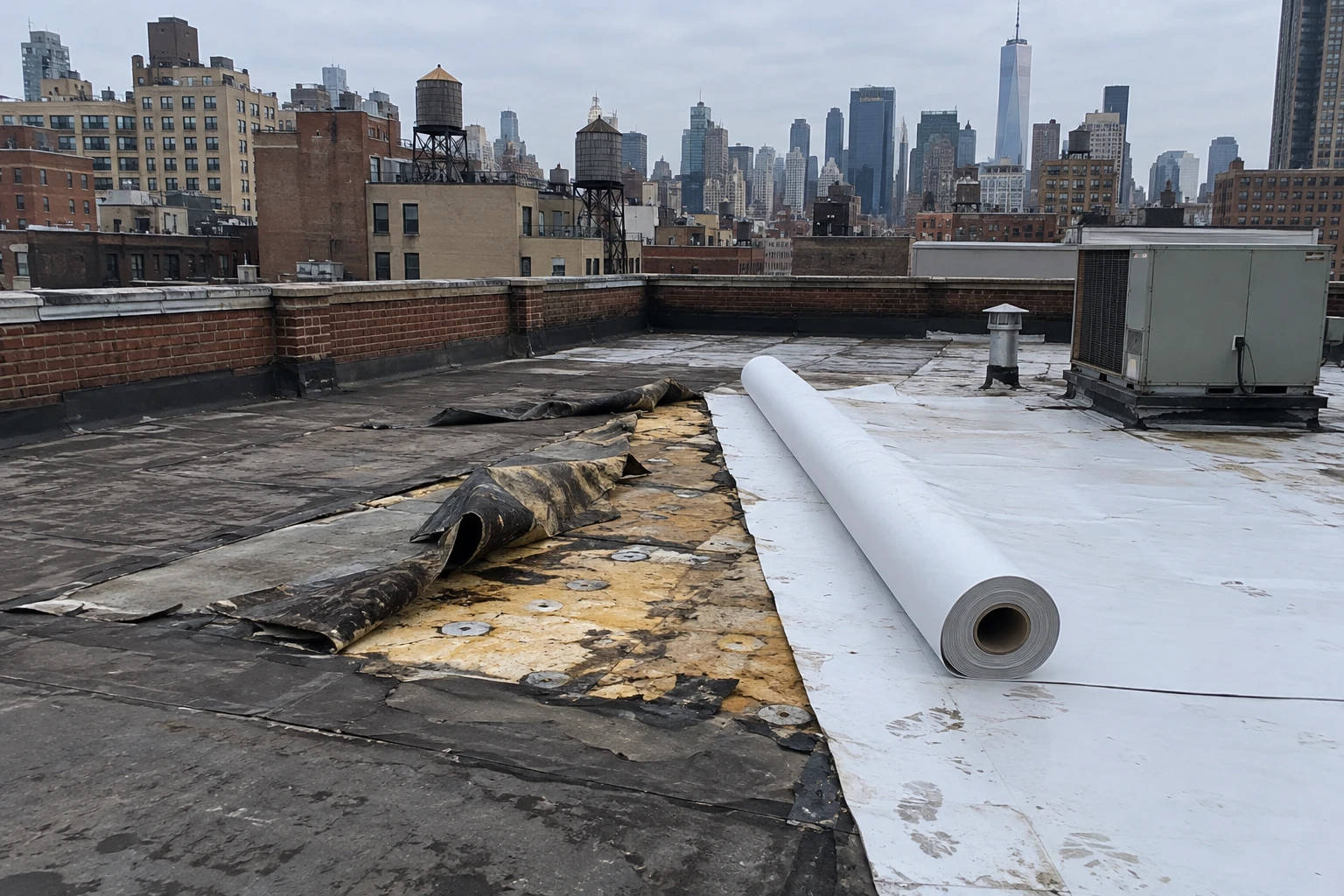
A reserve study updated yearly with fresh ratings is more useful than a one-time forecast. We provide updates after each inspection cycle, and the table shows what changed. A board or an asset manager can then adjust contributions gradually instead of facing a large special assessment. The yearly update also shows which replacements slipped and why, so the next year's plan starts from what happened and not from what was hoped. A replacement that moved back two years because cores came out dry is good news and is recorded as such. For owners of several buildings, the roof asset management register feeds the study directly, and the commercial roof replacement scope fills in project details when a date arrives. Where two options cost about the same, the plan states which one carries less risk of an early leak, and why.
Commercial Roofing Questions
What decides when a roof moves from the maintenance column to the replacement column?
The moisture findings and the repair trend. When cores show wet insulation across a large share of the field, or repair costs over several years approach the cost of a new roof, replacement belongs in the plan. The ratings and the repair log give the evidence.
How far ahead should a roof plan look?
Five years in detail and ten to twenty in outline. The first years carry survey-based dates and ranges. Later years carry age-based estimates that the next surveys refine. We update the plan each year.
Should we replace now and install the solar or green roof, or wait?
It depends on the roof's condition and the owner's cash timing. If the roof is dry and sound, extending life with maintenance may defer the requirement. If wet insulation is spreading, deferring raises the cost. We show both paths with dates and ranges.
Does the plan cover New Jersey buildings?
Yes. The method is the same. The plan states that Local Laws 92 and 94 cover New York City buildings only, and that a New Jersey building is governed by state and municipal codes, confirmed with its local building department.
What happens to the plan after a major storm?
We inspect affected roofs, update ratings and revise dates if damage or wet insulation changes the picture. The plan records the storm, the findings and the revised sequence, which also supports an insurance claim.