Full tear-off and replacement for Manhattan, NY commercial roofs, scoped from core cuts and moisture findings, with Local Law 92 and 94 requirements.
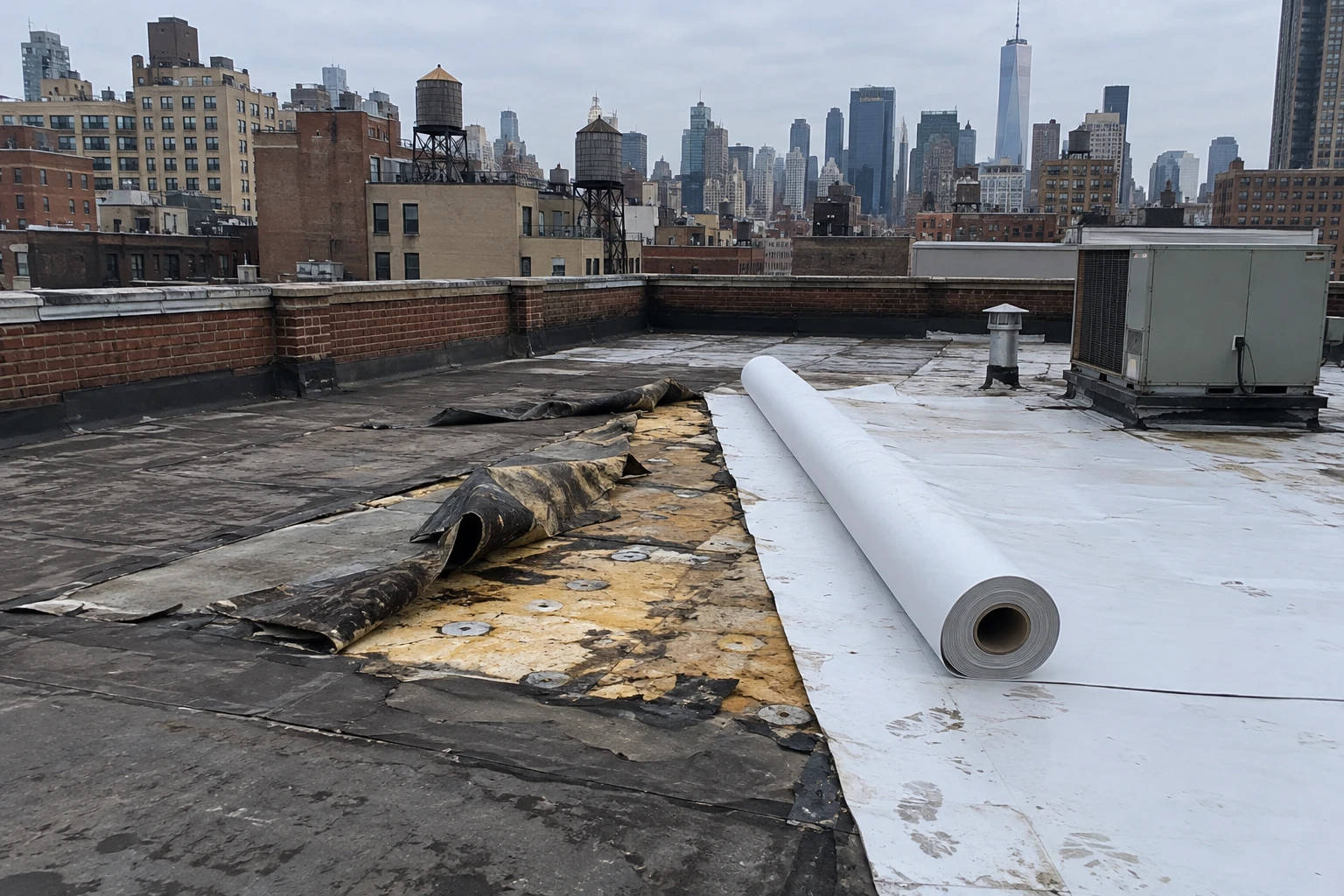
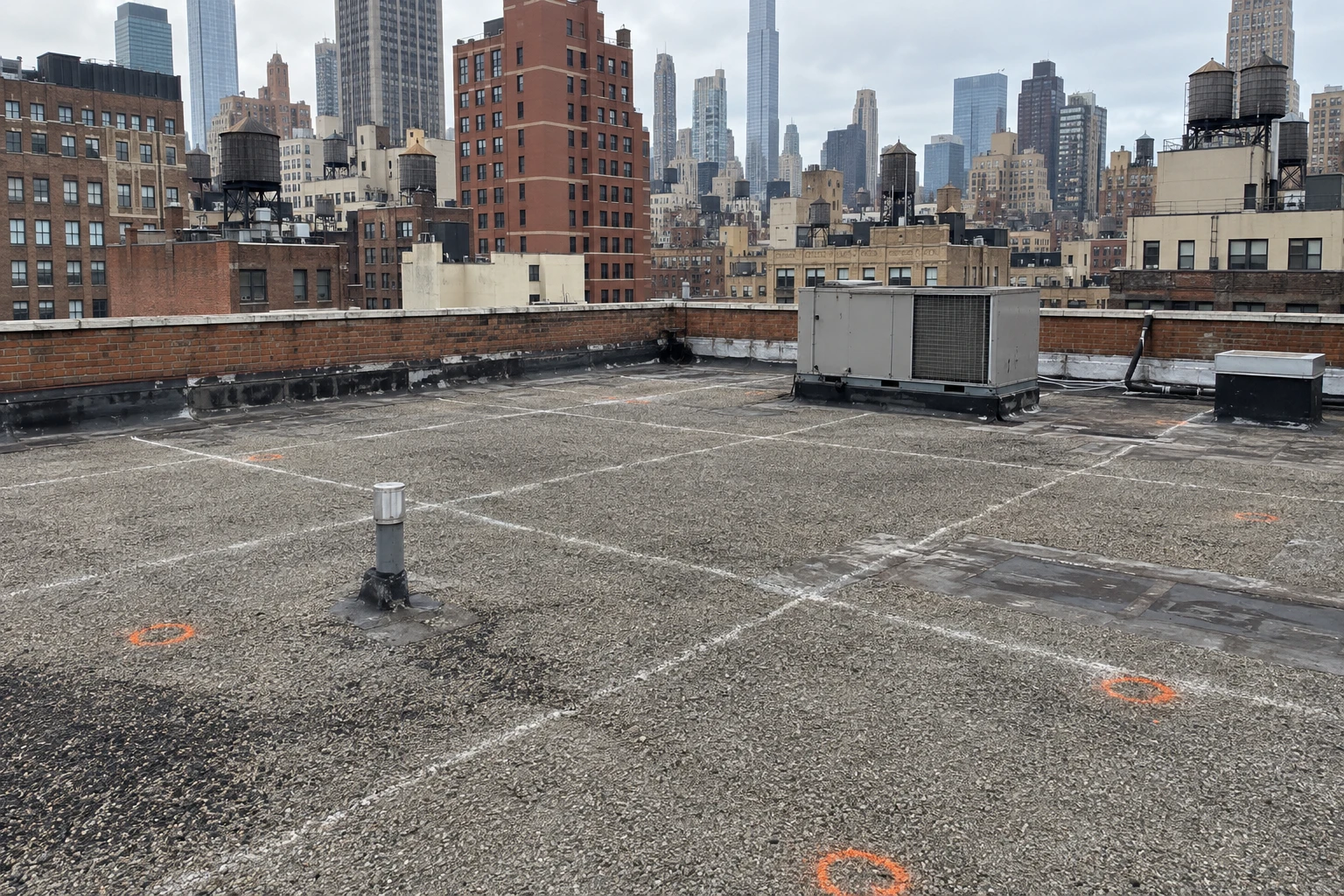
The decision to replace a roof on a Manhattan building is usually made in a survey report long before a crew reaches the parapet. A moisture map shows how much of the insulation has taken on water, a set of core cuts shows how many layers sit on the deck, and a condition rating tells the asset manager whether another round of patching still earns its cost. Replacement enters the picture when those three findings point the same way. The membrane is the layer everyone sees, yet the insulation beneath it usually sets the real end of service life. We treat the survey as the scope document: it fixes what comes off, what stays, and what gets rebuilt at every edge and penetration.
That approach suits the buildings in this borough, from a Midtown office or hotel to a five or six story prewar apartment building in Washington Heights, because the roof area is limited and every detail on it carries weight.
What does a failed roof look like in a core cut?
A core cut is a small, neat sample taken through the whole assembly, and it tells a different story from the surface. We read it layer by layer: the membrane, any older membrane left underneath, the insulation, the cover board if one exists, and the deck. Wet insulation, rust on fasteners and a membrane that has gone brittle move a project from repair to replacement. A dry core under a worn surface points toward a recover or a coating.
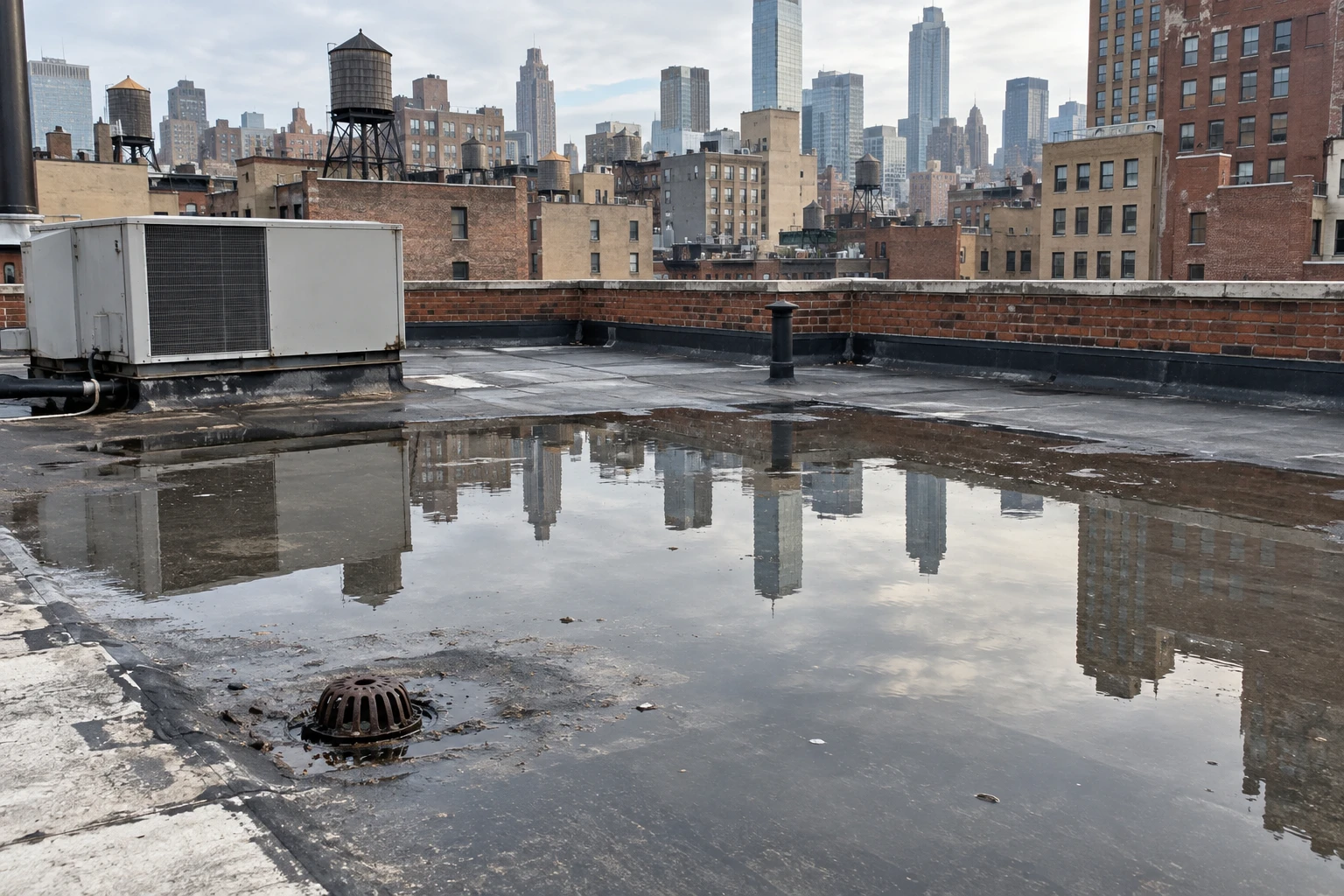
Hurricane Ida put a number on the stress that drains face in this city: 3.15 inches of rain fell in a single hour on September 1, 2021, the most the city had recorded in that span. A roof whose drains cannot clear that volume settles into ponding water against laps and flashings, and the core cuts taken afterward often show where it sat. We pair the cores with an infrared scan so the sampled spots are chosen by evidence, and the findings are marked on a plan the owner keeps.
When does the survey say replace instead of repair?
The line is drawn by where the water is. Moisture confined to a single curb, drain sump or parapet corner is a repair problem, and it is priced as one. Moisture spread across the field, with insulation that has lost its thermal value and seams that have opened in more than one location, is a replacement problem, because every patch is placed over material that will not hold a fastener or an adhesive. The condition rating puts that judgment in a form an asset manager can take to a reserve study or a lender.
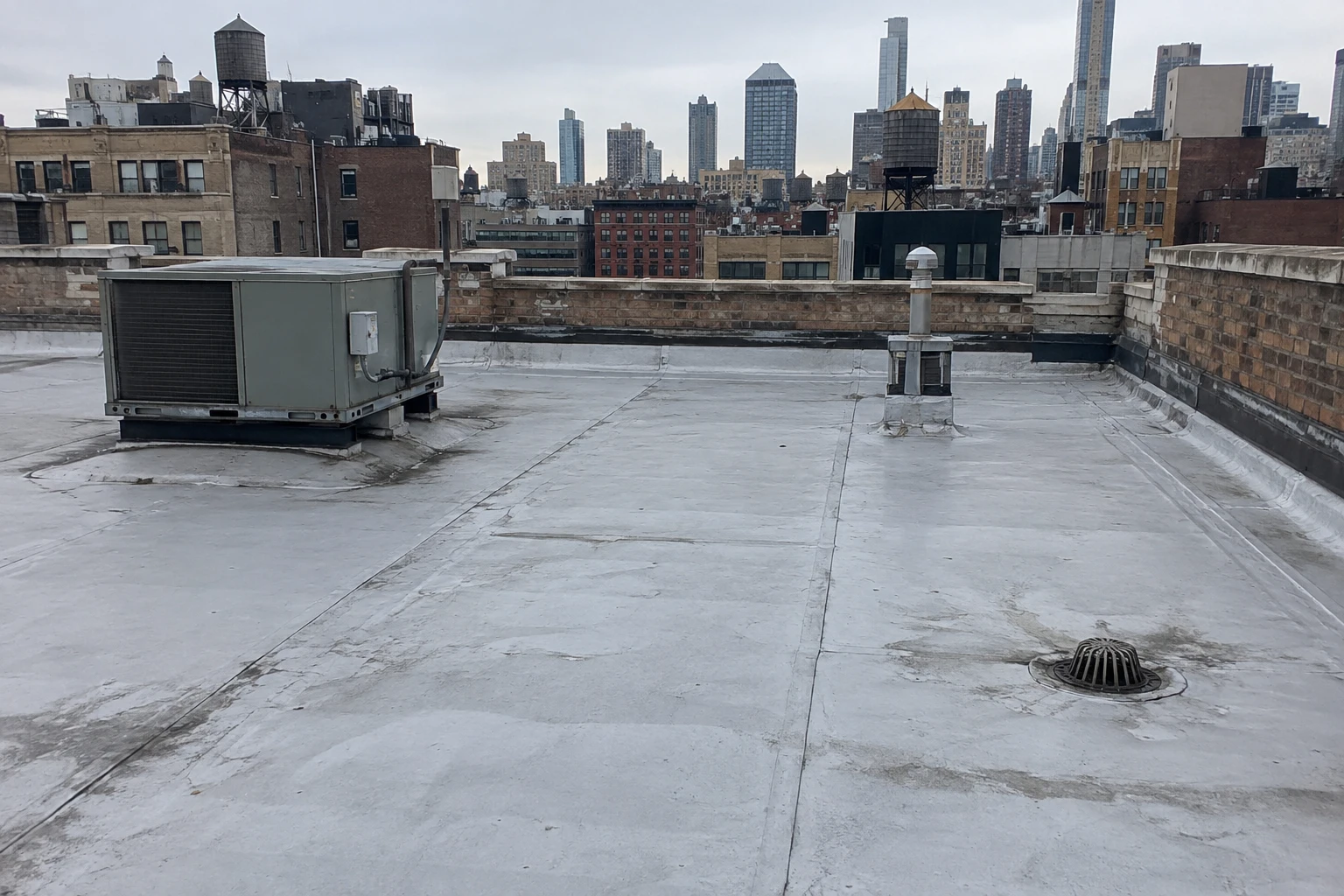
Age matters less than condition. For roofs that are close to the line, a roof recover over the existing assembly is worth pricing next to a full tear-off, and the infrared moisture survey is what decides whether the old insulation can safely stay.
How is a tear-off staged on a tight Manhattan site?
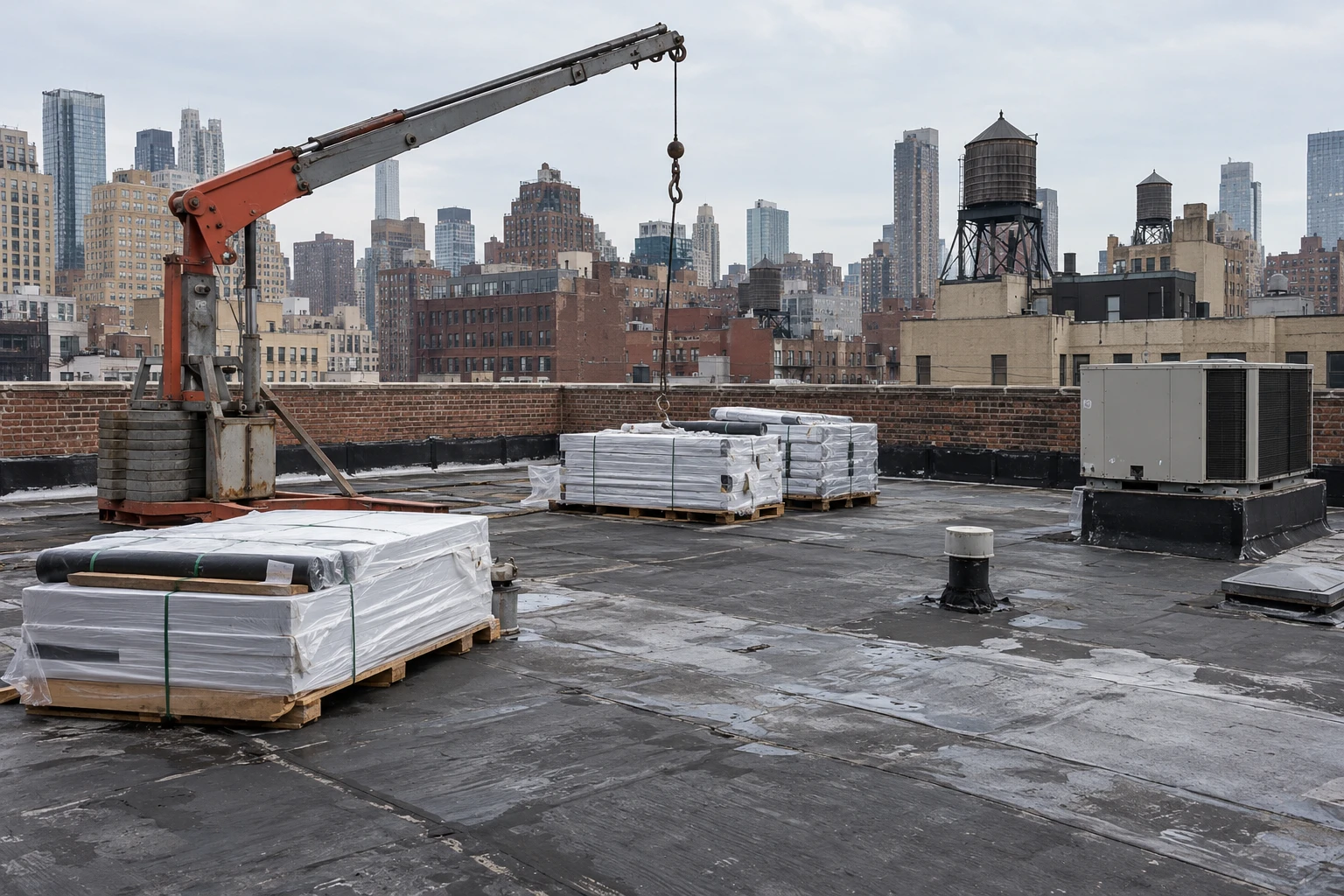
Manhattan reroofing is mostly a logistics exercise. Material arrives by truck on a street with limited curb space, goes up by hoist or crane, and has to be staged on a roof that may have little open area. Debris comes down the same way, so each day is planned around what can be removed before the roof is dried in again. We open only as much membrane as can be closed the same day.
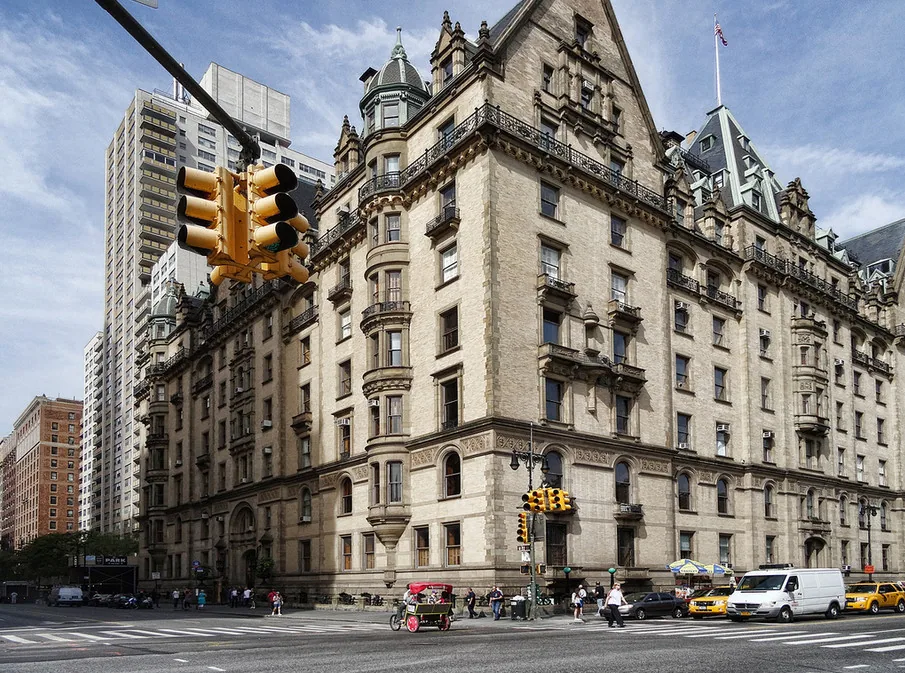
In landmarked districts such as the SoHo-Cast Iron Historic District, which covers about 500 buildings, changes visible from the street are reviewed, and roof work may need to be shown to the commission before it starts. In the Financial District, where nearly 200 older buildings were converted to residential use between 2013 and 2021, a reroof often runs while apartments below are occupied, which brings noise windows and protection of finished interiors into the schedule. Our occupied building reroofing approach sets those limits in writing before work begins.
What do Local Laws 92 and 94 add to a full replacement?
Local Laws 92 and 94 of 2019, in effect since November 15, 2019, require that the sustainable roofing zone on new buildings, enlargements and full roof replacements be completely covered by solar panels, a green roof, or a combination of the two. For an owner planning a tear-off, this means the roof plan has to account for that zone from the first drawing. Shading, equipment placement and structural capacity decide which option is workable.
We coordinate the membrane design with the design professional who files for the building, so that the surface, the insulation thickness and the pedestals or growing medium work as one assembly. The membrane choice also changes: a TPO roofing system is a common base for solar arrays because it is light and reflective, while a green roof calls for a membrane and protection layers rated for constant moisture and root pressure. The city also publishes the 2022 Construction Codes, including an Existing Building Code.
What drives the schedule and the budget?
Access, the depth of the existing assembly, the number of penetrations and edges, and the season move cost and timing more than anything else. Access covers hoisting, sidewalk protection and delivery hours. Penetrations and edges, such as bulkheads, mechanical curbs, coping and roof drain leaders, take far more hand labor than the open field.
Season matters because the borough is hard on roofs in both directions. Central Park averages 29.8 inches of snow a year and has recorded 106 F, so a new membrane has to handle freeze-thaw cycling in winter and heat load in summer. Hurricane Sandy, which sent a 14.06 foot surge above average low tide into The Battery in 2012, is a reminder that low-lying rooftops and rooftop equipment near the water deserve extra attention to wind and flood exposure. We price the job by line, so the cost of the field, the edges and the penetrations are visible separately.
What documentation does the owner keep after the work?
The closeout package is the first entry in the building's roof record. It includes the photographs taken at tear-off and again before the surface is covered, the core cut locations, the final drain layout, the flashing details at every wall and curb, and a baseline condition rating for the new roof. Asset managers use it for reserve studies and lender requests. Where a manufacturer's warranty applies, we hand over the registration and the maintenance conditions that keep it valid.
We also leave a short list of recurring checks, such as drain cleaning after leaf fall and a post-storm walk. If the building is part of a larger portfolio, the same record format can feed a condition report program across sites.
Commercial Roofing Questions
How do we tell whether the insulation can stay in place?
The infrared scan finds the wet areas, and the core cuts confirm what the scan suggests. Dry insulation with intact facers can stay under a recover or a new membrane. Wet or compressed insulation has to come out, because it cannot hold fasteners and it no longer insulates.
Will a replacement in Midtown or the Financial District disturb tenants?
Some noise is unavoidable, so the schedule follows the building's quiet hours. Work proceeds in sections that are dried in each day, and protection below is added where needed. The property manager receives a written plan before the first day.
Do the sustainable roofing zone rules apply to every replacement?
They apply to new roofs on new buildings, enlargements and the replacement of an entire roof deck or assembly, with exemptions the building's design professional must document. A repair or a limited section of work is treated differently. We review the scope against the rules before the price is set.
What decides between a tear-off and a recover?
Moisture decides it. A dry, well-bonded assembly can take a new membrane over it where code allows, which saves time and disposal. Wet insulation, multiple older layers or a deck that shows corrosion all push the project toward a full tear-off. The survey settles this before bids are compared.