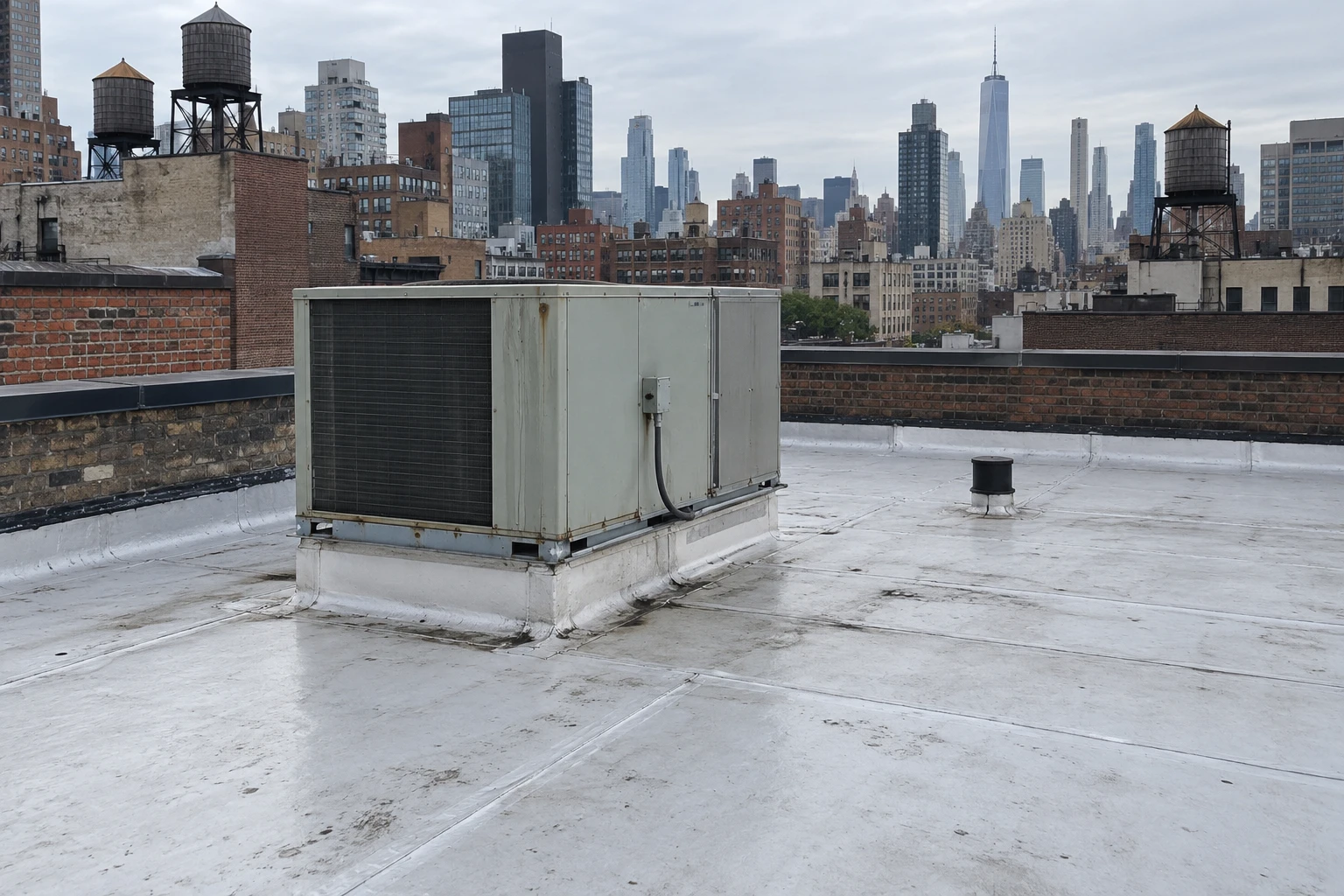
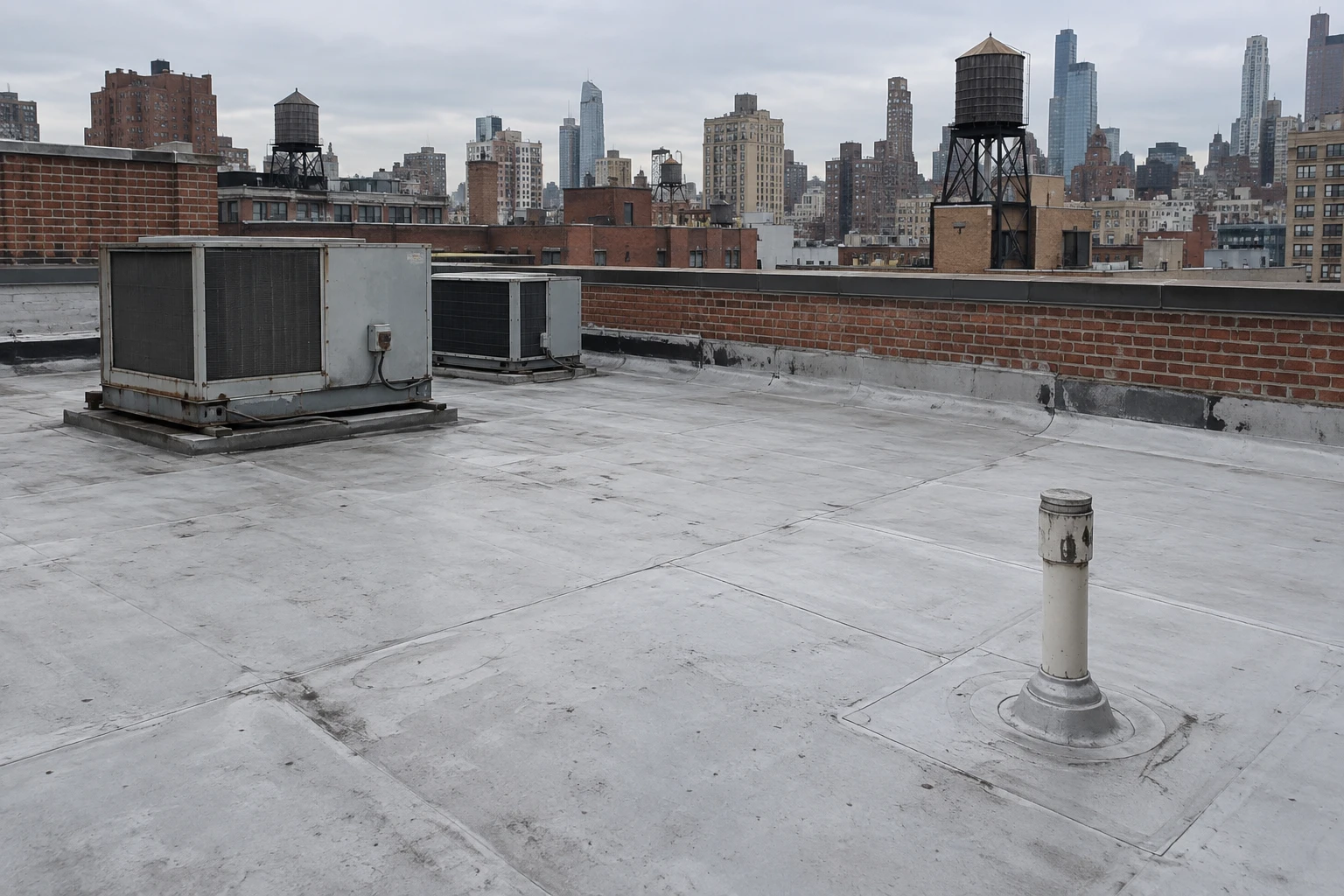
TPO single-ply roofing for Manhattan, NY buildings: seam probing, thickness and attachment choices, heat and rain performance, and the records owners keep.
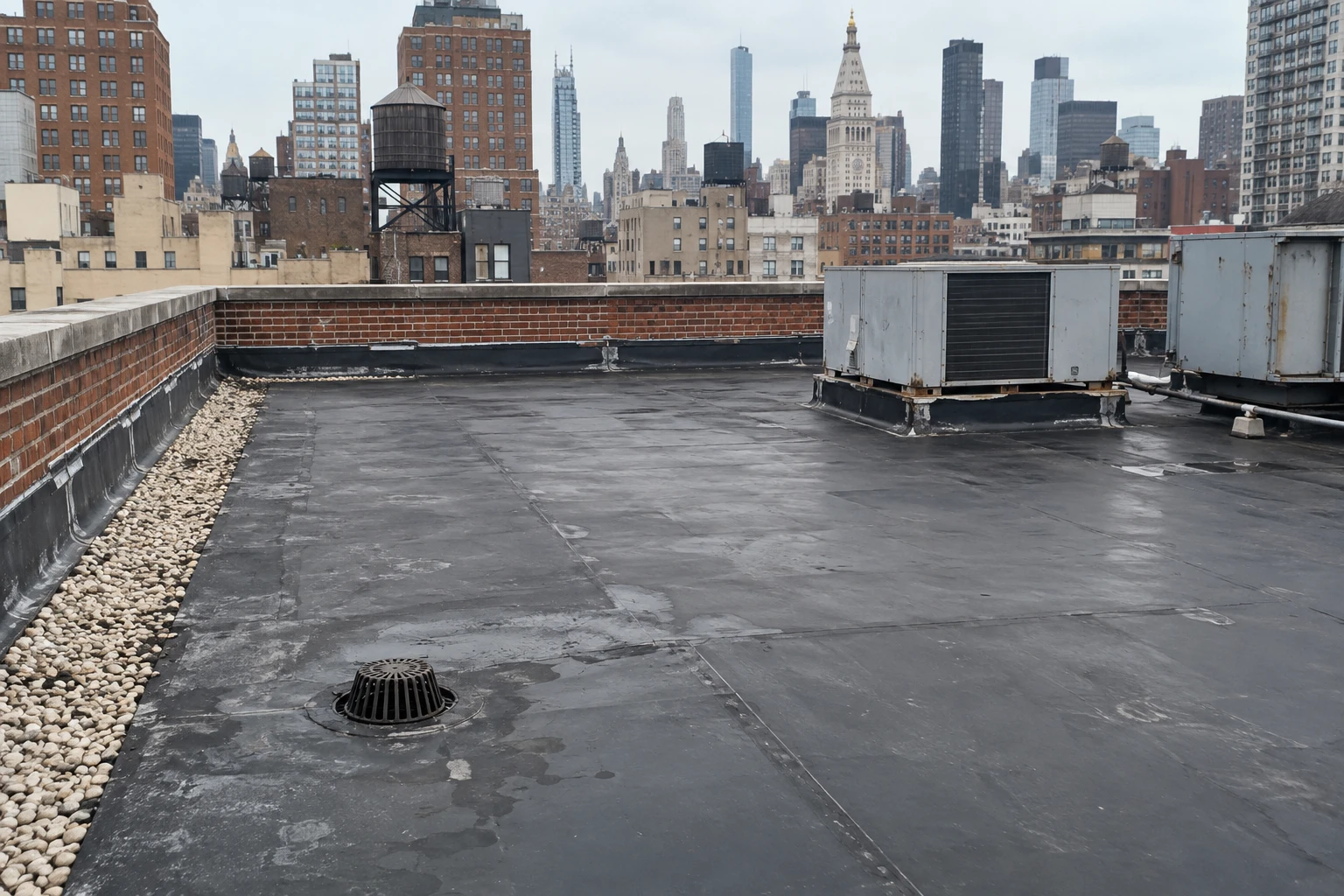
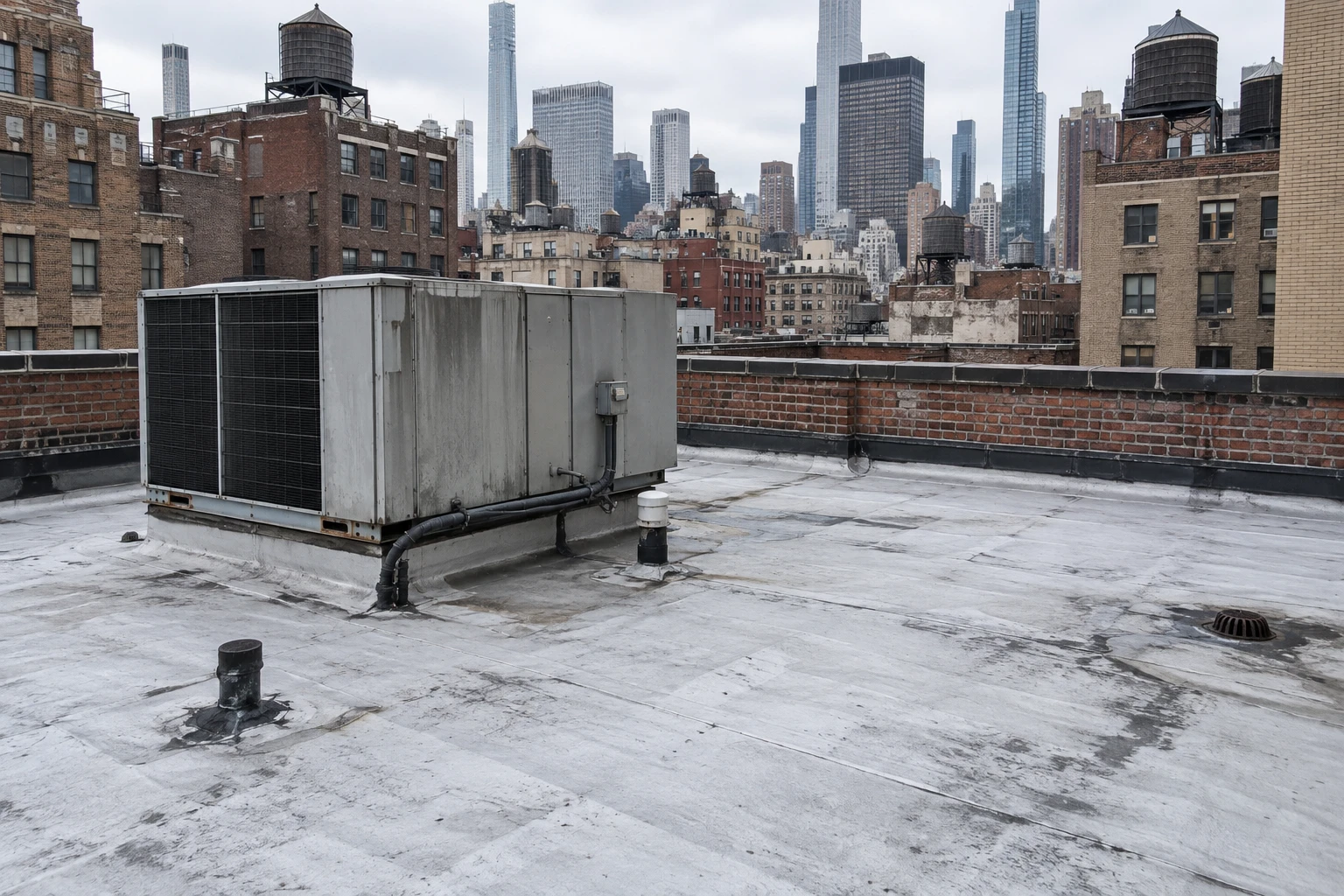
A caliper laid across the cut edge of a TPO sample reads the thickness that was actually installed, and it is the first number a survey checks against the specification. Thickness, attachment and the weld record together say more about a TPO roof than the color of its field. On a Manhattan, NY roof, where the field is small and the details are many, the seam count is high and each seam is a decision about future leaks. TPO is a thermoplastic membrane, normally white, welded with hot air so that adjacent sheets become one piece. It reflects sunlight, it is lighter than ballasted systems and it goes down quickly, which matters when the staging area is a sidewalk shed. The questions for an owner are about thickness, attachment, the substrate and the survey result that justifies any of it.
When is TPO the right membrane for a Manhattan roof?
TPO suits low-slope roofs with dry, sound substrates that need a reflective surface and a quick installation. Setback roofs on Midtown towers, podium decks and the flat roofs of prewar five and six story apartment buildings in the East Village and Washington Heights are the common candidates. On those older multifamily roofs the survey sets the attachment method and the edge detail from the deck and parapet actually found. It is less suited to roofs with heavy chemical exposure, such as those downwind of kitchen exhaust, where another membrane may resist grease better, and to roofs with a great number of tiny penetrations, where a liquid-applied detail may be easier.
The survey decides. An infrared scan and core cuts confirm that the insulation will stay dry, the deck is sound and the existing layers can be reused or removed. We then compare TPO with the other choices in the file, including PVC and EPDM, using the roof's actual exposure, not the product's brochure.
How thick should the membrane be, and how is it attached?
Single-ply membranes come in a range of thicknesses, and the thicker end gives more material above the reinforcement scrim, which resists wear from foot traffic, hail and the movement of equipment. On a roof with frequent service visits, such as one with rooftop units, a thicker sheet is a sensible choice. On a quiet roof with little traffic, a thinner sheet may be adequate.
Attachment is the other decision. A fully adhered system bonds the membrane to the substrate and resists billowing in wind. A mechanically attached system fastens the sheet through its seam plates and is lighter and quicker. A ballasted system relies on weight, which a tall building's roof structure often cannot carry. Wind uplift at parapets and corners governs the attachment pattern, and the 78 mph gust of December 2, 1974 in Central Park is a reminder of why the perimeter gets more fasteners or full adhesion. The engineer's wind calculations and the manufacturer's requirements go into the specification.
What does a good weld look like, and how is it checked?
A sound weld has a continuous, uniform bead of squeezed-out material at the edge, no wrinkles or fishmouths and a consistent width. Welding depends on temperature, speed, pressure and a clean surface, and each can drift during the day. For that reason, probe checks are done on every seam, and test cuts are made on a sample of welds to confirm that the bond fails in the sheet, not at the seam.
Details are the other weak point: inside corners, outside corners, pipe boots and the edges of walkway pads. These are prefabricated or hand-welded, and each gets the same probe check. The record includes photographs of the seam, the probe result and the date, and a weather log that notes temperature and wind during welding. The record becomes part of the warranty file, since a warranty claim often depends on proof that the installation followed the specification.
How does TPO handle Manhattan heat, snow and rain?
The white surface reflects sunlight, which narrows the daily temperature swing at the membrane. Central Park has recorded 106 F and minus 15 F, and the urban heat island adds to summer load, so a membrane that sheds heat has an advantage. In winter, TPO remains flexible in cold weather when properly formulated, and it handles the freeze-thaw cycles of a city that averages 29.8 inches of snow a year, provided the seams were welded cleanly.
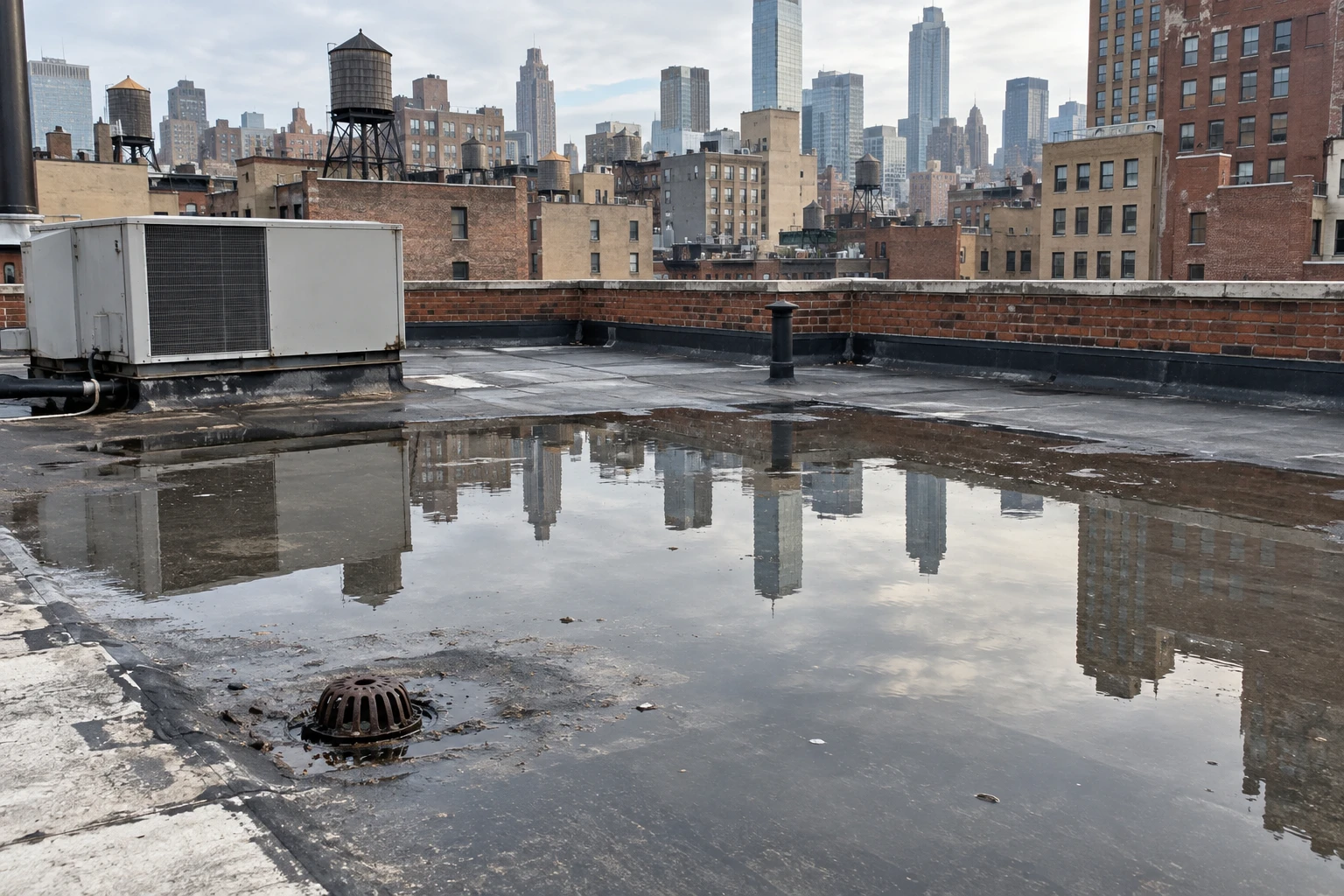
Rain is a question of drainage more than membrane. Ida's 2021 downpour peaked at 3.15 inches in an hour, and any membrane will fail early if the roof holds water behind a curb or in a low spot. We survey the slope and add tapered insulation or a drain where ponding is likely. TPO tolerates short periods of ponding but not permanent standing water, and the ponding water section of the file records the depths we measure.
How do the sustainable roofing zone rules affect a TPO replacement?
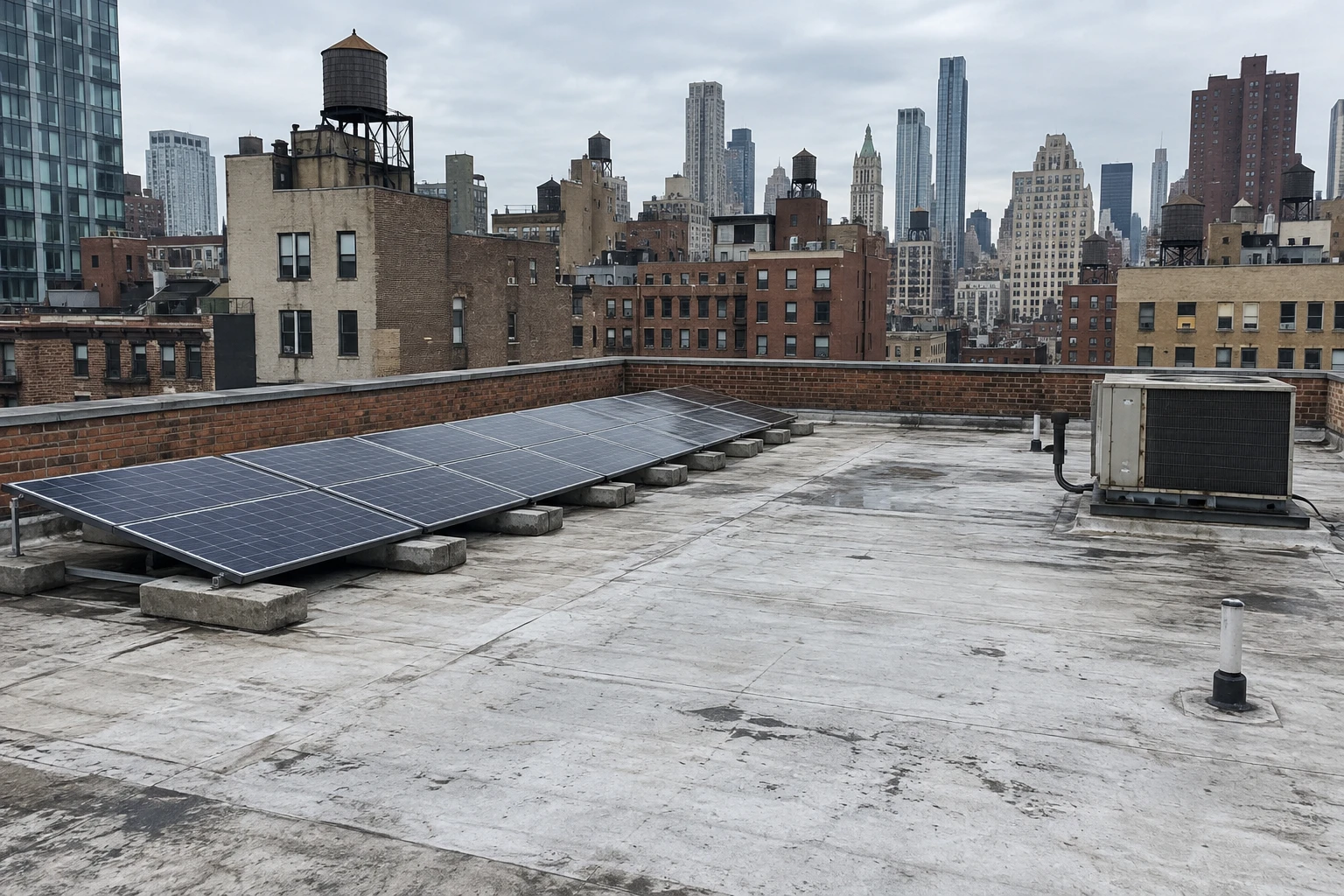
Local Laws 92 and 94 put solar panels, a green roof or both across the sustainable roofing zone whenever a building is new, enlarged or fully reroofed. A TPO membrane is a common base under panels, since it is flat, white and weldable, and it carries walkway pads between rows. In the design we mark the zone, place the equipment and drains, and choose the membrane details so that solar-ready roofing can proceed without opening the roof again. A green roof requires a root barrier and a drainage layer above the membrane, which changes the specification, and we confirm the product's suitability for that use.
What drives the cost and the schedule?
Cost follows area, the number of penetrations and edges, the thickness chosen, the insulation depth required by the current energy code, the substrate repairs the survey finds and the cost of access. Schedule follows weather, staging and tenant restrictions. A new TPO roof on a clean substrate goes down quickly, but tear-off, wet insulation replacement and curb rebuilding take the time. The commercial roof replacement scope separates these items so the owner sees where the money goes. Hoisting and street-use permits are real cost on a tight block, so we list them as their own line. Winter work is possible with cold-rated adhesives and heated welding equipment, though a spring or fall window keeps the seams more consistent and the schedule less exposed to a snow forecast.
Commercial Roofing Questions
Can TPO be installed over our existing roof?
In many cases a recover is possible, provided the insulation is dry, the existing membrane is attached and the deck is sound. A separation layer or cover board goes between the old surface and the TPO. If the scan finds wet areas, those are removed first. The number of existing layers, set by code, is a hard limit.
How long does a TPO roof last on a Manhattan building?
Service life varies with thickness, exposure, drainage and maintenance, and a single number would mislead. We give an estimated remaining life from the condition rating after each survey and revise it at each visit. Roofs that are cleaned, drained and repaired promptly tend to last longer than those left alone.
Is TPO affected by the exhaust from a restaurant below?
Grease and oils can degrade some membranes, and roofs downwind of kitchen exhaust need a closer look. We check the area around exhaust fans for staining and softening, and if exposure is heavy, we recommend a membrane with better grease resistance or a protective pad and regular cleaning.
Who inspects the seams after installation?
Our crew probes every seam as it is welded, and a supervisor repeats the check before the area is signed off. The owner or the manufacturer's inspector may do their own review, and we keep the photographs and probe results for that purpose. Any failed seam is repaired and re-tested before the section closes.