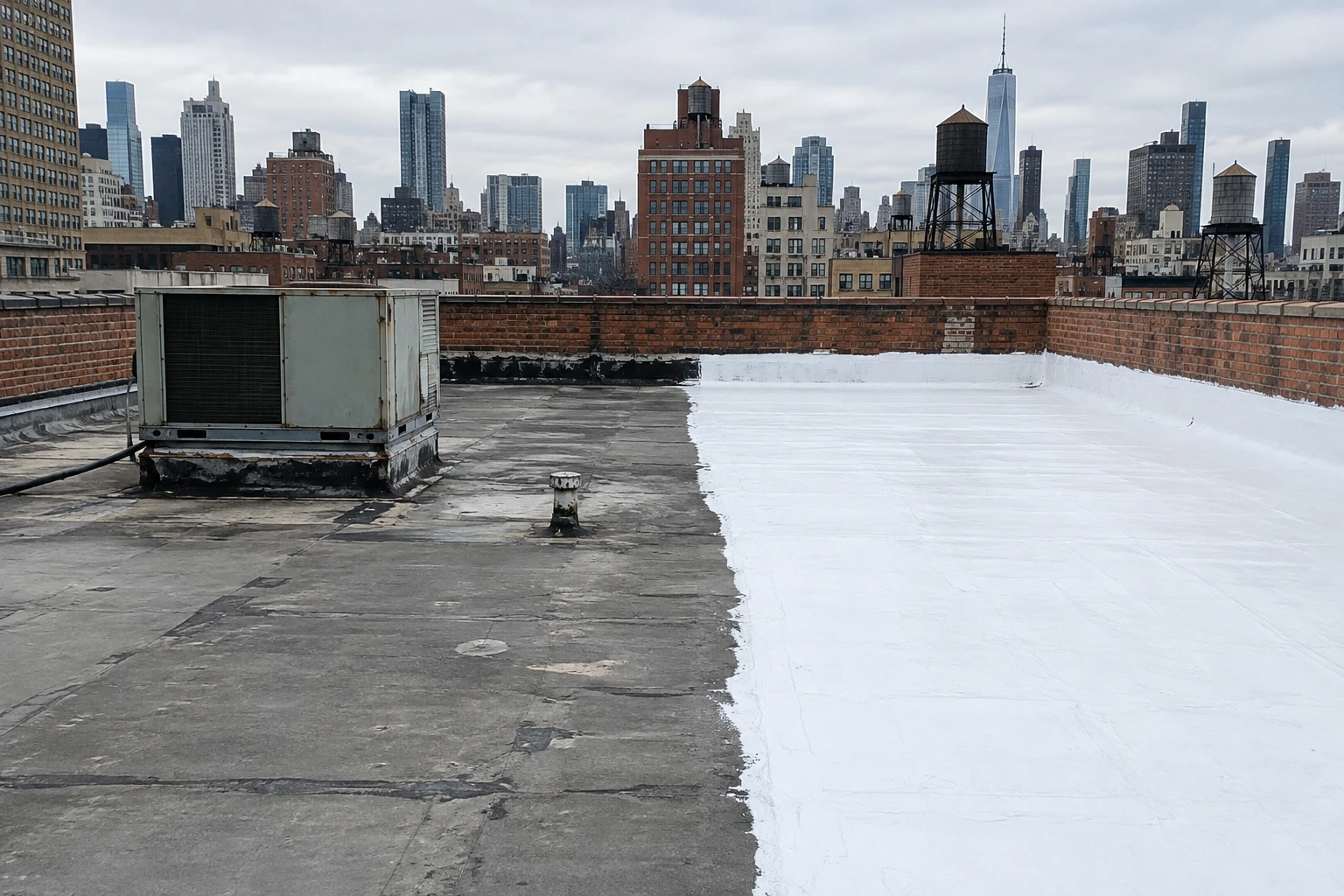
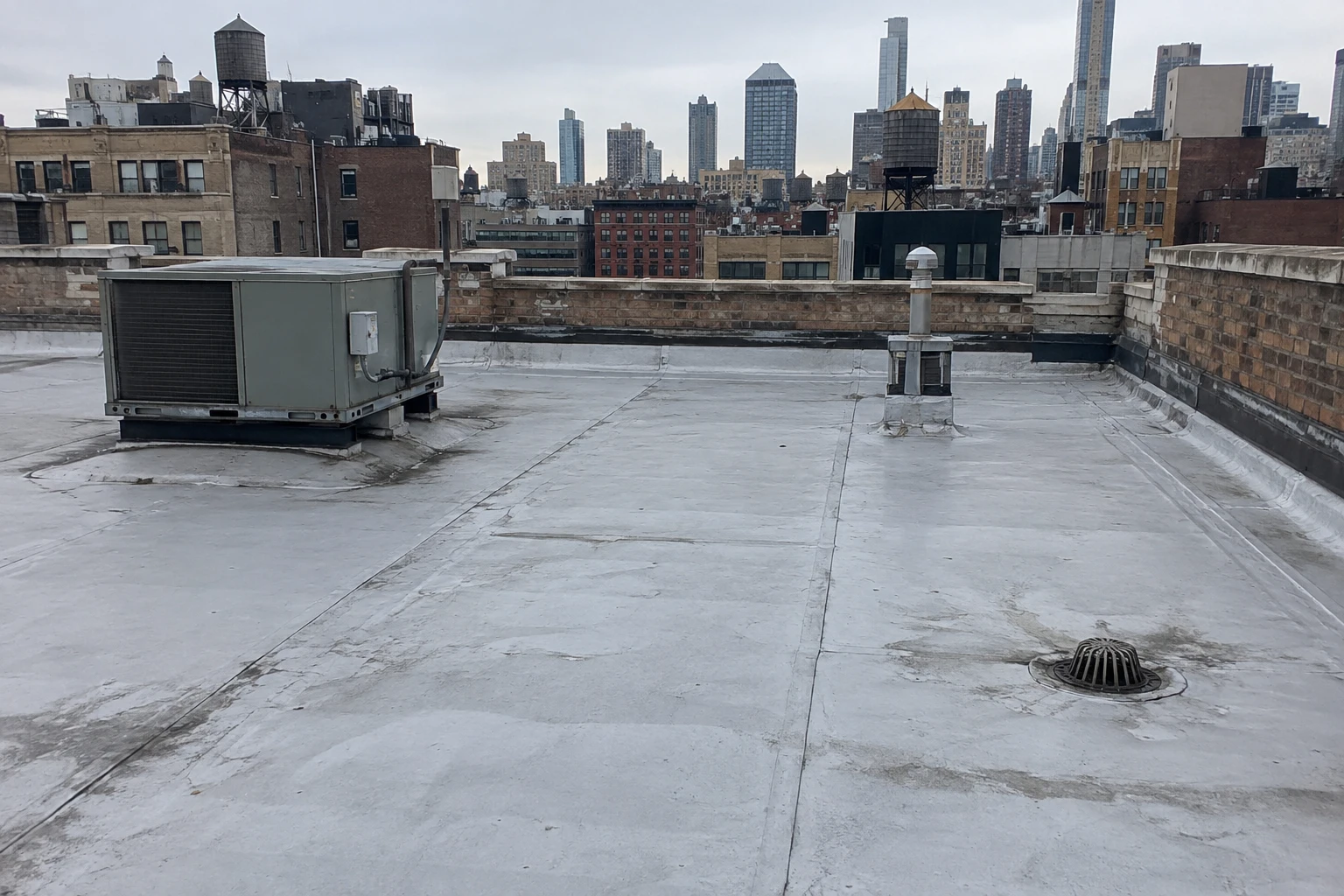
Acquisition roof surveys, condition ratings and reserve planning for Manhattan, NY investors and REITs, with moisture maps and core logs that price the risk.
An underwriting model carries a line for roof reserves, and the number in that line is usually a rule of thumb. A moisture map and a set of core cuts replace the rule of thumb with a measurement: one zone is dry, another holds wet insulation, a third has a membrane at the end of its service life. For an investor or a REIT buying in Manhattan, where the island's county produced about 1.007 trillion dollars of output in 2024 and asset prices are high, the difference between an estimated and a measured roof is a negotiating point. Request the roof survey before the inspection period closes, not after.
We survey, rate, repair and replace roofs for owners who buy, hold and sell, and we document each step for the file.
What should a roof survey deliver during acquisition?
Four outputs matter to a buyer. The first is a moisture map showing wet and dry insulation across each roof area. The second is a core log with the thickness, type and condition of each layer. The third is a condition rating for membrane, flashings, drainage and edges. The fourth is a cost range for repair, restoration or replacement over the next several years, expressed by cost driver and not as a single figure.
These outputs let the buyer price the roof into the offer and set the reserve. A roof with dry insulation and a sound membrane may need only maintenance. A roof with widespread moisture needs replacement, and inside the city that brings the sustainable roofing zone of Local Laws 92 and 94 into the estimate, to be covered by solar, a green roof or both. Our due diligence roof surveys carry that scope into the estimate. Ask for the survey as soon as access is granted.
How do roof ratings feed a reserve study and a hold period?
A hold period is a sequence of capital decisions. A roof rating gives each decision a date: this roof can be maintained for five more years, that one needs coating in two, a third must be replaced before the refinance. The ratings move into the reserve study, and the reserve study moves into the model. As the ratings change after each survey, the dates move, and the model follows.
The same record helps at sale. A buyer's engineer will survey the roof, and a seller who presents a dated moisture map and a maintenance log shortens that conversation. Our roof asset management process keeps the file current across the hold, so the record is ready when the sale is. Landmarked buildings, with their added review time, carry that note in the plan. Update the rating after any storm, claim or major repair.
How do different Manhattan building types change the roof risk?
The island's roofs range from cast-iron loft buildings and tenements to supertall towers. Midtown holds about 400 million square feet of office space, much of it in towers with setback roofs, where terraces sit below higher walls and collect runoff from above. Prewar five and six story buildings fill the East Village, the Lower East Side, Inwood and Washington Heights, and their flat roofs carry bulkheads, tanks and other rooftop items. SoHo-Cast Iron, with about 500 buildings, is one of the landmarked districts where visible changes are constrained.
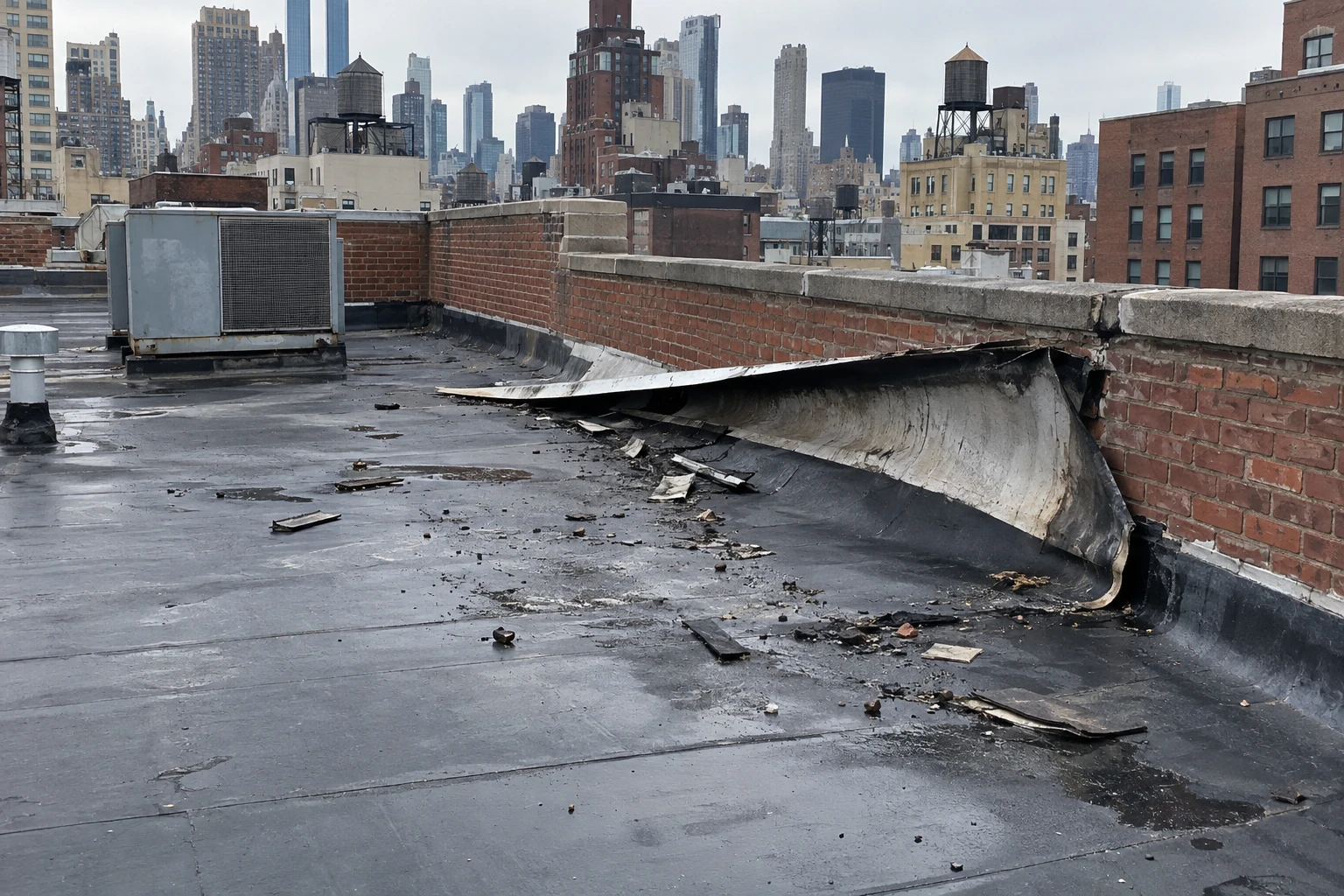
Each type has a different failure pattern and a different cost to correct. A tower terrace fails at the wall junction and the drain. A tenement roof fails at the parapet and the bulkhead. A loft roof depends on its skylight and cornice details. A survey reads these patterns and reports them by type, so a multi-asset owner can compare. Send the asset list with building types and ages.
Many investors hand day-to-day control to property management companies, and the survey record is the shared language between the two. The manager sees the repair list, the owner sees the capital plan, and both read the same ratings. Where a building houses medical tenants, the healthcare systems that lease space may impose their own conditions on roof work, which the plan notes at the start. Consistent records across all of these parties prevent disputes about what the roof was when the lease began.
What do extreme weather events mean for a holding?
Sandy, on October 29, 2012, flooded about 17 percent of the city and left Lower Manhattan south of 39th Street without power, after a 14.06 foot surge, measured at The Battery against average low tide. Ida's hour of 3.15 inches on September 1, 2021 was the heaviest the city had recorded. Events of that scale test drains, flashings and insurance.
An owner with a rated portfolio can respond in an order: survey the poorest roofs first, document damage for the carrier and schedule repairs by risk. Our roof insurance claim assistance turns the survey into a claim file. A storm damage roof repair then follows the priority set in the rating. The pre-event rating should be kept on hand, since the carrier asks for it.
When does replacement beat repair on an income property?
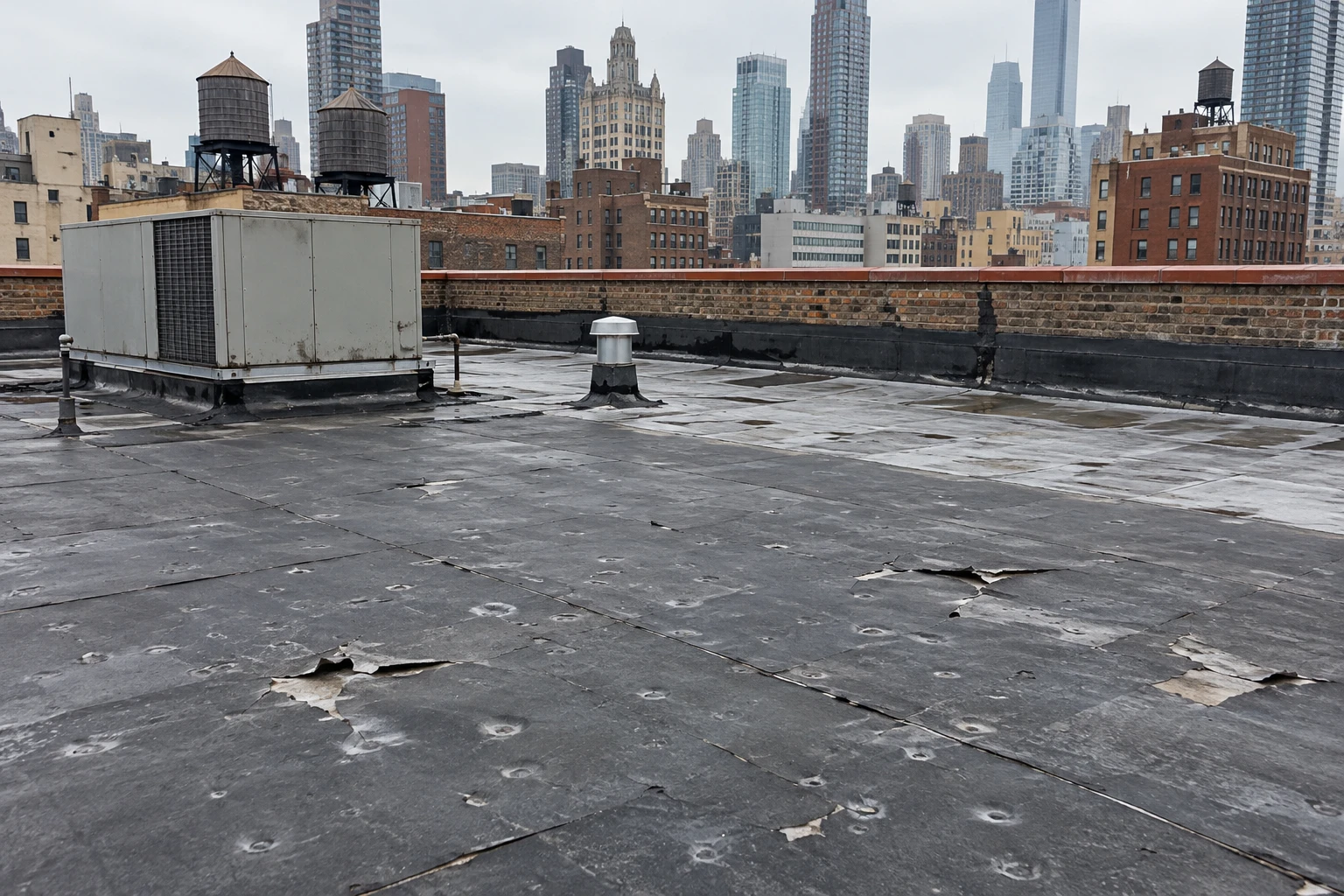
Replacement beats repair when the cost of repeated repairs, and the damage between them, exceeds the cost of a new assembly over the period the owner will hold the asset. A survey with core cuts provides the inputs: the share of wet insulation, the remaining life of the membrane and the cost of the repairs needed to reach the next planned event. Where moisture is widespread, replacement is usually the cheaper path to a dry roof.
Coating or a recover can bridge a hold period when the insulation is dry. A roof coating restoration extends service life at lower cost, and a roof recover overlay adds a new membrane over a sound base. Each option is priced with its cost drivers and its effect on the next filing. For investors who own in Hudson Yards and across Midtown, the plan compares buildings on one scale. Choose the option that fits the hold, and record why.
Timing within the hold matters too. A replacement late in a hold period mostly benefits the buyer, so the owner weighs recovery in sale price against the carrying cost of a failing roof. Where a coating or a targeted repair can carry the roof through the sale, backed by the moisture map, capital may be better spent that way. We lay out each path with the schedule and the cost drivers, and the owner decides with the whole picture in hand.
Commercial Roofing Questions
What determines how long an acquisition roof survey takes?
Access, roof area and the number of roof levels determine it. A small roof can be scanned and cored in a day. A tower with several setback levels takes longer. Tell us the closing timeline and we plan the survey to fit it.
Can the survey be done before the seller grants full access?
A drone pass and a visual survey from adjacent roofs or the street can start earlier, but a moisture map and cores need roof access. We state in the report which findings rest on limited access.
How do we compare a roof reserve in the model to the survey?
Place the survey's cost ranges by year next to the model's reserve line. Differences show where the model is light or heavy. We provide the ranges by cost driver so the comparison is direct.
Does a new roof help at sale?
A new roof backed by a closeout file, photographs and manufacturer paperwork answers a buyer's engineer before the question is asked. The file counts as much as the roof.
What if the survey finds a violation risk?
We report the condition and the scope needed to correct it. Legal and filing steps belong to the owner's counsel and expediter, and we supply the technical record.