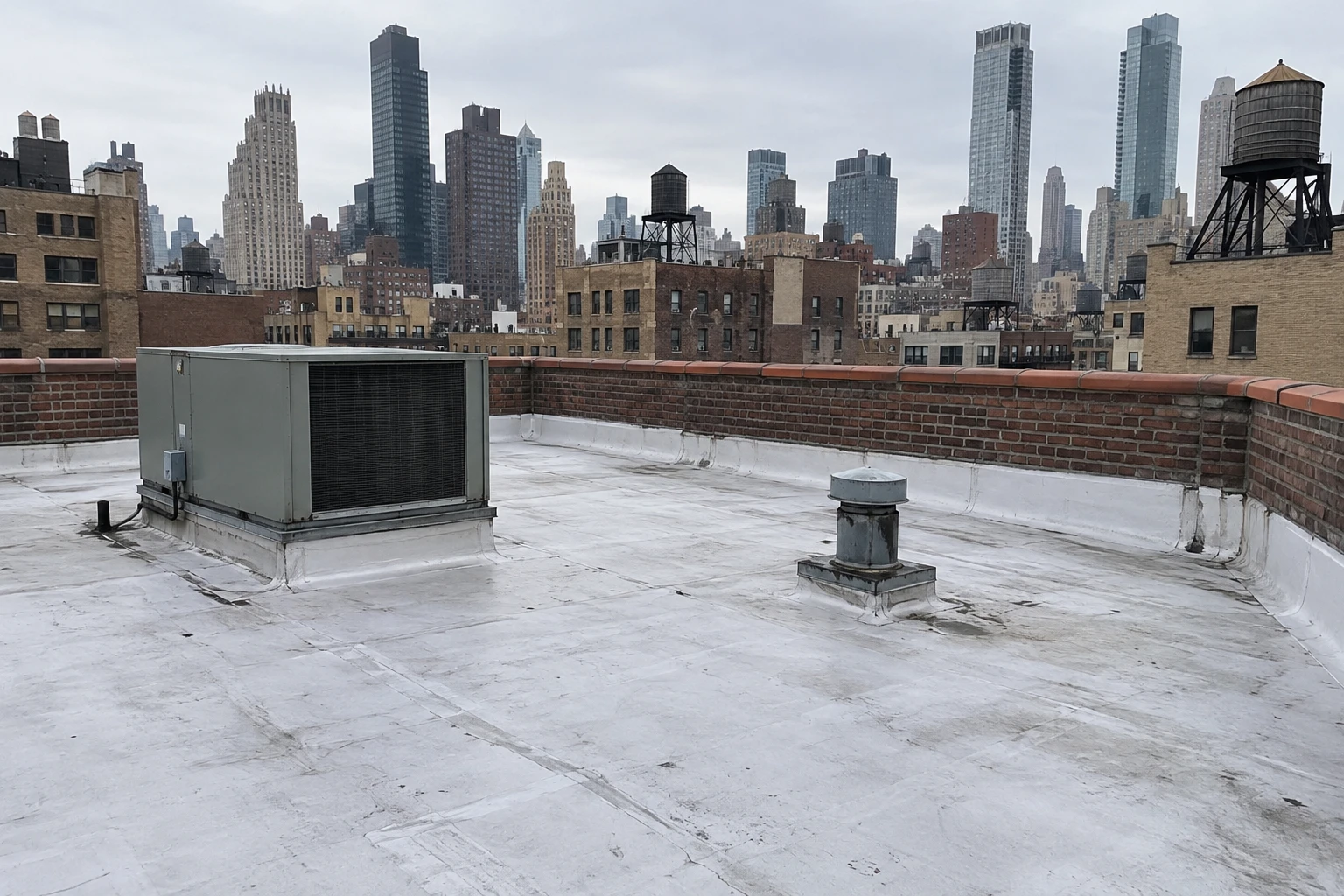
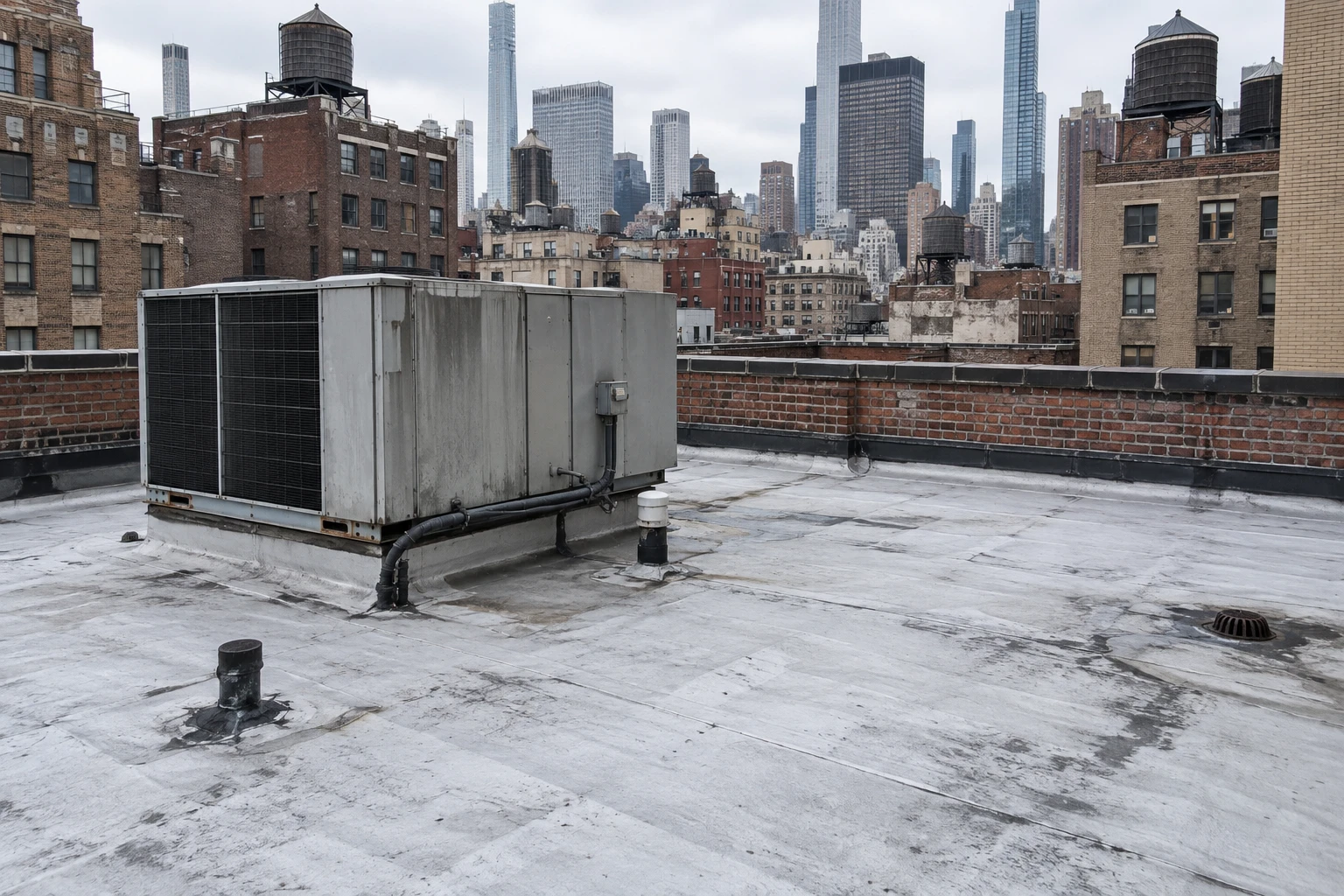
Holcim Elevate (formerly Firestone Building Products) roof categories in Manhattan, NY: EPDM, thermoplastic and metal roofs surveyed, repaired and documented.
A pull test on a flashing termination gives a number in pounds, and on an aged roof the number is often lower than the termination bar suggests. Holcim Elevate is the name of the company that was formerly Firestone Building Products, and its commercial range covers EPDM rubber, TPO and PVC thermoplastic membranes, metal roofing and insulation. The paper trail for a roof can carry both names, an older one on the original documents and the newer one on recent ones, and the asset manager's question is whether they describe one roof or two. In Manhattan, NY, where a rooftop is often a patchwork of repairs and recovers, the core log answers it.
We survey, repair and replace these categories of roof. Documents under either name, the last roof report and any open violations are what the survey asks for first; scope and rating precede any price.
How do we reconcile records under two names?
We start from the roof and work back to the paper. A core and a surface inspection identify the system family. The label and the documents give the name, the date and the specification. If the two agree, the file is consistent. If they do not, the survey records the difference and the owner decides how to document it.
A name change at the manufacturer does not change what is on the deck, so the roof is rated on its condition and the file notes both names. The warranty document, if there is one, governs what the manufacturer will cover, and we read it before touching the roof. The reconciliation matters for a sale or a refinance, because a buyer's counsel will compare the paperwork with the survey and ask about any gap. We write the finding in plain terms: the roof in front of us is a rubber sheet, adhered, installed in a given year according to the documents, with these repairs on it since. If the documents name a different system than the one we find, the report says so and shows the core that proves it, so counsel can ask the right question of the seller.
What does the survey look for on an aged rubber roof?
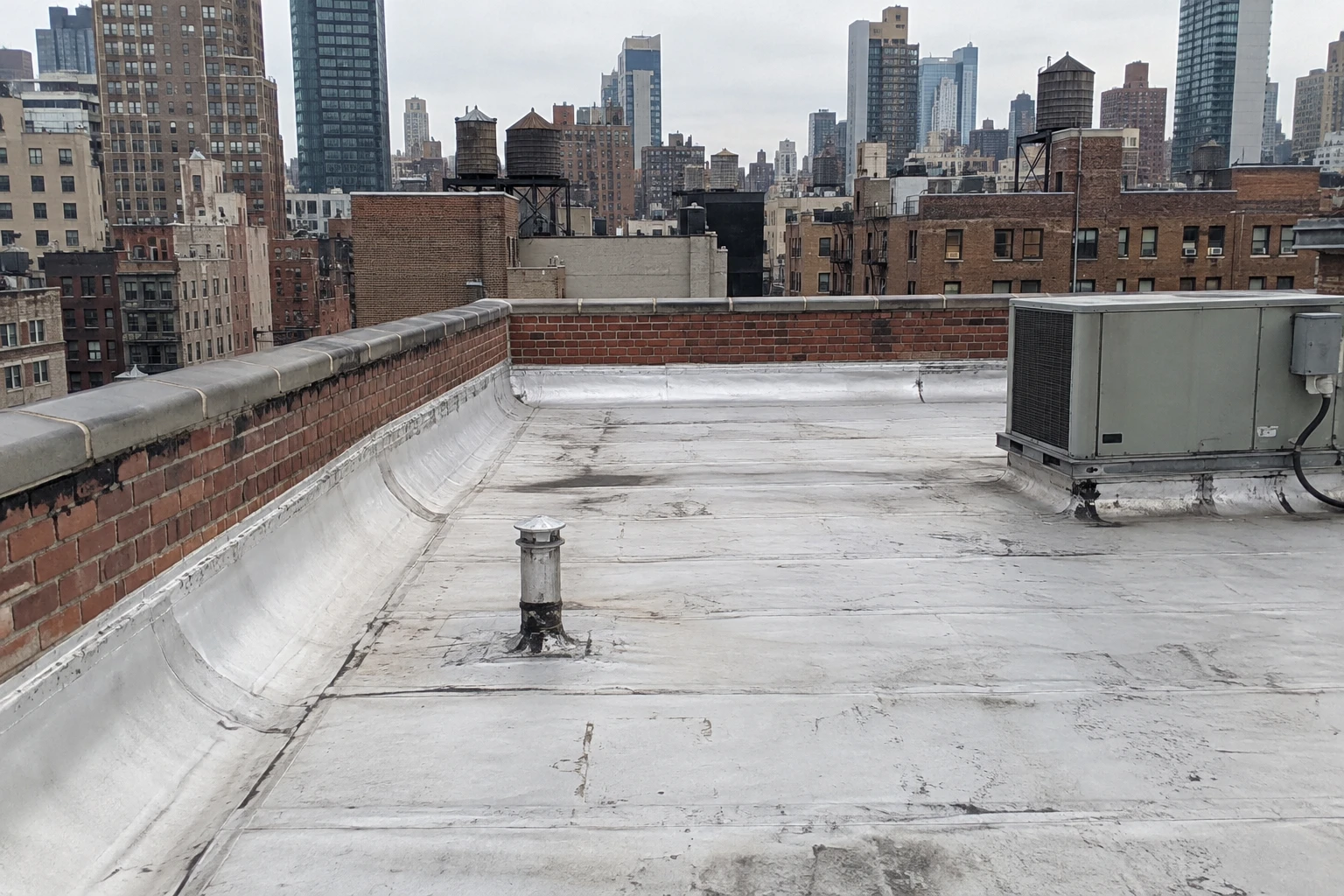
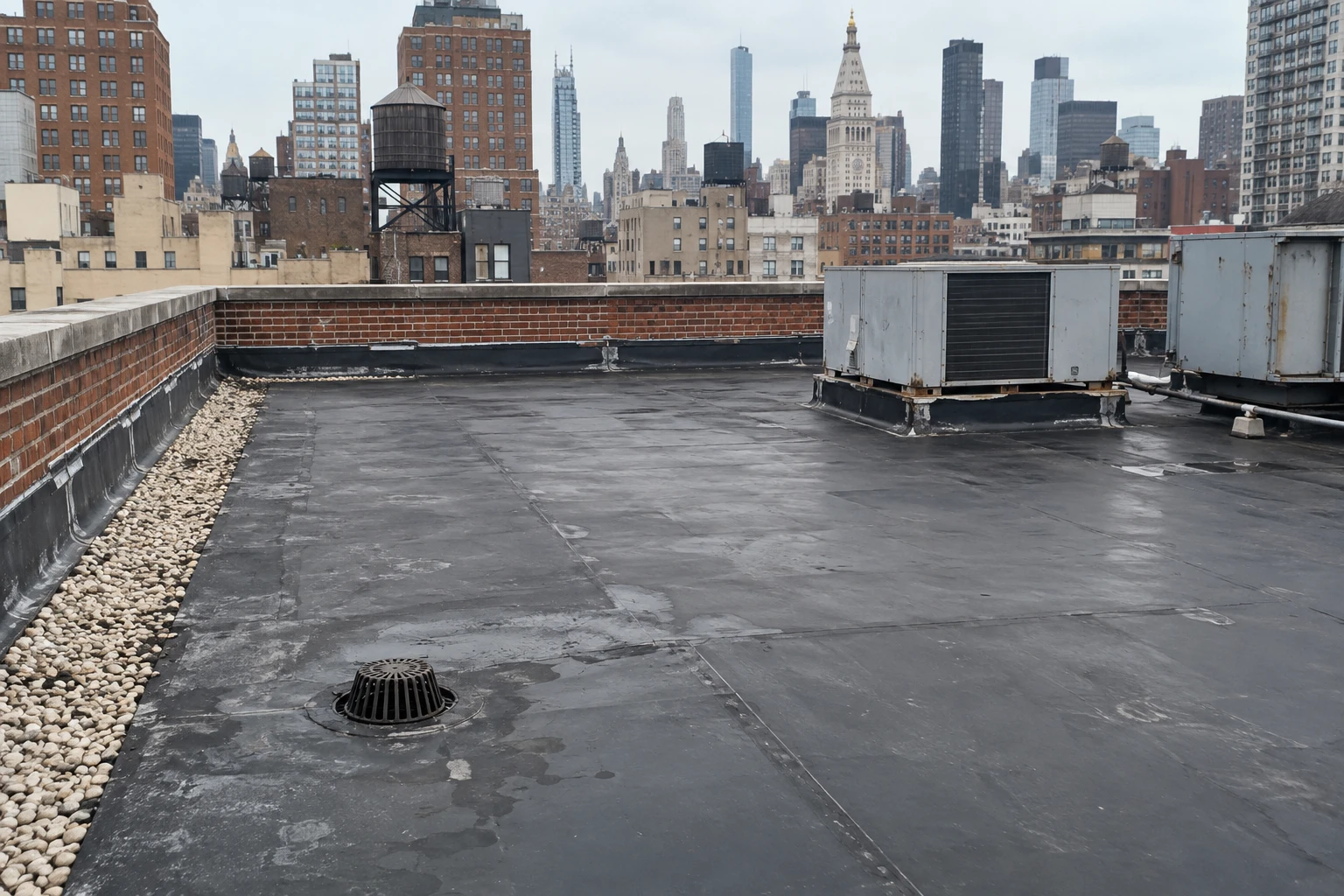
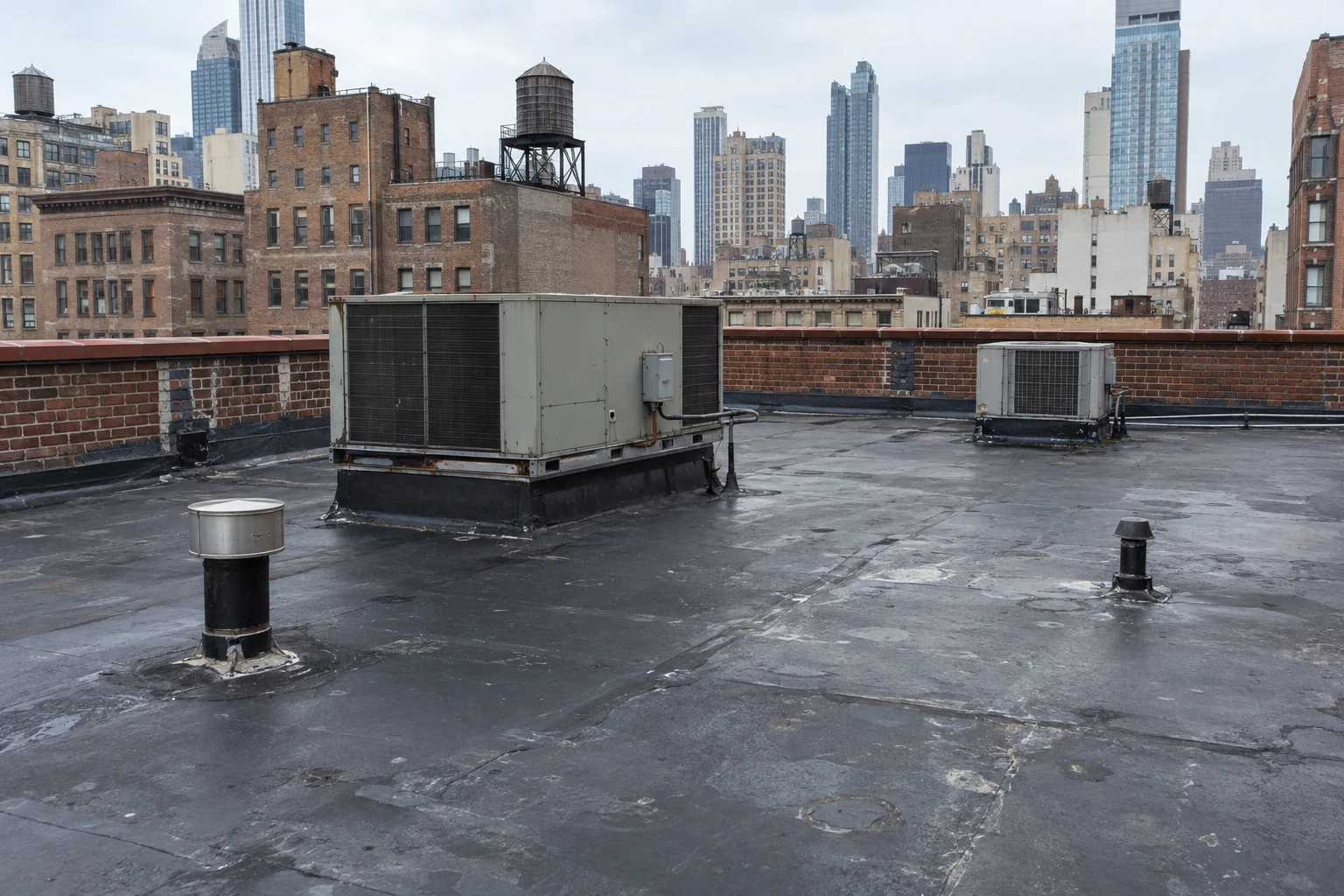
Shrinkage, splice condition, surface chalking and flashing tension. A rubber sheet that has shrunk pulls on every termination, and a termination that has pulled loose lets water behind the sheet. We measure the gap between the membrane edge and the curb or wall, probe the splices and press-test the tape. A splice that peels under the thumb is a repair; a pattern of failing splices across the field is a sign the adhesive has aged out. We map each failed splice on the sketch, count them by zone and compare the count with the area. A cluster at the south edge points to sun and heat, a line along a parapet points to movement, and scattered failures point to age. The map shows the cause better than a list.
The EPDM roof that reaches this condition is a candidate for a recover if the insulation is dry and a replacement if it is not. The cores decide. Where Local Laws 92 and 94 of 2019 reach a full replacement and its sustainable roofing zone, that decision carries design consequences, and the survey brings them to the owner before the choice is made.
How do thermoplastic sheets from this family age?
TPO and PVC are joined by hot-air welds. As the sheet ages, it can lose plasticizer, stiffen and shrink, and welds can fatigue at corners. We probe each lap, test a patch weld and look at the surface for crazing. A sheet that accepts a new weld can be repaired. One that refuses is at the end of the line.
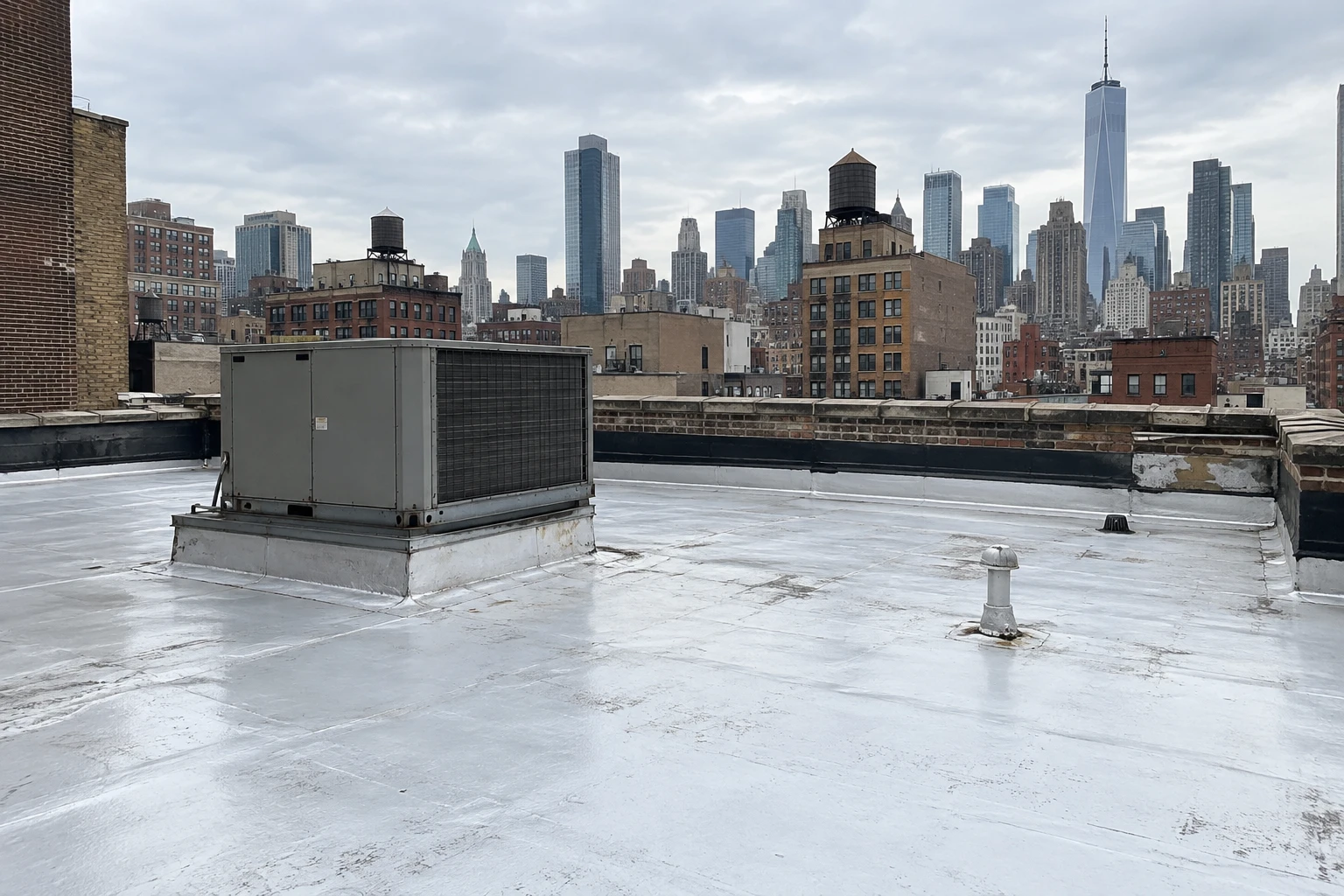
Central Park's temperatures have swung from minus 15 F to 106 F, with 29.8 inches of snow in an average year and a strong urban heat island. A thermoplastic sheet works through all of it, and the movement concentrates at corners, curbs and walls. We check relief at those points and the condition of the sealant. A sealant bead that has cracked and hardened is replaced after the surface is cleaned, and the termination bar is re-fastened at the spacing the wall allows. Where the wall is soft masonry, we test the fastener before relying on it, since a fastener that pulls out of crumbling brick holds nothing. A cool roof replacement lowers the surface temperature, and a reflective coating over a dry, sound sheet can do part of the same work.
What do metal roofs on these buildings need?
Where a roof is metal, the checks change: screws, laps, seams, clips, snow retention and coating condition. Exposed-fastener panels leak at screws as washers dry out. Standing seam roofs need free-sliding clips and closed seams. Rust at cut edges starts quickly where the coating is scratched.
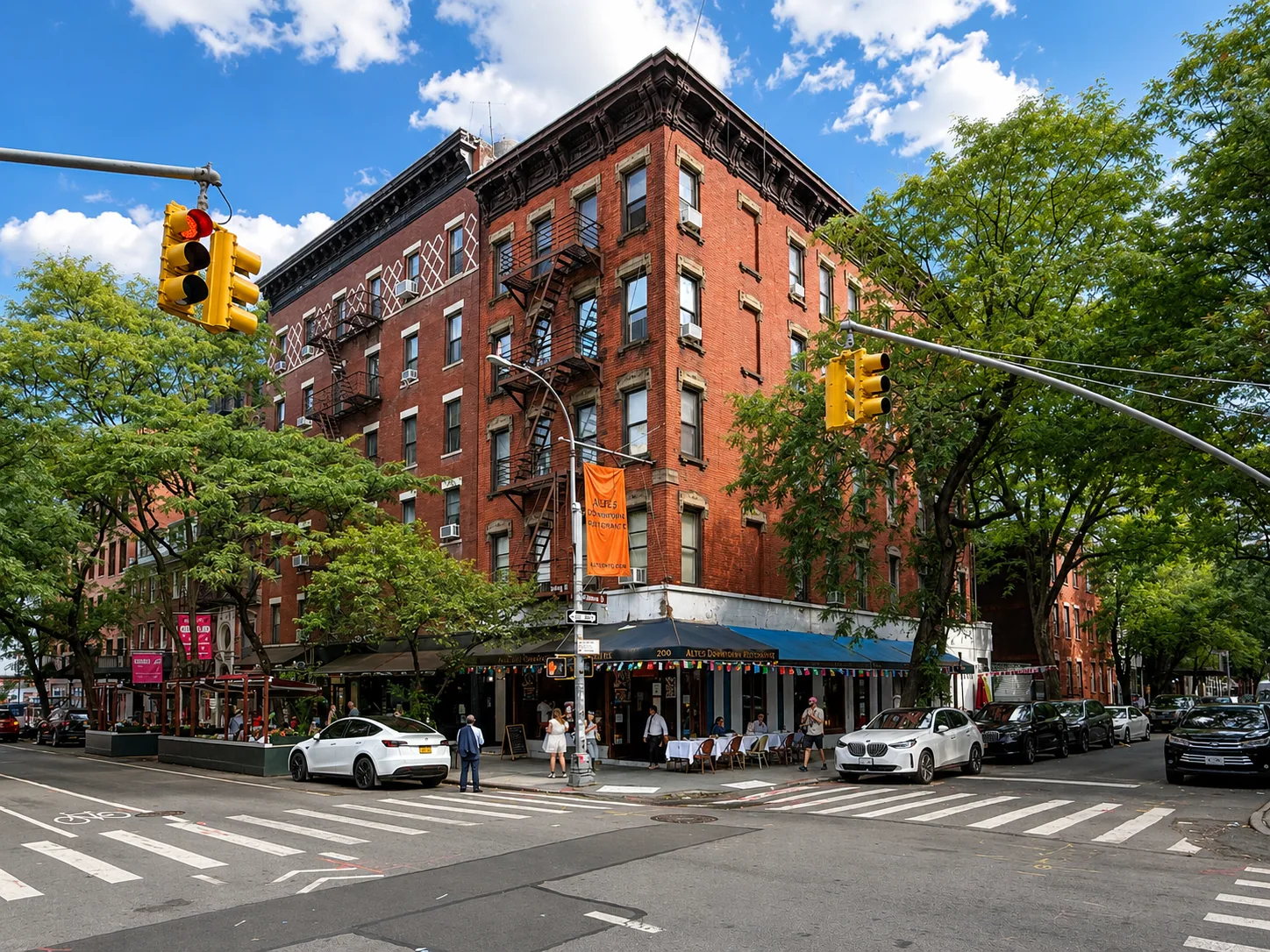
Metal can appear on a building as full roof panels or as smaller elements such as cornices, bulkhead roofs and flashings. We survey each, and the report lists the metal separately from the membrane. Visible metal work is regulated in the landmarked districts of Greenwich Village, whose historic district reaches across more than 50 northern and western blocks, and SoHo, where the cast-iron district spans 26 blocks and about 500 buildings. A repair in SoHo is repaired in kind unless the review allows a change.
How does the comparison with other makers work?
On exposure, weight, repair path and district rules. Makers such as Carlisle SynTec and Duro-Last make comparable single-ply systems, and the survey tells us what the roof needs. We write a table of options with their seam methods, weights and cost ranges, and we add a column for what each option does to the flashing heights, since a thicker assembly can leave a short parapet unable to hold a code-height flashing. The column is where a good-looking option sometimes loses to a plainer one.
What Ida's September 1, 2021 hour of 3.15 inches shows is what happens when a drain leader cannot carry the rate: water stands against every detail. The table includes the drainage fix with each option, because a membrane that is right on paper fails if the roof ponds. The roof warranty management file keeps the terms and the conditions beside the table.
Commercial Roofing Questions
What decides whether an older rubber roof can be repaired?
The splices, the shrinkage and the insulation. If splices are mostly sound, shrinkage is limited and the insulation is dry, targeted repairs buy time. If the sheet is brittle, shrunken or leaking across the field, replacement or recover is the better use of money.
Do roofs labeled with the older name get different treatment?
No. We identify the system by its surface, seams and cores, and we repair with compatible materials. The label supports the file but does not set the method.
Can a metal roof in a landmarked district be repaired?
Yes, usually in kind. Visible changes may need review. The building's status comes first, then the roof's regulated features and then the scope, which puts the review step on the schedule from the start.
How does a pull test help?
It measures how well a termination or a flashing is holding. A low reading points to shrinkage, aged adhesive or loose fasteners. We record the number and photograph the spot, so a later test shows whether the repair held.
Does a New Jersey building face the same local-law requirements?
No, those requirements stop at the city line. A New Jersey building answers to state and municipal codes instead, and its local building department says which, while the survey method stays the same.