Reflective cool roofs for Manhattan, NY buildings: surface temperature readings, membrane and coating options, code context and the records owners keep.
An infrared image of two roofs on the same block at four in the afternoon in July tells the whole story of reflectivity. The dark roof reads as a solid block of stored heat. The light roof beside it barely shows against the sky. The difference is not cosmetic. A surface that absorbs sunlight passes that heat into the insulation, the deck and the floor below, and then back out at night as the membrane contracts. Central Park has recorded 106 F, and the city carries a strong urban heat island on top of it, so a rooftop in Manhattan, NY lives at the hot end of the regional range for much of the summer. A cool roof changes that surface temperature, and the useful question for an owner is what it does to the asset's service life and the building's cooling load.
What makes a roof a cool roof?
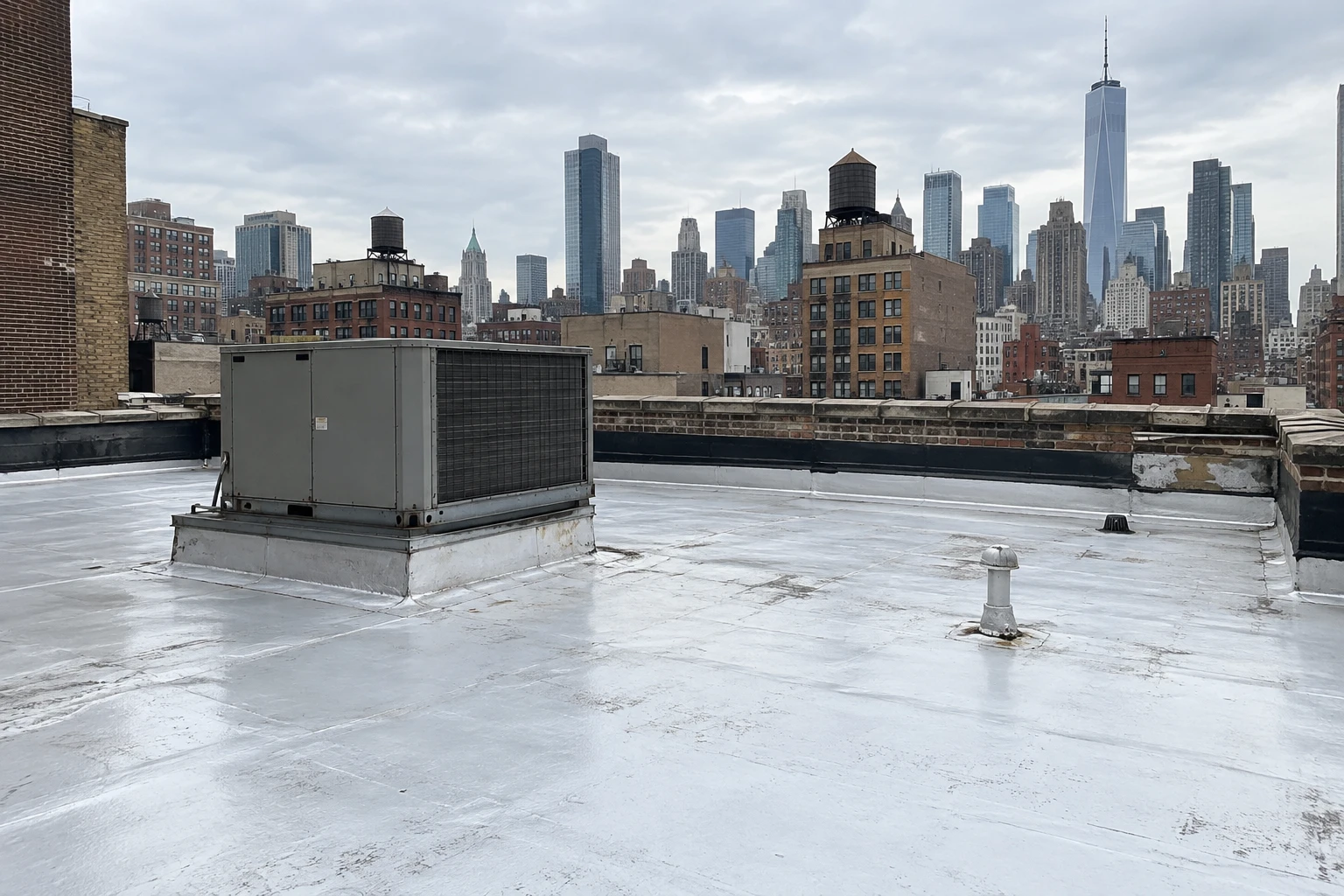
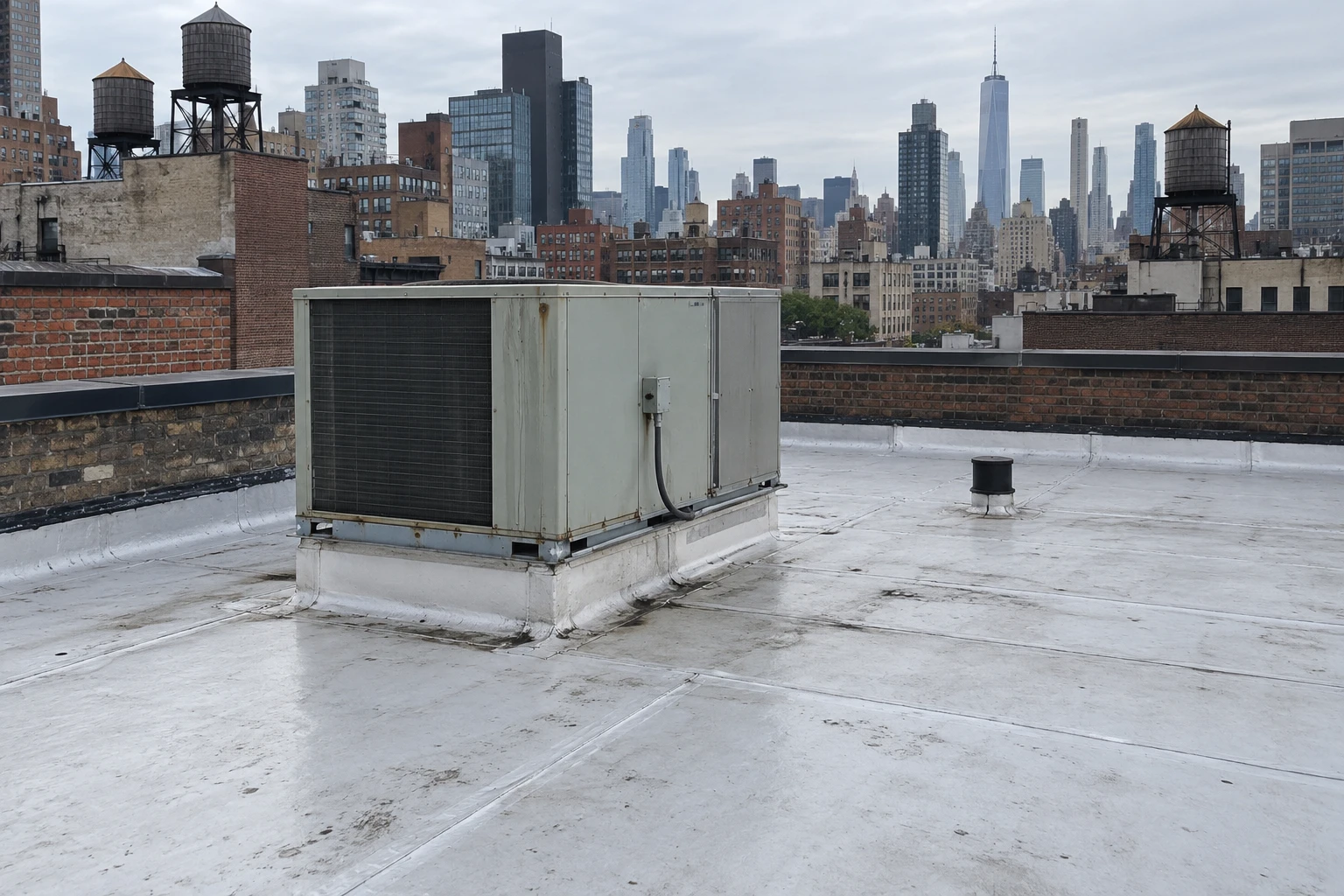
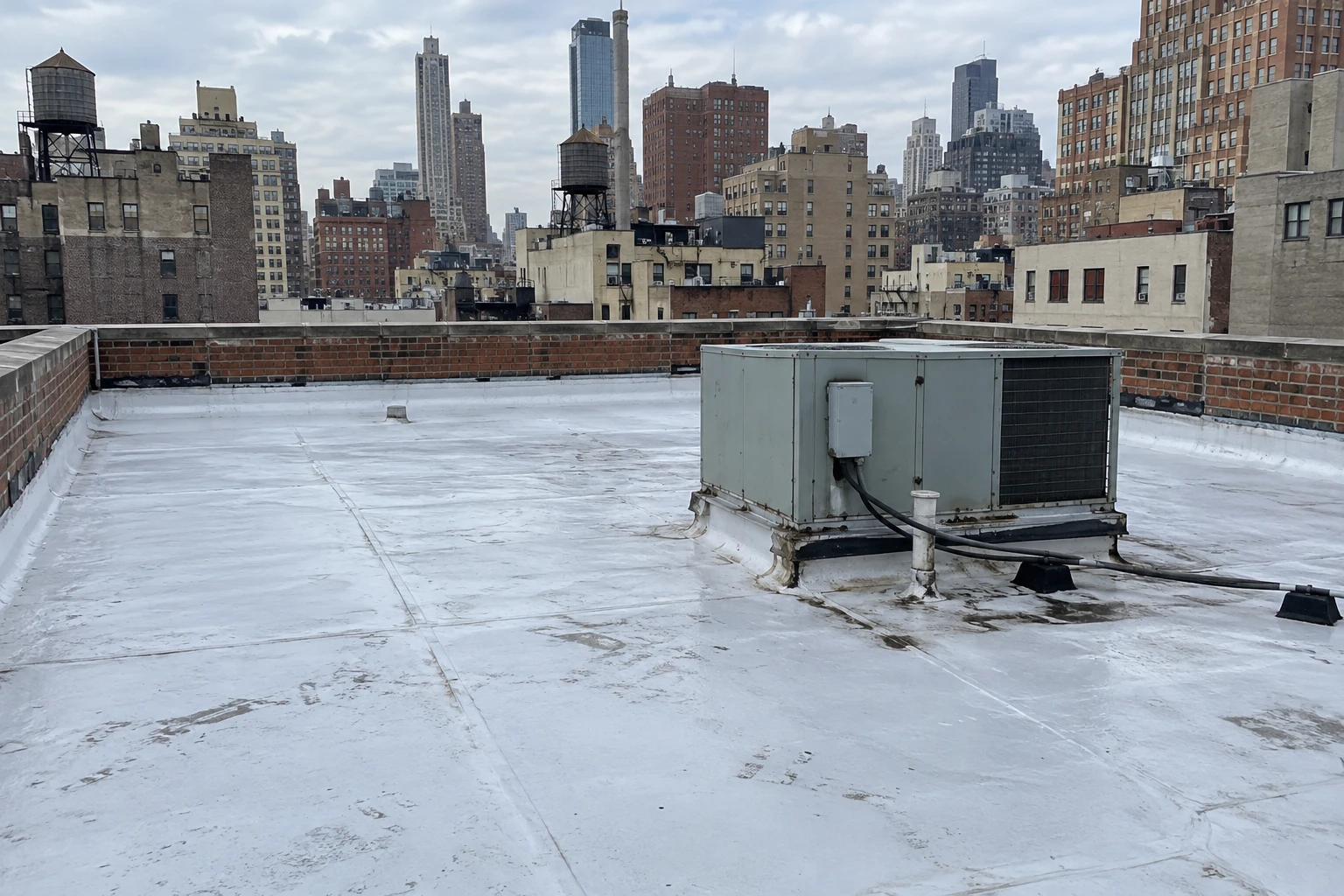
A cool roof reflects a large share of incoming sunlight and releases the heat it does absorb. Two properties matter: solar reflectance, which is how much sunlight bounces back, and thermal emittance, which is how readily the surface gives up heat. A white membrane or a white coating has both. A dark membrane with a reflective coating applied over it can reach a similar result.
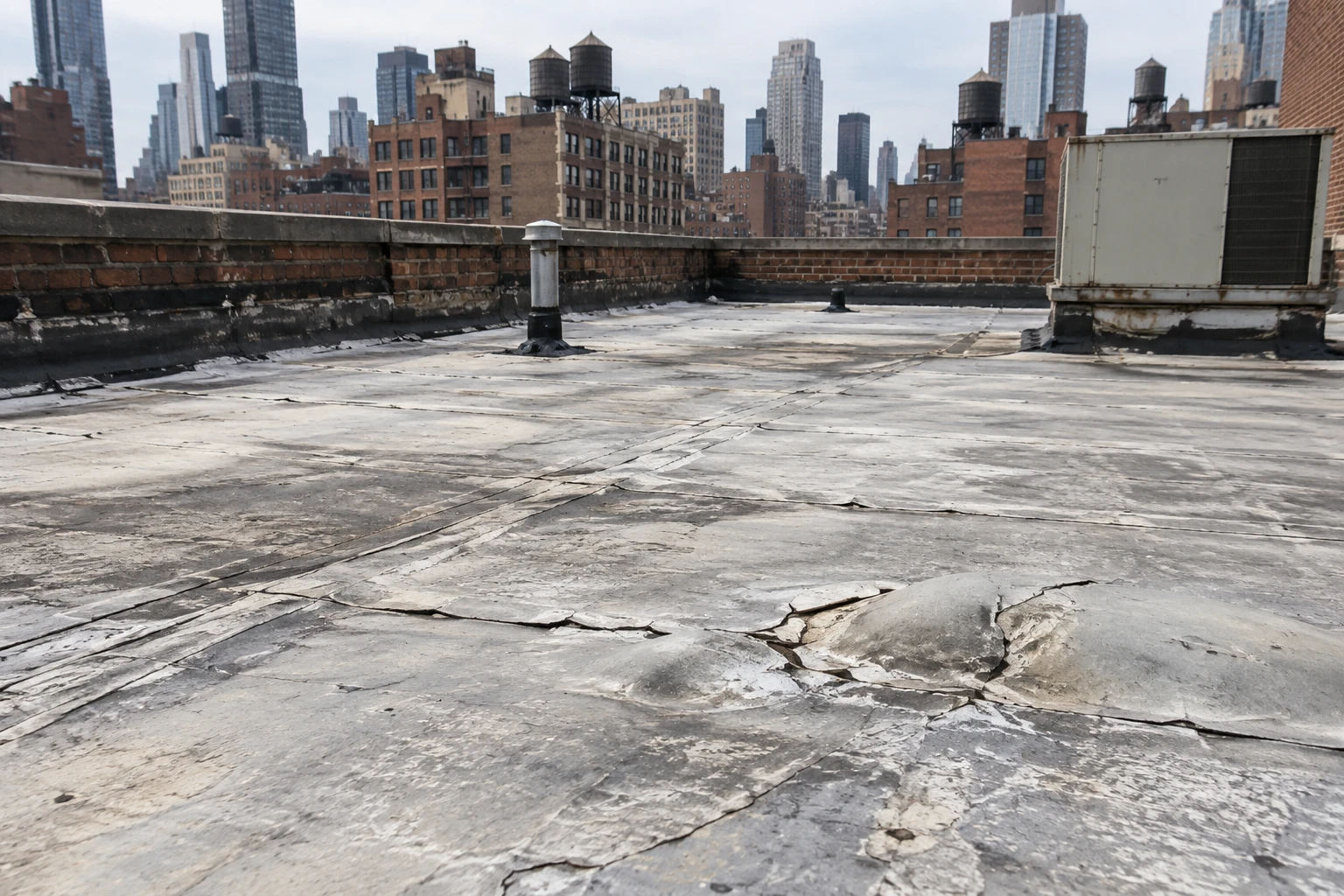
Reflectance falls as a roof ages. Dirt, algae and chemical deposits dull the surface, and the roof gradually reads warmer. For that reason we treat a cool roof as a surface that needs cleaning and re-measuring, not as a one-time installation. The condition of the surface goes into the roof's file, and a drop in reflectance becomes a maintenance trigger long before the membrane itself is at risk.
Which systems deliver a reflective surface?
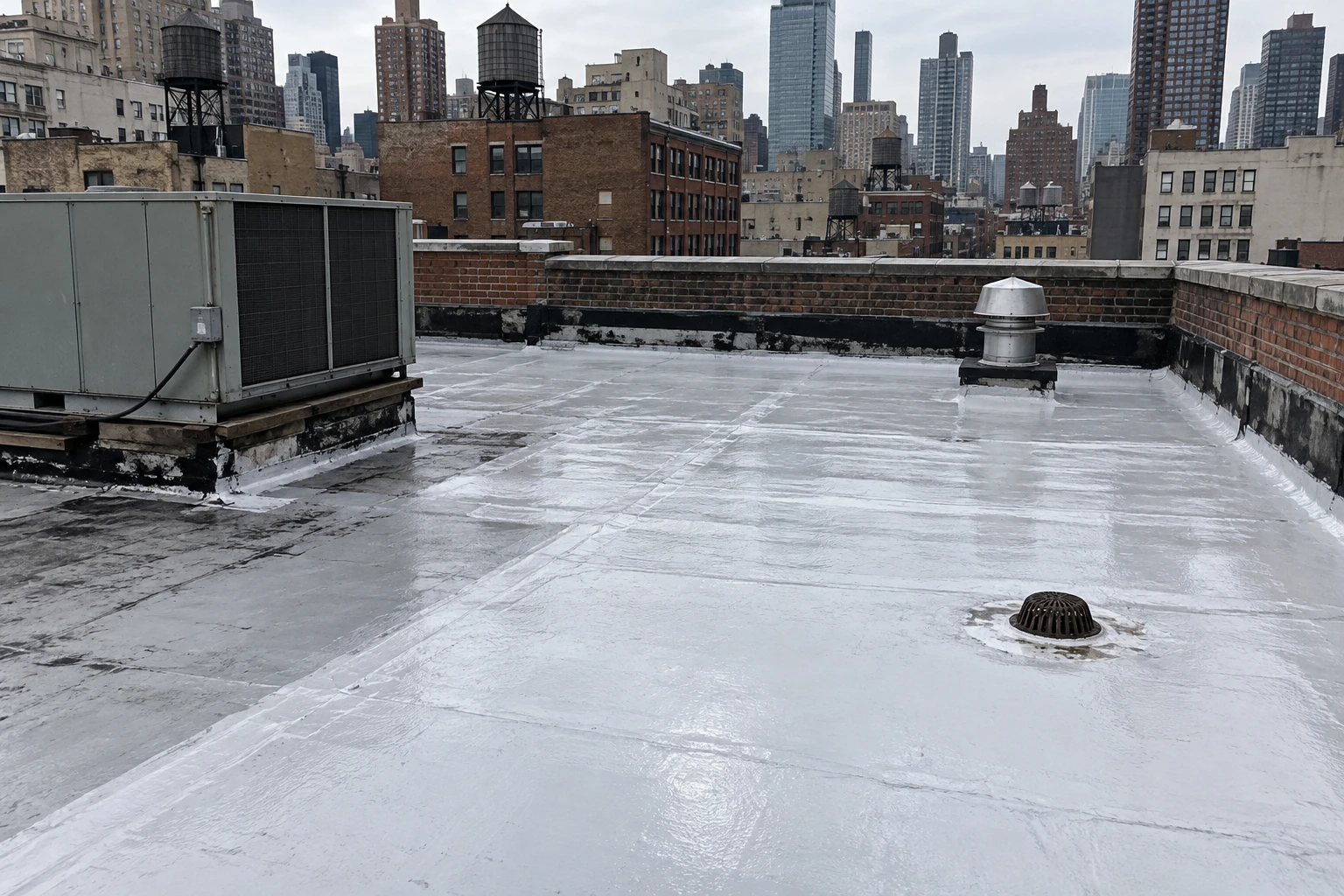
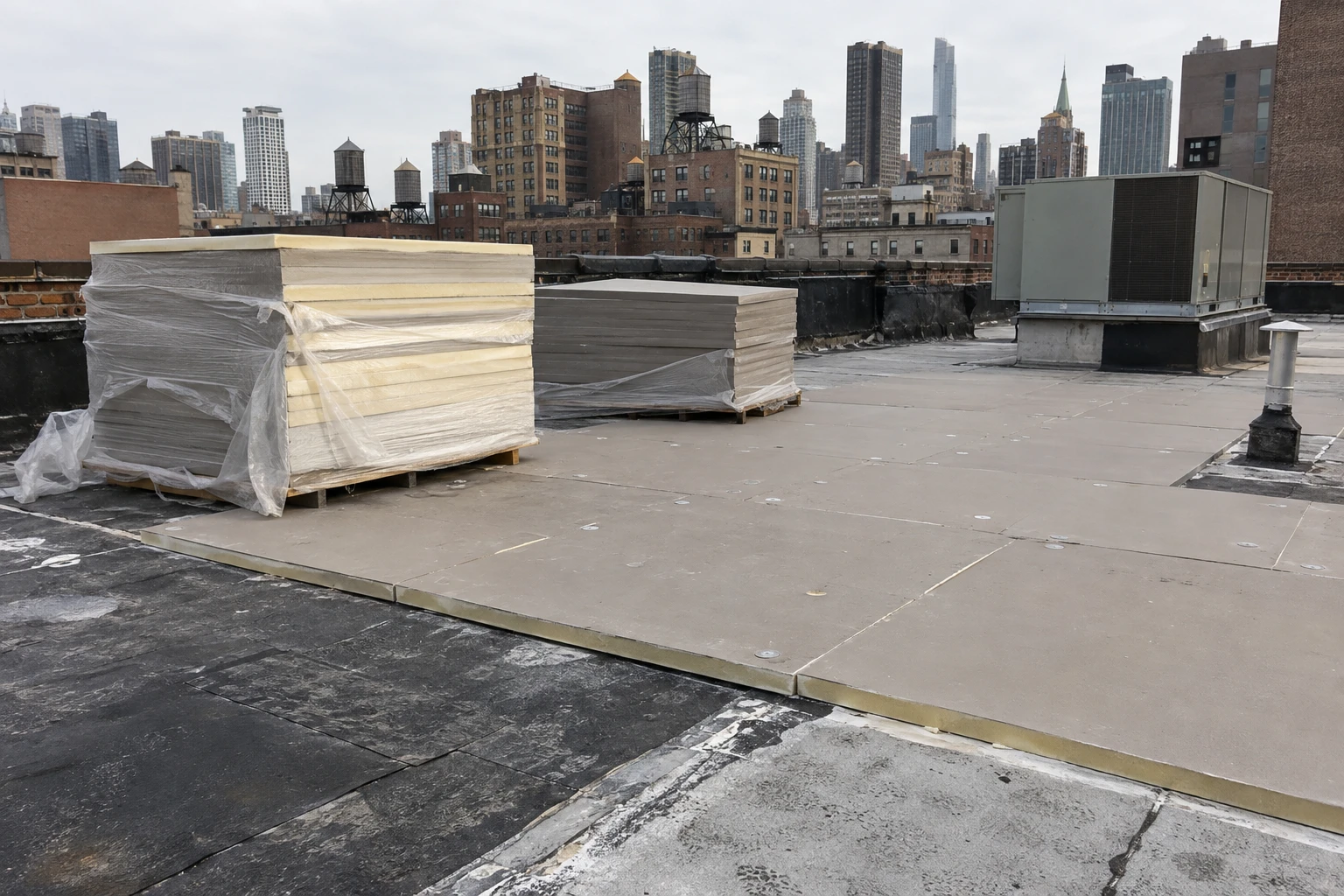
There are three routes. A white single-ply membrane, such as TPO, is reflective from day one and is installed as part of a new roof or a recover. A liquid-applied coating, either silicone or acrylic, can be applied over a sound existing roof, which makes it the lowest-disruption path when the roof qualifies. Reflective granules or a reflective cap sheet on a modified bitumen roof do the same job on assemblies that use that system.
Each route has limits. A coating needs a dry, adhered substrate, which an infrared scan and core cuts confirm. A new membrane needs a roof that is due for replacement. A reflective cap sheet needs a roof that was built to take one. We lay out the three paths against the survey, then price the ones that fit.
What does a cooler surface do to service life?
Heat accelerates the aging of most roofing materials. A membrane that swings across a very wide daily range moves at its seams, flashings and fastened edges, and each movement is a small stress. Central Park's record range runs from minus 15 F to 106 F, and the surface of a dark roof in sun can exceed the air temperature by a wide margin. Lowering the peak surface temperature narrows the swing.
The effect is on the rate of wear, not on a number we can promise. A cool surface tends to slow the heat-driven aging of the membrane and the sealants, and it reduces thermal movement at flashings. That is the case we make in the file: a lower peak temperature, a smaller daily range and a longer interval before heat and UV damage appears in the survey. Whether that extends the life by a year or by several depends on the roof, and the condition rating tracks it.
How does it affect cooling load and the energy code?
On a building with air conditioning, a reflective roof cuts the heat that reaches the top floor, and the benefit is largest on buildings with a thin roof assembly, a large roof area compared with the floors below, or an older stock of low-slope roofs. The NYC Department of Buildings publishes the 2022 NYC Construction Codes, including an Energy Code, and a replacement or recover is the point where those requirements for insulation and surface properties are reviewed. We check the current requirement before the design is fixed, and we bring the insulation depth and the reflective surface into the same decision, since roof insulation and cover board choices set the roof height at every edge.
Winter is the other side. A reflective roof gives up a little passive solar gain in cold months, and in a city that records about 29.8 inches of snow a year, the owner should know that trade-off. For most Manhattan buildings, summer cooling dominates, but a building with a heating-heavy load should have that calculated by its energy consultant.
How do Local Laws 92 and 94 fit with a reflective roof?
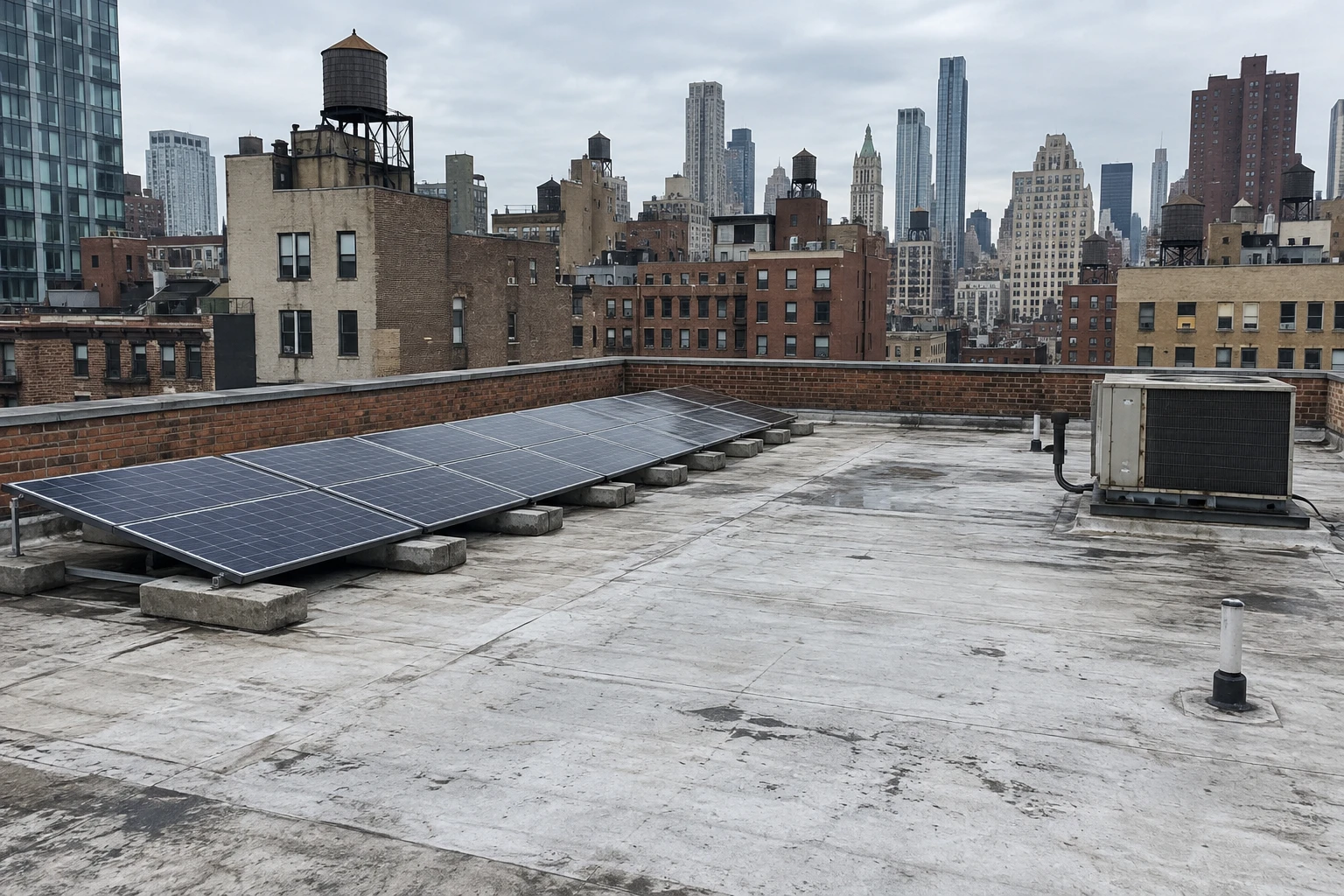
Since November 2019, Local Laws 92 and 94 have asked new buildings, enlargements and complete replacements to devote their sustainable roofing zone to solar panels, vegetation or both. A cool roof does not stand in for that zone on a full replacement. It does, however, serve the part of the roof that is outside the zone, and it provides a good base under a solar array, since a cooler surface sits beneath the panels. When a project is a full replacement, we set the zone first, then specify the reflective surface for everything around it. Where solar is planned, solar-ready roofing lays out the arrays so the reflective field and the panels share the roof without conflict.
Which Manhattan roofs gain the most?
Flat roofs on prewar multifamily buildings in the East Village and Washington Heights, where top-floor apartments often take the brunt of summer heat, are strong candidates. So are low-slope podium decks and setback roofs on Midtown towers, where the roof is a small part of a large building but sits in direct sun and amid reflected heat from adjacent glass. Landmarked districts are a different case, because a change visible from the street may need review, and a roof that cannot be seen from the street is easier to treat. The survey identifies which roofs are candidates, and the file records the reflectance reading before and after.
Commercial Roofing Questions
Can a cool coating go over our existing roof?
It can if the roof passes four tests: dry insulation, an attached membrane, intact seams and flashings, and a surface that takes the coating after cleaning. The infrared scan and core cuts settle the first two, and an adhesion test on a small patch settles the last. If any test fails, the failed area is repaired or removed first, or the route changes to a new reflective membrane.
Is white always the right color for a Manhattan roof?
White gives the highest reflectance, but it also shows dirt faster and reflects glare toward taller neighbors. In a landmark district or where a roof is visible from windows above, a light gray or tan may be accepted more easily. What settles the choice is the reflectance and emittance of the product, which we read from its rating data and confirm after installation.
How often does a reflective surface need cleaning?
Soot and dirt collect faster on some roofs than on others, so the interval follows the surroundings. We measure reflectance at installation and again during maintenance visits, and clean when the reading drops below the level in the file. A gentle wash with low pressure is usually enough, and the drain strainers are checked at the same visit.
Will a cool roof qualify for any incentive?
Programs change, and eligibility follows the product rating, the building and the filing. We supply the product data, the reflectance readings and the installation record that applications ask for, and the owner or the energy consultant confirms eligibility. We do not promise a specific rebate or tax treatment.