Repair of heat and UV roof damage in Manhattan, NY: crazed surfaces, brittle sheet, shrunken flashing and failed sealant, with reflective coating options.
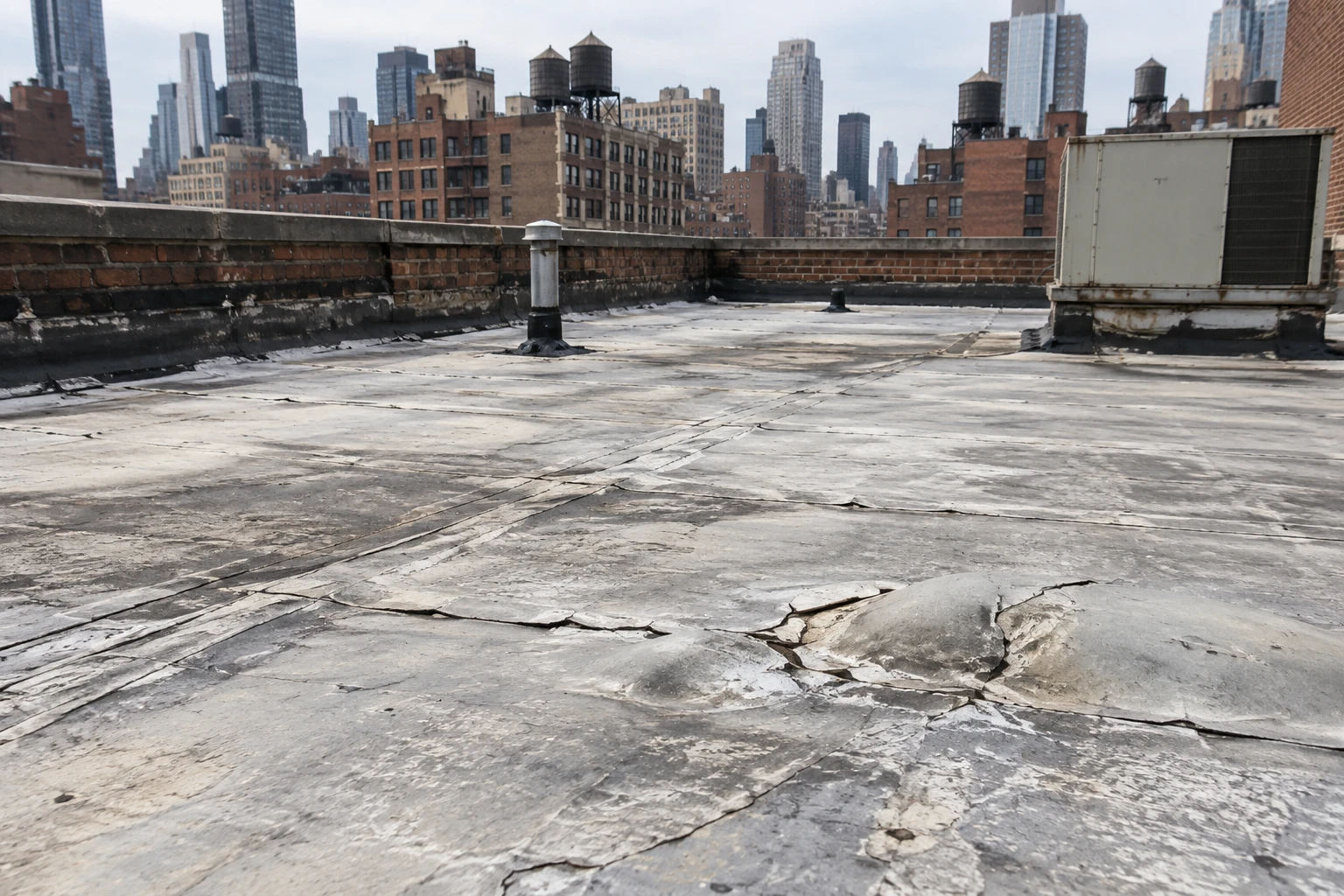
A thumbnail pressed into an aged membrane tells the surveyor how much plasticizer is left: a supple sheet gives and rebounds, while a heat-aged sheet stays dented or cracks along the dent. Surface temperature is the number behind that result. Central Park has recorded 106 F, a dark roof in direct sun runs well above the air and then cools after sunset, and the urban heat island keeps the warmth in long into the night. Heat and ultraviolet exposure work slowly, which is why they get missed until a roof is brittle. Photographs in raking light, where crazing and chalking show best, make a good first record.
Heat and UV damage is assessed and repaired, and reflective systems extend the life of roofs that qualify.
What do heat and ultraviolet light do to a roof surface?
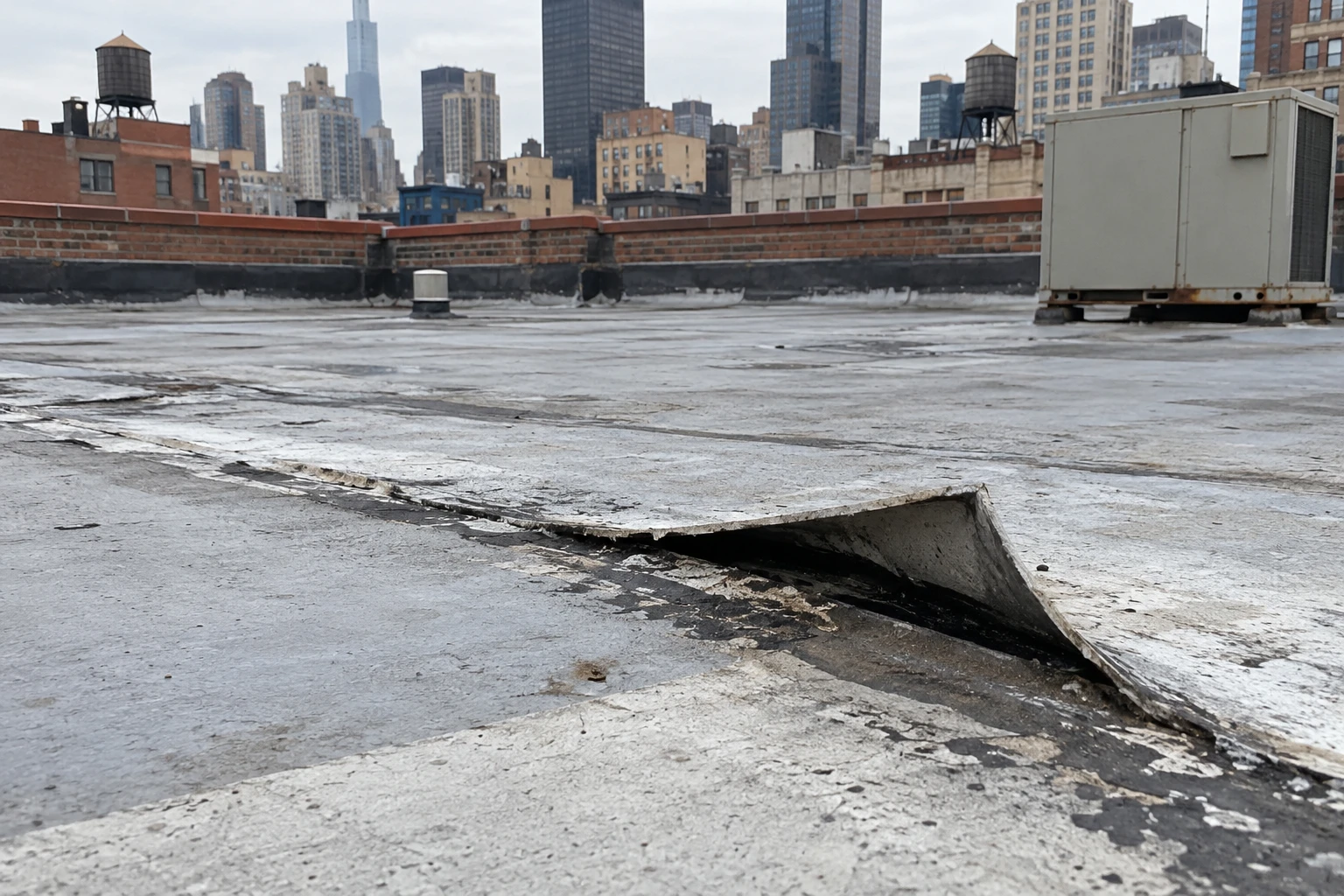
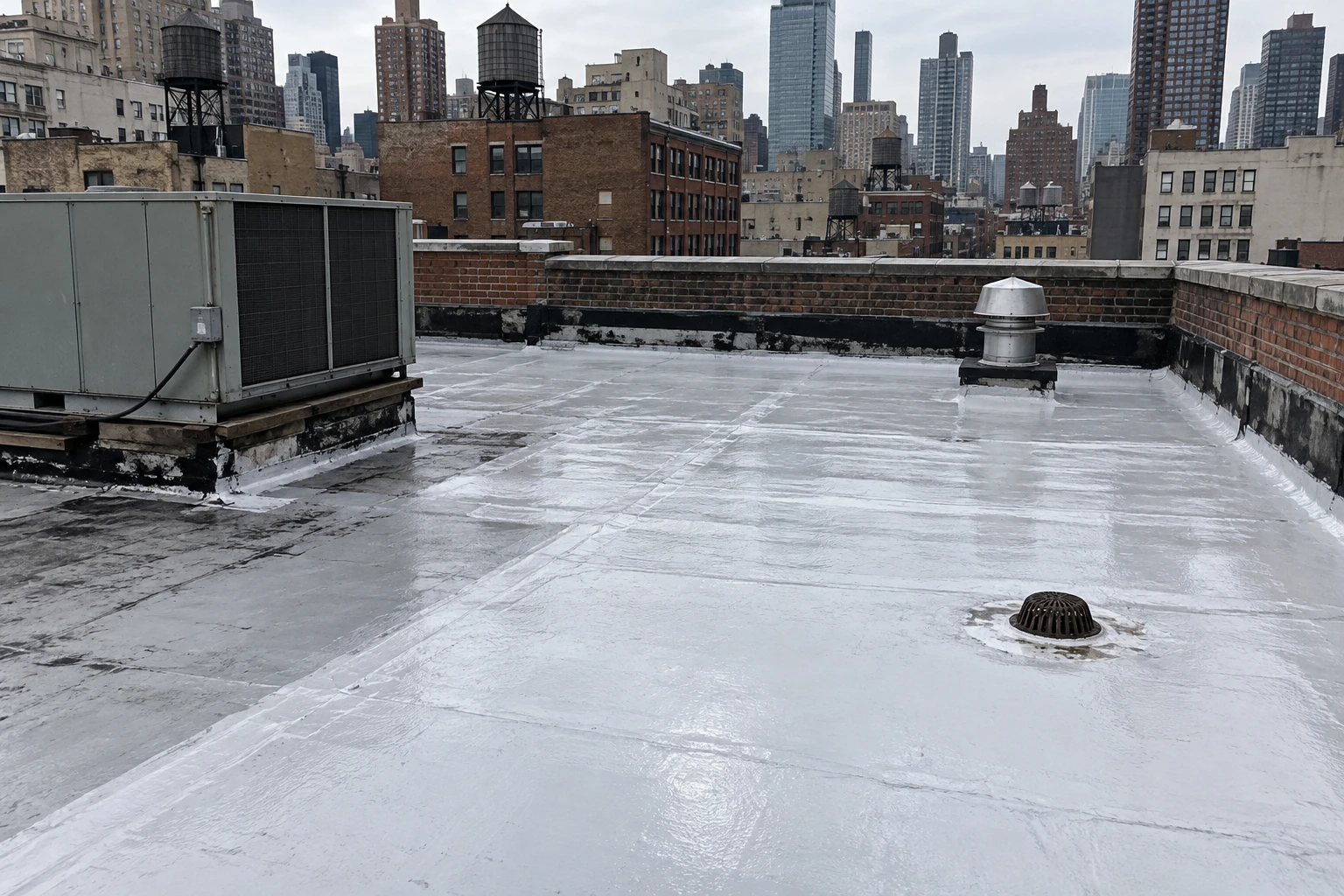
Ultraviolet light attacks the top layer of a membrane first. Thermoplastic membranes stiffen as plasticizer escapes, while rubber membranes chalk and craze, bituminous roofs shed granules while the asphalt below oxidizes and cracks, and coatings erode and thin. Heat speeds every one of these changes, softening adhesives and sealants and driving moisture out of the sheet.
The daily cycle adds fatigue. A roof warms through the afternoon and cools overnight, and the sheet expands and contracts at every seam, wall and penetration. Central Park's recorded range runs from minus 15 F on February 9, 1934 to 106 F on July 9, 1936, and a roof here sees a share of that span each year. Edges curl, flashings shrink and sealant pulls away as the cycles accumulate, so the survey notes the stage of aging, from light chalking to deep cracking, and rates it on the plan.
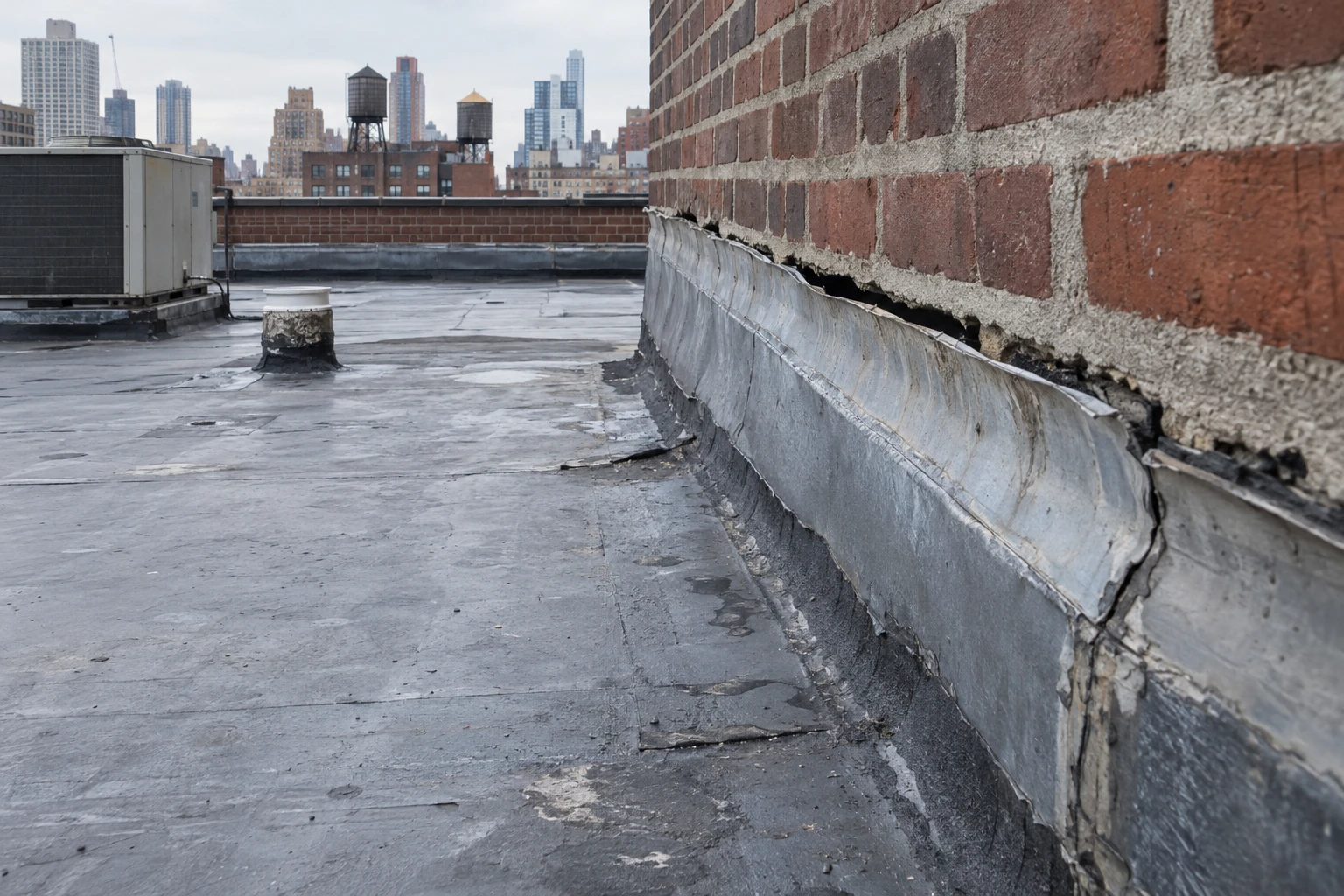
Shrinkage is the quiet result. Once a membrane has lost its plasticizer it contracts, and the contraction pulls on every attachment: flashing comes off walls, laps draw open and fasteners come under tension. Signs include a membrane lifting off the wall base, a gap opening at a corner and a sheet stretched like a bridge across an inside angle. The pull-back from the wall is measured in inches and logged, since repeating the measurement a year on shows the rate of aging and whether the repair of a flashing failure will hold.
Which signs mark heat and UV damage, and which are something else?
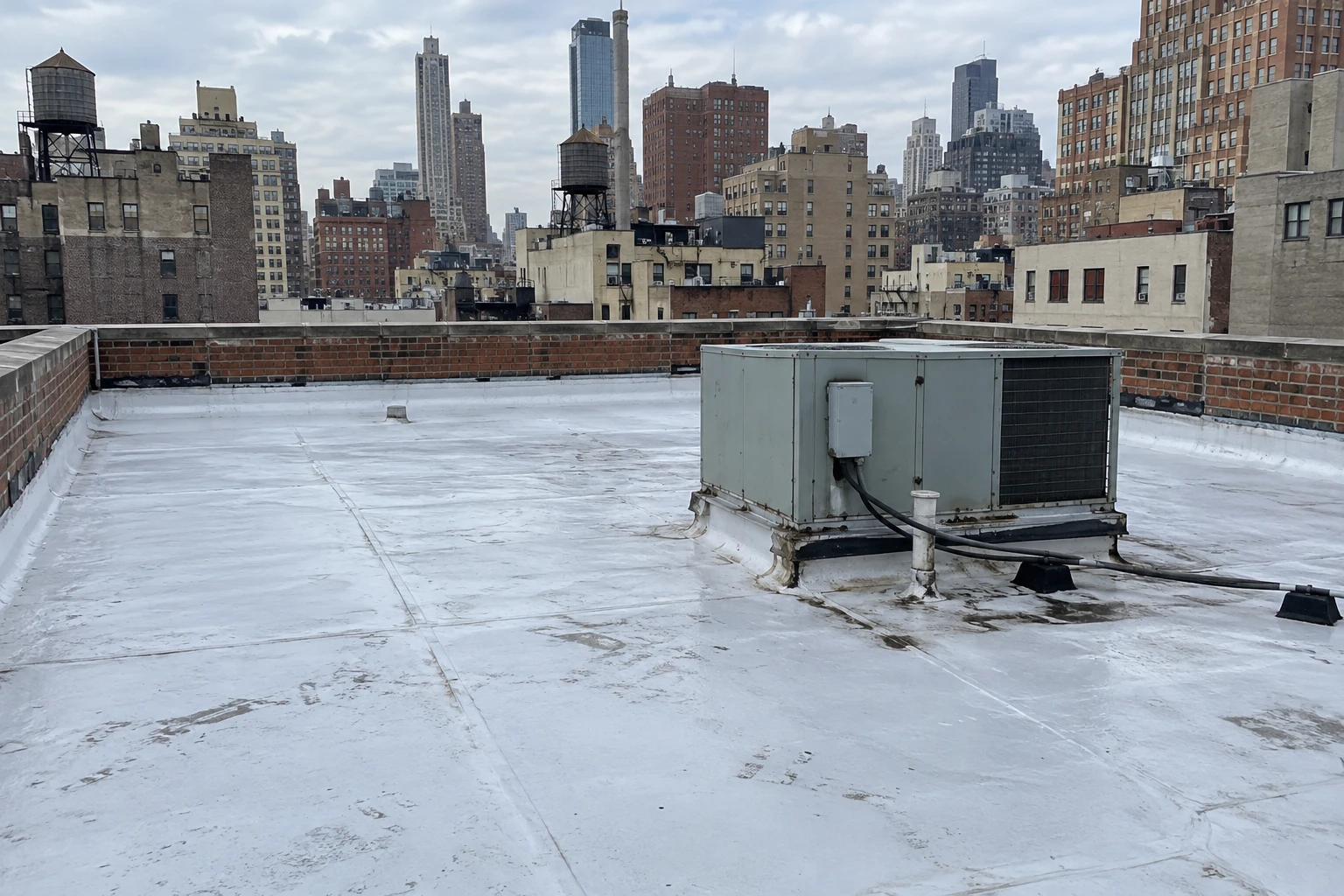
The signs run through chalking, crazing, exposed reinforcement, a shrunken membrane pulling from walls, curled lap edges, bare patches where granules have worn off and cracked sealant. They appear across the sun-exposed surface and often worst on the south and west faces.
Other causes can imitate them. A line of cracking can be a seam failure caused by movement, a split at a wall can be a flashing problem and a stain can be old ponded water. The pattern separates them: uniform wear across a sun-facing surface points to exposure, local damage points elsewhere. Sound layers under an aged surface usually allow restoration; wet insulation under the same surface does not, and a moisture scan tells which case applies. Each face of the roof deserves its own photographs.
Testing converts the judgment into numbers. A small sample cut from the sheet is examined for remaining thickness, flexibility and the condition of the reinforcement, and hardness readings at several spots show how far the surface has stiffened. Where a manufacturer's system is installed, the results are compared with the product's expected behavior. None of this takes long, and it replaces an opinion about aging with a measurement for the owner's file.
What are the options for an aged surface?
Three paths open up. Repair and monitoring seals the cracks, replaces failed flashing and tracks the rate of change. Restoration cleans the roof, makes repairs and applies a reflective coating, as in roof coating restoration. Replacement is for a sheet that is brittle throughout or sits over wet insulation.
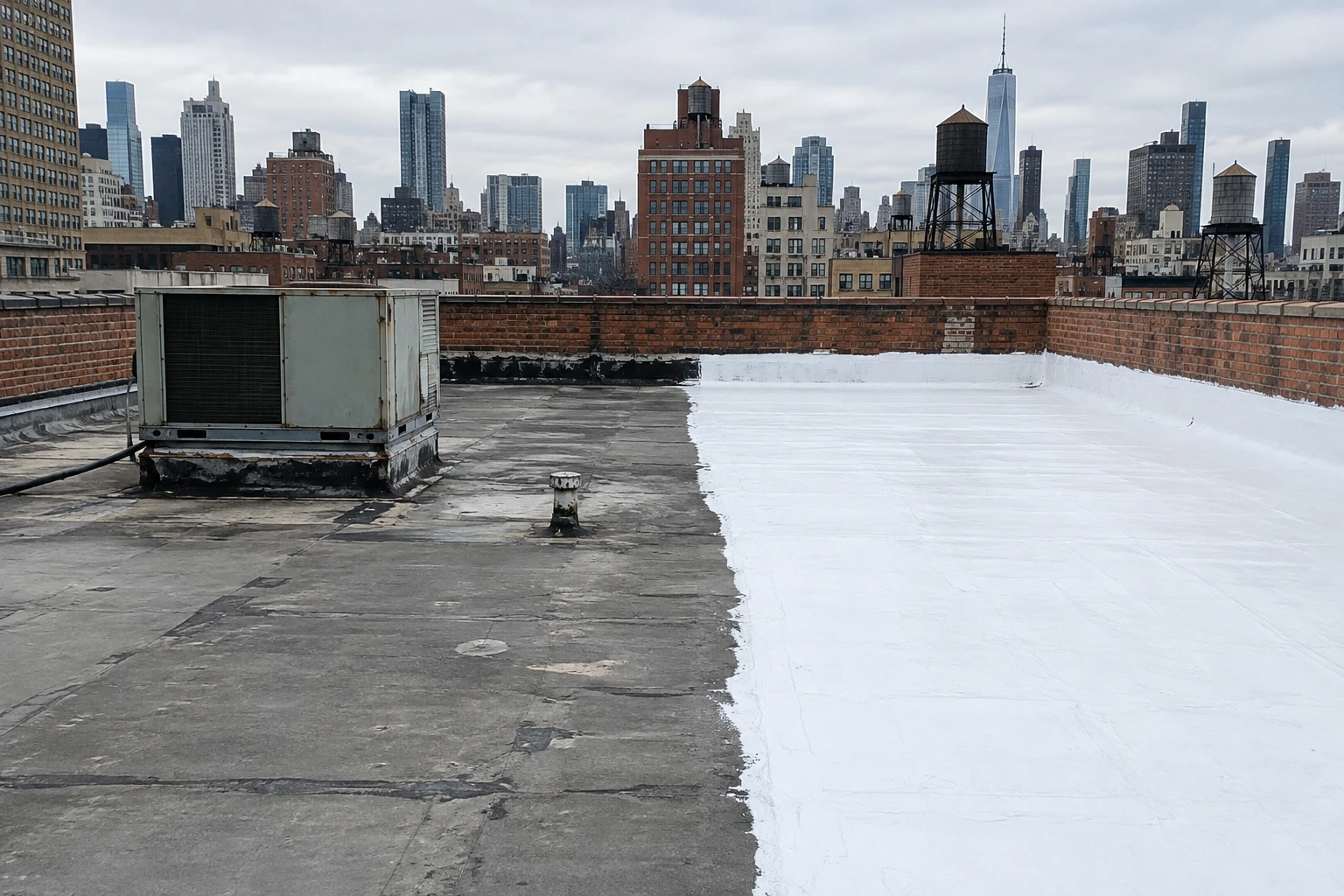
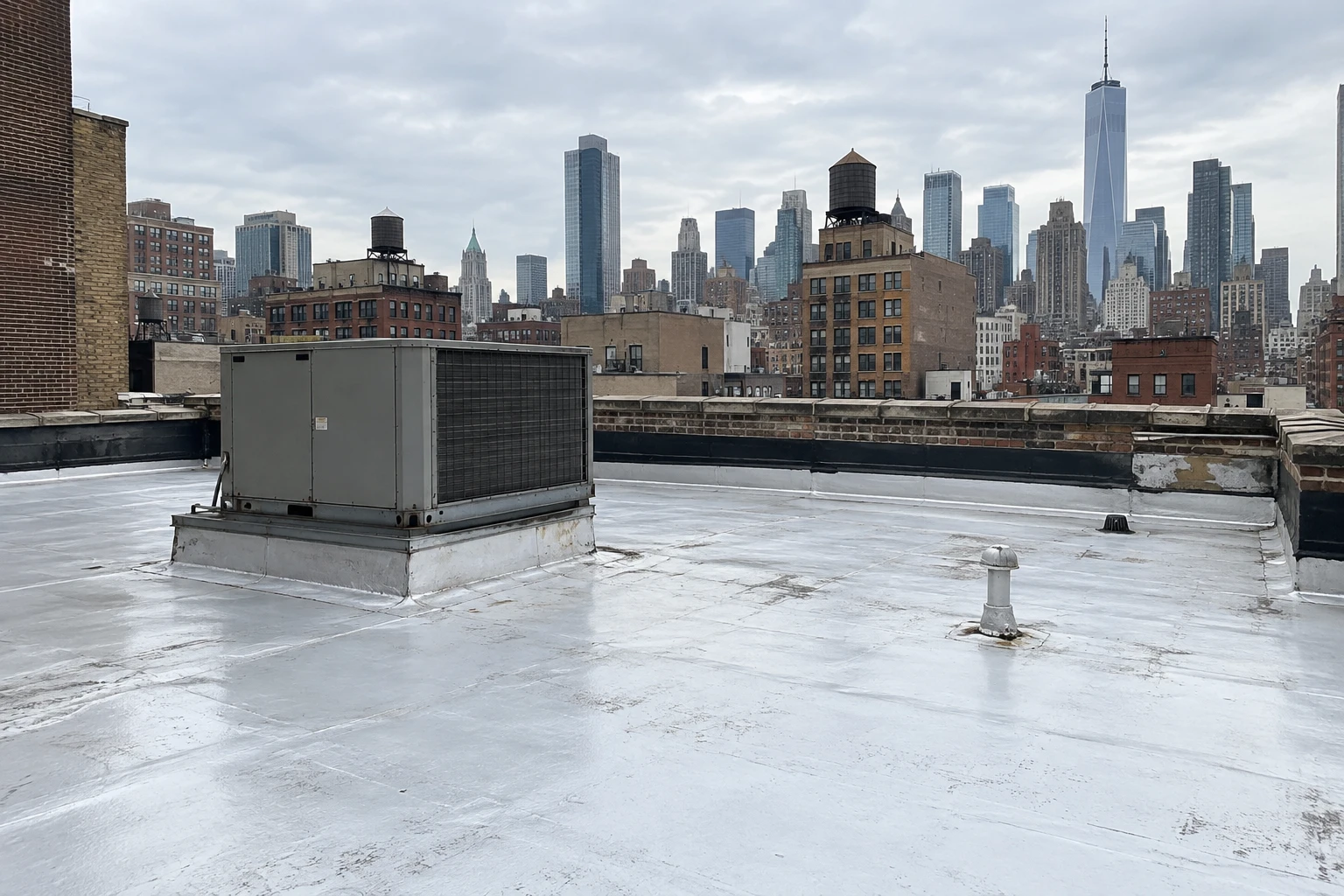
Coatings that reflect sunlight bring the surface temperature down, slow further aging and lay down a new weathering layer. Roofs that shed water well are candidates for acrylic roof coatings, whereas roofs that keep some standing water suit silicone roof coatings, and a wet roof suits neither. When a roof is being replaced anyway, a cool roof installation deserves a look. Whichever route is chosen, the moisture map, core log and remaining sheet life come first.
How does the heat load differ by building type?
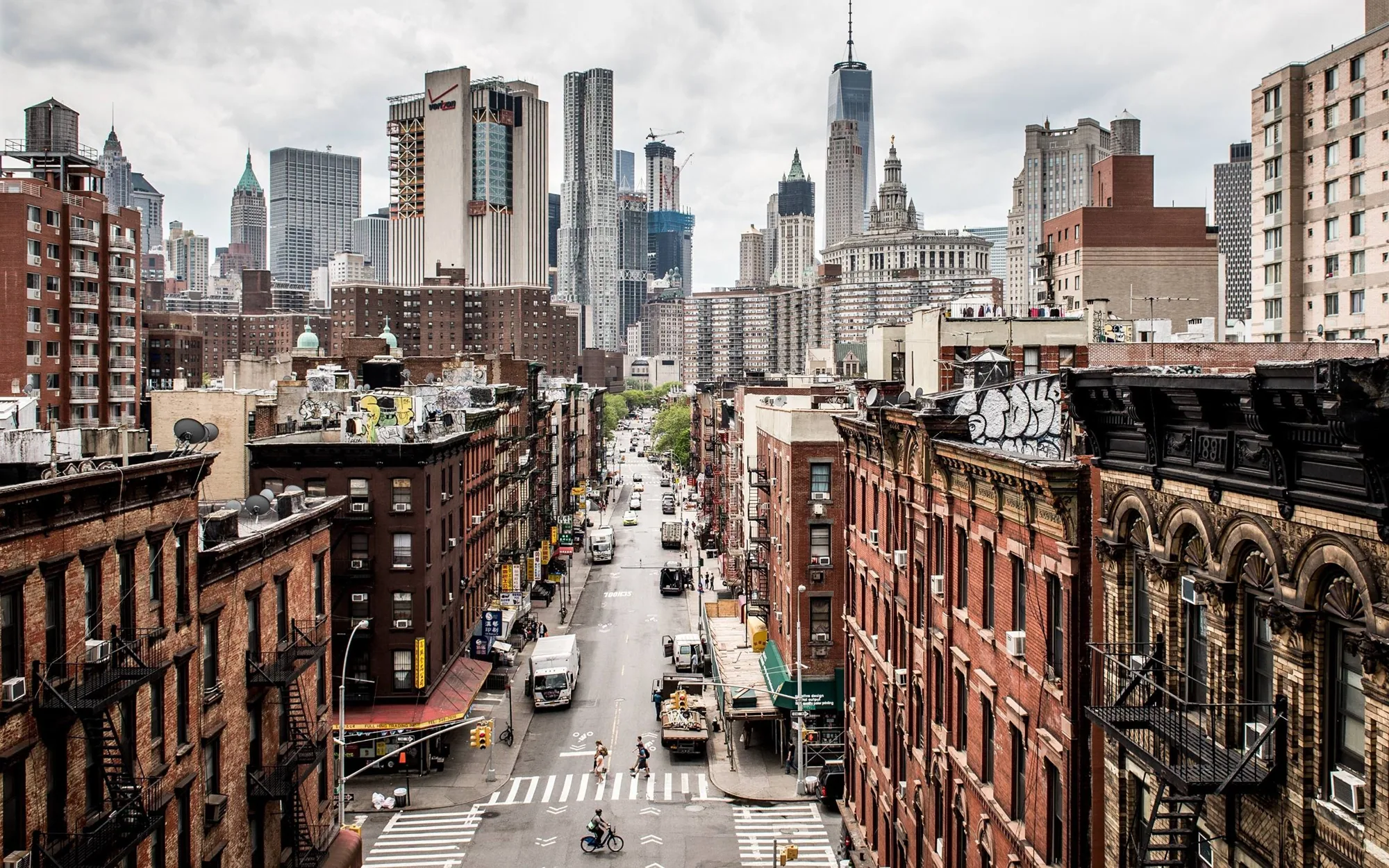
Tenants on the top floor, beneath a dark roof, feel the heat before anyone else, and the cooling bill reflects it. A Midtown setback roof may sit in the shade of a taller neighbor for part of the day and in full sun for the rest. Low roofs on prewar five and six story buildings in Inwood, Washington Heights, the Lower East Side and the East Village often have no shade at all and carry equipment that adds heat of its own.
Roofs with rooftop units take heat from the exhaust, so those spots age faster. The survey notes the hottest areas, including the ones near exhaust vents, and plans protection or coating there. In the SoHo-Cast Iron district, about 500 buildings in all, landmark rules limit changes visible from the street, so a color change on a visible roof may need review, and coating color is checked against the landmark file before ordering.
Occupants and equipment below feel the heat too. Afternoon hours push rooftop units harder, and a mechanical room beneath a hot roof can need extra cooling. Reflective surfaces ease that load by an amount that depends on the building and on how dirty the roof is, so no energy figure is promised. Complaints about interior temperature, equipment run times when the engineer can supply them and the roof color are recorded, which lets the owner judge the outcome after one season. The findings pair with the lease, since some tenants pay for utilities.
What does heat and UV repair change in the budget and the code review?
Surface restoration costs less than replacement and postpones it, which moves capital spending later. The 2022 NYC Construction Codes, including the Energy Code, govern new roofing work, and Local Laws 92 and 94 of 2019 ask for solar, a green roof or both across the sustainable roofing zone when a roof is fully replaced. Before design, a restoration that keeps the existing assembly is checked against that definition.
The condition rating from the survey enters the reserve study, with the coating's expected life stated along with its limits. Owners of buildings in the Upper East Side and elsewhere can compare roofs on one scale through roof condition reports, and rated roofs let a manager line up coatings by urgency. The coated roof is re-surveyed after its first summer.
Maintenance protects the investment. Dirt collects on a coating and dulls its reflectivity, which an annual cleaning and inspection corrects. Laps that have begun to crack are sealed before they open, and drains stay clear so water never stands on the film. Each preventive roof maintenance visit covers these items and logs the surface against its baseline, and the log shows when the next recoat falls due.
Commercial Roofing Questions
What decides whether an aged roof can be coated?
Three conditions: dry insulation, a membrane that is attached and still flexible through its thickness, and a surface that will bond. Moisture scanning, cores and a small adhesion test show whether they hold.
How much cooler does a reflective roof run?
Under the same sun a reflective surface stays cooler than a dark one, which slows aging, although the product and the dirt on it shift the result over time.
Why do some faces of a roof age sooner than others?
South-facing surfaces collect the most sun over a year and west-facing ones take the hot afternoon load, so wear is noted by orientation.
Can heat damage be repaired locally?
Yes, when it is local, as around exhaust vents. Aging spread across the roof means restoring or replacing the whole surface.
What should be checked inside during a hot spell?
Heat on the top floor, new ceiling stains and softened roof edges, each reported with a date so the survey can set them against the roof findings.