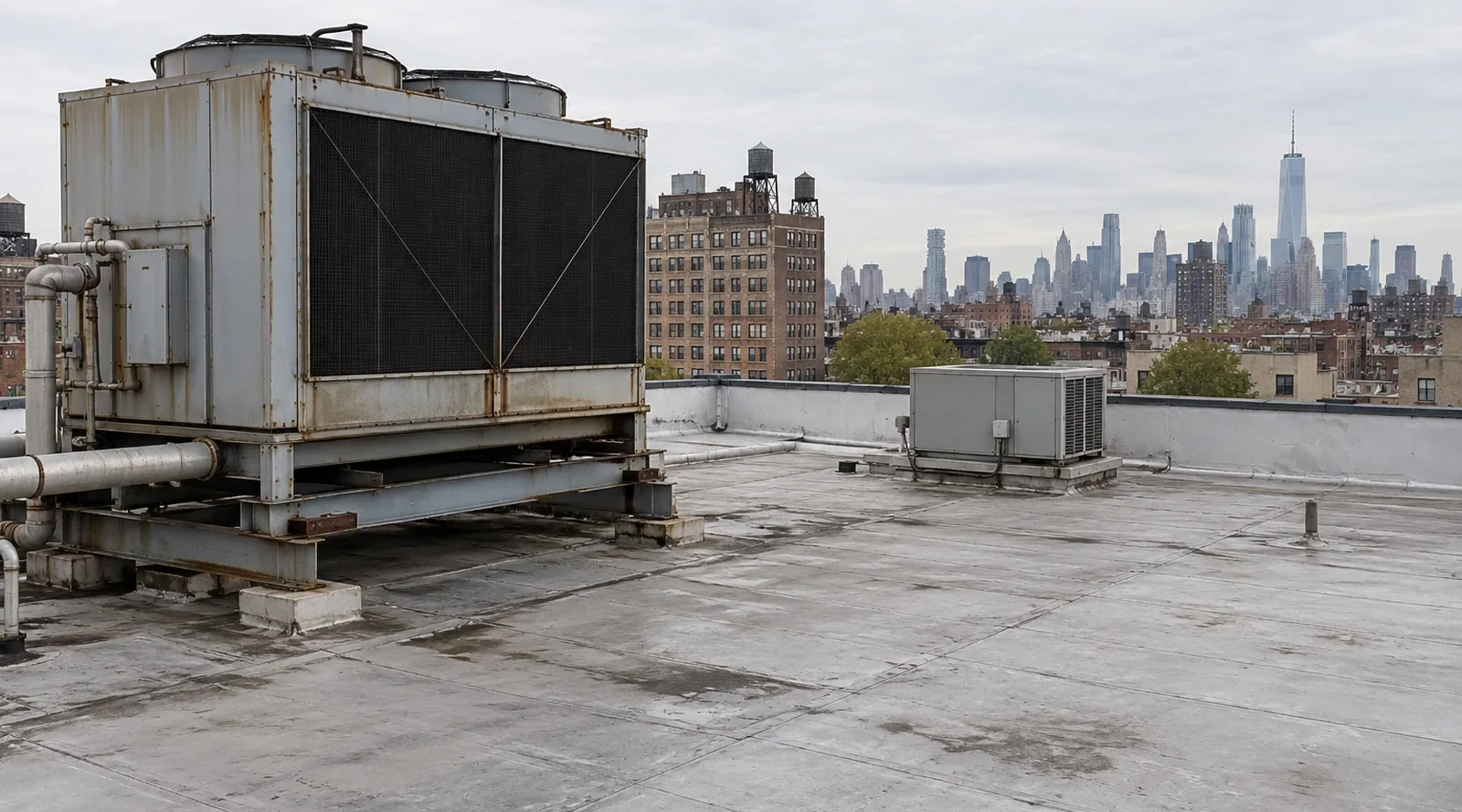
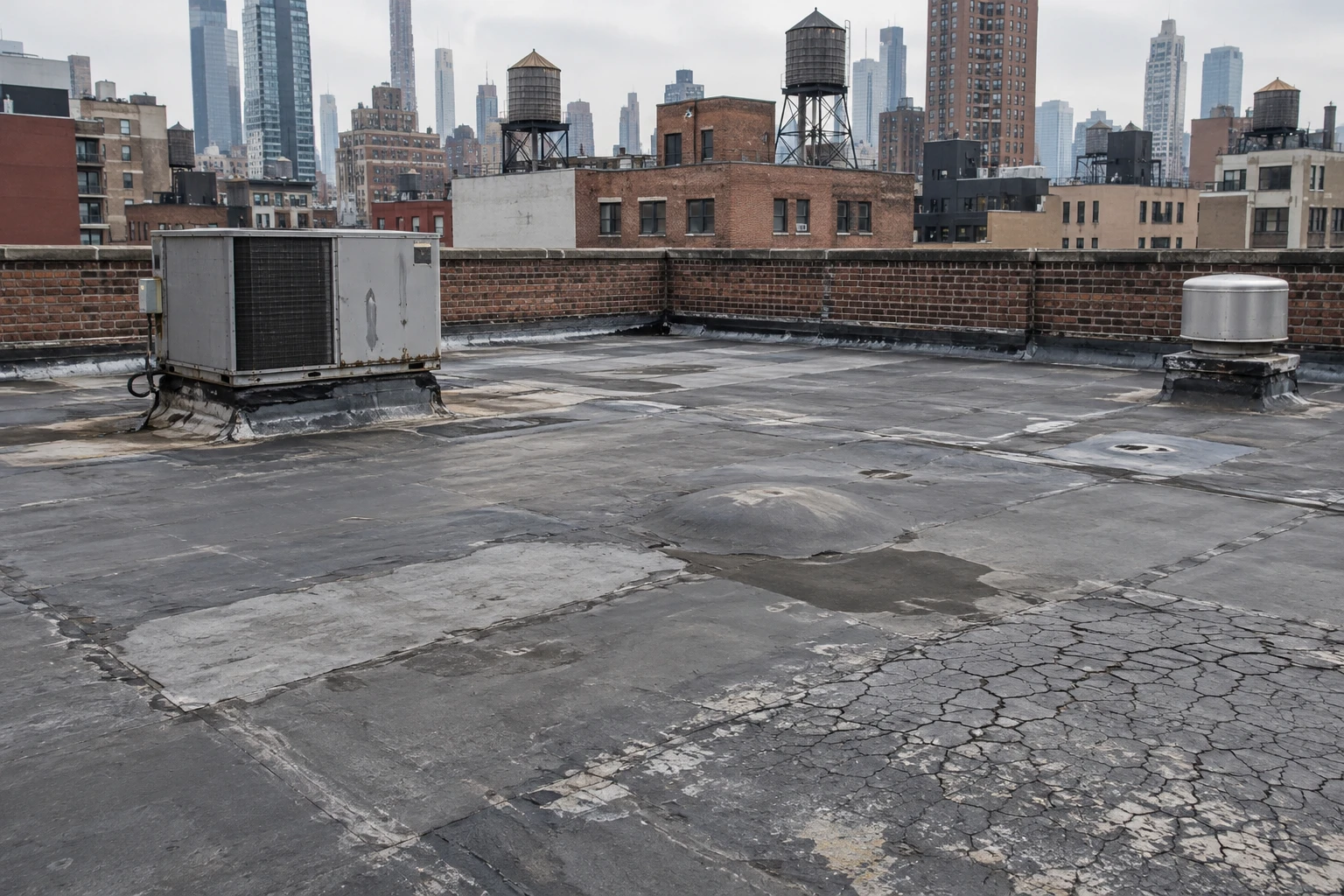
Manufacturing plant roofing in Manhattan, NY and nearby New Jersey: exhaust-zone surveys, shutdown planning and code-aware replacement.
A core cut taken beside a process exhaust stack and a second taken well away from it will not match, and the difference between them is the finding that matters on a plant roof. Heat, steam and chemical vapor change the membrane near the stack long before they change it anywhere else, so the survey starts there. Zoning in Manhattan, NY leans against manufacturing: the Special Garment Center District rules of 1987, which cover West 35th to West 40th Streets between Broadway and Ninth Avenue, restrict it in large portions, and the Midtown South Mixed-Use Plan approved in August 2025 rezones 42 blocks from manufacturing-only to mixed-use. Plants that remain, and those across the Hudson, still need roofs that survive what they vent.
The latest roof report, the building's age and any open violations start the survey; scope and ratings are set before a number is discussed.
What does the survey look for around exhaust and equipment?
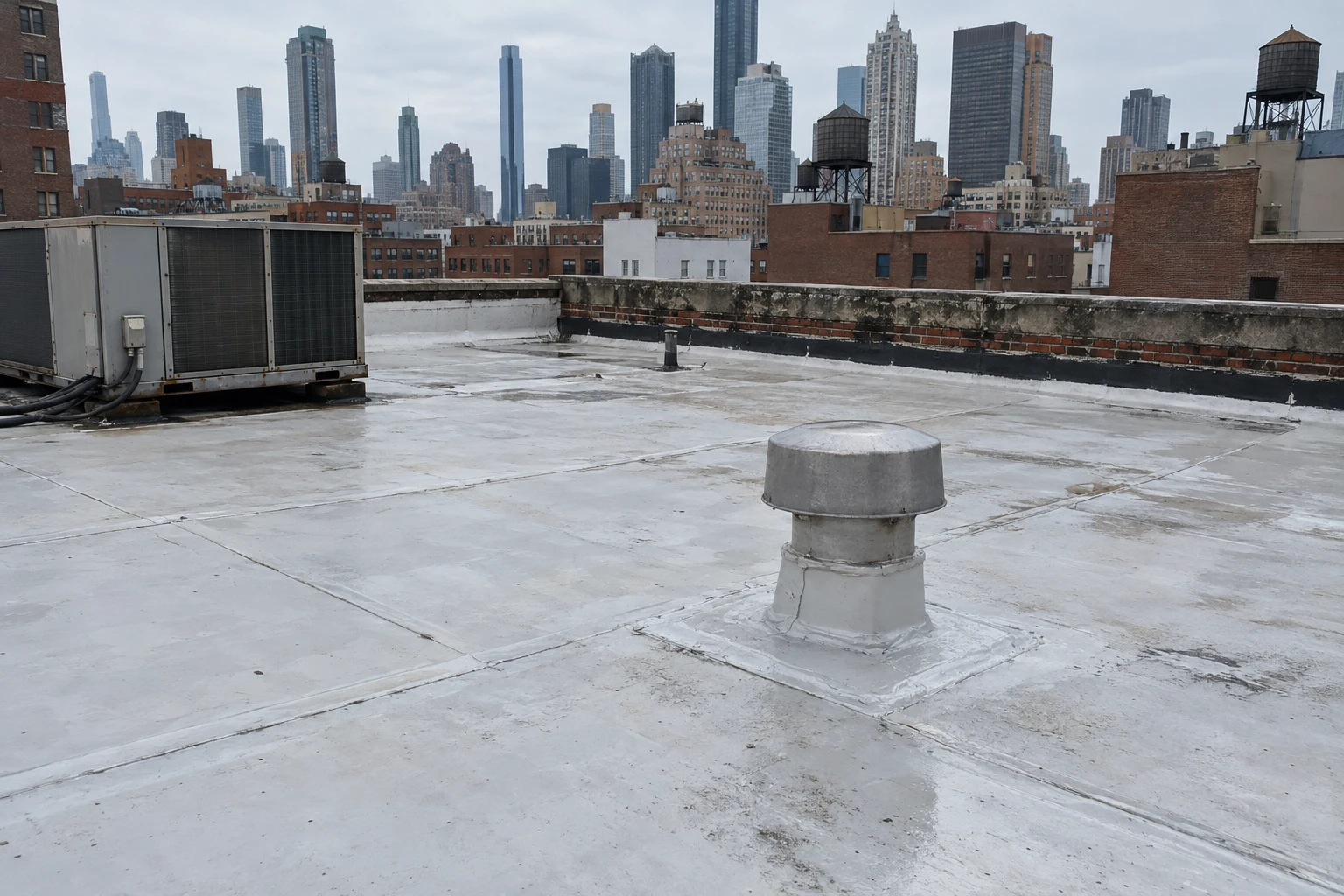
Around each stack and fan we look for brittle or discolored membrane, softened flashing, residue that holds dirt against the sheet and sealant that has cracked from heat. We cut a core at the worst spot and at a control point, and we record the membrane thickness, the insulation condition and the depth to the deck. A mechanical curb that was reflashed once and left may now sit on a different pitch than the roof around it.
The findings are mapped on a sketch with a condition rating for each zone. The map tells the plant engineer where a heat-resistant sheet or a chemical-resistant sheet belongs and where a standard one will do. It also marks every tie-in between old and new membrane, since a tie-in at a stack zone is where a roof that was repaired in two phases tends to leak first. Each tie-in is probed and photographed, and the photograph is dated. A KEE membrane or PVC alloy suits the exhaust zones, and a lower-cost system can cover the quiet field. Spending by zone is cheaper than spending across the whole roof.
How is a tear-off planned around production?
A plant has a calendar: scheduled maintenance, changeovers, inventory builds. The loud and dusty steps belong in the shutdown windows. Quieter work, such as seam welding and flashing, can run during production with protection overhead. We write the sequence from the plant's calendar and ask for a named contact who can approve a stop. That contact also approves any change to the order of work, so a crane lift that slips by a day does not trigger an argument on site. The written sequence lists the first zone, the last zone and the condition that stops work, such as a forecast of rain inside the dry-in window.
Inside, sheeting goes under the work zone, and equipment below is covered or locked out. Hot work needs a permit, and in New York City the Department of Buildings and the Fire Department set rules for it, so we confirm the applicable permit and the fire watch before a torch or a welder is lit. The plan also covers the roof access route, the crane location and the debris path, because in dense districts those decide the schedule as much as the weather.
What does a full replacement trigger in New York City?
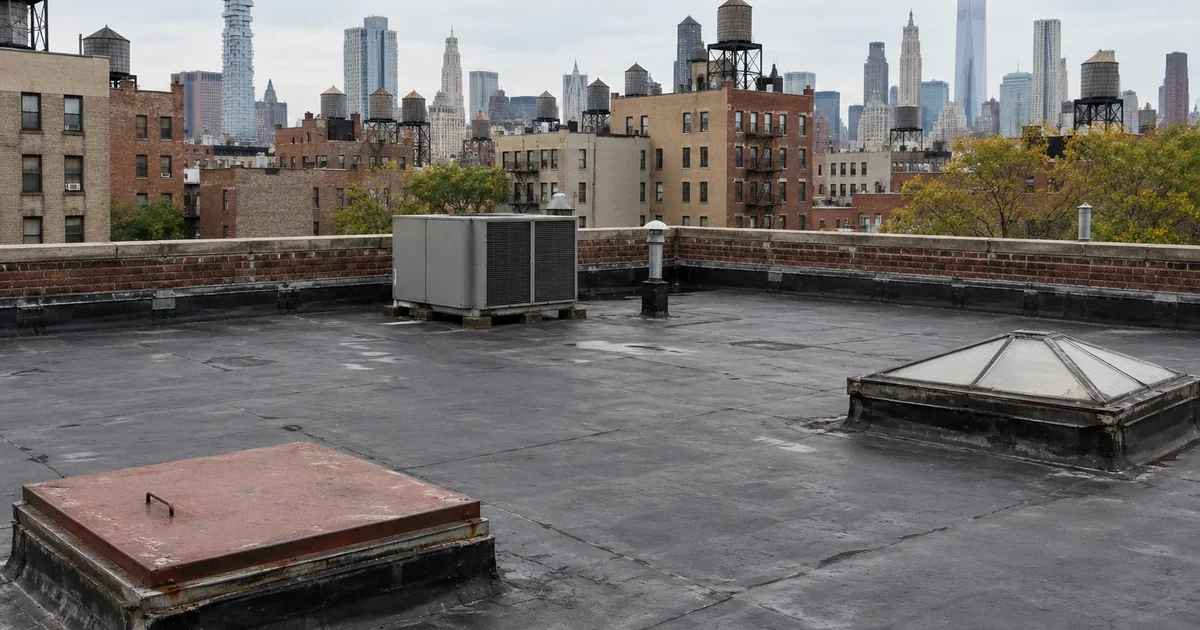
Replacement on a plant roof follows the 2022 NYC Construction Codes, and the Energy Code in particular sets insulation requirements. In force since November 15, 2019, Local Laws 92 and 94 require solar, a green roof or both across the sustainable roofing zone of any full replacement. A plant with a crowded roof must therefore plan where equipment will sit relative to the zone.
We review the equipment layout, the structural capacity and the exhaust clearances together. A solar array over a plant roof has to clear the stacks and leave service routes, and a green roof adds saturated weight. The scope lists each requirement and the reserve it needs. A repair or partial recover may sit outside the rule, and the owner learns which path applies before committing.
How do storms and temperature extremes change the specification?
Central Park has recorded 106 F and minus 15 F, with a strongest gust of 78 mph on December 2, 1974, and it averages 29.8 inches of snow a year. A plant roof sees those swings plus the heat of its own equipment. Ida's cloudburst on September 1, 2021, 3.15 inches in an hour, shows what a drain leader must handle, and the surge of 14.06 feet that hit The Battery in October 2012 shows what flood exposure can mean for a ground floor.
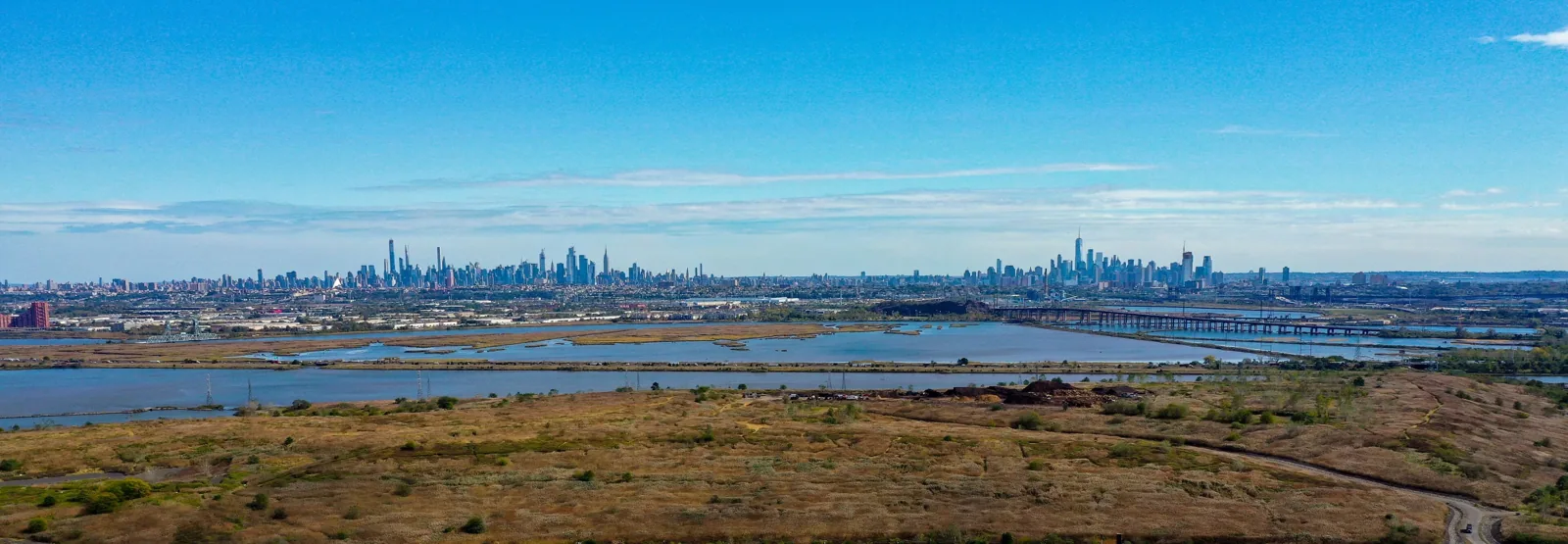
On the roof we check parapet coping, edge fastening and leaders. In Inwood, the industrial area at Sherman Creek, between Dyckman Street, Tenth Avenue and 207th Street, is where the subway, bus and sanitation depots sit, and a building near the water or in a low area calls for a drainage check after every major rain. Secaucus, at an elevation of 7 feet, shows why that check matters in New Jersey too.
What should the plant keep on file?
Keep the core log, the infrared images, a list of every stack and fan with its discharge, the product submittals and a sketch of the curbs. For a plant that shares a site with a warehouse or a cold storage building, give each roof its own record. The roof condition report is the document a lender, an insurer or a buyer will ask for first.
Records also protect the owner in a dispute. If a flashing fails at a stack that was changed after the roof was installed, the record shows who changed it and when. Every roof penetration should be reported before it is cut, and a roofer should install the flashing. A dated log of additions turns a leak search from a guess into a lookup. For a plant that expects to change equipment, the log also feeds the reserve study, because each addition shortens the remaining life of the flashing around it and the study should reflect that. Send updates after every equipment change so the rating stays current.
Commercial Roofing Questions
What decides whether to use a specialty membrane around exhaust stacks?
The discharge. Oils, steam and strong heat degrade a standard sheet near the stack, while a heat- or chemical-resistant sheet holds up. A core and a surface inspection show how far the damage extends. We apply the stronger material only in the affected zones and use a standard sheet elsewhere.
Does a plant roof replacement in New York City always require solar or a green roof?
Yes for a full replacement: Local Laws 92 and 94 of 2019 then require the sustainable roofing zone to carry solar, a green roof or both. A repair or a partial recover may not. We review the scope with the building department's rules and tell you which path applies before work is priced.
Can the roof be replaced without stopping the line?
Often, if the work is staged. Loud and dusty steps go to shutdown windows, and quieter steps run during production under protection. The limit is anything sensitive to dust or vibration directly below. We write the sequence from your calendar and review it with the plant engineer.
What records does an insurer expect after a roof loss at a plant?
Dated photographs, the last survey, the repair history and the list of rooftop equipment. A condition rating that predates the loss helps tell old wear from storm damage, and a file is kept for each roof for delivery on request.
How do I know whether a repaired stack flashing will hold?
It holds if the flashing is rated for the pipe temperature and has room to move. We use heat-rated materials where needed, add a protective pad under hot stacks and probe the repair after it cures. A later core cut near the stack shows whether the insulation has stayed dry.