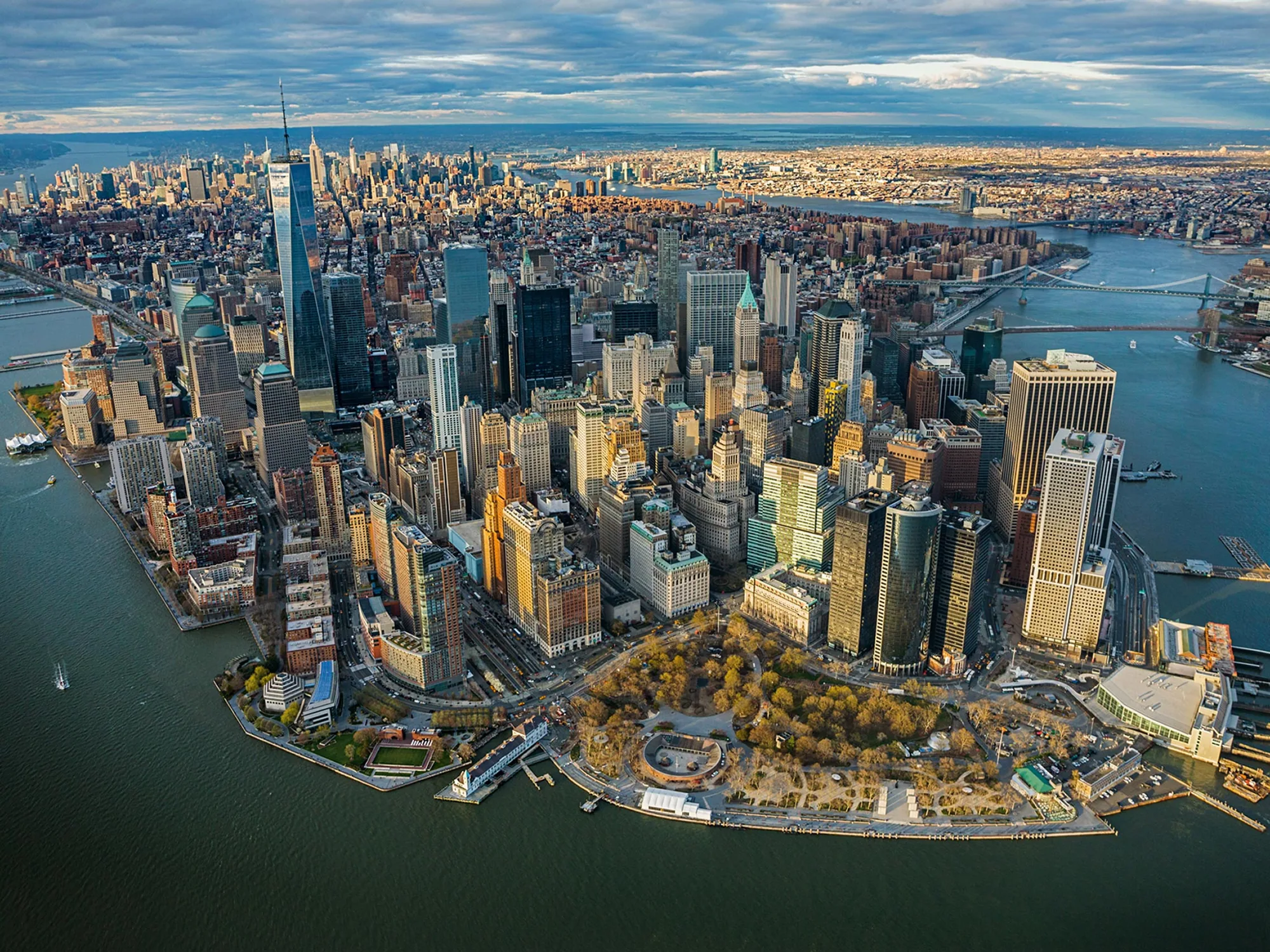
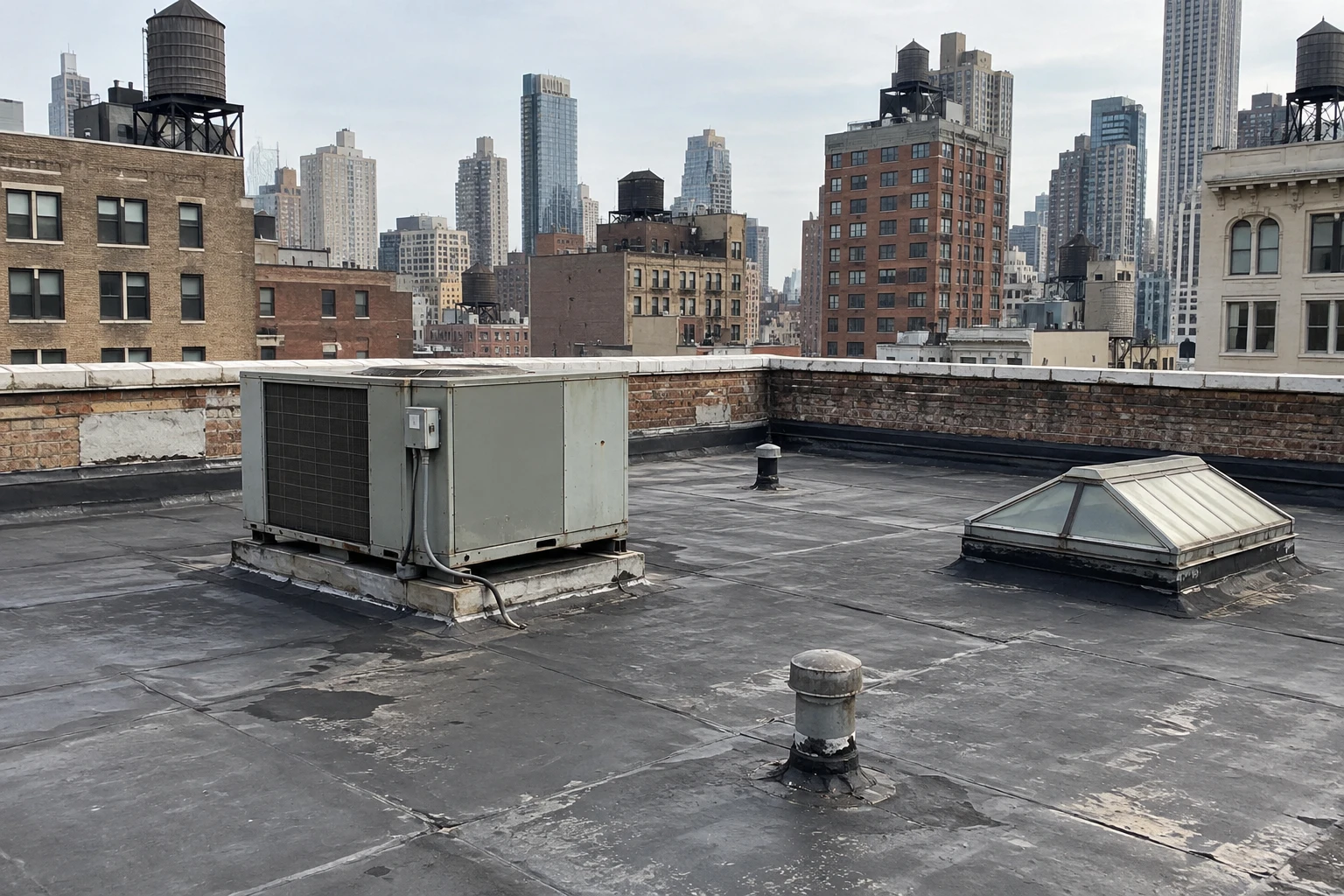
Written roof condition reports in Manhattan, NY: photographs tied to a sketch, core logs, infrared maps and ratings that lenders, boards and insurers can use.
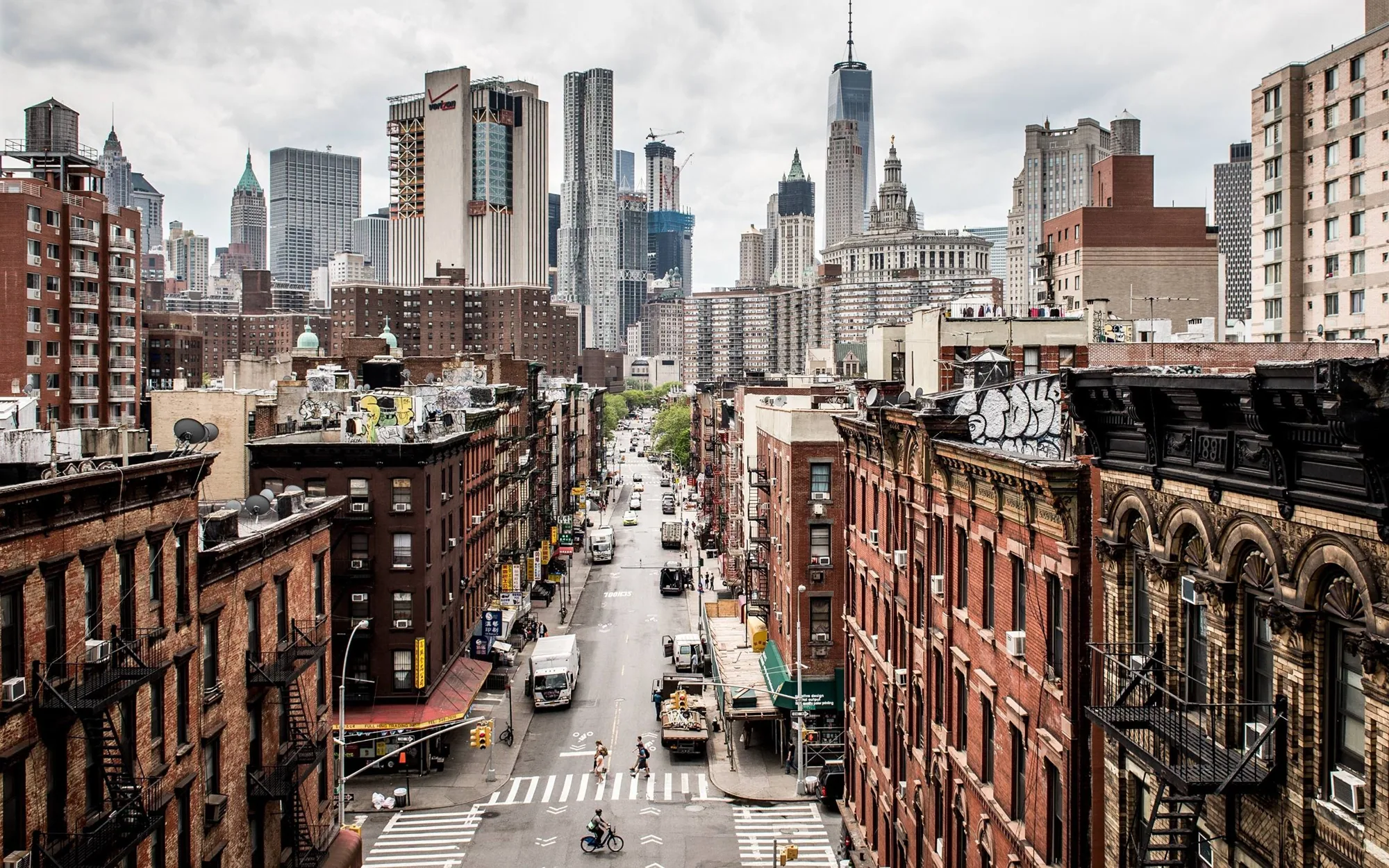
A condition report has three readers, and each opens a different page first. The board turns to the cost table. The lender turns to the remaining-life estimate. The insurer turns to the photographs, looking for a dated record of how the roof stood before a loss. A report that serves all three is a document of measurements, with every claim tied to a core, an image or a reading. A Manhattan, NY roof is small, hard to reach and subject to many rules, so the report also carries regulatory notes: the historic district, any open violations and whether a full replacement would raise Local Laws 92 and 94 of 2019.
We write condition reports for single roofs and for portfolios. The rating scale and survey scope are agreed after the last roof report, the building's age and any open violations are in hand, and before a price is named.
What does a condition report contain?
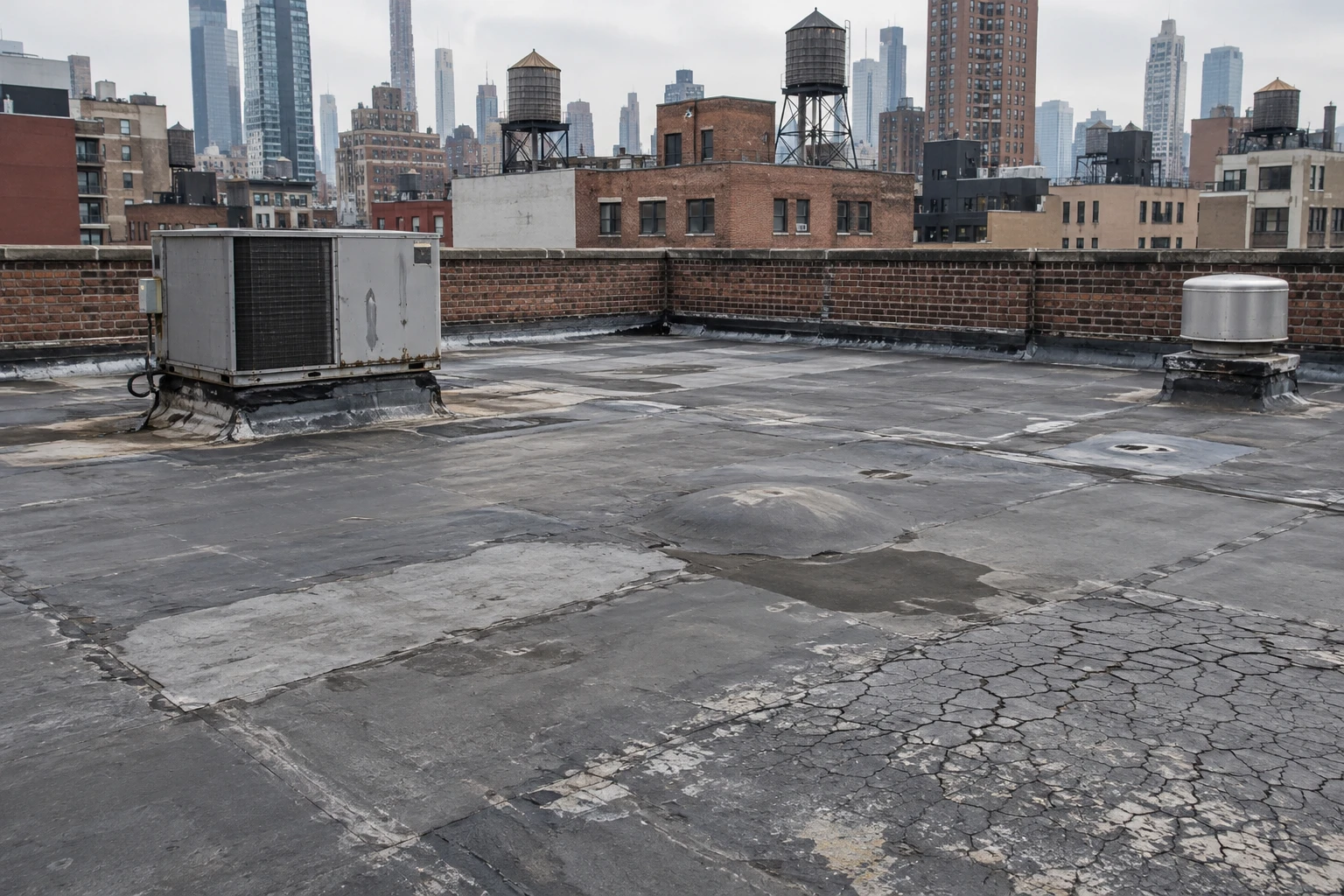
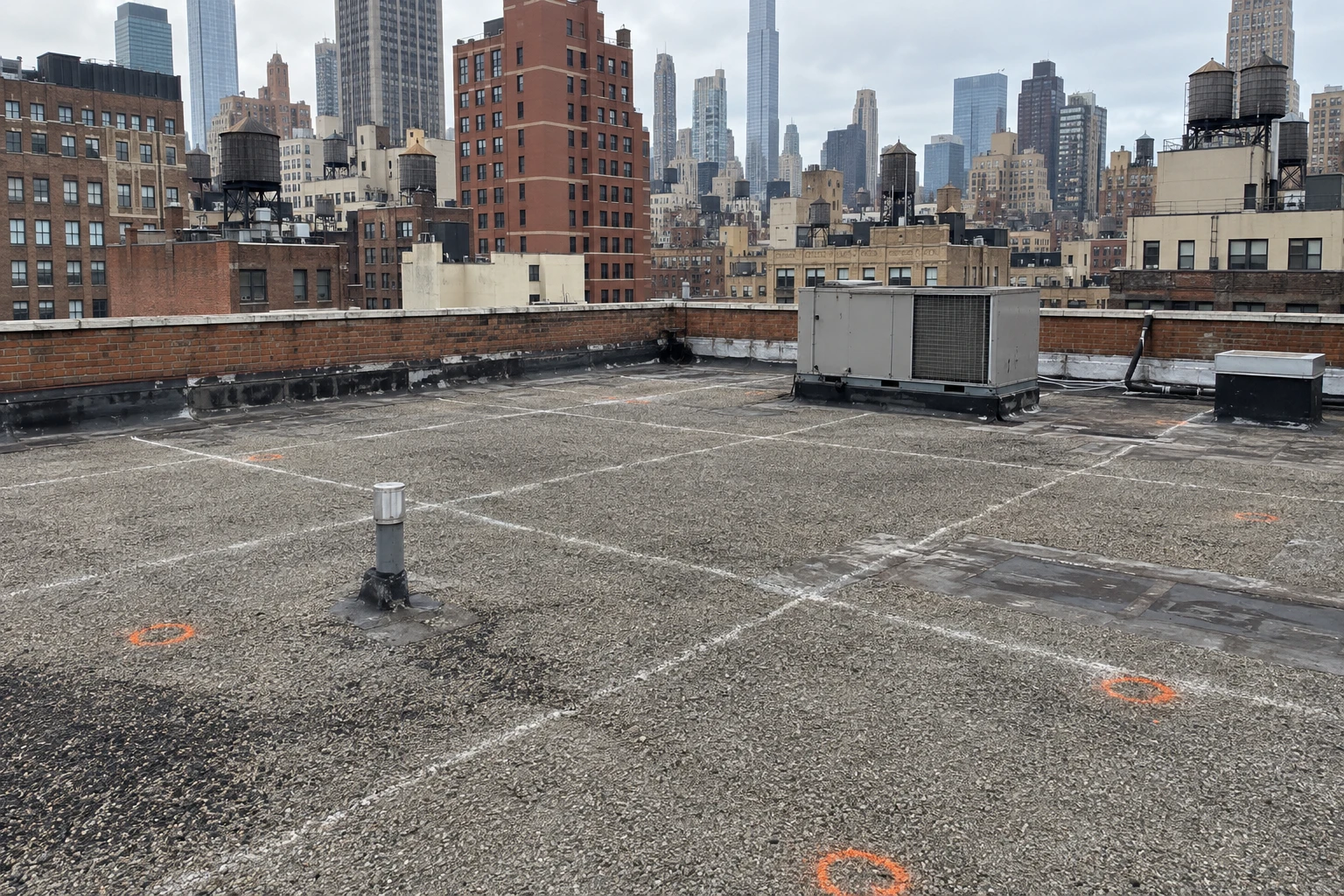
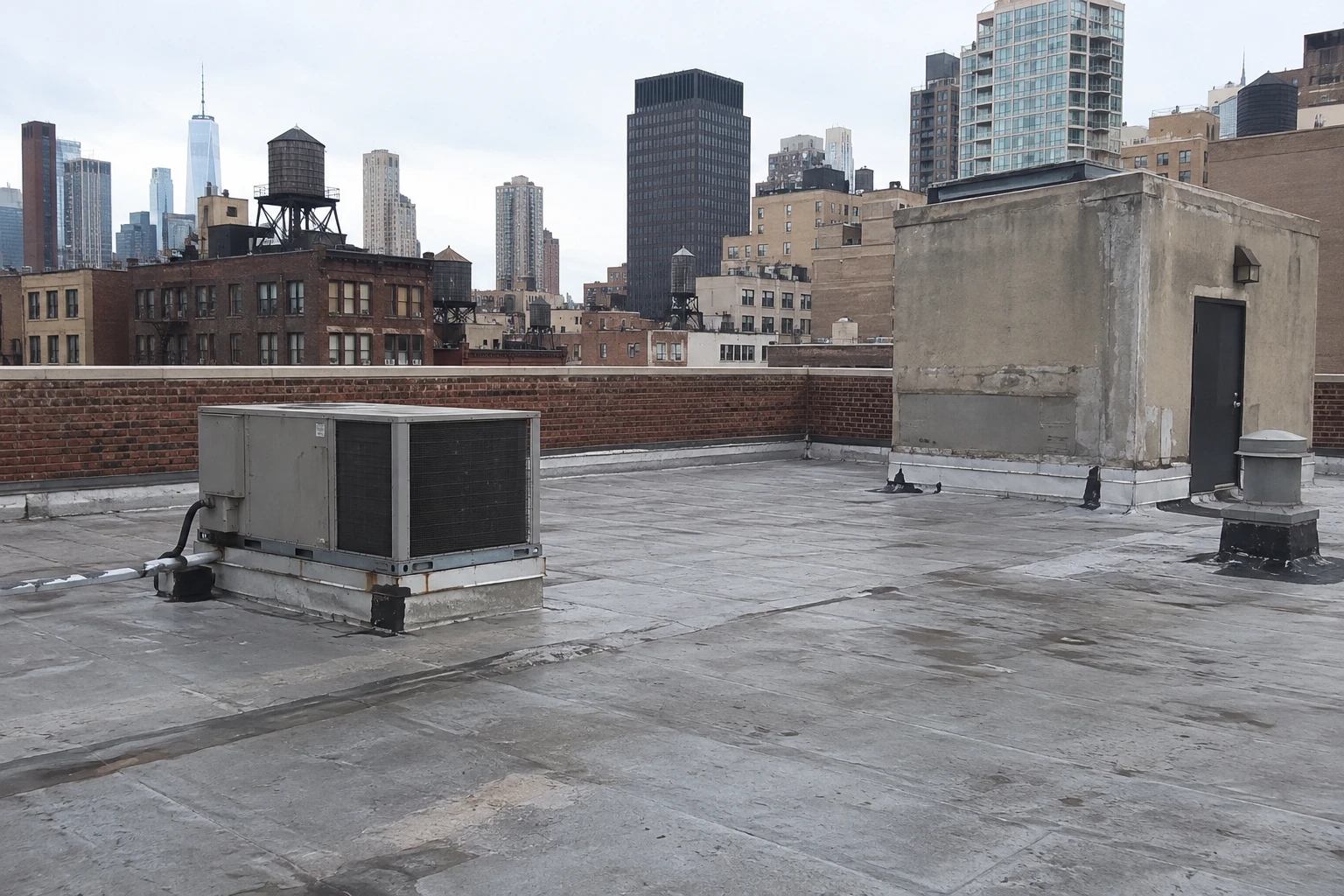
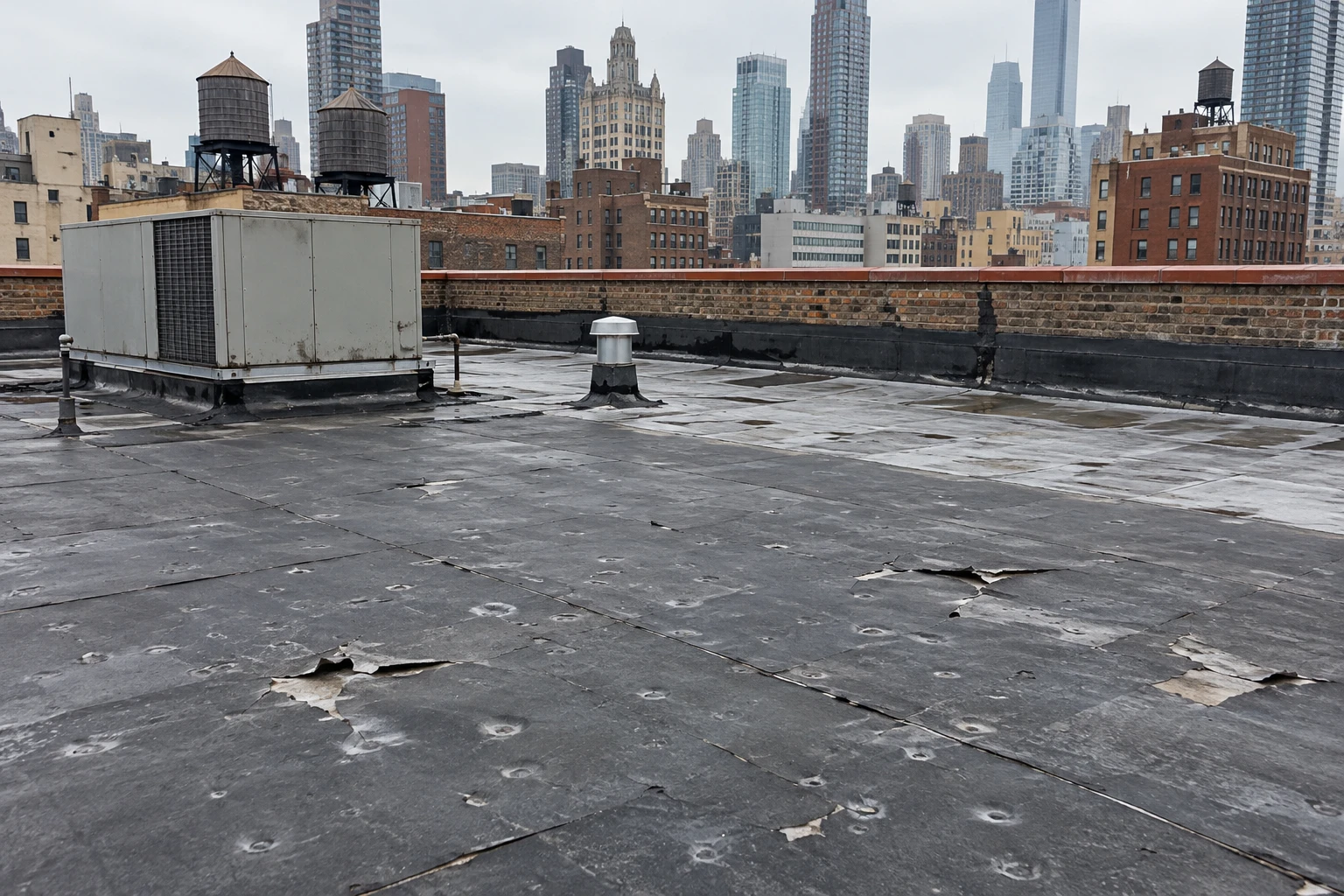
A summary page with the overall rating and the main findings. A roof sketch with every drain, curb, penetration and parapet marked and numbered. Photographs tied to the sketch by number, each dated. Core logs with layer thicknesses and moisture readings. Infrared images with the time and conditions of capture. Ponding depth readings after rain. A detail inspection list for bulkhead bases, coping joints, flashing and leaders.
Then the interpretation. Each finding gets a note on what it means for the roof's remaining life. A wet curb is a rebuilt flashing; a wet field is a replacement. The report ends with options, each with a date range and a cost range, and with a list of what to document next. The reader can follow every conclusion back to a measurement, which is what makes the report usable by someone who never visited the roof. We write the summary page last, after the interpretation is settled, and we keep it to a page, because the board member who reads only that page should reach the same conclusion as the engineer who reads all thirty.
How is the evidence gathered?
An infrared scan at dusk shows where insulation holds heat longer than the rest. Cores at the warm spots and at control points confirm what is wet and what is dry. A level and a tape measure ponding depth after rain. A hands-on walk checks every detail. A drone inspection adds an overview of areas that are hard to reach, and the walk covers the rest.
Access is part of the method. A roof that opens from a bulkhead stair has limited room for equipment. We plan the walk with the building engineer, bring only what the stair allows and seal each core hole the same day. The infrared moisture survey sets the pattern, and the cores prove it. Photographs are taken before cores are cut, so the original surface is documented. Each photograph carries a number, a date and a direction, and the sketch shows the position and the angle of the camera. A reader who wants to see the same corner a year later can stand in the same spot, and the comparison is direct. Where a view is blocked by equipment, we say so rather than leave a gap unexplained.
Which regulatory facts belong in the report?
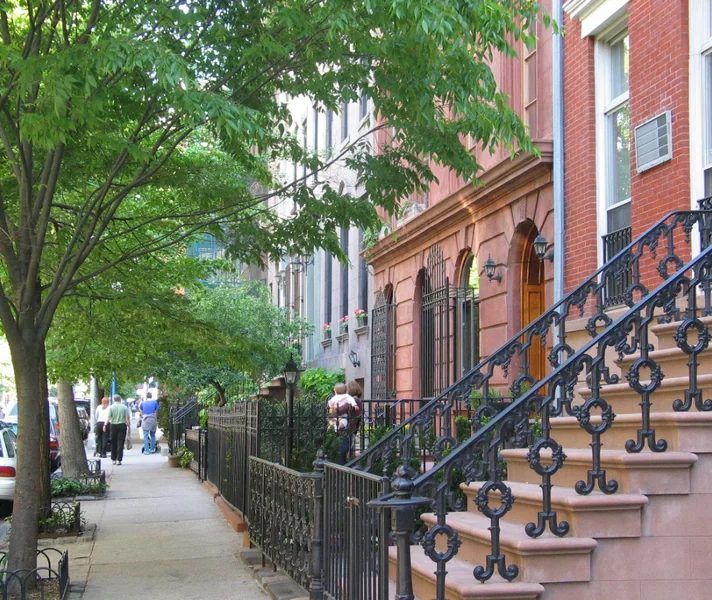
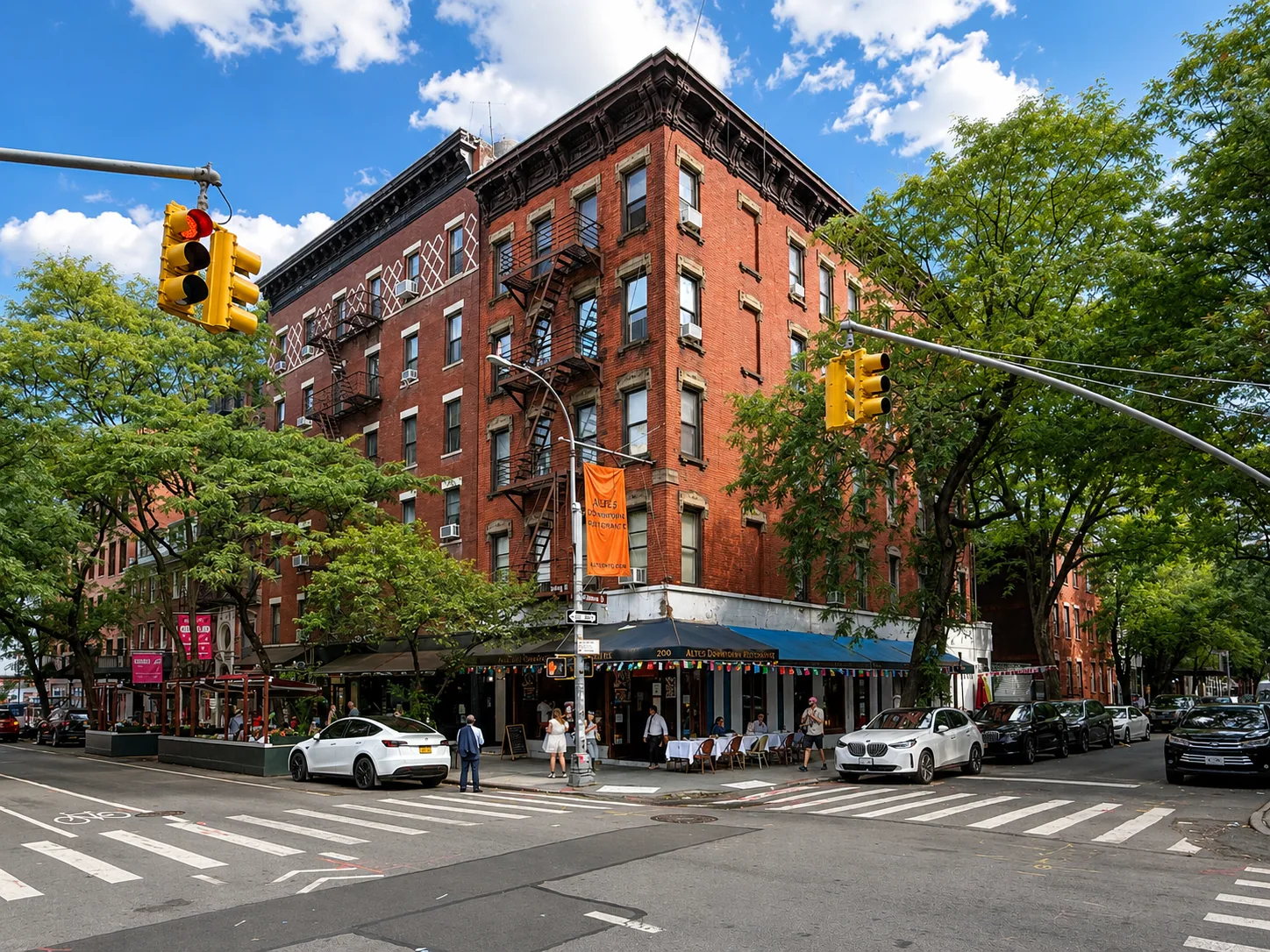
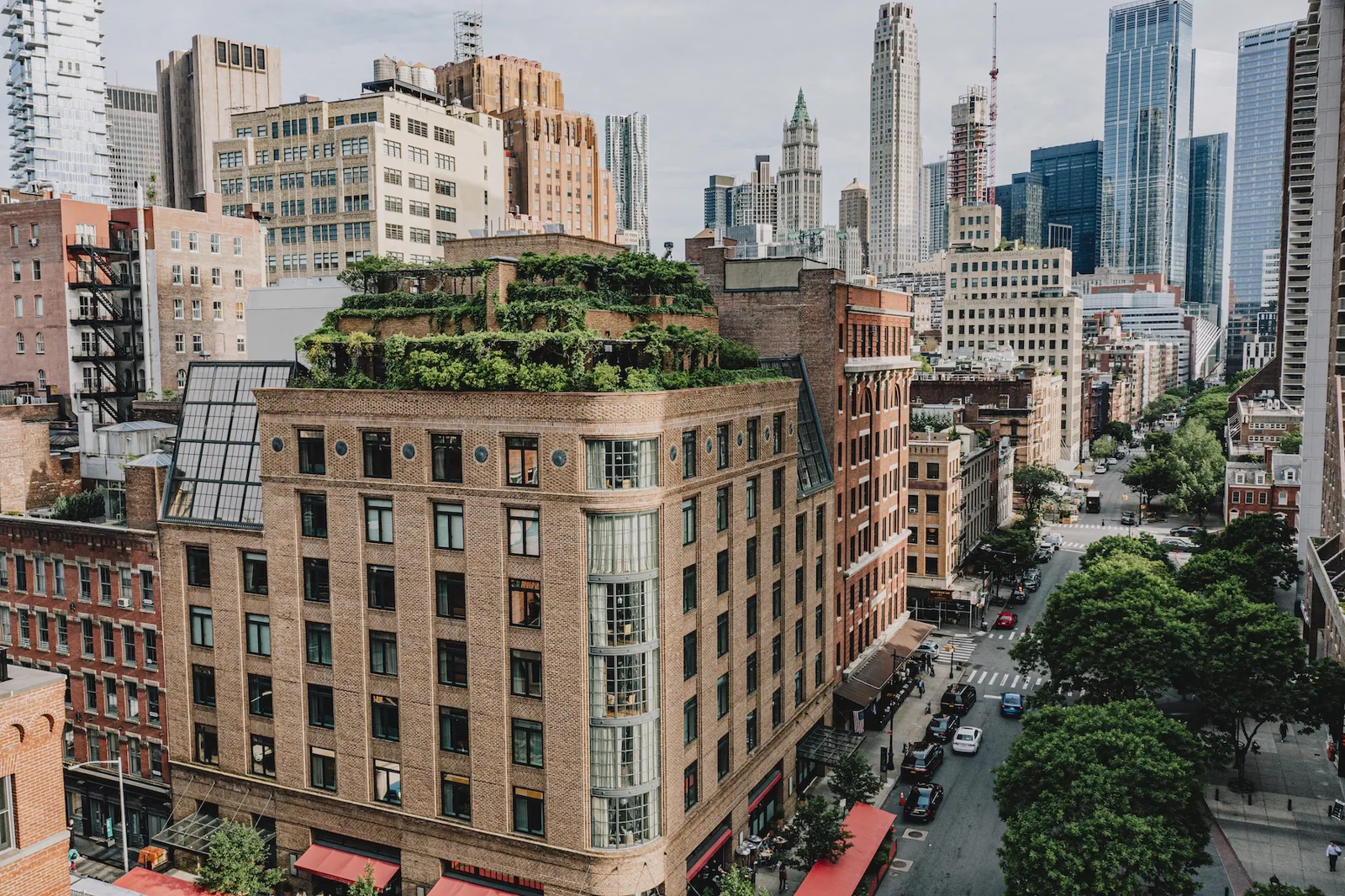
Historic district status, because it shapes what can change on a visible roof. Designated a city landmark in 1973, the SoHo-Cast Iron Historic District spans 26 blocks and about 500 buildings. Four city Landmarks Preservation Commission historic districts were designated within Tribeca in 1991 and 1992. Landmarked districts such as SoHo-Cast Iron and Greenwich Village constrain roof and facade changes visible from the street.
Open violations, because they can block permits, and a roof-related violation may also have to be cleared before a sale or refinance closes. The report lists each violation by number and type, as the owner provided it, and it notes whether the survey findings bear on it. The code edition in force: the 2022 NYC Construction Codes, with their Building Code, Existing Building Code and Energy Code. And the sustainable roofing zone rule. A report for a loft building in SoHo or Tribeca lists the district, the regulated features and the likely review steps, so the owner knows what to expect before a project is designed.
How do lenders, boards and insurers use the report?
A lender uses the remaining-life estimate and the cost ranges to size a reserve or a holdback, and a lender who reads the same report format on every loan in a portfolio can compare roofs the way it compares appraisals. A board uses the ratings to set contributions and to explain a special assessment before it happens. An insurer uses the dated photographs and the pre-loss rating to separate old wear from storm damage. In due diligence a buyer reads the whole package and may seek a second opinion on a single finding.
Storms such as Ida in 2021 and Sandy in 2012 show why a dated pre-loss report is the document an adjuster asks for. Our roof insurance claim assistance starts from the report on file, and a current report shortens the process.
How often should the report be updated?
Yearly for a roof near the end of its life, every two years for a roof in the middle and at intervals set by the rating for the rest. Always after a major storm, a leak that required a repair or an equipment change. Each update compares the new measurements with the old and states what changed.
The update is shorter than the first report, and it is written to be read next to it, with the same page order and the same numbering, so a change in a rating or a core reading can be found in seconds. It repeats the cores at the original locations, the infrared scan and the ponding readings, and it adds the repair log. A series of reports builds a record of how the roof ages, and the series is what allows an owner to predict replacement within a year or two. The roof asset management register collects the series for a portfolio.
Commercial Roofing Questions
What decides how long a condition report takes to produce?
Access and size. A single small roof with a clear stair can be surveyed in a day, and the report follows after the cores are logged. A portfolio takes longer, because each roof needs its own walk. We give a schedule when the survey scope is set.
Can a report be used for an insurance claim?
Yes. A dated report from before a loss shows the roof's condition and helps separate wear from storm damage. We provide the report and, after a loss, an update that documents what changed.
Does the report make repair recommendations?
Yes, ranked by risk, with cost ranges and timing. It also states what is not recommended and why, such as a coating over wet insulation. The owner decides, and the report gives the basis.
How are core holes repaired?
Each is sealed the same day with matched materials and photographed. The report lists the location of every core so a later crew knows where the patches are.
Do New Jersey buildings get the same report?
Yes. The method is identical. Local Laws 92 and 94 are noted as applying to New York City alone, and a New Jersey building is shown under the state and municipal codes that govern it.