Planned repair of membranes, flashing, seams and roof details on Manhattan, NY buildings, with each finding rated and mapped before any work starts.
A repair is worth paying for when it is written as a boundary and not as a patch. The boundary marks the area where the roof is compromised, the work that restores it, and the part of the assembly that is left alone because it tests sound. Without that boundary, a roof collects small fixes that overlap one another, each with its own sealant and its own failure date. We begin with a survey of the findings, rate each one by urgency and by cause, and then write the repair scope as a numbered list of locations. On Manhattan buildings, where roof area is limited and every flashing carries weight, this approach keeps the maintenance budget visible to the asset manager and the lease obligations clear for the tenants below.
What does a repair survey look for first?
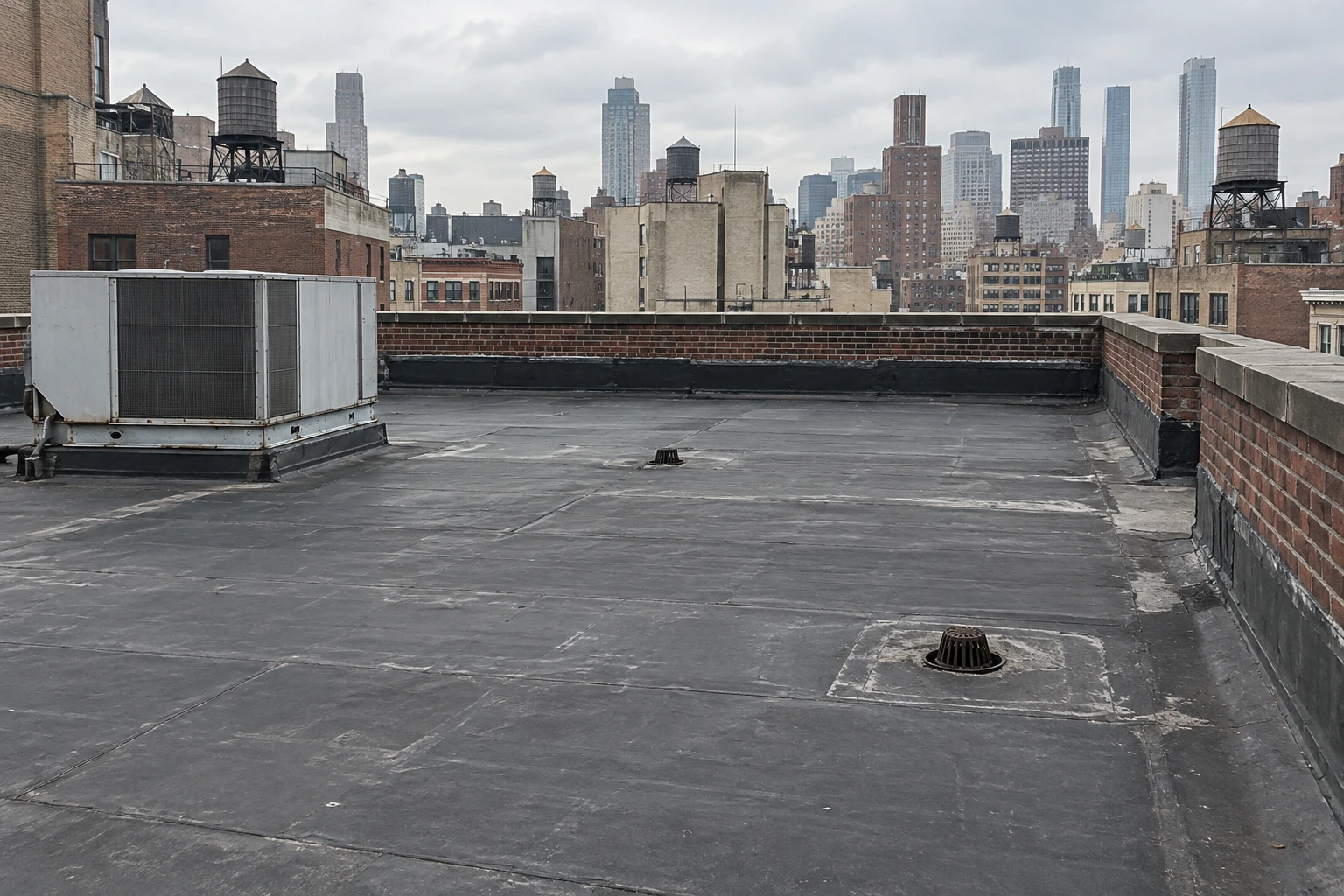
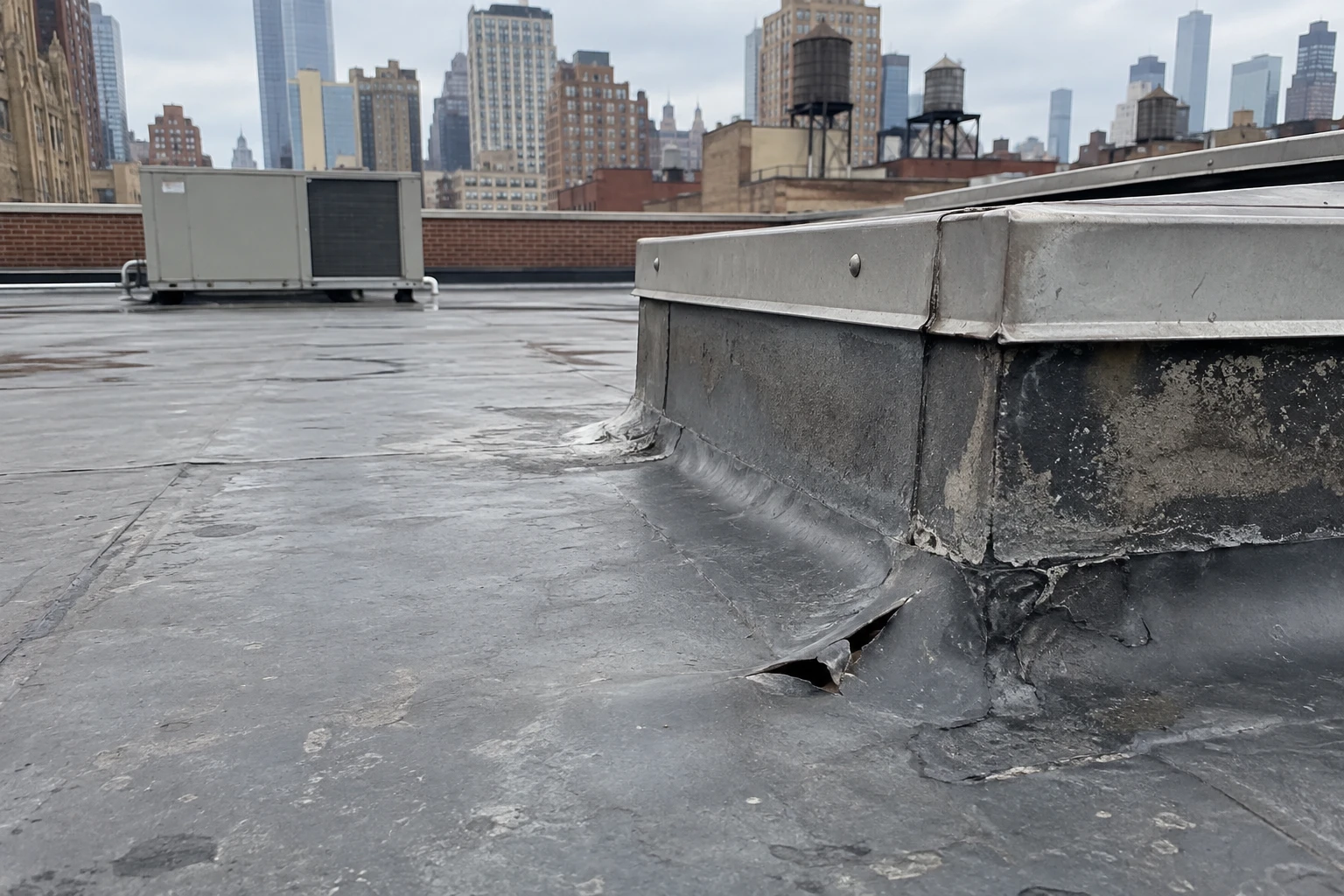
The survey walks the roof in a fixed order: drains and sumps first, then perimeter and parapets, then penetrations and curbs, then the open field. Drains come first because standing water explains many failures downstream of it. Parapets and coping come next because water enters behind masonry as readily as through it. Penetrations, such as pipes, conduit, hatches and equipment supports, are checked for sealant age, flashing height and fastener condition.
The field of the membrane is read last. We look for blisters, ridges, open laps, punctures, and surface wear that exposes the reinforcement. Each finding is photographed and placed on a roof plan, with a condition note that says whether it is a surface defect or a failure in the layers beneath. A commercial roof inspection produces the same record on a recurring schedule, and repairs are far easier to price when that record is current.
Which findings are a patch and which are a fix?
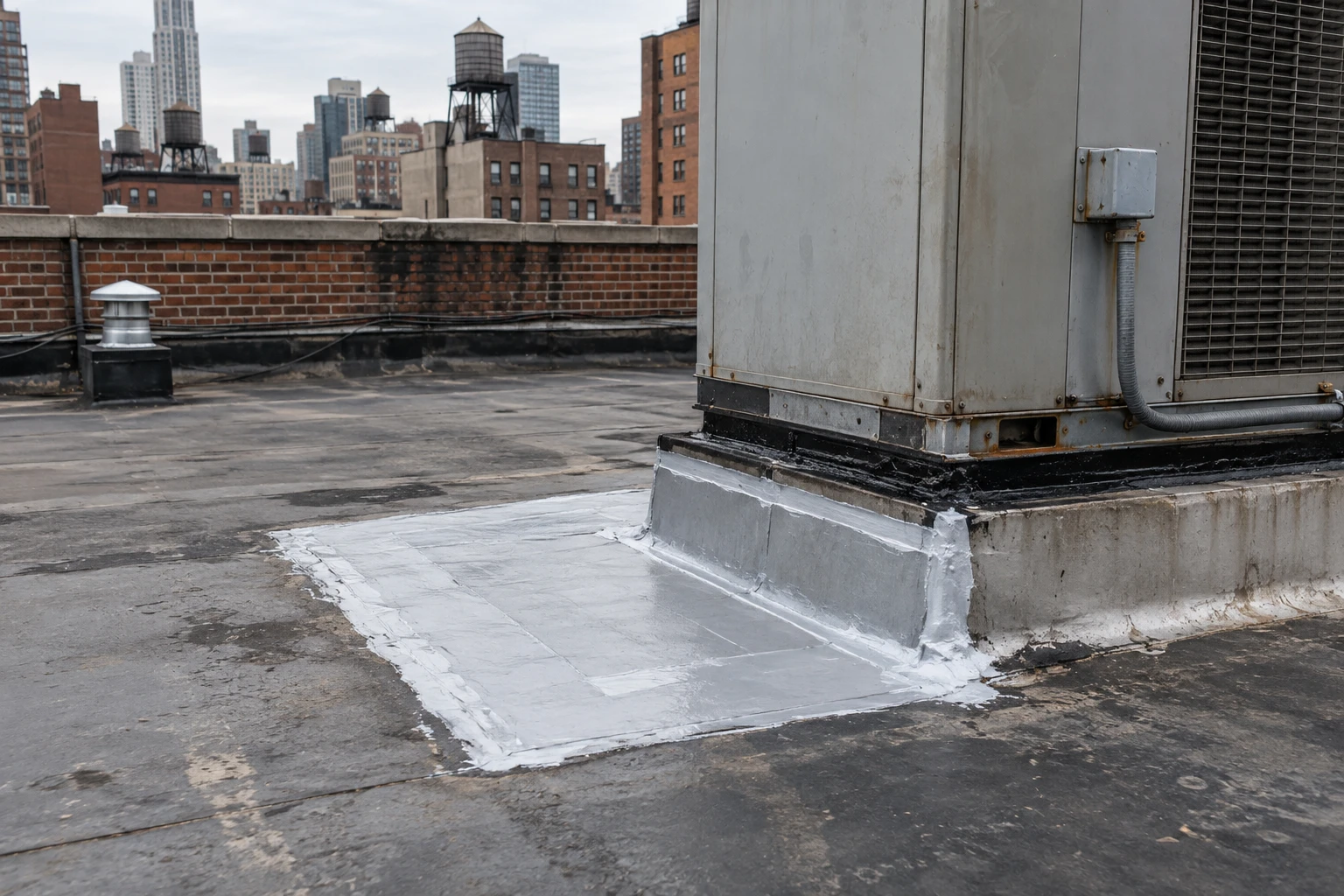
A patch addresses a symptom: it closes a puncture, bridges a split seam, or reseals a joint. A fix addresses the cause: it corrects the slope that sends water to one corner, replaces the flashing that keeps opening, or rebuilds the curb that was never raised high enough. Both have a place. A puncture from a technician's boot needs a patch. A seam that reopens every spring needs a fix, because the patch will fail again for the same reason.
We mark every item in the report as one or the other, with the reason. That distinction matters to the owner because repeat patches are the most common way maintenance budgets drift upward without improving the roof. If the same location appears in two consecutive reports, it moves to the fix list. For membrane problems of this kind, a membrane puncture repair and a flashing failure repair follow different methods, and the scope names which one applies.
Why do parapet and edge details fail first?
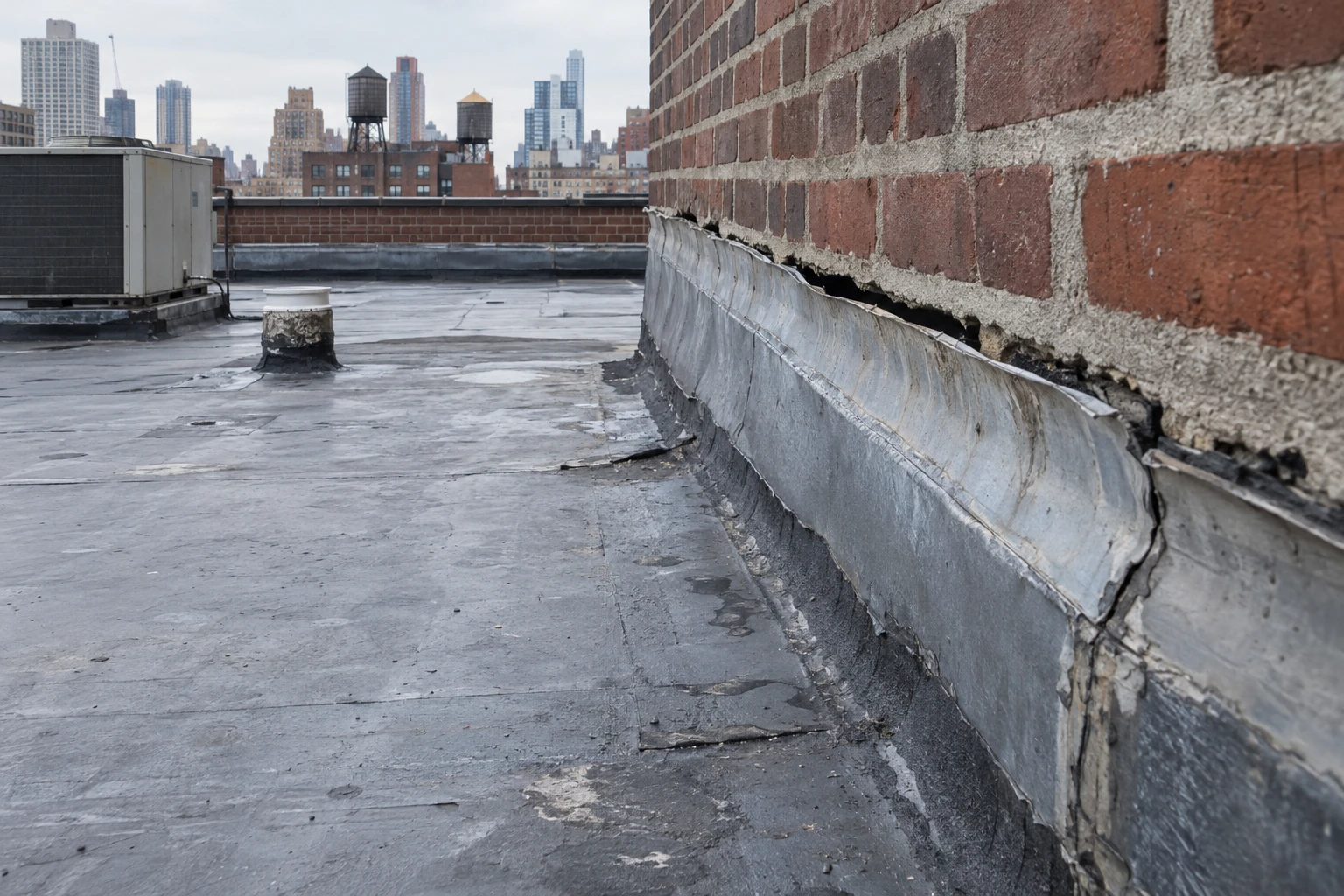
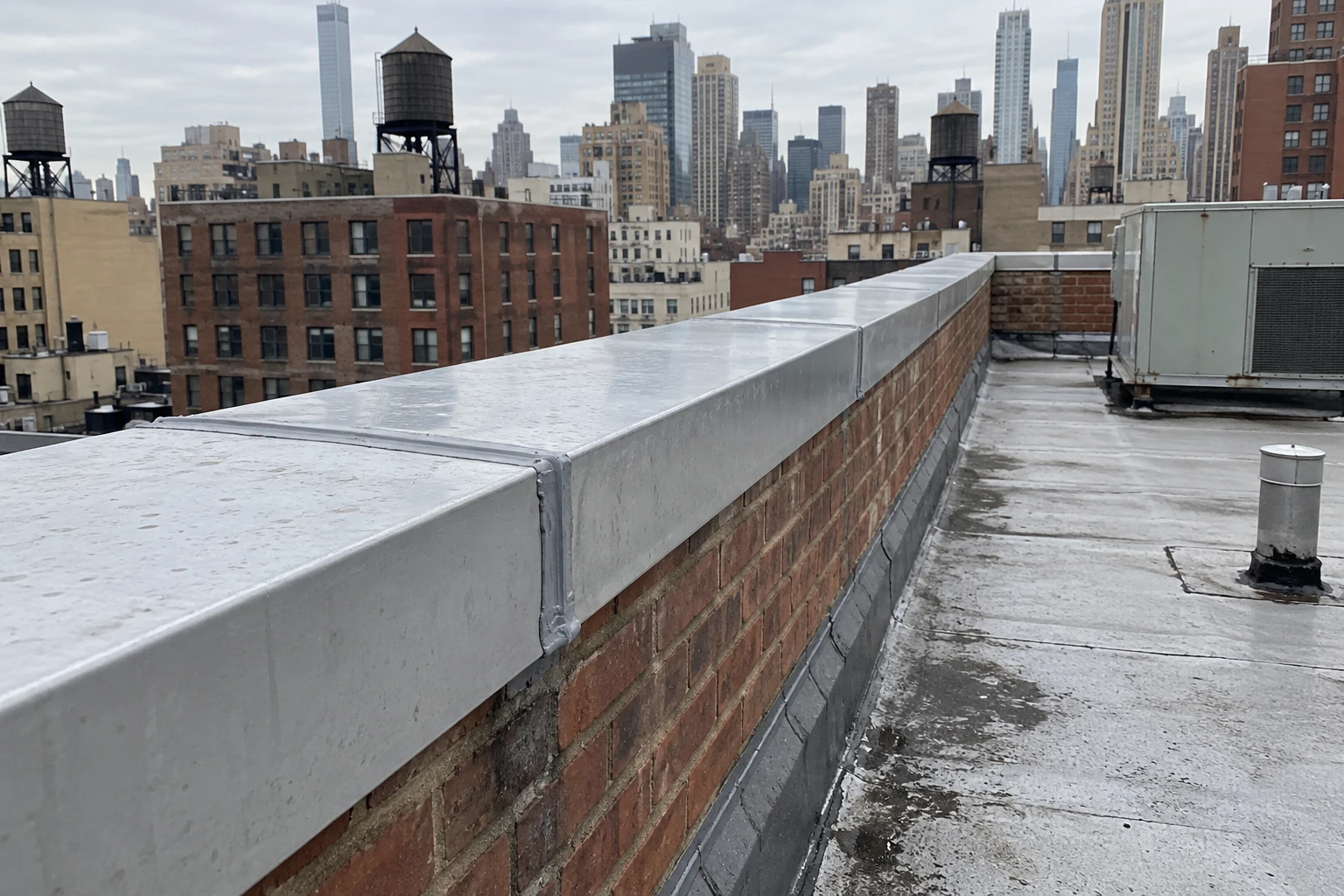
Edges take the most abuse. Wind, thermal movement and water all concentrate there, and the metal that finishes the roof is exposed to every season. Coping can loosen at its joints, counterflashing can pull out of its reglet, and sealant can dry out and split. On older masonry, mortar joints behind the metal let water into the wall and then into the ceiling below, a failure that often looks like a membrane leak and sends the repair to the wrong place.
Central Park has averaged 29.8 inches of snow a year, with a record 27.3 inch fall on January 23, 2016, and each freeze-thaw cycle works on those joints. We reset or replace edge metal and coping where the survey shows movement, and we repoint or seal the masonry behind it when the wall is the source. Repairing the membrane without addressing the wall behind the flashing is the single most common reason a repair does not last.
How do converted lofts and prewar buildings change the repair?
Conversion buildings carry roofs that were built for one use and now serve another. Tribeca is dominated by former industrial buildings turned into lofts, and Chelsea's Starrett-Lehigh Building, a full-block freight terminal and warehouse from 1930 and 1931, is a reminder of how varied these older roofs can be. The Walker Building in Chelsea was converted in 2012 so that its top 16 floors became apartments, which means the roof now sits above residents and not above stored goods.
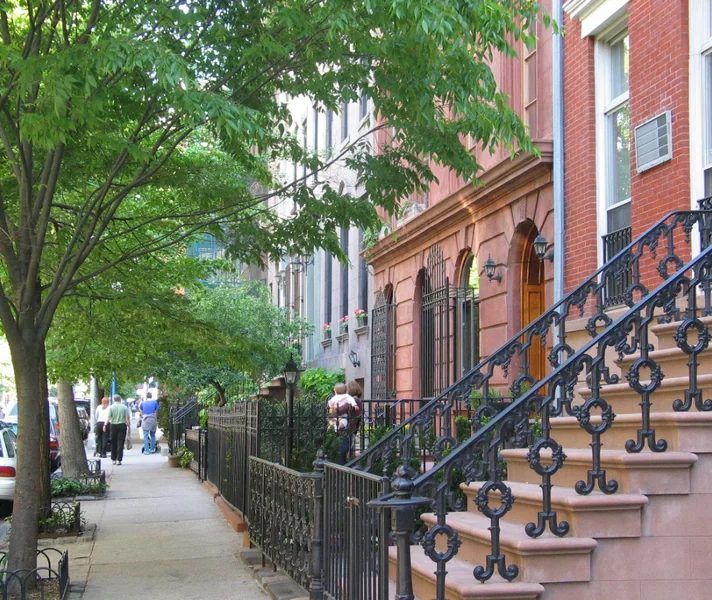
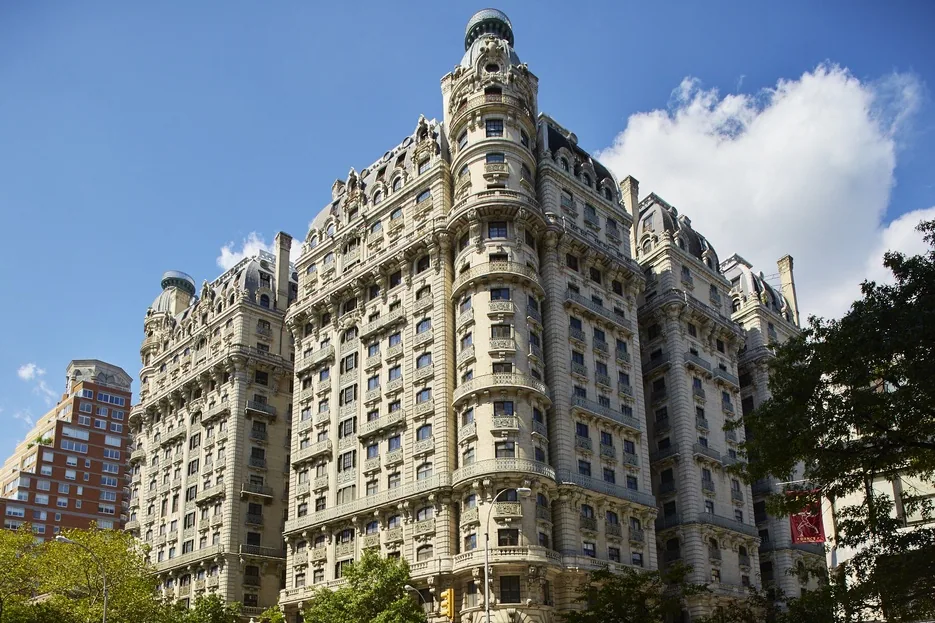
Prewar buildings on the Upper West Side, most of them built between 1885 and 1910, present a different pattern, where small roofs mean every edge and every penetration carries weight. In each case the repair has to respect what is beneath. A leak into a loft apartment is fixed on a different schedule than a leak into a storeroom, and the repair crew coordinates access with the building's management. Roofs in Tribeca and on the Upper West Side each need a different access plan for that reason.
What records does a repair produce?
Each repair is logged with a location, a photo before and after, the material and method used, and the cause when it can be determined. Those entries build into a history of the roof that an asset manager can read at a glance. When a repair location reappears in the log, it is flagged for a fix. When a section of roof stays quiet for several inspection cycles, the budget can move to another building in the portfolio.
The log also helps with insurance and with warranty questions. If a manufacturer asks for the repair history, or an adjuster asks what condition the roof was in before a storm, the answers are already written. For an office building with multiple tenants, the log can be shared with the managing agent so everyone sees what was done and when.
What drives repair cost and timing?
Access and conditions drive most of the price: how the crew reaches the roof, how much staging is needed, how many separate locations are in the scope, and whether the work can be done in one visit. Weather and temperature matter, since adhesives and sealants cure differently in January than in July, and a repair that needs dry surfaces cannot go forward after a rainy day. Emergency work is billed on a different basis than planned work, and it can be avoided by repairing known weak points before the wet season.
The timing question has a financial side. A planned repair is a line in the operating budget. An emergency is a surprise, and it often includes interior damage that was preventable. We list the findings in priority order, so the owner knows which ones are done now and which wait for the next planned visit.
Commercial Roofing Questions
How do we decide between repairing now and replacing later?
The decision rests on how much of the assembly is wet. Localized moisture at a curb or drain justifies repair, while moisture across the field points to replacement. The infrared scan and core cuts give the evidence, and the report states the remaining service life so the repair spend can be compared with the replacement date.
Should every leak be repaired the same week?
Active leaks over occupied space go first. Others are scheduled by the risk they carry to insulation and decks. A slow leak at a wall flashing can soak insulation for months, so even quiet findings are ranked by what they can do if left alone.
What happens when the repair area is surrounded by old material?
The new work is tied into the old with overlapping laps and compatible materials, and the edge of the repair is checked for adhesion. Where the surrounding membrane has aged out, the report says so, and the repair is designed to be the last one the section needs.
Can repairs be done in winter?
Many can, with cold-weather materials and attention to moisture and temperature, and we record the conditions on each repair. Some adhesives and sealants need warmth to cure, so those items wait for a suitable day. Temporary measures protect the building meanwhile.