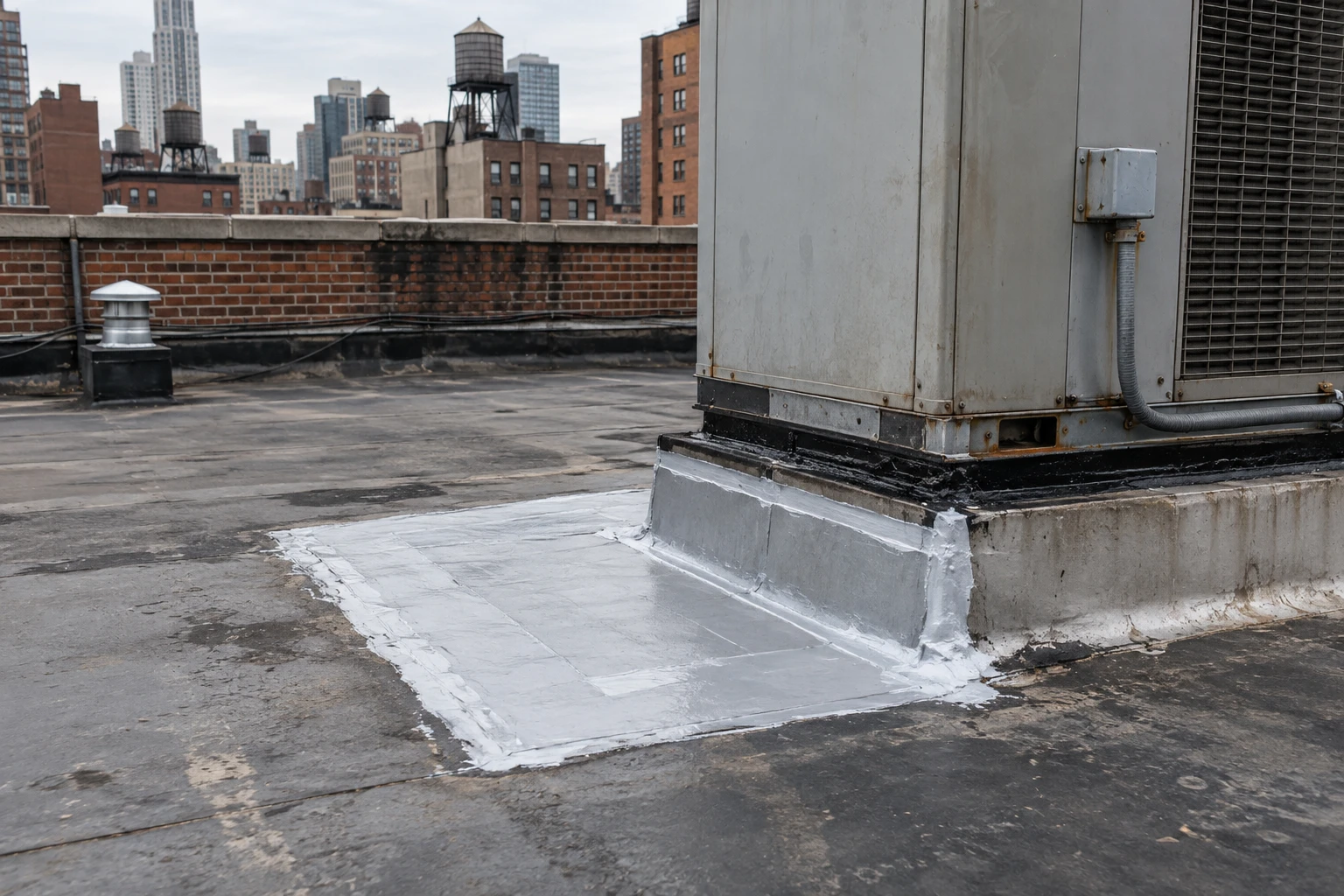
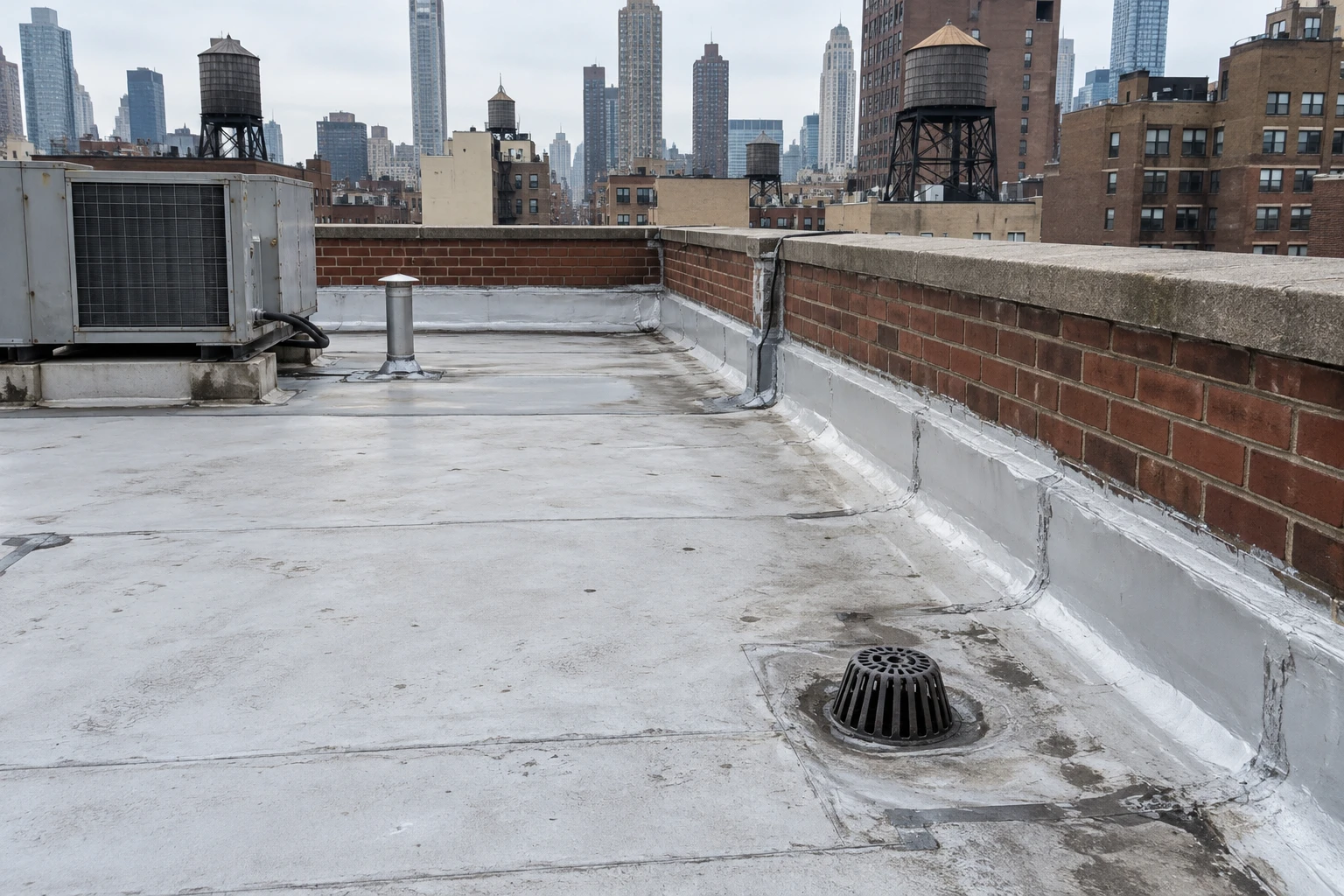
Puncture and foot-traffic damage repair for Manhattan, NY commercial roofs, with moisture checks under every hole and walkway plans for service routes.
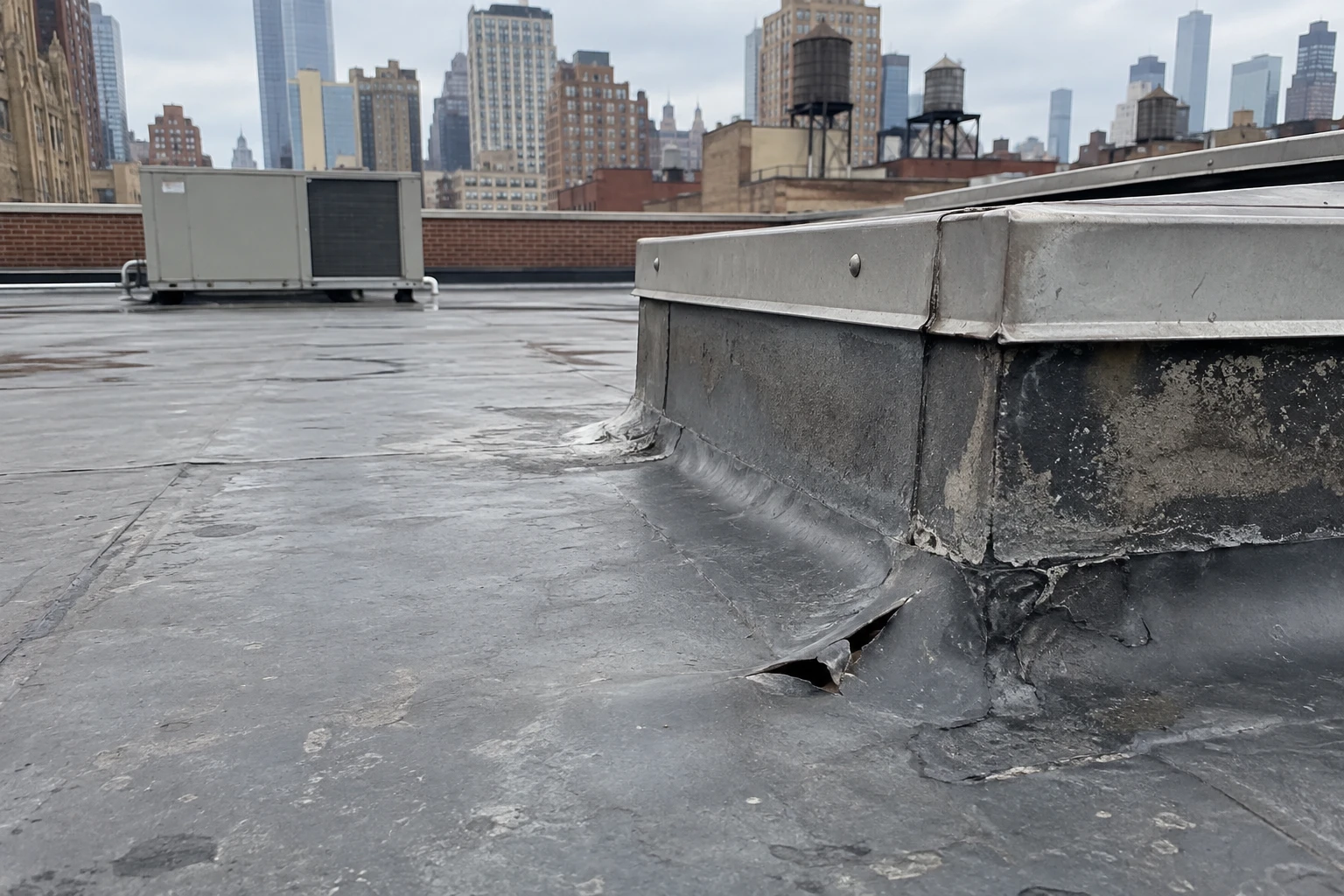
A hole the size of a thumbnail beside a rooftop unit, ringed by dark insulation on the infrared image, is a small puncture with a large consequence. The dropped tool cut the membrane once; every rain since has pushed water through the cut, and the wet patch below is many times the size of the hole. Punctures follow foot traffic, since service technicians, window cleaners, signage crews and surveyors all cross small roofs with tools. Chalk around each puncture and a photograph taken before any temporary patch goes on preserve the evidence.
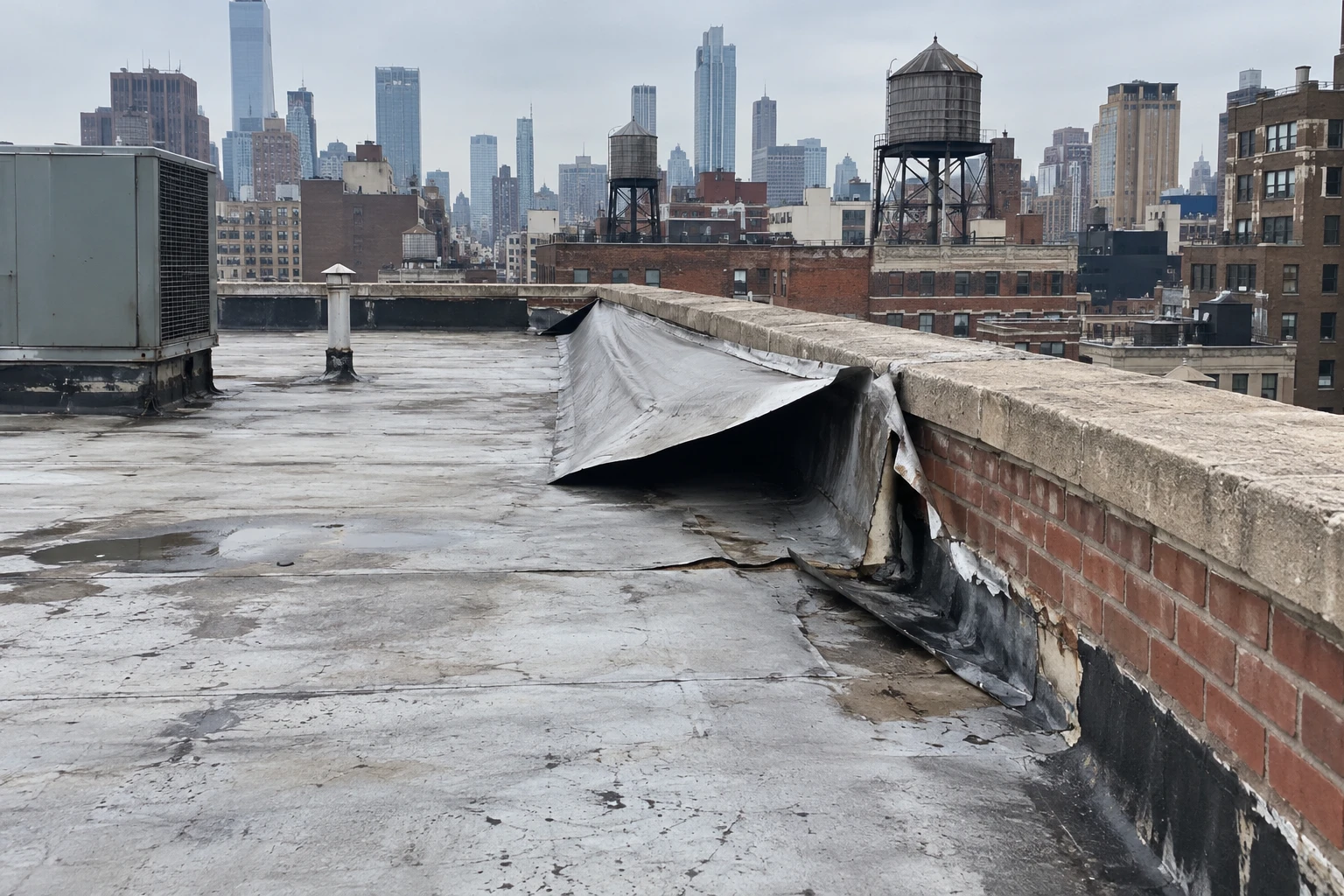
Membrane punctures and traffic damage on commercial roofs are found, repaired and prevented.
Where do punctures come from on a Manhattan roof?
A Manhattan roof serves as a work platform for many trades. Mechanical contractors service rooftop units, water-tank crews inspect their tanks, facade contractors set rigging, antenna installers pull cable and window cleaners hang platforms from tie-back points. The marks they leave include a screwdriver dropped from a hand, a ladder foot, the corner of a pallet, a cable dragged across the field and a slice from a utility knife.
Wind-carried debris, whether a branch, a piece of loose metal or a thrown object, extends the list, and a roof beside a construction site collects fallen material. Each puncture's location is recorded, because the pattern names the cause. Service traffic leaves holes beside equipment, wind-borne debris leaves them along an edge and heavy foot traffic leaves them on a walkway. Building staff can say which trades have been up recently.
Wind plays its part in the debris. Central Park's top gust of 78 mph, on December 2, 1974, sets the outer limit, yet gusts well short of it can still carry loose sheet metal or a tarp across a roof. A wind damage event often leaves punctures and tears with the lifted edges, so the survey after a storm checks the field for impact marks as well as the perimeter.
Why must we check for wet insulation under every hole?
A puncture that reaches the insulation lets water in with every rain. Central Park gets about 49.5 inches of precipitation in a year, and Ida's 3.15 inches in one hour on September 1, 2021 shows what a hole can admit in a downpour: a hole that took a few drops in light rain can take a flood in an hour like.
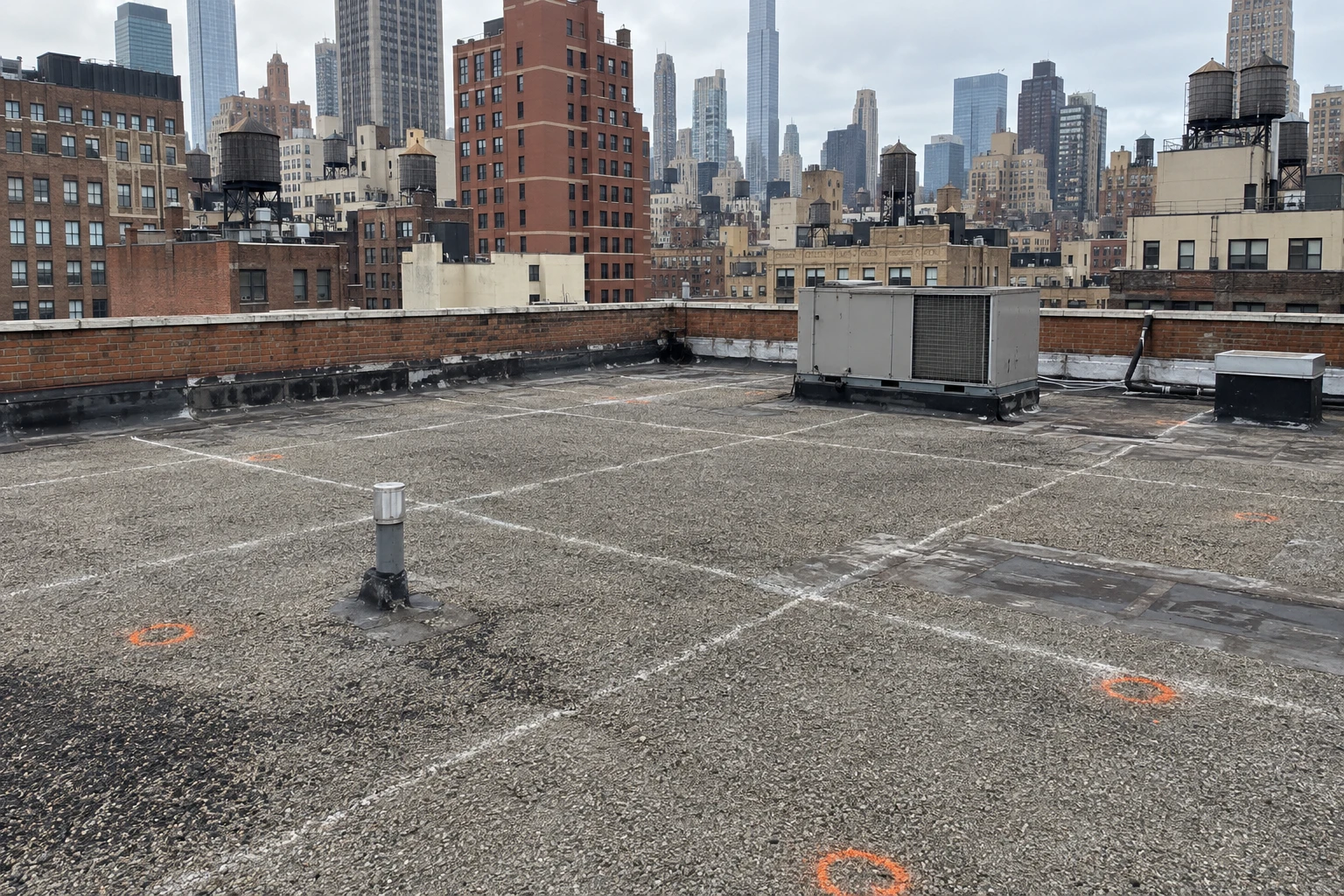
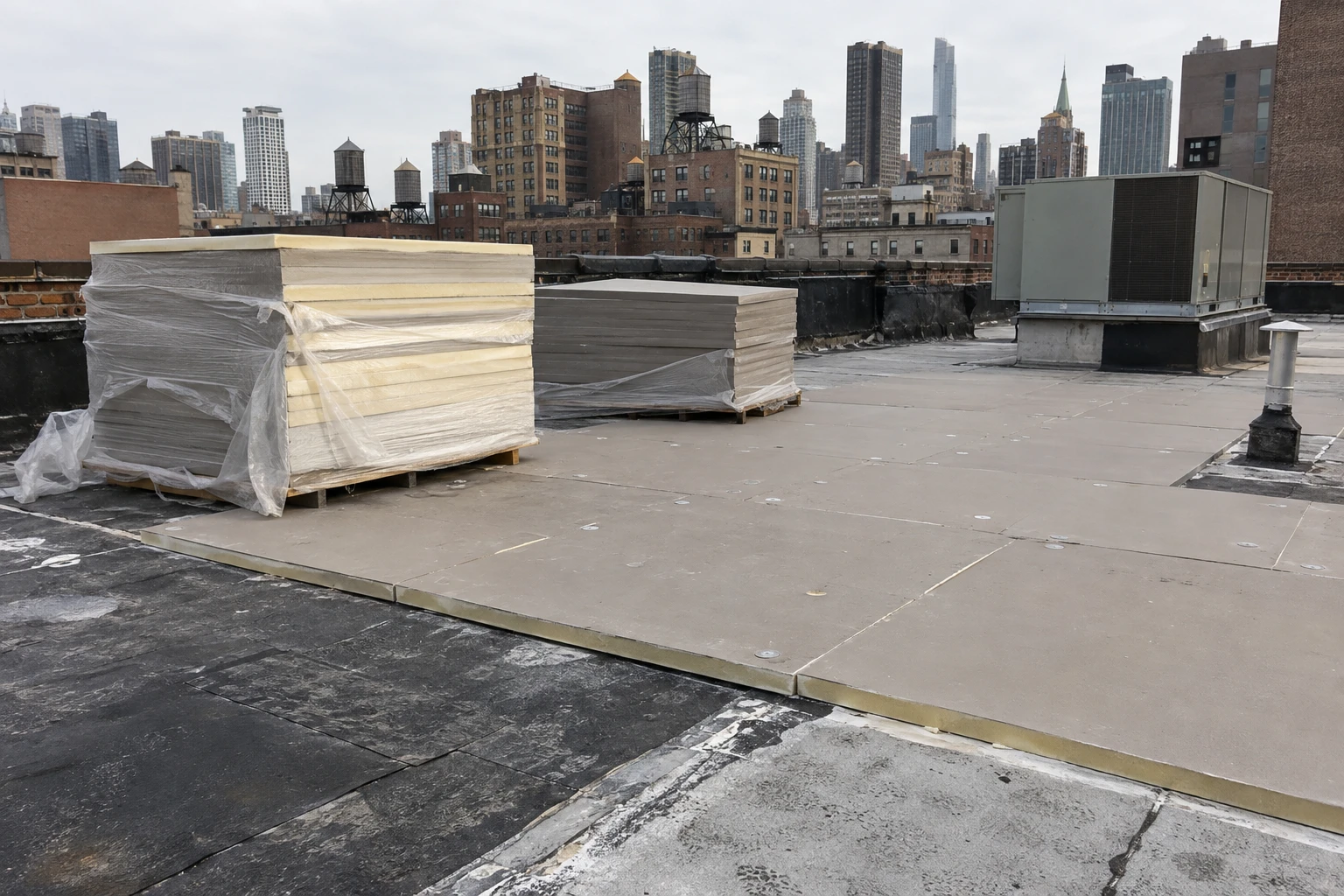
Patching without checking underneath seals the water in. The area is scanned with an infrared camera, confirmed with a moisture meter and cored if the reading is high. Wet insulation comes out and new insulation is tied into the surrounding board before the patch goes on, and the infrared moisture survey maps how far the wetness extends. If the insulation is wet over a broad area, the repair becomes part of a larger scope and roof insulation and cover board decisions follow. The size of the wet area is recorded beside the size of the hole.
The wet area, not the hole, drives cost. Pair a puncture an inch across with a wet patch two feet wide and the job becomes removing two feet of insulation, drying the deck and rebuilding every layer in sequence; the patch is the inexpensive step. That is why every puncture is worth repairing as soon as it is found, even when the hole looks harmless; repairing early is far cheaper than repairing late.
How is each type of membrane repaired?
The repair follows the roofing system. On a thermoplastic sheet the area is cleaned and covered with a welded piece reaching a few inches beyond the damage, its corners rounded to resist peeling. EPDM is patched with cured or uncured membrane in adhesive or tape. Modified bitumen receives a heat-welded or cold-adhered patch, and a built-up roof receives felts and bitumen finished with a flood coat.
Wherever possible the patch matches the roof material, since an unlike material may not bond. Welds are probed afterward, and each patch is photographed before and after. If the sheet has aged or turned brittle, a patch may fail to hold, so the survey weighs the repair against a larger restoration under commercial roof repair. Adhesives and welds need dry conditions, which means weather can postpone the work. The patch type and the date go in the record.
What protects a roof from the next puncture?
Prevention begins with routes. A walkway pad from the access door to each piece of equipment gives service crews a marked path and shields the sheet; pads are heavy-duty material welded or adhered to the membrane, and they are replaced as they wear. Equipment platforms keep ladders and tool bags off the sheet, and a rule requiring a mat under any work area makes a difference.
Access control helps too. A log at the roof door, naming each visitor and the work done, helps the superintendent trace damage to its source, and a short briefing for trades, with a plan of the protected routes, cuts down dropped-tool damage. Our preventive roof maintenance visits check pads and routes. In Chelsea and other districts with heavy rooftop equipment, route planning is part of the maintenance plan. A copy of the roof plan posted beside the door keeps the routes visible.
Material choice also affects puncture resistance. A thicker membrane, a reinforced sheet or a cover board beneath the membrane resists point loads better, and a new roof or a replacement can price these options in. Heavy service traffic may justify them. The options are framed around the traffic the roof will carry rather than in the abstract, and the owner chooses the level of protection the building needs. The closeout file records the choice and the thickness installed.
Who pays when a trade damages the roof?
The contract between the owner and the trade, and the lease, hold the answer. Responsibility usually rests with the trade that punctured the sheet, provided the damage can be tied to its visit, and that tie depends on records: a dated photograph before the work and one after, or a roof log.
On discovery the damage is documented with where it is, how big it is, its cause when known and the moisture reading under it. Damage that traces to a contractor goes back to that contractor with the file and a repair request; damage that does not is paid from the roof maintenance budget. Where an insurer is involved, the documentation supports the claim, much as in seam failure repair records. Photographs sent the day the damage is found are the strongest.
When the damage links to a recent visit, a short factual note to the trade, sent with the photographs, often settles the repair quickly. The note states the date found, the location and the moisture reading, and it avoids guessing at fault. Clear evidence usually persuades the trade to arrange the repair, and the roofer then finishes it to the system's standard so the warranty stays intact. Flashing damaged on the same visit is a flashing failure and is fixed in the same trip. Terrace and equipment-service routes in Hell's Kitchen and Hudson Yards get the first look, since foot traffic causes many punctures.
Commercial Roofing Questions
What decides whether a puncture is a patch or a section replacement?
The moisture reading and the sheet's condition. One dry puncture in a sound sheet needs only a patch. Wet insulation, a cluster of punctures or a brittle sheet means a section comes out and is replaced.
Can a puncture leak into the building right away?
Yes, if the deck is exposed or the insulation thin. Far more often the water travels through the insulation first and appears inside later, some distance from the hole.
Do walkway pads pay for themselves?
On routes with regular traffic they do, since a pad costs less than a single puncture repair that includes wet insulation.
What is the right first move on finding a hole?
Photograph the hole, mark it, keep people clear of the area and call. Tape or sealant can serve briefly as a temporary patch, though it has to be replaced.
Can a coating cover small punctures?
Pinholes can be sealed by a coating, yet any puncture that reaches the insulation needs a real repair before one goes on, since coating over wet insulation conceals the problem.