Hands-on commercial roof inspections in Manhattan, NY with photographed findings, a condition rating and a ranked repair list for asset managers.
A roof inspection starts in the stairwell, with the building's own record of what the roof has already been through. Prior repair invoices, leak logs, tenant complaints and the original drawings tell us where to look before anyone steps on the membrane. On the roof, the walk follows a fixed route so that nothing is skipped: drains, perimeter, penetrations, equipment, and finally the open field. Every observation is tied to a location on a plan and a photograph, and every finding receives a rating. The result is a document an asset manager can set beside a capital plan, a lender's request or an insurance renewal, and read without a guide.
What does the walk cover, and in what order?
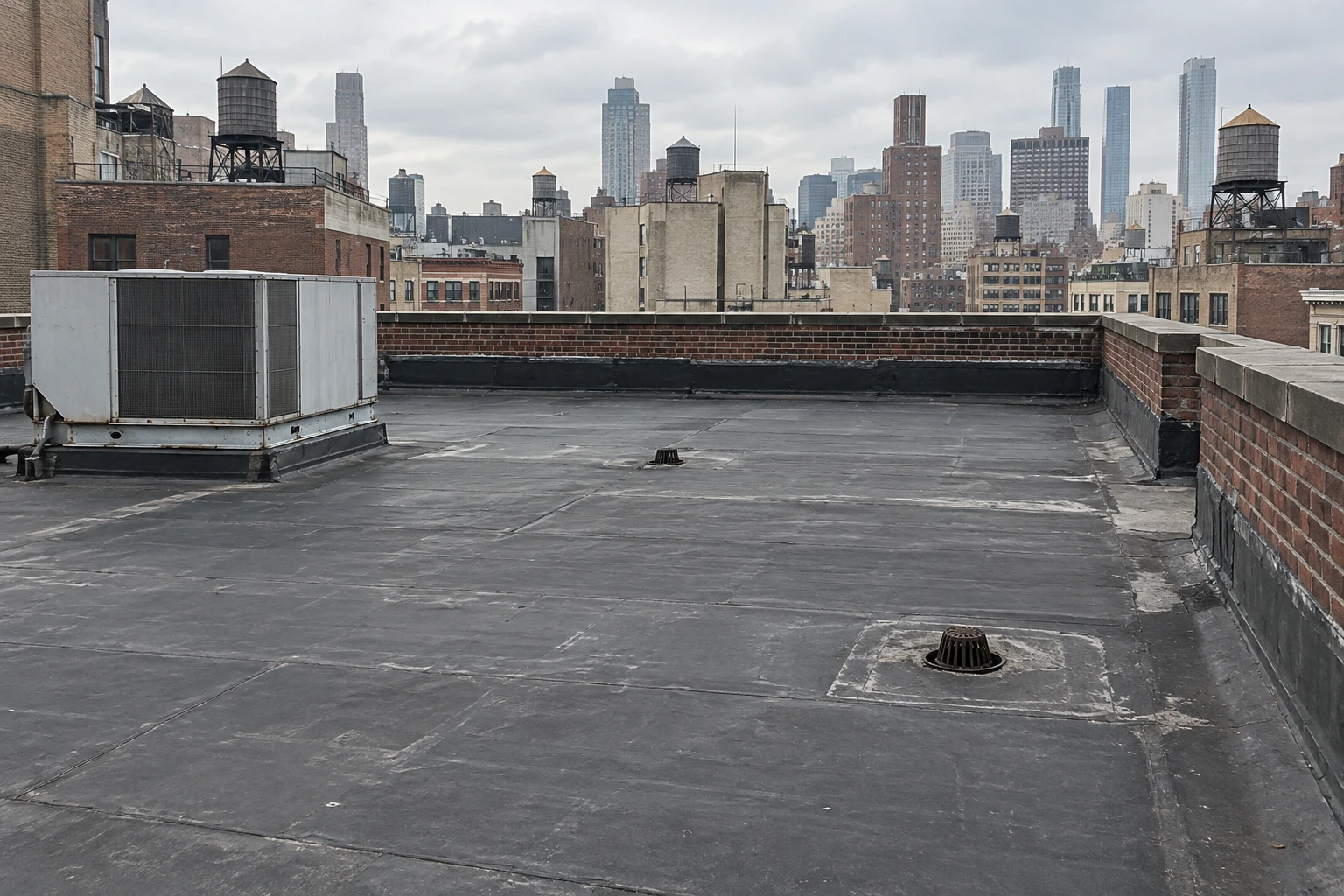
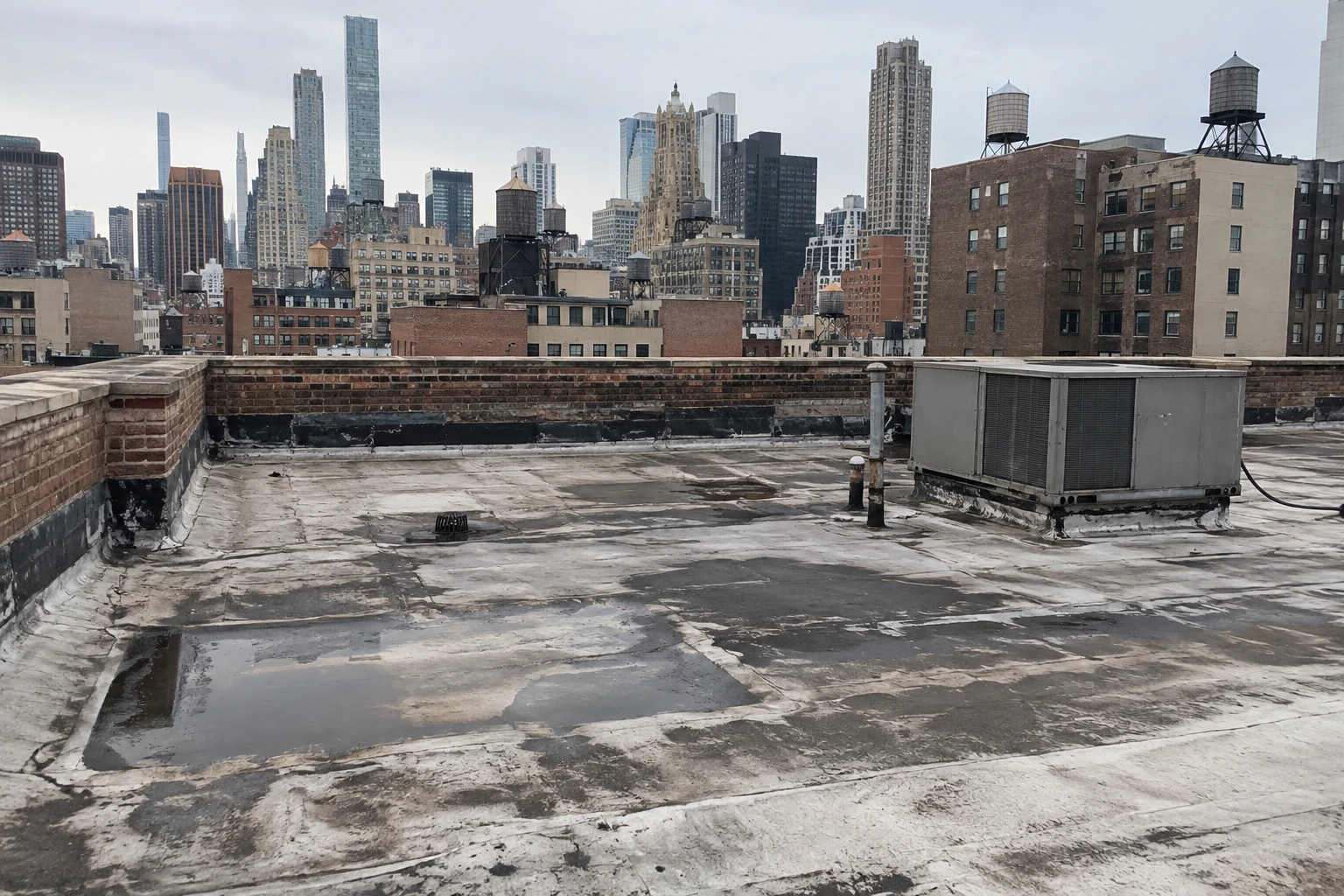
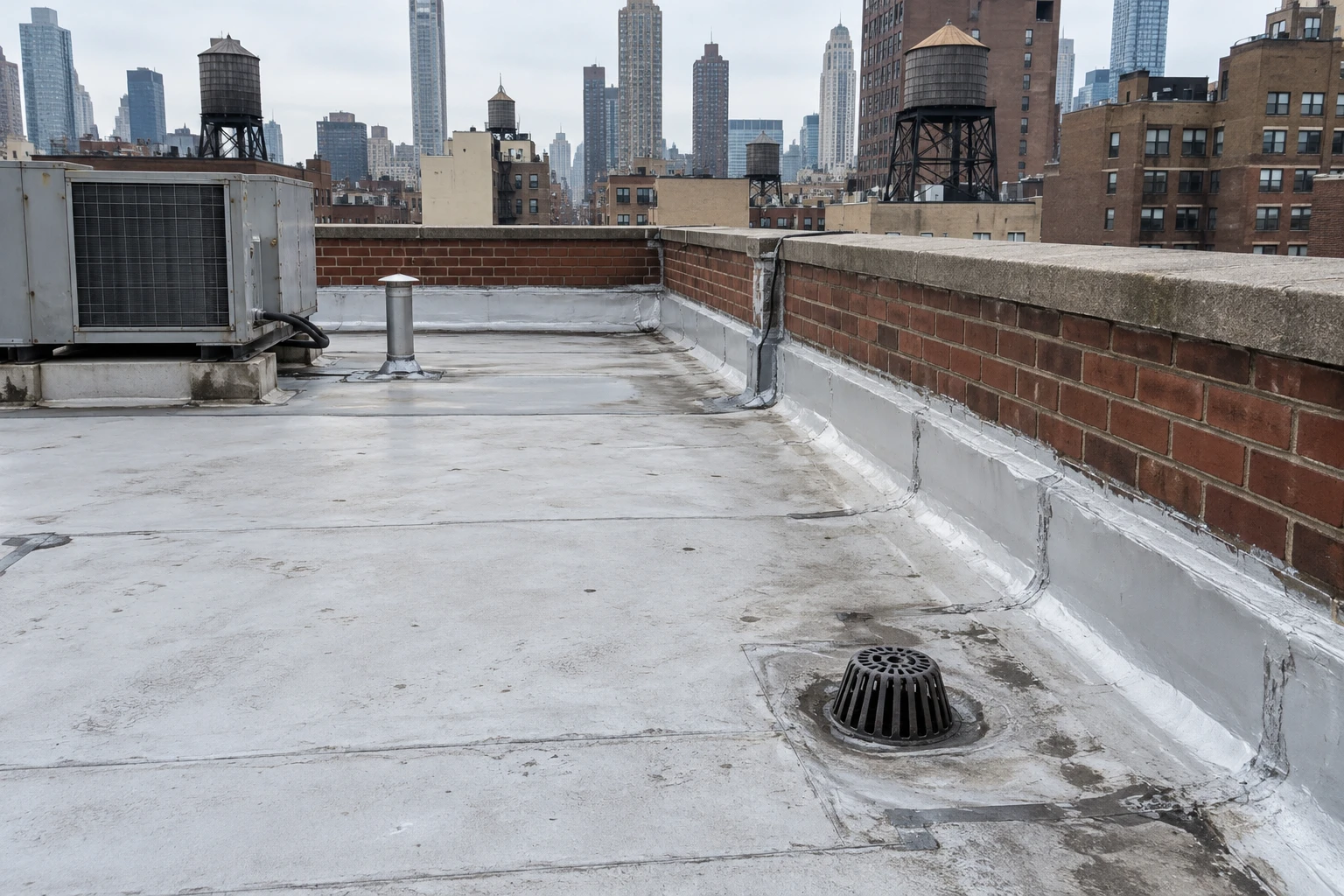
We start at the drains, because water that cannot leave the roof is the cause of most of the problems that follow it. We check strainers, sumps, leaders and overflow scuppers for debris, damage and elevation relative to the surrounding membrane. From the drains we move to the perimeter, where parapets, coping, counterflashing and edge metal are examined for movement, open joints and failed sealant.
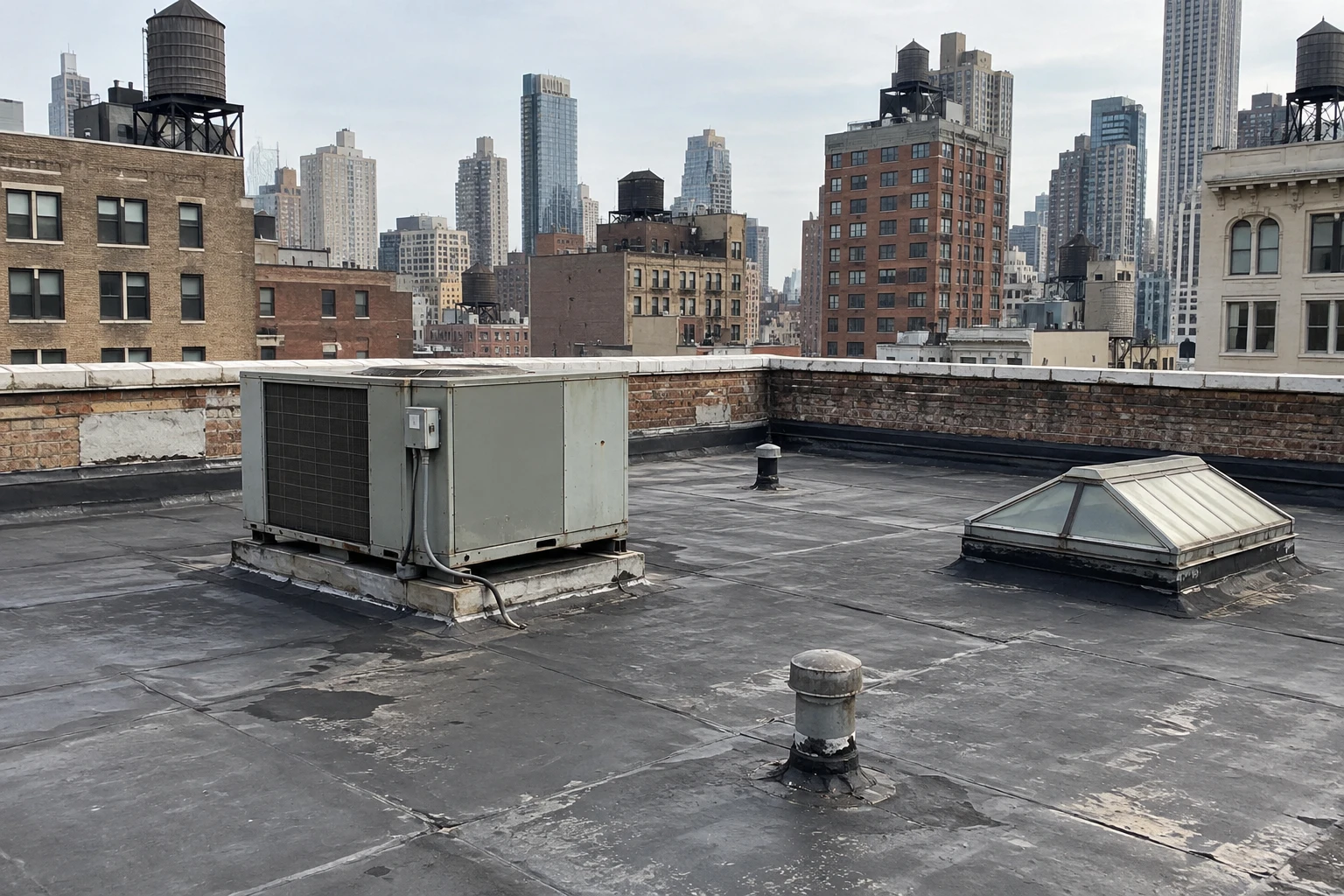
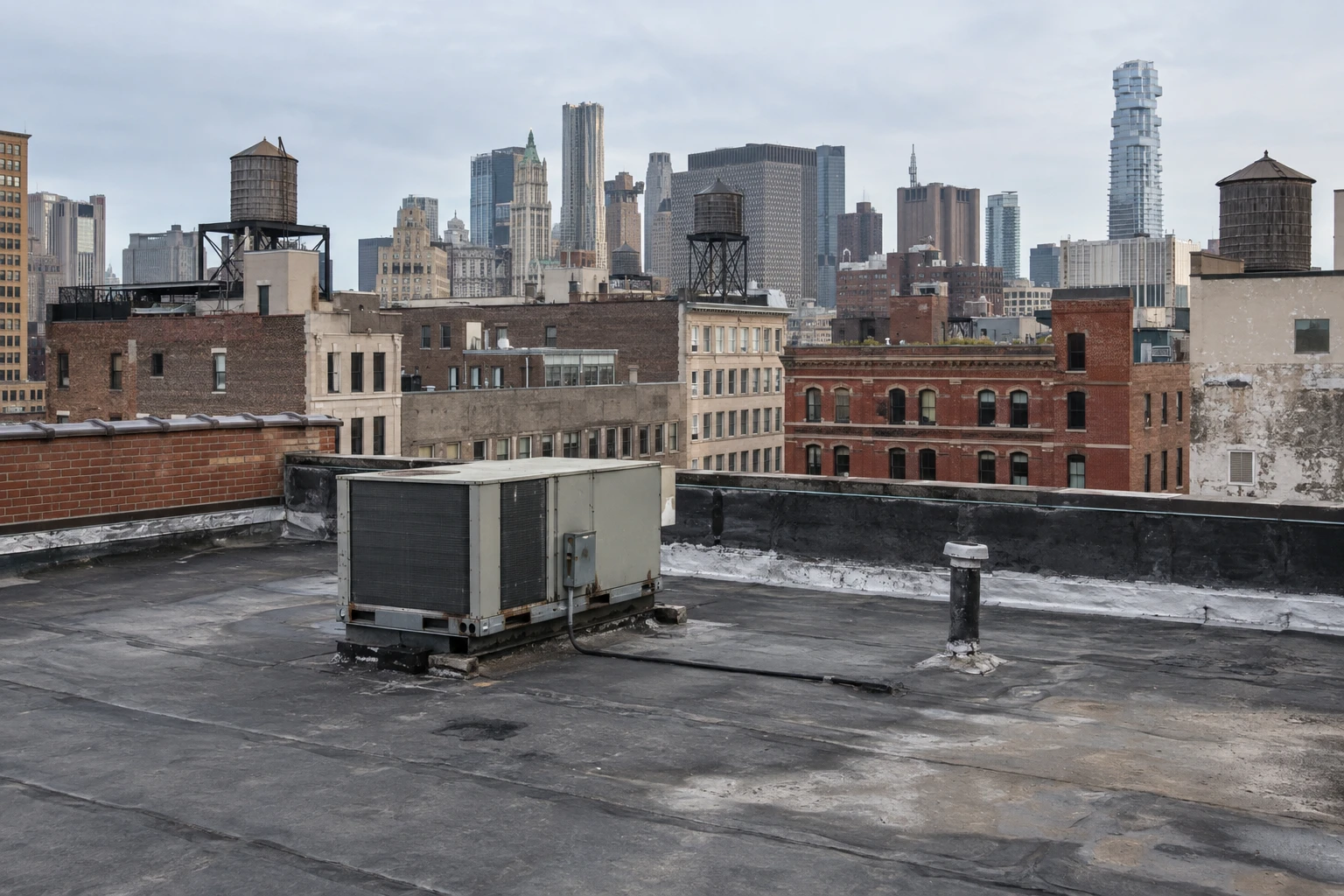
Penetrations come next: pipes, vents, conduit supports, hatches and equipment curbs. Each one is checked for flashing height, sealant condition and fastener integrity. Last is the field of the roof, which we read for blisters, open laps, punctures, abrasion, wear on the surface and signs of ponding. A moisture meter and, where warranted, an infrared scan identify wet insulation that cannot be seen. For roofs that are difficult to walk, a drone roof inspection supplements the route with imaging.
How is a condition rating assigned?
The rating combines three questions. What is the present state of the membrane, flashing and insulation? How fast has the condition changed since the last record? And what would happen to the building if the roof were left alone for another year? The answers produce a condition rating that places the roof on a scale from sound to failed, with notes that explain the reasoning.
A rating is useful only if it is comparable from one roof to another, so we apply the same method on every building. For a portfolio, the ratings become a ranked list, and the list becomes input to roof capital planning, which assigns funds to the roofs that need them most. An individual building gets a remaining service life estimate and a repair list with the most urgent items first.
How do building types change what is inspected?
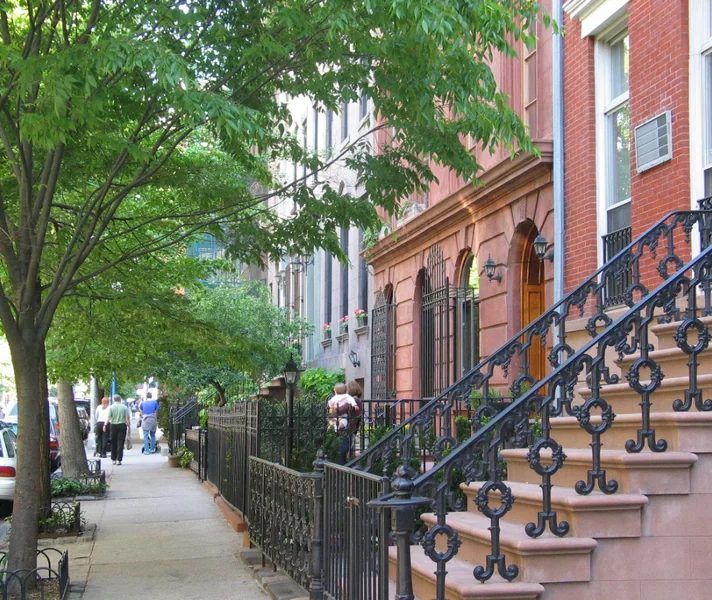
The Upper East Side includes Lenox Hill Hospital, NewYork-Presbyterian Hospital and Weill Cornell Medical Center, and the neighborhood's historic districts include the Park Avenue Historic District with 64 properties. A hospital roof is inspected with attention to rooftop air handling and drainage that serve critical spaces, while a historic residential building is inspected with attention to parapets and chimneys, and to the limits that landmark status places on visible changes. Roofs on medical office buildings sit between the two.
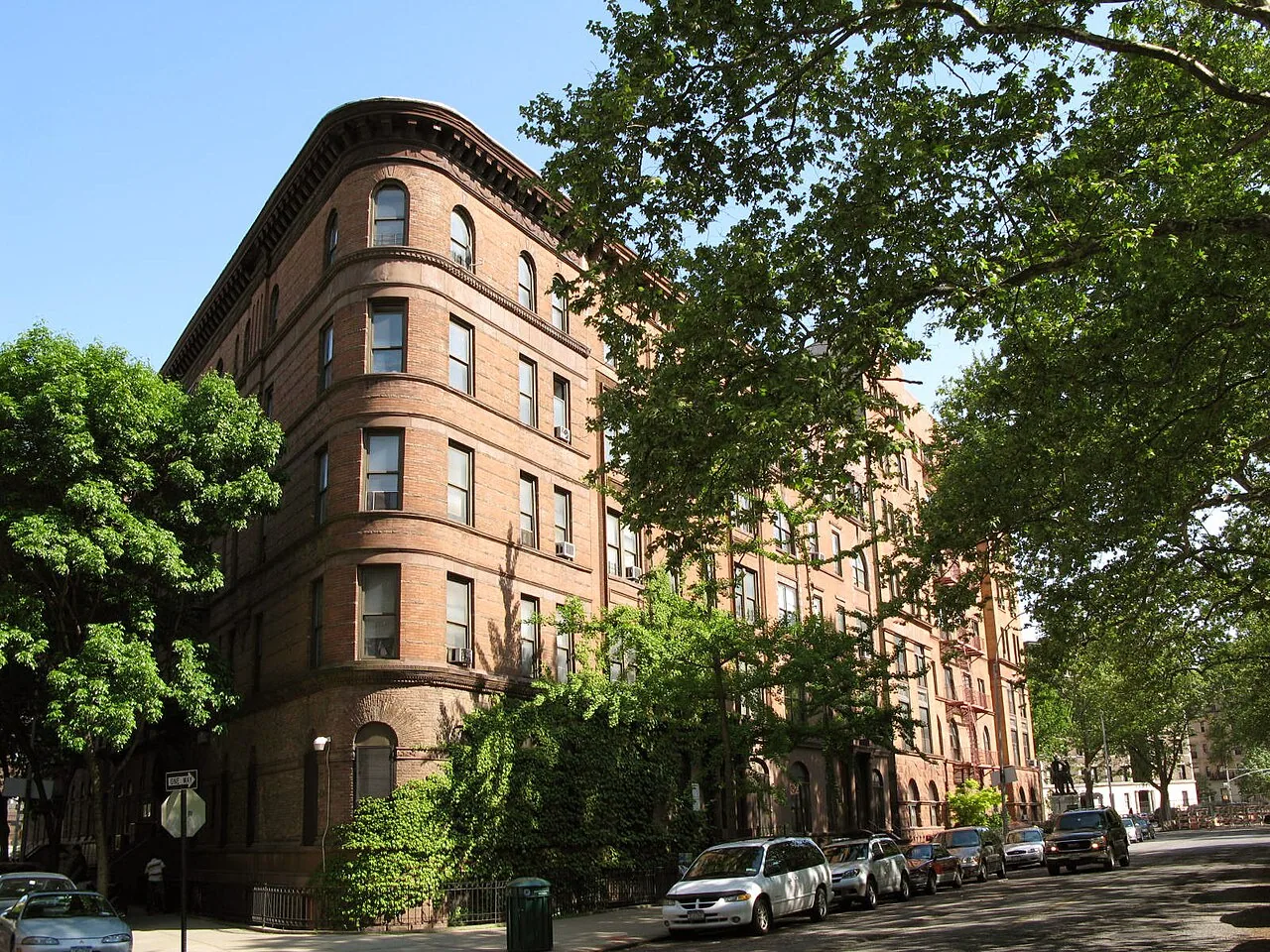
East Harlem has 24 New York City Housing Authority developments, and Taino Towers, with four 35 story towers and 656 apartments, opened in 1979. Large residential complexes involve many roofs and many penetrations, and the inspection plan groups them by building type so the findings can be compared. In Harlem, the many townhouses in historic districts such as Mount Morris Park call for their own access plan, since row house roofs are reached through the building or from neighboring structures.
When should an extra inspection be scheduled?
A regular schedule, often twice a year, keeps small defects from becoming large ones. An additional visit after a significant event is worth the time. Central Park has recorded a 78 mph gust and a 27.3 inch snowfall on January 23, 2016, and either kind of event can lift an edge, shift a curb or load a drain with debris. Hurricane Ida's 3.15 inches of rain in a single hour in 2021 showed how fast drains can be overwhelmed.
We also recommend inspections at ownership changes, before a lease renewal, before a roof warranty expires, and when a new piece of rooftop equipment is installed. Each of those moments changes either the risk or the information the owner needs. The visit after a storm is shorter than the full survey and focuses on the details most likely to have moved: perimeter metal, drains, and the flashings around any new equipment.
What does the owner receive?
The deliverable is a written report with a roof plan, a numbered list of findings with photographs, a condition rating, a remaining service life estimate and a ranked repair list. Each finding states what was observed, what it means, and what to do about it. Items that are urgent are marked as such, along with the risk if the work is delayed.
The report is designed to be read by people with different needs: a property manager scheduling work, an asset manager building a reserve, a lender checking collateral, or an insurer reviewing a claim. We keep the language plain and the photos clear. The first report also establishes a baseline, and the next one shows what has changed. If the building is part of a larger group, the same format supports a multi-site roof program, with the findings from every building in one comparable set.
What happens after the inspection?
The inspection ends with a conversation about the ranked list. Small items can be handled on a maintenance visit, and the preventive maintenance schedule can be written from the findings. Larger items are priced separately, with options. If the findings show widespread moisture, the next step is a survey with core cuts, and the report explains why.
Where the report recommends no action beyond monitoring, that is stated as clearly as a recommendation to repair. A roof rated sound with clear drains and tight flashings goes back on the schedule for its next visit, and the report says which details to watch. Owners with several buildings use that clarity to move funds to the roofs that need them and to leave the sound ones alone.
Commercial Roofing Questions
How long does an inspection take on a typical roof?
A single roof can be walked in a few hours, depending on size, number of penetrations and access. Larger buildings with several roof levels take longer. The written report follows after the photographs are sorted and the ratings are checked.
Does an inspection need access to the interior?
Interior access helps, because ceiling stains and wet insulation seen from below confirm what the roof shows. If it is not available, the roof findings stand alone and the report notes the limit. A short walk of the top floor often adds useful information.
Can a visual inspection find wet insulation?
A visual walk finds clues, such as soft spots, ponding and blistering, but it cannot see inside the assembly. A moisture meter or infrared scan does, so we use them whenever the visual findings suggest moisture is present.
What does a roof inspection cost compared with a repair?
The inspection gives the owner a basis for deciding between repair and replacement. We quote it by roof area and access, and the price is stated before the visit.
Can the report be used for a sale or a loan?
Yes. Buyers and lenders ask for the condition, the age and the remaining service life, and the report answers all three. For a formal transaction we recommend the more detailed due diligence survey.
Who should attend the inspection?
The building engineer or property manager is useful for access and history, since they know where leaks have appeared and which equipment was added or moved. Attendance is optional. We can also work from a key and a roof plan, then review the findings in a call afterward.