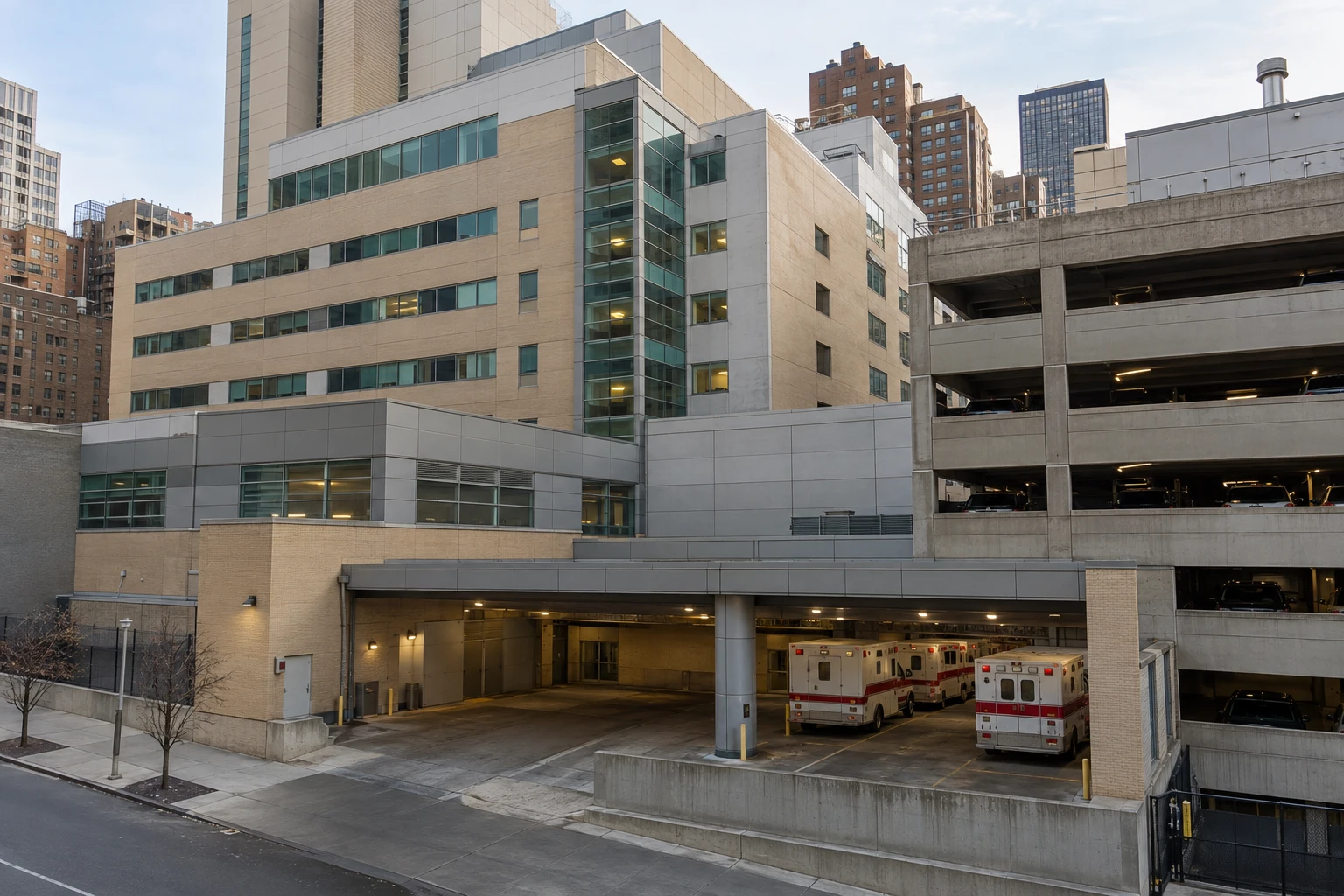
Hospital and healthcare campus roofing in Manhattan, NY: phased surveys, infection-control planning, drainage and Local Law 92 and 94 scope.
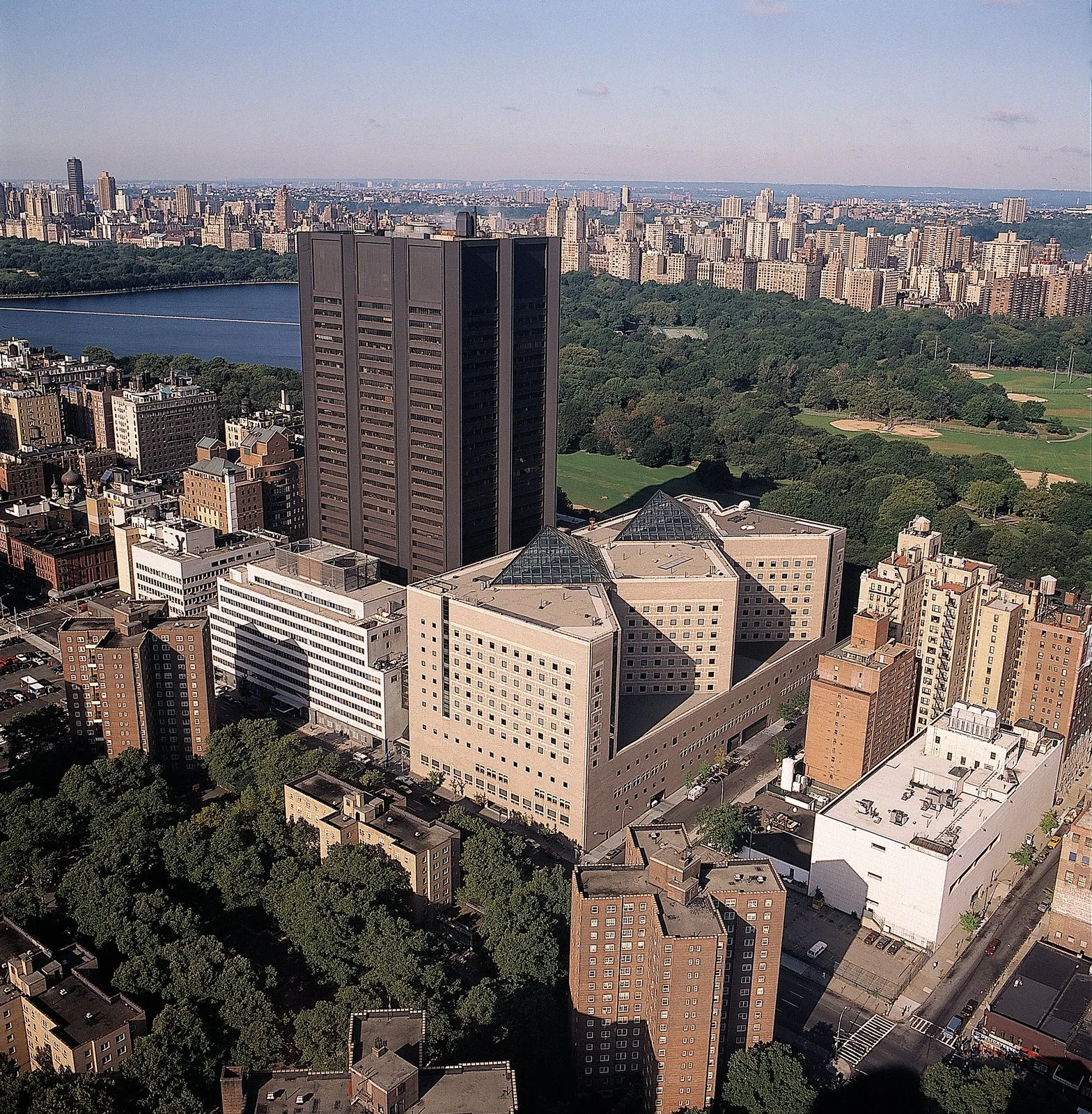
On a hospital roof, a core cut is a piece of evidence with a clinical audience. It shows whether the insulation under a roof above a patient floor is dry, and the answer decides whether a repair can wait for the next cycle or must happen this quarter. Healthcare buildings are never empty, and the roofs above them can vary in age and use: a tower roof, a podium, a mechanical penthouse. Kips Bay holds Bellevue and NYU Langone, the Upper East Side holds Lenox Hill and Weill Cornell, and NewYork-Presbyterian/Columbia stands in Washington Heights, so hospital roofs in Manhattan, NY span three neighborhoods.
We survey, repair and replace roofs on hospitals and healthcare campuses and put the findings in a format a facilities director and an infection-control lead can both use. Scope comes first: the latest roof report, the building's age and any open violations set the survey before a number is discussed.
How does a survey cover a roof with many ages and uses?
We divide the roof into zones that match the departments below: surgery, labor and delivery, imaging, inpatient floors, central plant. Each zone gets an infrared scan, cores at warm spots and control points, ponding depth readings and a detail inspection. The zones carry separate ratings, tied to a sketch.
The ratings let the facilities director rank spending by risk to patient care. They also give the clinical side a plain-language summary: which areas could be affected by a failure in the next year, which are stable and which need a closer look at the next inspection. The summary goes to the infection-control lead before any scope is final, because a repair that touches a ceiling plane needs their review. A dry zone over a corridor ranks lower than a zone with a wet curb over an operating suite. Equipment is listed zone by zone as well, since a chiller or a generator bears on the structure and on the work plan alike. Hot work needs permits, and we list those with the scope so the schedule includes them.
How does infection control shape the work?
A healthcare facility runs an infection-control risk assessment before construction near patient areas, and roofing is included when it can affect air quality or the ceiling plane. The assessment sets the barriers, the air handling changes and the sign-offs. We follow the plan the hospital issues and add roof-specific measures: sealed penetrations before tear-off, vacuum cutting, covered intakes and cleaning at the end of each shift.
Odor is part of air quality. We select low-odor systems and locate every intake before work starts. When wind shifts toward an intake, the smelly step pauses. Moisture is the other risk. A wet ceiling can grow mold within days, and we help the team identify and remove affected material instead of leaving it. The scope names who signs off at each stage, and the sign-offs are filed with the project record.
What did Sandy teach about water and mechanical systems?
Sandy flooded about 17 percent of New York City on October 29, 2012, with a surge 14.06 feet over average low tide at The Battery. The Manhattan VA Medical Center's basement flooded, damaging mechanical and fire suppression systems, and it was the last Sandy-hit city hospital to fully reopen, after about six months of repairs. Surge reaches the ground and the basement, not the roof, but the lesson carries upward: water that reaches mechanical systems has a long recovery.
On the roof, the equivalent is a leak over an electrical room or a mechanical penthouse. The cloudburst of September 1, 2021, 3.15 inches in an hour, came with the first flash flood emergency the Weather Service had issued for the city. We check leaders, overflows and curbs against that rate, and we document flow tests. The hospital's emergency plan should name the roof zones that sit over critical systems, and the roof survey provides the map for it. A leak response that begins with a sketch showing which curb sits over which electrical room saves the first hour, and the first hour is where most of the avoidable damage is decided.
Which rules apply to a hospital roof replacement?
Replacement work on a hospital roof follows the 2022 NYC Construction Codes, covering general building requirements, work on existing buildings and energy performance. Local Laws 92 and 94 of 2019 apply wherever a hospital roof is replaced in full: solar, a green roof or both has to cover the sustainable roofing zone. On a hospital roof crowded with equipment, helipad approaches and exhaust, that rule becomes a layout study.
We map the zone, the equipment and the structural capacity early. Clearances for exhaust and air intakes are checked against any added solar or green roof, and the weight is checked against the deck. Whether a repair or a partial recover sidesteps the rule is stated in the scope. For campuses in Washington Heights and Kips Bay, the review also checks landmark and historic status.
How should a campus plan roofs across many buildings?
A campus owner needs the same format on every building: a condition rating, a moisture map, a ponding record, an equipment list and an estimated remaining life. Ranked this way, the roofs can be funded in sequence. Ratings become a multi-year schedule, with dates and cost ranges, in the roof asset management plan.
A smaller medical office on the system gets a lighter version, and a data center serving the campus gets the strictest one. For health systems, healthcare roofing is a long-term program, with spring and fall inspections and a visit after every major storm. We update the rating after every repair, so the file always matches the roof. A capital committee reading the file in October sees the same numbers the facilities team saw in April, with the repairs in between dated and photographed, and can approve a replacement on the strength of a record instead of a conversation.
Commercial Roofing Questions
What decides the order of roof projects across a hospital campus?
Condition rating, weighted by what lies below, sets the order. A roof with wet insulation over an operating suite or a power room ranks above a dry roof over offices. Ratings plus the departments below produce an order that can be defended, and the capital plan takes it from there.
Can a hospital roof be replaced without disturbing patient floors?
Largely, with phasing. Work proceeds in sections, each with its own barrier plan, schedule and sign-off. Loud and dusty steps go to the quietest hours, and low-odor systems are chosen. High-sensitivity zones are done last, after the crew has proven its sequence elsewhere.
How are helipad approaches protected during roof work?
We coordinate with the hospital's flight operations before work begins. Crane lifts, materials and loose debris near an approach path are controlled or paused during flights, and everything is secured at the end of each shift. The hospital's aviation contact sets the rules.
Do New York City roof rules apply to a hospital in New Jersey?
No. Only New York City buildings are covered by those laws. A hospital in New Jersey works to state and municipal codes, and the local building department is the one that confirms them. The survey and the infection-control planning are the same.
What records does a hospital need after a roof project?
Photographs of each layer, core logs, moisture maps, flow test results for drains, infection-control sign-offs and the maintenance calendar. Accreditation reviews, insurers and future contractors all draw on them. We deliver them as a package at close-out.