Hurricane roof repair for Manhattan, NY and the Hudson waterfront: wind uplift, drain overload, debris impact and power-loss effects, documented.
Two storms frame the roof questions in this city: Sandy, whose surge on October 29, 2012 stood 14.06 feet over average low tide at The Battery, and Ida, which on September 1, 2021 set a one-hour rainfall record of 3.15 inches. Surge floods basements, and rain tests roofs. The two storms damaged buildings in different ways, and a hurricane survey separates them. Wind lifts edges, rain overloads drains, debris punctures membranes, and a power loss stops the equipment that keeps a building dry. Photograph the roof edges and drains once access is safe and write down the storm's date and time.
We survey and repair hurricane and tropical storm damage on commercial roofs, and our emergency line answers around the clock.
What did Sandy teach about Manhattan buildings?
Sandy put about 17 percent of New York City under floodwater, shut all road tunnels into Manhattan but the Lincoln, and blacked out Lower Manhattan south of 39th Street. East River water flooded parts of the East Village. In the Financial District, a Con Edison transformer explosion cut power. The VA medical center in Kips Bay lost use of its basement mechanical systems and was the last Sandy-hit city hospital to fully reopen.
Roofs sit above surge, but they felt the storm through wind and through the loss of power. The Battery Park City Resiliency Project, slated for 2026 to 2031, includes flood barriers around South Cove and Rockefeller Park, which shows how the district is responding. For a roof, the lessons are drain capacity, secure attachment and a plan for dry-in when crews cannot reach the site quickly. Keep the storm's wind and rain data with the survey.
Access after a storm is its own problem. All road tunnels into Manhattan but one closed in 2012, so a plan cannot assume crews and materials arrive on schedule. The practical answer is preparation: a standing agreement for emergency response, a stock of dry-in materials near the site and a pre-storm photograph set. The owner who has a rated roof survey on file can brief the crew in minutes and skip the discovery phase that otherwise costs a day.
Where does hurricane wind damage roofs first?
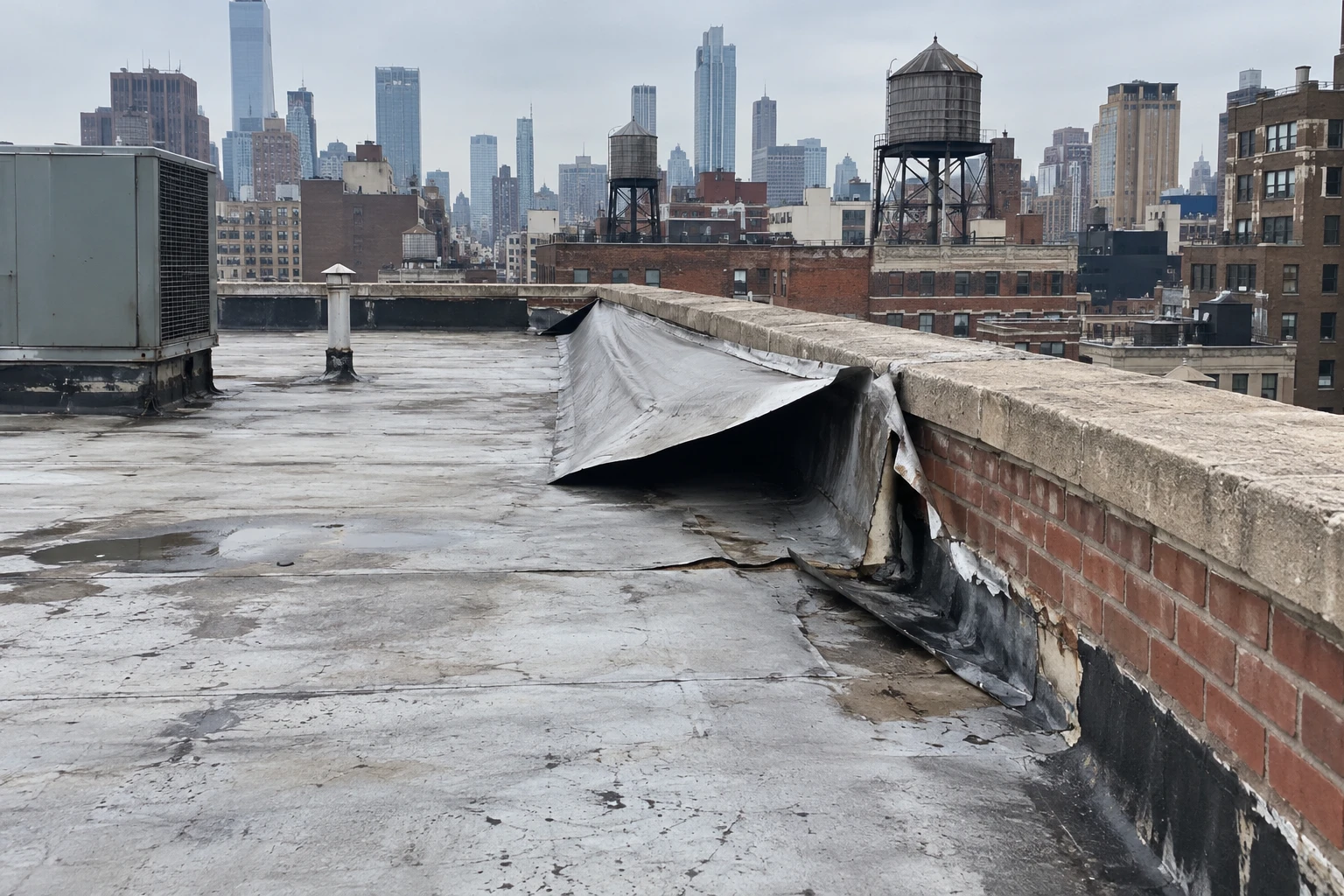
Wind damage starts at the edges. A hurricane can produce winds in the range of Central Park's strongest gust, 78 mph, recorded on December 2, 1974. The edge metal, the coping, the flashing heads at walls and the membrane at corners take the highest suction. Loose items, such as equipment covers, signage and antennas, become projectiles.
The survey walks the perimeter, checks fastener spacing and cleat condition, and looks at the field for fluttering or wrinkling. Damage often follows the wind direction. A displaced coping run on the windward side suggests a gust from that direction. For details, wind damage roof repair describes the repair sequence. Secure loose equipment before a storm if a forecast allows, and note any items found moved afterward.
What happens when a drain system is overwhelmed?
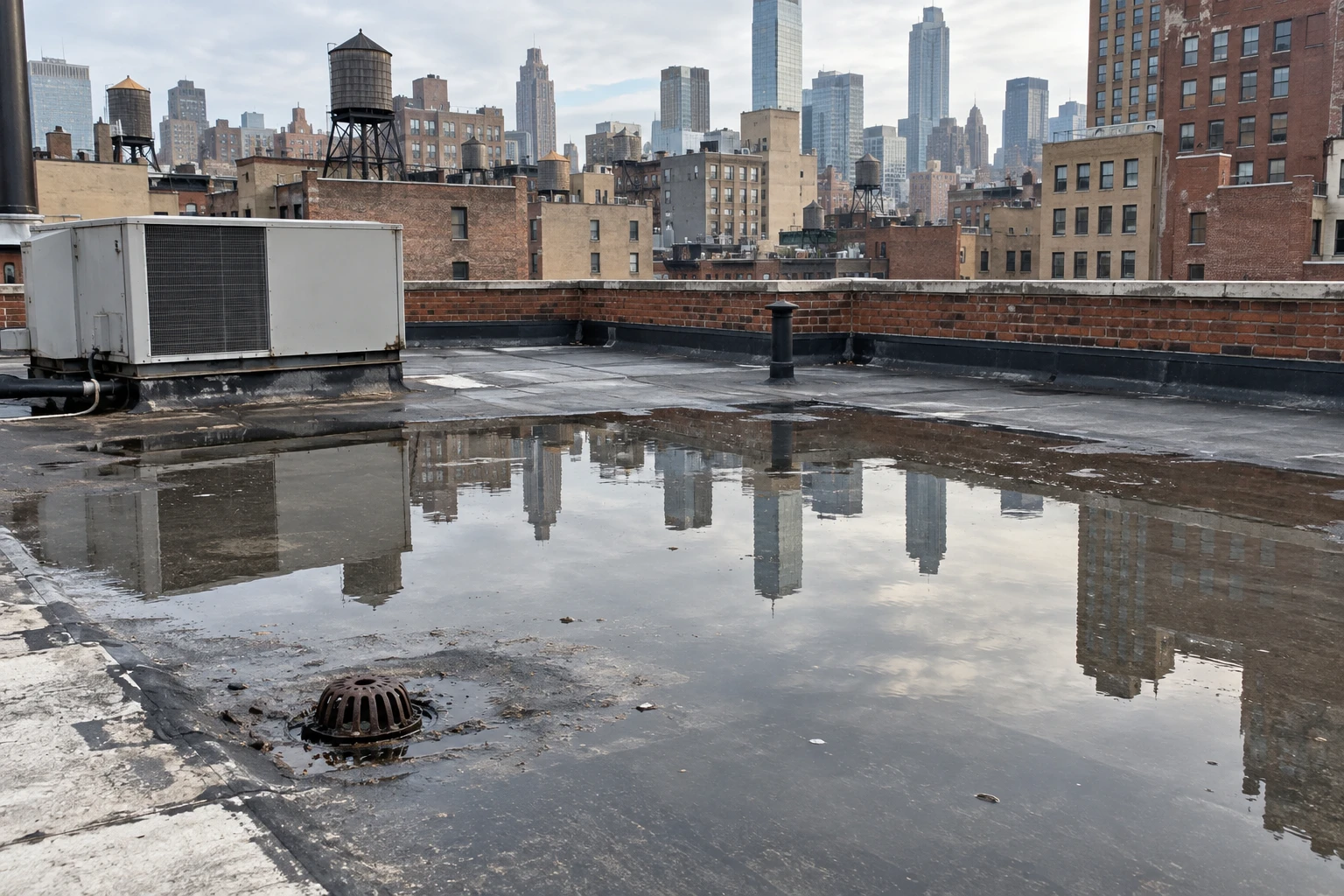
Ida's rain on September 1, 2021 totaled 7.13 inches in Central Park and peaked at a record 3.15 inches in one hour, and a flash flood emergency, a first for New York City, was declared. Drains are sized for a design rainfall; an hour that exceeds the rate leaves water standing against parapets and curbs.
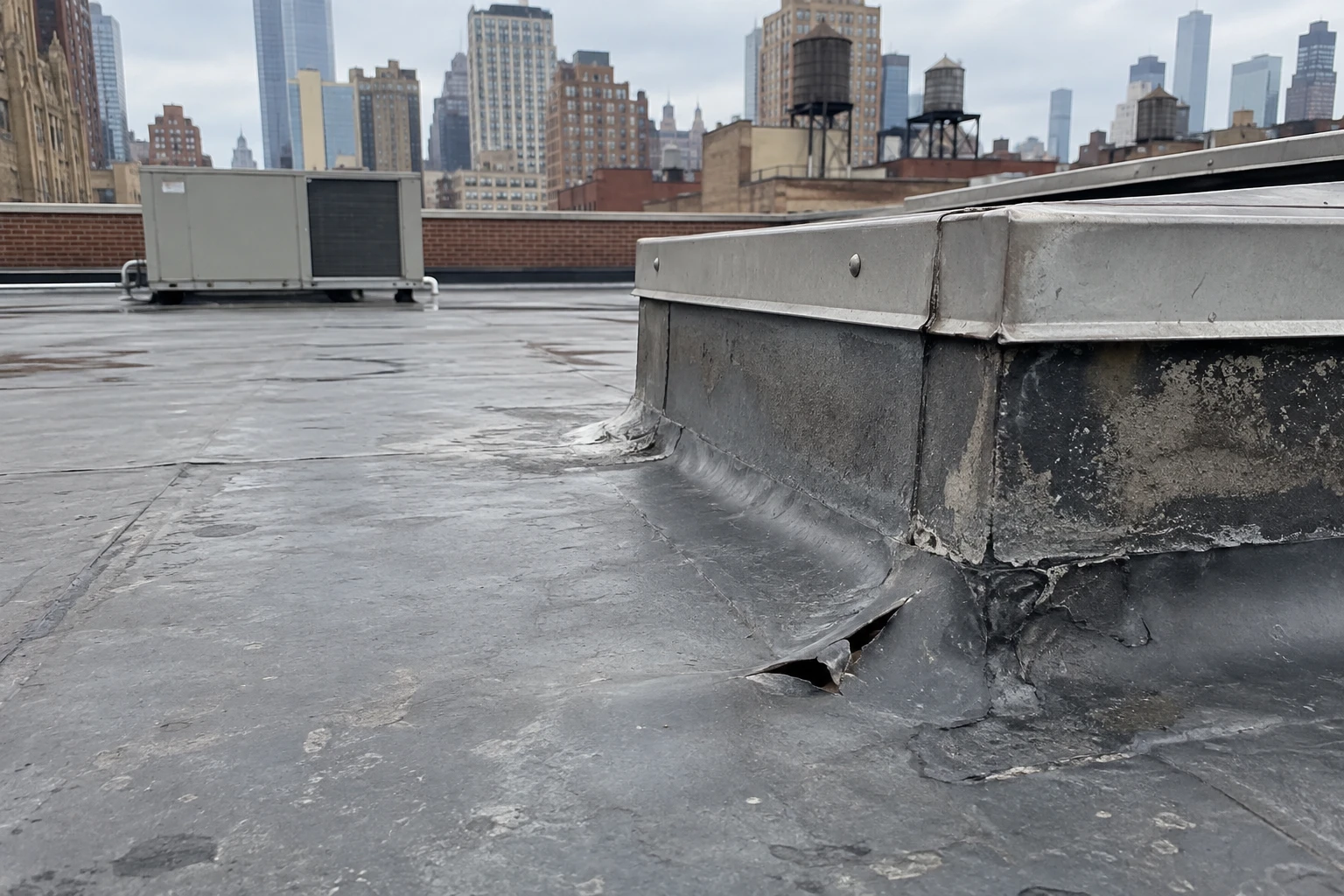
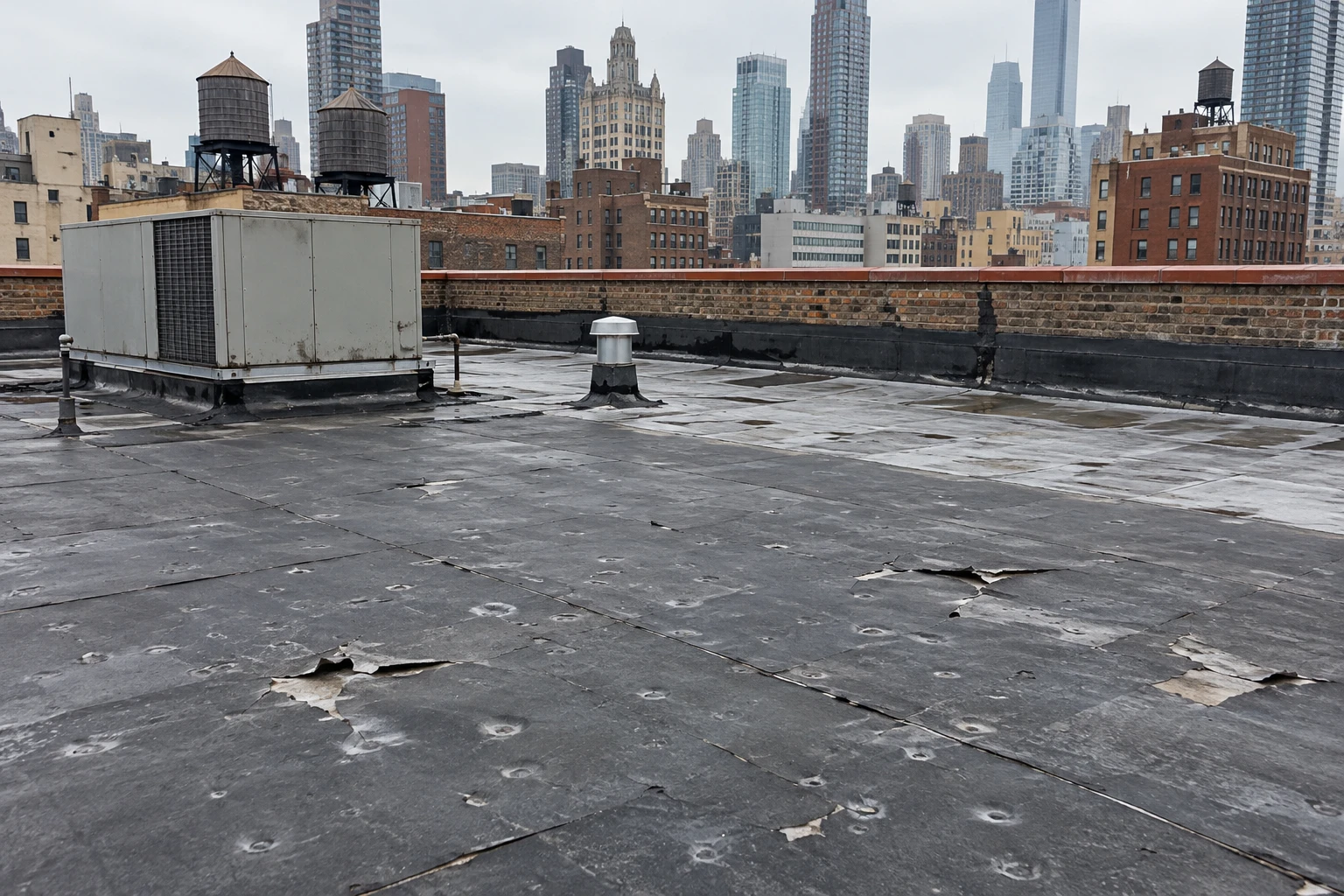
Rising water finds the lowest flashing and enters there. The result is a cluster of small leaks around a roof's walls and penetrations, and wet insulation across a large area. We measure ponding depth after the storm, flush the leaders, check overflow openings and scan for moisture. A ponding water repair may follow, and clearing and upsizing drains is part of the cure. A roof whose drains were clean before the storm fares better, so maintenance is the first line of defense. Record the water level on the parapet if marks remain.
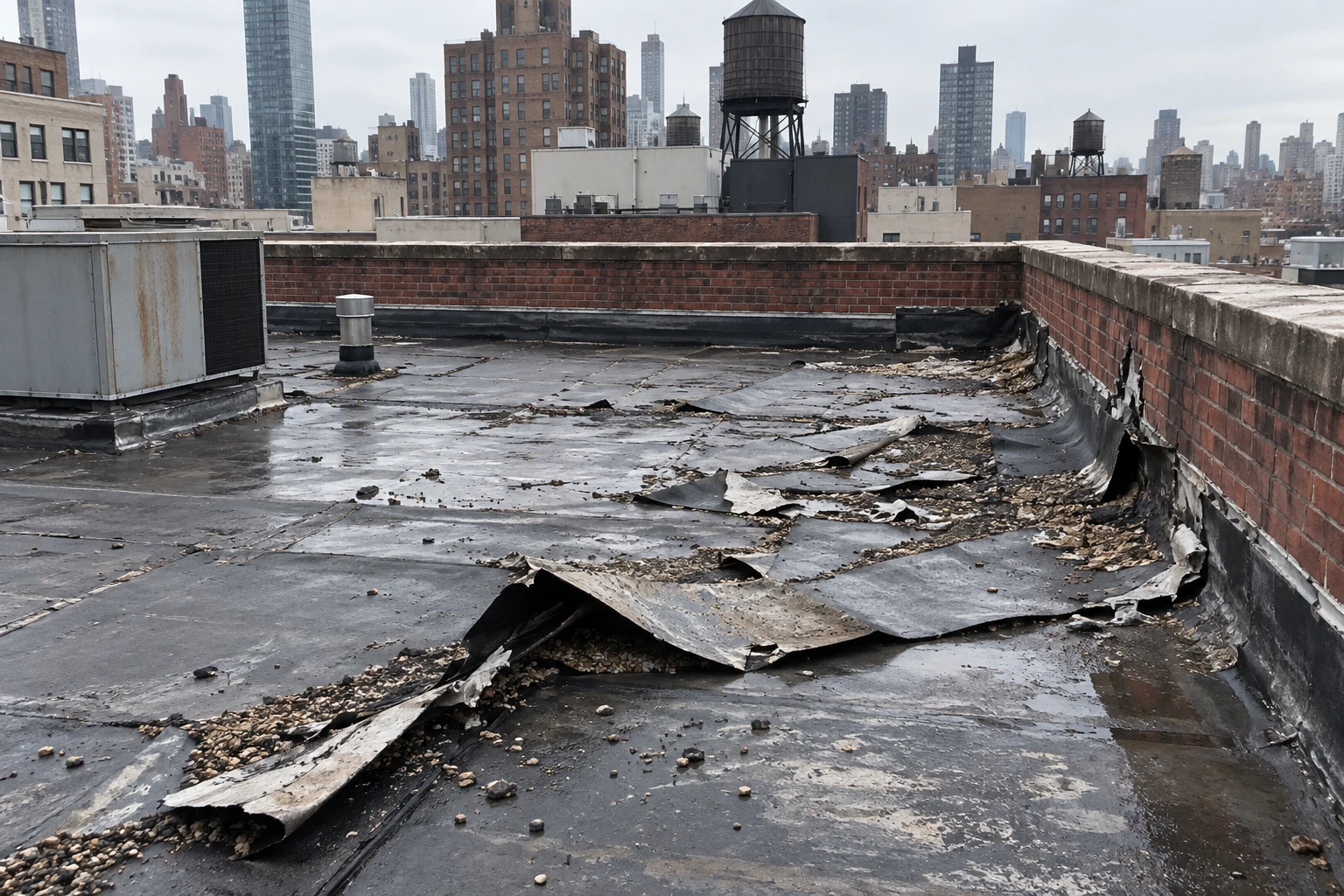
Debris is the third force. Wind-borne material, such as branches, loose sheet metal or fragments from nearby work, strikes the membrane and cuts it. Impact damage looks like scattered punctures and tears, and each one admits water. The survey scans the field for them, since a roof that came through the wind can still carry a dozen holes. Membrane puncture repair addresses them one at a time, with a moisture check under each.
How does the Hudson waterfront change the exposure?
The river side of the region has its own record. Hurricane Sandy in October 2012 flooded 1,700 Hoboken homes, caused 100 million dollars in damage and put seawater across half the city. Secaucus, at an elevation of 7 feet and 10.96 percent water, has to treat drainage and flood exposure as roof questions. Jersey City has 30.7 miles of waterfront.
Roofs on the waterfront stand open to wind coming off the river, and edges there take the full gust. A power loss stops rooftop units and any pumps, so a building that depends on them needs a dry-in plan that does not. Our survey on that side checks fasteners and edge metal for corrosion as well, and we serve Hoboken and Jersey City directly. Ask the building engineer which rooftop equipment depends on power.
How are hurricane losses documented for the carrier?
A hurricane loss often involves a flood, wind and rain claim at once, and carriers separate them. The roof file should show which items were caused by wind, which by rain entering through damaged or overloaded details, and which by earlier wear. Photographs, a moisture map, core results and the weather data for the date build that record.
Emergency dry-in is documented separately from permanent repair. Our roof insurance claim assistance prepares the scope and the estimate by line item. Once the repair grows into a full replacement, the zone that Local Laws 92 and 94 of 2019 reserve for solar, a green roof or both enters the scope. A storm damage roof repair scope is written to match the carrier's approved items. Save the contractor's emergency invoices.
Resilience work follows a loss. Once the roof is dry, the owner can use the repair to improve what failed: add drain capacity or overflow scuppers, raise flashing heights at walls where water reached them, upgrade attachment at edges and corners, and secure equipment with proper curbs. Added to a repair that is already under way, these upgrades often cost little. They appear as separate items in the scope, each with its cost drivers, which lets the owner and the carrier sort out which belong to the claim and which to the capital plan, and the next storm meets a stronger roof.
Commercial Roofing Questions
What decides the order of repairs after a hurricane?
Water that is entering now goes first. Open roofs and failed drains are dried in, then edges and flashings, then the field, and the survey ranks whatever remains by the risk it poses to the building.
Does flood coverage apply to a roof?
A roof typically falls under wind and rain coverage rather than flood coverage, though policies differ, and the carrier makes the call. The records separate the causes so each can be assessed.
How soon should drains be checked before a storm?
Before the season opens and again when a storm is forecast. A strainer cleared the day before may separate a few inches of water from a flood.
Can we repair a roof while the building has no power?
Yes for the dry-in, which crews carry out with portable equipment; permanent work resumes once conditions allow.
What should be on the roof before a storm?
Nothing that can move. Equipment covers are fastened down, debris is cleared and the drains and scuppers are checked for openness, and photographs fix the pre-storm condition on record.