Commercial roof surveys, repair and replacement in Jersey City, NJ, for waterfront office towers, port-side freight buildings and former rail yard sites.
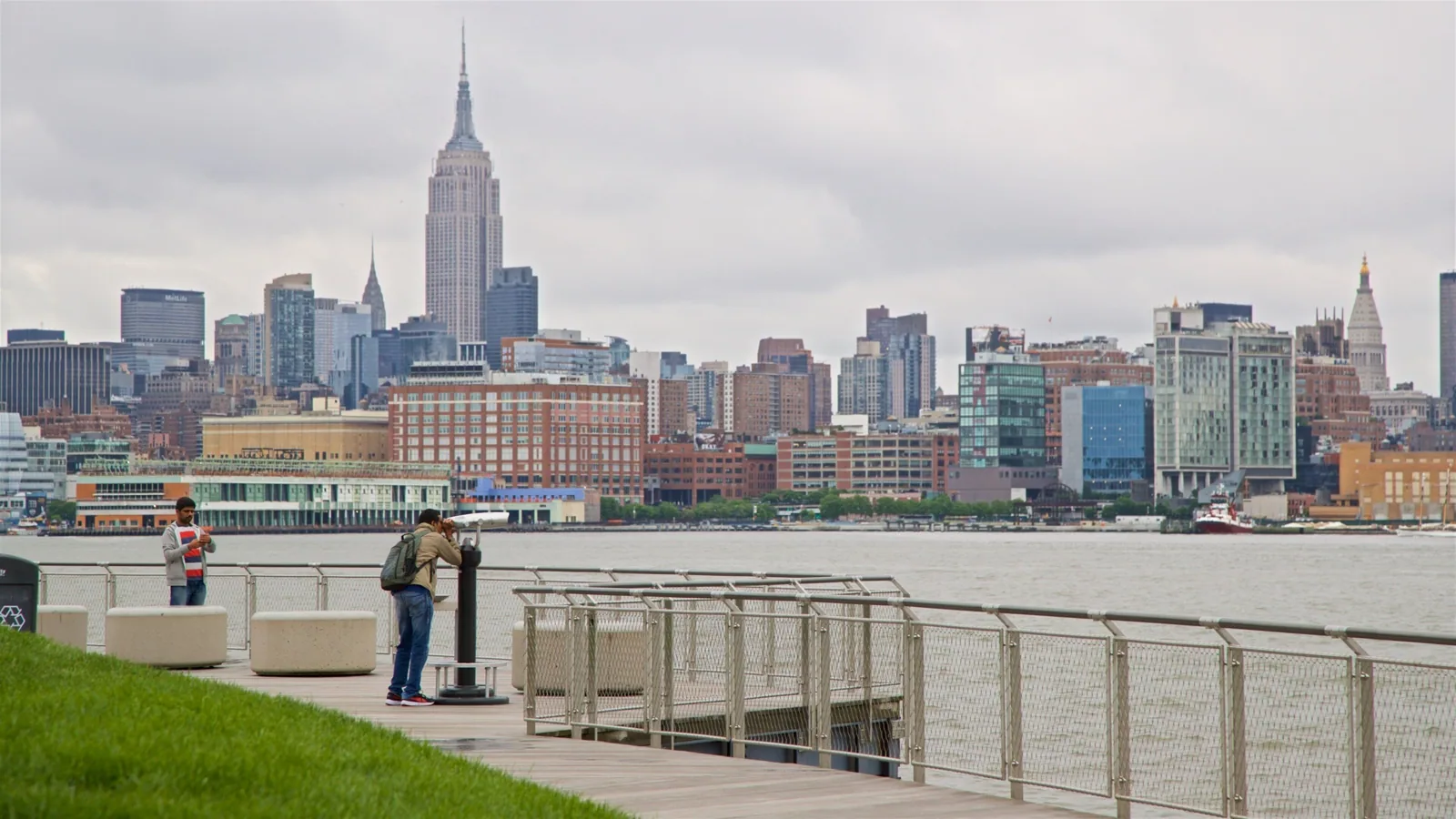
A wind reading from the waterfront side of a Jersey City roof is the first number we want, and the second is the depth of standing water at the drain farthest from the edge. Together they say how hard the building is working and how much of that work the roof is losing. Jersey City has 30.7 miles of waterfront, and the roofs along it face open exposure to wind and rain across the Hudson in a way that interior blocks do not.
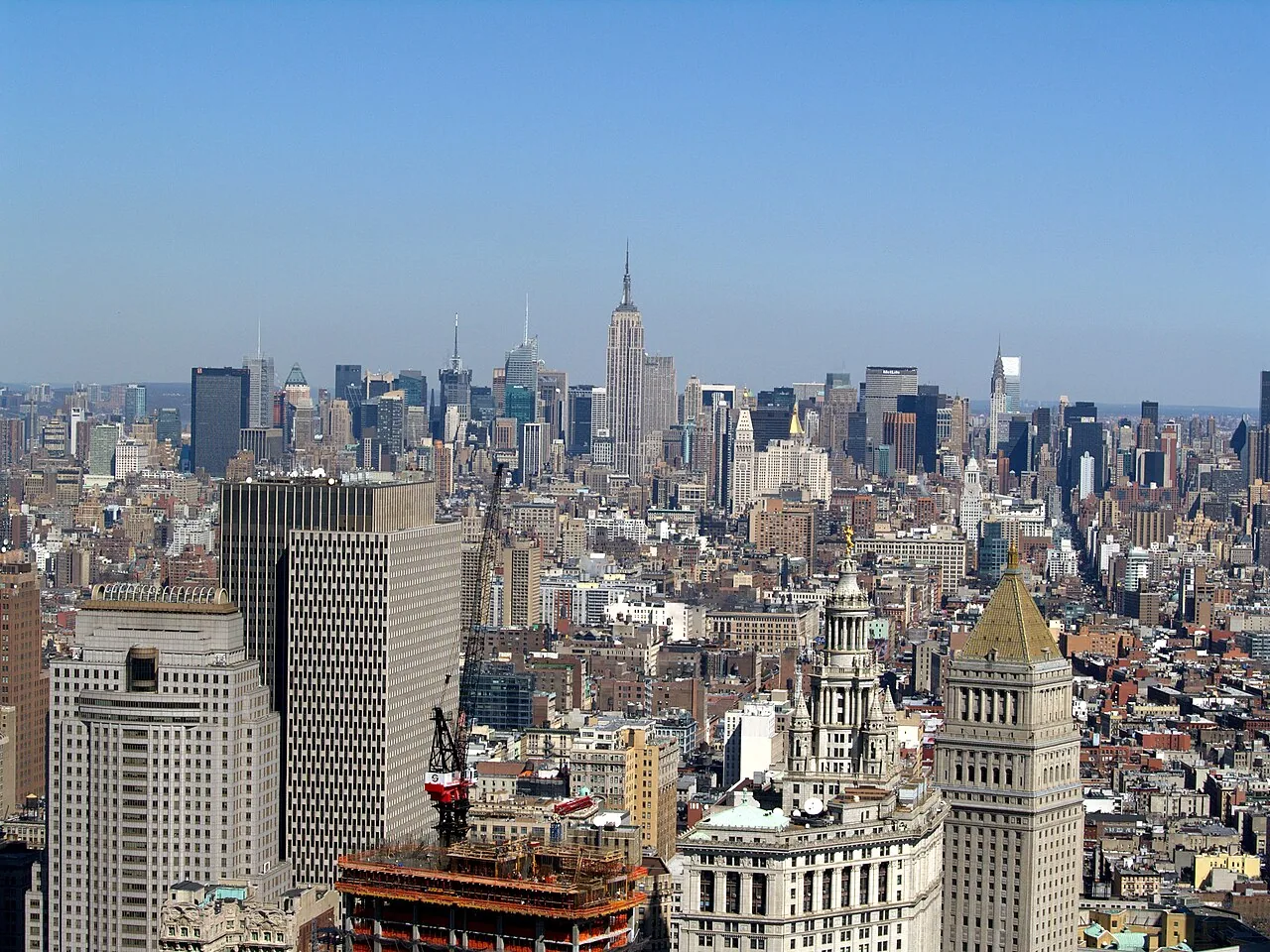
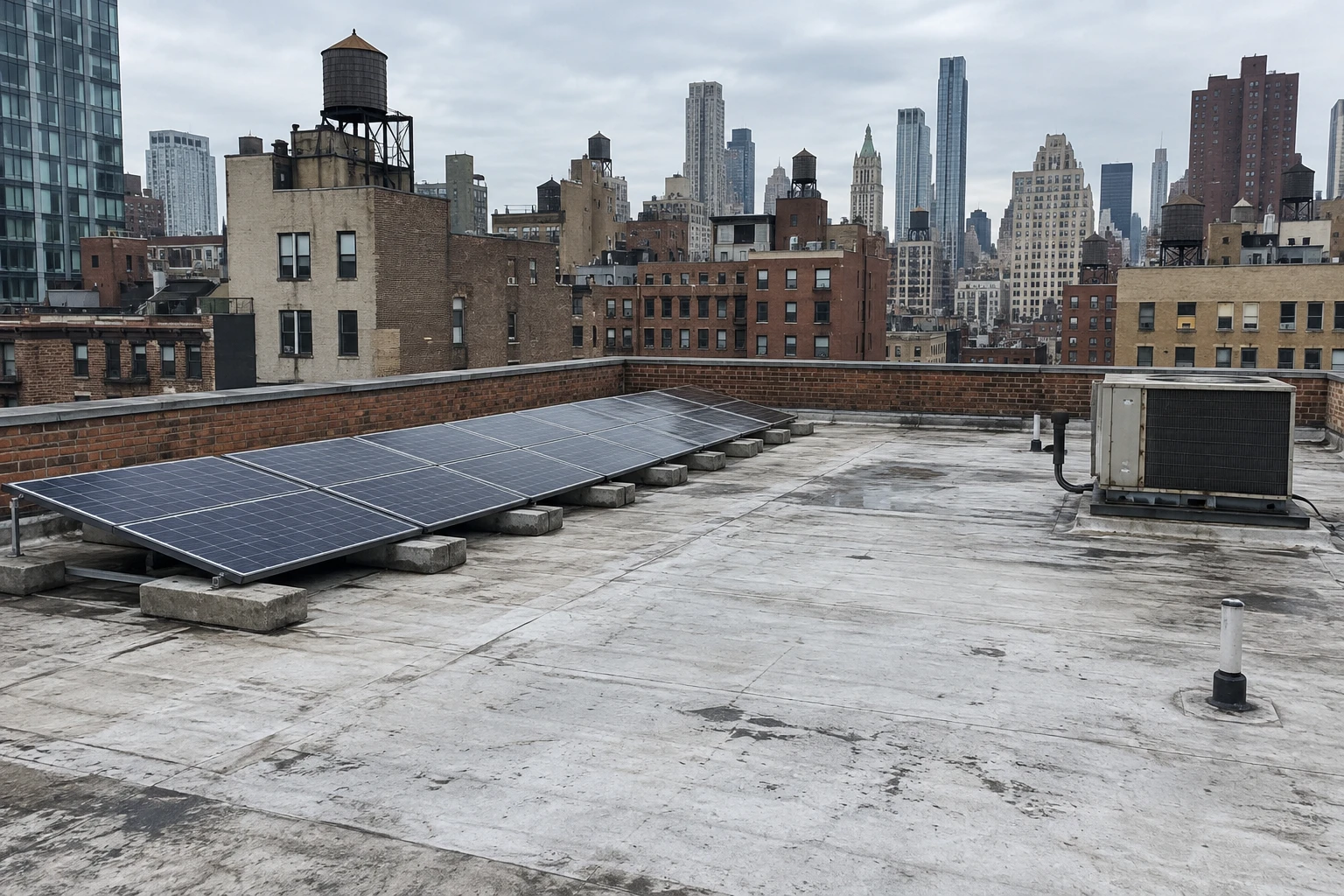
We survey, repair, recover and replace low-slope commercial roofs in Jersey City, NJ, on office towers, freight buildings, apartment complexes and mixed-use blocks. The work is documented the way an asset manager needs it: a condition rating, a moisture map and a priority list that can go into a reserve study. Jersey City and the Hudson River side more broadly are part of the Manhattan service area, and roof decisions on both banks often share the same weather.
What does 30.7 miles of waterfront do to a roof?
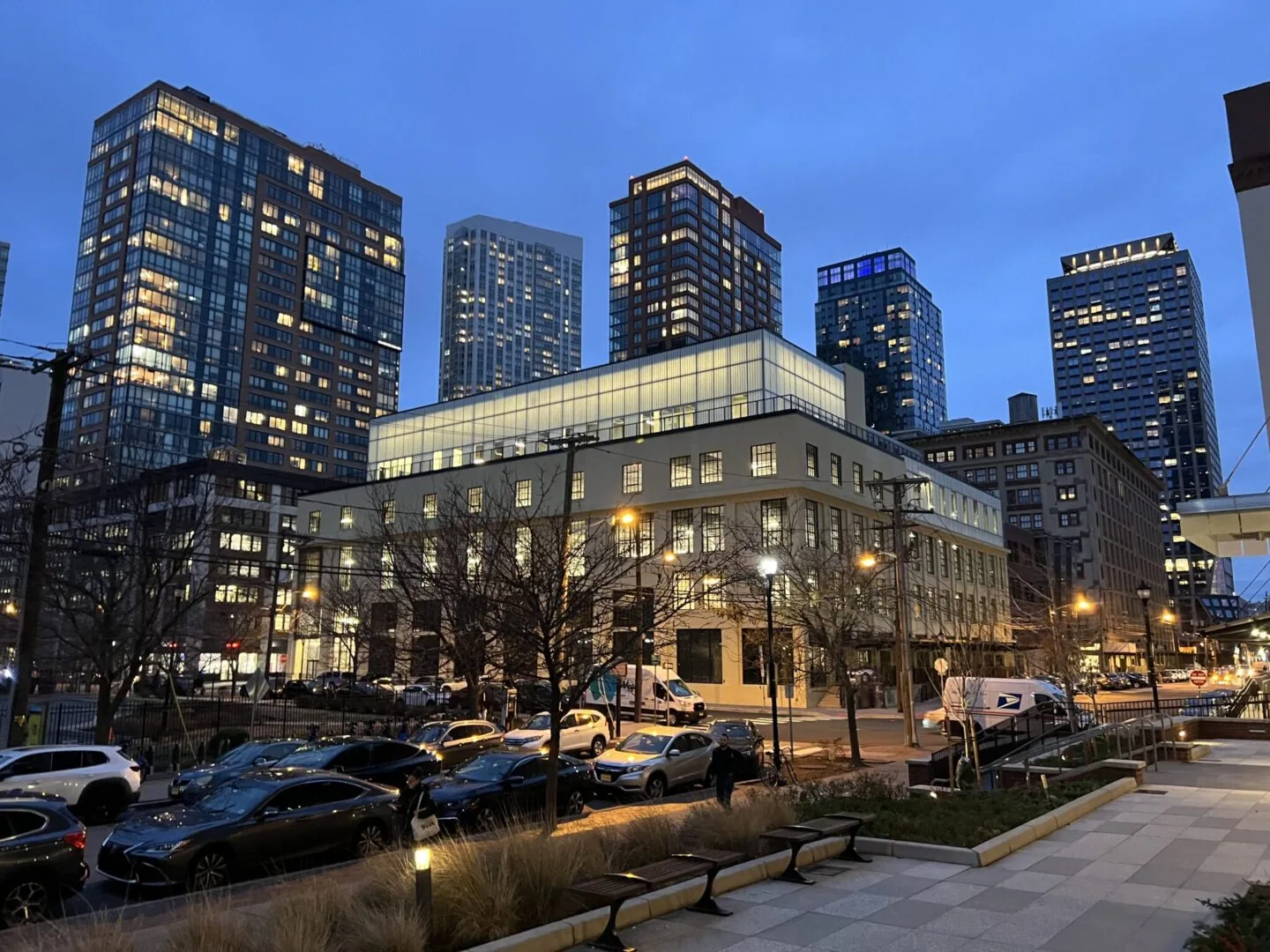
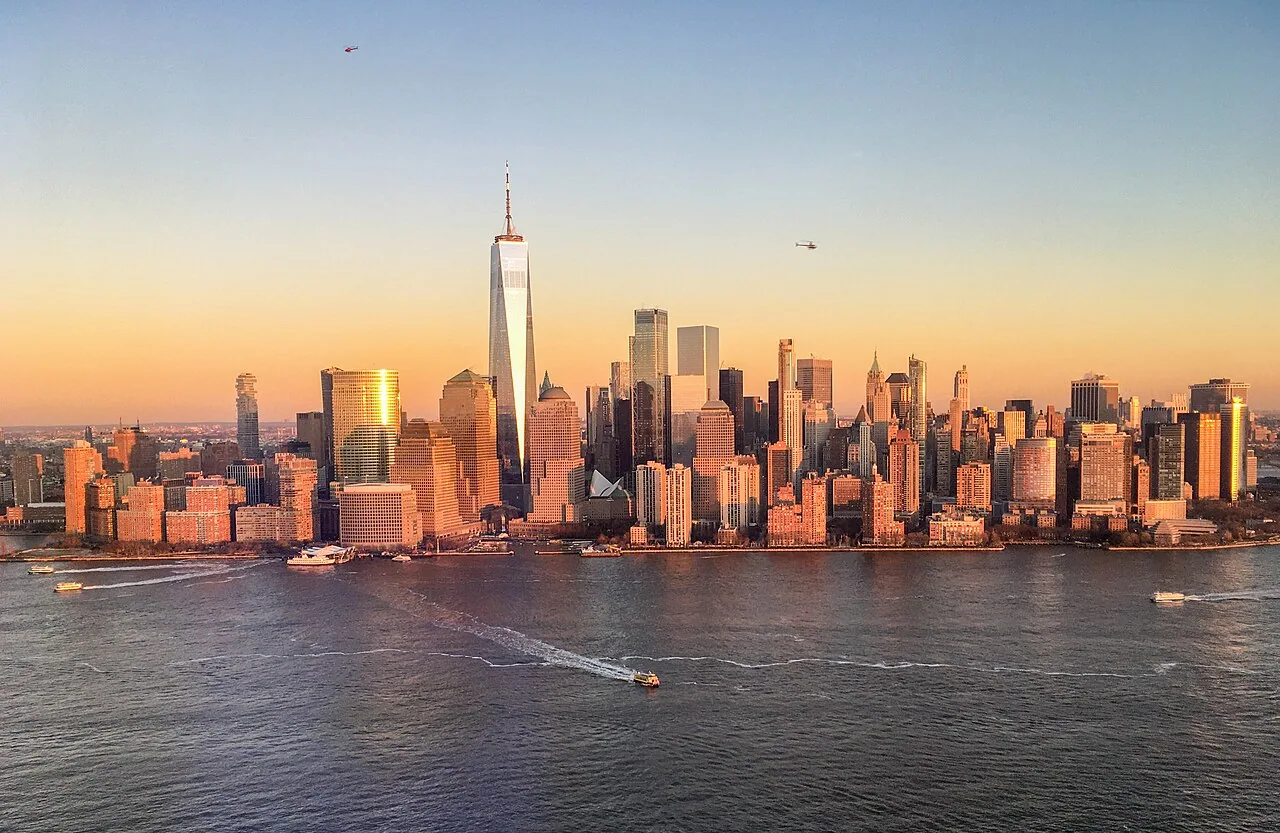
Waterfront redevelopment has made Jersey City one of the largest banking and finance hubs in the country, nicknamed Wall Street West. Office and residential towers along the river stand in the open, which means high wind loads at edges and corners, spray carried inland and a roof that cannot rely on neighboring buildings for shelter. A tall roof on an open site needs secure edge metal, a membrane attached for its exposure and flashing at every parapet that resists uplift.
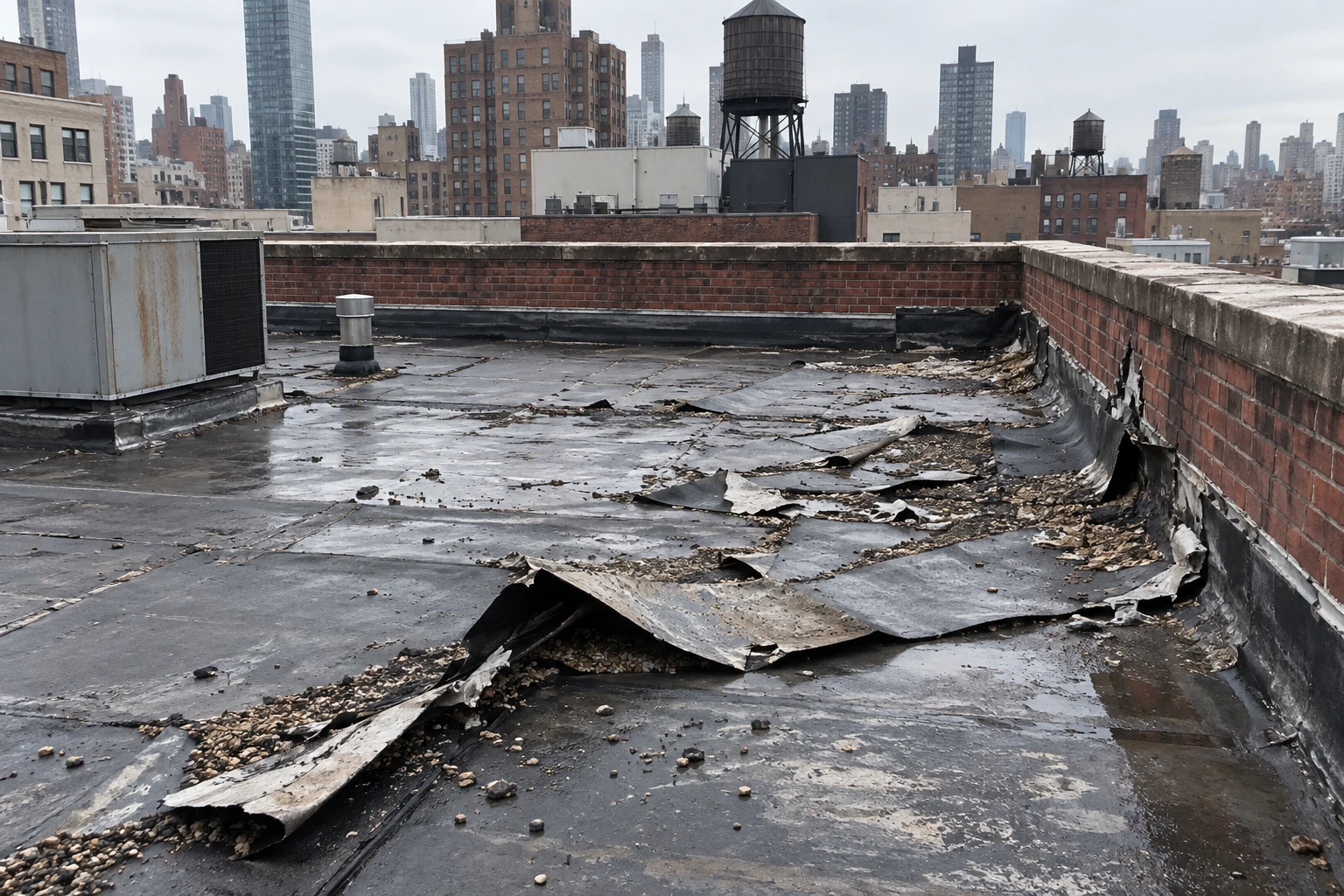
Our survey begins at the perimeter and works inward. We check coping attachment, edge flashing, the condition of the seams at corners and the drains. Where we find a lifted detail, the written finding names the stretch and the repair. For a tower with amenity decks or mechanical roofs, commercial roof inspection becomes a routine part of the asset plan, with an annual walk and a post-storm check.
Spray and wind-driven rain get into places that a quiet site never tests. Sealant at curbs, joints in coping and the laps of metal flashing all see more water on an exposed roof, so we press and probe them by hand during the walk. Weak sealant shows up as a gap you can put a fingernail into, and a repair at that stage takes an hour instead of a tear-out.
How do port and freight buildings change the scope?
Port Jersey is Jersey City's intermodal freight and container shipping terminal, and the railroads once filled the Harsimus and Communipaw coves to build several large freight rail yards along the waterfront. A freight-oriented district tends to carry warehouse, distribution and industrial buildings, and we do not assume the roof type of any one of them. A scan and a few core cuts settle it.
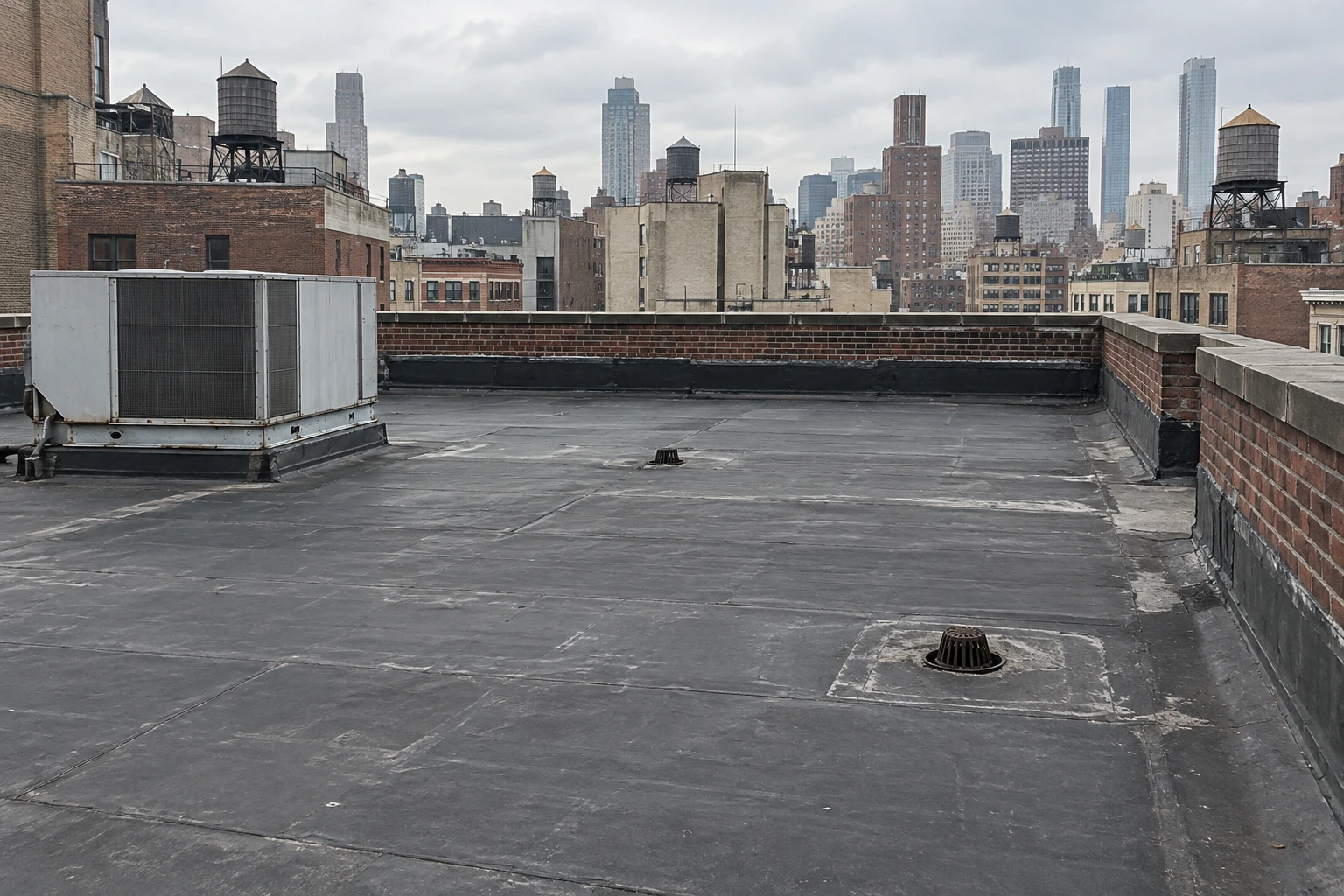
What we look for on large low-slope industrial roofs is consistent: ponding at the low points, seam condition, the number and flashing of penetrations, rooftop equipment loads and how water leaves the roof. A facility that runs around the clock cannot give us a week of access, so the plan is staged by bay. For owners managing several buildings, a distribution center roof program rates each one on the same scale and sequences the spending.
Rooftop equipment on logistics and industrial buildings, such as exhaust fans and refrigeration condensers, adds penetrations and load. Each curb gets checked for flashing height and for a path for water to leave.
What do redeveloped rail yard and office sites need from a roof?
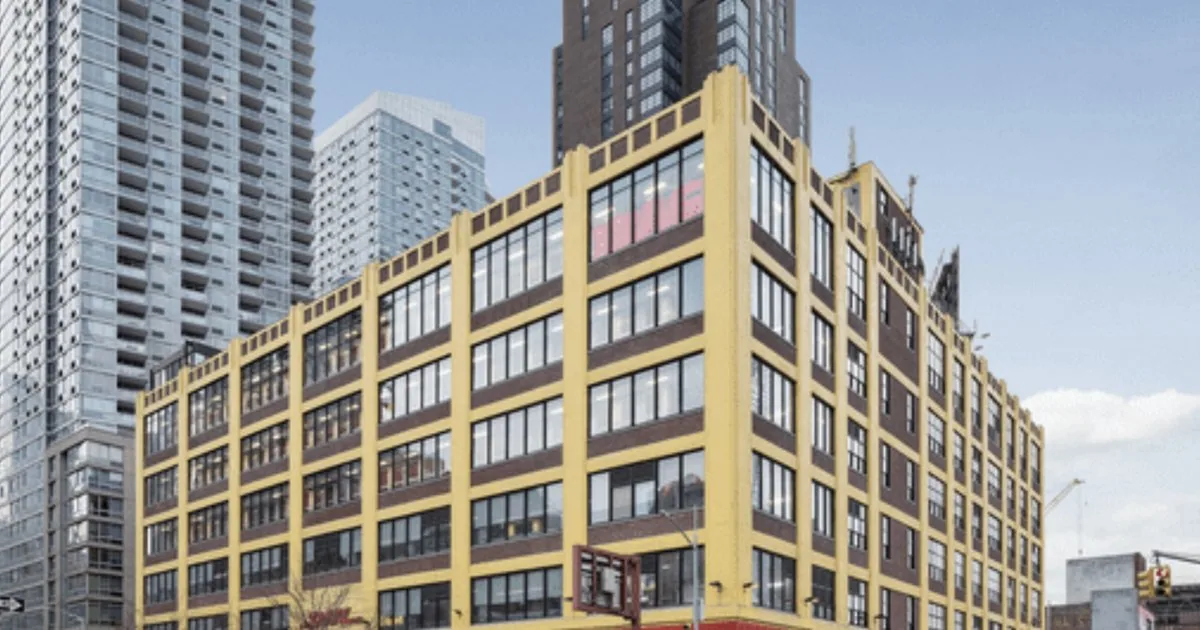
A 2020 census count of 292,449 residents, up 18.1 percent from 2010, points to new construction. A newer building is not a trouble-free building. Early roof problems tend to come from construction: an unsealed penetration, a drain set slightly high, a detail finished by a trade that came after the roofer.
A baseline survey before the first winter documents the roof's condition when it is young. It records drains, curbs, seams and flashings with photographs and an infrared reading where useful. The baseline becomes the first page of the roof file and gives later comparisons a fixed reference. If problems do appear, the dated record helps settle whether they come from workmanship, design or wear. Owners also ask whether a solar-ready roof suits the new building.
Amenity decks, pavers and green roof areas on newer towers need their own drainage review, because water that sits under pavers can hide a failed membrane.
Which storms set the standard for the Hudson River side?
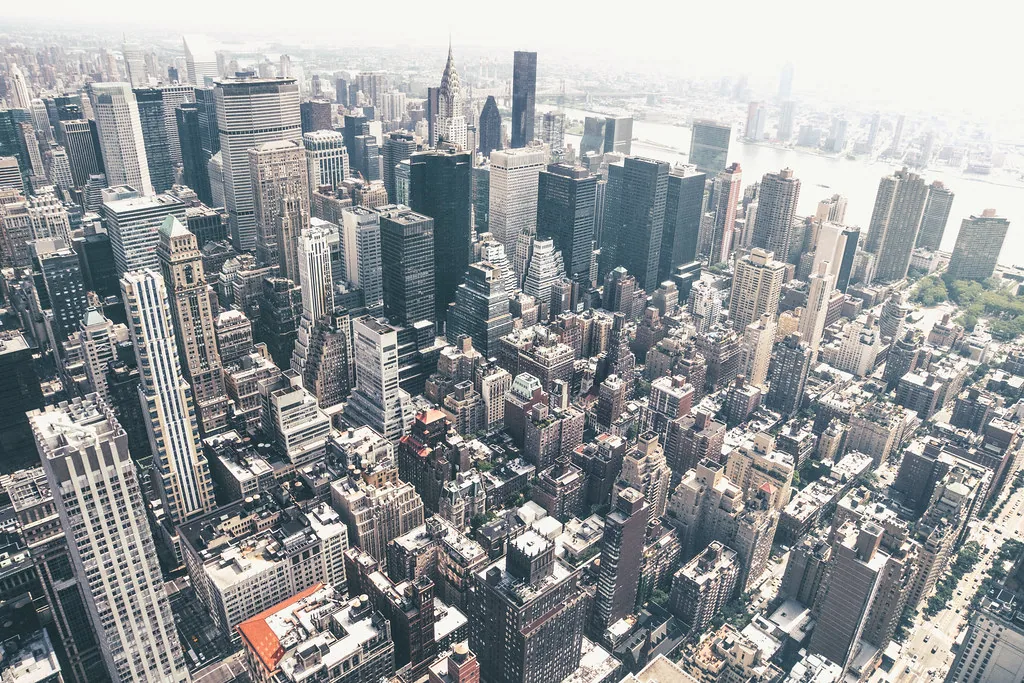
Records kept in Manhattan, across the river, frame the storm history of the Hudson River side. Sandy's October 2012 surge at The Battery, across the harbor, measured 14.06 feet over average low tide, and Ida's one-hour record of 3.15 inches fell on September 1, 2021. A roof sits above the surge, but the wind and rain of such storms act directly on it.
Snow in Central Park runs to 29.8 inches in an average year, and its strongest gust reached 78 mph. Waterfront roofs feel wind first and hardest. We look for lifted flashing, displaced ballast and open metal laps, and for drains that cannot keep up. A hurricane damage review begins with dated photographs, which supports an insurance claim.
Heat is the third stress. Central Park has recorded 106 F, and dark membranes on open sites run hotter than the air, which softens sealants and opens laps at corners. We note which faces of the building show the most wear.
Which rules apply to a Jersey City roof?
New York City's Local Laws 92 and 94, which require the sustainable roofing zone on new buildings and full replacements to be covered by solar, a green roof or both, are city rules that apply to buildings in New York City. A Jersey City project follows the requirements of its own jurisdiction, and we confirm those with the local building authority during scoping, before a design is fixed.
That step belongs at the start, because it affects structure, drainage and budget. An owner who also holds property in Manhattan can run both through one program, with separate approvals for each and one rating scale across the buildings. Neighboring Hoboken and the Hudson River side more broadly follow the same method.
Roofing permits, inspections and insurer requirements can differ between the two banks, so we write the approvals list for each property at the start of the project.
What goes in the owner's file?
The rating, moisture scan, core log, drain inventory, approvals and warranty make up the file. Owners who also hold buildings in the Financial District across the river can rate those roofs on the same scale, so the capital plan covers both banks.
Commercial Roofing Questions
Which part of a waterfront tower roof is surveyed first?
The perimeter: coping, edge metal and corner flashing. Wind uplift starts there, and a loose edge found early is a small repair.
What proves a new roof was installed correctly?
A dated baseline: photographs of penetrations, seams and flashings, an infrared reading and a drain check. If a defect appears later, the record shows how the roof looked at the start.
How is access arranged on a freight facility that never closes?
We plan by bay or zone, agree entry points and safety rules with the operator and keep the staging area clear of truck movement. The schedule is written before the first day.
Does a New York City roofing rule follow us across the river?
No. City law applies to city buildings. For a Jersey City project, we confirm the local requirements at scoping and design to those.
When should a waterfront owner re-survey after a storm?
Within days of a major event. Lifted edges, displaced materials and blocked drains are cheap to fix early, and the dated record supports a claim.