Built-up (BUR) multi-ply roofing for Manhattan, NY: core cut layer counts, gravel and cap options, kettle controls, weight limits and long-term records.
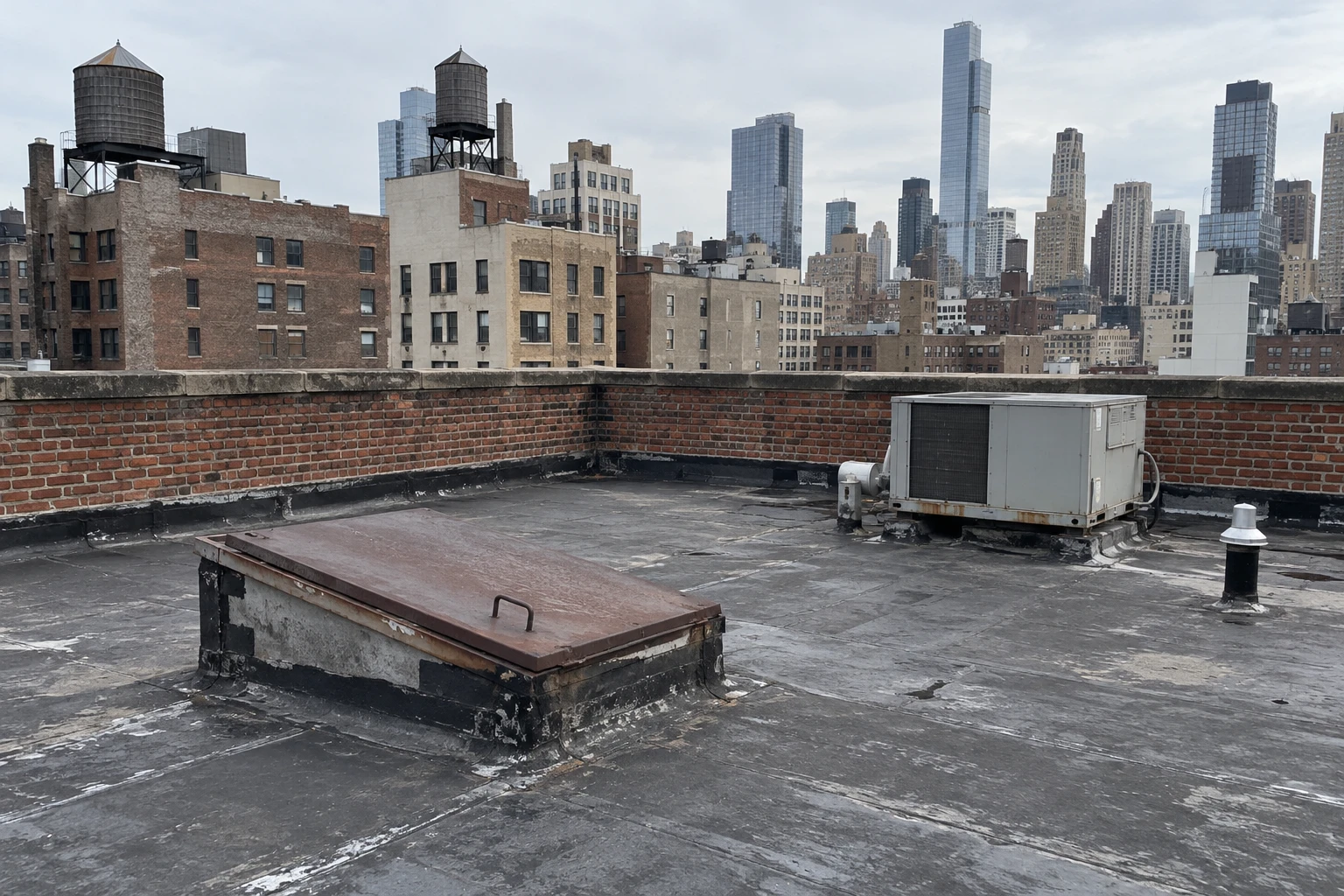
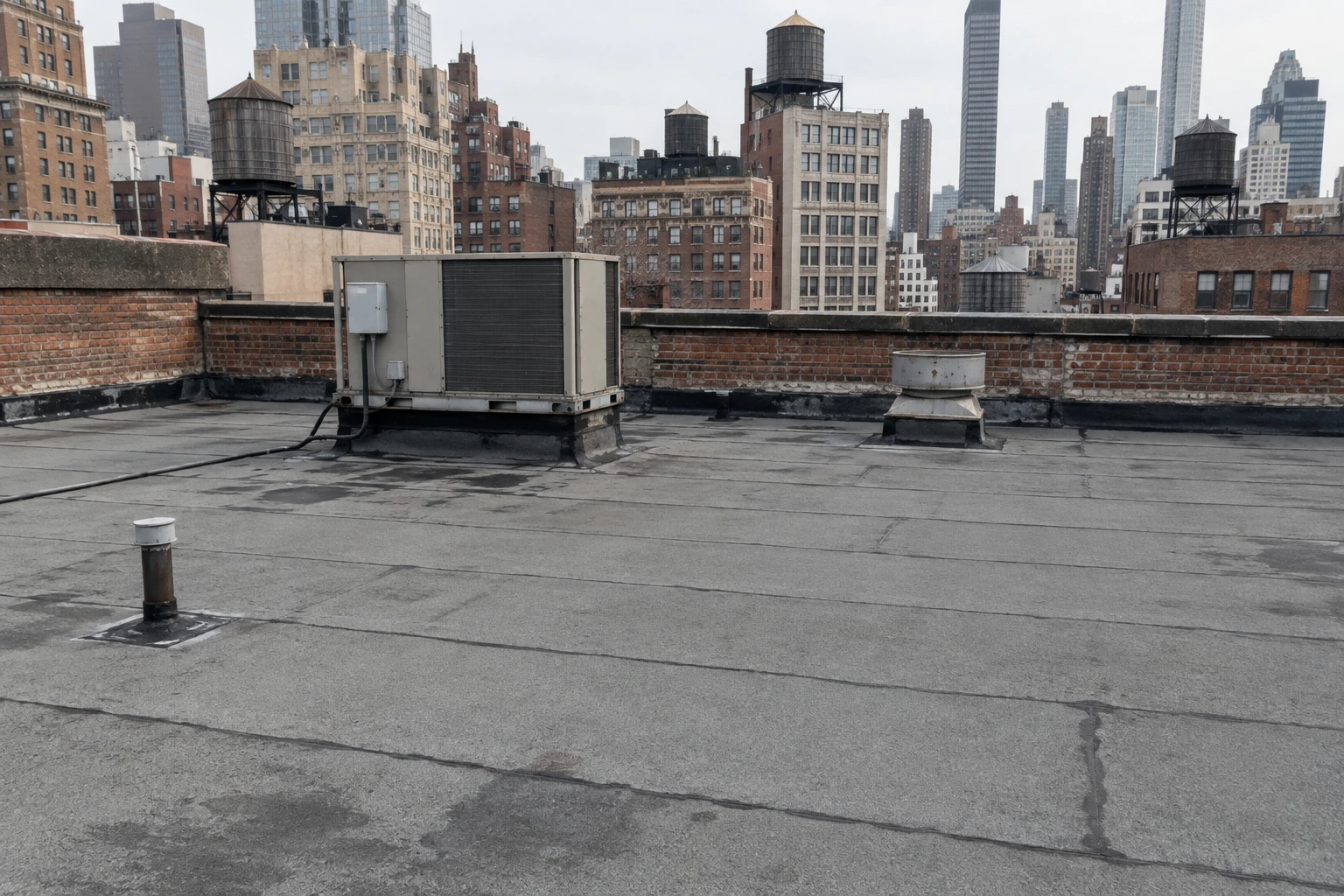
A core cut through a built-up roof reads like tree rings. Count the plies of felt, note the bitumen between them, measure the thickness and look for the dark, wet band where moisture has collected, and the roof's history is on the table: how many generations of work it carries, whether the layers still bond and how much water the insulation holds. Built-up roofing, BUR, is the oldest of the commercial low-slope systems still in use, made of alternating layers of bitumen and reinforcing fabric topped with gravel, a mineral-surfaced cap sheet or a coating. Many roofs in Manhattan, NY are built-up or sit on a built-up base that earlier work left in place. The decisions for an owner are what the layers say, whether to keep them, and how heavy or hot a new one can be on that building.
What does a core cut tell the owner about the layers?
A cut shows the number of plies, the type of surfacing, the condition of the bitumen, the presence of a vapor retarder and the state of the insulation. Dry, firmly bonded plies are a good base for a recover or a coating. Wet or delaminated plies, a blistered surface or a vapor retarder that has failed point to removal in those areas.
We cut at the locations the infrared scan flags and at several that look sound, since a scan reads heat retention and a cut reads the actual material. The layers are recorded in the file with photographs. Because a roof can carry more than one previous roofing campaign on top of the deck, a count of layers also tells us how close the roof is to the limit the code allows, which can force a tear-off even when the plies look sound.
Gravel, mineral cap or coating: which surface is right?
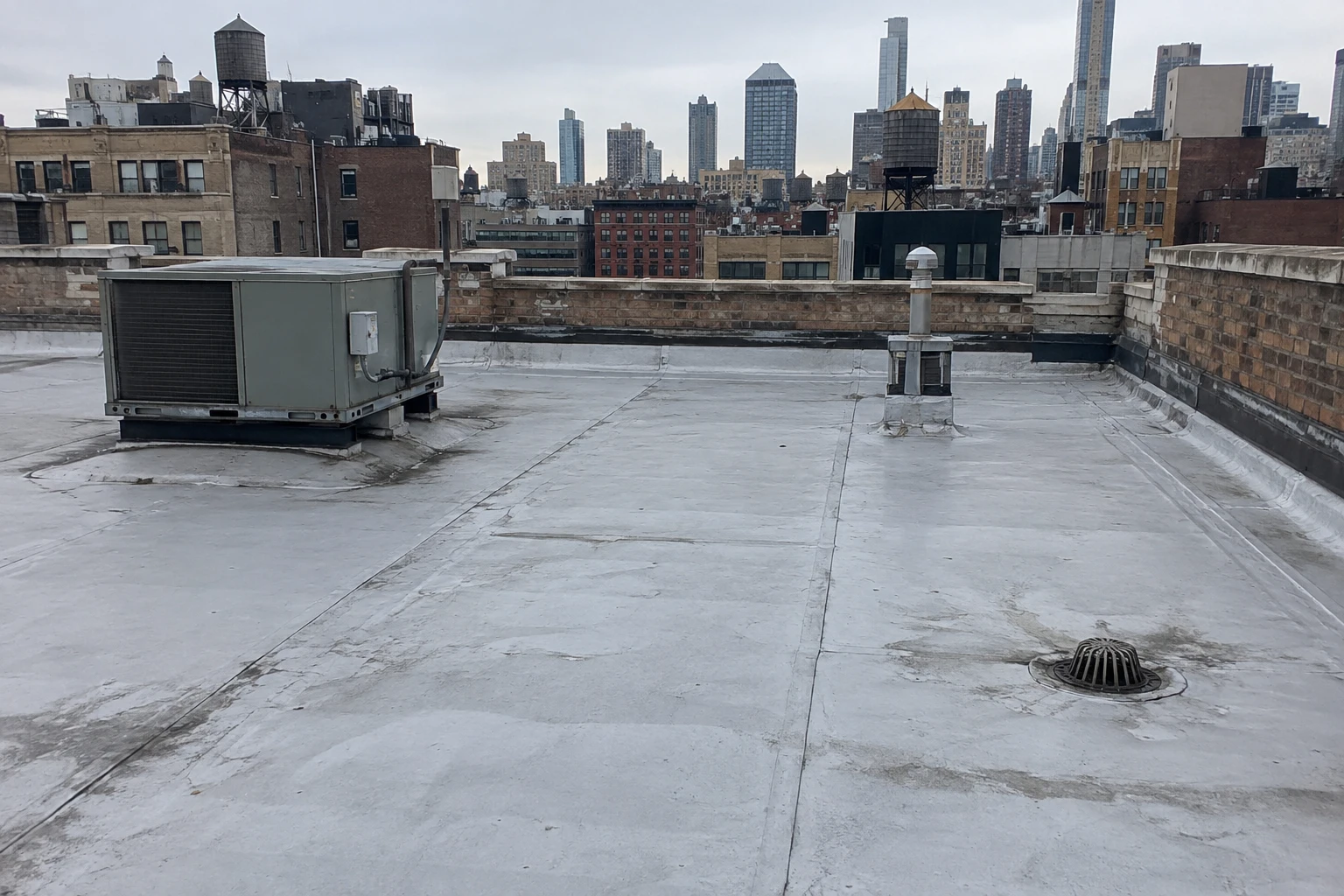
Gravel protects the bitumen from sunlight and fire and adds weight, which suits some structures and not others. A mineral-surfaced cap sheet is lighter and cleaner. A reflective coating over a smooth surface reduces heat gain and is a common choice for restoration. On a building with a rooftop terrace or a planned array, the surface has to work with what sits on it.
Weight is the limiting factor. Built-up assemblies with gravel are heavy, and older buildings may not have capacity to spare, which is why structural confirmation comes before gravel is specified. In a city where the modified bitumen cap sheet and the single-ply membranes are lighter alternatives, the choice often follows the load calculation. The roof recover option is considered only when the existing plies are dry and the structure can carry the addition.
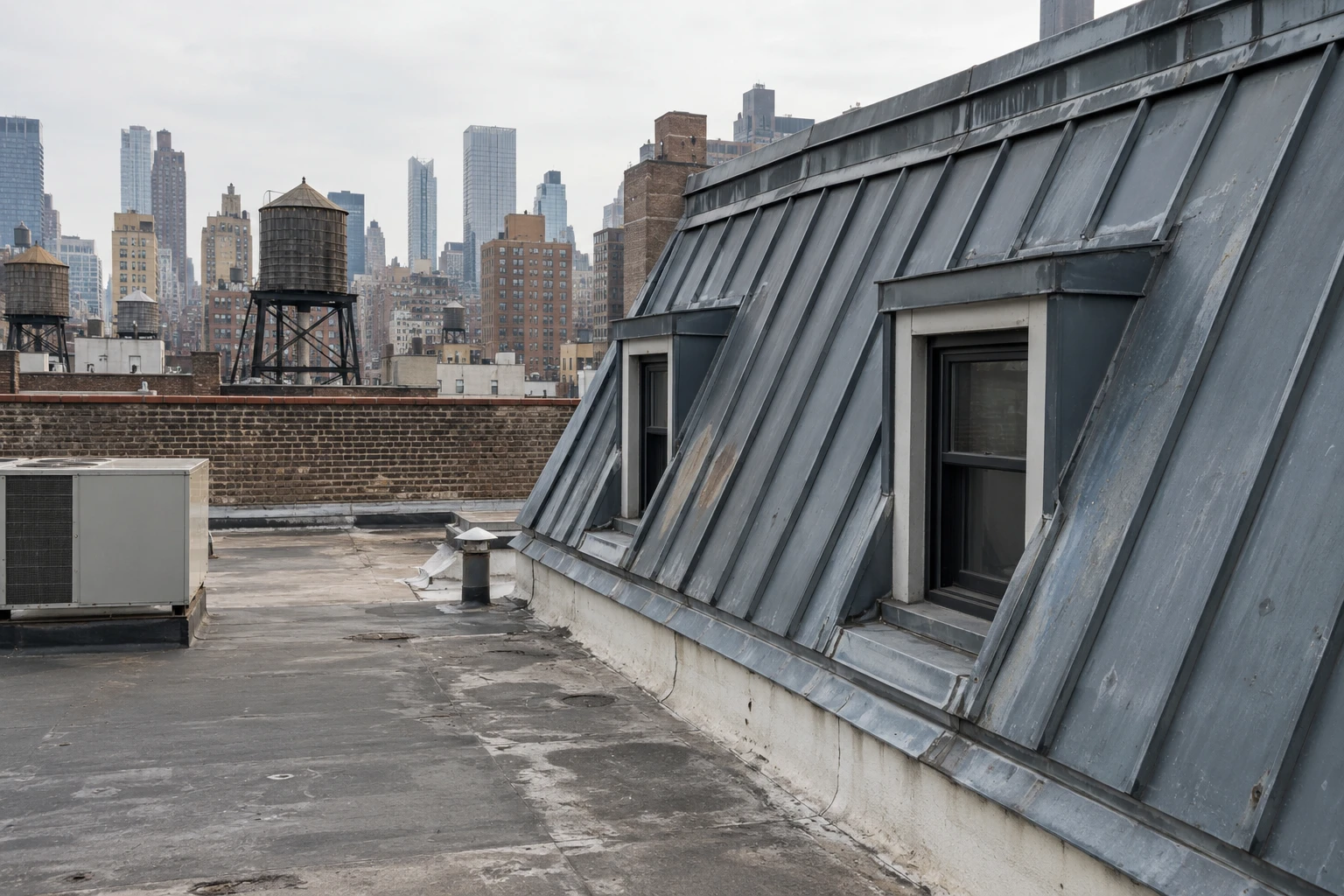
Where a building's structure was framed for a lighter roof and the owner wants something durable, a standing seam metal retrofit over the old built-up layers can avoid heavy tear-off, provided the slope and framing allow it. We compare that path against a new built-up or modified bitumen assembly using weight, cost, service interruption and the owner's hold period, and the comparison goes into the report with the numbers laid out.
How is hot asphalt controlled in a dense city?
Traditional built-up roofs are installed with hot asphalt heated in a kettle, and the kettle, the hoses and the hot material are all fire and burn risks. In Manhattan the work is tightly regulated, with permits, a fire watch, extinguishers at the kettle and rules for where a kettle may sit. Many projects use cold-applied adhesives or self-adhering plies to avoid heat entirely.
We choose the method with the owner's insurer and the neighbors in mind. In the Financial District, where nearly 200 buildings were converted to residential use between 2013 and 2021, the roofs of older office stock sit beside tenants who have moved in, and torch-free methods reduce risk and complaints. Whichever method is used, the crew logs temperature, plies, application rates and weather for each section, and a supervisor signs each area before it is closed.
How does a multi-ply roof handle Manhattan rain and snow?
Redundancy is the advantage. Several plies mean that a defect in one is backed by others, and a well-made built-up roof tolerates foot traffic and equipment loads better than a thin single-ply. Central Park averages 29.8 inches of snow and 49.5 inches of precipitation a year, and the multiple layers withstand freeze-thaw cycles when they stay dry.
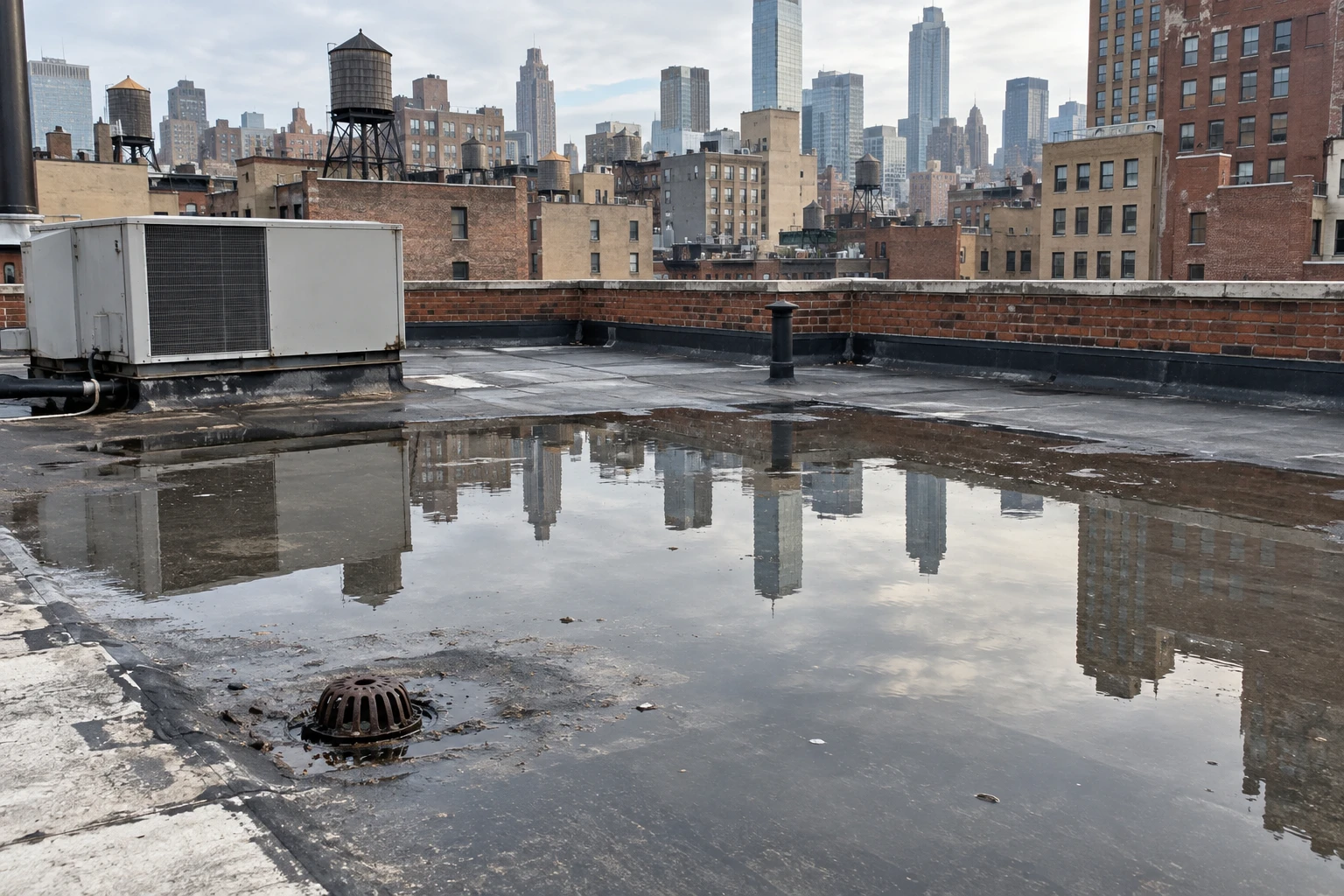
Ponding is the enemy. On September 1, 2021 Ida's rain reached 3.15 inches in a single hour, and a built-up roof that holds water around a drain will accelerate blistering, ply separation and surface cracking. We measure ponding depth, map low areas and correct them with tapered insulation, new drains or crickets. A roof that drains in 48 hours is in better shape than one that holds water for a week, and the survey records the difference. We return after the next significant rain to photograph the same low spots, so the comparison is between two dated images and not between two memories. Repairs to a ponding water problem begin with slope, not with another layer of coating.
What changes on older commercial stock in the Flatiron District and downtown?
The Flatiron District includes the Ladies' Mile Historic District, and older buildings of three to six floors are still numerous on its side streets. A roof on older stock can carry layers from several eras, and the history is read from cores. Parapets, chimneys, skylights and bulkheads each need their own flashing detail, and each one is checked for how it was built and what has been added since. We survey each, and rebuild the flashings as part of any restoration, because a restored field with failed flashings will leak at the edges. Where the deck beneath a parapet or skylight curb has rotted or rusted, that substrate repair comes first and is priced as its own line, so the owner sees the cost of the hidden work separately from the cost of the visible membrane. The report also flags which details need review before any change visible from the street, so the owner can start that approval in parallel.
What goes in the file?
Core cut results with the ply count and photographs, the moisture map, the weight and structural confirmation, the installation method and logs, the product data and the warranty terms. For a full replacement, the layout of the sustainable roofing zone under Local Laws 92 and 94 belongs with them. Entries in the roof condition report carry the layer history forward to the next survey.
Commercial Roofing Questions
How many layers can a roof carry before tear-off is required?
The code caps how many coverings a roof may carry, and the structure caps the weight. A core cut counts the layers present, and the building's engineer confirms the deck's capacity. If either limit is reached, removal is required.
Is gravel surfacing still used?
Yes, where the structure supports the weight and the building suits it. Gravel protects the bitumen but hides leaks and complicates repairs, since it has to be swept aside to see the surface. Many owners choose a mineral cap or a coating for easier inspection.
Can a built-up roof be repaired, or must it be replaced?
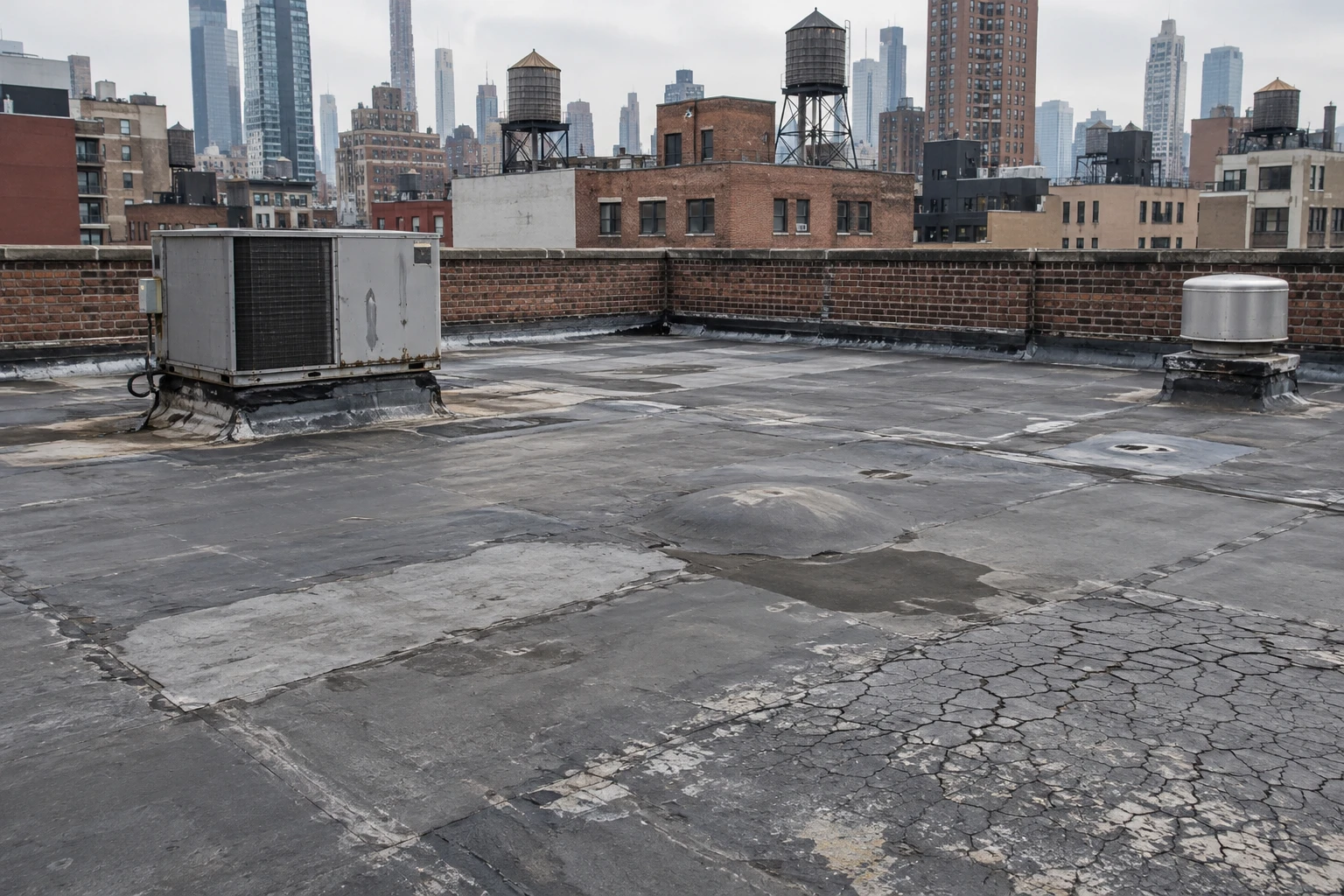
Local repairs work when the plies are bonded and dry. Blisters, splits and flashing failures can be cut out and rebuilt. Widespread delamination, wet insulation or a failed vapor retarder calls for removal of those sections or a replacement.
Why do blisters form?
Moisture or air trapped between plies expands in heat and lifts the surface. Small blisters may be left alone and monitored, but ones at seams, drains or traffic routes are cut and repaired. The core cut shows whether water sits below.