Standing seam metal roofs for Manhattan, NY buildings: clip and seam surveys, thermal movement, snow retention, landmark visibility and file records.
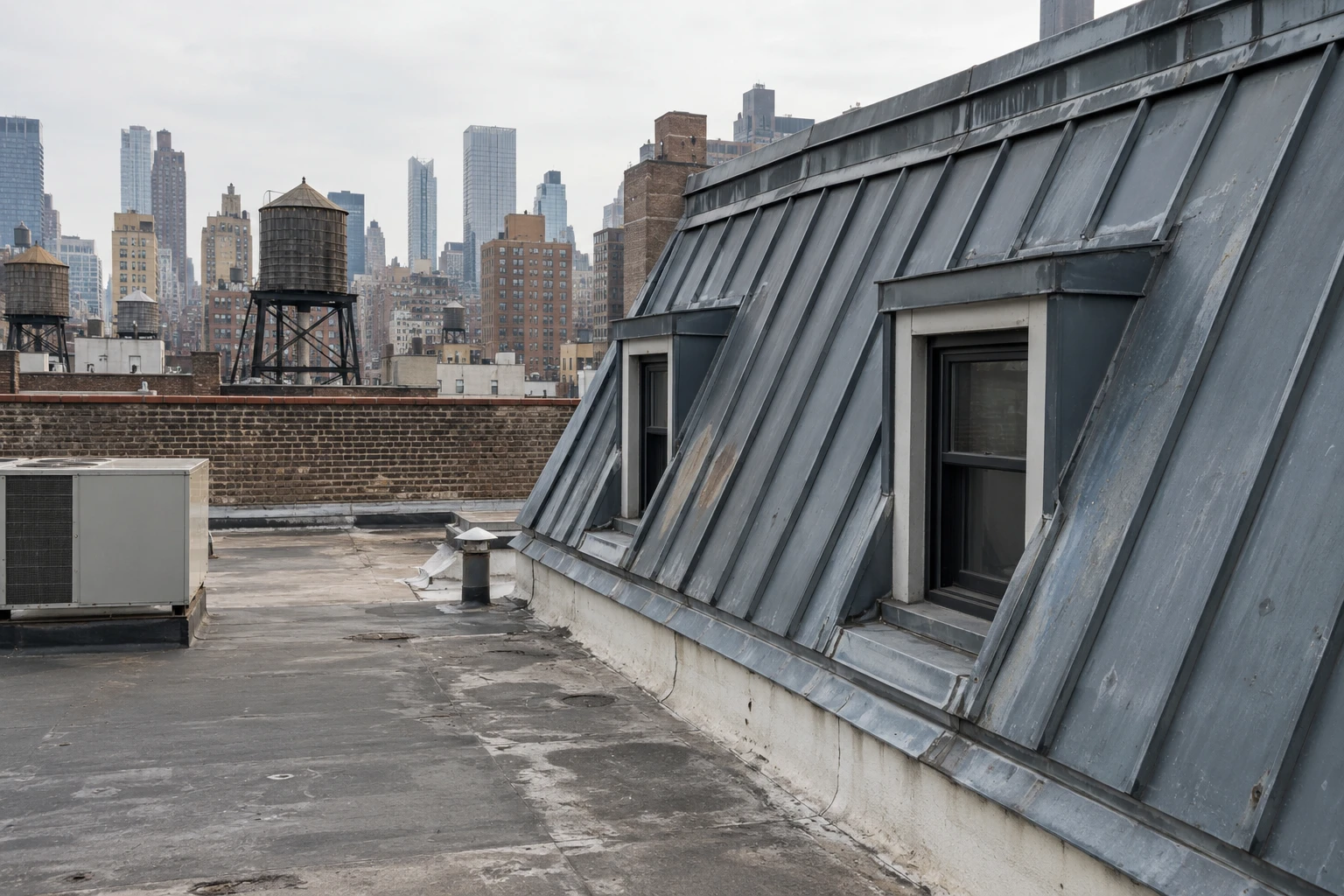
Measure the gap between a panel's edge and its clip on a hot day and again on a cold morning, and the difference is the roof's movement written in fractions of an inch. A standing seam metal roof is designed to move. Its panels are held by concealed clips that slide, and its seams are raised ribs that lock or are mechanically seamed so water cannot cross them. When the clips bind or the seams open, the movement turns into noise, oil-canning, loose fasteners and, finally, leaks. On Manhattan, NY buildings with a pitched or low-slope metal roof, the survey looks first at clips, seams and panel ends, because the field of the sheet is rarely where the water gets in. The owner's decision is whether the existing metal is repairable, whether it should be retrofitted, or whether a new system is warranted.
What makes a standing seam roof different from other metal roofs?
The fasteners are hidden. In an exposed-fastener roof, screws go through the face of the panel and depend on rubber washers that age. In a standing seam roof, a clip is fastened to the deck and the panel locks over it, so no fasteners pierce the weathering surface. The seams stand above the plane where water runs, which is why the system suits low slopes better than lapped panels.
That design asks for correct detailing at the ends of the system: ridge, eave, rake, valleys, transitions to walls and penetrations. Each end is formed from trim pieces and sealed, and each is where a survey finds trouble. A system that moves freely in the field but is pinned at a wall flashing will tear at the pin, which is the usual cause of a sudden leak on a roof that is otherwise sound.
What does the survey check?
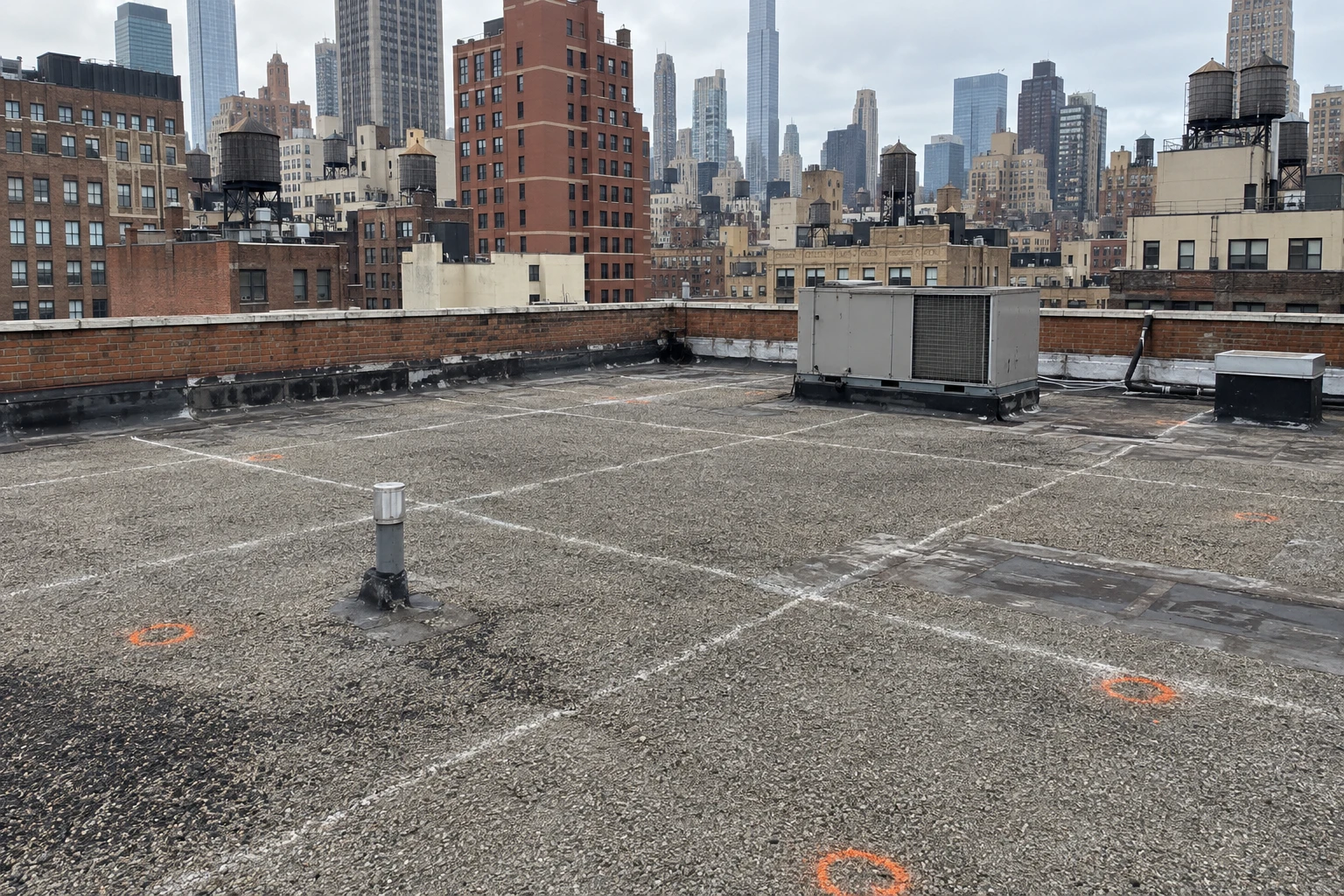
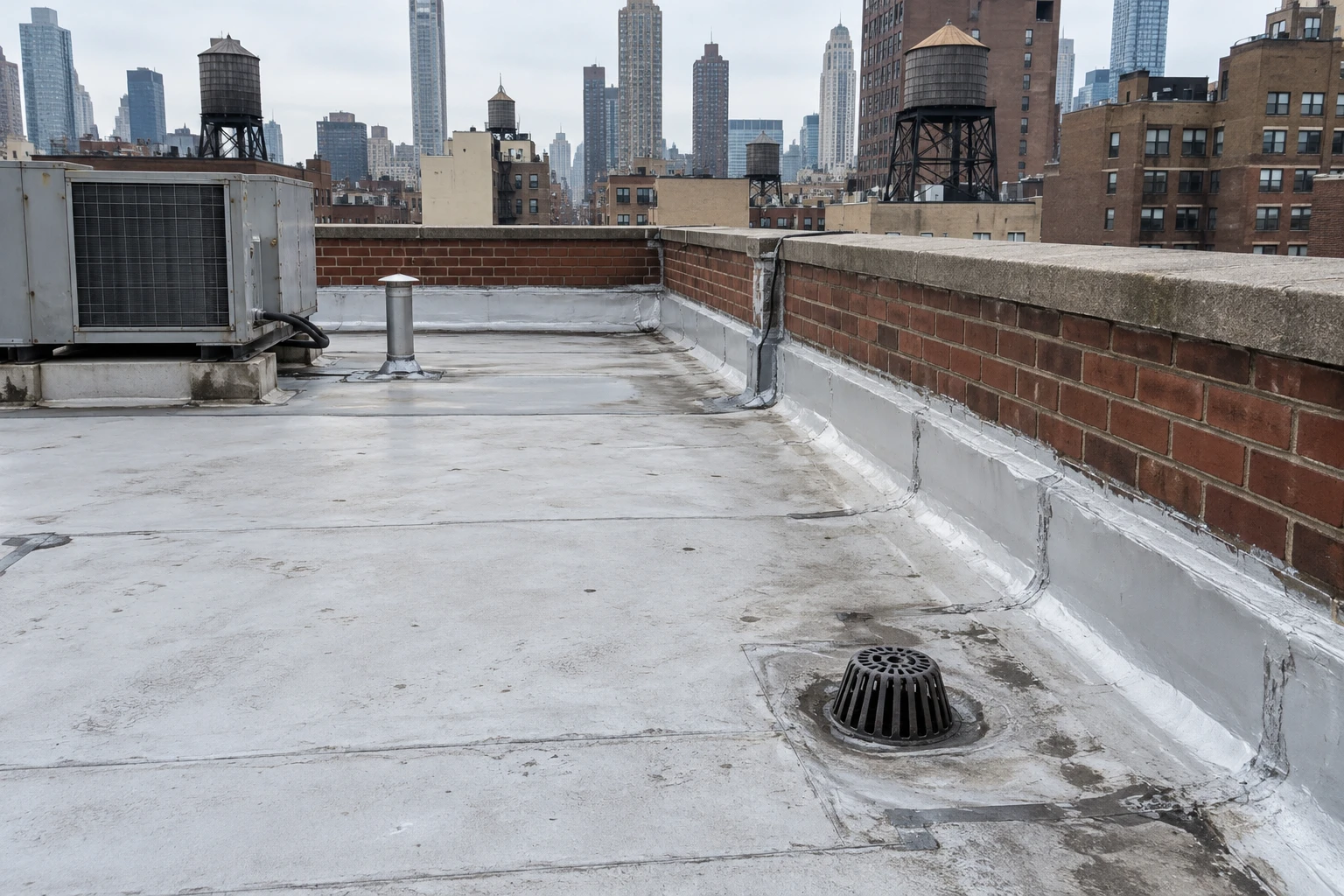
We walk the seams and check them for openings, corrosion, damage from traffic and sealant condition. We look at clip spacing and movement, at panel end laps and at the trim. We examine the substrate for moisture if the roof has a low-slope assembly with insulation, using an infrared moisture survey and cores, and we check the underside of the deck where it can be seen for rust or staining.
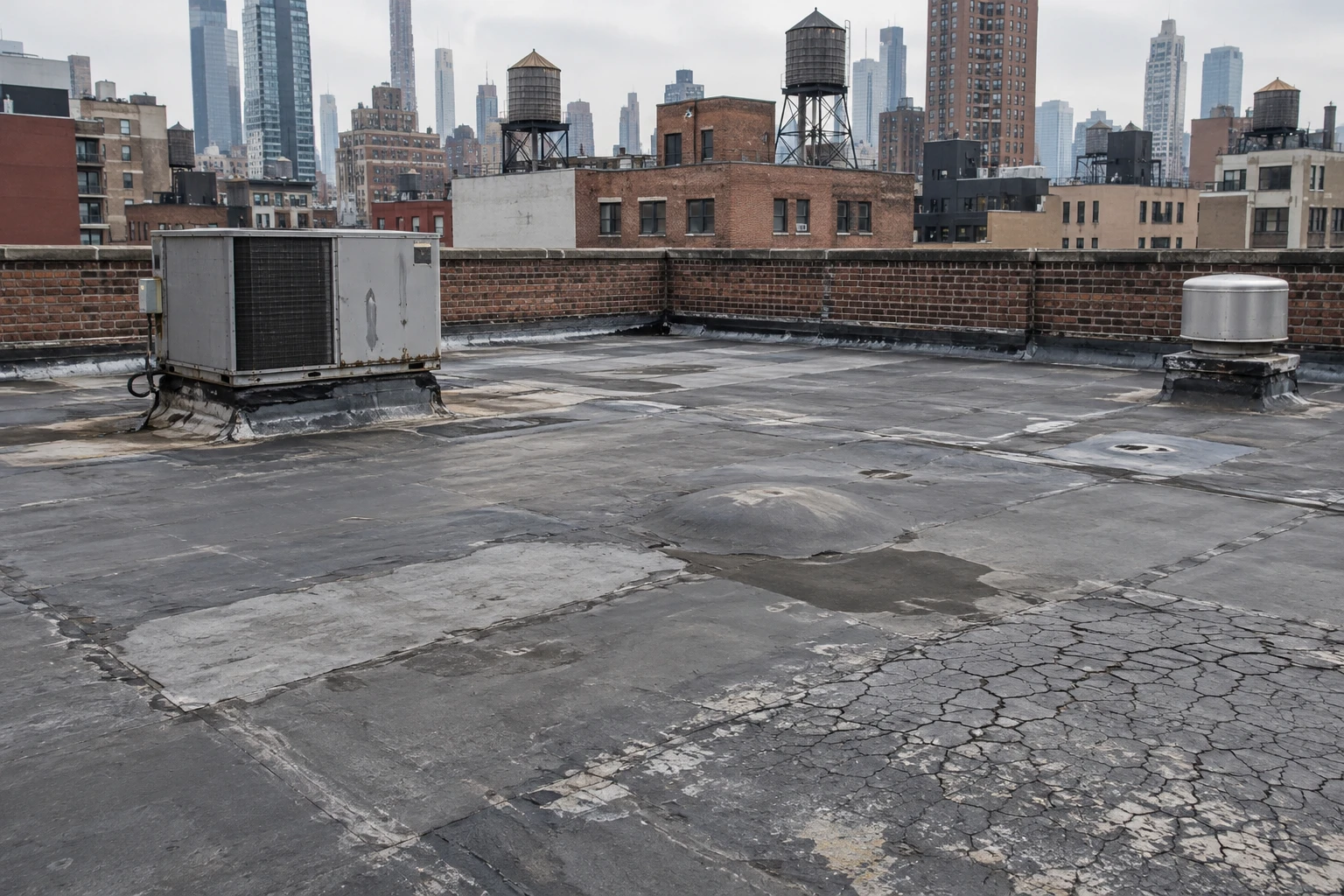
Finish matters too. Coatings fade and chalk over time, and scratches that expose the base metal begin to corrode at the edges. A roof with a sound structure and a tired finish may be a candidate for recoating. A roof with open seams, corroded clips or bent panels needs repair, and one with all three needs more than repair. The findings go into a condition rating with photographs of each defect and its location on the roof plan, so the owner can compare repair against metal roof retrofit, a membrane such as TPO on a low-slope section, or full replacement. Each path is priced from the same survey, with the weight, the disruption and the expected interval to the next major work shown beside the cost.
How does it behave in wind, snow and thermal swing?
Uplift concentrates at eaves, rakes and corners, where a gust like the 78 mph one Central Park recorded on December 2, 1974 does its work. Clip spacing and panel gauge are tightened at those zones, and the roof is designed to the wind pressures the building code requires. Snow behaves differently on metal: it can slide in a mass from a pitched panel, and on a Manhattan block that is a hazard to the street below. Snow retention devices hold the pack in place and release it gradually. Central Park averages 29.8 inches of snow a year and saw a 27.3 inch record fall on January 23, 2016, so retention belongs in the design wherever people walk below.
Movement at the clips comes from a temperature range that has run from minus 15 F to 106 F in Central Park. Dark finishes get hot and expand more. The survey checks that clips have room to slide and that nothing has been added that restrains the panels, such as a pipe support fastened through the sheet.
How do landmark districts affect a metal roof?
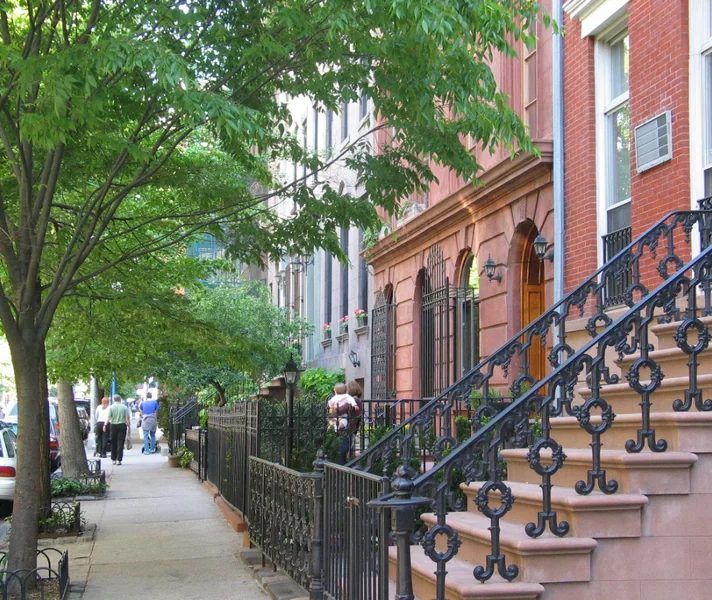
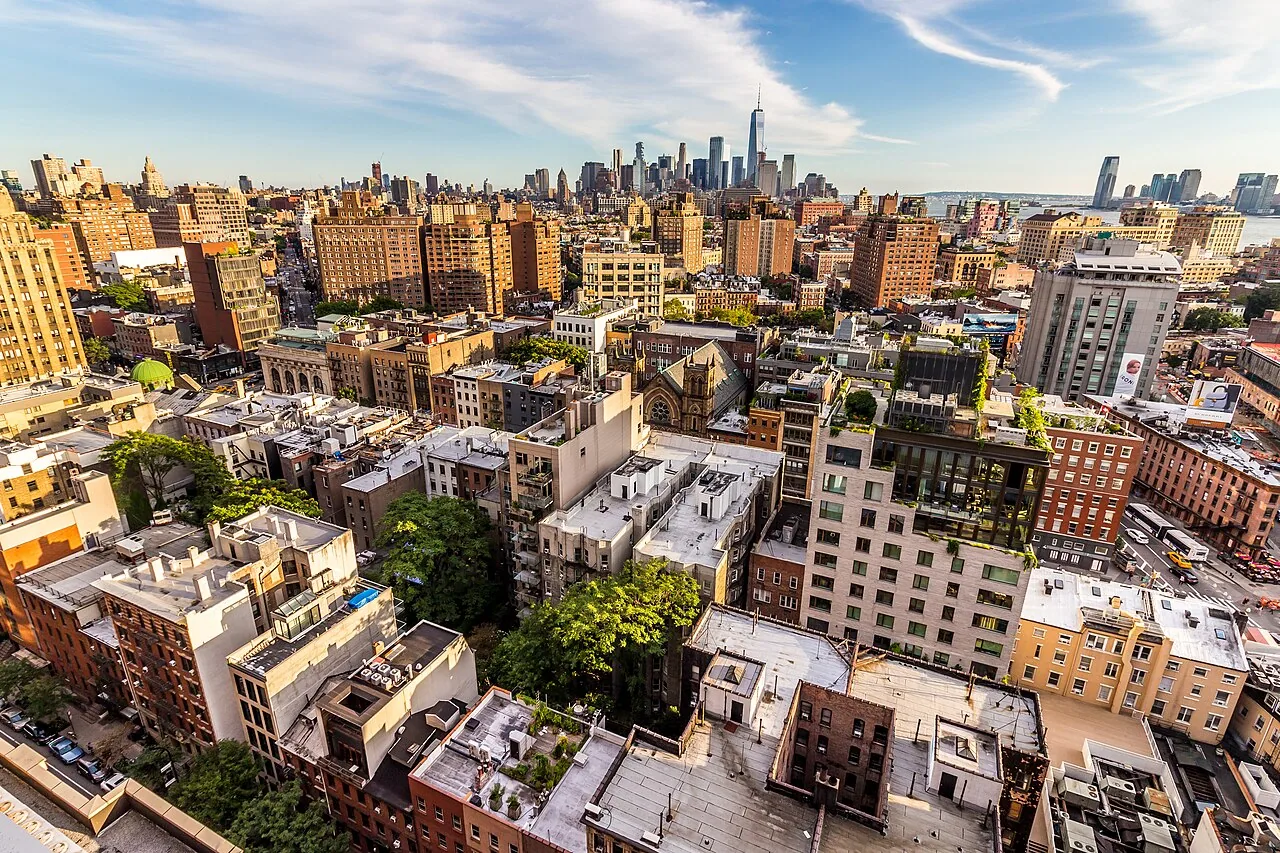
The Greenwich Village Historic District covers more than 50 northern and western blocks, and renovations there must preserve the main facade and overall aesthetics of each building. The Upper East Side Historic District was designated in 1981 with a 2010 expansion that added 74 buildings. A metal roof visible from the street may need review for material, color and profile, while a roof behind a parapet may not. The review shapes the schedule, so we check the building's status at the start.
When a metal roof is approved, we document the existing conditions, submit samples and drawings and keep the approval with the file. The finish color, seam height and trim profile are specified to match what was approved. For roofs in Greenwich Village, we keep crews and materials away from the street frontage and stage work to limit the effect on neighbors.
What maintenance does a metal roof need?
Less than most, but not none. Debris collects in valleys and behind penetrations and holds moisture against the finish. Drains and gutters have to run clear, because the 3.15 inches Ida delivered in one hour in 2021 shows how fast a clogged gutter overwhelms an eave. We check sealant at penetrations and trim, tighten loose trim fasteners and touch up scratches before corrosion starts. A short preventive maintenance visit once or twice a year keeps these items from becoming repairs, and the log supports the warranty.
What should the owner keep on file?
The clip and seam survey, panel gauge and finish data, the wind and snow design basis, the landmark approvals if any, the installation photographs of clips and trim before they were covered and the warranty terms for the finish and the weathertightness. If the work is a full replacement, the sustainable roofing zone under Local Laws 92 and 94 is part of the plan, and the same roof condition report carries it forward. Keep the seaming machine settings and the seam test notes if the panels were roll-formed and seamed on site, because they show that each run was closed to the same standard. Photographs of the clips before the panels went over them are the one record that cannot be recreated later, and they are the first thing a future repair crew will ask for.
Commercial Roofing Questions
Why does our metal roof make popping noises?
Panels slide on their clips as the temperature changes, and a bound clip or a pinned trim piece makes noise as it releases. Occasional ticking is normal. Loud, frequent popping, or noise paired with leaks, points to clips that cannot move or trim that restrains the panel.
Can a new metal roof go over an old low-slope roof?
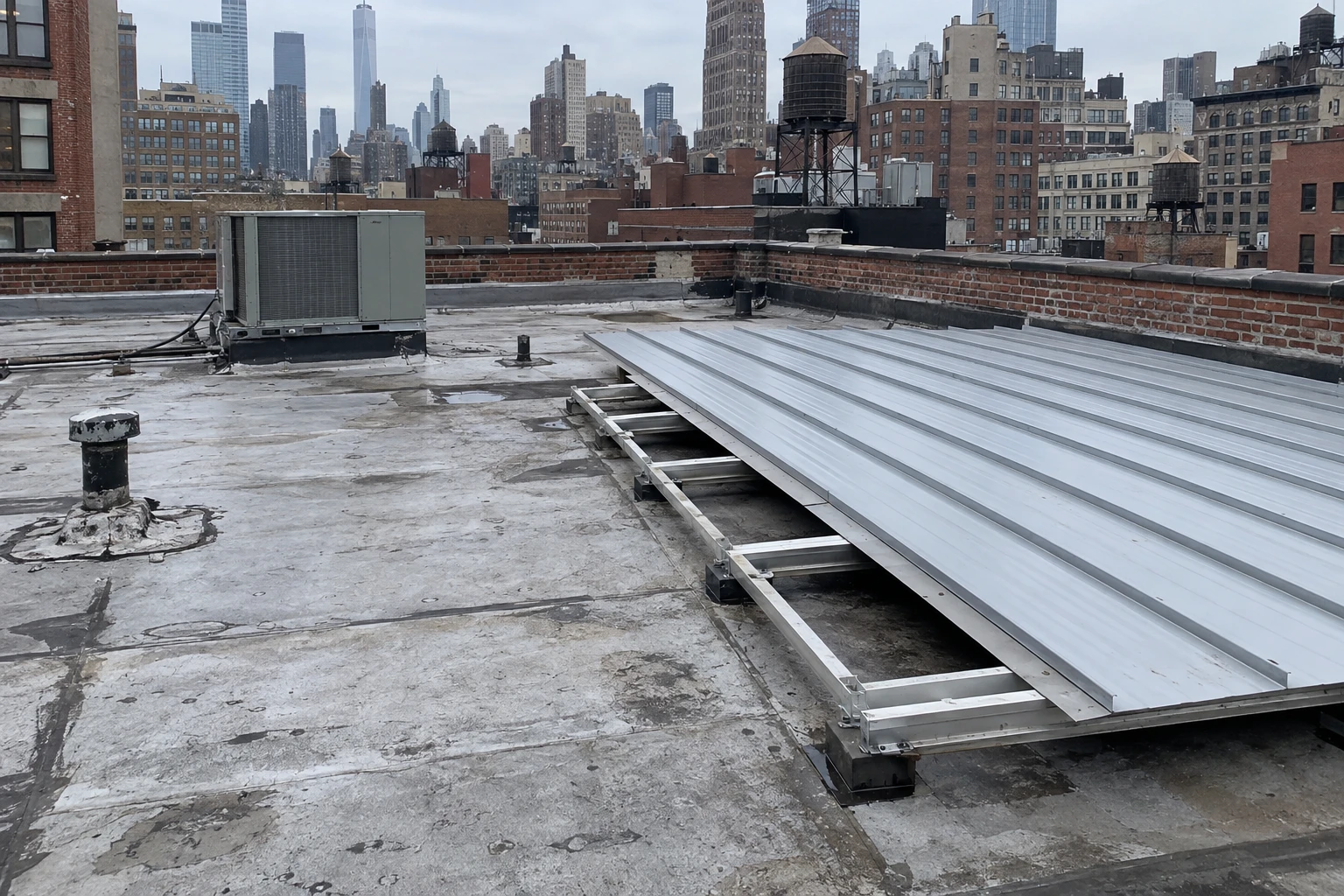
Often, if the slope, framing and insulation allow it. A retrofit frame or sub-purlins create the slope and carry the panels above the old membrane. The old roof has to be dry and the structure has to take the extra weight. The survey answers both.
Does a metal roof need snow guards in Manhattan?
On a pitched roof above a sidewalk or entrance, yes, snow retention is a safety feature. On a low-slope roof with parapets, snow stays put. The design considers the slope, the drop zone below and the snow load, and the engineer confirms.
What do we do about scratches in the finish?
Small scratches are touched up with a compatible coating after cleaning, before the base metal corrodes. Larger damage may need panel replacement. Photographs and a repair log keep the finish warranty in order.