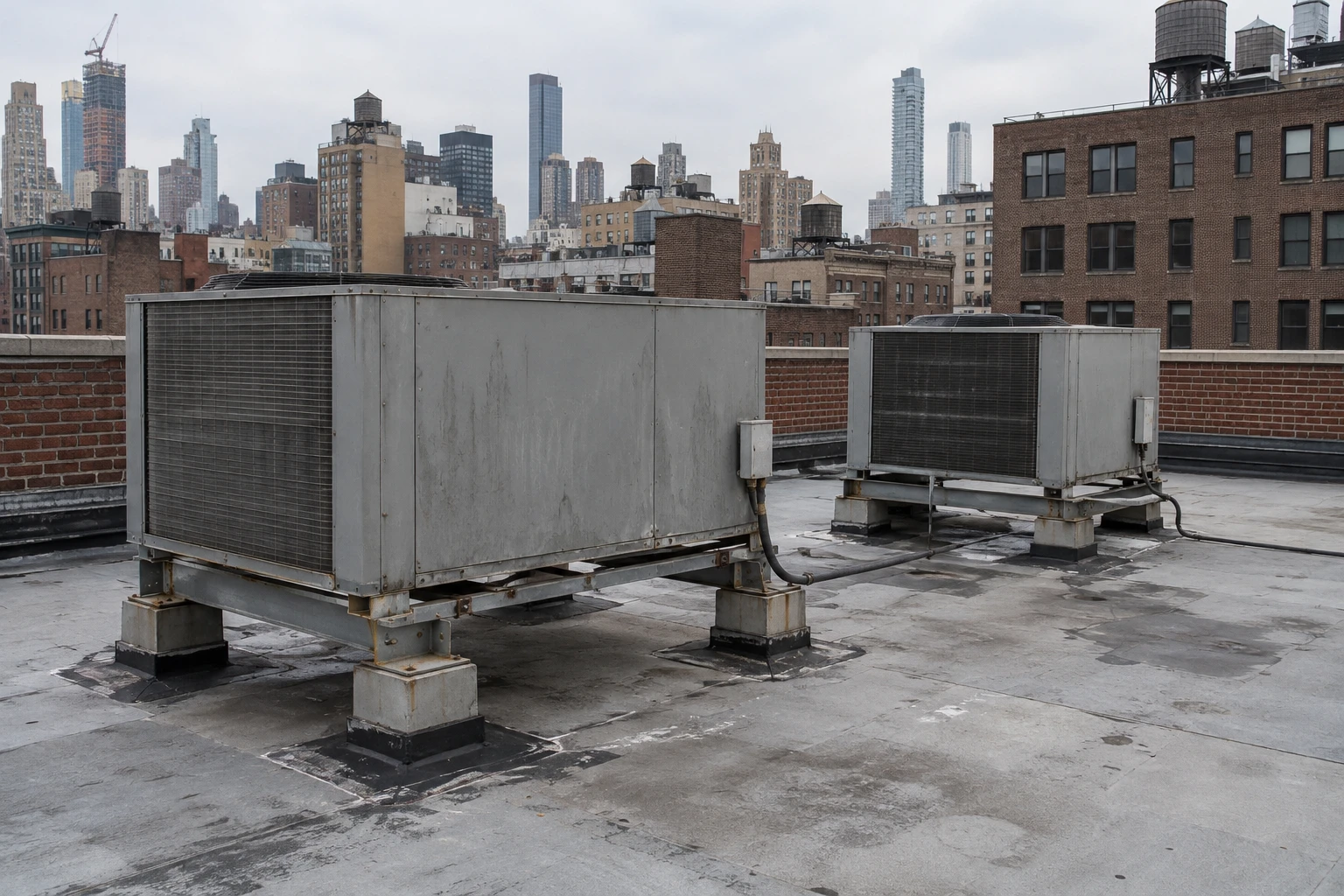
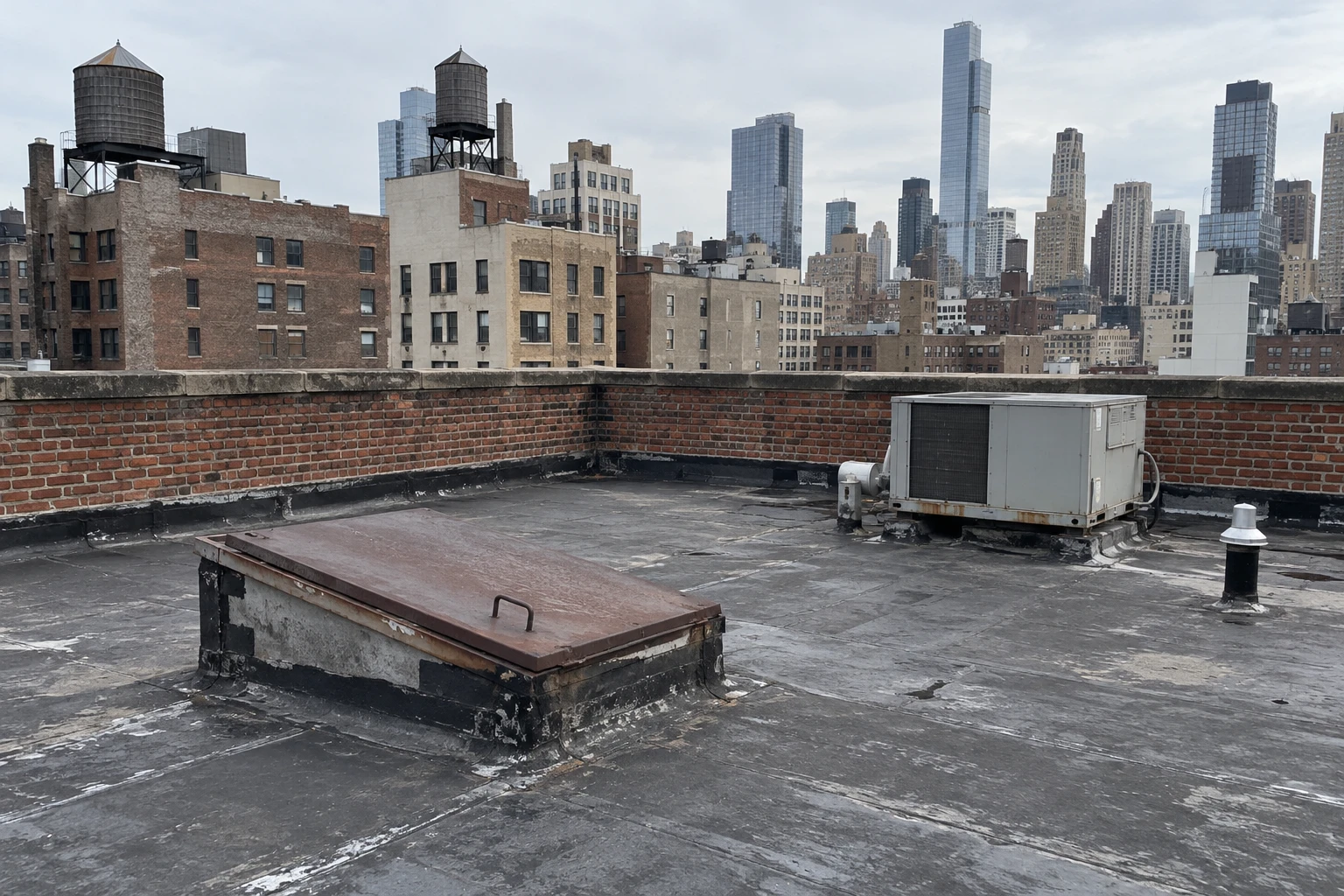
SBS and APP modified bitumen roofing for Manhattan, NY buildings: granule loss surveys, torch-free installation, multi-ply durability and records for the file.
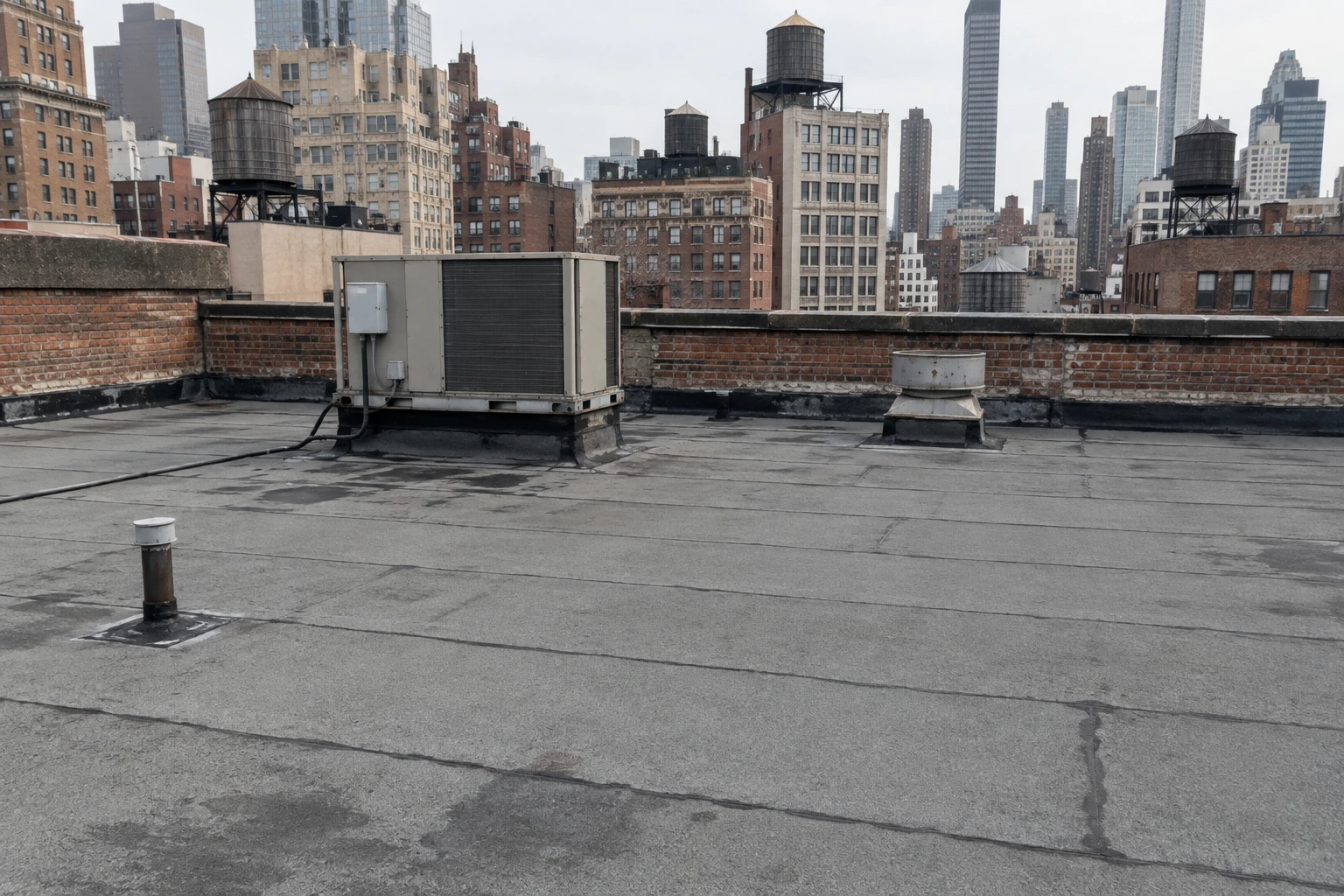
A handful of mineral granules in a drain strainer is a finding. Granules protect the asphalt below from sunlight, and when they wash into a strainer in quantity, the cap sheet above is losing its armor. The amount in the basket, the bare black patches on the slope and the cracking at the surface together show how many seasons the cap has left. Modified bitumen is asphalt blended with polymers, SBS for flexibility or APP for heat resistance, reinforced with fabric and laid in plies. It is a mainstay on Manhattan, NY roofs because it is durable under foot traffic, repairable with simple tools and familiar to every building engineer. The questions for an owner are what the granule loss means, how the sheets are joined in a city that restricts open flame, and whether a recover or a replacement is the sound choice.
What is the difference between SBS and APP?
SBS, styrene-butadiene-styrene, makes the asphalt rubbery, so the sheet stretches and recovers with building movement and stays flexible in cold. It is installed by torch, hot asphalt, cold adhesive or self-adhesion. APP, atactic polypropylene, makes the asphalt more plastic, with good heat and UV resistance, and it is almost always torch-applied. Both are reinforced with polyester or fiberglass, and both are usually laid in two plies with a granulated or coated cap sheet on top, a lighter relative of the multi-ply built-up roof.
For Manhattan roofs, SBS is often the better fit because of the cold range and the number of application methods. Central Park has recorded minus 15 F and 106 F, and a membrane that handles both without cracking has an advantage. APP can suit a roof in strong sun that gets less winter stress. The survey and the installation method, not the label, decide.
How is it installed without an open flame?
In a dense city, open-flame work on a roof is tightly controlled, and many owners and insurers prefer to avoid it. Alternatives exist. Cold-applied adhesive systems bond plies with a liquid adhesive. Self-adhering sheets have a factory adhesive layer under a release film. Hot asphalt installation uses a kettle that sits at the street or on the roof and brings its own fire controls. Heat-welded laps use hot air on the cap sheet seams.
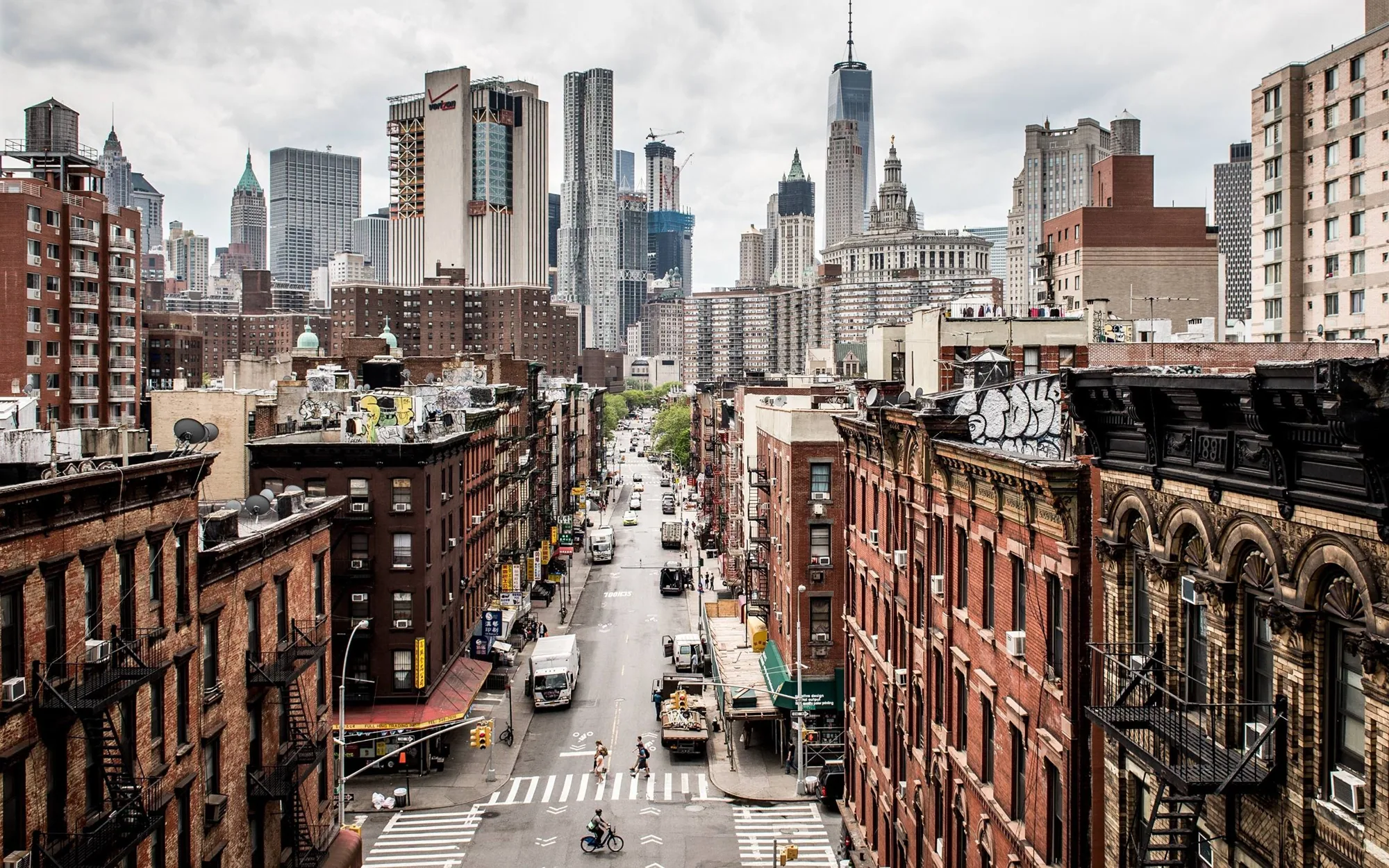
We choose the method with the building's fire-safety requirements, the owner's insurer and the landmark or district context in mind. On a roof in SoHo, where the SoHo-Cast Iron Historic District covers 26 blocks and about 500 buildings, the closeness of neighboring buildings and the age of the stock make torch-free methods the sensible default. Every method produces the same record: the ply layout, the lap widths, the temperature and weather logs and the photographs of each detail.
What do granule loss and surface cracking tell us?
Granule loss exposes the asphalt to UV, which dries and cracks it. Light loss near drains and at foot-traffic routes is normal. Widespread bare patches, alligator cracking and splits at laps mean the cap sheet is near the end of its useful life. We photograph each condition and rate the roof by area, then walk the same route a year later with the same camera positions, so the change in granule loss is a comparison and not a recollection. The comparison matters for the reserve study, because a cap sheet that lost little in a year has a different budget line than one that lost a great deal.
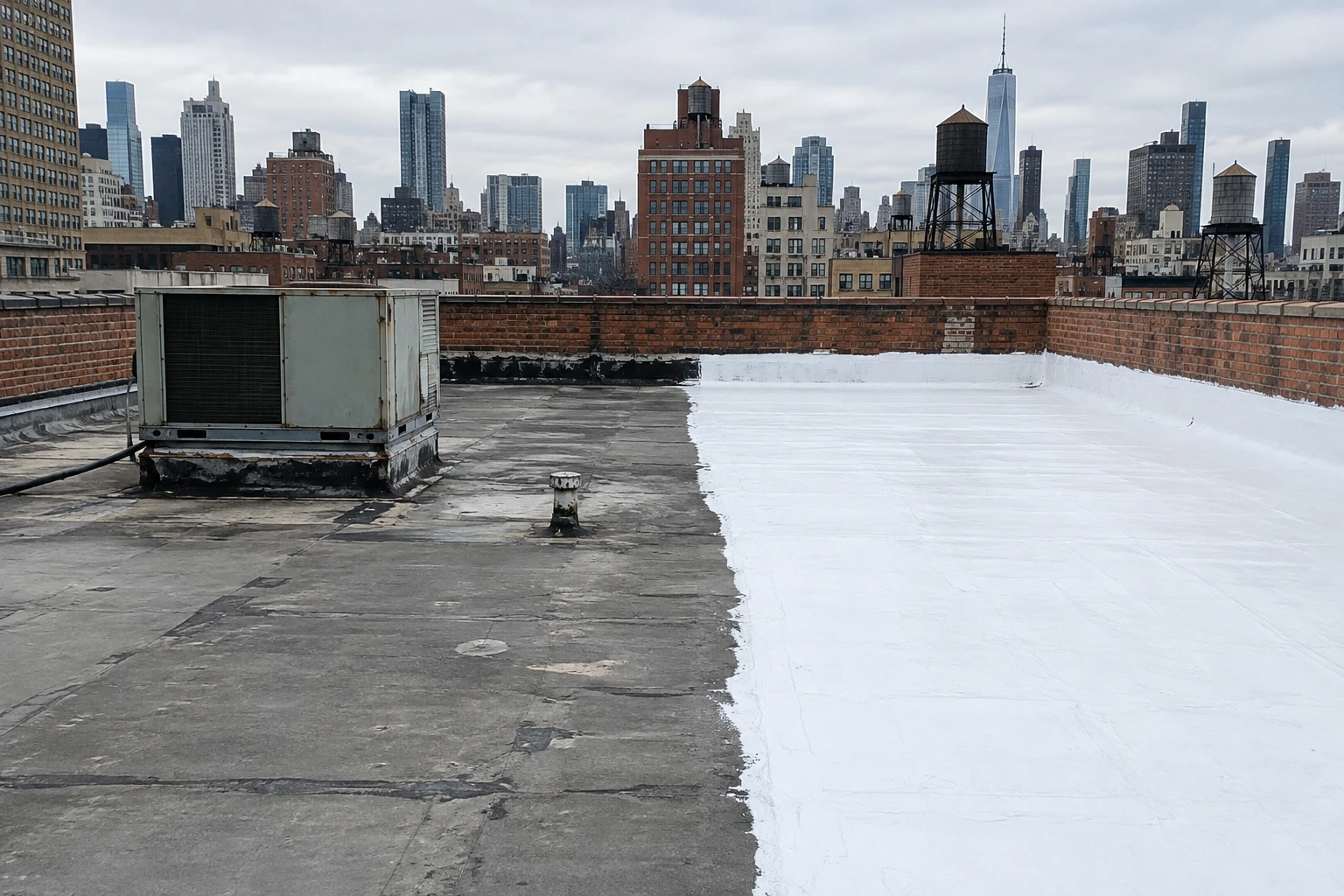
A core cut shows how many plies remain, whether the plies are bonded and whether the insulation below is dry. A cap sheet with bare patches but dry insulation and intact base plies can often be restored with a silicone coating or covered with a new cap, extending its life at a lower cost than tear-off. A roof with wet insulation and delaminated plies has to come off in those areas. The roof coating restoration route and the replacement route are priced side by side from the same survey.
Where do modified bitumen roofs fail first?
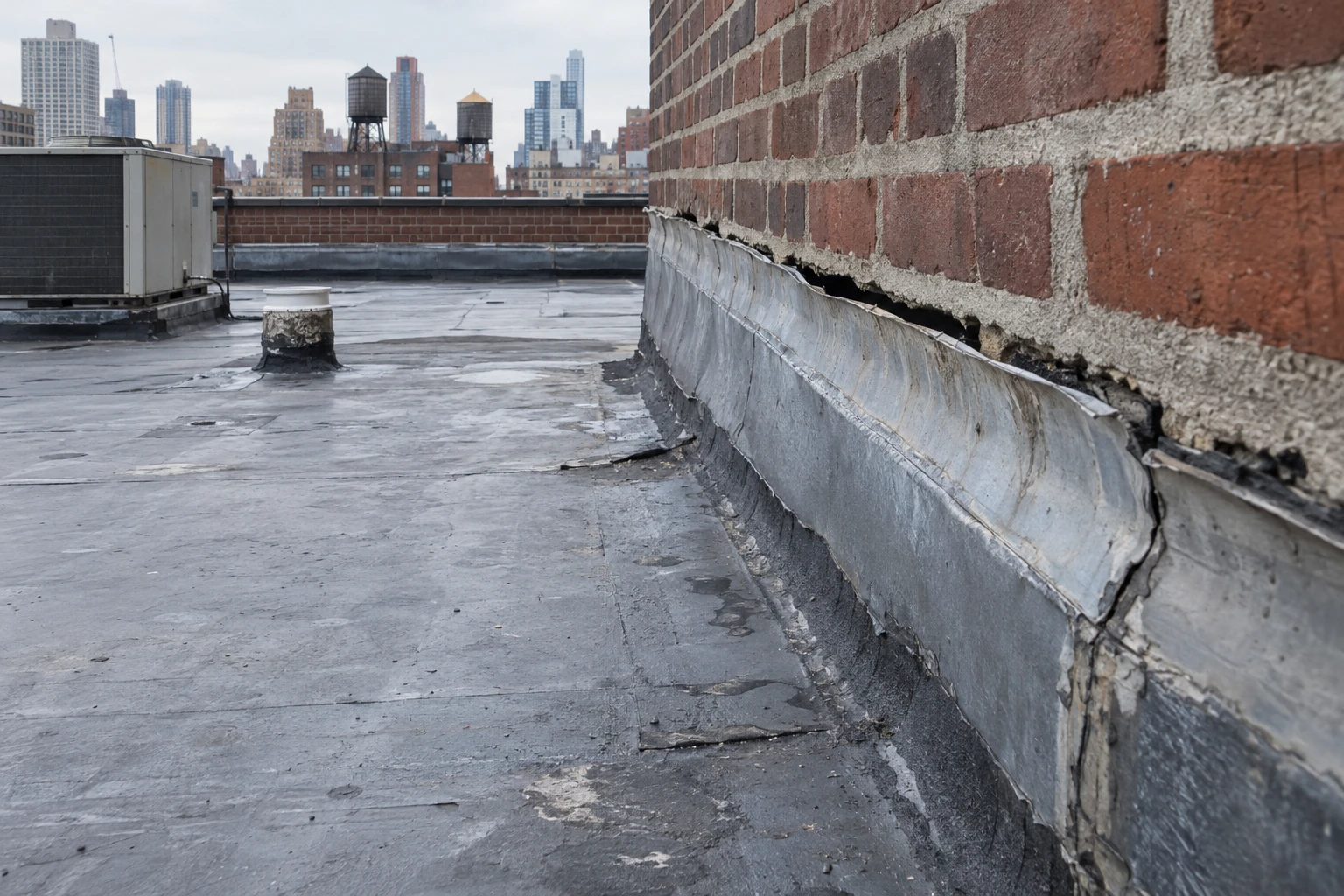
At the details. Flashings at parapets, curbs and pipe penetrations are built from multiple pieces, and each overlap is a potential entry point. Base flashings that were not tied into the field plies, counterflashing that has pulled away and sealant that has dried are the usual culprits. A flashing failure repair removes the failed piece, builds the new flashing in plies with staggered laps and installs a protected counterflashing.
Drains are the other place. Ponding at a drain concentrates the granule loss and traps debris, and the sump pan must be tied into the plies. On September 1, 2021 Ida's rain reached 3.15 inches in one hour, a harsh test for any roof with a half-blocked drain. We clear and test drains in each visit and measure ponding depth, then add a saddle or a new drain where water stays.
How do loft and converted buildings change the specification?
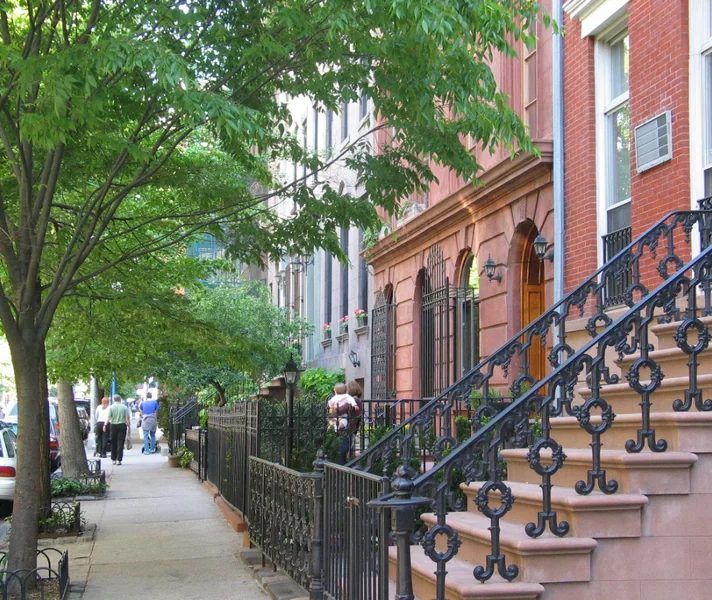
Tribeca is dominated by former industrial buildings converted into residential buildings and lofts, with four Landmarks Preservation Commission historic districts designated in 1991 and 1992. A converted loft may have a new use below the roof and an old structure above it, and the roof assembly may include several previous generations of materials. The survey records layers by core cut and checks the deck for sag and attachment.
Roofs in landmark districts may be subject to review if changes are visible from the street. A roof surface hidden behind a parapet can often be replaced without a visible change, while a visible slope needs a matching material. We confirm the status early and keep the approved scope in the file, so the roof built matches the roof approved. For rooftop mechanical changes in a conversion, the curbs and supports are included in the same plan.
What does the owner keep?
Core cut results and photographs, the ply schedule, the product data, the installation method and weather log, the ponding map, the warranty terms and the maintenance interval. If the work is a full replacement, the Local Law 92 and 94 sustainable roofing zone layout joins them, since a modified bitumen base can carry panels or a green roof assembly when the specification allows it. Keep the lap-width measurements and the primer batch notes too: if a seam is questioned years later, those two entries show whether the laps met the specification on the day they were made. A maintenance interval written into the file, with the granule photographs repeated at each visit, closes the loop between installation and service life and gives the next asset manager a clean record to inherit.
Commercial Roofing Questions
How many plies does a modified bitumen roof need?
Two is the common standard: a base ply and a cap sheet. Some specifications add a third for heavy traffic or critical areas. The count follows the exposure and the specification, and a core cut shows what a current roof carries.
Can a coating be applied over a worn cap sheet?
Yes, if the roof is dry underneath and the surface takes the coating after cleaning and an adhesion test. The coating restores reflectance and seals minor cracks. It is not a repair for wet insulation or delaminated plies.
Is a torch-free system as durable as a torch-applied one?
A system installed correctly by any approved method meets the same performance standards. Cold-applied and self-adhered systems need clean, dry, primed surfaces and correct temperatures, and we log those conditions. The method is chosen for safety and for the building.
Will foot traffic damage the cap sheet?
Granulated cap sheets tolerate light traffic, and walkway pads protect routes to equipment. Heavy or repeated traffic wears granules away faster, so we place pads along service paths and note them on the roof plan.