Around-the-clock emergency roof repair in Manhattan, NY: tarping, dry-in and documented temporary repairs that protect the building until permanent work.
The useful question once a roof has failed is how much of the building the water can still reach. Everything else, including the cause, the warranty and the final repair, can wait for daylight and a dry deck. An emergency response is therefore a short list of actions in a fixed order: stop the water from advancing, protect what is below, record the conditions, and make the roof safe for the next storm. We answer calls at any hour, every day of the year, and we arrive prepared to do that list on a Manhattan building, where access is narrow, the roof may be small, and the people below are often still working.
The temporary work is built to be removed or absorbed into the permanent repair, and it is photographed so the owner and the insurer can see exactly what was found.
What happens on the first call?
The first call sets the order of work. We ask where the water is appearing inside, whether anyone has seen it entering from a specific point, what the weather is doing, and whether electrical equipment, records or patients are exposed. That conversation tells us whether the priority is a tarp over a failed section, a drain to be cleared, a pipe penetration to be sealed or a stretch of flashing to be secured.
If the building has a roof plan, a recent report or a list of past repair locations, that speeds the response because the crew knows where to look first. If it does not, the crew walks the roof from the access point outward and records conditions as they go. Property managers who keep roof records on file for each building, as part of condition reporting, shorten the first hour a great deal.
How is a roof dried in during active weather?
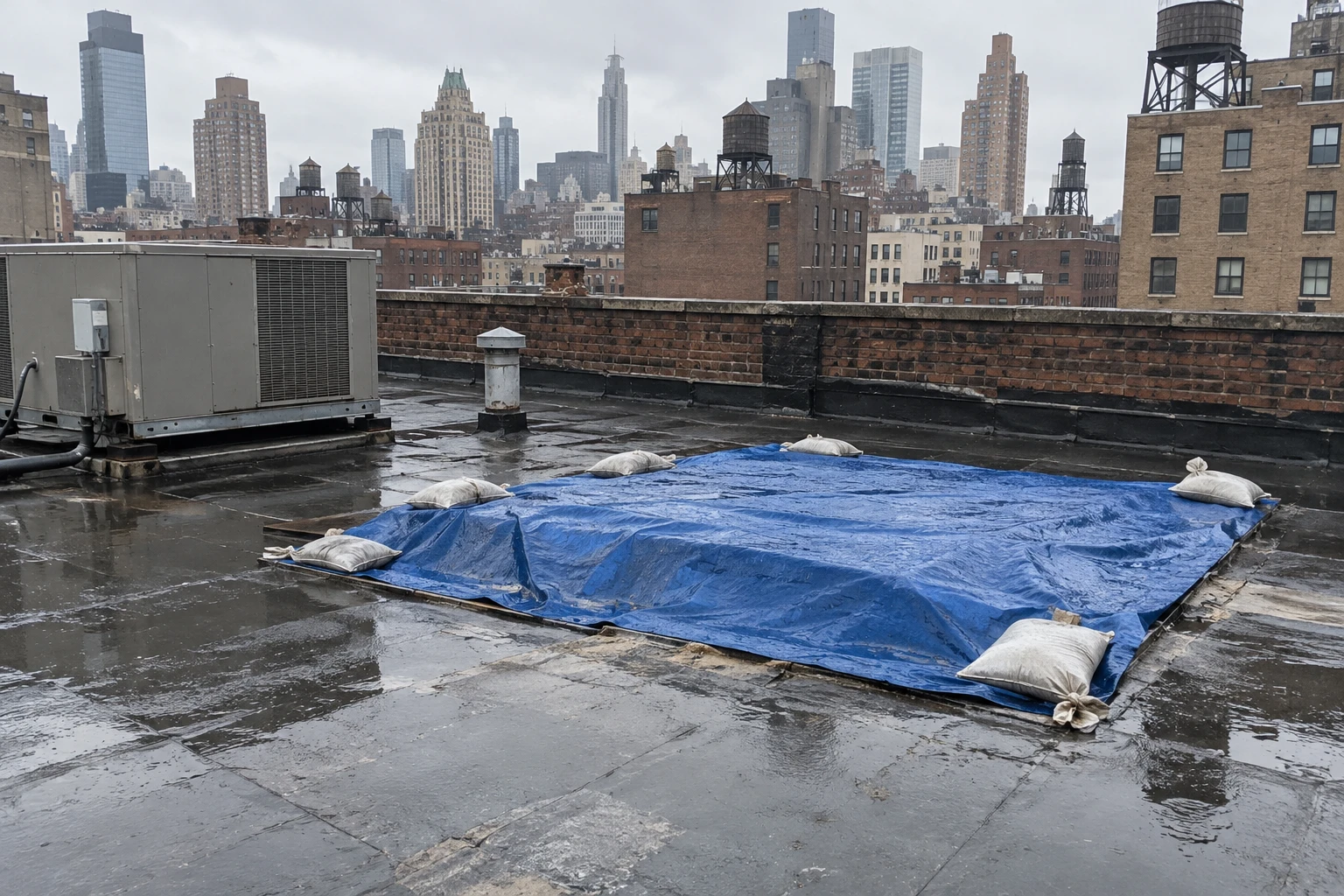
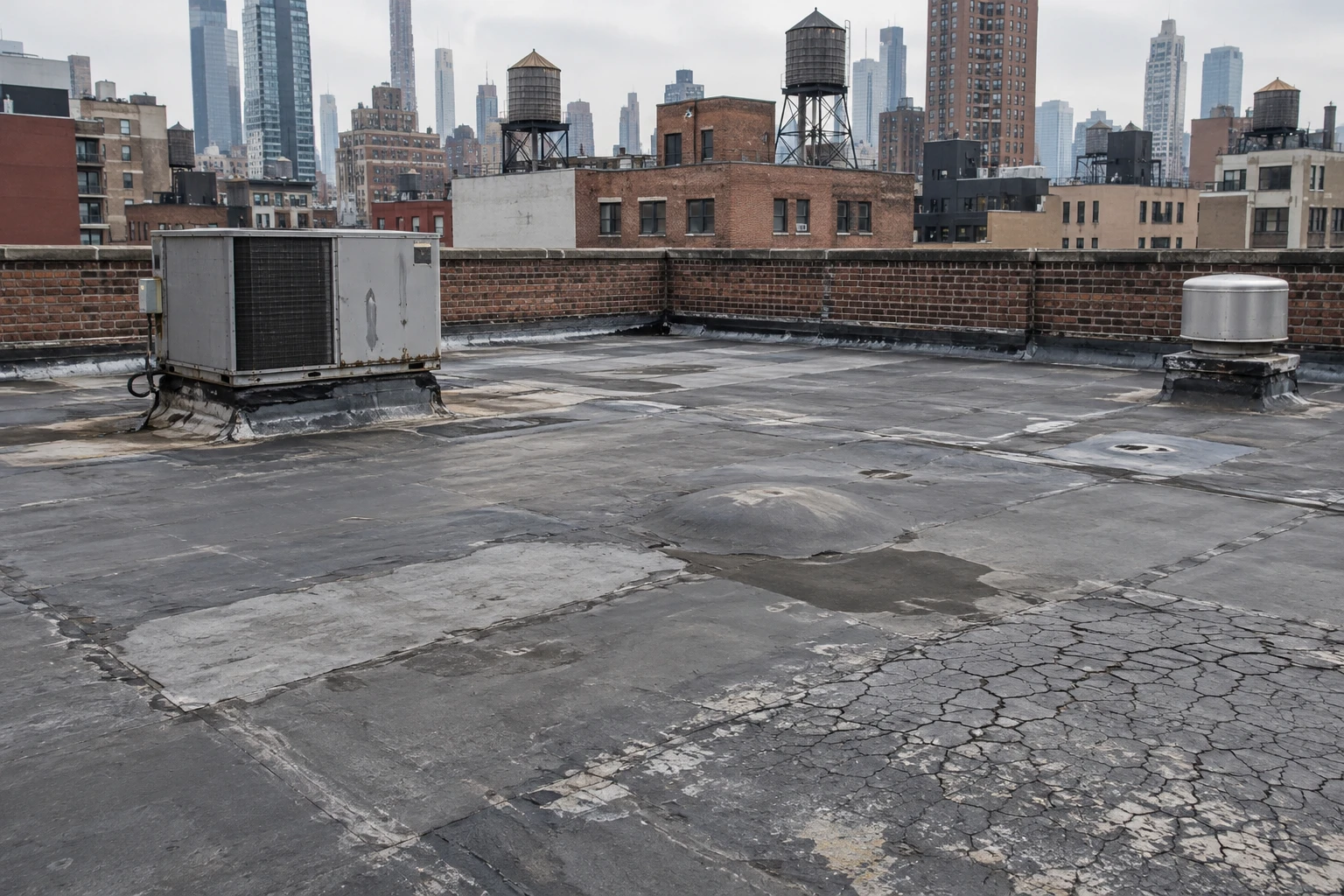
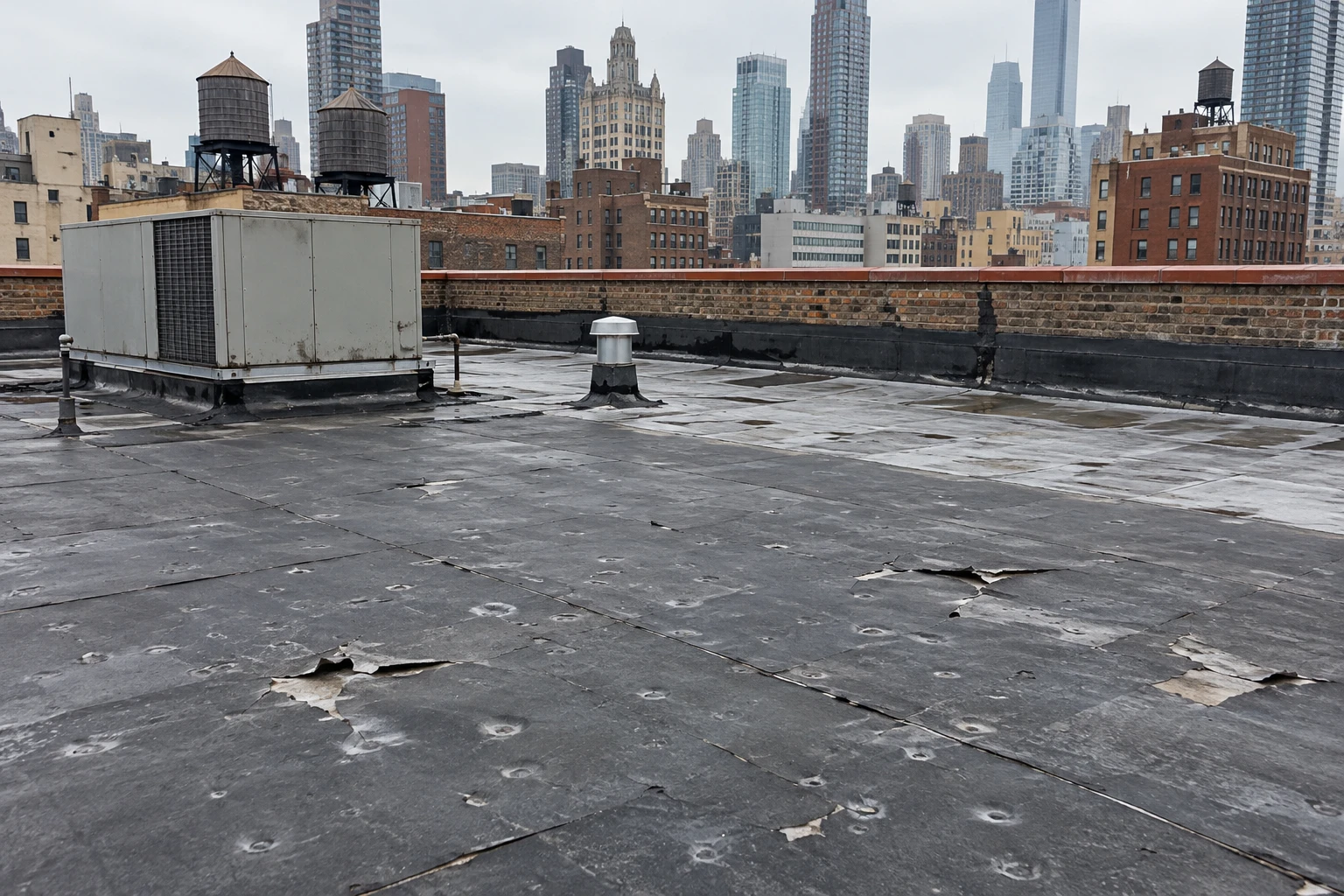
Dry-in means closing the opening so water cannot reach the building while the weather continues. On a low-slope roof, that usually means one or more of three measures: a heavy tarp secured at the perimeter and weighted against wind, a temporary membrane patch adhered over a dry area, or a sealed cover over a failed penetration. The choice depends on the surface, the temperature and what is wet.
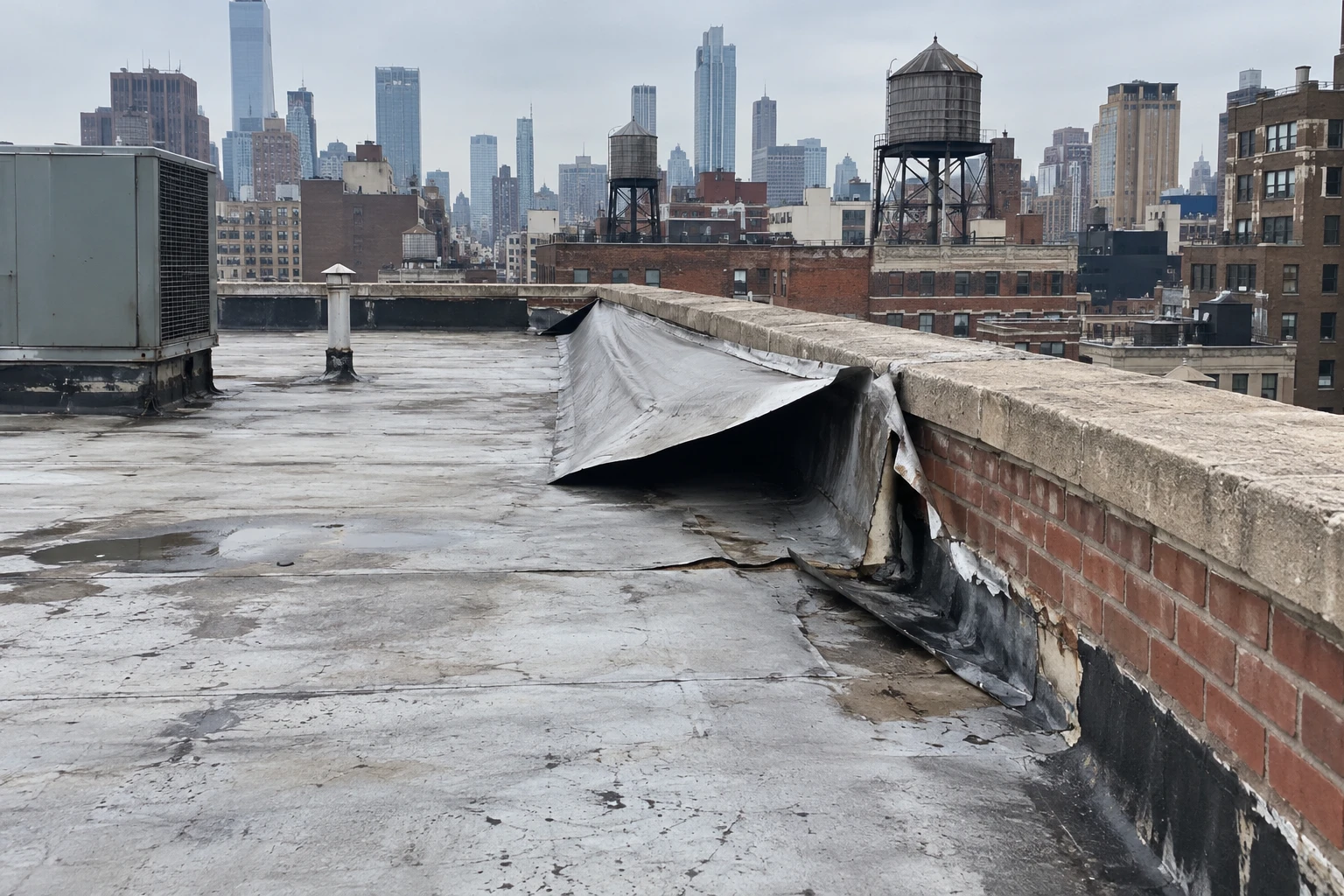
Tarps are fastened to the building and not simply weighted, because wind finds loose edges. Temporary patches are laid on a surface that has been dried as much as conditions allow, and their edges are lapped past the damaged area. If the insulation under the failure is wet, we mark it for removal in the permanent repair and take photographs of the extent. Where wind has torn the membrane back from an edge, the first work is to secure the lifted perimeter before anything else.
How does access change an emergency response in Manhattan?
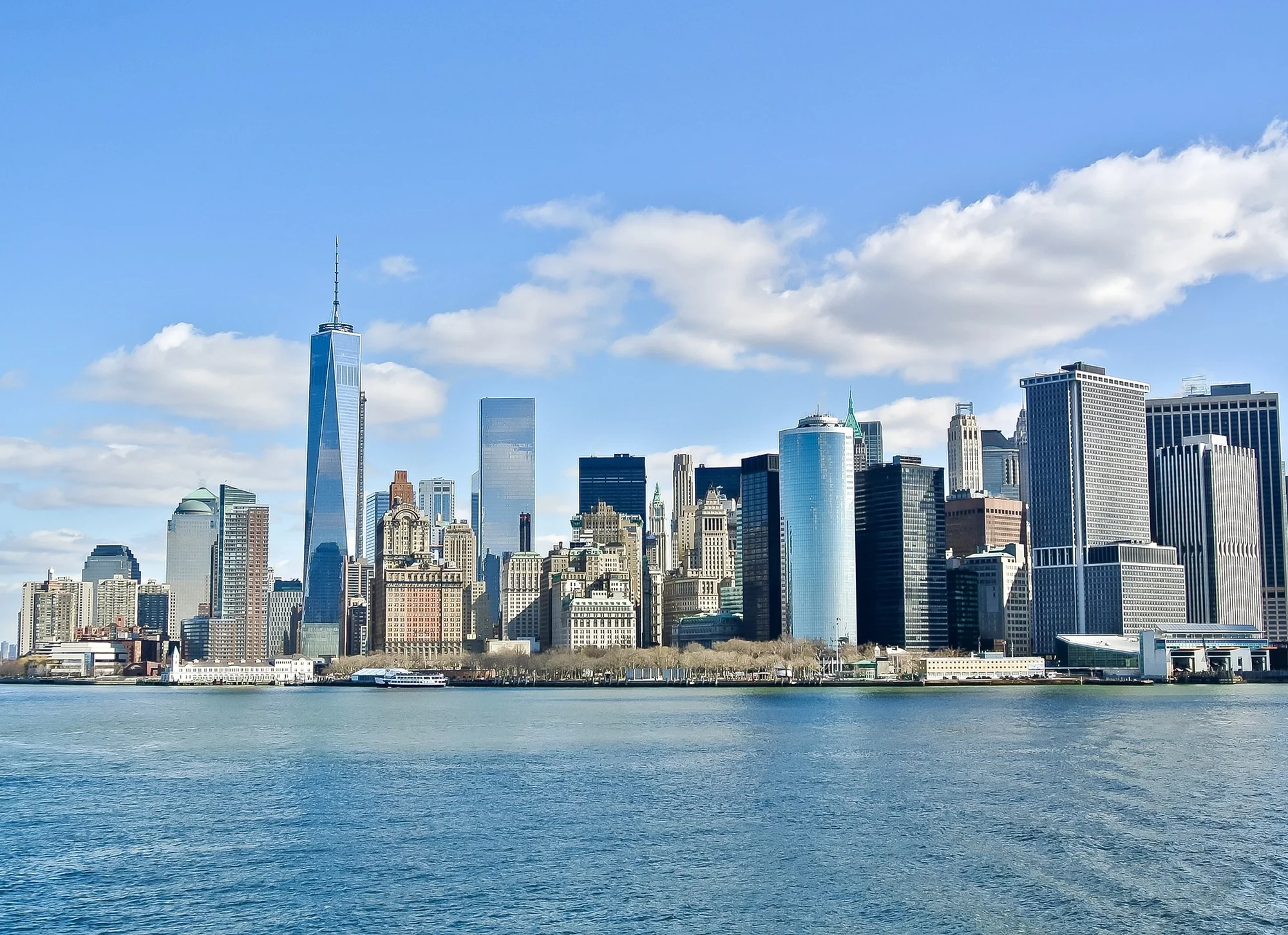
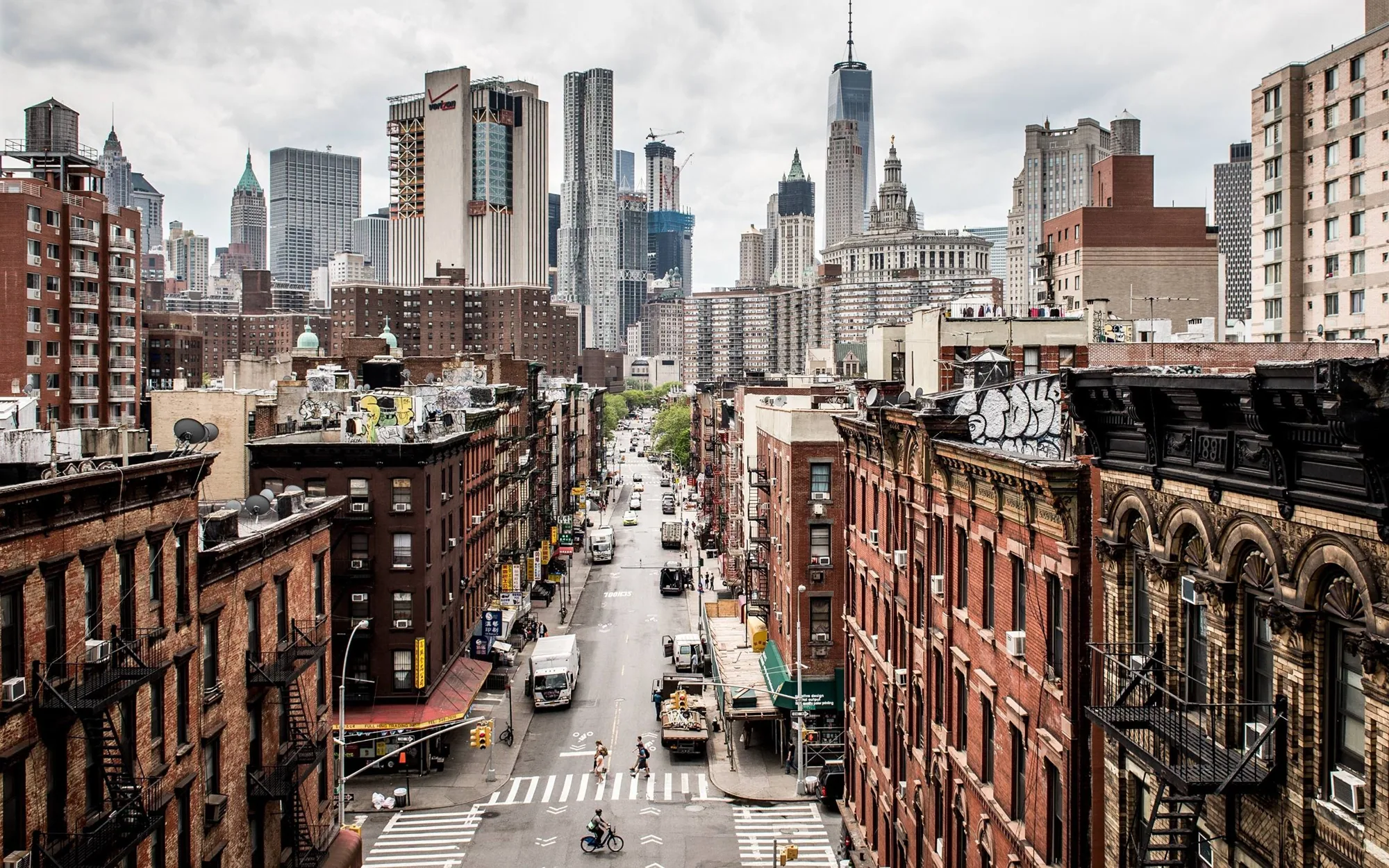
The island's access is the hard part. Streets in Midtown and the Financial District carry heavy traffic and limited curb space, and a crew needs a place to stage material, a route to the roof and sometimes a protected pedestrian path. The Lincoln Tunnel carried roughly 112,995 vehicles a day in 2016 and the Holland Tunnel about 89,792, so crossings from New Jersey can slow a crew or a delivery on a busy day.
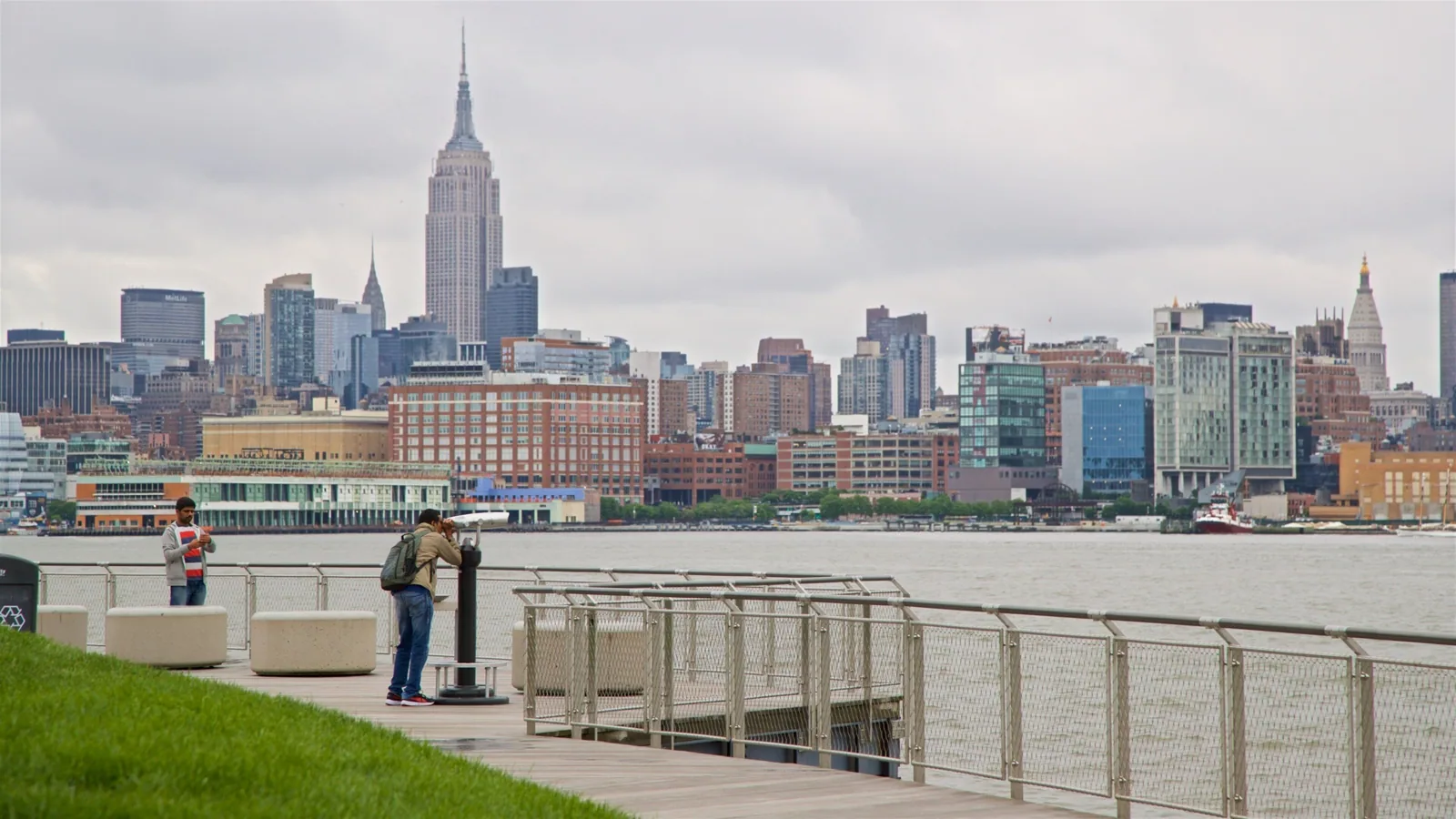
Hurricane Sandy showed how much access can change. On October 29, 2012 every road tunnel into Manhattan except the Lincoln Tunnel was closed, and everywhere in Lower Manhattan south of 39th Street lost power. After a major storm, a crew may have to work without working lifts, without lighting in stairwells and with limited material delivery. We plan for those conditions by carrying lighting, hand-hoisting equipment and enough temporary material to complete the first dry-in without a second trip. Buildings in Hoboken and Jersey City sit on the far side of those crossings, which is one more reason the first kit has to be complete.
How do we protect occupants and equipment during the work?
Water in a building is a safety issue before it is a roofing issue. Wet ceilings can fall, wet floors cause slips, and water near electrical equipment can create a shock hazard. We work with the building engineer or manager to isolate affected areas, move or cover equipment and keep occupants away from compromised ceilings while the roof is secured. In a hotel, an office floor or a residential tower, communication with the front desk or the managing agent keeps the response orderly.
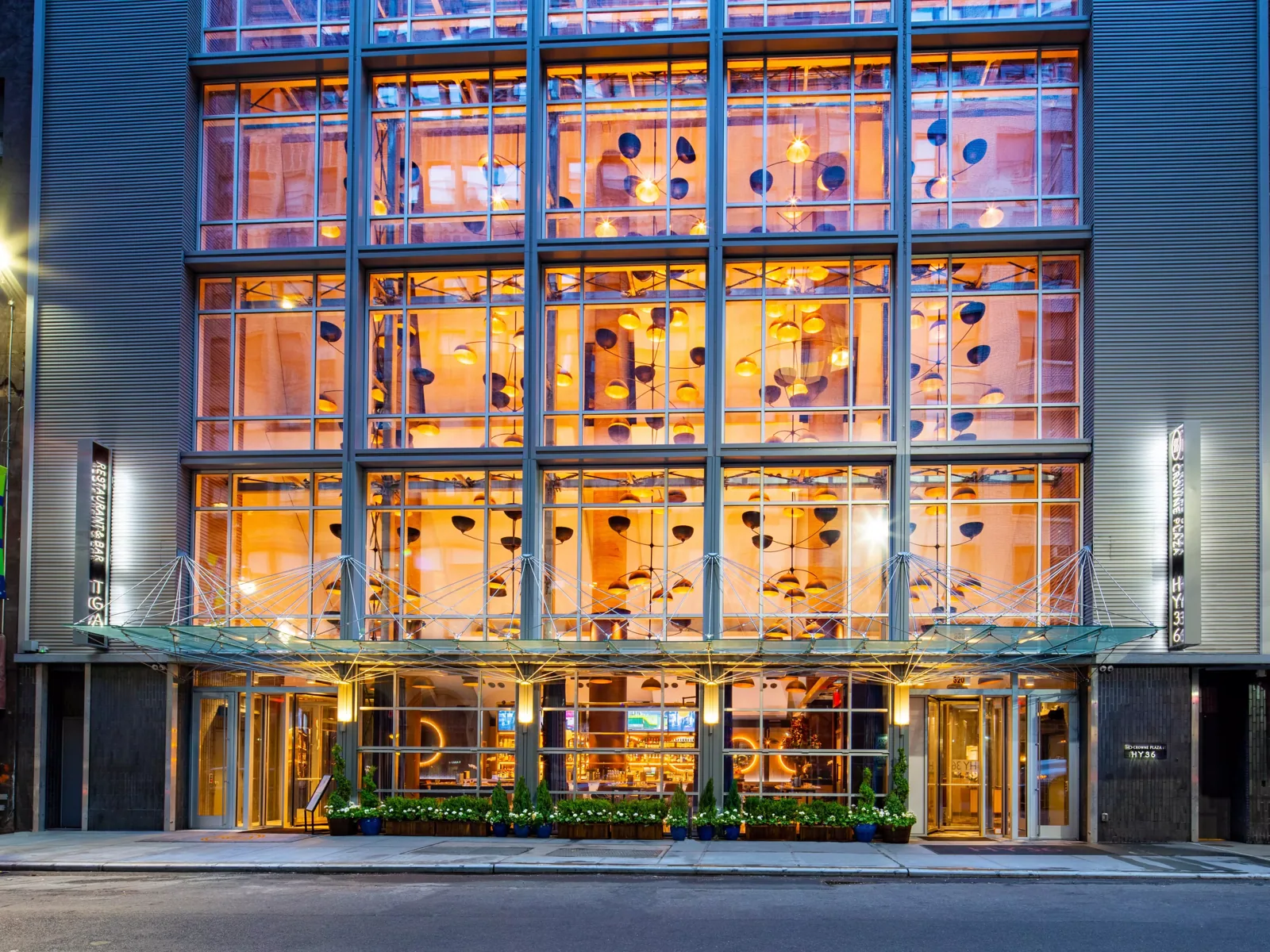
For a hotel roof, where guest rooms sit directly below, the repair plan sets noise limits and coordinates room closures. For an office, the plan identifies critical spaces such as server rooms and records storage. In either case the temporary work is sequenced so the area with the highest consequence is protected first, and the rest follows in order of exposure.
What gets documented for the insurer?
The emergency record has four parts: photographs of the damage and the roof conditions on arrival, a written description of the temporary work and the materials used, the time and date of each action, and notes on any wet insulation or deck damage found. That package gives the adjuster a clear starting point and supports a claim for the cost of mitigation. Insurance policies commonly require the owner to take reasonable steps to prevent further loss, and the dry-in is that step.
We keep the documentation separate from any opinion on coverage, which belongs to the owner and the carrier. When the permanent repair begins, the earlier record is attached so that the full story, from the first call to the finished roof, is on file. For storm events, the claim assistance we provide builds on this record.
What comes after the temporary repair?
A temporary repair is a bridge, and it should not stay in place longer than necessary. After the dry-in, we schedule a full inspection to find the cause, test for moisture and rank the permanent repair options. The inspection often shows the failure was a small detail that grew under stress, such as a flashing that had loosened over several seasons. In other cases it shows a roof near the end of its service life, and the temporary repair becomes the first step in a replacement plan.
Either way, the owner gets a clear report: what failed, why, what the temporary work covers, and what the permanent work will include. If the damage was caused by a major storm, we also look at the wider storm damage across the roof, since a single visible failure often means other details were stressed. The report lets the owner decide the next step with full information.
Commercial Roofing Questions
What can be done if the roof is inaccessible because of a storm?
Crews wait for conditions that allow safe work, and in the meantime we advise interior measures such as moving equipment, placing containment and diverting water. Once the roof is safe to walk, the dry-in goes first. Safety rules apply to every roof, and no job justifies working in lightning or high wind.
Does an emergency repair void a manufacturer warranty?
A documented temporary repair, done with compatible materials, generally does not. We record the method and the products so the manufacturer can review them, and the permanent repair follows the manufacturer's conditions where a warranty is in force.
How do we tell an emergency from a repair that can wait?
Water entering over occupied space, electrical equipment or critical records is an emergency. A slow stain at a known detail is a scheduled repair with a near date. When in doubt, call: a short conversation sorts the two.
Who authorizes emergency work on a leased building?
Usually the managing agent or the owner, depending on the lease. We ask for the contact with authority on the first call so the work does not stall while permission is sorted, and we send them the record afterward.