Commercial roof surveys, mechanical roof work and replacement in Hudson Square, Manhattan, NY, for media, design and office buildings near the Holland Tunnel.
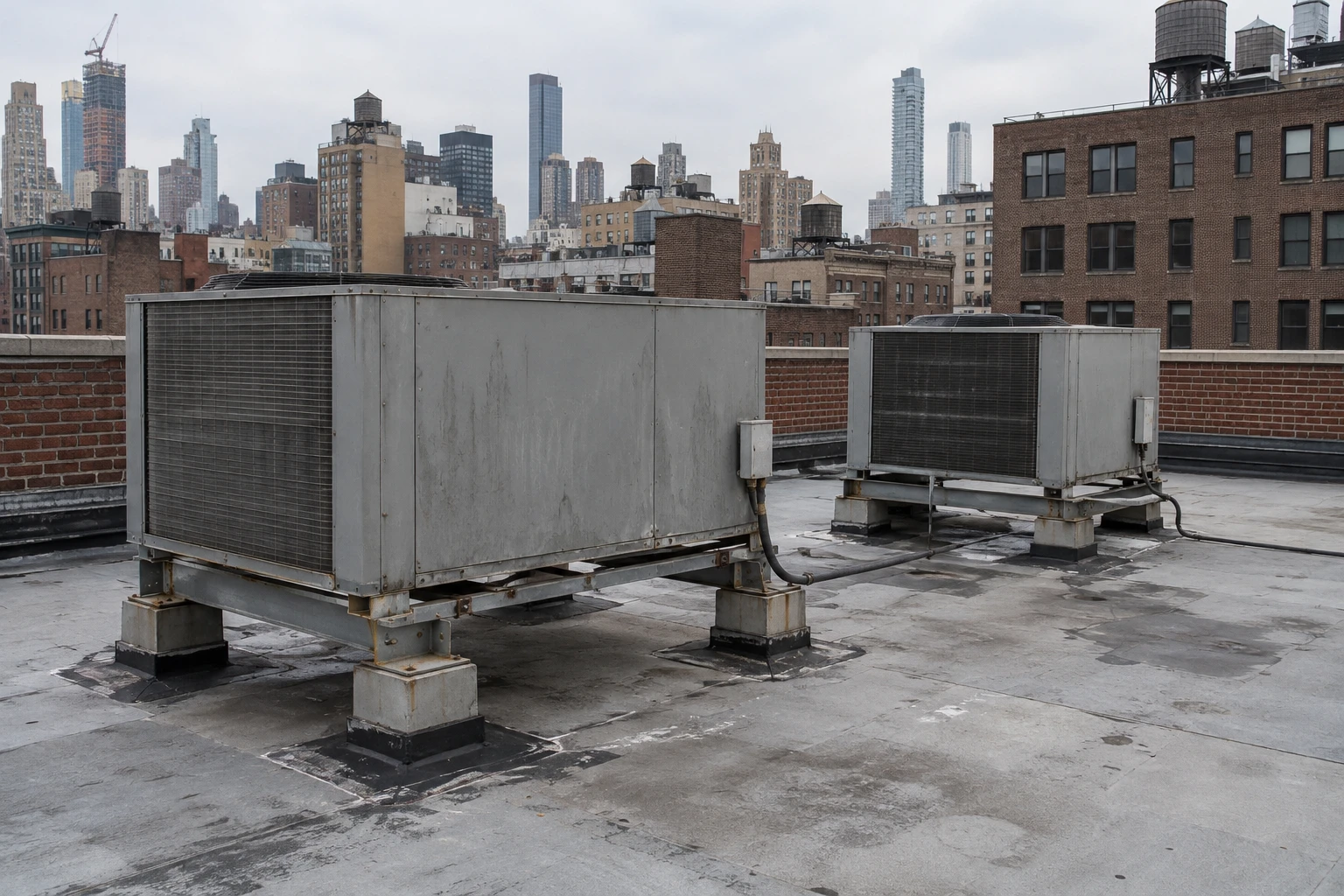
On a mechanical roof in Hudson Square, the survey tape finds more equipment curbs than open membrane. That ratio is the finding: the roof is a service floor, and its waterproofing is the thin layer between a building's air handlers and its tenants. The neighborhood became known as the Printing District in the 20th century and remains a media hub for advertising, design, communications and the arts, and it was rezoned in 2013 to allow taller buildings. Google announced in 2018 a $1 billion, 1,700,000 square foot headquarters across three buildings in the area. In Manhattan, NY, this combination of large floorplates, heavy equipment and creative tenants makes the roof a matter of capacity and continuity: can the structure carry the units, can the membrane survive the traffic and can the offices below keep working?
What roofs sit above Hudson Square?
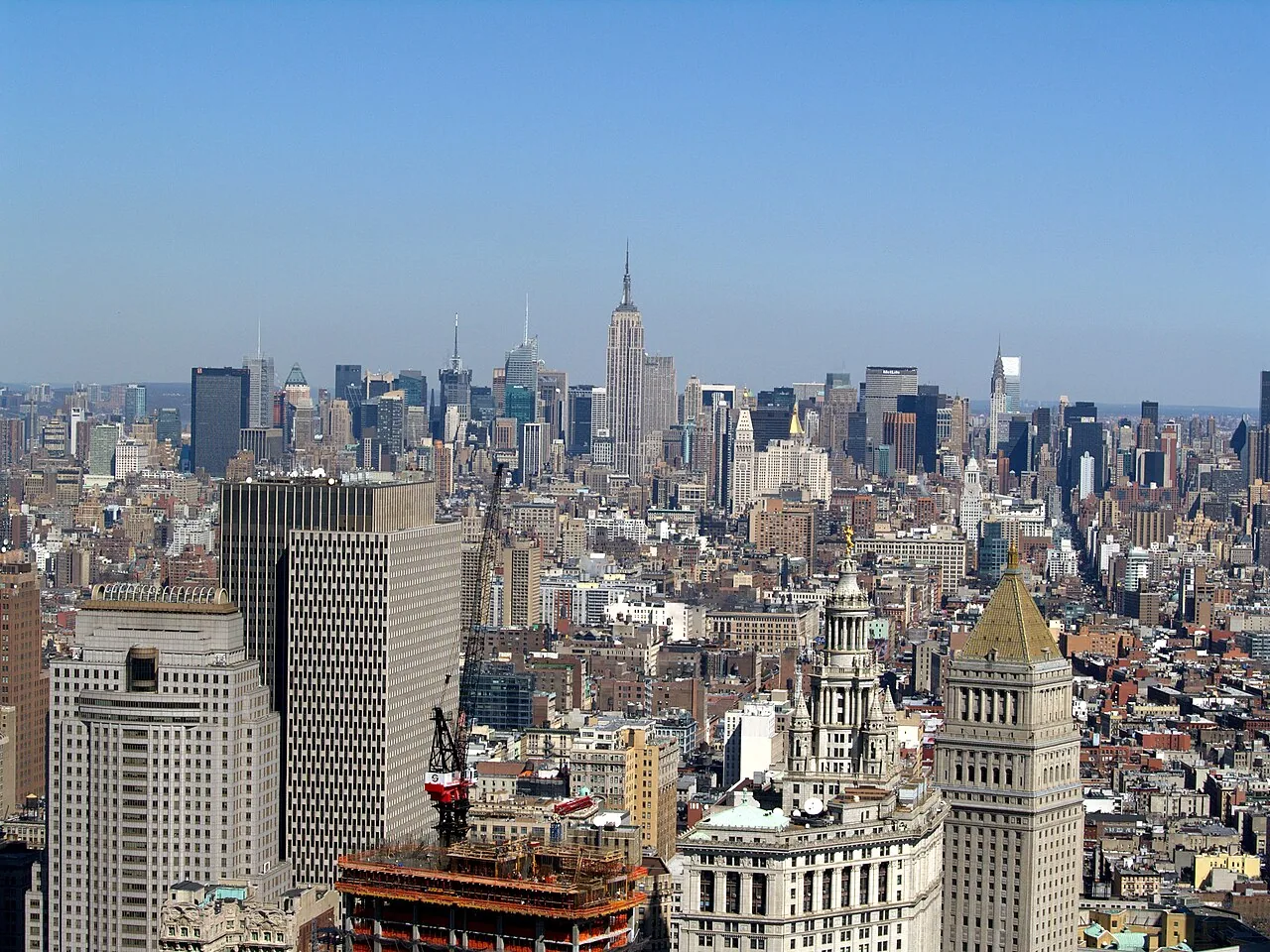
Roofs over media and office floors, over older printing buildings that have been adapted and over newer, taller buildings built after the 2013 rezoning. The Holland Tunnel opened November 13, 1927, runs between Lower Manhattan and Hudson Square and Jersey City, and has a 122 foot ventilation tower on the New York side, which marks the western edge of the neighborhood's skyline.
Each roof is read directly rather than assumed from the district: layers by core cut, curbs and supports by inspection, drains by measurement. A multi-building campus is surveyed building by building, with the office building roof of each rated on the same scale, and the report rates each roof area on the same scale. The result lets an occupier or owner with several roofs compare them and set spending where it matters.
How is a crowded mechanical roof surveyed and repaired?
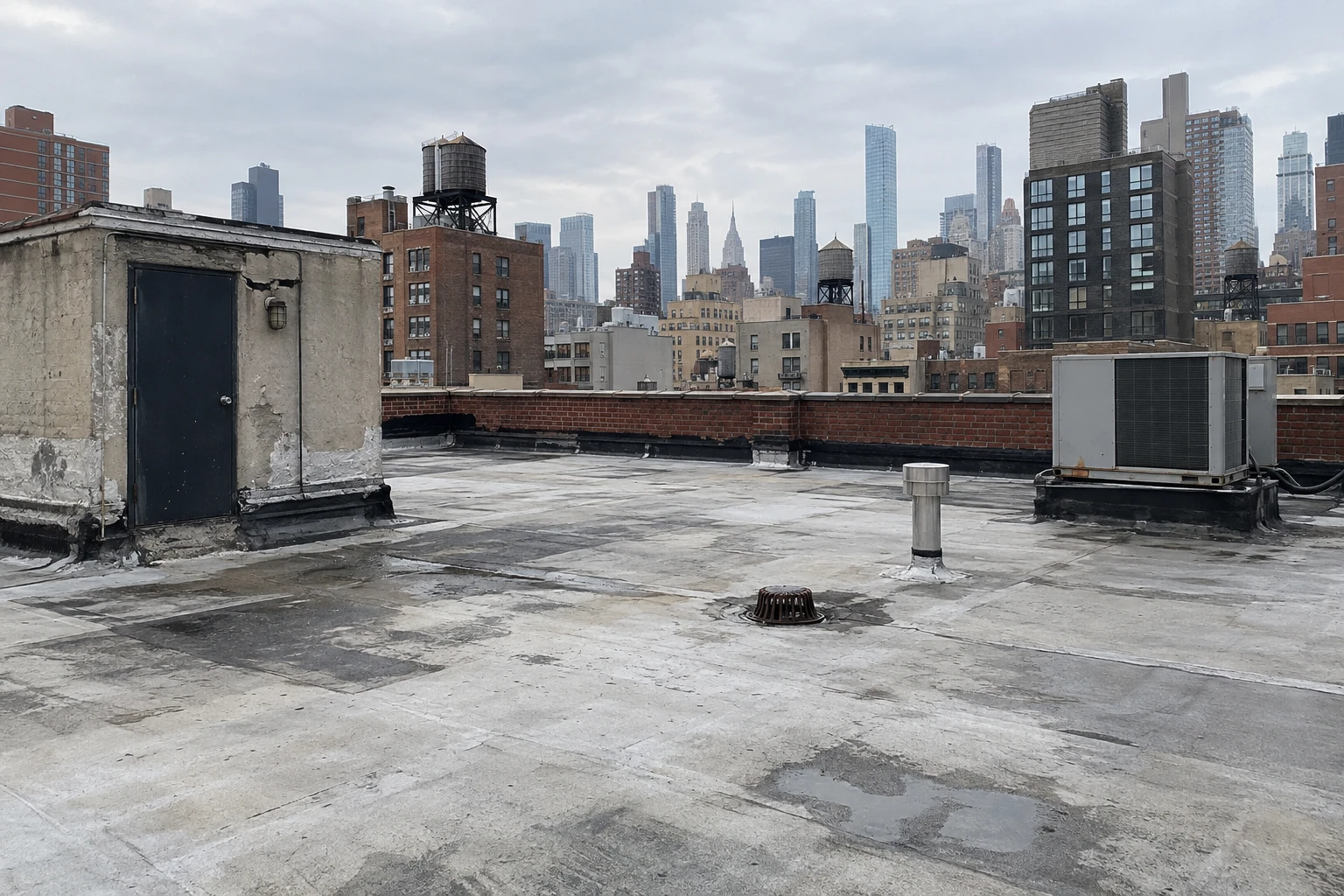
Map first. We record every unit, curb, support, pipe run and conduit, number them and rate each. Then we trace drainage, which on a crowded roof is a maze: water crosses the membrane between curbs and meets walkways, pipe supports and dunnage. A drain that is boxed in by equipment can be hard to clear and easy to forget.
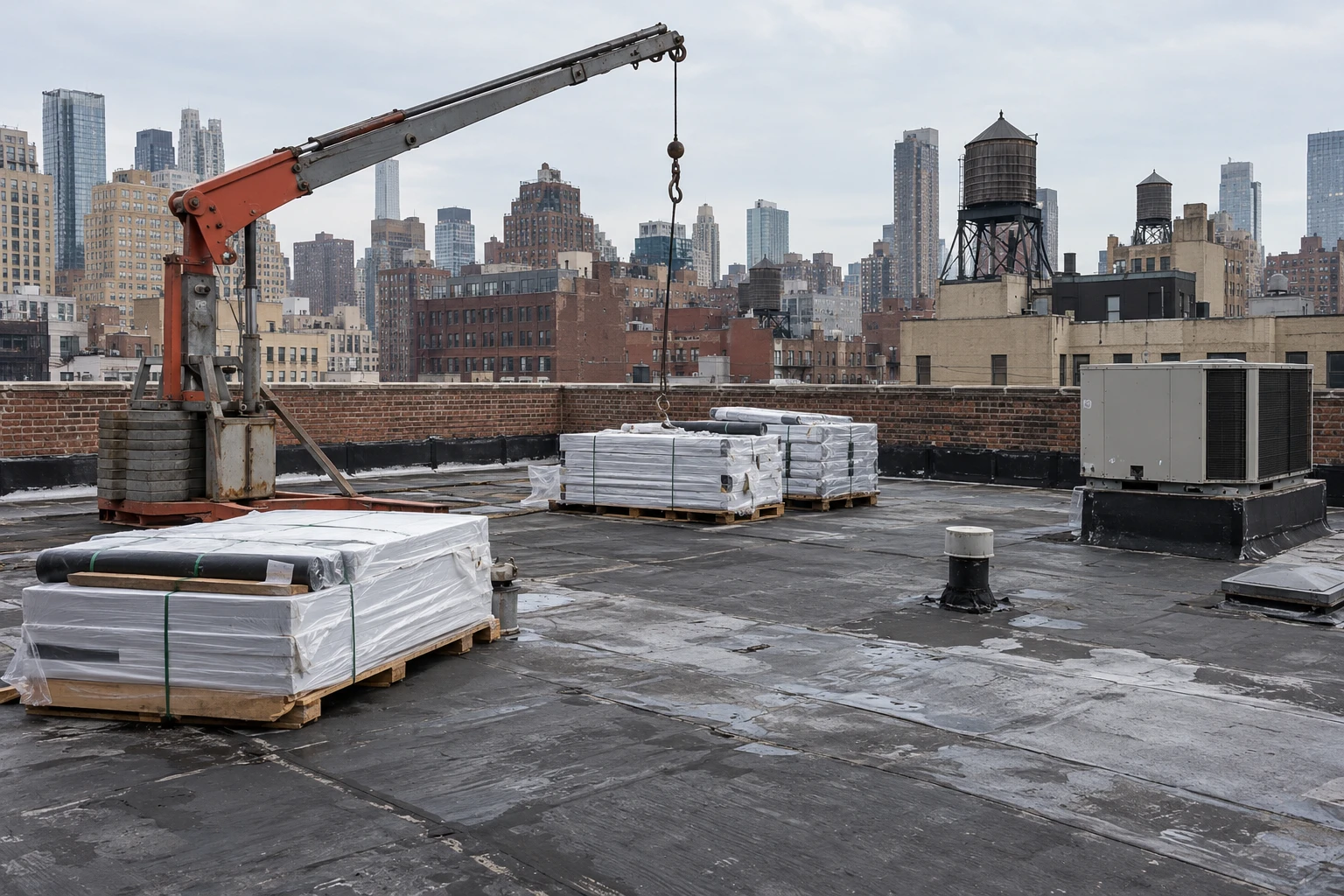
Repairs address the pattern. Failed curb flashings are rebuilt, pipes that rest on the membrane are lifted onto supports, walkway pads protect routes to equipment and tapered insulation or crickets correct ponding behind curbs. The work on rooftop equipment curbs and supports is coordinated with the mechanical contractor, so units that have to be lifted or shifted are moved once. A crowded roof has a high cost of access, so we bundle repairs into a single visit wherever possible.
Heat from equipment matters. Condenser discharge and exhaust warm the membrane near the units, and a membrane that is hot all summer ages faster than the same membrane across the roof. The survey compares surface hardness and flexibility near the discharge with the field, and the report marks zones where a protective pad, a lighter-colored cap or a different membrane is worth the cost. Cables, conduit and refrigerant lines that cross the roof are lifted onto supports at a spacing that keeps them off the surface, and each run is numbered on the plan so a later contractor knows who owns it.
How do we keep creative and media tenants working?
With a plan for noise, dust and water. Edit suites, studios and design floors depend on quiet and clean air. We agree the loudest hours with each tenant, schedule tear-off and cutting accordingly, and protect the ceilings under the work. Temporary protection sits over sensitive areas, and a daily log records what was opened and closed.
The same discipline applies to the roof of a multi-building campus where different tenants have different hours. A reroofing project in an occupied building moves from the least sensitive area toward the most sensitive, so that problems are found and fixed early. Notices go out with dates, and a contact on site can pause work if a tenant needs it. Records of each pause go into the file, and the schedule adjusts without a penalty to the building.
What do heavy rain, snow and heat do to these roofs?
Ida's hour of 3.15 inches on September 1, 2021 puts a crowded roof's drains to the test, and snow loads a roof and blocks scuppers, with Central Park's 29.8 inch average and its 27.3 inch fall of January 23, 2016 as the measure. Heat, with 106 F on record and a strong urban heat island, ages the membrane and sealants around heat-producing equipment. Wind matters at height, and Central Park's strongest gust was 78 mph on December 2, 1974.
We measure ponding depth after rain and check the overflow path from each drain. We inspect curb sealants and flashing terminations in the summer, when heat accelerates failure, and drains and caps before winter. A roof asset management program puts those checks on a calendar for each roof in a portfolio, so that nothing waits for a leak.
What should owners of newer, taller buildings plan for?
The 2013 rezoning allowed taller buildings, and taller buildings have roofs that see stronger wind and bigger mechanical loads. A young roof still needs a baseline survey, a warranty file and a maintenance schedule. Local Laws 92 and 94 of 2019 send solar, a green roof or both onto the roofing zone of any new construction, enlargement or full replacement, so work of that kind in the district begins with that zone. Neighboring Tribeca and SoHo share the same code but different landmark constraints.
Taller roofs also change how work is done. Hoisting is longer, wind holds work more often, and a repair that takes a morning at street level can take a day at the top. We plan lifts for early hours, keep a wind limit for loose materials and carry spare dry-in material on the roof so a sudden change in weather does not leave an opening. The same plan governs inspection visits, so a seasonal check is a scheduled, predictable cost and not a surprise.
What goes in the file?
The equipment map, the condition rating for each roof area, the drain tests, the structural confirmations for equipment loads, the tenant notices and daily logs and the warranty terms. The file lets the next facility manager pick up where the last left off. For an owner with several buildings, a one-page summary at the front of the file lists each roof, its rating, its next action and its date, so budget meetings begin with the decision, not with a search for the paperwork. When a building changes hands, the file travels with it, and the buyer's team can see what has been done, what is planned and what the roof can be expected to need in the coming seasons.
Commercial Roofing Questions
A roof drain is surrounded by equipment. How do we maintain it?
We build access into the plan with a clear strip to the drain and a removable pad over any pipe that crosses it. The drain is cleared and tested each season, and the equipment layout is updated so no new unit blocks it.
Can rooftop units be moved without opening the roof?
Units on curbs can be lifted and reset by the mechanical contractor. We flash the curbs and test them in the same visit. A unit that must be moved to a new location needs a new curb and flashing.
How do we handle fumes from the roof work near air intakes?
We locate intakes on the survey, choose low-odor materials and seal or shut intakes during the sensitive steps with the building engineer's agreement.
What does a baseline survey on a new building cost compared with a leak?
A baseline survey is a small expense compared with ceiling and equipment damage, and it records the roof's condition for the warranty. Catching a construction defect early is usually inexpensive to fix.