Sika Sarnafil thermoplastic and liquid-applied roof categories in Manhattan, NY: welded PVC, resin flashings and podium decks surveyed with probes and cores.
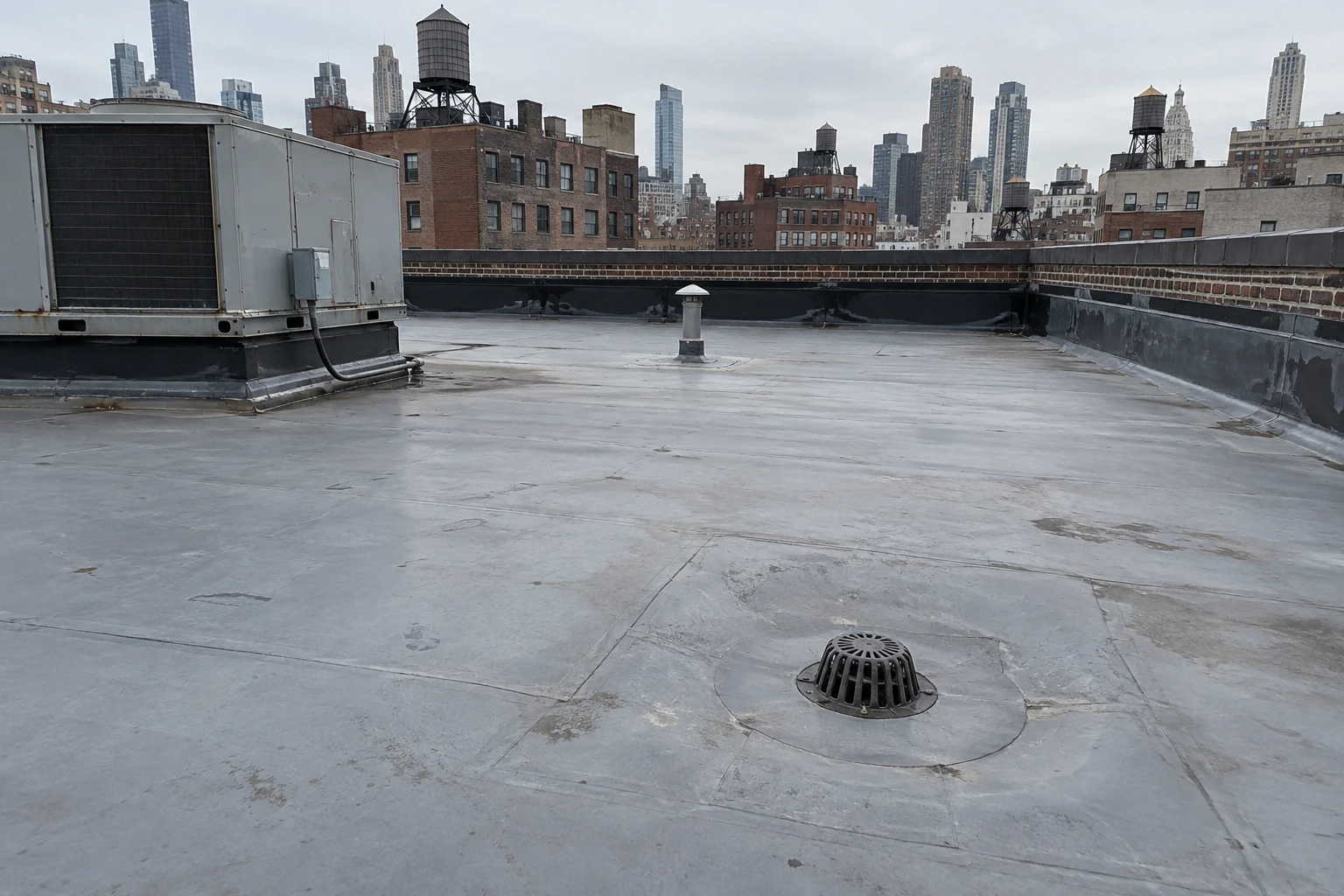
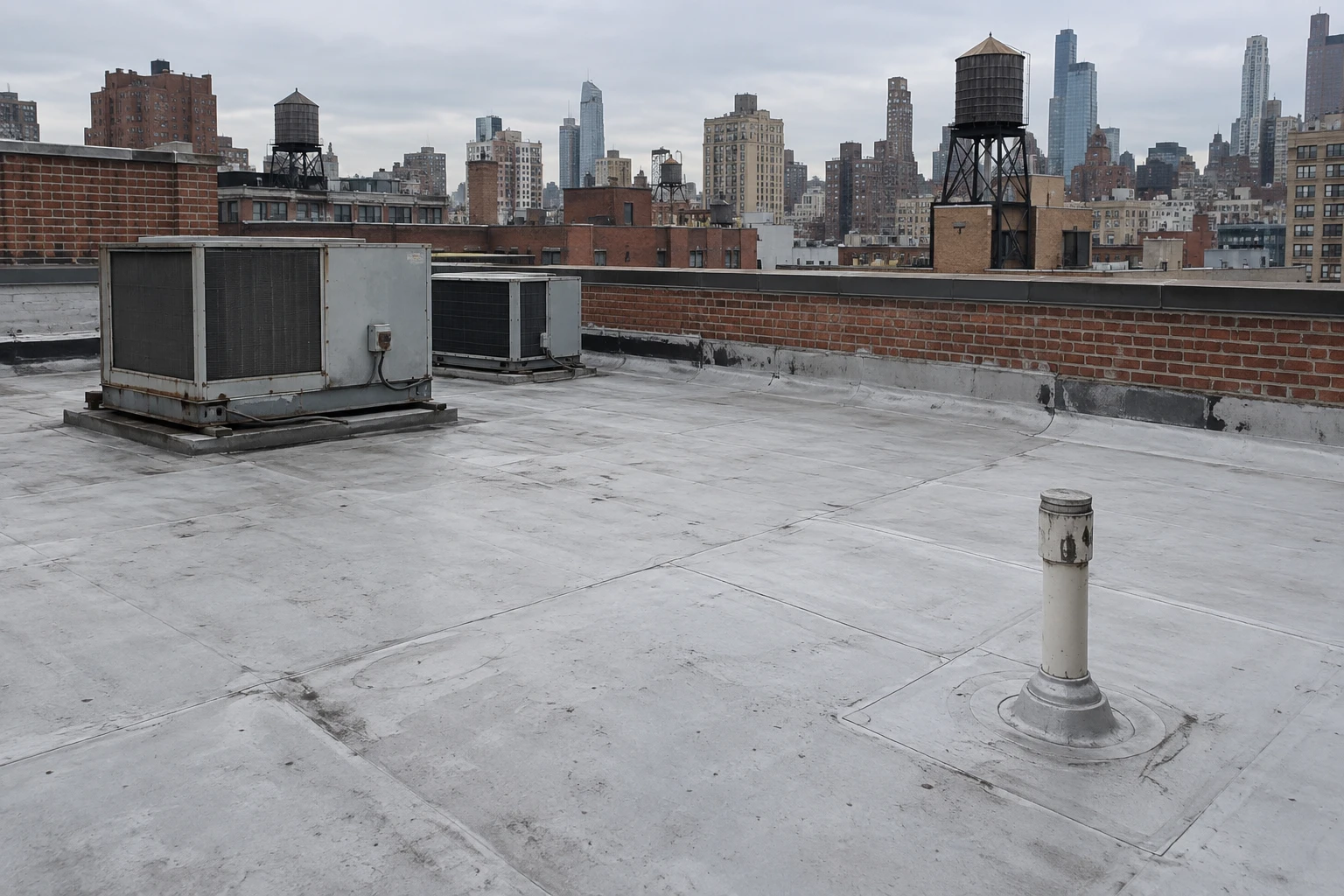
A blunt probe that slides a quarter inch into a welded lap is a finding, and the map of every place it slid is the survey of a thermoplastic roof. Sika Sarnafil is a roofing manufacturer known for thermoplastic membranes, especially PVC sheets welded with hot air, and for liquid-applied flashing and waterproofing resins. In Manhattan, NY, where a roof can hold a bulkhead, a skylight, a cluster of conduit and a mechanical curb in a small area, the resin is as important as the sheet. The details are crowded and close together, and a preformed boot may not fit.
We survey, repair and replace thermoplastic roofs and their liquid-applied details. The last roof report, the roof plan if one exists and any open violations start the file, and the scope and rating are set before a number is discussed.
What does a weld survey record?
Every lap probed along its full length, every gap marked, every ripple near a seam photographed. On a retrofit, we cut sample strips and pull them by hand to see whether the layers have fused. In a good fused weld the sheet tears before the seam lets go. A cold weld peels cleanly.
The map of gaps goes on the roof sketch, numbered, with the probe depth at each. Clusters tell us something: gaps along one parapet point to movement at that wall, gaps near a unit point to heat, scattered gaps across the field point to workmanship or age. We also note the direction of each gap relative to the slope, since a lap that opens against the flow of water is a likelier entry than one that opens with it, and the repair order follows that ranking. A repair means cleaning the surface, setting a patch with rounded corners, welding it and probing again. Each repaired lap gets a second probe a few weeks later, once the weld has cooled and the roof has gone through a few heat cycles, and the second reading is entered beside the first in the log. The PVC roof that cannot accept a test weld is at the end of its sheet and moves into the replacement column.
When is liquid-applied flashing the right detail?
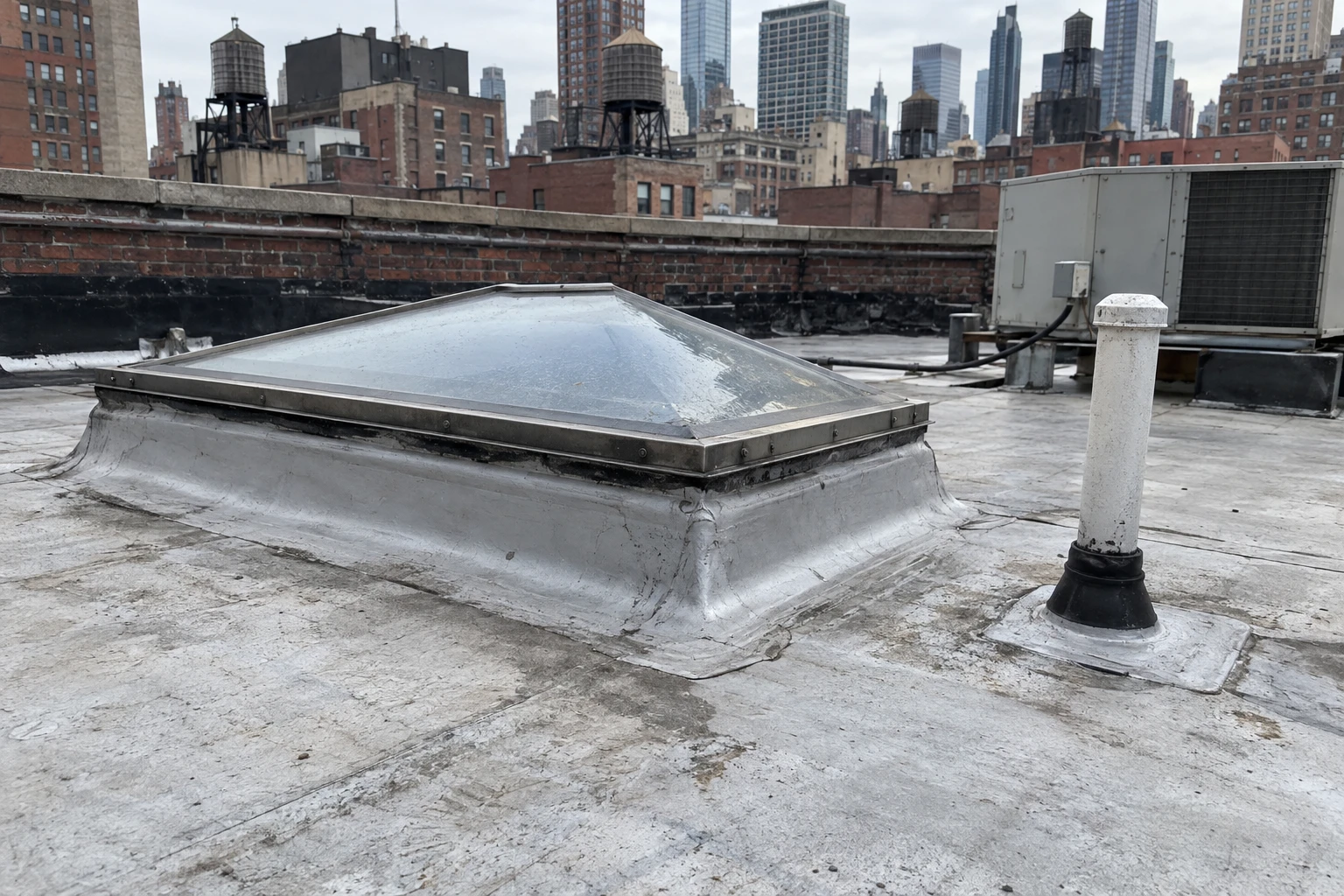
When the shape defeats a preformed part. A cluster of pipes through a curb, a bracket with several legs, a stair bulkhead with irregular corners and a skylight curb with a cracked corner are all places where a resin that flows around the shape and cures into a flexible layer beats a cut-and-weld patch. The resin is reinforced with fabric, applied in coats and checked for thickness as it goes on.
It needs a clean, dry surface above the dew point, and it cures faster in warm weather. On a Manhattan roof in the shade of a taller neighbor, the surface can stay damp long after the sun has dried the rest, so we read the surface with a moisture meter before mixing. A resin laid over a damp corner is a blister that waits for the first hot afternoon. Surfaces must be compatible, and we test a small area first. The skylight and penetration flashing scope uses resin and sheet where each fits and records the material at every location. A resin detail that fails usually failed at the substrate, so repairs start by cutting back to sound material.
What changes on a podium or amenity deck?
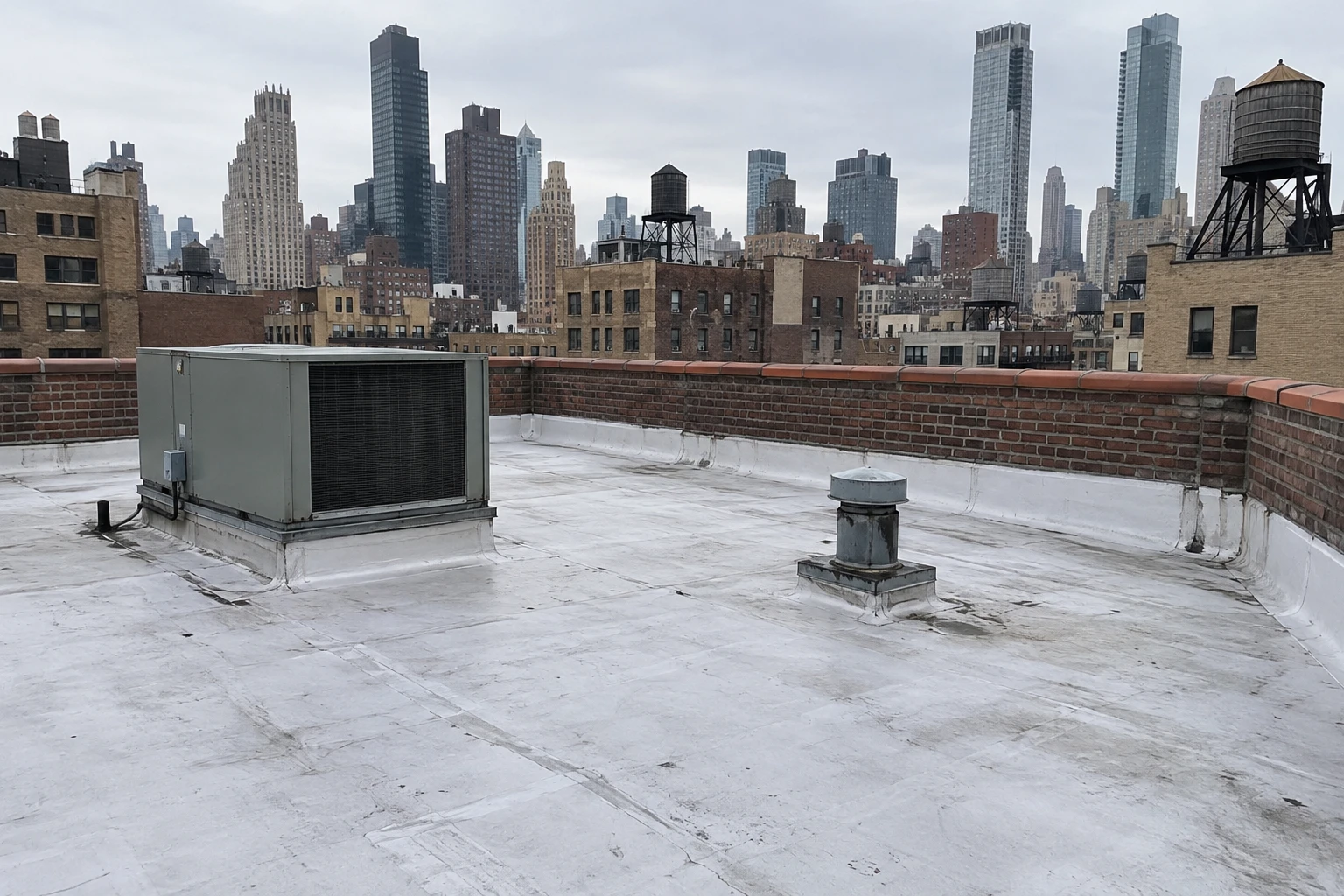
Midtown's roofs include tower setbacks, mechanical roofs and low-slope podium decks, a mix that follows from a district of office towers, hotels, apartment towers and theaters. Pavers, planters and furniture may sit over the waterproofing on a podium deck, which makes a leak there hard to find. We lift pavers in sections to inspect the membrane, flood-test or scan for electronic leaks and check drains and sleeves.
Related and Oxford built a platform over the West Side Rail Yard that supports a 28 acre mixed-use development, and platform decks like it raise their own questions about access, drainage and layered waterproofing. We do not assume the system on any particular deck. We survey what is there. For a podium in Midtown or a deck near Hudson Yards, the report records the finish, the drainage path and the membrane beneath.
How are odor and dust managed near sensitive occupants?
Welded thermoplastic gives off little odor compared with hot asphalt, which suits hospitals, clinics and schools. Adhesives and resins have their own smells, and intakes close to the work get covered or dampered. Each morning the wind direction is checked, and a shift toward an intake pauses the step.
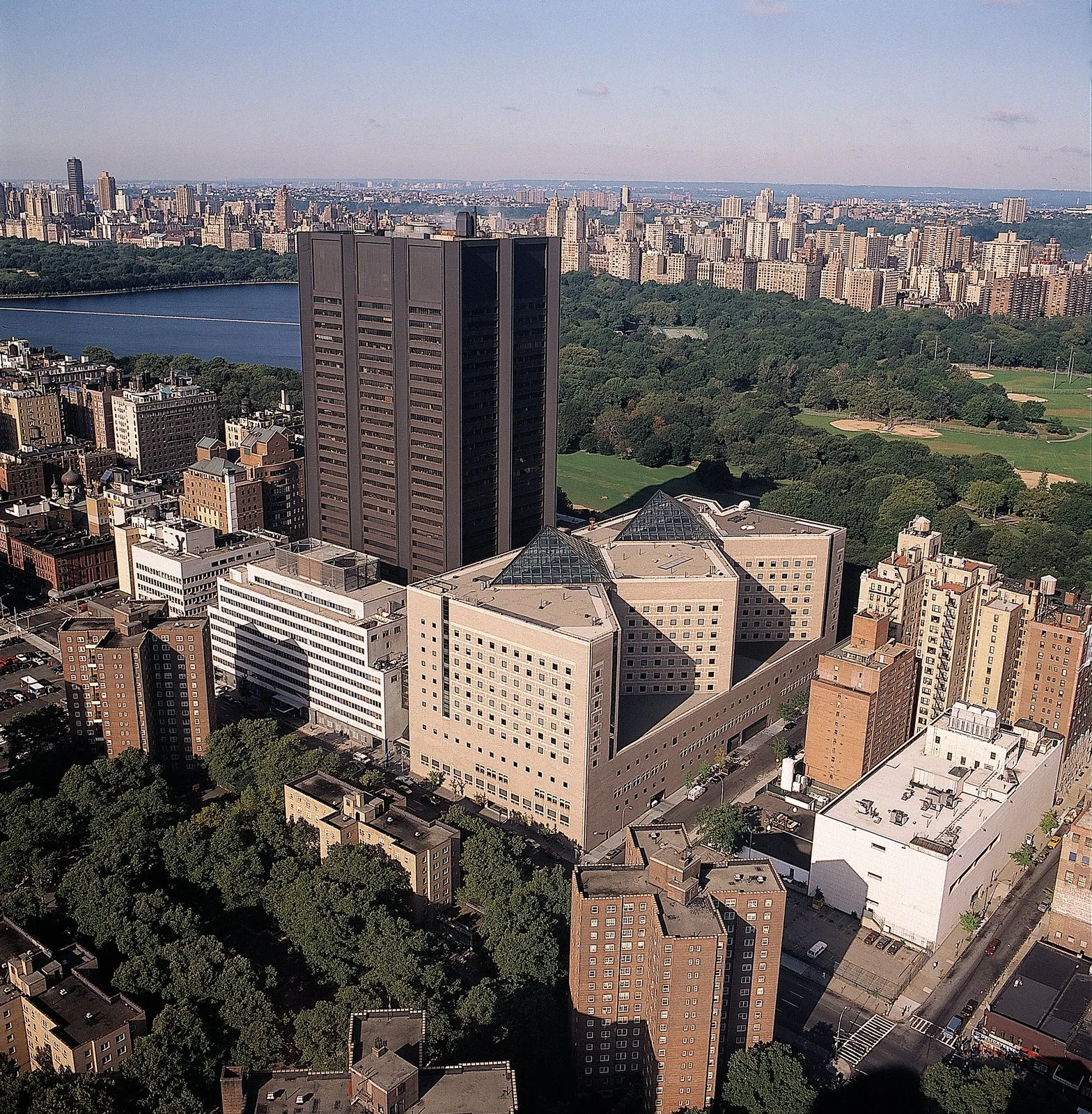
Hospital campuses set expectations that nearby buildings inherit, among them Lenox Hill and Weill Cornell on the Upper East Side, NewYork-Presbyterian/Columbia in Washington Heights and Bellevue with NYU Langone in Kips Bay. Dust is controlled by sealing penetrations before tear-off and by vacuum cutting. The plan names the intakes, the dampers and the person who closes them. A short call at the start of each work day confirms that the dampers are set, and a second call at the end confirms that they have been reopened. Both calls are logged with the time, so the record shows how the air was protected during the work. See how the same method applies to a hospital roof.
How do thermoplastic options compare across makers?
By sheet thickness, reinforcement, weld width, accessories and repair path. Another maker such as Duro-Last prefabricates sheets to a measured roof, which suits small roofs with many penetrations, and Versico offers its own mix. For each option the report's table shows seams made in the field, hand-cut details, delivery lead time, weight and cost range.
A sheet that tolerates a puddle still suffers from the grit a puddle carries, and the 3.15 inches Ida dropped in one hour in 2021 shows how quickly a roof can collect one. Each option's drainage fix goes in the table too. A board reading the comparison sees the cost of each choice and the roof's own constraints, such as parapet height and structure, which often decide the winner. The table also notes which options need a warranty read before the design is fixed, so a choice that would void a promised coverage is flagged on the first page and not discovered after the order is placed.
Commercial Roofing Questions
What decides whether to repair welds or replace a thermoplastic roof?
Whether the sheet accepts a test weld and whether the insulation is dry. A sheet that welds cleanly and sits on dry board can be repaired. One that refuses a weld or sits on saturated board is at the end of its life.
Can liquid-applied flashing be used over an old membrane?
Often, if the surface is clean, dry and compatible. We test a small area for adhesion first. Some surfaces need a primer, and some will not accept resin. The test result goes into the report.
How is a leak under pavers found?
By lifting pavers in sections, inspecting the membrane and testing drains. A flood test or an electronic leak scan narrows the location without removing the whole deck. Repairs are limited to the affected area, and the pavers go back in the same pattern, with the lifted positions marked on the sketch so a later crew can find the opened locations. The membrane is tested again after the pavers are reset, and the result is filed with the others.
Is a welded sheet suitable near hospitals?
The install is quiet and low in odor. Intakes near the work still need protection, and infection-control rules govern the plan. The hospital's own assessment sets the barriers, and we add roof-specific measures.
Do New Jersey roofs follow the same rules as New York City roofs?
No. Local Laws 92 and 94 apply to New York City buildings. A New Jersey building answers to its own state and municipal codes, and the local building department confirms which. The survey method is the same.