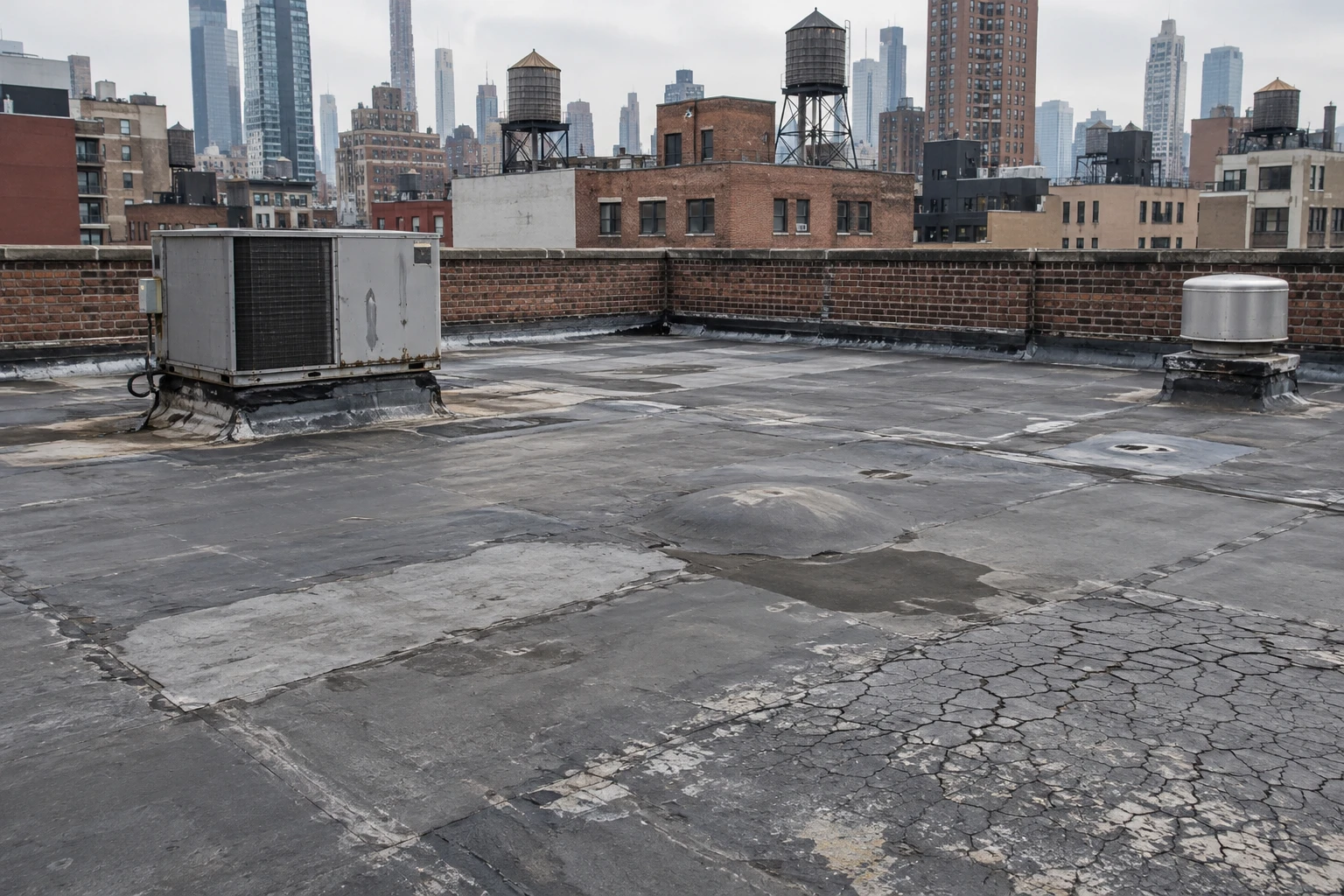
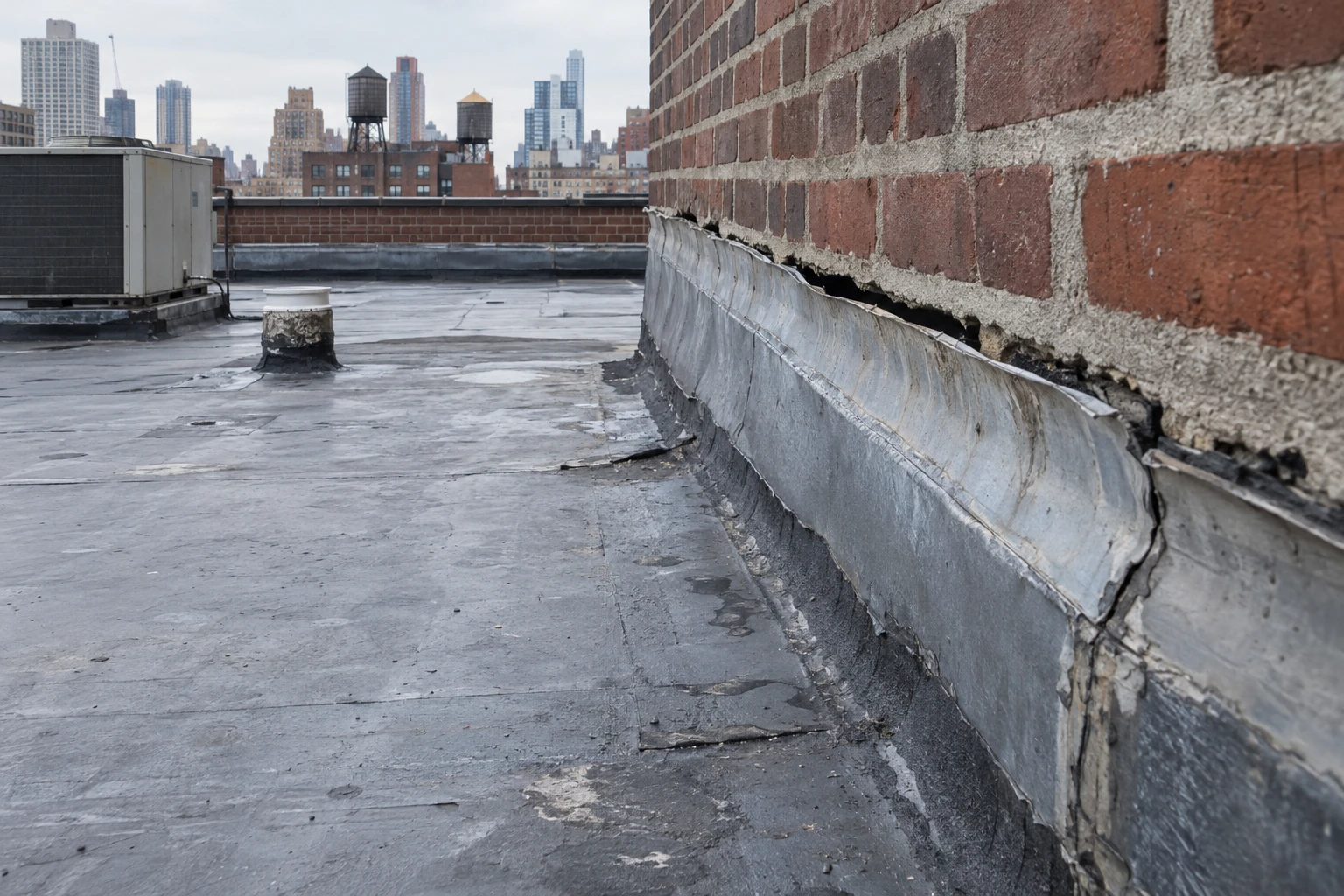
Skylight curb, pipe, vent and penetration flashing repair for Manhattan, NY roofs, tested against heavy rain, thermal movement and crowded rooftops.
On a roof with many penetrations, a leak more often starts at a four-inch pipe boot than in the open membrane, and the infrared image shows it plainly: a warm halo around each penetration where insulation has soaked. Skylights, vent stacks, conduit, gas lines and support posts all pierce the roof, and every piercing is a joint between two materials that move differently. On a small Manhattan roof the count of penetrations is high compared with the area, so flashing quality sets the leak rate. The first step in any repair is a numbered list of every opening, matched to the trade that owns it.
We repair and replace skylight curbs, pipe and conduit flashings and rooftop penetrations on every roof system we install.
Why do penetrations fail before the field of the roof?
A penetration holds water out with a flashing, and a flashing depends on sealant, metal and the membrane lapping the right way. Each of those weakens with time. Sealant dries and cracks under sun and cold. Metal flanges move with the building. A rubber boot splits where ultraviolet exposure has aged it. The membrane, which is bonded to the flange, pulls at the corners during winter contraction.
Central Park has recorded 106 F and minus 15 F, and its urban heat island keeps rooftops warm at night. That range of 121 degrees of recorded extremes works on every joint over the year. Treat flashing failure as a sequence. The first sign is typically a hairline crack at the sealant bead, then a gap at the flange, and then water tracking along the pipe into the insulation. The infrared survey finds the wet halo before a ceiling stain forms, and a commercial roof leak repair at the penetration is a small item compared with the insulation replacement that follows neglect.
What goes wrong with skylights, and what are the options?
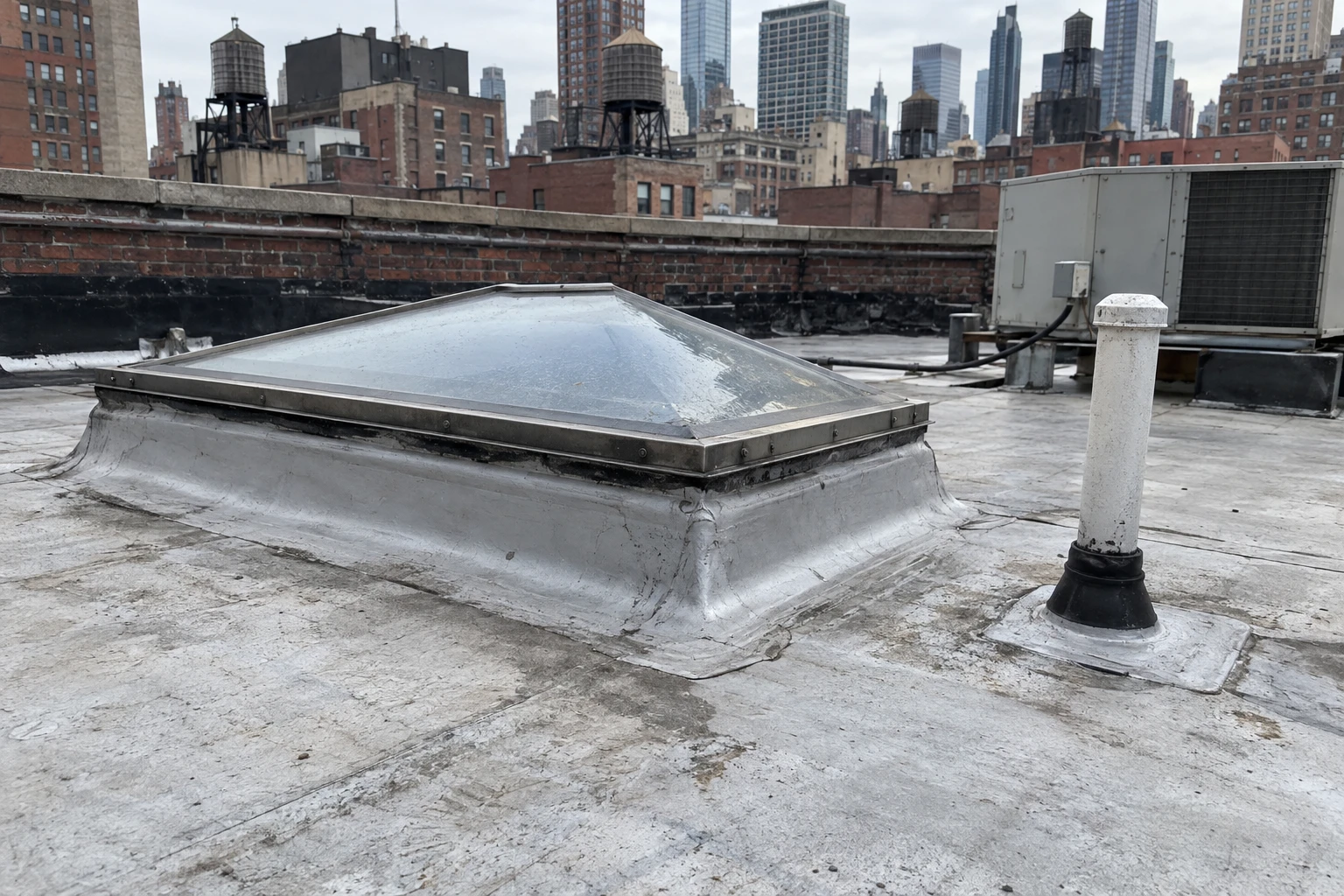
Four parts of a skylight tend to fail: the frame corners, the glazing seal, the curb flashing and the condensation drainage. The curb is the usual leak path, particularly at the upslope corner where water collects and at the downslope side where it must exit. Frames corrode, glazing seals dry out, and old plastic domes yellow and crack.
The options are repair, re-flash, replacement of the unit or removal. Re-flashing a sound curb with new base and counterflashing often solves a leak at modest cost. Replacing a failed unit makes sense when the glazing or frame is beyond repair, and removal with a roof panel infill suits a skylight no one needs. Where a building sits in a landmarked district, such as the SoHo-Cast Iron district, a skylight that neighbors can see may need a landmark review before any change. Curb height gets measured early, because code and the membrane both set a minimum, and it is recorded for the new flashing.
How are pipes, conduit and equipment supports flashed?
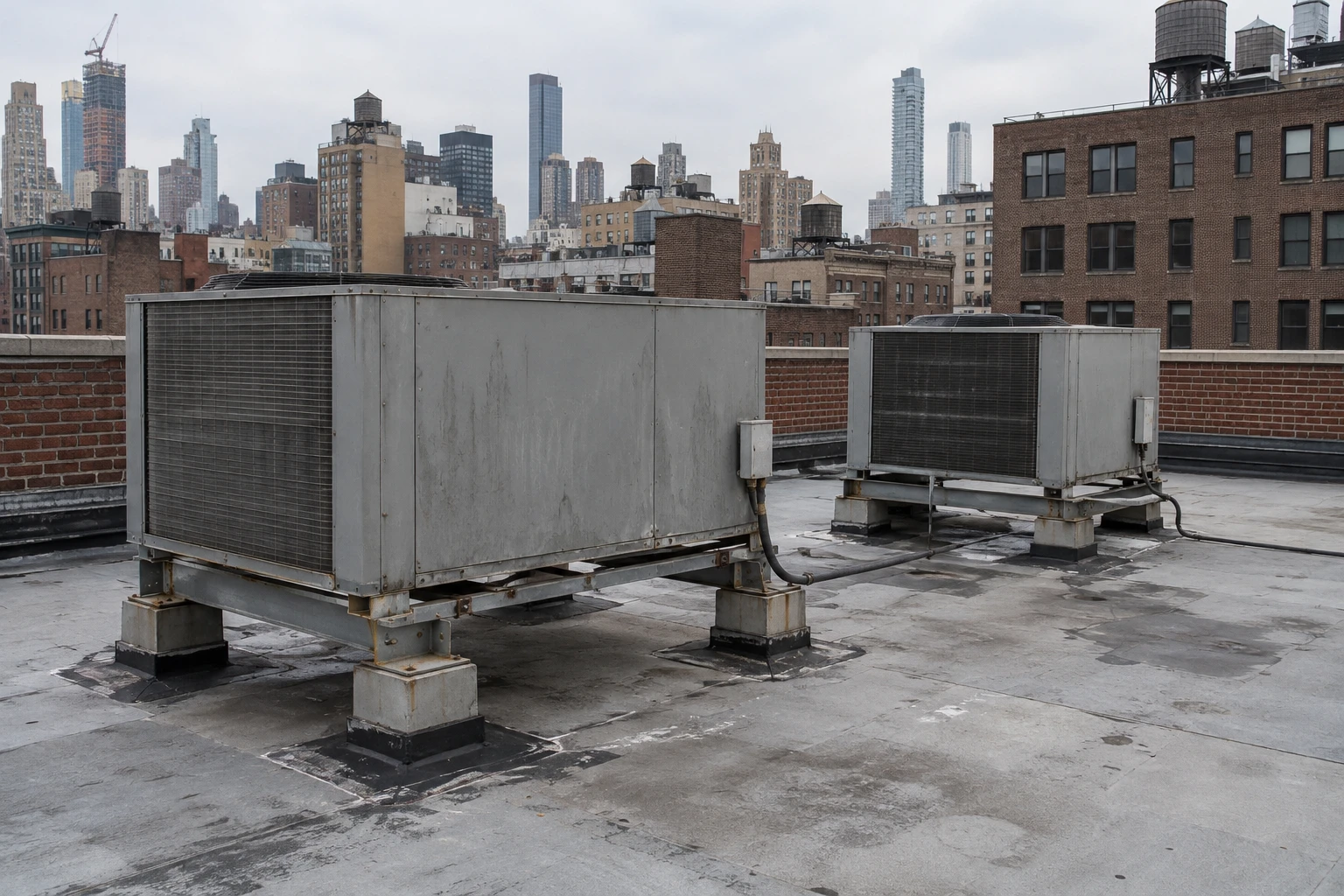
Small round penetrations take a prefabricated boot or a field-formed flashing, a clamped collar and sealant. Larger or irregular ones take a pitch pocket or a formed curb. Rooftop units, exhaust fans and antenna supports sit on curbs or posts, and each needs counterflashing and a sealed base. On a crowded roof, supports for the equipment of several trades often share one area, and the flashings overlap.
Our approach is to eliminate pitch pockets where a better detail is possible, replace boots on a schedule and raise any penetration that sits in a low spot above the water level. A rooftop equipment curb and support that is set in a pond will leak sooner than one on a drained surface. Coordinate with the trade that owns the equipment, so no one cuts a new hole or disturbs a repaired flashing the day after our crew leaves. Record the date of each flashing renewal in the log. The log should also name the product used on each boot, since a mismatched sealant can attack a rubber collar and shorten its life. When a roof is scheduled for recoating or a recover, every penetration is renewed first, so the new surface covers sound details and not tired ones.
How does an extreme rain hour test the penetrations?
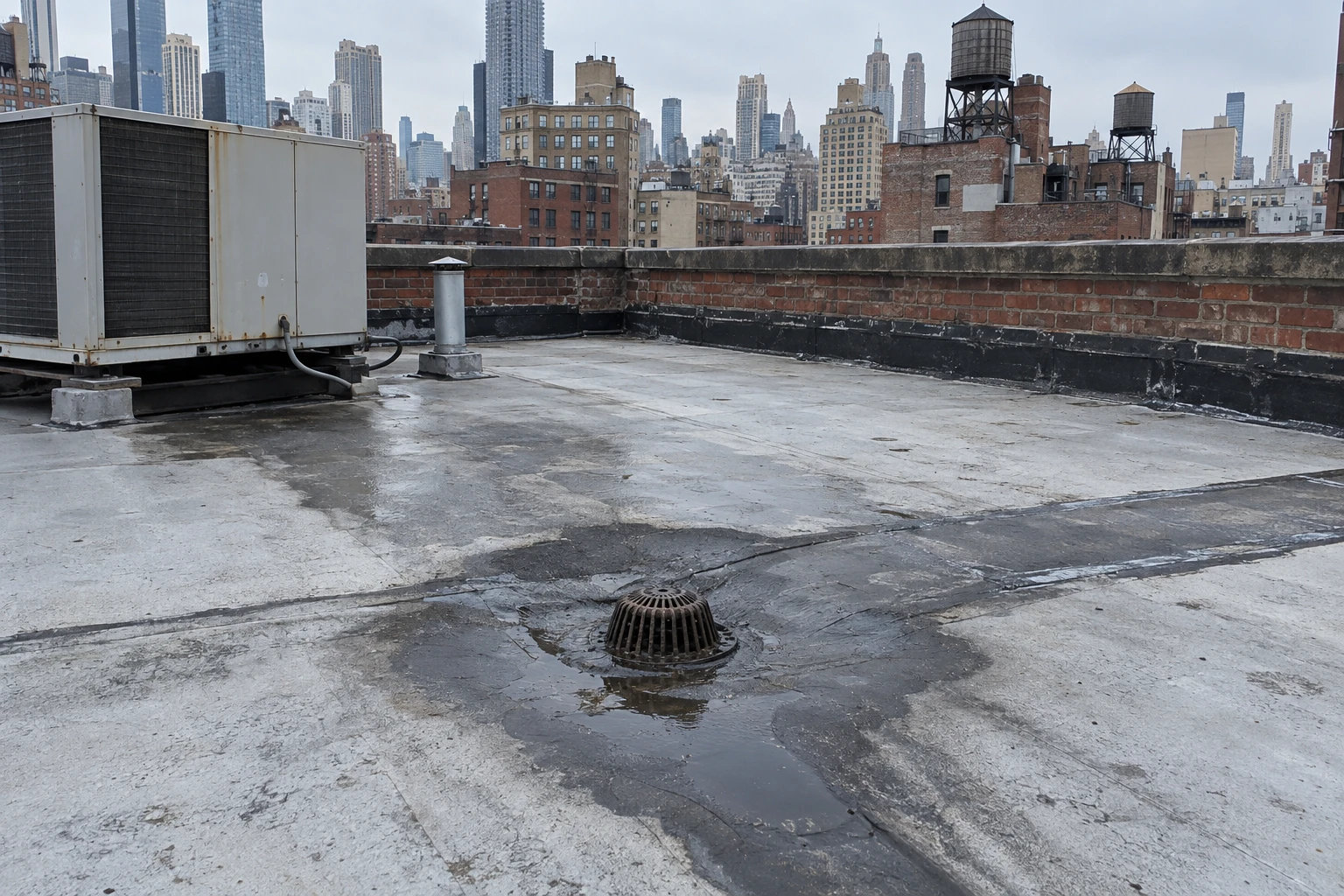
When Ida set the city's hourly rain record of 3.15 inches on September 1, 2021, the Weather Service declared the first flash flood emergency it had ever issued for New York City. In that hour, a roof with weak drainage holds water several inches deep around its penetrations, and a flashing designed to shed water is asked to hold it back. Flashing height matters: the standard minimum above the membrane is set to handle ordinary rainfall, not a pond.
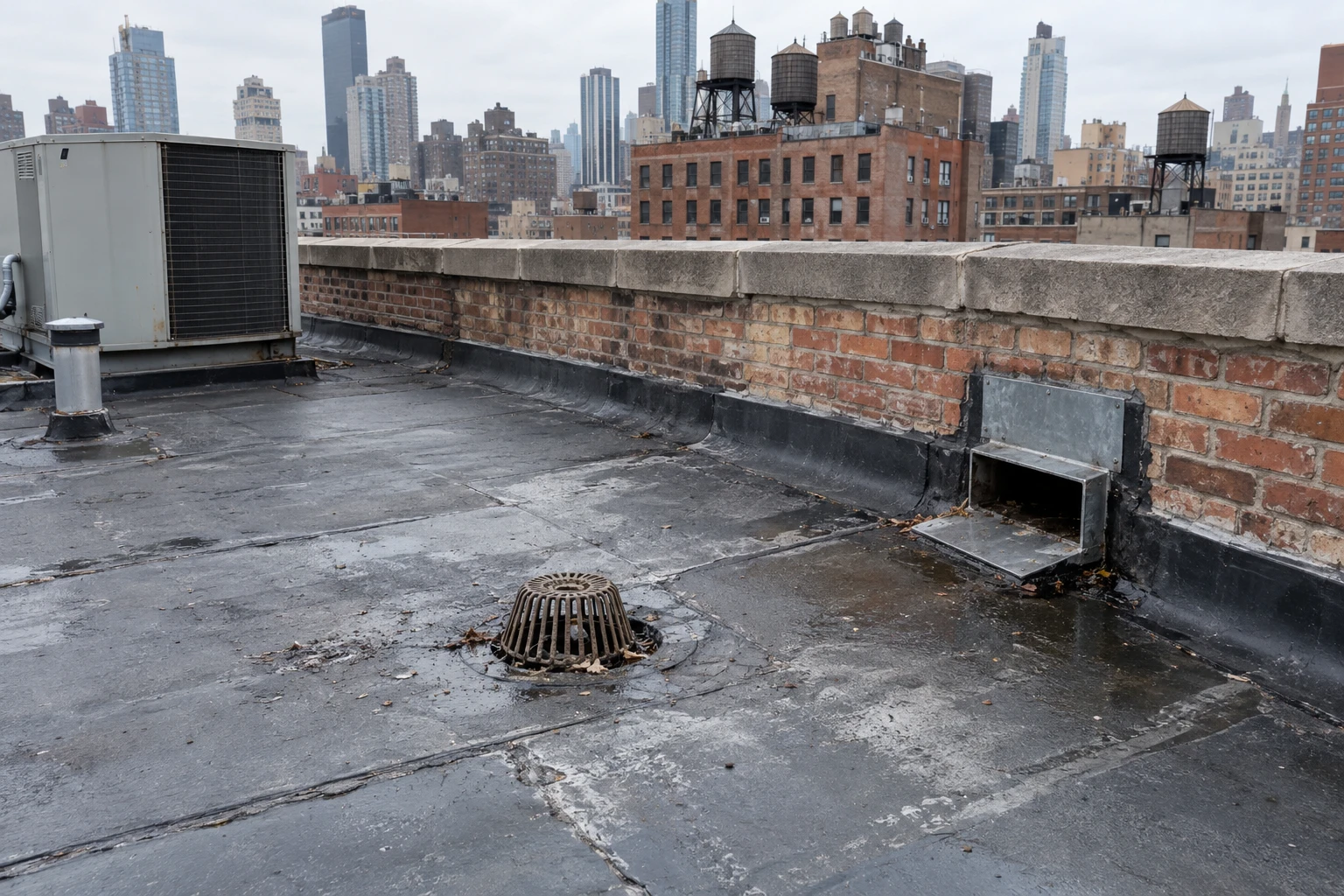
For that reason, we check the height of each flashing against the ponding depth recorded on the roof. Where water collects around a skylight curb or a pipe, we correct the drainage first by clearing and regrading the roof drains and scuppers, or raise the flashing if the pond cannot be removed. On a hospital roof in Washington Heights, Kips Bay or the Upper East Side, the rooftop systems that serve patient areas are flashed to the same height standard. Write the flashing height beside the penetration number.
What drives the scope and the schedule of flashing work?
The count of penetrations, their condition, the roof system and the access drive both cost and duration. Repairing ten boots in one visit takes hours, while re-flashing a skylight curb with a new membrane can take a day. Work on an occupied floor beneath a skylight needs protection of the space and notice to the tenants. Weather is the main schedule risk, because flashings need dry surfaces and a cure window.
For a large building or a portfolio, we combine penetration work into a single mobilization and rate each roof in a roof condition report. Owners of buildings in Greenwich Village often ask for this approach because the roofs are small and the visits are many. Keep the penetration map current as trades add and remove equipment.
Warranty and records matter here too. Membrane manufacturers set detail requirements for flashings, such as flange width, termination height and the sealant type, and a flashing that departs from them can be questioned later. We build each detail to the system's published method, photograph it before it is covered and record the materials used. A year later, the photographs show a lender or an insurer exactly what sits under the counterflashing.
Commercial Roofing Questions
What decides whether a leaking skylight is repaired or replaced?
The condition of the glazing and the frame decides it. A sound unit with a failed curb flashing is re-flashed. A unit with cracked glazing, a corroded frame or a failed seal is replaced, since flashing a failing unit repeats the leak.
Can sealant alone fix a leaking pipe penetration?
Sealant may slow a leak for a season, but it only buys time. We replace a cracked boot, a loose collar or a lifted flange, and we treat sealant as a finishing detail rather than the primary flashing.
How do we find a penetration leak without opening the roof?
After a warm day an infrared scan shows the wet halo around a leaking penetration, and a meter reading backs it up. If doubt remains, a hose test run from the low side upward isolates the entry point.
Do new penetrations from other trades void a flashing repair?
They can disturb it. A trade that cuts or moves a pipe without notice can break the seal. Tell the building staff to call before any roof work, so the new penetration is flashed to the same standard.
What should we have ready for the survey?
Roof access, a list of the equipment on the roof with the trade that serves it, and any drawings showing the penetrations. The more complete the list, the faster the map.