Roof surveys, condition ratings and replacements for government and municipal buildings in Manhattan, NY, written for procurement files and capital budgets.
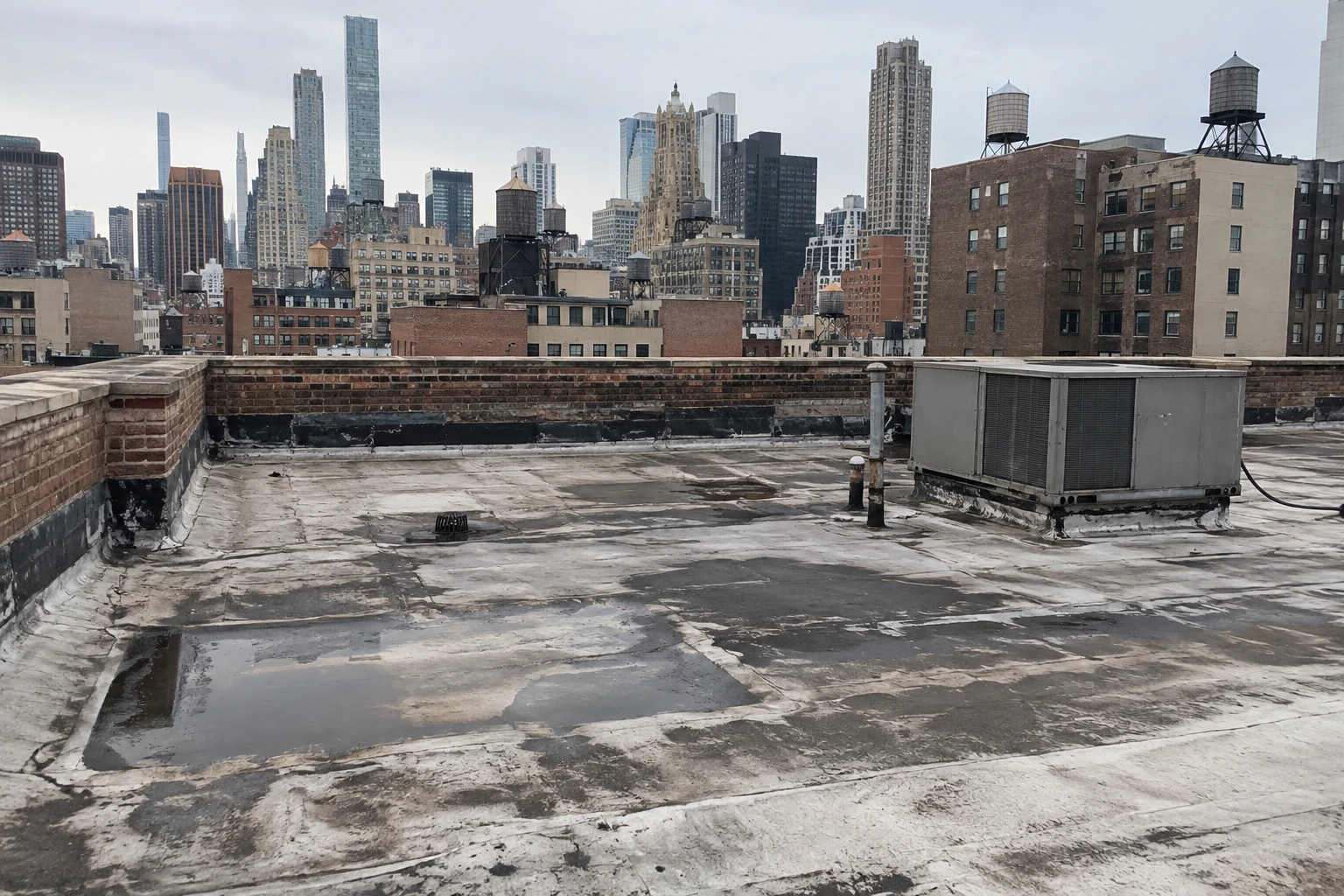
A written condition rating on a municipal roof is a number a budget office can act on, and a note that says the roof is old is not. A core cut through a low-slope roof on a public building can show two layers of membrane, part of the insulation saturated and a drain leader that sits half an inch above the low point. Each reading converts to a cost and a remaining service life. On a government building in Manhattan, NY, where the roof sits under public procurement rules and a capital plan that runs several years, the written finding is what moves a project from a complaint to a funded line. Our survey produces that finding.
What does a survey of a public building roof deliver?
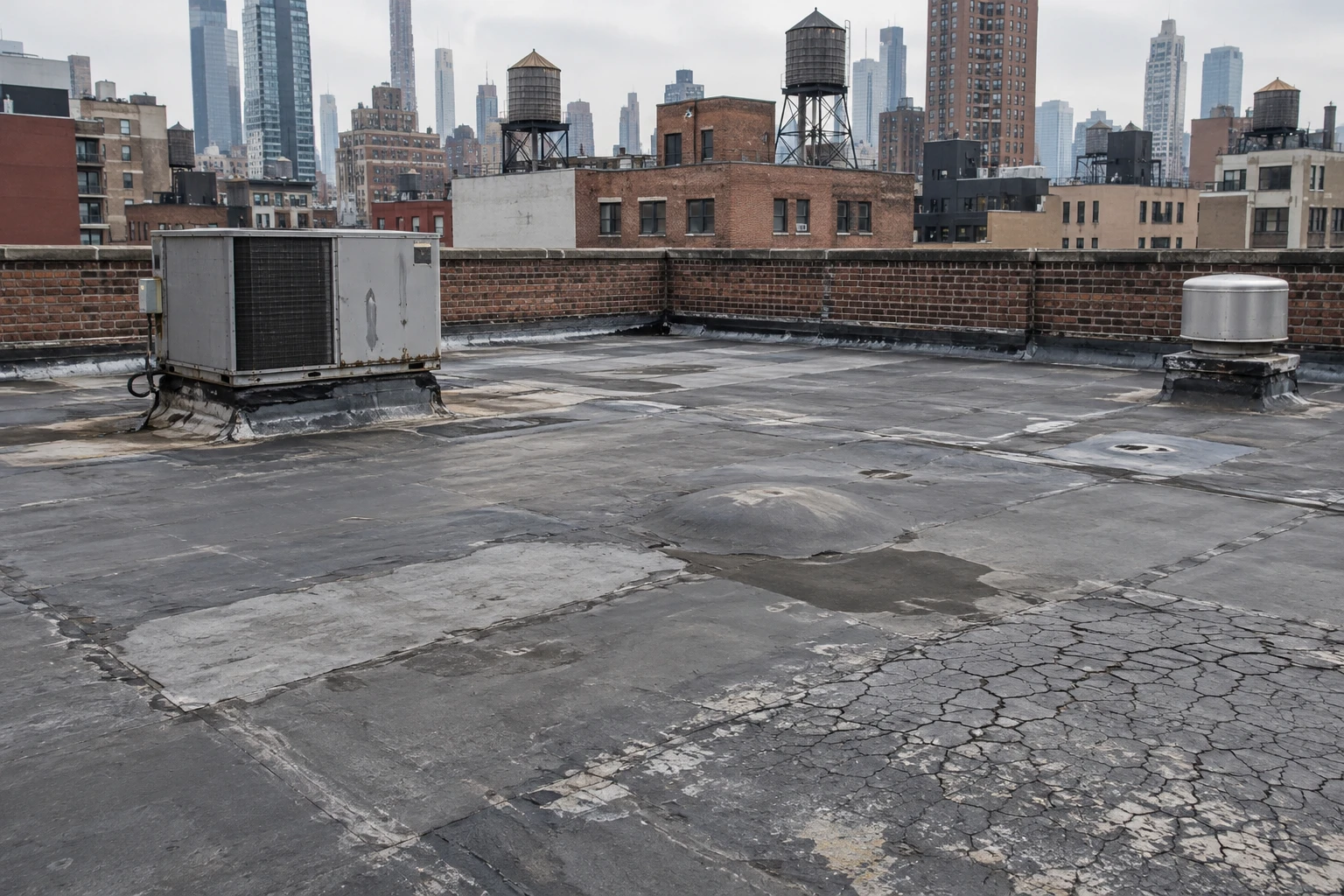
The deliverable is a report an agency can attach to a request. It contains a roof plan with numbered zones, infrared maps, core cut locations and results, ponding depth readings, a drain leader count and a photograph for each finding. Every zone carries a condition rating on a fixed scale, a remaining-life range and a recommended action.
Reports are written so a budget analyst and a facilities engineer can both use them. The summary page lists total roof area by rating, the cost range for each action and the risk of deferral. A section called what happens if nothing is done says what the next winter or the next extreme rain hour is likely to do to the worst zones.
Roof access and fall protection get their own line in the report. A public building may have hatches, ladders and parapets built to older standards, and a worker's route to the zone matters to the schedule and to safety. We record the route, the hatch size and any equipment that blocks it.
How is a scope written for a procurement file?
Public work follows written scopes, quantities and unit costs. We write the scope with measured areas, material specifications by section, flashing and edge details, drainage changes, testing requirements and the sequence of work. Alternates are listed separately, such as a tapered insulation system or additional cover board, so bidders price the same thing.
Addenda stay clean when the survey is complete. A scope that states the number of drain leaders to be replaced, the linear feet of coping to be reset and the area of wet insulation to be removed leaves little room for change orders. We attach the cores and the infrared maps so bidders can read the evidence behind each quantity.
Testing requirements are written in, not assumed. A scope that calls for seam probing on every welded lap, a flood test at drains and a final infrared scan after installation produces a roof the agency can accept with evidence, and it gives the inspector a checklist.
Which codes and local laws apply to a city-owned roof?
A public roof answers to the 2022 NYC Construction Codes: the Building Code, the Existing Building Code and the Energy Code. Local Laws 92 and 94, effective since November 15, 2019, tie the sustainable roofing zone of any full replacement to solar, a green roof or both, and a public building replaced in full must show how the zone is met.
We map the zone on the roof plan and check that equipment clearances, drainage and access still work after the layout is applied. A partial replacement may avoid the zone requirement, so the report compares a partial and a full scope, with their cost ranges, before the agency picks one.
Energy code adds insulation requirements on a full replacement, and the thickness affects parapet height, curb flashing and door thresholds. Each knock-on change is itemized in the scope, so the budget carries it.
How does a public housing roof differ from an office roof?
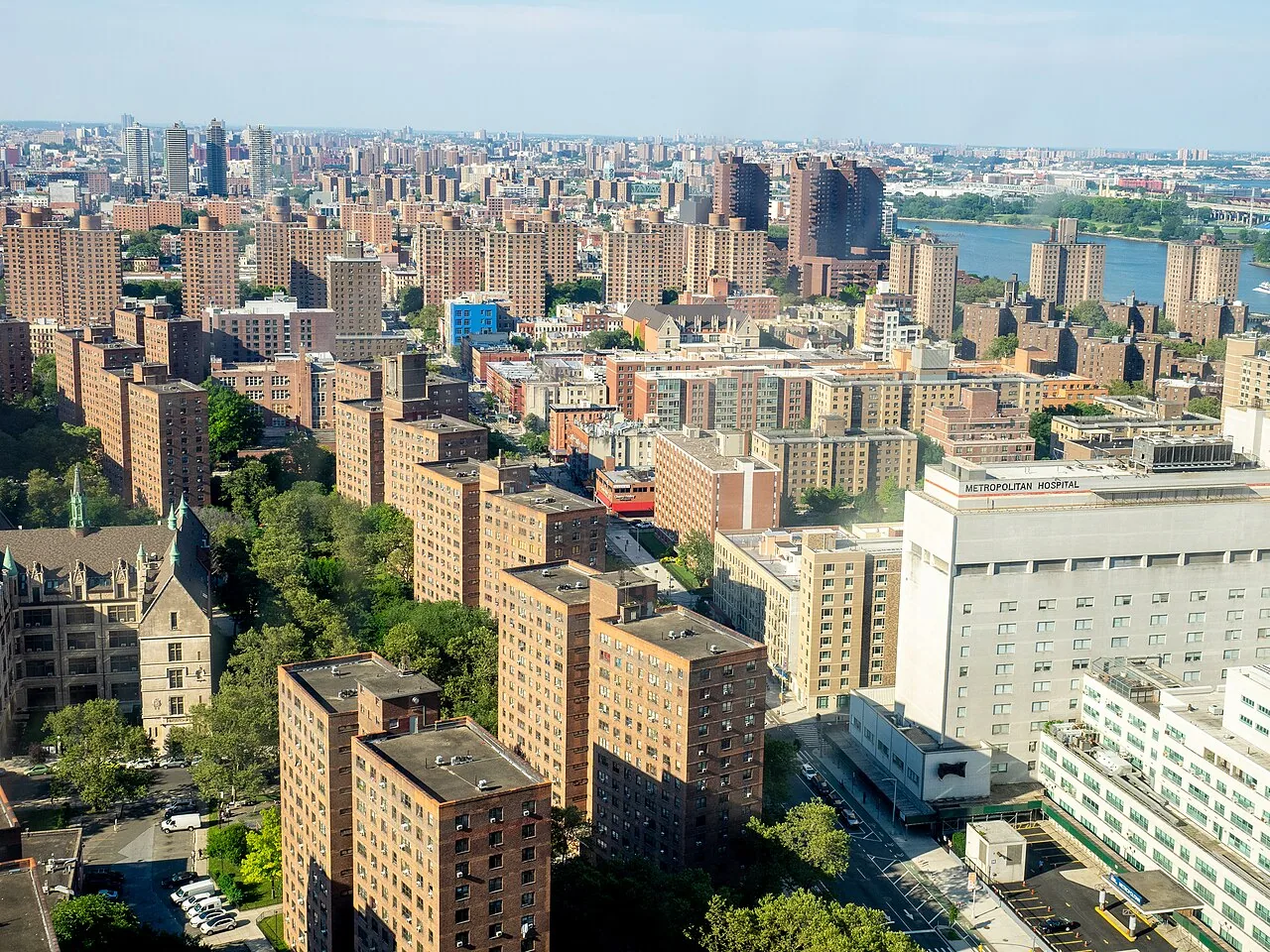
East Harlem has 24 New York City Housing Authority developments, and as of 2013 more than a quarter of residents lived in NYCHA-managed units. Taino Towers rises in four 35 story towers with 656 apartments at East 122nd Street and Third Avenue. A roof on a residential tower serves hundreds of households, so a leak that enters a top-floor apartment is also a repair-ticket count for the agency.
Our survey for campuses like those in East Harlem ranks buildings by condition and by the number of units under each roof zone. That ranking supports a capital plan across many buildings, and it ties the roof schedule to resident notice requirements. Bulkheads, lift machine rooms and parapet coping carry most of the water, and we survey them as separate zones.
What did Sandy and Ida show about public roofs and drainage?
Sandy's surge on October 29, 2012 measured 14.06 feet above average low tide at The Battery, and every block of Lower Manhattan south of 39th Street lost power. Ida's hour of 3.15 inches on September 1, 2021 triggered the first flash flood emergency in the Weather Service's history for New York City. A public building has to remain open or recover fast after both.
For roofs, the lesson is drainage and equipment. Roof drain leaders that cannot clear an extreme hour hold water against curbs and flashings, and generators or air handlers moved to a roof must sit on dry, drained platforms. Leaders are flow-tested, ponding depth is recorded after storms and the generator pad is rated as a zone of its own.
How is a roof project run on an active public site?
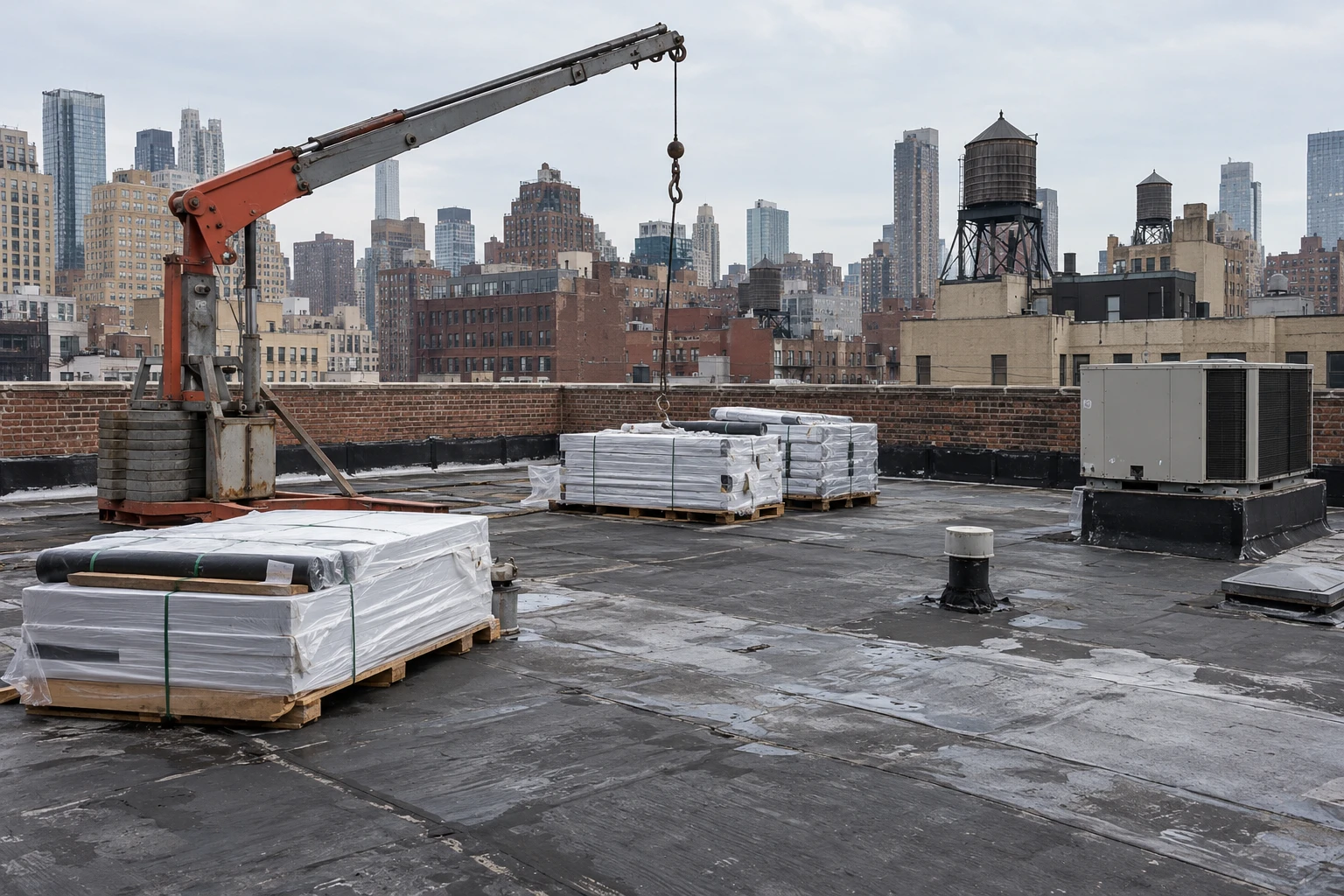
Public buildings stay open, so the roof opens in sections that close the same day. Security screening, escort rules and restricted areas go into the plan. Work near a public entrance or a transit facility, such as the Port Authority Bus Terminal, which serves about 8,000 buses and 225,000 people on an average weekday, needs pedestrian protection and delivery windows agreed ahead of time. Our approach to occupied building reroofing applies directly, with hoisting scheduled outside peak flows.
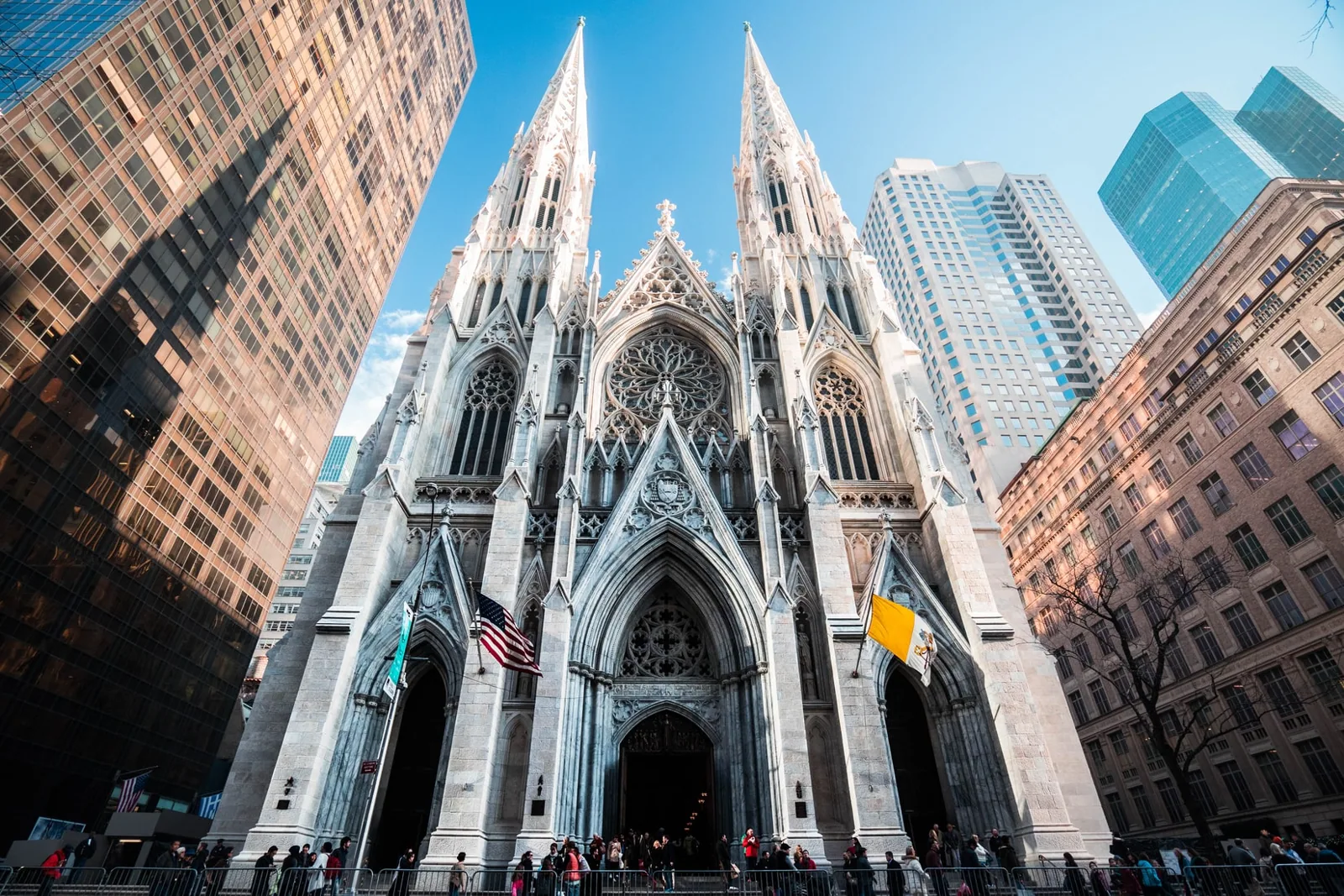
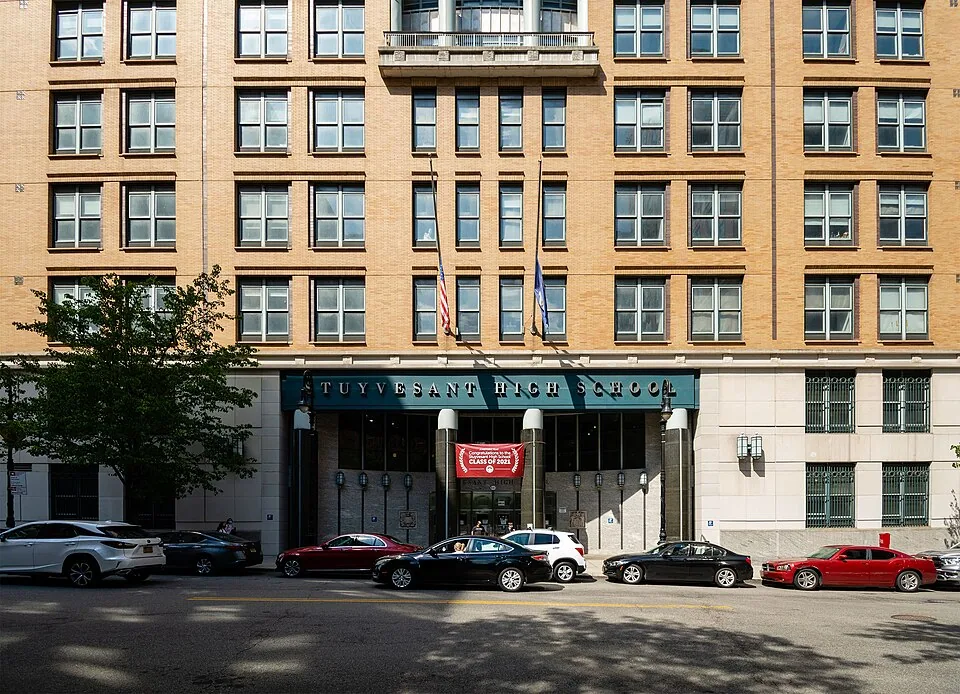
The records at close-out include the as-built details, product data, test results, photographs by zone and the warranty. Agencies can attach them to the asset file, and the next survey starts with them. Similar discipline applies to church roofing boards, school roofing and hospital roofing, where the calendar and the occupants set the sequence. Municipal buildings in the Financial District are surveyed to the same specification format.
Commercial Roofing Questions
What should an agency send before a survey is scheduled?
A recent roof report, the age of the building, any open violations, drawings if they exist and a list of what operates under each roof zone. With those in hand, the survey scope and rating scale can be agreed before any price is discussed.
Can the survey support a capital request?
Yes. The report gives a rating, a remaining-life range and a cost range per zone, which are the numbers capital requests ask for. Photographs and core data attach as evidence.
How are alternates handled in a bid?
Alternates are written into the scope as separate items with quantities, such as tapered insulation or cover board, so every bidder prices them the same way. The agency then picks the combination that fits its budget.
What if the building is landmarked or sits in a historic district?
We prepare the visibility drawings for review and match visible materials to the existing profile. The schedule shows where approvals fall relative to the dry months so no work waits on paper at the wrong time.
Who inspects the finished roof?
The agency's inspector and the Department of Buildings, where a permit applies, inspect the work. We run our own checks first, including seam probes and ponding readings, and hand over the results.